Show me the wisdom

The world tree is a motif present in several religions and mythologies, particularly Indo-European religions, Siberian religions, and Native American religions. The world tree is represented as a colossal tree which supports the heavens, thereby connecting the heavens, the terrestrial world, and, through its roots, the underworld. It may also be strongly connected to the motif of the tree of life, but it is the source of wisdom of the ages. – Wikipedia

One common theme in magic, mythology, and fantasy is the idea that this “wisdom of the ages” is (or was) known by individuals called “the old ones.” Some say they came and went eons ago and left their wisdom right in front of us, and that all we had to do was figure out what we were looking at. Others say that whether the “old ones” still walk amongst us unseen or left eons ago, that their knowledge can only be found by years of meditation, study, and withdrawal from the day-to-day world.

I’ve been fascinated with this stuff since I was in high school and first came across the mystery school mysteries, comparative mythology, and similar approaches to “the big question.” I’ve noticed a lot of commonality between systems even though the myths and techniques are often somewhat different.

The only thing I’m sure of is that the more one studies all this, she less s/he knows. That doesn’t imply, though, that if one hadn’t studied it at all, s/he would know everything by the time s/he reached my age. All I have so far at my sage other than aches, pains, medications, and trips to the hospital is a monthly copy of “AARP Magazine.”

Maybe all this has been bunk. If so, it’s been joyful and addictive bunk that’s provided a lifetime of wondrous insanity. As luck–or the gods would have it–I’m not living on the street or, worse yet, in an institution where the psychiatrists ask, “Do you hear or see things that aren’t there?” My only response to that would be, “How would I know?”

When I became an old one, I didn’t have a visit from an older one who handed me a book titled “Here’s The Wisdom.” Or, if that did happen, I was asleep and missed it.

So, all I have to say about the wisdom is that it’s been a nice hobby and it’s given me some mysterious things to put in my novels. I have no idea what percentage of my readers think the wisdom is out there waiting for them and end up in an asylum where they’re asked “Do you hear or see things that aren’t there?” If so, I hope they know the right answer.

So reading about mysterious things is a risk sort of like bungee jumping. You might be yanked up into the high clouds where all will become known or you might hit bottom where nothing more will be known–or vice versa.

But what a ride.

–Malcolm
Conjure Woman's Cat Audiobook By Malcolm R. Campbell cover artMalcolm R. Campbell

Publisher: Thomas-Jacob Publishing

Website

Facebook Author’s Page

Amazon Author’s Page

Listen, and if you’re still “okay,” move on to the second audiobook in the series.
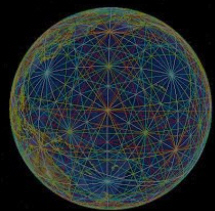
Resource for those interested in magic

“Ley lines (/leɪ/) refer to straight alignments drawn between various historic structures and prominent landmarks. The idea was developed in early 20th-century Europe, with ley line believers arguing that these alignments were recognised by ancient societies that deliberately erected structures along them. Since the 1960s, members of the Earth Mysteries movement and other esoteric traditions have commonly believed that such ley lines demarcate “earth energies” and serve as guides for alien spacecraft. Archaeologists and scientists regard ley lines as an example of pseudo-archaeology and pseudo-science.” – Wikipedia

If you’ve read a lot of novels focusing on ancient magic, including The Da Vinci Code, you’ve probably encountered the concept of Ley lines. I’m interested in them, but have never had the opportunity to investigate them, much less travel to a purported location.

If you are curious about them, here’s a link to a post from Dreamcatcher Reality that’s the best explanation of Ley lines I’ve seen in ages: https://dreamcatcherreality.com/ley-lines-matrix/

I don’t necessarily agree with Wikipedia except to say that they are speaking about the view of mainstream science. I find Dreamcatcher reality to be an interesting site, but I don’t use its information in my novels because it’s rather like Jane Roberts’ “Seth Materials” in that I can’t prove it. Even thought I write fiction, I want the details to be true; doing that makes for a stronger story.

Malcolm

Florida Folk Magic Stories: Novels 1-4 by [Malcolm R. Campbell]Malcolm R. Campbell is the author of the four-part Florida Folk Magic Series in which the hoodoo magic was verified to the greatest extent possible.

My odds of winning the Nobel Prize are pretty much zip

After Bob Dylan won the Nobel Prize for Literature in 2016, I figured there was a chance for those of us odds makers had written off. So, I have my speech ready. It begins, “Åh, det borde du inte ha.” And it ends, “Så länge och tack för alla kronor.”

If you speak Swedish, you can see I tried to be humble. If you don’t speak Swedish, then you don’t know what I said, which is just as well.

I checked the latest line at Ladbrokes, and they still favor French author Annie Ernaux (shown here) at 8 to 1 odds. Jamaica Kincaid is sitting at 12/1 and Jon Fosse was at 14/1. The first couple of times I went to a horse race, I put $2 on along shot when I saw that if I won I’d get a big pay off. I lost the $2.  I wonder how many people had money riding on Bob Dylan in 2016.

I was happy when Louise Glück won the nobel last year because I’ve been reading her work for ages. She writes with power and truth, both of which have attracted me to her work.

Alex Shephard writes, in the New Republic, “Every year I publish this preview, and people bet real, actual money based on it. If you are reading this because you want to bet on the Nobel Prize in Literature, please—and I can’t stress this enough—don’t do that. Buy something useful instead, like a lottery ticket. Or bet on the Nobel Prize in Literature, just do the exact opposite of what I say.”

Nonetheless, he thinks Maryse Conde, Ngũgĩ wa Thiong’o, Yan Lianke, Can Xue, and Yu Hua. As he warns, don’t bet on it.

No Americans are favored this year. So, there it is. I thought that if this wasn’t my year, then it was probably going to be Nora Roberts’ year. Or even Tom Clancy, may he rest in peace even though “he” keeps churning out new stuff.

It’s a real crap shoot.

Malcolm

Malcolm R. Campbell is the author of books, including “Fate’s Arrows,” which somebody needs to translate into Swedish before next year’s prizes.


UPDATE: 10-7-21 Apparently Tanzanian writer Abdulrazak Gurnah wasn’t on anyone’s radar. He lives in England and has a publisher there, but not a U.S. publisher. I suspect that will change. You can read the BBC story here: https://www.bbc.com/news/entertainment-arts-58828947


What if Facebook went away?

We’re aware that some people are having trouble accessing our apps and products. We’re working to get things back to normal as quickly as possible, and we apologize for any inconvenience. – Facebook on Twitter at high noon today.

Today we’re learning what the world would be like if Facebook went away. Right now, it’s gone. I’ll avoid the technical speculation about the cause of the outage.

No doubt, some users thought the feds finally made good on their threat to break up Facebook. So far, the feds aren’t claiming responsibility. Neither are any of the other usual suspects.

Short term, going cold turkey on Facebook is like quitting cigarettes or heroine. I’m drinking a class of red wine to take the edge off.

A lot of people are act holier than thou when they quit Facebook or cut down on the amount of time spent there. They cite all kinds of reasons: nasty people, politics, ads, companies getting their data, time better spent doing other things like, say, texting.

For many of us, Facebook serves as a clearing house linking us to virtual friends and people in our bricks and mortar neighborhoods, provides links to websites and blogs, connects us to others in special interest areas, tunes us into what’s going on in the world. It’s hard going without it.

Like many people in my generation, I began on CompuServe, jumped to MySpace, and ended up on Facebook. Some peple say Facebook is for old people. Fine, why should that be a detrimental thing? Some people say Facebook shouldn’t let bad guys have accounts. Why not? The rationale for that is that we’re too gullible, ignorant, an unwashed to make our own decisions and will all be led astray if the bad guys get to speak their piece.

Perhaps by the time you read this post, Facebook will be up and running again. Or maybe it’s gone forever for better or worse. Either way, the world will keep on turning and we’ll find new services and/or addictions.

Malcolm

Facing the Climate Catastrophe

On August 9, the Intergovernmental Panel on Climate Change released its assessment of the state of the climate — the panel’s grimmest yet. The window to stop some of the worst effects of the climate crisis is rapidly closing, the report found, and world leaders must act with urgency to prevent catastrophe.

The report, prepared by more than 200 top scientists around the globe and approved by the 195 UN member states, is the first of three expected this year to inform emission reduction commitments at the 26th annual international summit known as the Climate Change Conference of the Parties (COP26) this November in Glasgow, Scotland.

Photo: Sunset over St. Mary Lake at Glacier National Park. The namesake glaciers at this park are rapidly melting as a result of climate change. In 1850, the region had 150 glaciers. There are now just 25 left. Photo © Kan1234/Dreamstime.

Source: Facing the Climate Catastrophe: What We Do Now Matters · National Parks Conservation Association

Do most people worry about climate change? Apparently more people are taking it seriously as shown, in part, by their willingness to switch to products that they think are better for the environment.

In this article, the NPCA suggests four critical areas we can focus on:

  • Reducing emissions from cars.
  • Retiring power plants to clear skies of haze pollution.
  • Reducing methane, one of the most potent climate-warming emissions, from oil and gas development.
  • Securing critical climate provisions in the federal budget.

Climate change is such a huge issue, it often seems outside the power of the individual to address. Articles like this one help us narrow down target areas where we can focus our efforts.

Malcolm

Trailguide publishers: stop leaving out the trees

When I walk through a forest, I really do want to know what kinds of trees I’m seeing. I’d think visitors to national parks and other scenic areas with trails and trailguides would like to know what, too. Apparently the trailguide publishers don’t think so.

As I research Glacier National Park, looking for the specifics of various trails and roads, I’ve come across a lot of trailguides. For example, just Google Glacier National Park and include the mountain or lake you want to climb or hike, and you’ll find numerous trailguides. Many of these are sufficient for the day hiker looking for things to do.

The online guides usually include directions to the trail, how long and difficult it is, what to take (water, bear spray, food), and include photographs of the mountains, lakes, and valleys. Those made by amateurs (who may be strong hikers) don’t mention the names of the mountains in the views because they probably don’t know what they are. The same is often true for the lakes.

As for the trees, no mention of them except, perhaps, to say, that a trail begins in a forest. It wouldn’t really be that hard to say Engelmann spruce forest (as shown in the photo) would it? The showier, well-known wildflowers get mentioned; the rest are simply called, well, meadows of flowers. I really wish more people who know the flora, fauna, and landforms would make these guides to they can give prospective hikers the complete picture.

Otherwise, those using the trailguides won’t know what they have seen after they get back from the hike.

Malcolm

Malcolm R. Campbell was one of the editors of the first editions of “Place Names in Glacier National Park” and “Geology Along Going-to-the-Sun Road.” His novels set in the park include “The Sun Singer.”

It’s crap, but I can get it for you wholesale

Now that we’ve gotten rid of our towering roof antennas and torn the tin foil off the rabbit ears, I hoped TV would finally can all the late-night pitchmen who sold miracle products that usually broke before we got them (the products, not the pitchmen) out of the shipping boxes. Instead, we just have more of them, not counting those in Congress.

Some of the products are the same old same old. Beds and chairs that make you sleep like an angel–probably because they kill you. Vitamin supplements for $100 a bottle, buy now and we’ll throw in ten extra bottles for free exclusive of postage, packing, and handling. The supplements purportedly cure everything but stupidity.

space junkyard on alien planet the astronaut looking at space junkyard on alien planet, digital art style, illustration painting junk yard stock illustrationsAt first the new crap as exciting because it was something different than those kitchen gadjets that sliced and diced with only a 10% chance you’d be injured or set the kitchen on fire. Now we have electronic gear that is guaranteed not to tell the NSA where you are exactly and products that will run your house to much better than you do, they’ll probably run off with your spouse.
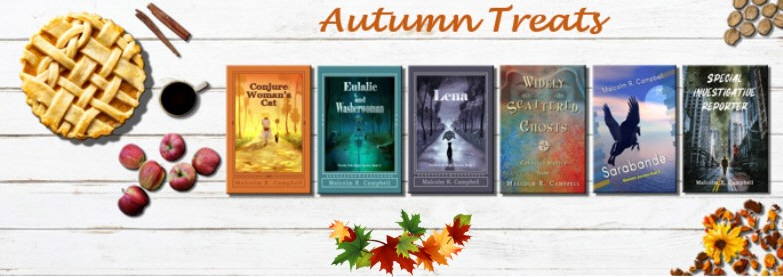

You know where the virtual assistants are going, other than Reno, right? One day we’ll tell our assistants to open thee pod bay doors and they’ll say, “I’m sorry, Dave. I’m afraid can’t do that.” When you point out that your name isn’t “Dave,” the support person will step in and say you should have purchased the 25-year warranty.

One time when my wife and I were buying a car, the salesman finished listing the two million features that made the car perfect. We were ready to sign. But then he said, “to protect your investment, can I interest you in a five year warrantly?” My wife answered, “Mr. Lundegaard, if the car is as good as you say it is, why do I need the warranty?” He looked like a deer in the headlights.

However, as we’ve all found out, telephone support people never look like deer in the headlights because their countries don’t have deer. Probably no headlights either. So, sooner or later we’re all going to find the pod bay doors closed and there won’t be anything we can do about it except to smile and say, “Well, at least I got the darned thing wholesale.”

Of course, if you’re dealing with somebody in Congress, s/he will tell you that your version doesn’t have any pod bad doors because, let’s say, the Sentate killed that part of the legislation, fearing that otherwise the crap would never fly. That doesn’t exactly make me feel warm and cozy, but what can I do? Vote? Right, what’ll help–unless we get a new party that doesn’t require “pitchman” or “wholesale” on a prospective candidate’s résumé.

I’m taking matters into my own hands. I’m buying a 1955 car with no electronics, especially snooping devices, in it and putting the tin foil back on my TV’s rabbit ears. Something to consider.

–Malcolm

If your beliefs are weak, ban books with opposing beliefs

One man who challenged the Harry Potter books did so because he believed the spells in the book are actual curses that summon demons. My response to that “logic” is:

  1. Can you prove it?
  2. If these purported demons appear, isn’t your faith sufficient protection?

No, of course he can’t prove it, and one reason he can’t is that he doesn’t know how spells work, and for most people considering his charge, he’s going to need some evidence. Show us the demons.

Suppose he produces the evidence. Can his faith not protect him? Apparently he’s unsure.

Most book challenges sound about this cowardly and absurd. That is, rather than disseminating opposing information to give readers an alternative, people choose to take the offending book off the shelves if they can:

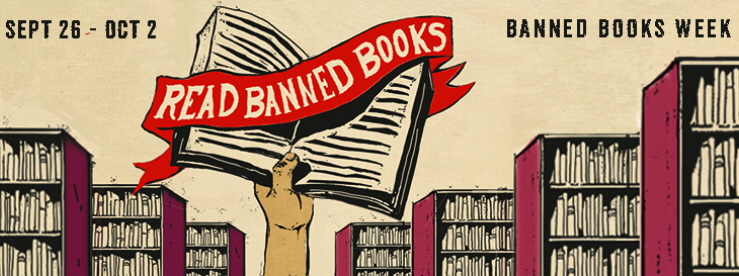
Do you remember a game show called “The Weakest Link”? Banning these books shows that because an individual says, “I don’t like them so we should remove them from the library so that nobody else can read them,” we say, “okay,” and demonstrate the weakest link system of decision making.

We can do better. If we can’t, we’ve let things go too far and the contry is now in the hands of people who can’t think and/or who are scared to think, much less engage in a dialogue about opposing ideas.

You can fight the weakest links by reading everything they don’t like and asking your friends to do the same.

–Malcolm

Malcolm R. Campbell

Publisher: Thomas-Jacob Publishing

Website

Facebook Author’s Page

Amazon Author’s Page

Sunday’s one thing and another

  • Billings Gazette photo
    Empire Builder: “The westbound Empire Builder train 7/27, comprising two locomotives and 10 cars, was carrying 141 passengers and 16 crew members at the time of the 9/25 derailment. At approximately 3:55 p.m., the seven rear cars of the train derailed near the town of Joplin, Montana, located 75 miles (121 km) north-northeast of Great Falls, Montana, and 145 miles (233 km) north-northeast of Helena, Montana. Several cars were also tipped over after derailing. Three people onboard were killed and over 50 others were injured, including 15 who were hospitalized.” – Wikipedia (I’ve taken trains along this route many times, so the story caught my eye. During Glacier Park’s hotels’ season, there might have been park tourists on that train. Sad news.)
  • A Sharp Solitude, by Christine Carbo: I finished the fourth and, I believe, the last in the Glacier Park suspense series and found it somewhat slow going until I got near the end. Then, all hell broke loose. Worth the ride, I think, but less compelling than the series’ first three books.

  • The O.C. (outside cat): The O.C., who we named Robbie, showed up on our doorstep months ago and decided to stay. So, we fed him and gave him water along with a covered box to sleep in. Queries to local folks on Facebook turned up nothing about a lost cat. He seemed healthy, but we took him to the vet to make sure before we began allowing him in the house. Fortuately, there haven’t been any “incidents” with our two older cats except a little hissing when personal space is invaded. Robbie’s inside the house a lot and that seems to be working even though he wants to spend most of the daylight hours outside.
  • Supper: I went all out preparing tonight’s supper. This proves that even though I’m a man, I’m not scared of going in the kitchen. I also know how to get ice cubes out of the freezer.
  • Granddaughters: We haven’t seen my granddaughters for two years, first because I was having weekly cancer treatments and then because of COVID. Now, finally, it looks like we’ll be able to travel to Maryland to see them before they grow up and get married. (I was beginning to wonder.) I hope they remember who we are. In case you were about to ask, we don’t take the cats with us. Looking forward to the trip.
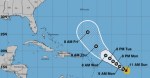
  • Weather: The remnants of two tropical storms dumped a lot of rain on us, so now, just as we’re enjoying sunny skies and lower temperatures, here comes Sam. According to those who know about such things, we should be in the clear. Hmm.

Meanwhile, I hope you are enjoying your weekend and reading lots of books.

Malcolm


‘You’re not who you think you are’

The title of this blog is one of the more provacative statements made by Carolyn Elliott in her exhillarating 2020 book Existential Kink.

Existential Kink: Unmask Your Shadow and Embrace Your Power (A method for getting what you want by getting off on what you don't) by [Carolyn Elliott]It’s tempting to respond, “Oh yeah, well then who the hell am I?”
Students of metaphysics, medicine, psychology, philsophy, and new age ideals–among others–have pondered the who am I really question for years. I don’t really feel competent to write a review of Elliott’s book here. She draws on a lot of areas, many of which we have stumbled across but never put together into a coherent system, about why we aren’t who we think we are and why our positive affirmations don’t seem to work.

One key is that we are more than our ego (in terms of ego, superego, and Id) and that the ego tends to ignore the unconscious part of the Self as though it’s either unimportant or doesn’t exist. So, from Elliott’s perspective–which agrees with Carl Jung–who we really are includes the part of ourselves we tend to deny. When we do this, the unconscious part of ourselves is actually running the show, that is to say, (in Jung’s terms) the shadow.

The answer, which appears counterinitutive, is integrating the Self rather than denying/disliking most of it. I leave that idea here as something to ponder. Jung says that the part your Self that you don’t include in your conscious approach to life will come upon you a fate. Elliott mentions that the whole Self always gets what it wants and that much of what we do in our daily lives amounts to magic we don’t realize we’re practicing.

Personally, I think I need to keep studying her book (or else).

Malcolm

My novel “The Sun Singer” is a hero’s journey book, one means of integrating the Self.