Questions to Ask Your Publisher Before You Sign

Over the weekend, you might have seen a writing-and-money topic trending on Twitter, #PublishingPaidMe, where authors started publicly sharing their advances. Such transparency is long overdue and—in this particular case—is meant to reveal stark differences between what Black and non-Black authors get paid.

Amidst these tweets, I saw a repeated call to action for Black authors: Before you agree to a deal, ask your publisher about their marketing and promotion plans for your book. Ask how they plan to support you. Ask, ask, ask. (Because their support falls short of where it needs to be, and publishers have to be pushed.)

Source: Questions to Ask Your Publisher Before You Sign | Jane Friedman

Many prospective authors think seeking a publisher is passé because they (a) don’t want to go to the trouble, (b) see finding a publisher is a long, hard road, (c) prefer to self-publish their books in order to have “control.”

Most books don’t sell, but they’re more likely to sell with the editing and support a publisher can provide–even a small publisher. To get the best possible publisher/author match, Jane Friedman expects you so ask questions rather than saying “OMG, a publisher responded to my query letter, so the last thing I’m going to do is rock the boat by doing anything to ensure we’re in sync.”

This article is long because you have a lot of questions to ask about publisher responsibilities, book quality, bookstores, marketing, and interacting with readers. The article ends with a “cookie-cutter” example of a marketing plan.

All this is well worth a writer’s consideration before s/he rushes off to Kindle Direct Publishing or Lulu.

–Malcolm

Malcolm R. Campbell is the author of “Conjure Woman’s Cat,” a novel about racism in north Florida in the 1950s.


In the jingle jangle morning

The song has a bright, expansive melody and has become famous for its surrealistic imagery, influenced by artists as diverse as French poet Arthur Rimbaud and Italian filmmaker Federico Fellini. The lyrics call on the title character to play a song and the narrator will follow. Interpretations of the lyrics have included a paean to drugs such as LSD, a call to the singer’s muse, a reflection of the audience’s demands on the singer, and religious interpretations. – Wikipedia

Bob Dylan released “Mr. Tambourine Man” in March 1965 in his “Bring It All Back Home” album when I was at the last place I wanted to be (college), tied down, I thought, by an ancient canon of learning that was taught and graded in an ancient style of “education” that did not meet my needs nor my temperament. What would have met my needs would have been saying “to tell with all this” and then telling Mr. Tambourine man “I’ll come following you.”
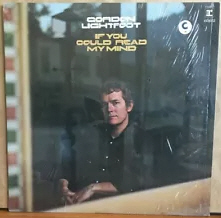
Five years later, Gordon Lightfoot released a song with a similar intent, “Minstrel of the Dawn” on his “If You Could Read My Mind” album when I was–once again–in the last place I wanted to be (the navy) freshly returned from Vietnam and a war I did not support then serving (ironically) on the staff at the navy’s boot camp where I helped prepare others to go to the place I just left. I soon became a conscientious objector and left the navy having become a convert to the minstrelsy of the “Minstrel of the Dawn” in the jingle jangle of a new morning.

Because of my belief in dreams, I am nothing if not impractical, and heavily influenced–actually under the spell–of these two songs for a lifetime, and while I cannot duplicate the quality of the songs, much less an old-time Troubador, I have always infused their spirit and spell in my work. That is to say, I lead my characters astray and want to hypnotize readers into following them–as Lightfoot says–“While the old guitar rings.”

Some have said Mr. Tambourine man is about losing oneself to drugs, a notion that Dylan denies. Like most writers, I’m dealing something more dangerous than drugs: words and stories spun into haunting and irresistible dreams. If the government ever figures out the truth about stories, they’ll either ban them or heavily tax them.

If you read fiction, you know that stories are written to make you “forget about today until tomorrow” while trying to “get into things more happy than blue.” There are side effects to such stories that are more dangerous than those attached to Fentanyl and Oxycontin: addiction to freedom and dreams. I’ve been prescribed Oxycontin at least three times and never got addicted because stories were always a much great temptation.

Money-wise, the street value of stories is less than the street value of Fentanyl and Oxycontin. However, I should mention that there’s no cure for stories. It won’t matter because, in your jingle-jangle mornings, you’ll be too far out in space to want one.

Malcolm

Click on my name to see the stories in my bag.


Pet phrases ultimately distract readers.

I’m reading a bestselling novel that uses one word and one phrase multiple times, and my first thought is: “Why didn’t the author or the publisher’s editor catch this?” When I write, I sometimes think up a cool bit of dialogue or an apt bit of description. Funny thing is, the first few times I use them, these bits and pieces of language seem fresh and new.

But then my intuition starts nagging at me: “Malcolm, you’ve seen these words before.” There are probably fancy applications that will ferret out suspected words and phrases that have been overused. I have no idea what they are, so I use the “find” feature in Word.
If I think I might have used a word or phrase too often, I type in a phrase such as “passel of popes.” Sometimes I’m shocked at how often I used it. The repetition of phrases, especially slang or a character’s often-used cliché can help define that character and make him/her different from the others in the cast. This fails when multiple characters are using the same cliché

That’s not only unlikely but kills the differentiation between characters the author was trying to achieve. One phrase that’s been overused in the novel I’m reading is “If you say so, Sir.”
I’ll give the author some slack by suggesting that phrase might have been popular in the 1950s where the novel is set. In today’s usage, that phrase is considered sarcastically cutting, meaning, “I think that’s really stupid but you’re entitled to your opinion”–not something I’d want to say to an officer who outranks me. The phase fails to have any impact when dozens of characters are saying it. The publisher should have caught this.

The word the author used over and over is “precious,” in this case, referring to something hard to find and yet essential, as in “The soldiers found a supply depot filled with precious rations.”  Or precious fuel. Or precious ammo. Maybe the author sees this as a stylistic device. I don’t.

I wish he’d used a different word about 95% of the time. It’s easy to miss overused words and phrases in our own work. A good beta reader and/or a good editor might catch most of them. Otherwise, if you think you said “passel of popes” too often, let Word tell you how often that was. —Malcolm

Uncle Hugo’s Bookstore Destroyed in Riots – Will there be an apology or restitution?

Uncle Hugo’s, the oldest independent science fiction and fantasy bookstore in the US founded in 1974, burned down during the recent riots protesting police brutality and racism in the wake of the shocking death of George Floyd during a police arrest in Minneapolis.

Source: Uncle Hugo’s Bookstore Burned Down in Riots – Locus Online

See more, including the owner’s comments here: Minneapolis Rioters Burned One Of America’s Most Beloved Independent Bookstores To The Ground. Owner Don Blyly says his insurance probably won’t cover his loss.

I suspect outside agitators rather than protesters did this. Apparently, no police were present. On TV shows, the cops find the perpetrators via recordings from traffic and security cameras. That probably won’t happen here or at any of the other stores looted or burnt and watched live by 24-hour news station viewers.

The irony, of course, is the number of black-owned businesses that have gone up in flames: not exactly a plus for the Black community is it?

The cities that allowed this destruction failed to protect the populace. Perhaps metro governments should pay for the peoples’ losses. On a hopeful note, this is a good sign: Donations to businesses destroyed by looters and rioters on Minneapolis’ Lake Street surpass $2M

–Malcolm


Images of chaos or images of protest

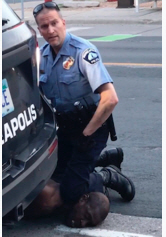
The autopsy is not yet clear about what killed 46-year-old George Floyd when he was apprehended by police. What is also not clear is why officer Derek Chauvin and his men kept Floyd pinned down on the street for eight minutes rather than putting him in the back of a squad and transporting him to HQ for an arraignment.

We do know that police departments generally have banned/discouraged various kinds of chokeholds since they often become lethal force when such force is not warranted.

Wikipedia photo

I tend to respect the motives of the legal protesters in the 30 cities across the country where there have been folks marching in the streets or congregating in parks. I worry, though, that the protesters’ valid anger and a valid message is, in some cities, being stolen by outside agitators who appear and set cars and buildings on fire while looting stores.

The public’s impression from the multitude of images on late-night news stations is probably not positive because the protesters are being blamed for the violence caused by those who showed up to create a mess.

The mess has become more tangled as police fire pepper-spray and rubber bullets at reporters who have credentials and are obviously not part of the rioting.

I do see signs of home. Protests that don’t become violent, and stories such as this one: “A sheriff put down his baton to listen to protesters. They chanted ‘walk with us,’ so he did.”

Violence tends to beget violence as more agitators appear or as overwhelmed police and national guard troops try to avoid the bricks and Molotov cocktails thrown at them without harming innocent protestors of using “excessive force” against those who are rioting.

As the Atlanta Mayor Keisha Lance Bottoms said after a night of unrest, “this isn’t protest, this is chaos.” I had to agree with her. I also think she might be right when she says Trump needs to stop talking. TV viewers leave with the impression that protestors think looting, burning buildings, and destroying police cars helps their cause. In most cases, it appears to me that bad apples appear once the protest starts and play out their own criminal agendas.

I hope most police officers are not guilty of racial profiling and so-called “street justice.” The trouble is, there are more than enough incidents every year that show everyone, especially African Americans, that our police departments need more training and a fresh agenda. We can start by getting rid of the trend of militarizing our police, and we can follow that up by firing officers who are guilty of racial profiling. This anger we see on our streets didn’t come out of nowhere.

–Malcolm


Hiding your main character’s thoughts from the reader

The first question might be: why would I want to hide my protagonist’s thoughts from the reader? This usually happens when the protagonist knows something that would spoil the climax of the book if it were divulged too soon.

Let’s say your protagonist is a police detective (Joe) who’s the lead investigator in the department’s attempts to discover and stop a serial killer. If you’re writing from the detective’s point of view, let’s say, third-person limited, then the reader knows only what Joe knows, sees, experiences, thinks about, or learns through conversations with other characters.

If the reader thinks your writing process looks like this, s/he might not finish the book.

However, the author of this story has a surprising climax in store for readers when it’s divulged in the last chapter of the novel: the detective is, in fact, the killer, and one aspect of Joe’s warped motive is the “fun” of misleading fellow police officers (Bob, Sam, and Bill) without appearing to do so.

So you see the problems here?

First, how do we account for the Joe’s time when he’s killing somebody and getting rid of the evidence. One way to try and do that is to tell the story through multiple points of view, say–one per chapter. We have a Joe chapter, followed by a Bob chapter, followed by a Sam chapter, etc. If, none of the killings takes place during a “Joe chapter,” does that solve our problem of hiding what Joe is doing?

No, because when we do come to a Joe chapter–whether it depicts Joe and others searching a crime scene and/or Joe talking about the evidence and the suspects–it’s unrealistic (I say impossible) for Joe to do any of these things without thinking about the fact he committed the crimes and, perhaps, even wondering whether he hid the evidence or the bodies well enough.

The minute he does the natural thing and thinks about any of that, the big surprising ending has been spoiled. If he never thinks about it (and doesn’t have a split personality), the readers are going to feel cheated when they finally learn Joe’s the killer.

I’ve been thinking about this lately because one of the main characters in my novel in progress has some secrets I don’t want the reader to know until late in the book. My solution is to avoid writing from that character’s point of view.  Will it work? I don’t yet know. Suffice it to say, it was obvious to me from the beginning that I couldn’t let the reader know directly what this character was thinking.

Maybe you can think of other ways of hiding the main character’s thoughts from the reader. My solution might crash and burn. It’s hard to know how these kinds of things will turn out.

Malcolm


As an introvert, I’ve found it easy to stay at home

Johnny Carson

If you’ve been around a long time and used to watch the Tonight Show With Johnny Carson, you may remember that one of his recurring bits, when others were talking about going out on the town for an upscale night of partying or dining, was to sit at his desk with a woebegone expression and say he’d probably just go home alone and eat a cracker.

As for me, I’d rather stay at home than go to a party or (hell) a rock concert or any event with 1000000000 people and eat a cracker. My wife of almost 33 years (our anniversary is tomorrow) feels the same way. We have shelves full of books and old movies and know how to prepare comfort food that we usually prefer to a $100 meal.

Biltmore Estate

Now, had we known our favorite vacation spot (Biltmore) was going to announce today that it’s reopening its 8,000-acre estate in Asheville, NC, we might have bought a three-day pass. We’ve been going to Asheville regularly since we were married (if not before). So, we do come outside our house from time to time and go back to places we’ve come to know as comfort places. I did send off to Biltmore for Cardinal’s Crest, our favorite wine from their winery. Fortunately, it arrived today.

We have steak, pork chops, and ribs in the freezer, but seriously during our rainy days, getting out and cleaning up the old Weber grill isn’t very tempting. Don’t laugh: we’ll probably have a squash casserole or beef stew instead. (“Isn’t that just typical of old people,” our Facebook friends are saying.” My response is, “Hell, we ate like this 33 years ago.”)

History Channel

If the space launch doesn’t get scrubbed due to bad weather, we’ll be watching that. Neither of us misses space shots, a habit we started before we knew each other. Since our regular TV shows are on hiatus, we’ve turned to the History Channel. We’ll finish up “Grant” this evening, but if they’re not lying to us, the previews have shown snippets of more cool stuff coming up. (“Yawn,” you say? My response is “Pshaw!)

I saw a link on Facebook today to an article that predicts kids are going to have a real depressing summer. My only response to that was if so, it’s due to a lack of imagination. Yeah, we went on family vacations and such things might now be possible this year, but even without them, we were seldom bored. Of course, my brothers and I played outside from dawn until dusk, and that was a lot more infinite in scope than the Internet or, God forbid, screaming in a swimming pool so filled with kids all you could do was, um, just stand there. Yawn.

Florida Panhandle (still not ruined)

Luckily, we grew up in the Florida Panhandle where are beaches weren’t screwed over by developers like the Peninsula part of the state. Our beaches were free and clear so we could enjoy them rather than share them with 10000000 other people who, when it comes down to it, are needless clutter.

But, I digress. As an introvert, I enjoy being quiet and going to quiet places. So staying at home and (figuratively!) eating a cracker is the cat’s pajamas. (Google that phrase if you’re too young to know what it means.)

Or, as Johnny Carson said, “Happiness is having a rare steak, a bottle of whiskey, and a dog to eat the rare steak.” Okay, we’re not quite that bad because we have cats and my wife doesn’t like Scotch. So, maybe happiness is a night at home with somebody you care for a whole lot.

–Malcolm

The Flooers of the Forest

My ancestors play this Scot’s lament for me on Memorial Day, and though it’s forever a reminder of the country’s loss to the English at the battle of Flodden, in September 1513, I cannot help thinking that after every battle in every war the flower of the nation’s youth will not be coming home.

Here’s the song as I hear it. I’ve added some translations at the end.

I’ve heard the liltin at oor yowe-milkin,

Lassies a-liltin before break o day
Now there’s a moanin on ilka green loanin –
The Flooers o the Forest are a’ wede awa

At buchts, in the mornin, nae blythe lads are scornin,
Lassies are lanely and dowie and wae
Nae daffin, nae gabbin, but sighin and sabbin,
The Flooers o the Forest are a’ wede awa

In hairst at the shearin, nae youths now are jeerin,

Bandsters are lyart and runkled and gray
At fair or at preachin, nae wooin, nae fleechin –
The Flooers of the Forest are a’ wede awa

At e’en at the gloamin, nae swankies are roamin
‘Bout stacks wi the lassies at bogle tae play
But ilk ane sits dreary, lamentin her deary –
The Flooers of the Forest are a’ wede awa

Dule and wae for the order, sent oor lads to the Border

The English, for aince, by guile wan the day
The Flooers of the Forest, that focht aye the foremost
The prime o our land, lie cauld in the clay

We hear nae mair liltin at oor yowe-milkin
Women and bairnies are heartless and wae
Sighin and moanin on ilka green loanin –
The Flooers of the Forest are a’ wede awa

yowe=ewe
ilka=every
wede=withered
buchts=cattle pens
dowie-sad
wae=woeful
daffin’=dallying
gabbin’=talking
leglen=stool
hairst=harvest
bandsters=binders
lyart=grizzled
runkled=crumpled
fleeching=coaxing
gloaming=twilight
swankies=young lads
bogle=peek-a-boo
dule=mourning clothes

–Malcolm


Maybe there will be fewer Memorial Day sales this year

They shall grow not old, as we that are left grow old:
Age shall not weary them, nor the years condemn.
At the going down of the sun and in the morning
We will remember them. – Robert Laurence Binyon

My wife and I see our reflections in the Vietnam War memorial as I find the name of a high school classmate two died there.

Memorial Day Sales

These anger me because merchants raking in money and shoppers getting a good deal on the latest electronics equipment are not the purpose of this day.

Must we commercialize everything, including the day set aside for remembering our dead?

I’m by no means a hawk–just the opposite, actually. So, I do not see Memorial Day as part of the misbegotten notion that there are glory and honor in war.

Some say we should use the day to visit military cemeteries and memorials. That’s a better idea than heading over to Walmart and filling up a shopping cart. We could spend a quiet day at home or walking a favorite trail through the forest: such things allow us time to attune with the universe, ourselves, and our fallen soldiers.

‘All Quiet on the Western Front’

Reading this book at a relatively young age was a strong influence on my becoming a pacifist. The novel is graphic, shows the dying, the dead, and the battle-weary in ways that leave no space for saying “isn’t this glorious?” Not that I’m suggesting we all stay home and read military history, battlefield novels, or watching films like “Saving Private Ryan” or episodes from the old TV series “China Beach.”

You Don’t Need to Become a Pacifist to Remember

The fallen were doing their duty as they saw it, sometimes against their will (at times of conscription), whether we agreed with the need to fight a particular war or not. Those who came home from those wars have not forgotten the fallen. Those who came home and those who did not and the families and friends of both often supported the wars and the need to enlist, heart, body, and soul. Those who supported the cause and those who did not have an opportunity to come together on Memorial Day and remember those no longer with us whom we loved.

I’ve written somewhere in one of my novels that the true casualties of war are those who come home with or without PTSD. They need our support and understanding and, on Memorial Day, our solemn regard for those who were killed. There’s no support available from us while we push and shove through the crowded aisles on a big box store.

The stores I respect are those that close on Memorial Day out of reverence for the meaning of the day.

–Malcolm


Centuries of progress

A Facebook friend of mine reported today that her mother has just passed away after living for 100 years. The post reminded me that one of my aunts lived over a century and shared memories of the old days (crossing the country in a covered wagon) that to her were just as vivid as yesterday. She was physically frail for years and lived in a nursing home of sorts where my brothers and parents and I used to visit her.

Nursing Homes

When I was young, it bothered me a great deal that during all the years of my going to grade school and high school and college, she was living in that room. She knew everybody and had her fair share of visitors, so she didn’t lack for company. While I was bothered a lot about her being in that home, I didn’t know quite how to ask why because the question would have implied that somebody in the family in her part of the country should have taken her in.

Kirk Douglas

When Kirk Douglas died at 103 in February, the press and those who knew him talked about his accomplishments and the pride he must have had in the success of his extended family.  Of course, Douglas’ life was a public life, so his accomplishments are usually discussed in terms of movie roles. That’s not the case with our own family members

A Century of Progress

The 1933 World’s Fair in Chicago was called “A Century of Progress.” While it celebrated industry and invention, I always liked the larger meanings of its theme because I think they can apply to all of us whether we live 100 years or not. I have no idea what most people believe is the over-arching purpose of their lives. I think our purpose is to make progress, spiritual progress, more than wealth, power, or acclaim.

When we talk to people who’ve lived long lives, we tend to talk about what they remember and how they felt when monumental events and discoveries were made. Perhaps it’s too private to ask them how they’ve changed, and I suppose most would think it vain to even answer such a question. The standard joke about old-timers is that they reached an advanced age by smoking a pack of cigarettes a day along with a quart of whiskey.” Too bad that’s not true for most people.

My belief system doesn’t presume those who live a century do so from luck, fate, or the Lord’s intervention. I think they learn and continue learning and have plenty of advice to pass along to others if and when they found anyone willing to stop thinking about the latest fads and listen to their philosophies.

It would be presumptuous to suppose one became perfect during their one-hundred-year stay on this planet.  But one hundred years of improving day by day is worthy of mention. I can’t help but see that improvement as a Century of Progress.

–Malcolm

Malcolm R. Campbell is the author of magical realism and contemporary fantasy novels and short stories.