What’s wrong with ‘he said’ and ‘she said’?

Victor Appleton, author of the Tom Swift series of books, went to a lot of trouble to avoid using the word “said.” His gyrations gave rise to the “Tom Swifty,” a gag line of dialogue and attribution that basically made fun o Appleton’s approach to dialogue.

The Wikipedia entry for the Tom Swifty provides typical examples such as “‘Who left the toilet seat down?’ Tom asked peevishly” and “‘Hurry up and get to the back of the ship!’ Tom said sternly.”

saidThe gurus of writing suggest “he said” and “she said” for most of your dialogue needs because most attempts at variety call attention to themselves and–in time–annoy the reader.

I’m reading a thriller novel by a New York Times bestselling author of some 30 books. I won’t mention his name or the book because I really have no need to speak ill of another author. I’ll stipulate that authors always face difficult decisions when one character has a vast amount of information to convey to another character.

No author wants to have a five page quote. So, s/he is likely to try to orchestrate some back and forth dialogue between the “teacher” and the “learner.” This helps. But it can soon lead to another annoyance: The learner asks a three-word question and then the teacher replies with a half a page of information, followed by another short question and another long answer.

The author of the thriller did a little of this, but his habit (and I’m making up the name of the character to obscure who I’m talking about, was the use of paragraph openings consisting of “Joe went on” and “Joe continued” and “Joe shifted to his next point,” all followed by long paragraphs of information. The author’s habit stood out because he used the same construction multiple times per page.

I hoped that once we got past the section of the book where the leaders of the black ops mission were done filling in the new operatives about the scenario, I wouldn’t keep seeing that clumsy writing. Unfortunately not. While this author doesn’t date himself by using Tom Swiftys, he continues with his awkward dialogue in a way that makes me consider flinging the book into the next box going to the library’s used books sale.

Here’s an example (without the characters’ real names and real dialogue) from one page:

“We can’t,”Bob replied, but we can work around it.”

“We’re in a major city,” I reminded him.

Bob replied, “We are now, but we won’t be tomorrow.” He further informed us, “The day after tomorrow, we’re talking the back  roads to a more lawless area.”

It seemed to me that this plan had flaws.

Sam let us know, “We can’t be certain that this will draw The Hyena out of hiding, but it’s our best shot.”

A fair amount of the book’s dialogue is written like this. It’s so over-the-top stylistic in an unattractive way, that such a paragraph would be covered with red pencil marks if it were handed in as an assignment in a college creative writing class. Most teachers would scribble in giant letters at the top of the page, “What’s wrong with ‘he said’ and ‘she said.”

One might otherwise suggest–even though Dan Brown certainly kept his readers even though many of his characters gave long lectures in history in the middle of action scenes–that giving one character a thousand words of facts to tell another character makes for a larger flaw in the book.

I found Dan Brown’s novels compelling because of the short chapters and the on-going action. Yet I did have to smile when professor ABC spent ten minutes lecturing police inspector XYZ about ancient history while they were in a shootout with the bad guys.

I’m about 20% of the way through the thriller on my nightstand, and the vast amounts of information being conveyed from one character to another in such an awkward fashion is so tedious that I want to quit reading. If I had another fresh book from the store, I would.

Obviously, this author has sold a lot of books. That alone makes me hope that this book delivers in spite of its style. Those of us who aren’t New York Times bestselling authors don’t need to throw out “he said” and “she said” as our primary dialogue tags because doing so will lose us a lot of readers.

You may also like: The Invisible Said—Three Reasons Why You Shouldn’t Ban Said.

Malcolm

EScover2014Malcolm R. Campbell is the author of paranormal fantasy stories including the three-story set “Emily’s Stories,” now with a brand new cover.

How a writer sees locations for prospective stories

In How to be doomed as a writer, I mentioned that author Stephen King prefers to look at story possibilities as situations rather than plots.

Over time, a writer becomes attracted to certain kinds of settings and the kinds of situations that might occur there. I’m attracted to natural wonders, especially mountains, as well as old buildings. My novels The Sun Singer and The Seeker both arise from a natural wonders setting, Glacier National Park. When I contemplated writing about the park, my first thoughts were about the kinds of things (situations) that might happen there. My Kindle short story “Moonlight and Ghosts” came to mind when I looked at an abandoned building near the house where I grew up.

Suppose you’re in a writing class and the instructor shows you the following picture obtained from the Florida Division of Historical Resources. All you’re told is that it’s an old and restored opera house in a small north Florida town.

PerkinsOperaHouse

Perhaps the instructor has influenced your brainstorming about this picture by showing you the building on a sunny afternoon with cars along the street. If s/he had shown you a photograph of the same structure as it sat on a moonlit night with the trees missing leaves during December, you’d come up with a different set of situations.

  • If you’re a fan of TV police shows, perhaps this looks like a place where a crime is committed.
  • If you’re drawn to opera and/or to theater, maybe you’ll think of stars, set designers, directors, little theater groups, professional “theater people” or amateurs coming together to put on a play that somebody hopes will fail.
  • Maybe there’s a secret about the building, some old legend or a will uncovered in a dusty attic that describes how, when the building was constructed, several hundred bars of gold were hidden beneath the box seats.
This picture gives you a very different feeling about the building.
This picture gives you a very different feeling about the building. – Florida Division of Historical Resources.

Okay, I’ve withheld some information, so with a few more facts, are your prospective story situations the same or do you change them?

  • The Opera House, which consists of a large second-floor theater and first floor shops, was built in 1880.
  • Traveling productions, including vaudeville groups, put on shows at this theater for a number of years. But then, when the railroads re-routed their lines and there was no easy way for out-of-town visitors to get to town, the theater fell into disuse.
  • Ghost hunters claim the owner died of a broken heart and still haunts the now-restored building. Purportedly, the former owner has been “seen” by the ghost hunters and a glowing orb of light.
  • The building is now used as a venue for weddings, local-area stage productions, and other functions where a seating capacity of 600 is desired.

If your instructor asked you to write a short story about this building, would you see it as just a building where anything might happen, a setting for a theater-oriented tale filled with clashing egos and temperamental stars, or would you try to link the local legends and the history of the building into your story? The only catch is, the instructor will expect you to convey–one way or another–a sense of the building. So, it can’t be a generic structure.

Well, unless you know the building already and/or are a historic preservation specialist, you’rre at a disadvantage when you try to describe it. If I were the instructor, I’d have several information sheets prepared as handouts.

  1. Those who wanted to use the building as a place setting would get a general description of the interior and some architectural information about the architectural style of the building, it’s size, etc.
  2. Those who wanted to use the location for a theater-oriented story, would receive information about the stage, the seating, the lighting, and the dressing rooms.
  3. Those who didn’t know yet what was going to happen but wanted real background, would be told about the building’s history and the ghostly legends.

What do you see here?

Interior as it looks now. - The Florida Center for Instructional Technology, University of South Florida photo.
Interior as it looks now. – The Florida Center for Instructional Technology, University of South Florida photo.

In a classroom exercise, you’re “research”–if you think any is needed–is limited by what you see in the photograph and what the instructor will tell you either in a lecture, a question and answer session, or via handouts. Since I am attracted by legends, especially paranormal stories, I’m going to see this as a place where something ghostly will happen.

How you tend to view real locations, whether they’re lakes, mountains, buildings, or city streets, will influence what “your muse” draws you to consider. Your inclinations may suggest that the instructor should have had several more handouts about the building. One might be how the building is used today. Another might be the kinds of businesses on the first floor and on adjacent streets.

As writers, we look at locations as places where something might happen or where something did happen. Whether you like tying in real history and legends or whether you see locations in terms of what’s happening there in the present day, once you’re attracted to a setting for who knows what reason, story situations may come to mind as you Google (or go to) the setting.

When I first saw pictures of this building, my first thought was, “Good, here’s a cool old building in the Florida Panhandle where I’ve been placing many of my recent stories.”

As I learned about the building–its history, its ghosts, its restoration–ideas began to float around for prospective stories. As this process unfolds, we may never write a story…unless we’re in a classroom and have no choice. If a story comes out of it, the setting was the catalyst and the result was a marriage of the real and the writer’s imagination.

Malcolm

P.S. If the actual building intrigues you, you can learn more about it here.

How to be doomed as a writer

“Get out and see the world. It’s not going to kill you to butch it up a tad. Book passage on a tramp steamer. Rustle up some dysentery; it’s worth it for the fever dreams alone. Lose a kidney in a knife fight. You’ll be glad you did.” – Colson Whitehead

RIPI found an old book in the garage called “How to Get Started as a Writer.” Looked it up on line and saw that when the thing  came out in 1965, Kirkus hated it. I glanced through it to see why I kept it and decided that it’s still in the house because I forgot about it.

I was going to write this post about it, but it drove me nuts reading the book’s advice. I took a Xanax and now I feel better. (All serious writers need to go nuts once or twice during their lives.)

If you type the words “how to be a writer” into your favorite search engine, you’ll find –well, let’s go check–161,000,000 hits. Sure, you may stumble across the Colson Whitehead piece or Stephen King’s On Writing: 10th Anniversary Edition: A Memoir of the Craft. If so, fate has smiled upon you.

If you start reading the rest of the advice, you’re doomed. As a prospective writer, you would only be in worse shape if you stayed in school until you were 35 years old getting a B.A. in English, an MFA in creative writing, and a PhD in God only knows what. Your head’s now filled with rules and, sad to say, not much else.

None of your teachers will suggest getting dysentery because that’s crude, unpleasant and harder to control than, say, using too many adjectives.

I’ve had dysentery several times. Changed my life. Just how, is one of the most guarded secrets every writer has. Hint: you know how to see what if situations (King likes “situations” better than plots) and turn them into stories. A lot of advice sites say you have to have passion. Well, okay, but it doesn’t beat dysentery or losing a toe to frostbite. (I tried to do that but failed and I really think that failure has kept me from selling as many books as King and Rowling.)

I don’t know if either of them lost toes, but I do know neither of them studied the rules in school until they were 35 and then suddenly sold a billion copies.

Doom, is thinking you need advice. Fatal doom is taking whatever advice you find.

Doom is thinking that somebody else knows better than you how to turn your own dysentery, lost toe, going nuts or a frightful encounter with _________ (fill in the blank) into the kind of “been there, done that” raw talent that makes memorable stories happen.

It helps to trust where you’ve been and what you’ve done and how you reacted when you saw what you saw. That is you. This isn’t to say you need to become a serial killer before you can write a novel about a serial killer. TMI, as people say in chat rooms. On the other hand, if you lose your kidney in a knife fight, you’ll be more apt to write memorable prose about killers than the poor doomed soul who studied language for 35 years instead of living a life.

Reading this post will also doom you as a writer. Too late now. But there is an antidote to everything I’ve said here. Get drunk and/or stand in the snow until one or more toes fall off. Only then will you have the passion and instinct to write. If you still need more passion, eating rancid pork is better than reading another “show, don’t tell” article.

Whatever you do, you need to stay alive long enough to write your stories. But fever dreams, oh yes, those will get you on the bestseller list as long as the fever breaks long enough for you to pick up a pencil before your spirit hears a doctor saying “time of death.”

Malcolm


New edition of Patricia Damery’s ‘Farming Soul’

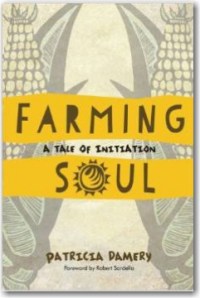
Leaping Goat Press has issued a new edition of Patricia Damery’s Farming Soul: A Tale of Initiation, a unique look at our relationship with our psyche and the natural world. I enjoyed the first edition of this mythic book when it appeared in 2010. Now, with a foreword by Robert Sardello, co-founder of the School of Spiritual Psychology, Farming Soul will transform the lives of more readers drawn to its wisdom.

From the Publisher

farmingsoul2014In the Foreword to the second edition, Robert Sardello states, “What differentiates this book from being an autobiography is the invitation to enter a unique form of initiation, one that seems so suitable to this age, this time, our given circumstances, now. This story is really a myth, a myth of the future.” A psychological and spiritual reckoning, ‘Farming Soul’ questions theories and assumptions that date back to the early 1900’s and the days of Freud, assumptions which have too often separated spirituality from psychology.

Suffering the trials of her own individuation process, Patricia Damery finds answers through a series of unconventional teachers and her relationship to the psyche and to the land—answers that are surprisingly deeply intertwined. One strand of ‘Farming Soul’ is about redeveloping a relationship to the land—Mother Earth—being rooted in a particular place and being guided by the tenets of Rudolf Steiner’s Biodynamic® Agriculture. Another strand is about Damery’s professional path of becoming a Jungian analyst, a path filled with review committees and unexpected and unorthodox teachers. It offers perspective on the complicated dynamic of therapist/patient bond and individuation, and a personal account of when one must step out on one’s own. Bringing together paths of spiritual, ecological, and psychological exploration, Farming Soul is a courageous offering that will help reconnect us to our deeper selves, the often untouched realities of soul, and at the same time ground us in our physical relationship to self and Mother Earth.

From my Review

Damery’s memories, dreams and reflections are woven from the warp and woof of her experiences arising out of analysis, meditation, shamanism and farming. “I understood,” she writes, “that the ‘garment of brightness’ from the Tewa song was being woven for me, and that, in time, perhaps I could ‘walk fittingly’ on this earth.”

Farmers, psychologists and other seekers on the path will find many correlations between their own journeys and the one that so beautifully unfolds in “Farming Soul.” Damery’s garment of brightness is kind lamp for eager eyes. Read the full review here.

Damery, a Jungian analyst and biodynamic farmer in the Napa Valley, is also the author of Goatsong and Snakes.

You May Also Like: New edition of ‘Snakes’ by Patricia Damery

Malcolm

Malcolm R. Campbell is the author of heroes’ and heroines’ journey novels and paranormal short stories, including “Moonlight and Ghosts.” “Moonlight and Ghosts” was inspired, in part, by his experiences with meditation techniques and his work as a home manager at a center for individuals with developmental disabilities.


A thousand or so books with no place to go (in my house)

DCFC0011.JPGI’m glad the new public library is open. As the busiest library in the regional system, the Jefferson, Georgia public library needed to get out of its old, cramped facility. The new facility opened June 27 in half of an old grocery store building and the result is a lot of upscale space.

This is where the books in my garage play into the equation. After years of moving stuff from one house to another, my wife and I are downsizing. I’ve already taken about forty sacks of old magazines to the recycling center. But the books–some 15 boxes–aren’t going to be thrown away.

These usually don’t go into the library’s collection. Most are sold by the Friends of the Library group at the annual book sale to help raise money for more programs. Our library will probably have this year’s sale in the fall. Meanwhile, a few books went to the Berry College Library, a couple of boxes went to the library in nearby Talmo, and the rest have been waiting for the Jefferson library to finish moving from the old building to the new building.

In general, I don’t like disposing of books. On the other hand, the place where I’m sitting right now is a home and not a book storage facility. I hope the books find new readers when the next book sale comes along. Needless to say, I’m not going to the sale. I know it’s for a good cause, but seriously, I don’t want to see a thousand books coming back into the garage.

One box went to the library today, but there are more to go in the coming weeks.

Malcolm

On location: your childhood growing up place

“Everywhere that July in 1963 there were the pines, their long needles shimmering in a faint wind under the hot subtropical sun. In the country there were empty dirt roads, rutted by mule carts. In the towns, sprawled unpainted shacks without windows. Ancient Negro women sat fanning themselves with palm leaves as they stared drowsily from rickety porches at their zinnias and coral vines and heavy-scented honeysuckle bushes. Moss-draped oaks and lacy chinaberry trees shaded sandy dooryards. Scrawny dogs, the flies buzzing at their noses, slept among ragged-feathered chickens poking for scratch feed. Locusts whine from tall magnolias and the steady pitch of power saws. But mostly it was those pines and the tang of their resiny branches and the dark straightness of their trunks. All of it looked like the south of the novelists and the poets, heavy with antiquity, romance and misery.” – Gloria Johoda in “The Other Florida.”

longleafforestI was in college in 1963 when my friend Gloria Jahoda wrote those words. Like me, she wasn’t born in Florida, but in her now-classic book about the state’s panhandle she observed and wrote about what many long-time residents no longer noticed or took for granted. “The Other Florida” was other because it wasn’t filled with tourist attractions, widely known beaches and movie stars.

Other than a few childhood poems, I wouldn’t write about the other Florida until recently. My family moved there from Oregon just in time for me to enter the first grade. Out of the culture shock of the move, I also saw the place I would live for 18 years through the eyes of an outsider.

Yes, my family went to St. Augustine, Tampa, Daytona Beach and Key West, stopping at many gaudy tourist attractions in between. But all that was crowded and nearly fake with an overlay of commercial glitz and I was always happy to be home even though much of the panhandle was considered backward and impoverished in spite of having the state capital in the middle of it.

The place is abandoned now, but this was my favorite place to eat down at the coast
The Oaks is abandoned now, but this was my favorite place to eat down at the coast

I haven’t been back to north Florida since the mid-1980s when my parents died and my brothers and I closed up and sold the house the family had lived (by then) for some 35 years.

In my childhood days, I learned the territory like most kids did…swimming in clear, cold sinkholes, camping with the Boy Scout Troop in the piney woods, hanging out with friends at our pristine and uncommercialized beaches, exploring the Florida Caverns at Marianna, deep sea fishing in boats that went out from St. Marks, learning the voices of Snake Birds and Limpkins at Wakulla Springs, delivering newspapers throughout my neighborhood, marching in parades downtown with the high school band. . .

We lived in Tallahassee in a day when mule wagons were still on the streets and many homes were built on unpaved, red clay roads.

I saw what Jahoda saw, partly because I was new, partly because the outdoors was our playground in days before the Internet, and partly because my folks arranged day trips to may special places within the confines of this map. In the days before high gasoline prices, my best thinking place was my 1954 Chevy on a dark country road at night. I don’t know what I solved anything, but I saw a lot on the hundreds of miles of roads I saw every week.

Looking Back

There were 40 pine trees in our yard. Plenty of pine straw to take.

If you’re a writer, I urge you to look back to your childhood places and ponder what it was like, what there was to do, what the people were like, and what kinds of stories and legends you heard. Whether you were happy, sad, or borderline average during those days, the memories are potentially very potent.

In looking back, I’ve written (or am in the process of writing) stories on that map set in Carrabelle and nearby Tate’s Hell Swamp, Marianna and the nearby Bellamy Bridge and Chipola River, Tallahassee, St. Marks, Wakulla County, and the barrier islands. My novella in progress is set at a fictional town not too far from Weewahitchka. You can probably find a similar handful of towns near your childhood home. Each has its unusual traditions, the stories people hope everyone has forgotten, legends, ghostly tales, and plenty of Mother Nature.

Florida seems strange to those who did not live there. The same can be said for other places I’ve lived, worked or visited: Northern Illinois, Minnesota, San Francisco, Montana, North Carolina, and North Eastern Georgia. For a writer, a lot of the appeal of going home (literally or figuratively) for stories is the differentness of the place. That adds a lot of appeal to a story. Take a Florida tradition, add in the weather and the pines, toss in a ghost story, and pretty soon you are telling something fresh and knew and page-turning.

You can ramp up your stories with old memories, smiling again with the the joys, possibly even finding closure for the sorrows; your issues, your cares, your friends, your slings and arrows, your memories can be puzzled and camouflaged into your story. They bring strength and depth because you lived them and know what they were all about.

I’ve about wrapped up my Weewahitchka-area story. It gets a potent childhood issue off my plate of memories. More about that later if the publisher likes the story. I think I’ve written some of my best stuff about the places where I grew up because there is so much “material” there I can turn into fiction. That’s why I often urge other writers to look at the towns where they grew up with fresh eyes and see if they can find some stories there.

–Malcolm

$1.99 on Kindle
$1.99 on Kindle

My stories with Florida settings include “The Seeker” (Tallahassee, Carrabelle, Tate’s Hell), “Emily’s Stories” (Tallahassee and St. Marks), “Cora’s Crossing” (Marianna), “The Land Between the Rivers” (Tate’s Hell) and “Moonlight and Ghosts” (Tallahassee).


Who are all those people in your stories?

“Revealing small tidbits about your characters as you go along helps engage your readers. We know how important that is in dropping clues and red herrings, but it’s also an excellent way to have your readers identify with your characters — even the villains. This is especially important in a mystery because it isn’t until the end of the story (hopefully) that the reader figures out who is truly the villain.” – Gayle Trent

I like author Gayle Trent’s advice about adding small tidbits of information about characters as stories progress, taken from Adding Dimension to Your Characters, because it mirrors the way most of us learn about the people in our lives. We meet a person, note what they look like, discover whether they seem to like us or pose a threat, and then the longer we’re around them, the more bits and pieces we pick up. Real life people seldom appear with a resume.

I’ve been thinking about all those people in our stories and how we portray them ever since reading a beginning writer’s question on a writing forum. She wanted to know how to figure out what a character in a proposed story looked like, sounded like, and acted like.

The question puzzled me, not because it’s irrelevant, but because the writer seemed to have no idea what the character was like. Early on, most writers need to figure out how best to portray major and minor characters in a story. Usually, though, a writer has a story idea and sort of “sees” the people involved: the challenge, then, is taking what one “sees” and figuring out how to  describe the character on paper.

By “see,” I mean seeing the character the way one “sees” somebody in their memory when they think about a family member, colleague, or friend.

Rushing the Plot?

I often wonder if a writer is rushing the plot down on paper before it’s ready when s/he decides to write the story but doesn’t know what any of the characters are like. When I think about writing a “boy meets girl” story, it’s hard for me to think about the idea without “seeing” what they boy and girl look like, act like, and believe in.

Fortunately for me, my imagination is very visual. That is, my potential story or story in progress presents itself to my thoughts like watching a movie. When I write a scene, I’m watching it the way I watch a movie or the way I see an event from the past in my memory.

If you don’t see your story this way as you write, here are a few ideas for learning about your characters:

  1. Readers like good guys with flaws and bad guys with a few good points. Real people are seldom 100% angels or 100% devils.
  2. Write a few pages of the story, and watch who shows up. As you write about your protagonist, do you “see” him taking actions and having conversations? Do you see the antagonist working his or her evil plots? If you do, then your characters and their traits may well develop as you tell the story. As you learn about them, you can go back and begin to describe them.
  3. Interview your character: This works best if you type a list of questions, print them out, and then quickly hand write the answers. Questions might include: how old are you, what color is your hair, what’s your hobby, what’s your job, what’s your favorite movie, what excites you, what depresses you, etc. Pretend like your conducting a job interview and write down the answers as quickly as you can.
  4. Imagine your character. Relax and pretend you are sitting in a place associated with your story whether it’s an office, ship, war zone, forest, old house or whatever. Pretend you’re sitting there when your character shows up. Watch them. How do they act? What do they look like? What’s their favorite color or song or book?
  5. I don’t like using real people as models, but sometimes it’s hard not to when they seem to fit the bill. What makes these real people stand out in your mind? If you were going to sketch their picture with a pencil, what physical characteristics would stand out?
  6. Elsewhere, I wrote a post about characters and themes. When you have a so-called theme for your minor characters, you’re providing the reader with a few defining points each time they appear. They pronounce words incorrectly. They shout. Their hair is always messed up. They wear the same color all the time. They swear a lot. They tell the same joke in multiple ways. You can sketch in characters quickly by getting readers used to identifying them with their theme.
  7. It’s important to discover why readers might care about your protagonist and what they fear/dislike about your antagonist. Without resorting to trite, stock characters out of books and movies, what does this suggest to you. What actions/traits make a character lovable? What actions/traits make a character despicable? As you think of this, you might begin to see what they look like, what they might do (good or bad) and the kinds of friends they have.

Rushing the story ruins the story. Rushing character development tends to create either flat stereotypes or too many details. As your story unfolds during the first draft, I think you will “see” your characters more and more clearly in your mind. You can always go back and add detail earlier in the story if you need it. You don’t need to know everything about every character when you start writing.

I like the idea of discovering a story as I write. This doesn’t work for the people who insist upon an outline. But as the story unfolds, the characters become clear. Now I can go back and fill in the details and make them more three-dimensional.

In many stories, the plot defines the kinds of characters you need. The more you follow the plot, the more you see who’s in it.

Malcolm


Characters and their themes

As a child, I enjoyed listening to an old recording of Prokofiev’s Peter and the Wolf narrated by Basil Rathbone, with the orchestra conducted by Leopold Stokowski. I liked the music and the story. But something else stayed with me that’s made a big difference to me as a writer.

peterandwolfEach character is associated with an instrument and a melody or theme. String instruments signify Peter and the cat and the bird are a clarinet and a flute. The French horns tell you when the wolf is present and woodwinds and drums tell you when the hunters are around.

The idea of a “theme” can help writers create memorable secondary characters without having to provide them with hundreds of words of description and back story.

In my novel The Sun Singer, for example, I wanted to add depth to the character named Tor who, while a blacksmith who made shields and swords, was fascinated by words. When he got them wrong, it provided a little comic relief in between battle scenes. When he was around, there was usually an on-going gag or riff about his vocabulary.

When I look at secondary characters, I think of things that make them stand out, that can be repeated in various ways throughout the story, and that set them apart from other characters in terms of attitudes, speech patterns and appearance.

While it’s probably a good idea to jot down what each character does and what they look like, past a point, I find that a theme helps me remember them myself and then define them for the readers. If you look at political cartoons, you’ll see that the artists have picked several real physical features from the famous people they’re portraying, and then these become the important part of the drawing each time the person appears in a cartoon.

When you see a cartoon with a President or a movie star or a member of Congress, you know who it is immediately because that person’s mouth, eyebrows, beard, hairstyle, or some other feature has been captured in the drawing.

Like the flute and the bird in Peter and the Wolf, the features in political cartoons and secondary characters’ speech patterns/habits/jokes/gestures become one and the same.  This is what the writer wants. S/he wants the readers to believe the characters are all three-dimensional even though you can’t spend a lot of time with each minor character’s background in most novels.

In my current work in progress, I have a secondary character who is taken with Mamie Eisenhower, the First Lady at the time this story was set. In the 1950s, a lot of people copied Mamie Eisenhower’s hair style, approach to fashion, the soap she used and the perfume she wore. Now, in 2014, I don’t expect my readers to remember this. But I can still pick out several features pertaining to the First Lady at the time and show how this minor character (who is really full of herself) is using them as part of her personality in a way that others don’t find very flattering.

Like Mamie, she loves charm bracelets. Once the theme is “set in motion,” all I have to do is say that her bracelet rattled on a table, got caught in somebody’s hair, or spun circles of sunlight around a room to remind the reader of the whole Mamie Eisenhower affectation.

Some characters use profanity, some mispronounce words, some smell like they’ve never had a bath, some walk with a limp or talk with their hands or smile too often or fail to make eye contact. You can exploit such things as themes.

When all is said and done, these themes help make the minor characters memorable and familiar to readers as the story unfolds. It’s a trick, in a way, because the readers will think they really know your characters when, in fact, they just know that one is a flute and another is a French horn.

Malcolm

Seeker for promo 1Malcolm R. Campbell is the author of contemporary fantasies including “The Seeker,” “The Sun Singer” and “Sarabande.”


Hoagy Carmichael I’m Not

Hoagy Carmichael at piano, with Lauren Bacall in To Have and Have Not - Wikipedia photo
Hoagy Carmichael at piano, with Lauren Bacall in To Have and Have Not – Wikipedia photo

I don’t think my parents shoved me into many years of piano lessons when I was growing so that I’d end up writing songs like “Georgia on My Mind” and “Stardust.”

Their primary hope was that, by learning how to play the piano, I’d be the Hoagy Carmichael they saw in movies like “To Have and Have Not” and “The Las Vegas Story.”

The piano guy was always popular. He’d go into a club or a home where a piano sat idle, sit down, begin to play, and suddenly he was surrounded by people who wanted to listen, sing or dance. Popular, sure, I protested, but he never got the girl.

Bogart always had more going for him than Hoagy.

I Preferred Jazz, Ragtime and Boogie Woogie

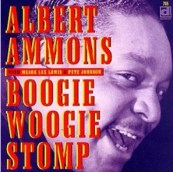
ammons I didn’t want to play exactly like Hoagy Carmichael. I wanted to play more like Scott Joplin (“Maple Leaf Rag”) and Albert Ammons (“Boogie Woogie Stomp”). But my piano teacher, bless her heart, kept giving me classical stuff. I liked it, but I didn’t want to play it. I pointed out to my parents that Hoagy Carmichael never walked into a club and played the Chopin Polonaise Op. 53 in A flat major. (That piece was always beyond my “skills,” as it turned out.)

Even though I was long past piano lessons and no longer living at home when “The Sting” came out in 1973 creating a temporary resurgence in ragtime, I mentioned in a letter to my parents that if they’d allowed me to perfect the “Maple Leaf Rag” when I was growing up, I’d be a popular man about town rather than an unknown writer.

Goodness knows, I tried to perfect ragtime. Trouble was, the family piano was in the living room just in case Hoagy Carmichael dropped by. When I practiced my classical music, my parents heard every note. But when they went outside, I’d morph the stuff into ragtime or boogie woogie. Invariably, a window was open and they’d comment when they came back inside that they’d never heard Bach with an eight-to-the-bar boogie left hand.

First edition cover of the Maple Leaf Rag - Wikipedia photo
First edition cover of the Maple Leaf Rag – Wikipedia photo

My piano playing, such as it was, deteriorated (if that could be possible) down to pretty much nothing but “Chopsticks.” Sure, I listened to Horowitz playing Chopin and occasionally imagined I could play like that. Horowitz probably practiced more than I did. So did Scott Joplin and Albert Ammons, kings of ragtime and boogie woogie.

The characters in my stories often listen to the music I wanted to play. In “Sweetbay Magnolia” (in Emily’s Stories), Emily’s father is a ragtime fan and listens to Scott Joplin in his truck. This gave me an excuse to listen to Joplin as I timed the songs on an album to see how many of them one would hear on a typical trip between Tallahassee and St. Marks, Florida.

Now, I’m working on another Florida-based story, this one set in the 1950s. There’s a juke joint in the story and the customers there want to dance. In those days–and in my story–nothing made people want to dance more than the raw energy of a piano player with–as Peter Silvester called it in the title of his book–a left hand like God. Not that I need an excuse, but now I have a good reason for listening to Pine Top Smith, Albert Ammons and today’s Jools Holland.

Writers often tell their friends to “be good” or they’ll end up in a story. Good advice, I suppose. But there are times when I’m more interested in the skills my friends have that I never could perfect. If you can play Chopin or Bach, I might put you in a story. But seriously, if you sit down at the piano of my childhood which sits seldom-used in my living room now and play “The Entertainer” or “Boogie Woogie Blues,” your music will catch my attention faster than your real or imagined wicked deeds.

Then, as we used to say, we’ll be cooking with gas.

Available on Kindle and as an audio book

Malcolm

“I’ve recommended this audiobook more than any other I’ve listened to.” from M. Stein’s review


How to create a whoopass wall of protection

Did you ever notice how tough guys in movies and brainy guys on science shows are always claiming that a darned good bomb can be made out of the contents of a family’s medicine cabinet?

The first time I heard this I was a kid in the days when kids were still allowed to play with fire, cap pistols, bows and arrows and cherry bombs. How exactly would I make a darned good bomb? Would I mix Preparation H and Vagisil? Or, possibly hydrogen peroxide and codeine. (In those days, the feds allowed people to buy codeine, paregoric and other miracle meds).

The thing is, nobody who claimed to know how to turn a medicine cabinet into a bomb ever explained how.

I have no interest in making a bomb, but I wonder what–as a writer–I should do if a character in one of my books was fighting bad guys, needed a bomb, and ran into the bathroom to throw one together. How should one realistically describe what he does?

Look, I’ve read plenty of thrillers written by people who know everything in the world about bombs, guns, aircraft, submarines, martial arts, police procedures, &c. They never say, “Bob grabbed a gun before he got on the helicopter.” For purposes of reality–and to prove to readers they know their subject matter–they state what kind of gun in was, what kind of helicopter it was, and spout out a bunch of stats like they’ve got the owner’s manuals with them.

What about magic?

Rowling has already confessed to using fake spells in the Harry Potter books. They’re kind of cute, actually. But they don’t do squat. I’m sure a lot of people went around shouting Accio Money and Avada Kedavra  before Jo told the world she didn’t give us the real stuff.

So now, I’ve got an ethical dilemma as I work on my conjure woman novella. I’m a fanatic about realism because I think it’s a wonderful foundation for the magic. If the stuff people already know is obviously real, then they’ll think the stuff they don’t know is also real. (That’s not logical, but it works in books.)

Suffice  it to say, that if Rowling used real spells or if some book called “Mega-Enforcer Dude” gave a step-by-step recipe for making a bomb out out Preparation H, folks would be getting hurt. But, the details have to sound plausible because: (a) you don’t want people who know how to make spells and bombs writing bad reviews on Amazon saying the recipes were a bunch of crap, and (b) you hate being dishonest with your readers.

There’s a wonderful conjuring spell called The Whoopass Wall of Protection (not its real name). As she fights the bad guys, my conjure woman needs to use this spell. But I can hardly say she dumped “a bunch of stuff” out of a sack. Nobody will believe she knows squat or, worse yet, that I (as the author) know squat. I can use footnotes to tell readers that the real Whoopass spell isn’t included, but footnotes turn people off because they start thinking they’re reading a doctoral dissertation and, trust me on this, nothing is more boring that that kind of writing.

Perhaps I should give a few hints to satisfy those craving reality as well as those who really know the spell. “Lucy dumped a sack filled with cornmeal, coffin nails, rue and pepper on her sidewalk.” Okay, that could work, but it doesn’t really plunge the reader into the moment, does it?

This is going to require some careful thought. If you’re a writer, perhaps you can offer some advice about just how much dangerous information should be included in a novel for the sake of accuracy.

If you’re a reader, just how much do you want to know? And, if the novella included the real spell, would you promise not to use in unwisely?

Related Posts

Malcolm

Malcolm R. Campbell, as you may already suspect, writes magical realism, fantasy and paranormal stories and novels.