Friday Finds: ‘The Space Between’ by Diana Gabaldon

FRIDAY FINDS, hosted Should Be Reading, showcases the books you ‘found’ and added to your To Be Read (TBR) list… whether you found them online, or in a bookstore, or in the library — wherever! (they aren’t necessarily books you purchased).

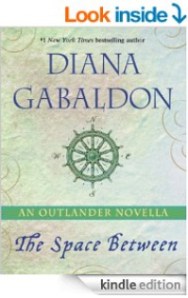
SpaceBetweenI’ve been reading Diana Gabaldon’s “Outlander Series” since it began in 1991. The latest novel in the series, An Echo in the Bone, was released in 2009, with Written in My Own Heart’s Blood expected this June.

While waiting for the June release, I was happy to find Gabaldon’s novella, The Space Between, which came out last month.

From the Publisher

Joan MacKimmie is on her way to Paris to take up her vocation as a nun. Yet her decision is less a matter of faith than fear, for Joan is plagued by mysterious voices that speak of the future, and by visions that mark those about to die. The sanctuary of the nunnery promises respite from these unwanted visitations . . . or so she prays. Her chaperone is Michael Murray, a young widower who, though he still mourns the death of his wife, finds himself powerfully drawn to his charge. But when the time-traveling Comte St. Germain learns of Joan’s presence in Paris, and of her link to Claire Fraser—La Dame Blanche—Murray is drawn into a battle whose stakes are not merely the life but the very soul of the Scotswoman who, without even trying, has won his heart.

While this book, like A Leaf on the Wind of All Hallows (2012), is outside the mainstream series, it’s an interesting look at related characters and themes.

Malcolm

SeekerCoverMalcolm R. Campbell is the author of the Garden of Heaven Series, a three-book fantasy and magical realism saga, including “The Seeker,” “The Sailor” and “The Betrayed.”


Setting up and then dismantling your personal library

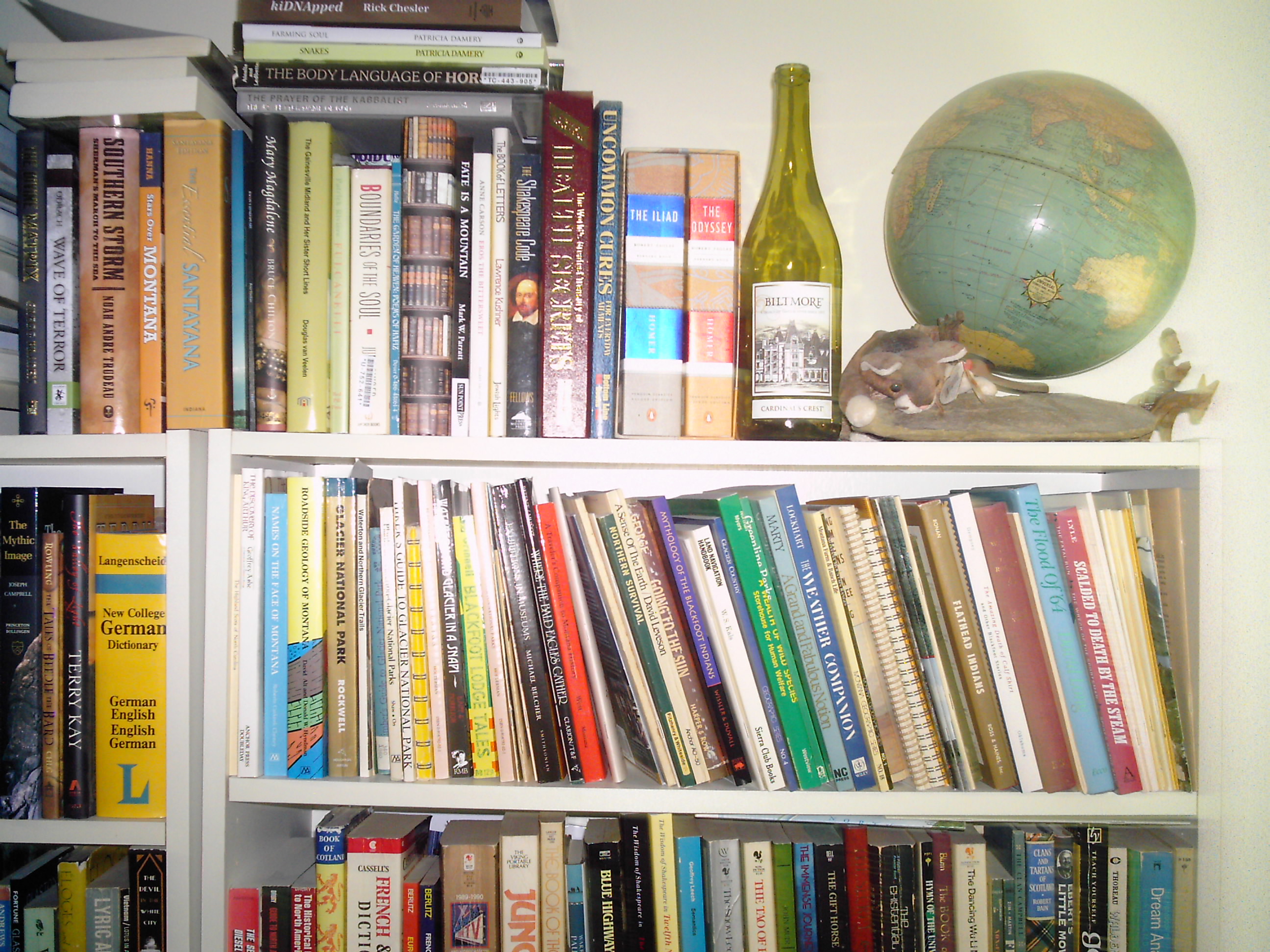
DCFC0097.JPGSome of us who grew up before e-books, kept the hardbacks and paperbacks we accumulated. One shelf became two, two became three and so on until the house and garage no longer had any wall space for new shelves or boxes of books.

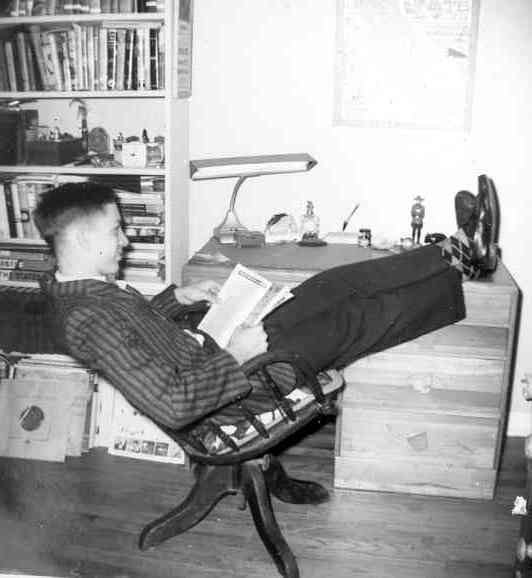
My father also collected books–for reading and reference–not rare editions destined to sell for a fortune years down the road like rare paintings, stamps and coins. In his later years, I believe he probably gave away 10,000+ books to university libraries. In that regard, he was lucky in that so many of his books focused on journalism, he had more than enough to help some fledgling college programs get their libary collections started.

I probably still have many of the books on this shelf from my high school days.

He knew also that his three sons, with their multiple interests, were likely to enjoy reading most of the other books after he was gone. With that in mind, my brothers and I were invited to go through all the books on all the shelves and place our first initial on the inside front covers of our favorites. I still have many of my father’s books on my shelves with an “M” in a circle.

While I don’t like all the rank and privilege associated with the kinds of families we see on programs like Upstairs, Downstairs and Downton Abbey, I like the family continuity especially when it comes to an association with the home place for multiple generations and for the maintenance over the years of collections of books. The personal library lived on and was added to even though some of the heirs had different tastes in books or, perhaps, never went in the library.

As generations, tastes and styles change, leftover books are expected to disappear at subdivision garage sales for pennies on the dollar. Some of my father’s things disappeared that way, too, because his house was larger than my town home and–while we absorbed a lot–my brothers and I had no room for the collected furniture, appliances and books my parents gathered for a lifetime.

Such things seem far less dear to people today. New pots and pans are deemed better than mom’s pots and pans; new tools from Home Depot are seen as better than what grandpa and dad left behind on their work benches. That’s a shame, really, especially when old things still work. Today, people want everything now, so they go out with credit cards and buy things in their 20s that their parents didn’t have until their 30s or 40s and that their grandparents didn’t have until their 50s or 60s.

So, by the time people inherit the old stuff, their houses are filled with new stuff, and just how many old hammers, plates, coffee pots, and even books does a young family need?

Yep "Downton Abbey" has the kind of space I need.
Yep “Downton Abbey” has the kind of space I need.

Unlike my father and mother who lived in the same house for the last 50 years of their lives, I’m doing what a lot of others my age are doing: downsizing. When you plan to move to a new place that, for one reason or another, will have 20% less space, a lot of old stuff will have to go. Much of it’s junk: copies of books and magazines and brochures and catalogues that were important during one hobby or career phase or another. They’re easy to pitch.

But the books are hard to get rid of, partly out of fondness and partly because it’s difficult for those of us who love books to throw them in the trash when no library or relative wants them and the prospective buyers on eBay and Amazon expect me to sell them for mere pennies.

I see the paradox in this: by the time one gets his or her library into a worthwhile collection, it’s time to get rid of it. On the other hand, without a Downton Abbey family of multiple branches and generations, I no longer have the “luxury” of keeping books I look at once every few years.

They’re just things, after all.

Malcolm


Pondering things that don’t make sense

When we see stories on the news, most recently including the disappearance of the Malaysian passenger plane, the Fort Hood Shooting, the landslide in Washington State, and the stabbings at the Murrysville, Pennsylvania school, our first reactions most likely include horror, shock and compassion.

370Then we start asking “why?” Fixing blame on somebody or something is probably a natural human reaction; it’s certainly a part of criminal and civil law.

But the “why” goes further than that. Whether we’re logical in our thinking or inclined, as writers are, to ask “what if?” the “why” behind major news stories creates order out of chaos while solving the puzzles events present to us.

When I worked at a police training institute some years ago, a typical test question for those in accident investigation courses showed the placement of vehicles on a highway after an accident. We often included details about weather, time of day, damage to the vehicles, and the length of the skid marks (if any) and asked students what kind of accident would lead to the vehicles ending up where they are. Eye witness testimony being unreliable and drivers having reasons to skew their own comments, the police often have to use turn their skills into a time machine to figure out what really happened.

The Nature of News

FortHoodTraditionally, reporters try to answer the standard who, what, when, why, where and how. While 24-hour news channels love gathering panels of experts together to speculate on what might have happened before we know what actually did happen,  many of us–in our own ways–ponder events that (apparently) don’t make sense.

We ask why would anyone for any reason go into a school or a military base and start killing people? Or, why were people living in an area where there was a risk of a landslide? And how could a plane seemingly vanish without a trace?

Of course, conspiracy theories seem to excite people, so–as one might expect–those reporting on the search for the Boeing 777 that apparently crashed into the Indian Ocean without a trace have heard quite a list of theories. Maybe it’s part of our nature to say that when things aren’t what they seem, something really strange happened.

I must admit that, after hearing how only a skilled pilot could fly an aircraft the way Flight 370 appears to have been flown, I wondered what sense it makes to go to all that trouble to avoid detection only to ditch the plane in the ocean. What kind of mindset would cause somebody to do that. Initially, it made more sense ot me that the plane had been skillfully flown and had landed in a hostile country that would cover up the whole thing. Maybe the CIA did it or a disgruntled pilot. But carefully crashing into the ocean in a way that creates a mystery makes no sense to me.

Others focus on the Fort Hood shooting and ask what kind of person, whether unstable, discounted by others, or angry would see a “solution” to their problems in the killing of a large number of people?

Fiction

Even if you love the movie and the book, you don't want to live it.
Even if you love the movie and the book, you don’t want to live it.

As writers, we ask “what if?” questions like this all the time because we’re looking for plots that keep people turning pages until the final scene. It’s our nature to provide multiple probable solutions and then work the story down to the only one that makes sense (and is possible) once everything becomes known.

In novels and short stories, we don’t want the reader to know “why” early on in the story because then s/he will stop reading. In “real life,” we want answers ASAP if not sooner. That which makes for good fiction often creates chaos, anguish and lack of closure when we’re living through it.

Ultimately, we want stuff to make sense. Until it does, we feel rather unsettled about it. What we crave in our reading, we deplore in our lives. Most of us don’t want to feel like we’re in our favorite novels when we’re watching the news or coping with accidents and other tragedies in our own neighborhoods.

As a journalist, I ask “why?” As a novelist, I ask “what if?” There are days when I feel like I’m wearing two hats.

Malcolm

My Writing Process – A Blog Tour Interview

When Rhett DeVane asked me if I wanted to be in a blog tour in which each author talks about his/her writing process, I laughed and thought, “What writing process?” So, I had to think about it for awhile. . .

What am I working on?

Lucky Mojo Site
Lucky Mojo Site

After writing contemporary fantasy set in the Rocky Mountains, I’ve been having fun going back to the Florida Panhandle for short story settings. I’ve become slightly more ambitious with the novella I’m writing set near the Apalachicola River. The story involves folk magic, nasty people, tragedy and the atmosphere of the piney woods world as it as in the 1950s. I usually work magic into my stories one way or another, but having a protagonist who is a conjure woman is something new for me. And, it’s been a hoot. So has the research!

One thing you see right away when checking into old books or contemporary hoodoo sites is that hoodoo is not the same as Voodoo. Hoodoo is folk magic; Voodoo is a religion. The other thing you’ll see is that while lots of people say they believe in magic, either “The Law of Attraction” on one hand or Harry Potter and Gandalf on the other.  Meanwhile, Hoodoo is written off as a cluster of ignorant superstitions. I don’t intend to treat it that way in the book. My hope is to do justice to another kind of magic while telling an exciting story.

How does my work differ from other of its genre?

MoonLightandGhostsI read a lot of fantasy, but that doesn’t make me a spokesman for the genre. That said, it appears to me that the fantasy most in fashion these days is (like Game of Thrones) set off-world or in our world after some catastrophe has wiped out society as we know it.

My writing focus is contemporary fantasy and paranormal. Contemporary fantasy is set in our world or in a world/universe/region close by. My work probably is probably closer to “reality as we know it” than most.

That is, I’m going to be using real settings and mentioning the differences, let’s say, between those who believe in magic and those who believe in science an technology. When I write paranormal stories, my work differs from others because there’s none of the Hollywood-style occult in it. I’m more likely to focus on ghosts and strange coincidences than vampires, demons, etc.

Why do I write what I do?

Celebrating the magic and wonder of the natural world

I like the interplay of people and the places where they live. Places tend to have an ambiance about them that’s not only tangled up with what’s going on there now, but is also influenced by old legends, tall tales, and the people lived there in the past. Since I believe there is much more to the world than what our scientists and our five senses are showing us, I like writing stories that the readers will see as possible. That is, I try to make the magic as close known techniques (real or imagined) as I can.

How does your writing process work?

When I start a book or a short story, I don’t know where it will end up. I become intrigued with a theme or a place or a prospective character and start fiddling with the idea. Quite often, the story will start to take shape as I look at source information about the place where it will be set, the kind of work the characters do, and the magic they’re familiar with.

The story takes shape while I write it. That means I’m just as in the dark about the outcome of the story as readers will be when they pick up the finished book.

The Tour

RhettA big thank you to Rhett DeVane (Suicide Supper Club), Southern fiction author from Tallahassee, Florida. You can find Rhett at her website: www.rhettdevane.com or on her blogs: www.writers4higher.blogspot.com and www.southernhat-tidude.blogspot.com

Rhett lives in the town where I grew up, so she gets leaned on from time to time to update me on, say, whether a restaurant is still open or if nearby attractions still have one tour or another when I write stories about the Florida Panhandle. (I haven’t been there since the 1980s and there has been a fair amount of change since then.

ClaytonphotoYou may also like hearing about author Melinda Clayton’s writing process. I know I would because she writes wonderful stories including Blessed Are The Wholly Broken. I’m hoping I’ll get some tips that will speed up my “writing process.” She’s blogging over at GoodReads.

Melinda also lives in Florida, but since I haven’t yet come up with a story to set in her part of the state, she’s escaped the kinds of questions I send to Rhett.

Malcolm

$1.99 on Kindle
$1.99 on Kindle

Malcolm R. Campbell’s Florida stories include “The Land Between The Rivers,” “Emily’s Stories,” “Moonlight and Ghosts” and “Cora’s Crossing.”

Let’s connect on Google+


Throwback Thursday – Four National Geographics

1961NGMThis morning, I reached into one of the many boxes of old National Geographic Magazine’s storied in the garage and scooped out four issues at random, two from 1961 and one each from 1962 and 1964.

These will probably be thrown out as part of my getting rid of old stuff project. Looking online for the December 1961 issue, I see it for sale on Amazon at $4.00 and on eBay at $34.99. What a price range!

I doubt that neither copy will sell. I’ve never had much luck selling old magazines. Time was, they were seemingly more valuable if you cut them apart and sold the pages with the advertisements.

Funny how a Great Northern Railway ad would sell quickly on eBay but if the same ad (along with other vintage examples) were offered as part of a complete issue, it was a harder sell.

The only copies I’m saving are those that are especially historic—some early space exploration issues, a John F. Kennedy tribute issue, and the issues that came out during the birth months and years of people in the family. I’m also saving some ads, mostly those having to do with train travel. Or, a few that are simply “strange” by today’s standards.

1961JunengmThe December 1961 issue includes articles about “Life in Walled-Off West Berlin,” “Canada, My Country,” and “Australia’s Amazing Bowerbirds.” The West Berlin article includes a map of the city, now from almost another time and another place ever since the Berlin Wall came down. But as Russia rushed to annex Crimea, I’m reminded of those cold war days. When I saw Berlin, there was a wall there. That shows how long it’s been since I was there.

A Look at London

You can tell at a glance that the June 1961 issue includes an article about London. When I originally read the article about the city’s “Storied Square Mile,” I didn’t know I would see it six years later. The article includes a fold out map along with photographs of people, places, pomp and pageantry.

When this issue came in the mail, you could also read about the FBI, Thailand, rose aphids and whaling.

There’s also a cute ad of a boy leaving his house with a red wagon filled with all his stuff for Bank of America Travelers Cheques. I used to carry these years ago, but in time I got fed up with explaining to stores and hotels with clerks who said “we don’t take checks” that these aren’t the same as the potentially bad checks torn out of a check book. You’d think people in resort towns would know that.

They probably still don’t know it.

The Holy Land and New Guinea

telestarThe December 1961 issue contains multiple articles about the Middle East. My father, who did some media consulting in the area in the mid-1950s probably liked the memories stirred up by this issue. If I had ever been there, I might be tempted to save this issue, though for what purpose, I’m not sure. I’m sure I still have this copy because my father saved it as part of his collection.

I haven’t been to New Guinea (or even the Canyon Lands of Utah), so the May 1962 issue isn’t tempting. It does have a space-aficionado article called “Telephone a Star: the Story of Communications Satellites.”

The article includes a picture of Telestar that would be launched that June. Teletar 2 would be launched the following year. At the time, this was BIG NEWS. Now, there are over a thousand operational satellites in orbit. The news media hardly even mention the launches any more.

They were still in orbit, though nonfunctional, as of last year. Big news at the time, telestarsongthere was even a hit song about it that reached number one on the Billboard Hot 100 list. It was a catchy song then, but I doubt it would get much play today–unless you’re walking (or flying) down memory lane.

Memory Lane or Ancient History?

If you were there, going through a stack of National Geographic Magazines that came out during your lifetime is a trip down memory lane. I remember the events, the products and the global issues. Otherwise, this is all “ancient” history. Most of the stuff that ended up in these magazines probably isn’t on the RADAR in a high school history class. Perhaps the Berlin Wall will flit by in a footnote to the paragraph about Cold War–assuming the Cold War is even in the course. In a college’s “Recent U.S.” history course, perhaps the Cold War itself will make it into the course for a one-hour lecture. When Russia marched into the Crimea, a lot of people who didn’t know what the Cold War was started doing a lot of Google searches about it.
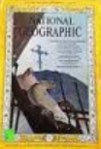
1964DecNGMI saved these magazines, along with copies of noteworthy issues of Life, Look, Newsweek and the Saturday Evening Post because I though they would be important as keepsakes, as windows on the world as it was, and possibly (like old books) as antiques that might be worth money some day. The memories are wonderful, but I can no longer afford the space all these boxes take up. Plus, they’re heavy to move around.

Perhaps they’ll have monetary value in another hundred years–like original photographs of the Civil War have now–but not being a rich person with a Downton Abbey sized house, I don’t have the space for that kind of collecting. And, I doubt my daughter wants to see a U-Haul truck arrive with a garage full of dusty old magazines arrive. She’s been to the Middle East, but I think she’ll always prefer her own pictures to those in the January 1964 issue of National Geographic.

Plus, I’m one of many millions of people who seem to have saved these magazines with the idea in mind that one day they would be rare.

Malcolm
Sometimes writers forget to back up their work

“Outside of a dog, a book is a man’s best friend. Inside of a dog it’s too dark to read.” – Groucho Marx

Cynical book reviewers often suggest some books are best eaten by dogs, used as doorstops and fireplace kindling, or lost in computer crashes. Sometimes they’re right.

SOFcover2014Since the writing that writers write is more often than not sitting in a DOC file on a computer’s hard drive, you’d think we’d backup our work every night with the same diligence that we run the dishwasher, turn off the lights and lock the front door.

Flash drives that hold zillions of words make that so easy to do. But suppose somebody–possibly me–was really on a roll while writing a comedy mystery about a reporter looking for a race horse on a new computer. (Actually, Jock was looking for the horse at a racetrack and an abandoned farm.)

So, this writer writes way past the ending of Jock Stewart and the Missing Sea of Fire and before he knows what’s happening, he’s 30% into the sequel to be called Jock Stewart and the Bambi Diaries.

He copies the words belonging to the first novel into another file and sends it to the publisher. He hasn’t backed anything up yet be cause the computer is relatively new. While the publisher looks at the sea of fire book, he adds more to the Bambi diaries book.

Then the relatively new computer has a head crash. No software on the face of the earth is able to retrieve the document holding the sequel to Jock Stewart and the Missing Sea of Fire.

I was so deep into the continuing story that I never took the five minutes necessary to insert a flash drive and backup the sequel. And, I never was able to get back in the groove enough to re-create it.

So now, everything is backed up a hundred ways to Sunday even if it’s a Tuesday. There may be a lesson here, but I’m thinking it’s probably too obvious to point out.

Malcolm

While Malcolm R. Campbell did not become the author of “Jock Stewart and the Bambi Diaries,” he did write other stuff before the computer ate it.

Getting away from it all (unplugging from the grid)

DCFC0028.JPGWriters often bemoan that fact that their days are fractured like a puzzle just out of the box because they need (want, are addicted) to checking online news, Facebook, Twitter, LinkedIn, Pinterest, Goodle+ and a variety of apps, newsletters and news sites multiple times a day.

I’m not sure writers are unique. Some people are so addicted to the grid that they can’t sit and have a conversation on what (we hoped would be) a quiet evening over dinner without constantly checking e-mail and/or answering every incoming cell phone call. It (this “need” to stay plugged into the grid as though we’re part of the BORG on Star Trek) is part of today’s world.

The need isn’t new. Twenty years ago we were asking why people went camping or hiking and had to take their portable TV sets and boomboxes with them (“serenading”) everyone else in the campground. This past summer while hiking in Glacier National Park, I saw more than half the other hikers had their earphones in for music rather than giving themselves an hour or so for experiencing the natural sounds from wind to water falls to birds. No doubt, they would also miss the warning growl of a grizzly hear on the trail as well.

As a writer, I feel the need to keep up (in case Hollywood calls with a movie deal, I guess) and if I’m not careful, I feel over-informed and maxed out by the day’s constant flow of largely extraneous input.

Perhaps we need to devise our own 12-step programs for spending less time plugged into everything else. An hour here and an hour there might get us used to being comfortable with bird songs, silence and the usually drowned out voice of our inner selves. An Internet and cell phone diet, perhaps, for enjoying the writing we’re doing, the books left to be read, or the sound of the wind through the pines.

In time, perhaps we’ll be comfortable with ourselves again.

Malcolm

Malcolm R. Campbell is the author of novels and short stories that take both protagonists and readers away from it all, including “Emily’s Stories” and “The Seeker.”

Looking for Celia Wird and a Ticket to the Bestseller List

cursedbydestinity“For those of you craving romance with an edge, some thrills or a paranormal slant, here is a trio of steamy, suspenseful books. If the edge-of-your seat intrigue doesn’t send your pulse skyrocketing, the gorgeous and courageous heroes certainly will.” – Lois Dyer in “Shock and Awww”

According to Lois Dyer’s BookPage column, my pulse will skyrocket (probably against my doctor’s orders) if I read Cynthia Eden’s Burn for Me, Cecy Robson’s Cursed by Destiny or Sharon Sala’s Going Twice. I didn’t like the concept of burning for anybody or the cover on Going Twice, so that left me with the cover with the full moon, the wolf and “tigress shape-shifter Celia Wird” (as the publisher describes her).

Checking Amazon, I saw that Cursed by Destiny has 58 reader reviews, an average review rating of 4.6 and is  #106,547 in books. Okay, that number isn’t exactly shouting “bestseller,” but the book’s only been out since January 7.

Here are my thoughts:

  • I can continue writing about wholesome people but use the same sexy temptress shape-shifter tigress lady on the cover. This is potentially dishonest and sooner or later word would get out that Wird wasn’t in the book.
  • I could go to a biker bar and find somebody who looks like Wird, take her picture and use that on the with cover with a little from Photoshop for the wolves in the background. This potentially would start a fight in the bar and since I’m not quite as strong as the Terminator in the movie who beat up everyone in the biker bar, I’d end up with hospital bills that far exceed the attitudes of my insurance company.
  • I could write about a shape-shifter who looks like Celia Wird but change her name to something like Lucy Wolfbane or Marge Gravestone. Unfortunately, writers are supposed to write what they know and I don’t know any shape-shifters, much less anyone who looks like Celia Wird and, while I haven’t checked, I don’t think my wife wants me looking for Celia Wird even for “research purposes.”
  • I could wait until the next Friday the thirteenth and then take a candle and some Tarot cards into a cemetery want call upon the forces of darkness to send me a tigress to interview for the book. The last time I sat in a cemetery with a candle, the cops showed up and claimed that they were had not been sent by dark forces.
  • Convinced that Celia Wird using the name of Marge Gravestone was my ticket to the bestseller list, I took a copy of Cursed by Destiny to the local Starbucks and asked if they’d seen her around. They said “not lately” and suggested I check the tombstone department at Walmart because “people dressed like that just love Walmart.”
  • What’s a writer to do? I checked Amazon and found 1000000000000 books that tell writers what to do. They all promise that if we do those things, we’ll end up on the bestseller list. Since none of those books are on the bestseller list, I figured the authors had all decided to start looking for Celia Wird.

In a BookPage interview, Anna Quindlen (who looks a lot more wholesome than Celia Wird) said that, “I think every writer feels she is one book from irrelevancy.” I wanted to send her an e-mail and ask for the rest of the story because I know a lot of writers who are just starting out and, without having to work at it, already believe they’re irrelevant. Odds are, most of them aren’t trying to battle their way out of obscurity by selling out to Celia Wird.

Some of those writers claim they don’t care about the money because “the important thing is getting my words out there.” My response (which doesn’t go over well) is that money is the universe’s way of telling you whether or not anyone is reading those words. Other writers say they’re publishing on Kindle and CreateSpace for the “joy of it.” I’m not sure what that means, but as Quindlen confesses, “It’s no substitute for being able to pay the gas bill.”

So, I continue to look for Celia Wird even though it’s rather like the Dr. Richard Kimball’s search for the one-armed man.

Malcolm

Malcolm R. Campbell–if you haven’t guessed it already from reading this post–is the author of fantasy fiction, including “The Seeker.”

If it’s Sunday, this must be spaghetti

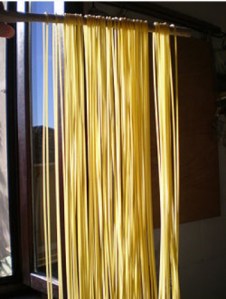
If my pasta ever looked like this, it was at the Mueller's factory.
If my pasta ever looked like this, it was at the Mueller’s factory.

For some of you, it’s a Superbowl night and you’ll be teary eyed after watching the puppy and the Clydesdales in the Budweiser commercial, assuming you haven’t already seen it on Yahoo, Facebook or YouTube, and then–like me–you can forget about the game and find something else to watch while feasting on spaghetti.

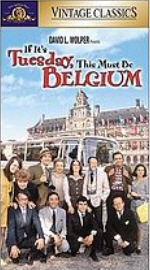
If you’re old enough to see the hidden reference in the title of this blog, you’re probably too old to be surfing the net on a computer. By the way, very few people use the <g> symbol any more to show they’re grinning, so if you leave a comment with a <g> or a <vbg>, then you probably saw the 1969 film “It it’s Tuesday, This Must Be Belgium.” It starred Suzanne Pleshette who was hot in those days.

Here’s the thing about spaghetti.

When the sauce is home made even when the pasta isn’t, it (the whole shebang) tastes better the second day around like beef stew, pot roast and possibly haggis. Serving spaghetti on a low key Sunday when there’s time for the sauce to simmer a couple of hours in the Dutch oven while I play Angry Birds and Words with Friends, guarantees that I’ll have a passable meal tonight and a superb meal on the typical high-stress Monday when Hollywood, some insurance agent, and reporters are all trying to talk to me at the same time.

tuesdayIn real life–as opposed to my author’s fantasy life where I remember Suzanne saying, “Malcolm, at least we had Belgium”–I’ll be buying groceries. If I lose track of what day it is, all I have to do is notice the Hunt’s Tomato Sauce on the aisle to remind me, If it’s a Grocery Store, This Must be Monday. Like traveling tour groups who go to Belgium on Tuesdays, I tend to fall into a pattern of doing the same thing on this week’s days as I did on last week’s days.

A Writer’s Structure

That way, I don’t have to think about what I’m going and can get all the chores done on auto-pilot while I’m actually thinking about how the main character in my next novel is getting off the mountain without falling. (My wife always knows when I’m thinking about the novel-in-progress because I’m rather absent from the reality she perceives.)

While contemplating a sex scene in the novel I was working on, I was once interrupted on a Monday by somebody wearing a red apron. He asked me if I was lost.

“Yes,” said. “I can’t find the sluts.”
“They’re on aisle three next to the tomatoes,” he said, without missing a beat.

Suzanne
Suzanne

My sense of order tends to create disorder around me, so I try to control it by making spaghetti on Sunday, grocery shopping on Monday, reading review books on Tuesday (though seldom in Belgium), going to the pharmacy on Wednesday…well, you get the drift.

If this were an upscale scent-empowered blog, you’d be able smell the vine-ripened tomatoes transforming themselves into spaghetti sauce with judicious amounts of rosemary, oregano, and a random bunch of secret herbs and spices.

Magic

You’d also know–from the oregano alone–that as a contemporary fantasy writer who dabbles in magic (for artistic purposes), I tend to be superstitious: Hell’s bells, it’s Sunday and I accidentally made haggis. The week is doomed almost as surely as going to Belgium on a Thursday.

Well, haggis would doom the week no matter what day one made it. But, for purposes of magic and this blog, haggis is a never on Sunday kind of event.

Some of you who are imagining the tomato aroma are probably sitting there with 55-gallon drums of salsa and bathtubs full of chips thinking, “Hell, if it’s Super Bowl Night, it Must Be Sunday.” Okay, that works for today, but it’s not the kind of thinking that’s going to get you through next week, is it? It would be safer to say, “If The Good Wife is On, it Must be Sunday.” At least, you’d be right more than once a year.

I need more order than pacing my life with Super Bowl Sundays. Toilet bowl Saturday’s come around a lot more often and give a writer the kind of structure he needs to put up with “real life” while building fantasy words in for his books. If you’re not a writer, don’t try anything in this post at home.

Malcolm

SOF2014lowresMalcolm R. Campbell is the author of the comedy/mystery “Jock Stewart and the Missing Sea of Fire,” some of which was written in a Kroger store while he was buying tomato sauce on aisle three.

Indie Authors – The Publicity Dilemma

“Most books, both traditionally published and self-published, don’t sell well.” – Mark Coker, Smashwords founder

Free Kindle Book
Free Kindle Book

Self-publishing has made the world of books more democratic. Authors who never could find an agent or a publisher’s editor to give their books a chance in the traditional publishing world can now publish and distribute their books through such platforms as Smashwords, Kindle, and CreateSpace.

But then what?

While self-published and small press authors are no longer the black sheep who couldn’t get published by a “real publisher,” book marketing for indie authors partly includes re-training the reading public and partly creating a platform that makes the books worth the time and cost to the reader.

Retraining the Public

Free Kindle Book
Free Kindle Book

When I talk to friends who are not authors, they tell me that 99.99% of the books they buy are traditionally published books from widely known publishers and authors that they heard about from friends, feature stories in newspapers and online publications, and from reviews by professional reviewers. While, book bloggers, social media, and reader reviews are making a dent in reader reliance on old-style marketing techniques, people tend to buy and read what they’ve always bought and read unless we show them something better.

I’m a writer and not a marketing expert, so I’m not going to try and compete with advice you can get from books like the two free Kindle books by Smashwords founder Mark Coker. (If you don’t own a Kindle, download the free “Kindle for PC” application from Amazon and read the books on your computer screen.) Otherwise, here are a few thoughts:

  • Yes, we need to show friends and other prospective readers samples of our work so they’ll see that it’s good. But we also need to talk about other self-published and small press books to let people know there’s a lot of stuff to read out there that’s not coming from giant, traditional publishers. Talk about the authors you’ve discovered in the genres you know your friends like.
  • Yes, we need to converse with other people in “real life” and in the social media, but unless (or until) you’re a celebrity, most people other than your closest friends don’t care what you’re having for dinner tonight or how many times a day your cat threw up a hairball. We need to be accessible while maintaining the ability to morph our off-line and online presence into that of a professional writer.

Platform and Presentation

Naturally, we need to begin with the best book we can write and design. While a small press will usually provide professional editing, formatting and cover design, you will either have to learn how to do such things or pay somebody else to do them if you self-publish.

claytonpublishSince the book will be competing with professionally edited and designed books, asking your kids to create the cover artwork with crayons or your spouse to look through the manuscript for typos isn’t going to cut it. Part of your investment in your book may well include hiring a professional cover designer and editor or finding some very talented beginners or students who will provide great work at a lower cost. Maybe you can barter with other professionals: you write their news releases and they copy edit your books.

There’s a learning curve with professional-level self-publishing. I’m wary of many of the online services that offer help. Perhaps  I’m cynical and think that after I pay $500 for somebody to arrange a blogging tour, will I break even when/if the book starts to sell. Novelist Melinda Clayton has done some of our self-publishing homework for us in her recently published Self-publishing Made Simple: A How-to Guide for the Non-tech-savvy Among Us. Here are a few more thoughts:

  • Developing an online persona in blogs, social media sites, and our own websites can easily trap us into an overall approach that appears to be ALL ABOUT ME. While we’re writing the book, we’re focused on the story and how can best tell it. Sure, some people are curious about such things. But, too much of that, and their eyes glaze over.
  • Yes, an author’s fame helps sell books. Some people will buy everything their favorite author writes as long as it’s good. Prospective new readers will, however, read the reviews, the interviews and the feature stories about an author’s new book. When presented with thousands of prospective books a month, most of us are more likely to reject a book than to try it out. Why? We don’t have time to study each book in depth, so we weed them out quickly. . .wrong price, wrong genre, uninteresting story, unattractive cover. In short, there’s nothing in it for us. Take your best shot fast with something interesting that stops that rejection train.
  • This leads to the true focus of our pitch. It’s not ALL ABOUT ME, it’s ALL ABOUT YOU. We need to show prospective readers the book’s features and benefits. Show them in everything you say and do, including the book’s online description and back-cover copy, what’s in it for them.
  • Avoid blog interviews that rely on generic questions unless there’s a wide variety of them and you get to choose which ones to answer. More often than not, generic questions such as When did you first know you wanted to be a writer and Are you a plotter or a pantser make you sound like an amateur. Plus, they focus on you, your issues, and your writer’s journey rather than what’s in the book for the reader to enjoy.
  • Readers were attracted to Rowling's books before they were attracted to her story about writing them. he story in your novel comes before the story of your life.
    Readers were attracted to Rowling’s books before they were attracted to her story about writing them. The story in your novel comes before the story of your life.

    Sorry about this, but saying you’re a work-at-home mom, an avid reader, or a dad who makes up bedtime stories for his kids isn’t going to sell your book. First, there’s nothing unique about any of that. Those are not the prerequisites for becoming a writer no matter how important they are in your own life. Second, focusing on your personal life is still ALL ABOUT ME. Focus on hobbies, avocations, and career information that not only shows the reader you’re deeply involved and knowledgeable about the people, places and themes in your books, but that you share a common ground.

  • Success Breeds Interest. That’s a long-time proverb from management and supervision courses. I think it’s true of writers and how they relate to the public. Even if we’re not selling loads of books, being negative online about one’s lot in life doesn’t make us very attractive. Obviously, lack-of-success probably breeds apathy. So, a positive approach is the basis of a successful platform. Many writers disagree with me, but I think it’s bad form to ask for reviews and for readers to tell their friends about your book. That sounds like lack of success to me for, if people like your book, they’ll spread the word without being asked. If you’re having trouble with your publisher, your editor, your cover designer, with Amazon, or with anyone else, save comments about that to writers’ forums and private messages. There’s a double standard here, I know: if J.K. Rowling sues somebody, it’s news–if indie writers complain, it’s unattractive and unsuccessful sour grapes. Don’t bash your publisher online.
  • You are not a charity case even if you’re broke. When I worked with nonprofit organizations, a lot of executive directors thought that if they simply announced an event, the public would show up in record numbers. Why? Because the charity or museum is a good cause. Well, there are hundreds of good causes out there, so using that as one’s rationale isn’t going to draw people to weekend events. Nonprofits have to sell the event. What wonders will the public experience by attending it? What’s in it for them? We show our lack of professionalism and continue the ALL ABOUT ME mindset if we present ourselves as people who need to be rescued rather than professional writers to be read if we focus our efforts on asking people to help us succeed. This kind of sentimentalism isn’t going to sell books. Count on it. If you say you’re broke, it suggests that you’re not any good.

If you’re a writer, best of luck finding the combination of publicity techniques and approaches that work for you. If you’re a reader, remember that those of us who focus on storytelling don’t always know how to tell you about our stories.

Malcolm

Malcolm R. Campbell is the author of magical realism novels, including “Lena.”