Briefly Noted: ‘ Burning Down the House’

burningdownhouseA September 16 2014 interview with author Nell Bernstein in The Awl (“The Case for Abolishing Juvenile Prisons”) begins with this overview:

“Last month, archaeologists identified the first of the fifty-five human bodies recently exhumed at Florida’s Dozier School for Boys—a now-shuttered juvenile prison where, for decades, guards abused children, sometimes to death, despite cyclical scandals and calls for reform spanning almost a hundred years. Dozier represents an atrocious extreme, but the failures of America’s juvenile justice system are widespread. Whether labeled ‘boot camps,’ ‘training schools,’ ‘reformatories,’ or other euphemisms, juvenile prisons have long harbored pervasive physical and sexual abuse. In one survey, twelve percent of incarcerated youth reported being sexually abused in the previous year—a figure that likely understates the problem.”

Since so-called juvenile delinquents from my north Florida high school were purportedly sent to this school, I reported on several books about “The White House Boys” in an earlier post. I found the interview with the author of Burning Down the House perceptive, compassionate and fascinating, and wanted to mention her book here for those who wonder about how we handle juvenile offenders, especially those charged with relatively minor misdeeds.

From the Interview: “I tried to come in with a reporter’s open mind. But I have known kids who’ve been in this system for decades, so I did come in believing, from my own experience, that prison was a consistently damaging intervention that tended to make things worse for kids rather than better.”

Bernstein - click on the photo to see the author's website
Bernstein – click on the photo to see the author’s website

From the Publisher When teenagers scuffle during a basketball game, they are typically benched. But when Will got into it on the court, he and his rival were sprayed in the face at close range by a chemical similar to Mace, denied a shower for twenty-four hours, and then locked in solitary confinement for a month.

One in three American children will be arrested by the time they are twenty-three, and many will spend time locked inside horrific detention centers that defy everything we know about how to rehabilitate young offenders. In a clear-eyed indictment of the juvenile justice system run amok, award-winning journalist Nell Bernstein shows that there is no right way to lock up a child. The very act of isolation denies delinquent children the thing that is most essential to their growth and rehabilitation: positive relationships with caring adults.

Bernstein introduces us to youth across the nation who have suffered violence and psychological torture at the hands of the state. She presents these youths all as fully realized people, not victims. As they describe in their own voices their fight to maintain their humanity and protect their individuality in environments that would deny both, these young people offer a hopeful alternative to the doomed effort to reform a system that should only be dismantled.

For those who know about The White House boys, and other young people sent to abusive camps and schools, the interview and the book are haunting. If only such things had been said 50 to 100 years ago.

–Malcolm
 

When you write, are you happy?

“I believe that half the trouble in the world comes from people asking ‘What have I achieved?’ rather than ‘What have I enjoyed?’ I’ve been writing about a subject I love as long as I can remember — horses and the people associated with them, anyplace, anywhere, anytime. I couldn’t be happier knowing that young people are reading my books. But even more important to me is that I’ve enjoyed so much the writing of them.”   – Walter Farley (author of The Black Stallion)

writerAt book signings, I see long lines of readers waiting for one widely known author or another to arrive, and this is good, of course, because the people love books and want to meet the bestselling authors they usually only see on TV. Of course, I’m there, too, in the same line waiting for my 30 seconds with the author where s/he is signing books so quickly, it seems like his or her tired hand will need a lot of Aspercreme at the end of the evening.

To many people, an author is the name on the book, the name they trust for the kind of reading they like, somebody who shows up on a talk show or who’s interviewed by Kirkus or Publishers Weekly. If you’re not a writer, you probably don’t think about what your favorite authors are like while they’re writing. I often wonder if those thinking about becoming authors are skewed off the road to reality by seeing authors as celebrities showing up with a lot of fanfare at a bookstore or a studio.

A favorite line of mine out of an old writing book went something like this: Most people don’t want to write, they want to have written. They’re looking only at what comes when the book is done; that’s only the tip of the iceberg in most authors’ lives. Most of the time, they’re alone with a pencil, pen, typewriter or computer. They’re wearing jeans and a tee shirt and look like they haven’t gotten enough sleep for years. It’s hard work, writing, and I think that people who imagine seeing their books on the bestseller lists don’t always think about exactly what they’ll have to do to make that happen.

Is the work fun?

booksartSince most of a author’s life is spent researching and writing, enjoying this part of the process seems to me to be an important prerequisite to considering poetry, short stories, novels and plays as part of one’s career. The writer at work, should be the picture of bliss and contentment. Okay, there’s frustration and profanity, too, and on the bad days, an extra glass of Scotch. But most of the time, authors who like being authors are happy while they’re writing.

In fact, writing is like drugs. Once an author finishes a book, s/he will variously be tired, excited, joyful, elated and (sometimes) relieved. But soon, s/he will have to be writing again because nothing else compares with it. Perhaps it’s a meaningful addiction or perhaps it’s a variation of the kind of high a runner often feels or a tennis player or a musician. Doing the work is the author’s focal point.

So, my two cents for today is to suggest that if the writing itself doesn’t make a person happy, perhaps they’re in the wrong career. At her sarcastic best, Dorothy Parker once said, “If you have any young friends who aspire to become writers, the second greatest favor you can do them is to present them with copies of The Elements of Style. The first greatest, of course, is to shoot them now, while they’re happy.”

It’s not an easy life and, when it comes down to it, most people really don’t like writing all that much, Reading, yes, but writing: forget it. They’re thinking about going on a talk show and having dinner with Jo Rowling, but not about the work.

If the work isn’t making a person happy, then it seems pointless to me to be writing fiction with big dreams but no sense of the day to day way most of one’s time will be spent. On the other hand, if it makes you happy, your friends and family make consider you a lost cause since–quite clearly–your addiction to your art is almost more important than anything else.

–Malcolm

Malcolm R. Campbell is the author of Emily’s Stories, The Seeker, Jock Stewart and the Missing See of Fire and other books that were a real hoot to write.

MCampbellEmilysStoriesRevised

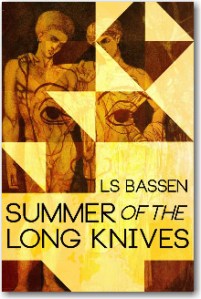
Review: ‘Summer of the Long Knives’ by L. S. Bassen

summeroflongknivesL. S. Bassen, a 2011 Flannery O’Connor Award finalist, has written a strong alternative history novel with her Signal 8 Press (July 22, 2014) release of Summer of the Long Knives.  “Night of the Long Knives” is an old German phrase used to describe acts of revenge, most famously German Chancellor Adolf Hitler’s murderous purge of his political opponents in the summer of 1934.

The novel begins its “alternity” approach with the first sentence: “Very little from a personal perspective has been written about the assassination of German Chancellor Adolf Hitler on July 1, 1934, following the so-called Night of the Long Knives.” Summer of the Long Knives is a haunting story about who killed an imaginary Adolph Hitler in his Chancellery gardens and why.

The fictional Dr. Anne Frank-Koestler is quoted in this mix of well-researched history and intuitive “what ifs?” as saying that as the journalist concerns himself with facts, the historian is an artist who concerns himself with the art of creating pictures of meaningful events and periods of human affairs that while not factually accurate, might just be a “truer” version than the account of the past that we know.

This “truer” account in Bassen’s story isn’t a denial of German history, but an exploration of the real summer of 1934 by merging it with “what if?” in the same spirit that authors create alternative ends to America’s critical Civil War battles and ask readers to imagine the resulting version of history. Bassen provides a backdrop so real that her characters’ lives–phantoms though they may be–seem equally real. Artist Albert Entrater, model Lisel Gantz and Catholic priest Konrad Hoeffer are involved in an assassination plot that the reader hopes will succeed as though the world might in fact change by the end of the novel.

The real is clarified by the imaginary in Bassen's novel.
The real is clarified by the imaginary in Bassen’s novel.

Imagined headlines bring us the news: HITLER KILLED A DAY AFTER CRUSHING NAZI RADICAL REVOLT: RÖHM A SUICIDE: VON PAPEN, VON BLOMBERG RESTORE ORDER

The imaginary Albert Entrater survives. Anne Frank survives. Hitler does not.  Those who believe in the furthest reaches of quantum theory tell us that whatever can happen does happen–somewhere, in another universe perhaps, or at the very least, in our minds after we read alternative histories.

The world we know is the world we know, but in another universe, Abraham Lincoln wasn’t assassinated at Ford Theater and Adolph Hitler was assassinated via one plot or another. And just maybe a young girl named Lisel Gantz, who was assaulted by brownshirt Stormtroopers and subsequently sought her revenge, pulled the trigger.

In the “what if?” world of an alternative history, The Summer of the Long Knives is at once a fictional thriller and a chilling exploration of the German summer of 1934.

Synchronicity and our Stories

Walk into the woods with an open mind. You'll be surprised at what you find there and how much it meets the needs of the stories you're telling.
Walk into the woods with an open mind. You’ll be surprised at what you find there and how much it meets the needs of the stories you’re telling.

We often notice how many things come in threes and how often seeing and noticing a thing (car make, idea, book) leads us to seeing it again soon.

I’ve often thought that where we focus our attention seems to enhance whatever it is we’re looking at and thinking about. So it is that whenever we begin to casually think about a story idea, we find ourselves stumbling over the ideas for scenes that will enhance the plot and characters that will be memorable after readers get to the last line.

Passion seems to fuel an interesting synchronicity throughout the research as well. One thing leads to another thing which leads to marvels that truly fit the story that we weren’t even looking for. The Internet and its links plays into this unfolding scavenger hunt for relevant facts, prospective locations, and the little details that can make or break a story.

Recently, a writer friend of mine told me about a call for submissions from an upcoming anthology of ghost stories about a city many miles away from there I live. The publisher wanted new paranormal stories that fit the city and its attractions and culture or new takes on legends and haunted places.

My first thought was to dismiss the idea out of hand. There was no way could fly or drive to that city and soak up its ambiance and turn my impressions into a story. But, if you’ll pardon the pun, the idea haunted me. An Internet search turned up a few ghostly legends that might possibly be brought forward into a current-day story. One legend kept drawing me into the facts and suppositions people had about it at the time it happened over a hundred years ago.

I kept saying I was just dabbling with the idea because, really, the anthology seemed best suited to people who lived in the city and who knew it well. Okay, maybe I could use Google’s maps and street view to see what the place looked like. Hmm, spooky. Then I stumbled across an author who’d written a book about the incident and who had been inside the house where it happened.

Oops, I just got hooked into submitting something. I have no idea whether the publisher will like it.* Either way, I had a good time watching characters, real-life facts, ghostly musings and plot ideas unfold before my eyes as though they had a mind of their own. Did the ghost herself lead me into her lair? Naah, stuff like that doesn’t happen. But the synchronicity behind the things an author becomes interested in is typical.

Another author recently said that whenever we choose to involve ourselves in a story, the universe aligns itself with us to help us tell the tale. I like that idea, and I find it works best if I don’t begin my dabbling with either an outline or a preliminary list of prospective characters.

These approaches may or may not be helpful later, but if they’re used too soon, they tend to restrict the incoming flow of information. How? Because the outline tends to limit the synchronicity to that which you include in the outline, leaving out the better ideas a writer could have used if s/he hadn’t made arbitrary decisions before the universe showed him what was possible.

I love discovering stories while I’m writing them.

spiritsanthologyUpdate: That story, “Patience, I Presume,” was accepted for publication in the Rocking Horse Publishing anthology Spirits of St. Louis: Missouri Ghost Stories.

This post, written last summer, is from the Magic Moments blog archive. Before I remove that blog from WordPress, I wanted to share a few of the entries.

Malcolm

Sky, from the toes up

“I thank you God for this most amazing day, for the leaping greenly spirits of trees, and for the blue dream of sky and for everything which is natural, which is infinite, which is yes.” – e. e. cummings

When I was in the first or second grade and learned that the earth revolves, I wondered why the ground did not move beneath my feet when I jumped. How perplexing; I come down just where I started, I thought.

My dad explained that the atmosphere moves with the earth and, in fact, if it didn’t, there would be a substantial windstorm blowing us down around the clock.

For years, I viewed the sky as something far way, especially on clear nights when the stars—according to my observations—moved on flight paths much more distant that clouds, airplanes, or the helium balloons that escaped our grasp at the county fair.

I supposed at an early age that an ant’s view of the sky includes everything from my toes up. My feet are shadows and my hands are clouds and my head is a far planet. I believed they were misinformed and/or had poor eyesight because the sky was miles away.

Dog Island (marked with an “A”) is three and a half miles off the coast.

Early on a Saturday morning when I was in high school, I went to Alligator Bay on the Gulf Coast south of Tallahassee, Florida, with Tommy and Jonathan for a boat ride over to Dog Island. Jonathan’s family had a speed boat anchored just off the beach near his family’s summer cottage. The faraway sky was blue and cloudless, and the water was tranquil.

After a day of swimming, snorkeling and sand-dune exploring, we headed back just as a storm began developing farther to the west. The sky grew very dark before we reached the bay sheltered by Alligator Point. The high chop of the waves slowed our progress, so the afternoon was winding down before we set the anchor and waded ashore. We were quite relieved we hadn’t swamped the boat, something we hadn’t done for a year or two.

As we stood watching the storm pass by outside the bay, the setting sun appeared low on the western horizon with one of the most spectacular golden sunsets I have ever seen. The beach, the boat, and the surf were bright orange and glowing with light. Meanwhile, the lightning from the passing storm to the south of us, was also bright orange, and it hissed as it snaked across the sky over our heads and shook the world with its hollow thunder.

We stood without saying a word, and to this day, I think those moments still represent one of the most mystical experiences I have ever had. On that golden beach just out of the storm’s reach, everything was possible and yes and hopeful and connected. “The sky is everywhere, it begins at your feet,” wrote Jandy Nelson in her young adult novel. Yes it is, and on that afternoon, it was clear to me that I stood within the sky and not below it.

–Malcolm

This post originally appeared on my Magic Moments weblog. As I get ready to shut down that blog, I thought I’d run a few of my favorite posts from the archive. Looking back on that day on the beach made it easier for me to understand a quote from “Seth” in the books by Jane Roberts: “There is no place where consciousness stops and the environment begins, or vice versa.”

Is a copy of the publication suitable payment for your work?

This is the inside joke of creative writing programs in America. We know creative writing doesn’t make money, and yet we continue to graduate talented writers with no business acumen. At best, it is misguided. At worst, it is fraudulent. –  Nick Ripatrazone in his essay in The Millions, Practical Art: On Teaching the Business of Creative Writing

The short answer: can you use that copy to pay the rent, buy a Happy Meal or a new toner cartridge for your printer? If not, why would any writer want to work for a copy of a magazine or anthology while the publishers make money off his/her work?

Another short answer: or, maybe you can legitimately view writing for payment in copies as similar to blogging which–unless you have a highly popular, monetized blog–isn’t paying the rent either. Blogging is part of an author’s platform. That’s how we justify doing it. In both cases, free blogging and unpaid publication in anthologies and little magazines sooner or later have to lead to a money making business or they are not doing what they’re supposed to be doing: improving your craft and moving you from a hobby writer to a professional writer.

The Longer Answer: When mainstream fiction magazines were more prevalent, writers were told that writing stories for “little magazines” and for non-paying anthologies for free was a necessary part of building up a list of writing credits. If BIG MAGAZINE ABC saw that you had been published in MEDIUM MAGAZINE YXZ, you supposedly had a better chance of acceptance. The practice still has value and, perhaps, may be even more important for those in publish or perish careers. This view has many ramifications to it depending on the kind of paid writing you ultimately want to do and how valuable those at the top of that ladder view publication in one place or another as a prudent step.

“What does it mean,” asks Ripatrazone, “that we, in the literary community, have accepted lack of monetary payment as commonplace?”

While I’m old school enough to impractically view college as a place heavy with liberal arts that teaches students how to think rather than providing then with a certificate that allows them to move right into a job like a technical school, I see the need that Ripatrazone sees when he says writing programs often do little or nothing to prepare graduates for the business side of their chosen profession. Likewise, many writers groups online and offline, though self-publishing has brought marketing and PR more heavily into the discussions and seminars.

As he puts it, the art of writing is sometimes taught as though it’s a spiritual process in which long-term practical, positive results are viewed as an unnecessary luxury. According to the disciples of this approach, finding yourself and telling your story are the important things even if nobody pays a dime to read what you write.

The odds of making that dime are long odds. That’s reality. But saying that dime doesn’t matter sounds like a lot of self-effacing denial to me. “Payment for little old me? Golly, writing the story is what counts.”

Maybe so if you plan to live with your parents into your 40s or find a spouse that makes enough money to support you while you find yourself or you win the lottery or you work at a day job and stay up all night writing.

Look at the Business Side in Addition to the Art of Writing

Ripatrazon’s essay includes a handy checklist of ideas for bringing students more into the mainstream of what their chosen profession is all about, from demystifying publishing to an introduction to freelance writing and how it works to what editors want and how they want to see it presented to them.

Writing nonfiction can become a viable means of supporting oneself while working on fiction after hours. Taking a look at such magazines as the Atlantic and the National Geographic is proof enough that nonfiction isn’t a secondary kind of writing. Becoming good at it, helps improve a writer’s art and craft while building a list of credits. Writing for low rates of payment at first and working up to higher rates of payments seems to me to be a much better route than writing for copies of publications.

That’s not a hard and fast rule, especially if you’re making money some other way to pay the rent. And who knows, getting accepted by a prestigious publication might help your career. It’s hard to say, because no matter how much all of us study the business side of writing fiction, making money from novels and short stories is always a gamble. The number of writers who live off fiction writing is a very small number.

When we write, we can’t be like our non-writer friends who go to a 9-5 job that pays them to work their craft in a cubicle or assembly line without having to worry exactly how customers are found and products are marketed. Even if we’re lucky enough to find helpful publishers’ editors, agents or even business managers, we’re still–as novelists–both the CEO of the whole process as well as the craftsman down in the shop.

We need two mindsets, one that sees the dollars and sense in practical terms and one that sees the beauty of a well-told tale coming together on the page. As Ripatrazone says, “I need my students to know that they will likely struggle every step of this way in this business. They must be shrewd and determined and aware. But when they close the door and go to their writing desk, they must be generous, sensitive, and open to the mystery of this art.”

Being too willing to write for copies may be a sign that we’re not really looking at the practical side of the profession. Or maybe for a while it’s an expediency.

Malcolm


“Should” and “Ought” – two words I distrust

“I think that word “should” in our internal narratives is very toxic—this notion of, ‘what should I be doing?’ and it’s always pegged to some sort of expectation, whether it’s self-imposed or external or a combination of the two. It’s hard to balance those expectations of what you should be doing with what you want to be doing. I feel very fortunate in that to a large extent what I do is exactly what I want to be doing for myself, and I still write for an audience of one. I read things that stimulate me and inspire me and help me figure out how to live and then I write about them. The fact that there are other people who enjoy it is nice, but it’s just a byproduct.” – Maria Popova in an interview with Jocelyn K. Glei

gamespeopleDuring the 1960s and 1970s when Eric Berne, Thomas Harris and others were popularizing the role of psychological games in our lives while suggesting transactional analysis as a way to escape them, the words “should” and “ought” were singled out as parental words. That is, they appeared in the daily string of DOs and DON’Ts we heard from our parents, teachers and other authority figures when we were young.

These parental injunctions, as they were called, were often heard time and time again by children until the rules within them became–for better or worse–so much a part of our view of the world, they were hard to separate from facts. Simplistically, this happened because we were too young to know the difference between fact and opinion and–as some said–became brainwashed into believing things that weren’t totally true and/or didn’t need to become a long term mantra for our lives.

Berne, when he took his theory of games into script theory, told us that combinations of “shoulds” and “oughts” and attitudes and coping mechanisms would often become engraved in stone as scripted ways of approaching various situations (or life itself) that worked more like canned computer programs rather than dynamic and authentic behavior.

Human Relations Training

When I wrote training materials in corporate settings in those days, transactional analysis was adapted by many as viable model in human relations and supervision/management courses, resulting in seminars, courses and newsletters. My exposure to all this–as a writer and not as a psychologist–influenced my view of human interactions.

IOKYOKConsequently, I am sensitized to any rule, prescription or sermon that sounds like a parental injunction being imparted to others who are supposed to accept it without question because it comes from an authority figure (parent, grandparent, doctor, minister, boss, “expert,” givernment agency). I automatically want to know why SHOULD I do ABC or why OUHGT I believe XYZ.

Sometimes, the SHOULDs and OUGHTs are correct. “You should look both ways before crossing a street.” “You ought to avoid bullying other people with fists or words.” “You should not put metal in a microwave or sugar in a gas tanke or text with your cell phone while driving.”

Since we can think of so many good examples of such rules, we often assume all of the SHOULDs and OUGHTs we hear are valid. That’s where the danger lies. A lot of our prejudices arise this way. So do a lot of our assumptions about what we can do or become in our lives.

Yes, I Always Question Authority

I would rather question what some say should never be questioned than blindly accept every SHOULD and OUGHT as gospel. My training in journalism trained me to check and double-check facts. My creating of supervisory and management courses using game and script theory concepts trained me to look carefully at everything every authority figure says.

Perhaps I’ve over-thought a lot that could have been accepted without question. Likewise, being wary of the SHOULDs and OUGHTs also frees up the imagination and unchains ones thinking when it comes to their ongoing life experience.

  • You can learn more about Eric Berne and transactional analysis here.
  • The International Transactional Analysis Association has a website here.

–Malcolm


RHP—New Division, New Imprints!

Robin French's avatarRobin Writes

Some of you may have heard, via social media, that RHP is expanding. Yay, us! We just brought out two new imprints, and added staff!

First, we will now be listing all of our literary fiction under the imprint Equidae. Oh, it’s still Rocking Horse Publishing, never fear, but we’re at the point now where we can specialize a bit. The release of The Fires of Waterland gives us two lit-fic titles, as Danny’s Grace will be moved to Equidae as well.

What the heck does that even mean? Glad you asked. “Equidae” is the Latin term, as in taxonomy, for “a family of perissodactyl ungulate mammals including the horses, asses, zebras, and various extinct related mammals,” as per Webster’s.

Second, since we have had such success with Spirits of St. Louis: Missouri Ghost Stories, we’ve opened up a new division/imprint for anthologies.

Our intent is to publish…

View original post 472 more words

Clean up your plate: people are starving in. . .

Even though this is only 212 pages, a lot of people didn't have time to finish it.
Even though this is only 212 pages, a lot of people didn’t have time to finish it.

This is a post about books even though you wouldn’t know it from the title. Hopefully, I can connect the dots with or without logic.

My brothers and I were taught that it was not only rude, but just plain wrong, to leave food on our plates. Why?

Generally speaking, food left was food wasted. Years later the giant chow hall sigh at Navy boot camp “suggested”: TAKE ALL YOU WANT BUT EAT ALL YOU TAKE.

It was okay to be a pig as long as you didn’t leave anything in the trough.

Why was leaving food wrong? Because people were starving in country XYZ. We were informed that while eating two or three times the amount of food we needed wouldn’t harm anybody, that throwing away food literally took it off their plates. Asking how that worked in practical terms was considered rude and/or that you thought your parents, school teachers and pastors were liars.

Later, we were told that books cost money (so does food, as it turned out) and that reading only half a book meant that–figuratively and/or literally speaking–you had thrown away half the book’s cover price. Of course, by today’s standards in which people are slinging books out there on Kindle for 99 cents, reading only a third of it means you only threw away 66 cents even though–had you sent that to countries where money goes farther (and often further)–life in general would be better for everyone.

The bottom line on unfinished dinners and unfinished books was shame. Whether it was Aunt Naomi’s brick-hard fruitcake or a dreadfully depressing novel like All Quiet on the Western Front, we were supposed to soldier on to the final battle no matter how much collateral damage our stomachs and psyches suffered in the process.

Lured into the book by its sexy cover, people apparently thought 21 was the number of centuries it would take to finish it.

Today, that shame isn’t quite gone with the wind, but it’s getting there. In fact, reviewers on Amazon and GoodReads often confess that “This book sucks even though I stopped reading on page 10.” How brazen is that, shame-wise? You really need to finish the book because some kid in city XYZ is going without a story tonight.

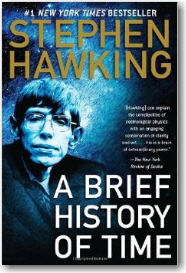
Now we’re getting statistics on unfinished books. People mean well, but like boring stews and bland deserts, their eyes are bigger than their reading endurance. So, consequently, they bought “Capital in the Twenty-First Century” by Thomas Piketty and “A Brief History of Time” by Stephen Hawking seriously intending to eat up every word, but then lost interest a few pages into their literary meals.

Using something called a Hawking Index (H.I.)–explained in The Summer’s Most Unread Book Is…–scientists determined that these two books top the list of unfinished books with folks getting only 2.4% and 6.6% of the way through. These days, fewer people believe in such admonitions as TAKE ALL YOU WANT BUT READ ALL YOU TAKE.

People seem to care less about waste, shame or the value of soldiering on. We’re more comfortable with tweets, texting and sound bites, even though such things often leave us ignorant of the big pictures, full course meals and lengthy tomes the world has to offer. We’re more of a TAKE VERY LITTLE AND PURSUE IT UNTIL BORED kind of society these days. More information, words and food all require commitment and frankly, we don’t want to promise that.

I’ve been tempted of late to throw several books out the window before finishing them. But, I kept on going, not so much because people are staving for words on continent XYZ but because I didn’t have any more fresh books in the house. When that happens, it’s like throwing away your last cracker because it’s a Ritz rather than a Triscuit.

As I read on in spite of the hardships involved, I try not to feel pride for soldiering on or shame for wishing I weren’t. In case it matters, I still clean up my plate.

You May Also Like: Can the Hawking Index tell us when people give up on books? in  The Guardian.

–Malcolm

Secrets – a writer’s stock in trade

I started thinking about secrets after reading author Dora Goss’ post about keeping secrets. Looking at the relationships between men and women, she writes, “It seems to me that there are women men keep secrets from, and women men tell secrets to. Most women, at different points in their lives, occupy both of these positions: secrets are kept from them, and they are told secrets.”

Bloomsbury - adult edition
Bloomsbury – adult edition

In “real life,” I don’t like being told secrets because those who are asked to help hide one thing or another are usually part of the collateral damage when the truth comes out. As a writer, though, I love secrets because every novel begins with the unsaid premise that there are secrets within that the reader must uncover while reading the book.

I liked the imagery in Rowling’s Harry Potter and the Chamber of Secrets. For one thing–like so many novels about extraordinary youths–here we had within Hogwarts School a secret room that all the master wizards of the realm could not (or did not) find, open up, and neutralize. To enjoy the story, the reader has to play along with the ruse that wizards many times more powerful and knowledgeable than young Harry Potter really had no clue about the chamber other than as an old myth about the castle.

Putting a Christian spin on the meaning of the chamber of secrets, John Granger sees Harry Potter as “everyman” the chamber as the world, the snake in the chamber as sin, the evil Lord Voldemort as Satan, etc. One can make a strong case for this interpretation in line with many religions and myths.

I tend to see a chamber of secrets as man’s unconscious mind and that like the powerful wizard teachers at Hogwarts, most of us see that part of the psyche as either a myth or–if real–a place too dangerous to visit. Using this view, a writer looks at his or her protagonist as an individual, badly flawed or otherwise, who doesn’t wholly know himself or herself, much less all of his/her capabilities.

When I start writing a story, my aim is always to conceal as much as possible from the reader without appearing to be concealing anything. I drop hints, many of which will only make sense later when the secrets home out. Like stage magicians, writers are presenting for your entertainment an illusion that obscures the mechanics of what’s really going on in front of your face.

A good magician seldom reveals how assistants disappear out of boxes, how rabbits appear in empty hats or how playing cards disappear into oranges, locked safes or the pockets of people sitting out in the audience. Of course, a great book has a climax to it and that’s when the reader finds out everything (maybe) that was happening that wasn’t apparent up to that point.

With the discovery, there is often surprise, but if the author has done his or her job well, there’s also a”but of course” moment of recognition. Later, the reviewers and critics will argue about how the author kept the secrets for so many pages and what those secrets really mean. Once all the reviews, articles and books have been written about the story, everyone will think they know everything.

But they won’t because authors never tell everything not even to the women men tell their secrets to.

Malcolm

Malcolm R. Campbell is the author of the Garden of Heaven Trilogy of fantasy novels: “The Seeker,” “The Sailor” and “The Betrayed.”