Magical Realism – an example

Readers of my novels Conjure Woman’s Cat and Eulalie and Washerwoman know those stories are magical realism. This afternoon, I’ve been looking for examples of magical realism to post here to dispel the misguided notion that magical realism is a subset of fantasy (as Amazon, among others categorize it). I couldn’t find what I wanted, partly because showing you enough to illustrate my point here that the magic in magical realism is just as real as the realism, would have forced me to show you passages long enough to be considered copyright infringement.

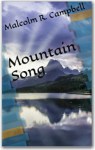
So, even though I guess it’s shameless promotion, I’ll show you a passage from my Kindle novel Mountain Song. The passage first appeared in print in a complex novel called Garden of Heaven self-published in 2010. My previous publisher suggested I make it easier for readers to attempt by splitting it into three novels. I was never happy with the resulting books published in 2013.

The problem was basically that the publisher wanted me to edit and re-configure the books as fantasy. I said they weren’t fantasy, they were magical realism. The publisher’s response to that was dismissive, that I was full of myself and thought my work was good enough to be considered “literary fiction” because that’s what magic realism was: a fru-fru synonym for fantasy.  We had many heated arguments about this, all of which I lost since I was under contract. I had to complete the trilogy. When it didn’t sell, the publisher and I agreed to pull it from the market.

The following excerpt is part of the main character’s vision quest on a mountain at the edge of the plains. While he’s standing on the mountain top, an eagle (Píta) picks him up and throws him down onto the plains where a black horse (Sikimí) appears with ideas of his own.

Excerpt

Píta dropped him like a frail aspen leaf upon a flat rock in the center of the prairie. A shroud of rain obscured the mountains and moved east. He stood, confused, favoring his left foot. When he saw Eagle suspended midway between the unnatural yellow sky and the unnatural yellow earth, he heard a faint call, high-pitched and strung tight across the chasm between clouds and prairie, then suddenly brilliant, enveloping and histaminic. What he heard in this wide lonely place was the clear, unmistakable voice of his grandmother, raised to the heavens in laughter on that long-ago day when Jayee shouted “holy shit” at a cow in the road in the great mountain’s shadow.

If he could walk west, if he could walk west to the highway, following the laugh his grandmother laughed when the world intruded, (laughter is sanity’s last defense, she told him so often) the laugh he heard now like a true beacon due west and ten years back, the laugh for which she was rightfully proud, her great opus written for flute crying, coyote yapping, bulls rutting, if he could follow this laugh west, then to the highway, then south to the crossroads store and the phone on the far side of the storm, great cauldron of probabilities and worlds, then he would survive this, all of this, this, this. He took stock of himself and laughed. The burnished steel puddle at his feet flung back a tiny caricature of a man, half drawn, beneath the immenseness of all else. He was cold. He smelled bad, too, reminiscent of dog shit and goat piss. If this was shock, then he would make the most of it. In the stinging spray of the first rain drops, he leapt forward, laughing, onto his left foot, and it felt good, damn good.

With each step, he pulled strength out of the soil. He began to run, and in spite of his heavy climbing boots, he felt light and fine. This was effortless; he was in his prime. He danced around the edge of a dry gully; he was smiling and thinking he had it in him to run past the telephone at the crossroads store, past Babb and St. Mary, of course, that would be easy, and then over the continental divide at Marias Pass, after which it would be downhill all the way home to Alder Street and the buff-colored house with the white picket fence.

And then it was the horse.

Sikimí burst out of the rain. He was a terror, a daemon, that one, pulling storms. David’s strength rushed back into the stony earth like water from a flushed toilet. Those eyes—deep sweet rage—rose and fell, rose and fell, in ecstasy, in pain, synchronized with breath and muscled strides. There was no cover. He flung off his shirt, focused his tumbling thoughts with the pure tones of vowels, climbed naked bedrock between forks of a creek, felt a clean tension in his hands and forearms, felt Earth’s heat climb his legs, forced breath and a strident growl from his burning throat, and exploded into silver fire in the shape of a man.

The horse came on, without pause.

“Aiá, Kyáiopokà, Stookatsis.” Eagle streamed out of the pale overcast east of the rain and dropped the lariat vine into David’s waiting hands.

He made a large loop, wrapped the loose end around a knob of rock like a climber’s belay, and let gravity take his weight down into the pain of his left ankle. This was good. This was his new anchor. Sikimí was twenty yards away when the storm swept around from the north and swallowed the prairie whole. All sounds were rain, and grey.

Then, screams, hooves pawing scree, Sikimí’s head shooting up out of boiling shadows, striking into the pain of his broken ankle like a snake and sliding away into the depths, except for the eyes which hung for great moments like molten saucers of gold on a black table. David dropped to his knees, the vine in front of him puny and limp on the stone. Before he could think, or spit rain and curses, those eyes rose up like the birth of fire and Sikimí’s breath seared his face.

When all was lost, he jumped forward with the Stookatsis noose in his hands, fell into the center of an ocean of rain, and grabbed Sikimí’s neck. The mane blew into his mouth. He gagged on seaweed. Salt scraped his eyes blind. His hands pulled a raw cry from the horse’s throat. For just moments, the vine around the rock restrained the thrashing beast and David was able to swing up onto his back. Then hell hit with no mercy.

Sikimí spun, twisted, tore the air, shook the prairie with his rage, slid through rocks and mud into the creek, transforming the rising torrent into high foam. David coiled the flapping loose end of the vine around his right hand and arm and clawed the mane with his left. His thighs and calves ached against the horse’s flanks. In the rain and the dark, those eyes spawned lighting, followed by belched thunder across the rank grass. Those teeth were into his legs again and again, until he jammed his heavy climbing boots against the side of the horse’s head. He was breaking Sikimí’s jaw, shattering the huge mandible into elemental powder, screaming forbidden words with each kick, again and again, until he saw what he had done, and slumped down against the hot neck and whispered, “There boy, there boy, you goddamn son of a bitch.”

Thwarted, Sikimí ran. He ran and the rain cut into David’s face like old knives. He ran and the contour lines rose and fell in a grey blur beneath his feet. He ran and David felt an uncommon exhilaration. Irreverent of the land, he ran west into the deeper storm where rain and cloud coalesced into a palpable sea. The dulled colors of a spilt rainbow, elongated like taffy pulled to the breaking point, swirled past on a cold tide. Shimmering schools of light darted and feinted in great unisons between the shadows of hill and dale.

When Black Horse ran, he ran with long, graceful strides and the passion of lovers. When Black Horse ran with long, graceful strides and the passion of lovers, his movements created a dance choreographed to the music of drums deep in the earth. David heard the music between his legs as uncommon heat and released his grip on Sikimí’s neck. He heard shrill notes and dissonant chords burn upward along his spine like fire on a short fuse and he released the noose and saw it float away into the blue grass. Now then, he was pain personified. Now then, in the overwhelming face of it all, he, David Ward, was dancer and dance; now then, he was a woman straining in tears and blood to give birth, he was a dark haired child straining in sunshine to pull his playground swing above the tree tops; now then, he was a man in his prime breathing hard beneath weights; now then, he was Eagle traversing the hyacinthine blue where air and sight are pure; now then, he was Black Horse leaping the western horizon; now then, when he could see and he could feel, there appeared in his path dreams, first as curtains of light, then with depth and breadth and movement where Sikimí tore them apart in dance.

(Copyright (c) 2010 by Malcolm R. Campbell)

If this were fantasy, it wouldn’t be happening in the very real world of Montana. If this were figurative, I would say, “it was as if the eagle dropped him on the plains” and “it was as though the black horse leapt out of the rain.” I don’t say such things because the scene is just as real as the mountain trails I use in the novel.

Malcolm

My new magical realism novel, “Lena,” will be release August 1 by Thomas-Jacob Publishing, a company that knows the difference between fantasy and magical realism.


Sunday Flatterings: a smorgasboard from radicchio to Muriel Spark

I don’t normally flatter people because some of them, and some who see me doing it, think that flattering is the same as sucking up to. I’m of two minds about that assessment: (1) So what? (2) I don’t care.

  • Thank you to one of my psychologist friends on Facebook who posted a video about the stigma people face who need psychiatric medications. I won’t mention her name, but you can find more on the subject at The Mighty.
  • The Olympics and the dedication of the competitors have been an wonderful respite this week from the more distressing news and the polarized political machinations resulting from that news. Many hours of enjoyment here even with sports I don’t usually follow.
  • My novel Eulalie and Washerwoman has been on sale for 99 cents throughout the weekend thanks to the efforts of my publisher Thomas-Jacob’s promotion of books by every one of its authors this past week. You can learn more about our upcoming sales and new releases by signing up for our newsletter here.
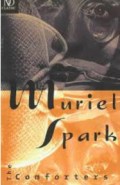
  • As a writer and a reader, I enjoy the reviews on BookerTalk, the most recent being a look at Muriel Spark’s first novel The Comforters: “She went on to write a further 21, gaining a reputation for blending wit and humour within darker themes of evil and suffering.”
  • The local tire store for patching and remounting a tire that picked up a nail. The tire was one of four I bought from them within the last six months, but without the expensive hazard insurance.
  • To the local Publix store that tossed a head of radicchio into my grocery sack for free when neither the cashier nor her supervisor could find it on the cash register display even after I spelled it out.
  • The pair of eagles at Berry College in Rome, Georgia, who have once again presented the community with a pair of brand new eaglets.
  • My ophthalmologist for using a YAG laser capsulotomy procedure to fix the blurry vision in my left eye on Wednesday. The blurriness occurs within a small percentage of those who’ve previously had successful cataract surgery. Now my vision is almost as good as an eagle’s vision. <g>

–Malcolm

Malcolm R. Campbell is the author of all kinds of stuff.


News: Free book and a new title

For your consideration when you’re looking for something to read:

  • Mountain Song is free on Kindle December 2 and 3: David Ward lives in the Montana mountains where his life was impacted by his medicine woman grandmother and his utilitarian grandfather. Anne Hill suffered through childhood abuse and ultimately moved in with her aunt on the edge of a Florida swamp. Their summer romance at a mountain resort hotel surprises both of them. But can they make it last after the initial passion wears off and they return to their college studies far apart from each other especially after an attack on a college street changes Anne forever?
  • Quotation: “After a while, the characters I’m writing begin to feel real to me. That’s when I know I’m heading in the right direction.” – Alice Hoffman
  • A Shallow River of Mercy, a new title from Robert Hays, released December 1 by Thomas-Jacob PublishingErnst Kohl has spent nearly half his life in prison after being convicted of murder as a young man. Upon his release, with nowhere else to go, Kohl returns to his old family home on the outskirts of a small Michigan town, hoping for redemption, or at least understanding. He finds a dog, a girlfriend, and a job in quick succession, and it seems as if he might finally be able to leave the past behind and make a quiet life for himself. But some of the residents, including the town’s corrupt deputy sheriff, are less than thrilled to see him, and will stop at nothing to rid the town of its infamous resident. As events hurtle to an inevitable conclusion, Kohl is left to decide: At what point might a man break, and at what cost to himself? 
  • Thanksgiving: I hope all of you had a wonderful Thanksgiving or–if needed–survived the relatives. We enjoyed a nice visit with my brother and his wife who drove up from Florida, shared wine and food and a thousand-piece puzzle, and provided a lot of great conversation. The lights and wreath went up (not by themselves) on the front door today while inside we’re wrapping gifts to hand over to the post office, hopefully for delivery.

Malcolm

A smattering of writing news

  • I’m slowly working on a new novel called Lena as a sequel to Conjure Woman’s Cat and Eulalie and Washerwoman. For reasons that might become apparent once it’s published, you’ll see why I’m moving so slowly on it. It begins like this: “So, Eulalie sang ‘Lady Luck Blues’ as she drove the 1949 clover green Studebaker pickup truck down that southbound road while creeks, wiregrass, longleaf pines, and sunny autumn afternoon savannahs slow-drag danced past the open windows and South Wind’s children teased her hair into sweet disorder. She was happy and heading for Willie Tate down in Carrabelle.” Unfortunately for Eulalie, the happiness isn’t going to last.
  • I rely on a lot of books and websites for source material about conjure. Unfortunately, Spiritual Information–featuring Voodoo Queen–will no longer have new posts. The author, who is older than I am, has become too ill  to continue, and wants to retire after she finishes healing. The good news is that her blog will remain online as a reference. There’s a handy index of topics on the left side of the screen. A quick glance at this list will show you how wonderful this blog has been for those who want to learn more about the oldest hoodoo traditions from days gone by.
  • My publisher Thomas-Jacob will be featuring Eulalie and Washerwoman, Redeeming Grace (Smoky Zeidel), A Shallow River of Mercy (Robert Hays) and The History of my Body (Sharon Heath) in Amazon promotions during December. Keep an eye on Amazon for some wonderful books and opportunities.  While Robert Hays’new book will be released on December first, it’s already available for pre-order.
  • I appreciate the support of those of you who also followed my other blog “The Sun Singer’s Travels.” In trying to simplify (whatever that means), I’ve closed that blog. It was my oldest, having started on Blogger many years ago, subsequently moving here to WordPress. I’ll try to keep you up to date on this blog as well as my website.
  • This has nothing to do with writing, but my friend and Thomas-Jacob colleague Smoky Zeidel, who lives in a southern California desert community, has been posting glorious pictures of her vegetable garden on Facebook. I’m jealous. My tomatoes, banana peppers and jalapenos finally bit the dust with our cooler temperatures. I still have some hardy oregano and parsley. If you’re taking notes, the oregano and parsley won’t be on the test.

–Malcolm

This and that for avid readers

Even though July 30th was yesterday, this selection of posts about magical realism is still available. If you love the genre, you’ll find some fascinating ideas.


New from Thomas-Jacob Publishing, Transformed, a Kindle short story by Smoky Zeidel.  “The way I see it,” said Daniel, “the fence lizard eats the fly, so the fly becomes part of the fence lizard. The fly is the fence lizard. The fence lizard gets eaten by the snake, and thus becomes the snake. What’s to say that snake won’t get snatched up by a Golden Eagle, and thus become the eagle?” Does the same principle apply to humans? Marina is about to find out.

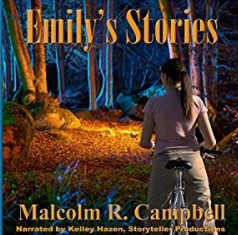
Thank you to all the readers who participated in the recent sweepstakes for Emily’s Stories on Audio Book Reviewer. Kelley Hazen and I are glad you stopped by and signed up. Congratulations to the winners and thanks to those of you who have already posted reviews.

Here’s a copy of my Amazon review for Don Westenhaver’s mystery thriller Missing Star

This post WWI thriller mixes historical and fictional characters in a fast-paced search for a missing actress (Joyce) in the very different Los Angeles of another era. The ambiance and history anchor the story which pits ex-marine aviator (Danny) and against the seedy unknowns of the big city where overlapping police jurisdictions and the corrupt politics of prohibition make it easy for many crimes to fall through the cracks.

Danny is determined to find Joyce in spite of impossible odds, and this makes him a believable and determined main character. Inasmuch as missing persons cases typically includes gaps of time when no new information is found, the story takes a few side trips that, while relevant, slow down the pacing a bit. It also doesn’t seem likely that Danny, as a civilian, would be included in police actions. Otherwise, the story moves well with a high degree of credibility toward a satisfying conclusion. Readers will feel anger over Joyce’s circumstances and respect for Danny’s perseverance, and cannot help but hope that they find each other again and make the bad guys pay for what they’ve done.


Recently released from Thomas-Jacob Publishing, Tizita, a new novel by Sharon Heath: “Physics wunderkind Fleur Robins, just a little odd and more familiar with multiple universes than complicated affairs of the heart, is cast adrift when her project to address the climate crisis is stalled. Worse still, her Ethiopian-born fiancé Assefa takes off right after her 21st birthday party to track down his father, who’s gone missing investigating Ethiopian claims to the Ark of the Covenant. Fleur is left to contend with the puzzle of parallel worlds, an awkward admirer, and her best friend Sammie’s entanglement with an abusive boyfriend. Assefa’s reconnection with a childhood sweetheart leads Fleur to seek consolation at Jane Goodall’s Gombe Stream Chimpanzee Reserve, but it’s through a bumbling encounter with her rival that the many worlds of Fleur’s life begin to come together. In the experience of tizita—the interplay of memory, loss, and longing—Fleur is flung into conflicts between science and religion, race and privilege, climate danger and denial, sex and love. With humor, whimsy, and the clumsiness and grace of innocence, Fleur feels her way through the narrow alleyway between hope and despair to her heart’s sweetest home.”

New, from Theodora Goss, my favorite review book for 2017, The Strange Case of the Alchemist’s Daughter. See my review here. From the publisher: “Based on some of literature’s horror and science fiction classics, this is the story of a remarkable group of women who come together to solve the mystery of a series of gruesome murders and the bigger mystery of their own origins. Mary Jekyll, alone and penniless following her parents’ death, is curious about the secrets of her father’s mysterious past. One clue in particular hints that Edward Hyde, her father’s former friend and a murderer, may be nearby and there is a reward for information leading to his capture…a reward that would solve all of her immediate financial woes. But her hunt leads her to Hyde’s daughter, Diana, a feral child left to be raised by nuns. With the assistance of Sherlock Holmes and Dr. Watson, Mary continues her search for the elusive Hyde and soon befriends more women, all of whom have been created through terrifying experimentation: Beatrice Rappaccini, Catherin Moreau, and Justine Frankenstein. When their investigations lead them to the discovery of a secret society of immoral and power-crazed scientists, the horrors of their past return. Now it is up to the monsters to finally triumph over the monstrous.”

–Malcolm

Malcolm R. Campbell is the author of magical realism books set in Florida.


En Route to the Diddy-Wah-Diddy Landfill While the Dogwoods Were in Bloom

Coming soon from Thomas-Jacob Publishing, a new Kindle short story in the Stories from Tate’s Hell series.

Background of the Story

Diddy-Wah-Diddy is, perhaps, the best known of Florida’s mythical places. The original story about a hidden-away town with unlimited food was among the folk tales collected by Zora Neale Hurston while working with the Federal Writers Project in 1938. Hurston wrote that Diddy-Wah-Diddy was “reached by a road that curves so much that a mule pulling a wagonload of fodder can eat off the back of the wagon as he goes.”

Bo Diddley further popularized the legendary town in his song “Diddy Wah diddy” recorded for Checker Records in 1955. You can find an unadorned re-telling of the original folktale in Kristin G. Congdon’s Uncle Monday and other Florida Tales. “En Route to the Diddy-Wah-Diddy Landfill While the Dogwoods Were in Bloom” is a re-imagining of the town in modern times.

Description

Every spring, fast food junkie Peter Martin packs his wife, Mary, and son, John, into his SUV and crisscrosses the back country of the Florida Panhandle searching for Diddy-Wah-Diddy, a legendary town offering travelers all the free food they can eat. Mary thinks they’ll never find it. John draws maps to show where they’ve been in years past. John has more hunches than fleas on a hound dog about the town’s location. More often than not, they get lost.

This year, they find Diddy-Wah-Diddy. It’s better than they expected. They begin to eat more than they should. Then Peter has a horrifying accident and disappears. While the powers that be treat Peter’s fall from grace as business as usual, Mary and John wait for him, and while they wait they keeping eating all they can eat.

Malcolm

Malcolm R. Campbell is the author of “Conjure Woman’s Cat” and “Eulalie and Washerwoman,” both of which are magical realism enmeshed in Florida’s folklore and racial injustice.


Subscribe to our newsletter and receive a free book

Thomas-Jacob Publishing is offering free copies of Melinda Clayton’s novel Making Amends to those who sign-up for our newsletter via the InstaFreebie site. This offer is good through the end of this month.

Just enter you name and e-mail address, and then choose the file type you want: MOBI, EPUB, or PDF.

We promise not to send you a deluge of stuff. We hope you’ll like what we do send: announcements of new books, a few poems, and a bit of news.

I enjoyed reading Making Amends. Here’s the publisher description from Amazon:

On a beautiful fall evening, in the middle of a game of hide-and-seek, five-year-old Bobby Clark is kidnapped by his estranged father, a shiftless man with a history of domestic violence and drug abuse. Bobby’s twin brother Ricky watches, terrified, from his hiding place behind the bougainvillea, while mother Tabby, who also struggles with addiction, lies inebriated on the living room floor. Bobby isn’t seen by his loved ones again until a fateful morning twenty-five years later, when video of his arrest dominates the morning news. He has been charged with the murder of his father, but before the trial can begin, he manages to escape. As Tabby and Ricky absorb the news of Bobby’s return and subsequent escape, Tabby is convinced he’ll come home to the quiet Florida street from which he was taken so long ago. But when events begin to spiral out of control, she’s left to wonder: is a child born to be evil, or shaped to be evil? And in the end, when it’s time to make amends, does it really matter?

I hope you enjoy the book and the Thomas-Jacob newsletter. The next issue should be out near the end of this month.

–Malcolm


Briefly Noted: ‘The Storyteller’s Bracelet’ by Smoky Zeidel

Thomas-Jacob Publishing released a new edition of Smoky Zeidel’s The Storyteller’s Bracelet today, bringing the novel back into print after a twenty-two month absence. The book is available in e-book and Kindle editions. You can watch the novel’s trailer here.

From the Publisher

STBcover“It is the late 1800s, and the U.S. Government has mandated native tribes send their youth to Indian schools where they are stripped of their native heritage by the people they think of as The Others. Otter and Sun Song are deeply in love, but when they are sent East to school, Otter, renamed Gideon, tries to adapt, where Sun Song does not, enduring brutal attacks from the school headmaster because of her refusal to so much as speak. Gideon, thinking Sun Song has spurned him, turns for comfort to Wendy Thatcher, the daughter of a wealthy school patron, beginning a forbidden affair of the heart.

“But the Spirits have different plans for Gideon and Sun Song. They speak to Gideon through his magical storyteller’s bracelet, showing him both his past and his future. You are both child and mother of The Original People, Sun Song is told. When it is right, you will be safe once more. Will Gideon become Otter once again and return to Sun Song and his tribal roots, or attempt to remain with Wendy, with whom he can have no future?”

Smoky’s Description of the Cover’s Symbolism

“I’ve gotten a lot of questions about the meaning behind the symbols on the new edition of The Storyteller’s Bracelet. The wavy lines at the bottom represent water, which plays a life-changing role for my male protagonist, Otter/Gideon. The stairway through the clouds represents the gateway to the 5th World in Hopi mythology. The arrows point to the four cardinal directions and their colors represent the direction people of color scattered at creation. (These colors can vary from one tradition to another; these are the colors the Hopi use.) Finally, the rattlesnake is a symbol of new life, of transformation. Rattlesnake sheds her skin and begins life anew.”

You May Also Like

Smoky also released a companion short story on Kindle called Why the Hummingbird is So Small, “the enchanting story of Sun Song, a storyteller for her tribe, as she visits Fuss, her hummingbird friend, on the day before she is to leave for Indian School in the East.” You can visit Smoky’s website here.

–Malcolm


New novella tells the story of a cat, a conjure woman and the KKK

Click here for Kindle edition.

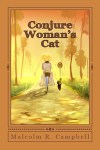
Thomas-Jacob Publishing has released Conjure Woman’s Cat,  a novella by Malcolm R. Campbell (“The Sun Singer”), set in the 1950s Florida Panhandle world of blues, turpentine camps, root doctors, the KKK and a region of the state so far away from everywhere else that it’s often called “the other Florida” and “the forgotten coast.”

Lena, a shamanistic cat, and her conjure woman Eulalie live in a small town near the Apalachicola River in Florida’s lightly populated Liberty County where longleaf pines own the world. Black women look after white children in the homes of white families and are respected, even loved as individuals, but distrusted and kept separated and other as a group.

A palpable gloss, sweeter than the state’s prized tupelo honey, holds the spiritual and temporal components of the Blacks’ and Whites’ worlds firmly in the stasis of their separate places. When that gloss fails, the Klan restores the unnatural disorder of ideas and people that have fallen out of favor.

Click her to see the trailer.

Lena and Eulalie know the Klan. When the same white boys who once treated Eulalie as a surrogate parent rape and murder a black girl named Mattie near the saw mill, the police have no suspects and don’t intend to find any. Eulalie, who sees conjure as a way of helping the good Lord work His will, intends to set things right by “laying tricks.”

Eulalie believes that when you do a thing, you don’t look back to check on it because that shows the good Lord one’s not certain about what she did. It’s hard, though, not to look back on her own life and ponder how the decisions she made while drinking and singing at the local juke were, perhaps, the beginning of Mattie’s ending.

All that’s too broke to fix, but beneath the sweet sugar that covers crimes against Blacks, Eulalie’s pragmatic, no-nonsense otherness is the best mojo for righting wrongs against both the world and the heart.

I hope you enjoy the book.

–Malcolm

Conjure Woman’s Cat website

Paperback Edition at Amazon

Nook Edition at Barnes & Noble

Eulalie's world.
Eulalie’s world.


Melinda Clayton views her latest protagonist as ‘wholly broken’

ClaytonphotoToday’s guest is author Melinda Clayton (“The Cedar Hollow Series”). Her new novel, a stunning tale about a family in the midst of self-destruction Blessed Are the Wholly Broken, was released October 16.  Clayton, who has published numerous articles and short stories in print and online magazines, is a licensed psychotherapist in the states of Florida and Colorado. She holds an Ed.D. in Special Education Administration. She recently founded Thomas-Jacob Publishing described as a “unique family-owned publishing company.”

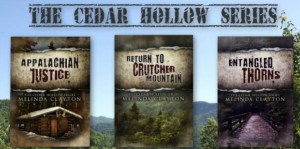
Clayton previously visited Malcolm’s Round Table in July of 2012 when her novel Entangled Thorns was released as the third book in “The Cedar Hollow Series.”

Malcolm: Welcome back! In your new novel Blessed Are the Wholly Broken, you move away from the Appalachian Mountain families in “The Cedar Hollow Series” to Phillip and Anna Lewinsky, a modern-day urban couple, living in Memphis. As an author, how difficult was it to shift away from the prospective “comfort zone” of an on-going series with known characters and established settings to a new environment featuring students graduating from college who are ready for careers and family life?

cedarhollowcoverMelinda: Thanks for having me back, Malcolm. It was difficult, but I also felt it was time. There may be other Cedar Hollow stories, but the story of Phillip and Anna Lewinsky had been rattling around in my head for some time. I had also wanted to write a story set in the area of Tennessee in which I grew up, so that was fun. It was also fun to revisit the University of Memphis on Memphis’ rainiest day of 1989. I remember that day well. I was really tired of the rain, of being cold, and of getting soaked on my walks to both class and work.

Malcolm: At the beginning of the book, you quote a line from “In Place of a Curse,” a signature poem by John Ciardi: “They who are wholly broken, and they in whom mercy is understanding, I shall embrace at once and lead to pillows in heaven.” In addition to suggesting a unique title for your novel, how does this sentiment set the stage for the story to come?

Melinda: I think of Phillip as being “wholly broken.” This is a man who in his early twenties felt he had everything he needed to be happy. In his words, “I felt like the luckiest guy in the world. First job, first apartment, first girlfriend, best friend. What more could I have possibly wanted?” But by his mid-forties, when we first meet him in the Prologue, he feels he has nothing at all. “Life imprisonment or death; that is the question. And while the outcome matters immensely to the other players in this drama of my life, it matters not at all to me. I am dead either way.”

I wanted to explore that dynamic, the path one might travel that could lead from euphoria to despair, from hopeful to hopeless.

Malcolm: Asking a therapist why s/he writes about characters with deeply rooted psychological problems probably makes as much sense as asking a composer why s/he writes about characters who are struggling with a symphony. Yet, as I think about both “The Cedar Hollow Series” and Blessed Are the Wholly Broken, I can’t help but see the books’ characters as almost being—as we say in the South—“too broke to fix.” In addition to the page-turning read we all look for, do you think these novels will also help provide closure for readers who know people who seem wholly broken and/or who often feel they might be wholly broken?

BAWB 200 x 300Melinda: Wow, I might have to think about that for a minute! I think the “broken” characters in the Cedar Hollow Series have within them some spark of hope, enough, at least, to compel them to continue moving forward. One reviewer remarked that she loved it that those books all ended on a hopeful note, a type of new beginning for the characters. If there’s a message to those books, it might be something along the lines of each cloud having a silver lining, or there being a light at the end of the tunnel. Never give up; this too shall pass, etc.

I think Blessed Are the Wholly Broken is different in that within the first page, we know Phillip Lewinsky has been found guilty of the murder of his wife. One of the beta-readers called me midway through reading and said, “But he’s going to get out, right?” She found him to be a sympathetic, likable character and wanted a happy ending for him. I suppose a philosophical argument could be made that in a paradoxical sort of way, he was happy with the ending and he did find the closure he was looking for, but the writing of Wholly Broken was more about an examination of the unraveling of a life than it was about reaching closure.

Malcolm:  How do prospective wholly broken people/characters impact the therapist/novelist?

Melinda: In some ways, the impact is the same for both the therapist and the novelist, in that I’ve always been fascinated by trying to discover what makes us all tick. Behavioral theory would say we don’t engage in a behavior unless we’re getting something out of that behavior. Maybe we’re being positively reinforced in some way, or maybe we’re trying to avoid something uncomfortable. That’s overly simplistic, but I think for the most part, it’s true.

As a therapist, part of finding the solution lies in finding the why of the behavior. Once a person recognizes and understands the purpose behind their behavior, they can choose whether or not they want to change it.

As a novelist, it’s fun to work to tie together a character’s motivations, choices, and decisions with their ultimate outcome.

Malcolm: After readers learn on the first page of Blessed Are the Wholly Broken that a crime has been committed, the novel moves about quickly from one time to another and from one place to another rather like a “whodunit.” I felt like I was reading a detective story. How did you approach your research for this, especially that involving medical, police, prison and courtroom procedures?

The dorms at Memphis State University (now U of M) where Phillip and Anna meet.

Melinda: This novel, by far, required more research than all three of my previous novels put together. I spent time both talking with and emailing medical and legal experts as well as making several phone calls to the Lauderdale County Jail to make sure I accurately portrayed not only procedures, but physical components of the building.

I sent hardcopies of the chapters dealing with medical issues to an expert in the field of microbiology, and chapters dealing with legal and courtroom procedures to the founder of a law firm in New York.

I wanted the book to be as true to the regions as possible, so I also researched weather patterns in that area during that time to make sure if it was raining in the novel, it really had rained on that particular day. I pulled up calendars from that time to make sure if court was held on a specific day in the novel, it would have really been held on that day in Ripley, Tennessee.

I think I probably spent more time on research than I did on writing. Everyone was incredibly helpful; if there are mistakes, they’re completely my own.

Malcolm: While Blessed Are the Wholly Broken was still a work in progress, you formed your own publishing company. How did the becoming a publisher change your perspective about what it takes to prepare and format manuscripts, and to publish and market a book? How did it change your viewpoint as a writer? Did becoming a publisher change your writing habits or approach or were you able to keep your publisher’s hat in the closet until the manuscript was done?

TJpublishingMelinda: Becoming a publisher in the middle of the writing process taught me that publishing is a lot of work! In some ways it stifled me as a writer because as I typed, I couldn’t help thinking, “Ugh, once I get done with this manuscript, I have to reformat it three different ways….”  On the flip side, I loved having the ability to review and proof the finalized manuscripts before hitting “publish.” It was nice to have one last chance to check for any typos or formatting errors before going “live.”

Malcolm: Best of luck with Thomas-Jacob Publishing and Blessed Are the Wholly Broken. Where can prospective readers find you your novels on the Internet?

Melinda: Thanks, Malcolm!  And thanks for the wonderful interview.

All of my books can be found through major retailers such as Amazon and Barnes & Noble. They’re also available through Smashwords, Apple, Sony, and Kobo.