The Twisty Word from WrenchCon 5201

Orlando, Star-Gazer News Service, November 9, 2015–The 5,201st annual WrenchCon concluded here today with a rousing speech by Susan Spanner called “I’m Gonna Wrench Those Blues out of My Life.”

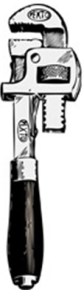
wrenchconWrench inventors from across the country found that every major speaker and small group leader was putting a positive twist on wrenches after a year when big media trounced indie wrenchers with charges of patent infringement and shoddy work just to get their creations before the public eye.

“In today’s global economy, we need a diversity of independents entering the arena rather than the same old, same old BIG TOOL getting all the action,” said Spanner. “This market needs the innovation of the indie grip.”

The 5,201st meeting of WrenchCon got off to a chaotic start when a flurry of typographical errors in posters, direct mail and the convention web site inadvertently–one supposes–advertised the event as WenchCon, proclaiming that “Wenching with pros will improve your technique.”

wrench2Once the wenchers and wrenchers were sent to separate sections of the newly-remodeled Roadkill Convention Center on Lake Alligator, a full schedule of seminars, discussion groups, and pitch-your-wrench meetings made the week well worth the money in spite of the usual injuries, according to exit surveys.

Subjects included:

  • Do wrenchers owe end-users 24/7 access on the social media?
  • Can inventors be more creative with the open-end wrench or the box-end wrench?
  • Getting your crescent-style wrench in to Home Depot and Lowes.
  • Minimalism and the all-but-forgotten Allen wrench.
  • Power tools and socket wrenches did not ruin the business.
  • Don’t base your promotion on lame sentiments such as “the first day I knew I wanted to be a wrencher.”

The highlight of the convention for most attendees was a personal meeting with a professional wrench agent who listened to their best “elevator pitches” and then offered suggestions for improvement. The winner of the Best Damned Pitch Award, Harvey Torx, was offered a long-term contract with the Twist Your Nuts Tool Company.

“My stardust driver will out screw a Phillips or slot head every day of the week and twice on Sunday,” Torx said.

The general public had a chance to twist and grip samples of the latest in wrench design at Saturday’s wrench fair where inventors autographed their tools and gave out plenty of swag and/or swagger.

According to informed sources, even those who thought they were in Florida for a wench convention enjoyed the Southern Comfort and the product demonstrations.

Ben Walker, who drove to Orlando from Rome, Georgia, said, “More than once, I found myself exclaiming, ‘I didn’t know you could do that.'”

A family business representative from New York City, Salvador Lucchese, said “I could kill for some of these wrenches–not to mention, with them.”

“I was planning to go into the gigolo business,” said Marty Smith, “until WrenchCom 5201 showed me that the twist didn’t come and go with Chubby Checker.

Story by Jock Stewart, Special Investigative Reporter


Briefly Noted: Joseph Campbell’s ‘Romance of the Grail’

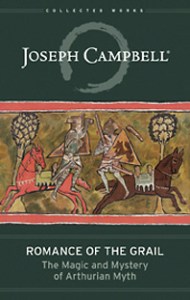
Romance of the Grail: The Magic and Mystery of Arthurian Myth (The Collected Works of Joseph Campbell), Evans Lansing Smith, Editor, ( New World Library, December 15, 2015), 304pp

romanceofgrailJoseph Campbell scholars and Arthurian legends students have been waiting for this volume for a long time. Sponsored by the Joseph Campbell Foundation, this collection focuses on the myths that introduced and excited Campbell about the over-arching mythic theories he spent a lifetime developing.

The book’s editor, Evans Lansing Smith became interested in disseminating Campbell’s views of the quests after discovering a typewritten copy of Campbell’s masters thesis “A Study of the Dolorous Stroke” which exams the motif of the wound and wasteland in the stories.

In an interview about the book, Smith said he hopes readers “will be as deeply engaged — and, indeed, as mesmerized as I was — with the power, grace, and fun with which Campbell retells the stories of the knights so central to the Grail romances: Yvain, Lancelot, Parzival, Gawain, Tristan, and others. As an Irishman, Campbell came from a long lineage of oral tradition, so that he was able in a couple of hours to convey more of the complexity and spiritual depth of those stories than many have been able to in long books on the subject.”

From the Publisher

The Arthurian myths opened the world of comparative mythology to Campbell, turning his attention to the Near and Far Eastern roots of myth. Calling the Arthurian romances the world’s first “secular mythology,” Campbell found metaphors in them for human stages of growth, development, and psychology. The myths exemplify the kind of love Campbell called “amor,” in which individuals become more fully themselves through connection. Campbell’s infectious delight in his discoveries makes this volume essential for anyone intrigued by the stories we tell—and the stories behind them.

Library Journal: “Smith provides well-rounded and concise essential readings on Arthurian mythology by one of America’s leading mythologists and incredible storytellers. Highly recommended for readers interested in Campbell, mythology, or Arthurian studies.”

When Campbell talks and writes about mythology, he presents the material as though he were there when it happened. He makes complex themes accessible. The Grail stories certainly lend themselves to his expertise and insights.

–Malcolm

JCFfundraiser


Magical Realism Writing Tips – Importance of Belief

When an author writes a novel or short story in the magical realism genre, magic is always a natural  and unquestioned component of the characters’ lives and the environment in which they live. As an author, you’re more likely to write a believable story if–while you’re writing, at least–you assume the magic is real.

This is my favorite blog because the writer has many years of experience and a great archive of posts for many Hoodoo subjects.

This doesn’t mean you must personally subscribe to the philosophy and practices of the magical system in your story whether that system is a known collection of beliefs such as hoodoo or Voodoo or a fictional system you built from scratch.

I prefer using practices based on actual belief systems because they already have a rich, varied and somewhat known lore that is often much deeper than anything a most of us can make up.

When I wrote Conjure Woman’s Cat about a root doctor (another name for a conjure practitioner), I began by reading books and web sites written by people who practice hoodoo. When I had a question, I asked them, usually making it clear that I was researching a novel rather than following the belief system myself. (You’ll see some of the sites/books I consulted in the folk magic category of my Myth and Magic Resources post.)

At times, I’ve read paranormal and magical realism books by authors who take a known system–say, witchcraft–and have their characters doing things that are completely outside the realm of the practice whether it’s Wicca or the traditional craft. Hollywood has done this a lot, but I feel more anger about it when I find it in a novel by a known writer who can look stuff up and talk to experts and keep the magic within the realm of what a system claims is possible. Witches do not worship the devil nor utilize spells that look like they originated in the Harry Potter series or Lord of the Rings.

This is a more commercial site with products to sell. However, it also has a wealth of information about spells, herbs and candles.

Yes, we all take liberties when telling a good yarn, and even when we don’t, it’s probable that (in my case) a real conjure woman will find things in my book that are unrealistic. I try to make the material as accurate as possible for a fiction writer–as opposed to a real practitioner who writes a novel based on their own experiences.

One way to make your story accurate is through the use of multiple sources. This helps you understand the magical approach well enough to write about it in your own words.

Of course, if you make up the magic from scratch, it helps if you set limits on it (so that your characters aren’t all-powerful) and keep it consistent. Don’t state a magical rule on page 25 and then have a character successfully ignore that rule on page 250.

For your readers to believe, you have to believe. Most of them will believe while they’re reading the story. That’s how you need to feel. I didn’t become a conjurer after I wrote Conjure Woman’s Cat, and I don’t expect my readers to do so either.

If you don’t believe while you’re writing, the story won’t ring true because your author’s point of view is that it isn’t true.

There’s a lot of anecdotal evidence that a fair number of people believe witchcraft, hoodoo and Voodoo work. Frankly, I don’t have an opinion about that and did everything possible while writing to refrain from judgement.

What we hope for when we write magical realism is that our readers will be carried away by the story as though everything in it is absolutely possible, maybe not in their own lives, but in the lives of our characters.

When magicians like Penn and Teller walk out on the stage in front of you or when you see them on TV, you know that what they’re doing is an illusion. You’re in the audience to be fooled and when the magician carries off a trick perfectly and you can’t figure it out, you laugh and applaud and ask for more.

A magical realism short story or novel is also an illusion. If both the magic and the realism in the story are done well, you’ll be fooled into thinking everything you read did happen or could happen. Neither the stage magician nor the writer dares approach his or her audience with any doubts about the effect s/he is trying to achieve. Doubts kill the performance, on stage or in writing.

And then, too, sometimes that stage magician and that writer include a bit of real magic under the guise of illusion. We always want you to think, “hmm, I wonder.”

–Malcolm

KIndle cover 200x300(1)SarabandeCover2015Malcolm R. Campbell is the author of the contemporary fantasy novel “Sarabande” and the magical realism novella “Conjure Woman’s Cat.”

Website


Myth and Magic Resources and Links

While working on Conjure Woman’s Cat, Sarabande and other novels, I compiled a list of resources for others interested in writing about magic or learning more about spiritual/new age resource materials.

mythclipartThe following resources, collected from this blog’s posts, may be helpful to others studying or following the heroine’s journey, folk tales and magical pursuits. These are books and sites I found helpful as I researched my novels and short stories.

Dark Moon

Black Moon and the Black Madonna on Sophia’s Children

Goddess Meditations by Barbara Ardinger

Dragontime Magic and Mystery of Menstruation by Luisa Francia

Moon Phases Calendar

Planting by the Moon

The Moon Watcher’s Companion by Donna Henes.

Moon Watching by Dana Gerhardt

Moon Tides, Soul Passages by Maria Kay Simms

Moon Mother, Moon Daughter by Janet Lucy

Witchcraft vs. Wicca – See one view here on Hecate’s Cauldron

Death and Rebirth

Descent to the Goddess by Sylvia Brinton Perea

The Myth of the Goddess: Evolution of an Image by Anne Baring and Jules Cashford

The Pattern of Initiation in the Evolution of Human Consciousness by Peter Dawkins & Sir George Trevelyan

Inanna, queen of heaven and earth: Her stories and hymns from Sumer by Diane Wolkstein and Samuel Noah Kramer – This book, first published in 1983, presented a long-awaited translation of the original Inanna material from the 2000 BCE cuneiform clay tablets.

Folk Magic

HOODOO IN THEORY AND PRACTICE –  An Introduction to African-American Rootwork by Catherine Yronwode – An introduction to hoodoo, including basics, spells, herbs, and related blues songs.

The Black Folder, edited by Catherine Yronwode, 2013.

Drums and Shadows, folk magic practices in the state of Georgia assembled by the WPA in the 1930s. The online overview describes the book this way: This collection of oral folklore from coastal Georgia was assembled during the 1930s as part of a WPA writers’ program, under the supervision of Mary Granger. The accounts in this book, framed by colorful descriptions of the rural locales where they were collected, were principally from elderly African-Americans, some of them centarians. Most had been slaves. In some cases they had known first generation slaves who had been born in Africa.

Hoodoo Herb and Root Magic, by Catherine Yronwode, 2002.

“Remembering Hoyt’s Cologne,” Malcolm’s Round Table

The Sanctified Church, by Zora Neale Hurston, 1981.

SOUTHERN SPIRITS: Ghostly Voices from Dixie Land – Web site features reference materials from the South during the slavery years about conjure and hoodoo.

Mojo Workin’: The Old African American Hoodoo System by Katrina Hazzard-Donald, University of Illinois Press; 1st Edition edition (December 17, 2012)

Conjured Cardea: Full-Service Botanica and Rootwork Services – supplies, services, blog

Heroine’s Journey

The Heroine’s Journey by Maureen Murdock

From Girl to Goddess: The Heroine’s Journey through Myth and Legend by Valerie Estelle Frankel (See the July 2011 “Mythprint” review of this book here.) Frankel’s website includes a lengthy heroine’s journey reading list.

Sarabande contemporary fantasy by Malcolm R. Campbell released by Thomas-Jacob Publishing in a new second edition November 20151.

“The Way of Woman: Awakening the Perennial Feminine” by Helen M. Luke

Apple Farm Community – The Writings of Helen M. Luke

Real Women, Real Wisdom: A Journey into the Feminine Soul by Maureen Hovenkotter  (See a review here.)

The Heroine’s Coach, the website for Susanna Liller’s journey-oriented coaching services. The site includes an e-mail newsletter for women following their own paths called “Journey News.”

The Heroine’s Journey appears on author Leslie Zehr’s Universal Dancer website and includes a discussion of Sylvia Brinton Perera’s Descent to the Goddess, a book I found essential for my understanding of the journey. Zehr is the author of The Alchemy of Dance: Sacred Dance as a Path to the Universal Dancer.

Light of Nature

Light of Nature Website, exploring the science and the philosophy of the concept.

“The Female Brain” by Louann Brizendine

“The Spell of the Sensuous” by David Abram

Messages from Mother – Author Mare Cromwell’s website.

Heroine Literature

The Heroine’s Bookshelf: Life Lessons, from Jane Austen to Laura Ingalls Wilder by Erin Blakemore

Fearless Girls, Wise Women & Beloved Sisters: Heroines in Folktales from Around the World by Kathleen Ragan

The Heroine in Western Literature: The Archetype and Her Reemergence in Modern Prose by Meredith A. Powers

The Art of Fiction: Illustrated from Classic and Modern Texts by David Lodge

Mythic Archetypes

Goddesses in Everywoman: Powerful Archetypes for Women by Jean Shinoda Bolen

Patriarchy

The Dance of the Dissident Daughter by Sue Monk Kidd

Unplugging the Patriarchy – A Mystical Journey into the Heart of a New Age by Lucia René

Reviving Ophelia by Mary Pipher

Ophelia Speaks: Adolescent Girls Write about Their Search for Self by Sara Shandler

Surviving Ophelia: Mothers Share Their Wisdom in Navigating the Tumultuous Teenage Years by Cheryl Dellasega

Story Within

And Now The Story Lives Inside You, poems by Elizabeth Reninger

The Spell of the Sensuous by David Abram

Alchemical Studies by C. G. Jung

Harry Potter – A New World Mythology? By Lynne Milum

“Dark Wood to White Rose: Journey and Transformation in Dante’s ‘Divine Comedy’” by Helen M. Luke

“The Soul’s Code: In Search of Character and Calling” by James Hillman

Tarot

LaVielle’s Book Jacket Blog

Raven’s Tarot Site

Writer’s Muse

The Sister from Below: When the Muse Gets Her Way by Naomi Ruth Lowinsky

Marry Your Muse: Making a Lasting Commitment to Your Creativity by Jan Phillips

The Voice of the Muse: Answering the Call to Write by Mark David Gerson.

20 Master Plots: an How to Build Them, by Ronald Tobias

The Hero’s Journey: A Guide to Literature and Life by Reg Harris and Susan Thompson (This is a series of lesson plans for teaching the hero’s journey in a classroom setting.)

Fairy Tales, Folk Tales, and Related Stories

Myth & Moor – Terri Windling’s blog

Marina Warner Website – Writer of fiction, criticism and history with a strong focus on fairy tales.

The Endicott Studio – “The Endicott Studio, founded in 1987, is a nonprofit organization dedicated to literary, visual, and performance arts inspired by myth, folklore, fairy tales, and the oral storytelling tradition.”

“The Irresistible Fairy Tale: The Cultural and Social History of a Genre,” by Jack Zipes. A wonderful study of the genre available in paperback and Kindle.

Fairy tales and Literature – An online bibliography from author and professor Theodora Goss. Great introduction of resource material.

–Malcolm

Malcolm R. Campbell is the author of magical realism, contemporary fantasy, and paranormal stories and novels.

November 1 is an auspicious release date for ‘Sarabande’

Click on graphic to watch trailer

The new second edition of my contemporary fantasy Sarabande will be released by Thomas-Jacob Publishing on November 1. This is the perfect day to begin the life of a book with a ghost.

Traditionally, the fire festival of Samhain (pronounced SAH-win)–now commercialized into Hallowe’en)–sits within a period of the year of “no time or space” because it’s a boundary. Ancient traditions view boundaries and other threshholds as liminal in a magical sense because they take on some of the characteristics of both sides of the figurative doorway.

SarabandeCover2015Samhain is a boundary between the summer and winter, days of sun god and the moon goddess, and saying goodbye to the last harvest and hello to the dark days of winter. Perhaps you’ve heard it said that the veil between the world of the living and world of the dead is thin on Hallowe’en. It’s more an altered state of mind, really, at a time directly between the autumnal equinox and the winter solstice, half a year of way from the May celebration of Beltane.

In my novel, the protagonist Sarabande decides that the only way to stop her dead sister Dryad from haunting her is to travel to the place where Dryad resides. So it is that Sarabande’s  journey is tied to the cycles of the moon and very much on perceiving and confronting a denizen of the underworld.

When my publisher and I started talking about bringing Sarabande back into print, we didn’t have a November 1st release date in mind. That’s just how all the updating, editing, and formatting came out. That’s one way of looking at a story with a ghostly antagonist.

There’s also another way of looking at it. The threshold spirits have their own schedule, and they know that November 1st stands dead center in a magical time period. Night and the Goddess of Night are giving this edition a bit of a supernatural nudge and I appreciate it.

I hope you do, too.

–Malcolm

Sarabandetrailerlastframe


Keeping those sequels consistent

At a book signing for his award-winning novel A Distant Flame, Philip Lee Williams told us that before he started worked on the manuscript, he created a timeline showing where everyone was at every moment as Union troops approached Atlanta. I told him my wife was going to hear about that because she thinks I’m overly picky about research. He said a lot of people’s eyes glazed over at the thought of such a timeline.

sequelI’ve been reading Diana Gabaldon’s “Outlander Series” ever since the first book appeared in 1991. I’m reading Written in My Own Heart’s Blood (2014) now. I doubt she outlined all of the English, Scots, and American history her series has covered leading up to the current novel set during the American revolution.

But her large, 800-page books are remarkably detailed and have a large cast of characters on multiple timelines. I wonder how she keeps it all straight. I wonder if Williams would have to re-read A Distant Flame in addition to his Civil War timeline if he wrote a sequel.

sequel2Readers–like Star Trek fans–are always the first to catch inconsistencies the author and his/her editors missed. A minor character’s eyes change color between books or episodes, a battle fought one year is suddenly at a different time and place, a person who said he didn’t know the main character turns out to have met them dozens of times in earlier books.

I’m an intuitive writer. That means I never outline anything and don’t know before writing a scene how it’s going to end. I’ve had a good editor and she sees things I miss. But she can’t fix major goofs. I worried about making Sarabande consistent with The Sun Singer. And now, as I work on a sequel to Conjure Woman’s Cat, I’m amazed at how often I have to go back and check things to make sure the new book isn’t out of sync with the earlier book.

This is the only time I wish I were disciplined enough to write an outline. Truth be told, I sort of cheated in English classes where we were expected to turn in both the outline and the term paper because I always wrote the outline after the paper was done. I suppose I can do now, but my eyes glaze over at the thought.

It’s strange re-reading ones own work. I come across passages that I’m surprised that I was able to write. Other passages, I wish I’d handled slightly differently. And I marvel at how my detail-oriented mind will consider the growing seasons of plants the characters see while hiking through the woods, but cannot remember who they were hiking with.

Of course, if you’re submitting to major publishers and agents, they’re going to require a synopsis. I’ve written those several times and have to confess that having them later on as reference does help keep sequels consistent. Some writers make character lists and spend a great deal of time writing little character studies about them that include height, weight, eye color, hair color, and other details. If I did that, I wouldn’t have to search through my previous books using terms like “hair” or “eyes” to see what color I chose.

It’s not that that stuff doesn’t matter. It does. It’s an important part of making the character and his/her actions seem real and valid. Nobody ever accused me of having an encyclopedic mind. I’m horrible at Scrabble, Jeopardy and Trivial Pursuit. I think it all goes back to a college geology course in which the teacher said, in this class we don’t memorize things for tests; instead, we talk about larger concepts because anyone with a good set of reference books can look up the details.

That was my new mantra. Never again would I consider listing all the battles of a war and memorizing the dates they happened–much less all the characters in one of my books and the colors of their eyes, hair and favorite shirts and blouses.

While, I love writing without an outline, it plays hell with keeping all the facts straight when it’s time to write a sequel. Yes, I know, I can forget writing sequels. Unfortunately, I like the characters too much and can easily think of more stories to tell about them.

If you write, how do you keep your characters straight from book to book to book. If you read novels in a series, do you catch yourself going back to earlier books because you think the author has gotten something backwards?

Since I write magical realism, fantasy and paranormal stories, I’m ready for any reader who finds any inconsistency. “Hey, Dude, it’s magic.”

–Malcolm

SarabandeCover2015Malcolm R. Campbell is the author of “Sarabande,” a contemporary fantasy coming out in a new edition from Thomas-Jacob Publishing on November 1. You can pre-order the Kindle edition now.

In remembrance of things past: stuff that’s gone with the wind

“I felt once more how simple and frugal a thing is happiness: a glass of wine, a roast chestnut, a wretched little brazier, the sound of the sea. Nothing else.”
― Nikos Kazantzakis, Zorba the Greek

I miss lots of things. Some day, you will, too. You’ll tell your children and others who are forced to listen to your nostalgia about the best of what you had and how nobody cares about it any more.

In no particular order, here’s today’s remembrance of things past:

  • paregoricBeing allowed to purchase paregoric and codeine over the counter at a drug store.
  • Endive (escarole) and watercress in grocery store produce departments.
  • A smaller federal government.
  • A society that didn’t expect parents to monitor their kids’ activities 24/7 and actually allowed them to walk or ride bikes to school.
  • People who came over to dinner who talked to me around the table rather than talking and texting with people who weren’t there.
  • Family doctors who actually treated things rather than sending everyone off to see a specialist who charged a whole lot more money to tell you what you already knew.
  • Bubble gum with baseball cards.
  • endiveBaseball before it had a playoff system prior to the World Series.
  • Weddings that didn’t cost $25,000 to $50,000.
  • A dial tone.
  • Coffee in a one-pound can or sack.
  • Woolworth’s, McCrory Stores, A&P, Foremost Milk, and Grapette.
  • Neighborhoods where people didn’t own automatic weapons for whatever reasons they own them now.
  • Vent windows in cars.
  • McCroryThe Atlantic when it was called The Atlantic Monthly and published fiction and poetry rather than being a quasi-political magazine.
  • Book review sections in most major newspapers.
  • Reporters who didn’t find ways to get their personal opinions into their stories.
  • The Hardy Boys.
  • Cameras that used film.
  • Young people who didn’t expect to have (right out of college) the kinds of houses, cars and furnishings their parents took a lifetime of hard work to acquire.
  • Christmas decorations that weren’t put out before Thanksgiving and weren’t thrown out before nightfall on December 25th.
  • A restaurant entrée that included meat, several vegetable side dishes and a salad rather that a slice of nearly raw meat perched on top of sautéd greens and a swipe of colorful sauce across the plate prepared by a food stylist.
  • twistedclawcoverPlaying outside with old toys and a lot of dirt.
  • Clean rivers.
  • Multiple varieties of U.S.-grown apples.
  • Stuff in stores that wasn’t encased in hard-to-remove clear plastic.
  • Route 66.
  • Airports without TSA.
  • Seeing a movie in a theater for $1.00.
  • Buying a candy bar for 50₵
  • Having a ₵ sign on my keyboard.
  • Silver dollars and $2 bills.
  • Catalogue, Hallowe’en and Doughnut rather than Catalog, Halloween and Donut.
  • Getting a margarita without an act of Congress to have it served without ice, without goofy flavorings and with salt around the rim of the glass.
  • A wedge of lettuce with thousand island dressing with the blue plate special at the lunch counter.
  • City streets before texting.
  • Gas stations where the attendant pumped the gasoline, washed the windows, checked the oil and water, and swept the car floors with a whisk broom.
  • A Walmart-free town.

–Malcolm


‘Time let me play and be Golden in the mercy of his means’

“Other than childhood, what was there in those days that is not here today?”
–St.-John Perse

The past is a bittersweet smorgasbord of delights that are forever new in a writer’s memory rather like Dylan Thomas’ “Fern Hill” where he was “green and carefree” and “famous among the barns.”

Canopy road en route to the farm - Leon County (FL) Public Works photo
Canopy road en route to the farm – Leon County (FL) Public Works photo

My Fern Hill was owned by Mr. Henry who arrived at my best friend’s house around the corner and drove everyone who wanted to go out to his farm for a morning of unfettered play. The woods and the fields were ours for the day, all because Mr. Henry wanted to do something for others, as a debt he owed the doctor–my best friend’s father–who saved his life.

We worked, too. We stacked bales of hay in an old lime house, helped build fences, fought an occasional grass fire, moved cattle from one field to another, cleaned up stuff that didn’t belong where it got left. Every Saturday ended with a line of beer cans on a row of fence posts behind the house where each boy held a .22 rifle and five .22 shorts. “Fire when ready.” And we did.

One day I went off to college and never saw Mr. Henry again. Another day, I heard that he had passed away. He was one of those teachers who didn’t know he was a teacher, and his lessons have long survived him and perhaps most of those who were for a few short years “young and easy under the apple boughs.”

I don’t remember truly thanking him for what he did other than telling him we had had a great time when he brought us back to town. If spirits read the verse of those of us who are still here with our memories, perhaps he found this poem of mine published several years ago.

Debt, Paid in Full

Without fail at first light,
the old Ford materialized on Saturday mornings
to carry us out the canopy road to Mister Henry’s farm.

When Doctor Smith saved Mister Henry’s life,
his patient saw within that unexpected miracle a living,
breathing obligation to be repaid with time and space.

While Mister Henry had reason to believe
one’s days are numbered, he knew the doctor’s children
and children’s friends perceived an infinity of time on their hands.

We took for granted our Saturdays would never end
and loosely defined our mornings with minnows and tadpoles
in the branch trickling through the sweet Southern woods.

We presumed all fences were made for climbing,
claiming all fields and building infinite afternoons with bales o hay
stacked high in the lime house en route to heaven.

We blended work and play on those magical acres,
carrying home tall tales of our grand adventures as talismans
to protect us from the world outside our dreams.

Within the immortality of youth, we saw little threat
from the bull in the field, the copperheads in the woods
or the eventual day when the Ford would not appear.

Without fail or sufficient thanks at last light,
childhood and Mister Henry’s farm slipped into the night
before we knew the debt was more than right.

from Forever friends, edited by Shelagh Watkins, 2011

–Malcolm

Website for my Florida novella “Conjure Woman’s Cat”

Does anyone remember this astral projection exercise?

When I was in high school, I bought a book that purported to teach a variety of psychic techniques. Unfortunately, I no longer remember the name of the book or what happened to it.

Wikipedia photo
Wikipedia photo

The book included an astral projection exercise far different than the usual ones which suggest lying down, meditating and ultimately visualizing oneself floating above the bed.

Here’s what I remember about it:

  • Sit in a comfortable chair and relax at a time when nobody else is home.
  • Stand up and walk to some other location in the house noting what you see along the way.
  • Return to the chair.
  • Close your eyes and visualize taking that same walk through the house, seeing in your mind’s eye what you saw when you physically walked through the house. Remember any smells, textures, lights and shadows, etc. as specifically as you can.
  • Visualize returning to the chair.
  • Now, open your eyes and physically walk through the house again by the same route and return to the chair.
  • Next, visualize taking that walk through the house.
  • According to the book, you will sooner or later return to the chair and find yourself already sitting there. Supposedly when this happens, you will be in your astral body and can experiment with willing yourself to appear in one room or another and, in time, at other places.

I tried this exercise several times, but never made many physical or mental walks through the house because the longer I did it, the more I began to dread that it would work. Why this exercise bothered me, I’m not sure. Maybe it was the loss of control, the idea that I would just stumble across myself rather than lifting away from myself in a controlled way.

Has anyone ever heard of this, much less tried it? If so, did it work?

This is a curiosity question because something about this exercise has always bothered me. I wish I could track it down and read the instructions and rationale again to see why I felt panic rather than curiosity about it.

–Malcolm

MoonLightandGhostsAs you might expect, Malcolm R. Campbell is the author of books and stories in the paranormal, magical realism and fantasy genres, including “Moonlight and Ghosts.”

Review: ‘The Way of Spirit’ by Joanne Helfrich

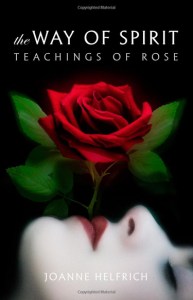
The Way of Spirit: Teachings of Rose, Joanne Helfrich (NewWorldView December 7, 2014), 218pp.

The publisher of The Way of Spirit says this spiritual self-help book will help you discover your life’s purpose and the means of achieving your soul’s deepest fulfillment. Whether or not the book is successful in doing that depends on the reader’s point of view about who Rose is and how Joanne Helfrich received Rose’s guidance.

WayOfSpiritHelfrich describes Rose as “an energy personality essence–a multidimensional being who exists primarily outside out physical world of space and time.” Her guidance was received by an energy exchange method of meditation more commonly known as channeling.

Jane Roberts’ popular Seth books of the 1970s introduced the general public to energy personalities, channeling, and a body of metaphysical information summed up by the phrase “you create your own reality.” Helfrich’s book complements Seth’s teachings.

While many readers intuitively felt that Seth’s non-mainstream, impossible-to-prove view of reality was correct, they often had trouble putting his concepts into actual practice in their lives. Subsequently, teachers such as Lynda Dahl (Seth Talk) and channelers such as Vicki Pendley (Elias) and Serge Grandbois (Kris) have explained and/or added to the information Jane Roberts provided via 1,500 trance sessions between 1963 and 1984.

Practical Approach

Helfrich has written a joyful and very practical guidebook for those seeking “big picture” knowledge and personal transformation. Students of Seth will find some overlap here between the concepts in The Way of Spirit and those they already know. Others are likely to become enchanted by Rose’s positive, no-nonsense approach to who you are and what you can accomplish.

Original Seth book - click on cover for current edition
Original Seth book – click on cover for current edition

Unlike some of the “Law of Attraction” books that focused on acquiring fame, fortune and other material world gains, The Way of the Spirit focuses on inner transformation and a compassionate approach to others. Rose sets the tone for the book by saying, “Since you create all of your reality, it stands to reason that when you become heroes pf your own lives, you change yourself and your world for the better.” The approach echoes Joseph Campbell’s (The Hero With a Thousand Faces) admonition that you cannot have a positive impact on the world until you “fix” yourself first.

Rose focuses on the individual: discover who you are, find your purpose and the bedrock intention of your life, own your own reality, interact with others with love and compassion, and understand that transformation comes from alignment with the universe, not by using brute force logic or pushing others aside to get what you desire.

Naysayers will be quick to point out that, like many other spiritual books focused on meeting goals and desires, this book says you don’t automatically get what you want; you get what the universe thinks you need. Many see this fact as a “kings-X” rule that negates of the rest of the books, allowing the authors to say, “well, your law of attraction meditation didn’t work, not because the system is flawed, but because you were trying to attract what you weren’t supposed to have.”

That point is well taken and the “mechanics” of whether or not the workings of “you create your own reality” should be interpreted as “you create your own reality when the universe consents.”

Quite clearly, The Way of the Spirit is about the way of the spirit, not the way of the transitory, illusory physical world of success and failure, rich and poor, or fame and anonymity.

Helfrich - click on photo for author's web site
Helfrich – click on photo for author’s web site

One strength of this positive and enchanting book is the section called practices. These are not recipes or A-to-Z formulas for making reality (or yourself) change before your eyes. As Rose explains it, “Practices are small, regular actions that help you live a happier life. They may be things you already do, but wish to do in a different way. When they become habits, they will transform your life.” These practices are:

  • Access Alternatives – Breaking away from closed thinking patterns
  • Intent Practices – Discovering and expressing your inate abilities
  • Souter – Finding a new way to visualize your breathing
  • Rest in Rose – Finding ways to relax and experience ones essence
  • IDEA – Discovering your foundation beliefs and their alternatives
  • Addressing Fears – Learning the role of fear and an appropriate response to it
  • Vespers – Meditating and exploring ways to channel your essence in day ahead
  • Evening Prayers – Calming your mind and staying connected as you fall asleep

The Way of the Spirit–like Jane Roberts’ Seth books–presents a vastly different view of reality than we are taught in school. Everything we “know” about time and space, physical reality, and cause and effect is challenged here. It’s a lot too take in and it cannot be taken in with an effortless leap of faith no matter how right it sounds in the reading of it.

Joanne Helfrich has created a thought-provoking approach to making things better in our lives. The practice sections give us a way to test drive her ideas without having to throw away the world view that has sustained us for better or worse up to now. This inspirational book is highly recommended.

Malcolm

Malcolm R. Campbell is the author of contemporary fantasy and magical realism novels and short stories that focus on characters making transformational journeys.