Parents Can Put Librarians in Jail if Parents Don’t Like a Library’s Books

Jefferson City, Missouri, March 3, 2020, Star-Gazer News Service–The Missouri House announced here today that when a bill proposing Gestapo-style Parental Advisory Committees is passed and signed into law, your favorite librarian may end up in the slammer.

House Representatives Jack and Monique (not their real names) admit that while it “takes a lot of arrogance to tell other people what they can and cannot read, such people can’t help themselves.”

According to informed spokespersons, the parental committees will be composed of adults who swear on a stack of comic books that “I don’t know anything about books, but I know what I don’t like.”
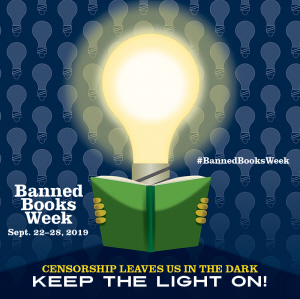
Dixon Ticonderoga, president of the Broken Pencil Think Tank, told reporters that studies show that teens read banned books sooner than other books.

“The bottom line is this: Banning books ensures that the age groups you don’t want to read the book will read then in greater numbers than they would if you just shut the hell up,” he said.

Librarians–who asked not to be named in print–noted that a “Missouri State Assessment of Adult Literacy (SAAL) conducted in 2003, 35% of Missouri adults have prose literacy skills at or below the basic skill level. In addition, 26% of Missouri adults are at or below the basic skills level in document literacy and 49% are at or below the basic skill level in quantitative literacy.”

Jack and Monique admit that the SAAL assessment shows that the parental committees will be “an example of the blind leading the stupid, and that’s what democracy is all about.”

Story filed by Jock Stewart, Special Investigative Reporter


Time machines really don’t cost that much

In 1960, one of my favorite movies was “The Time Machine” based on H. G. Wells’ novel. Perhaps it was the slight crush I had on Yvette Mimieux (unrequited love) or perhaps it was my attunement with old legends about time travel, but the film remains a favorite even though it’s very dated by now.

Now we’re learning more and more about how astronomers’ observations are verifying Einstein’s theories of space/time. My focus on time is more mystic and speculative than science, but I have always thought that one day we would figure out how to do it without breaking Star Trek’s Temporal Prime Directive that prohibits interfering with cultures in a time frame earlier than our own.

For now, though, I’m content to use my imagination as a time machine when I write as well as when I read. My work in progress is set in 1955. Whether it’s the writing or the ongoing research of the period, I feel like I’m bouncing back and forth between 2020 and the 1950s. I feel the same way when I read whether it’s Southern Gothic, which I like a lot, or mainstream historical novels.

I believe in past lives, though I do think they’re occurring simultaneously with our current lives and “future” lives. Aside from that, books do have a powerful ability to transport us to other times and places. How easy it is to fall under the spell of a book or film set in another time and (while reading/viewing) take everything we see and hear as a reality we want to experience.

Do you feel this way when you read? Do you suddenly “see” a period in our nation’s past (or some other nation’s past) as more real than you did before you began the novel? I usually do. It’s almost like magic.

Malcolm


Florida’s Carnivorous Plants

In some parts of the county, searching for autumn-leaves color is not only a regional pastime but a tourist experience. Spring wildflowers are another large attraction, though I don’t hear as much about timing and destinations as I do for fall color.

In the Florida Panhandle, we have a scenic byway (State Route 65) that runs north and south through Liberty County (where I’ve set my conjure and crime Florida Folk Magic Series) that’s a beautiful road that becomes a bit congested in the spring as the cameras come out to “capture” wildflowers. Florida’s carnivorous pitchers, when found en masse, are referred to as “pitcher plant prairies.”

White-topped Pitcher Plant – photo by chapstickaddict on Flickr

According to Missouri Botanical Garden, “Sarracenia leucophylla, commonly called white-topped pitcher plant or white trumpet, is native to mucky soils of sandy bogs and pine savannas in coastal plain areas from south western Georgia, southern Alabama and the Florida panhandle. This is a stemless herbaceous perennial that grows in full sun.”

It’s also a carnivorous plant. When I lived in Florida, I used to tell out-of-state visitors that these flowers were worse than alligators and could strike like a snake and consume a 200-pound man in a nanosecond. They normally eat insects, considering people off limits most of the time. Goodness knows how many of my exaggerations got ferried back to the rest of the country!

Blazing Star – Route 65 Tour Guide photo.

You can see pitchers during April and May, and to a lesser extent in the fall. Don’t pick any of them: you might end up in jail. In addition to pitchers, you’ll find a spectacular display of color from the False foxglove, Rayless goldenrod, Hairy chaffhead, Bristleleaf chaffhead, Flattop goldenrod, Narrowleaf Sunflower, Blazing star, and White rosegentian.

If you live in Florida or are traveling to West Florida during the blooming season, you’ll find this tour guide to be a handy reference.

Malcolm


Riding the Whirlwind of Story

Poet and teacher Natalie Diaz says that stories are energy and I believe her.

While I’m hard-pressed to find anything that is not energy, energy takes many forms, manifesting at varying rates of vibration. You must be receptive to it, though, as a writer or a reader or as some random person minding his/her business who suddenly gets swept away by the chance meeting with a tsunami of story.

When I’m thinking about writing a story, I delay and delay and delay because I know that once I commit to that story, the whirlwind begins, has no mercy, is ubiquitous, steals sleep and sanity and every unguarded thought. But all that is one of the joys of writing, it’s like surfing, skiing, skydiving and the best sex you’ve every had.

Those of you who’ve been reading this blog for a while know that when story energy appears, I ride it with little (if any) knowledge about where the whirlwind is going. Today, while I was more or less innocently minding my own business, a new character appeared in my novel in progress. “Who are you and where the hell did you come from?”

“I’m Julia Hughes Adams from uptown Manhattan and apparently got pulled away from the comforts of Harlem into the Florida Panhandle through an unkind wormhole in space.”

“I feel your pain,” I said.

“I doubt it, white boy,” she said.

Long ago, I stopped trying to answer the question of how the hell do these things happen? There’s no point in asking though I suspect the answer has to do with quantum entanglement.

I’ve learned the hard way that writers have to open themselves up to these story whirlwinds if they want to write stuff that’s any good, that resonates with people, that has the guts to injure readers where they need to be injured and restored anew.

The whole shebang is similar to getting really stoned and/or really drunk and letting whatever happens happen. Sure, you might end up in jail; if you do, that adds depth to your story. Whatever happens, you’ll probably embarrass yourself, but–to put it bluntly–you need to stop giving a rat’s ass about such things even though it might tick off your parents or spouse.

Let the story be what it wants to be. Or else.

Malcolm


Writer’s Resource: Army Field Manuals

United States Army Field Manuals are published by the United States Army‘s Army Publishing Directorate. As of 27 July 2007, some 542 field manuals were in use.[1] They contain detailed information and how-tos for procedures important to soldiers serving in the field.  – Wikipedia

These manuals are a wonder for writers researching multiple subjects whether writing about war/battles or not. I’ve used the first aid manuals for years because they show the basic techniques that can be applied in the field by non-medical personnel. If one of your characters breaks a leg, for example, the field manual shows you what first aid to use.

The manuals can be found in a variety of places, some for sale on Amazon, others are various free sites. Click on the word “Wikipedia” after the quote above for an overview. One handy downloading source (various formats) can be found at the US Military Manual Collection website. There’s quite a list here.

There’s good stuff (e.g. Sniper Training) for writers doing novels about battles and black ops.  For general writing, there’s Map Reading and Land Navigation (very good: used this in ROTC and Scouting), Basic Cold Weather Manual, Carpentry, Welding, Diving.

Maybe you’ll find something here that helps your research.

Malcolm

Click on my name and you’ll find my Facebook Author’s Profile. Every day, I fill it with links to book reviews, author interviews, and publishing information.

Does anyone know how the Russians are meddling in U.S. elections?

I haven’t seen any evidence of it, but then maybe it’s really subtle and/or maybe I’ve been brainwashed.

Some people say Russia is putting ads on Facebook that are filled with disinformation that purportedly makes Democrats look bad and Republicans look good. Okay, let’s suppose that’s true. My response tends to be, “So what.”
Seeing an ad, from Russia or anyone else, doesn’t automatically make me believe it, much less take any action. I still have freedom of choice, so I can’t figure out how Russian-placed ads (if there are any) are any more harmful/helpful than any other political ads.

Or, have I simply missed the boat here?

Now, if the Russians are hacking into our election software, that’s another kettle of borsch. Somebody messed up big in Iowa, but I don’t think the Russians caused it. My wife and I used to write custom software for a living: we were talking about this last night and we are truly happy that we didn’t write any caucus reporting software for anyone.

At my age, I’m cynical about a lot of things it’s probably pointless to be cynical about. But I’m not worried about the Russians trying to influence my vote. When it comes to cynicism, I’m more concerned about the U. S. government spying on me than the Russians: NSA, FISA courts, Patriot Act, oh my.

In terms of the election, the Russkies–as we called them during the cold war–aren’t even on my RADAR. Neither is Putin.  I’m more concerned about finding a viable candidate I like who can win rather than worrying about mudslinging no matter where it originates.

What about you? Can you decide who to vote for without the Russians’ help? I’m pretty sure you can.

–Malcolm

Malcolm R. Campbell is the author of the satirical novel “Special Investigative Reporter.”


Ad Hoc Writing Research

If I were writing historical novels, I would probably do a lot of research before I even committed to writing each book. My novels are written without an ourline or any idea how they will end up. This means I do the research for each scene when I get to it. While the novel in progress is set in 1955, the fact that I was an elementary school kid in that year doesn’t mean I know a lot about the time period.

So, it’s time to Google everything.

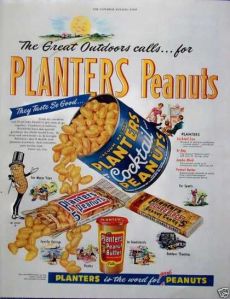
  • The last scene took place at a grocery store. Okay, when somebody entered the store, what kinds of posters, die-cut signs, and hand-written specials did they see on the window sill or window? I found a great Noxzema suburn cream sign, a nice Planters Peanuts poster, and a list of the meat prices per pound.
  • The current scene takes place in the backyard of some well-to-do people. While we had cheap pre-Weber metal barbecue, the fru fru people often had barbecue grills made of brick, 44 inches wide are larger.
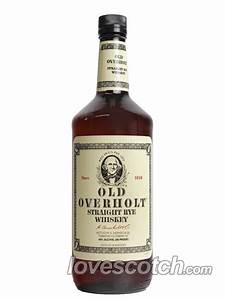
  • What are they having to eat? I knew part of this already, but did a bit of online checking. The menu: porterhouse steak, corn, collards with ham hocks, baked potatoes, corn bread, and macaroni salad. The men are drinking either Jax Beer or Old Overholt Rye whiskey. I would enjoy all of this except for the Rye which I never liked.
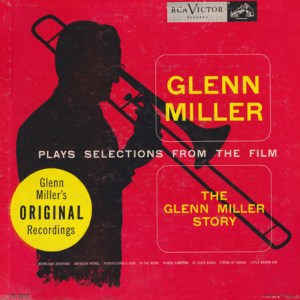
  • The family wanted music. So, after verifying that long playing records were, in fact, available in 1955 AND that RCA had a three-in-one (78, 45, and 33 and 1/3 rpm) record player, I needed to make sure they had something to listen to. Since the men in the family are KKK members, they won’t be listening to jazz, blues, or gospel. Glenn Miller seemed like a safe choice.
  • Now, if I can, I’d like to find out how long each of the tracks is so I can time the action with which song would be playing at five minutes into the dinner and ten minutes into the dinner, etc.  (I did this once before when I timed the cuts on a Scott Joplin CD with a ride between Tallahassee and St. Marks, Florida. Probably nobody checks these things, but I wanted to know what song would be playing as Emily and her father (in Widely Scattered Ghosts) reached various landmarks along the way. Heck, I even check the weather reports for the dates and cities where my novels are set to make the weather in the novel the same as it was in “real life.”

Okay, I only have one more thing to check. What happens if somebody gets shot in the arm with a target arrow? There’s so little history taught in med school, that doctors can’t tell me what they would have done in 1955. I was e-mailing back and forth with a medical museum curator who admitted that doctors seem to believe that their speciality “rose like a Phoenix out of the ashes of ignorance” just before they got out of medical school. So, on treatment, I need to skirt around the specifics I don’t know. I’m not happy about that, but as Vonnegut always said, “so it goes.”

Malcolm


Does “Bestseller” Influence Your Book Buying?

When the Pulitzers and other prizes are announced, news stories inform us that more people start buying those books. I suppose the same is true for books that become bestsellers even though that appears to happen while the book is en route to the bestseller lists rather than as the immediate response after an award is announced.

Traditionally, I stay away from bestsellers because, while pricing has changed, they usually cost more than I want to pay, so I traditionally have waited for the hardcover and trade paperback editions to run their course and hold out for the mass market paperback edition.

Some people are immune to bestseller lists because they only read genre books rather than “general fiction.” Others scan the lists for authors they’ve enjoyed reading in the past. So the fact that the book is a bestseller isn’t their main concern other than that status creates buzz and makes it more likely to be noticed.

I tend to read all of the books by certain authors (Donna Tartt, Mark Helprin, Pat Conroy, Erin Morgenstern), the latest books in series I’ve gotten hooked on (e.g., Dean Knoontz’ Jane Hawke series), and magical realism books such as those by Alice Hoffman. Otherwise, it often takes me many months to decide on a bestseller from an author I know little about (still haven’t bought Where the Crawdads Sing, but am tempted.)

The bestseller list at the beginning of this post is the NYT listing on Amazon today. See anything you like? American Dirt has gotten mired in controversy. I seldom read anything by J.D. Robb. I may ultimately read the Ann Patchett book if I run low on reading material. Friends’ viewpoints about any of these might influence me except when those friends either (a) read nothing but a genre I don’t like, or (b) read only the most politically correct books of the year.)

My approach to buying what I buy ends up being chaotic with plenty of madness in my “method.” Since I’m always reading a book, I mean daily, I don’t understand people who read one book a year or stopped reading books once they finished their last English course in school.

How do you decide to buy the books you buy?

–Malcolm

Malcolm R. Campbell is the author of “Conjure Woman’s Cat.”


Do all your characters sound like you?

When creative writing students turn in their first short story or dialogue exercise, the teacher’s response is frequently, “All of your characters sound like you.”

The writer had certain points to communicate via dialogue and distributed them amongst the characters as though their manner of speaking is interchangeable. Or, as the teacher might say, “You should be able to tell which character is talking by what they say and how they say it.”

Several student responses are likely: (1) A dozen synonyms for said. (Yes, there’s a difference between “he said,” “he yelled,” and “he whispered.”) But they don’t help if the words that are said don’t sound any different in tone, structure, word choice, accent, and focus than the three other people in the conversation. (2) The student thinks up a list of eccentric phrases and distributes these amongst the characters, rather like dealing out cards, so that EVERYONE TALKS FUNNY. The teacher is likely to say, “The people sound like they just escaped from a carnival freakshow.”

One of the hardest things for a writer to do is getting to know his/her characters so well that the way they talk arises naturally out of the person. People talk differently because they are different. The writer’s at a disadvantage here if s/he hasn’t spent any time listening to how “real people” express themselves. Some use slang, some have accents, others speak in short sentences while a few speak in paragraphs. Children sound like children and are influenced by fad words from school or (in modern times) words from texting. Older people may use terms from 40-50 years ago that young people may never have heard, as in “You ain’t got no gumption.”

One way to figure all this out is by reading the works of authors who write great dialogue. TV viewers and critics used to say “‘The West Wing’ has great dialogue.” Listen to a few of these shows and figure out what Aaron Sorkin did to make his characters’ dialogue memorable. Here again, the characters all had their issues, likes and dislikes, fears, joys, etc., so what they said fit who they were.

Resist the urge to pepper conversations with small talk. That slows down the story even if it does sound just like a conversation you heard in a store or on the subway. You are advancing the plot, not shooting the breeze. Read your words aloud. So they sound like they’re words to be read or words to be spoken?

If you look up “writing dialogue” online, you’ll find some decent advice that’s almost as good a learning by reading well-written novels.

Malcolm


It probably got your Grandfather LUCKY

It may have even gotten your Father LUCKY
Keep Up the Tradition – Lucky Tiger Company

We all know what it means when somebody says, “I hope I get lucky tonight.”

While researching the brand of hair tonic a sexist pig woud use in my novel in progress, I came across some ads for Lucky Tiger hair tonic that were (apparently) “OK” to run in the 1940s and 1950s but (no doubt) might cause a bit of social media flack today. Here’s one example from 1949:

And another from the 1950s:

So, the man here is just back from Africa after killing numerous animals for sport, and the first thing he does is use this hair tonic to prey on women. Needless to say, all the women in the Lucky Tiger ads I found were just delighted.

I don’t think women in “real life” had much in common with the women in these ads even though it was common in those times for “a man to pursue a woman until she let him catch her” (or so they said). Looking at ads like these, it’s obvious that patriarchy fueled our purchasing decisions as well as our view of ourselves and the opposite sex.

Even though high school and college-age individuals see the 1950s as ancient history, the deeply ingrained attitudes of that “ancient history” continue to impact men’s and women’s roles today. I can’t imagine how women seventy years ago reacted to these ads–along with all those happy housewife commercials that made cleaning the house look like fun.

Today, things are different, but not different enough.

Malcolm

Malcolm R. Campbell is the author of two contemporary fantasy novels, “The Sun Singer” and “Sarabande.”