This and That from, well, me

coracoverYes, I’m the guy behind the curtain of this blog. Seemed like it was time for a books update:

  • Two more of my e-books are being translated into Italian, “Cora’s Crossing” and “Moonlight and Ghosts.” Meanwhile, we’be found a translator to create a Spanish edition of “Sarabande.”
  • The sequel to “Conjure Woman’s Cat,” “Eulalie and Washerwoman” is now on the editor’s desk. (uh oh) I’ve seen a partial version of the cover art and it’s looking good. It’s being done by the by the same artist who did the cover art for the first book.
  • For years, I’ve put off writing the third book in the Mountain Journeys Series that begins with “The Sun Singer” and then moves forward with “Sarabande.” Don’t laugh, but I didn’t start it sooner because the protagonist knows more about magic than I do, and I thought, “Well, Malcolm, how in the hell are you going to write this book.” I thought about faking it, but that seems wrong. The book’s name will be “Aeon.” Shhh, my publisher doesn’t know about it yet.
  • My review of “A Girl is a Half-Formed Thing,” which I posted here recently, also appears on Literary Aficionado. Nice to show up on that site again! It’s been a while.
  • Have you seen this article: How Long Until a Robot Wins the Pulitzer? I don’t think it will happen for a year or two. What about you?
  • Since this is banned books week, let’s end with a quote about it: “I urge everyone to celebrate Banned Books Week by picking up a book that some closed-minded person out there wanted desperately to keep out of your hands.” – Jessica Herthel
  • If any of my books are banned, I’ll be really ticked off and might even use some profanity.

Malcolm

Why or Why Not?

“I read a piece in Marie Claire titled “I Published My Debut Novel to Critical Acclaim – and Then I Promptly Went Broke.” And I caught my head nodding in agreement with the writer. http://www.marieclaire.com/career-advice/features/a22573/merritt-tierce-love-me-back-writing-and-money/

“About once a year I find myself at a crossroad in my writing. I love freelancing, and Funds for Writers, and novel writing. I wish I could do just one of them, but the fact is these days you cannot just do one. You must diversify and spread your name (and talent) around to reach all the pockets of readers out there. It takes diversification to earn a living.” – Author Hope Clark

You would think, wouldn’t you, that if an agent accepts your novel, sells it to a big New York publisher, and the book becomes a bestseller, you’d be ready to work as a full-time author of fiction everybody wants to read. Hope Clark and I read the same article and, as she said in today’s newsletter, she does several things to maintain her income even though she wishes she could pick one of those things and work on it full time.

One way or the other, we need to ask how we can diversify and make it all work. A lot of writers teach. That’s their full-time job and, like most regular jobs, it provides the health insurance and other benefits. Well known writers can make money with speaking engagements. Others work for magazines, newspapers, corporate public relations departments, and other places who need writers. Many, of course, work full-time at some a job totally unrelated to their fiction.

If you have a family, your time is even more limited whether the children are in pre-K and grade school or are in high school or college. Having a family is a joy, if it’s meant for you, but it also carries a lot of time-consuming responsibilities. If you’re working full-time and then coming home to maintain a household and chauffeur your kids around to activities, your writing time during most weeks might be slim to none.

I worked as a technical writer, a job that’s not so much in demand any more. What I liked about it was that–except when my company was kicking off a new software package–the job seldom required overtime hours. On the other hand, when I worked in corporate communications, I always had to contend with deadlines that extended my working hours, or that involved after-work activities.

When a full-time job and one’s family take up most of one’s time, it’s very easy for the writing to fade away. For one thing, assuming you publish anything, it’s probably not going to bring in enough money to justify spending multiple hours a week away from your other chores. So, if you want to write books, the challenge is discovering why you want to and how to manage those reasons into why you want to (or have to) do the other things on your plate.

Simplistically, keeping up with fiction writing often means staying home when everyone you know is at a party, ball game, concert or outing at the park. It probably means that when the fall TV schedule begins, you won’t be able to watch all the new shows. So what are you going to do? Watch this season of “Survivor,” “How to Get Away with Murder,” and “Grey’s Anatomy,” or slog it out on a novel a few hundred words per evening? And, as most writers discover early in their marriages, the spouse is likely to be unhappy if you sequester yourself in your den every night instead of doing something together whether that’s watching a favor TV show or cleaning out the garage.

So, why are you writing? Perhaps wanting to write isn’t quite enough. Yes, I know, a lot of writers say during their first interview, “I always wanted to be a writer.” When they first started feeling that way, they probably thought they’d pay their dues by writing for pennies, then nickles, then dollars, and then ultimately have an agent and a big publisher behind them helping ensure a steady income. This is like every kid who plays sandlot baseball thinking they’re going to be accepted by a major league ball club. Chances are slim to almost none.

Maybe we don’t know why we write. We just do it because we have to. Okay, that might be enough as long as we understand the realities of the money side of this business. Or, perhaps you have a more complex reason and that lends itself to your involvement in multiple kinds of writing in addition to novels, or in work in businesses and groups that relate to the WHY of your writing–justice, the environment, law, politics. Perhaps that WHY is the foundation for a diversified income that fits hand-in-glove with the time required for writing.

Let’s hope we all find what that WHY is so that we can make our careers work.

–Malcolm


Writing magical realism: step-by-step suggestions

When the magic within a story is accepted as usual within an otherwise realistic setting, you’re probably reading or writing magical realism. It requires a light touch: if the magic becomes too overt or too over-the-top in terms of Hollywood special effects, then you’re out of the magical realism genre realm into fantasy, occult or science fiction.

Here’s an example

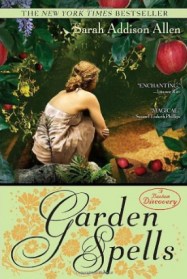
gardenspellsIn her novel Garden Spells, Sarah Addison Allen tells a story about a woman named Claire Waverly living alone in the family’s old house in a small town. Her family has always been viewed by others as odd or unusual in some way. She runs a catering business that’s in high demand because she’s not only a great cook, but uses the products of her own garden to enhance her dishes in ways that seem to help those who need to be helped: their luck or their emotions improve, they feel better, find their lives improving. She doesn’t advertise this: if she did, it would sound like an unbelievable health food scam and would no longer be magical realism. Each member of the Waverly family has a special gift that causes others to see them as slightly odd and/or highly talented.

The novel works on many levels as magical realism because: (1) We’re not seeing Harry Potter magic, (2) The small town setting lends itself to local legends and gossip that create an eerie overlay of maybe and perhaps that’s never quite analyzed in the light of day, (3) The magic is low key, not the kind that in other novels would turn into a thriller, witchcraft hysteria, (4) Her characters do what they do without overtly using “magical techniques” that require practice, meditations, or the stuff of either fantasy or dark arts novels.

If you  want to write magical realism, it helps if you’ve read a lot of it and have a feeling for the genre as well of being comfortable leaving a lot of things unsaid or hinted at rather than approaching the unusual in your story with a full-bore emphasis on “creepy stuff” as  Stephen King might approach similar material. Here are a few suggestions

Tips for Writing Magical Realism

  1. This magical realism book review site is a great place to learn tips about what works and what doesn't.
    This magical realism book review site is a great place to learn tips about what works and what doesn’t.

    Unlike fantasy, magical realism has strong plots and characters that would draw readers through the story if there were no magic at all. It’s hard to imagine the Harry Potter books without wizards and their magic. Garden Spells might work as a story in a small town even if the Waverly family didn’t have unusual talents.

  2. Choose a setting that lends itself to magic, unanswered questions and unusual events without attracting the attention of, say, the news media or the police or others who might shine a strong light on it. Small towns and rural settings both have legends and myths (whether you make them up or do a riff on those of the real place where you set your story).  Since a lot of people in today’s society get spooked by swamps, remote mountains, piney woods in the moonlight–along with the real or imagined creatures that might be there–going off the beaten track for your story gives you a lot of opportunities for implying that, say, the land is conscious or that birds and animals have unusual motives, or that keeping on the “right side” of folk beliefs is the healthy thing to do.
  3. The people who create the magic seldom talk about their magic; if they do, they don’t see what they do as any different from the way anyone else uses the tools of his/her trade to do or to create what most people cannot do or create. If you borrow from a real magical tradition such as Voodoo, witchcraft or hoodoo, research (or your own knowledge) will bring you a lot of ideas about ways of living a magical without turning the practitioner into a caricature.  As the author of a magical realism story, you never ever demean the myths, legends, beliefs, spells and practices of your magical characters or the enchanted landscape in which they live.
  4. If you use a real wilderness or other remote setting, your book will be more believable if you research the flora, fauna, weather and people who live there now–or lived there in the past.  For one thing, you need realism to play off against the magic. For another, it’s hard to show characters moving around in an area if you don’t know what it looks like. And finally, natural magic uses things from the land that witches and conjurers grow, harvest or find. Don’t make this up: it will kill your story. Find out what kind of leaves are used for the spell you want, research what the plants look like and whether they grow in the area where your story is set, and make that a natural part of your narrative.
  5. Refer to an area’s legends and myths. For real settings, you’ll find these from folklore societies, books with titles such as “The Ghosts of Quincy” or “Florida Legends” and “Creation Myths of the Sunshine State.” Your job is usually not to retell any of these stories, rather to refer to them the way people in a city might mention in passing the day the trolley car first came by the house or the fact that some accident happened years ago in a certain place. For example, in my novel in progress, one character tells another not to eat gopher tortoises because they were created by the devil. The legend about that is longer than this post, but in a magical realism book I can simply refer to that as a fact and move on. I always prefer to use nuggets out of the real myths and legends from a place rather than making them up from scratch. For one thing, they fit the place well. For another, they convey a folklore truth that many people living there have heard before and/or a bit of folklore I want to help keep alive.
  6. Certain events/feelings that are told as metaphors in a mainstream realism novel can be told as though they actually happened. Be careful with this, or it won’t seem believable within the story’s context and the character’s beliefs. For example, in realism, a character who needs to apologize to another might say, “I felt as though I was so small, I could hide under the dining room chairs until my parents left for work.” In magical realism, you don’t include the words “as though” or “as if.” You state it like it’s temporarily the case. Interior monologue and/or lyrical propose are two ways you can do this so that a typically unrealistic event suddenly seems plausible within the magic of the moment. For example: “When my conjure woman is angry, she is taller; she doesn’t look smaller when she walks down to the far end of the beach.”

amfolklore

There’s no recipe here. In a sense, you have to feel it and sense it before you can do it. Once you practice the genre a lot, you don’t have to consciously think about the components any more than a person with years of experience thinks about what s/he does to make a bicycle work. It also helps if you have an open mind and a sense of wonderment or even magic about people and the natural world.

At any rate, I toss off these suggestions as ideas that might work. Or might not.

Malcolm

Malcolm R. Campbell is the author of the magical realism novel “Conjure Woman’s Cat.”

Being preoccupied – one hazard of being a writer

If somebody wrote a blues song about living with a writer, it might start out something like this:

My baby’s lyin’ next to me, but I ain’t here,
I’m just a haint who ain’t dead, cause she’s off yonder inside her head.

My wife told me many years ago that she can always tell when I’m working on a novel or a short story because I’m not in the room even when I’m in the room. She says I’m preoccupied, but we both know it’s more than that. I haven’t gone off into a trance, but I’m getting close.

I can pull myself back from this preoccupation if I have to, if the cops bust into the room or the world ends, but otherwise the story in progress is so addictive that it has more power than “real life.”

dadreamWhen a writer’s in a writing trance, the sights and sounds of his/her story display in the mind’s eyes with greater clarity than memories and dreams. It’s almost like s/he is there with the hero being chased down the street by muggers, the people escaping from a burning building, the troubled woman on a swing, the lovers walking on a beach in the moonlight , or a room full of employees getting chewed out by the boss.

It you’re a writer, you know what I mean. If you live with a writer, you have my sympathies.

Once the story’s complete, the daydream quality of my non-writing hours disappears and I’m back to normal. Thankfully, I don’t work on multiple stories/novels at a time, so when I write the words “the end” on one story, I don’t immediately become preoccupied with the next. I say “thankfully” because being not fully present with others when you’re supposed to be watching a TV movie together, shooting the breeze on a car trip, or sharing a carafe of wine at a fine restaurant always comes off as disinterested uncaring.

One of my pet peeves is people who text or talk on their cell phones when having dinner with my wife and I or who have have come over to play cards or shoot the breeze over drinks. Few things are more rude than that even though most cell phone users think the world will stop if they don’t answer every call. While writers don’t mean to be rude and caught not listening or not responding to others in the room, they can’t always help it. And we come across as worse because we don’t have a cell phone plastered against our ear while everyone else around the dinner table sits in limbo while we yak about something inconsequential. Cell phone interruptions are an accepted kind of rudeness; daydreaming in front of others is not.

Maybe I need a sign around my neck that says: Sorry to be rude, but my short story’s calling I’ve got to take this.

Most people will either think that’s a joke or that the writer is crazy, that is, unless they’ve lived with a writer and his/her trance-like moments and understand what’s going on.

Seriously, it’s not that really want to ignore you. It’s just that I haven’t yet found a twelve-step program to cure my writing addiction.

–Malcolm

Still addicted after all these years, Malcolm R. Campbell is currently preoccupied with the sequel to “Conjure Woman’s Cat.” 


Getting the sequel right

I’m working on a sequel to Conjure Woman’s Cat. It’s been more difficult to write than CWC. Likewise, Sarabande–the sequel to The Sun Singer–was harder to write than TSS. I don’t think my difficulties with sequels are unique to me.

On the other hand, some writers produce multi-book series with the same characters and similar plot lines, so whatever drags me down while working on a sequel must not bother them or they’d go nuts by the time they get to the third or fourth book in a series.

The books grew more complex as the characters aged and advanced through their years at Hogwarts. A large cast of characters with conflicting motivations and loyalties also kept the books fresh.

With a sequel, what can possibly go wrong?

  • When everything is said and done, it might lack the unique freshness the author achieved in the original book.
  • The characters don’t seem to be the same. I’m not talking about character growth, which is good; more like their being apples and oranges different than they were in the first book, ending up as different people.
  • The events, descriptions, voice, and mannerisms had to be consistent within the first book. With the sequel, there’s always a danger that the author will inadvertently change something or contradict something from the original without even noticing it.
  • Some of an author’s favorite phrases and descriptions might get into the second book to such a great extent that readers feel they’re reading the same book twice, or a hastily written sequel in which the author plagiarizes himself.

If you’re a writer, perhaps writing sequels bothers you for other reasons. If you’re a reader, you’ve probably found yourself disappointed with some of the sequels you read because they didn’t live up to the wonders of the original.

Frankly, I don’t have an easy solution for solving my concerns about sequels. But here are a few ideas.

  • The sequel can focus on a different character than the original. On the plus side, if you take a secondary character from the original and make him or her the protagonist in the sequel, you’re dealing with a lot of new ground. You’re adding information, events and experiences that weren’t mentioned or even hinted at in the original. On the minus side, try to imagine the Harry Potter books focusing on a different protagonist with each follow-up book in the series. This can anger fans, even if you’re not a major bestselling author, because they return to your work wanting to hear more about the character they grew to love (or hate) in the first book. I feel that the dangers here might outweigh the advantages  even though I used this approach when I wrote Sarabande.
  • Knowing your characters in the same way you know real people makes them more likely to seem just as believable and consistent in the sequel as they did the first time out. I have always thought there was something false about making a grid for each character in which I listed his or her traits, motivations, personality, brief history, etc. Sure, this will keep you from changing a character’s hair color by accident in the middle of a book, but I see such grids as somewhat artificial. We know and keep track of our real life friends without needing a chart showing everything about them. If you really know your protagonist, and other primary characters, then I think you can take them into new situations without having to fret about what they would do or say. When you have a real-life problem, you know (usually) in advance which of your friends to turn to for a shoulder to cry on or for practical advice. Knowing our characters in this way helps keep them from changing into totally different people in the sequel, much less doing something that’s (so to speak) out of character.
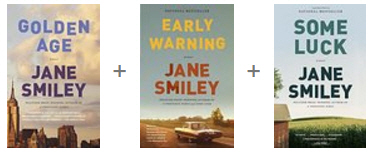
  • Jane Smiley's "Last Hundred Years Trilogy" takes a family through a century of real and fictional events as the characters age, marry, have children and pass away. New real-life events played off against the characters and helped keep the books interesting.
    Jane Smiley’s “Last Hundred Years Trilogy” takes a family through a century of real and fictional events as the characters age, marry, have children and pass away. New real-life events played off against the characters helped keep the books interesting.

    Keep your notes from the first book. I don’t plot or outline any of my books: if you do, don’t throw those away. I do take a lot of notes as I do research. The flora and fauna living around a protagonist’s piney woods cabin probably won’t change from book one to book two. Keeping the notes reminds you what you said so that the sequel is consistent. When I have multiple characters, I sometimes make a timeline that shows when they were born, when they married, when they had children, etc. If you do this, too, then that timeline will serve you well when you write the sequel.

  • While you may have had certain in jokes and events that were mentioned more than once during the course of the original, the sequel will be fresher if you don’t use the same ones over again. Referring to a few of them in the sequel is so similar to people in real life often telling the same stories many times, that it not only makes the characters real, but it also ties the sequel to the original in a positive way. However, the sequel needs to add new in jokes, set pieces and personalities for the characters to talk about rather than rehashing everything from the original. In some ways, oblique references in the sequel to often-mentioned events and attitudes in the original also adds realism because we don’t always tell the same yarns or remember-whens the same way each time we think of them.
  • While keeping the characters consistent from the first book to the second book is important, I believe it’s equally important for the protagonist to have different challenges in the sequel. Sure, some TV series pit the protagonist hero against similar kinds of bad guys in every episode. This works for a while, but then it gets stale. So, if your protagonist in the first book is, say, coping with the aftermath of a natural disaster, the second book probably shouldn’t show them coping with a new natural disaster. As authors, we need to avoid having our books sound like they all have the same plot, such as a hurricane in book one, a flood in book two, and an forest fire in book three. For every series that works that way, I think there are probably ten that fail.
  • Sequels are also helped (though this isn’t mandatory) if they take place with events, hobbies, avocations, locations, and issues the author knows well. In my case, I have focused on times and places where I lived or worked, giving me a feel for the places and what was likely to happen there.

As writers, we play “what if” with characters and situations. The thing that makes this fun for us is that after we play one kind of what if with a character, it’s boring to do that again whether it’s personal relationships, disasters, bad guys, injustice, or vacation hi-jinks. Knowing one’s characters and keeping a few notes helps us write sequels that are both consistent and fresh when compared to the original books.

Malcolm


Webinars and Courses that Rip off Writers

The other day, I saw a promotion for an online course that claimed to be filled with secrets for increasing Kindle sales of your books to high, money-making sales numbers. The plan was advertised as being easy to implement and took so little time to keep going that it would free up a lot of the writer’s time for writing and researching future books.

I have no idea what the plan is because in order to find out, one had to sign up for a course costing almost $200.  Quite possibly, that could be the best $200 I ever spent. But I’m not willing to risk the money without more details about the plan. Apparently the course is a one-time deal before the webinars are released at a cost of $900 or more.

These prices are exorbitant.

money2If somebody has a marketing plan that’s really working for them by bringing in money like they’ve never seen before, why must it be sold sight-unseen to the rest of us rather than offering the details in a magazine article or in an appropriately priced Kindle or paperback book?

While this not be the case with the plan I’m thinking of, many no-fail plans require writers to do what they may not want to do: change genres, write shorter books, write faster, be more commercial, have a monetized website, sign-up for third party services that also cost money, attend conventions and participate in panels and book fairs, or other tasks which may not fit some writers’ lifestyles, abilities, and budgets.

My personal opinion is that a webinar is a horrible way for dispensing detailed information because it’s linear. If the information were in a PDF, a Kindle book, or a paperback, one could see large blocks of information, headings and graphics at a glance rather than waiting for the webinar/podcast to get to them. Adding insult to injury, many of these video presentations include guests and that means time is wasted introducing them and chatting with them and adding happy talk throughout the presentation. Even if you love webinars, if they’re not free, then they are more costly than reading a e-book with the same information in it. You may not agree, and that’s fine. I primarily resent the prices.

I subscribe to “Poets & Writers Magazine” and AWP’s “The Writer’s Chronicle” because I want professional advice and tips. “Writers Market” is another alternative as well as local and state writing organizations. Writers are, as many will tell you, not really competing with each other, so sharing techniques at a reasonable price (book/speech/article) rather than doling them out for a giant profits seems to me too be the professional thing to do.

A lot of promotional experts offer free PDF and Kindle files filled with tips in hopes that after reading those, the writer will subscribe for more expensive services. The tips vary in quality and application. They’re great idea generators even if you can’t use all of them. The more expensive services are described in detail so that the author knows what s/he is getting.

I might have just missed out on a money-making secret by turning down the $200 course. On the other hand, I’ve been around long enough to worry about buying a pig in a poke.

Malcolm


Oh no, I missed the top earning writers’ list

Here’s the list (stolen from Jane Yolen’s Facebook profile):

1. James Patterson $95 million
2. Jeff Kinney $19.5 million
3. J.K. Rowling $19 million
4. John Grisham $18 million
5. Stephen King $15 million
5. Danielle Steel $15 million
5. Nora Roberts $15 million
8. E.L. James $14 million
9. Veronica Roth $10 million
9. John Green $10 million
9. Paula Hawkins $10 million
12. George R.R. Martin $9.5 million
13. Dan Brown $9.5 million
14. Rick Riordan $9.5 million

I’m shocked. I don’t see my name there. What the hell happened? Maybe Forbes magazine screwed up the math.

–Malcolm


Storytelling, dreams, and magic

Life in Truth (as opposed to the “life actual” world we see with our eyes) “tells us of the world as it should be. It holds certain values to be important. It makes issues clear. It is, if you will, a fiction based on great opposites, the clashing of opposing forces, question and answer, yin and yang, the great dance of opposites. And so the fantasy tale, the ‘I that is not you,’ becomes a rehearsal for the reader for life as it should be lived.” – Jane Yolen in “Touch Magic”

MRbloghop2016When we wake up from a dream, we’re aware of the fact that we didn’t realize we were dreaming while we were dreaming, but accepted what was happening as real no matter how improbable it seems in the light of day. Daydreams are somewhat the same. We’re imagining surfing in Hawaii or climbing Mt. Everest when somebody says, “you look like you’re a thousand miles away.”

Authors hope readers will react to their books like this. We want the reader to step into the story and, as the words flow forward along the pages, believe a little or a lot that the story is real. When a book is compelling, readers are often startled when the phone rings or somebody knocks on the front door and they find themselves back in “life actual” in somewhat the same way they react when they wake up from a compelling dream.

It’s said that Samuel Taylor Coleridge suggested that when stories contain human interest and a semblance of truth, readers will temporarily suspend their judgement about the implausibility of the plot, setting and characters. Readers willingly suspend their disbelief and see the novel, short story, play or movie as life actual rather than life in truth.

A general fiction author will take us to a real place, or at least a realistic place, in our own comfortable domain of life actual (sometimes called “consensual reality”) and tell us a story that could happen (or might have happened) in the “real world.” (I put “real world” in quotation marks because both Quantum physicists and spiritual gurus have called into question whether the world we perceive as real is real.)

Contemporary fantasy authors will take you to a hidden place within the world we know where magical events occur. The Harry Potter series is a good example of this. Most of the magic within Rowling’s books was confined to Hogwarts and other magical locations. The consensual reality at Hogwarts was different from the consensual reality in London, and both readers and wizards knew that they were traveling between parts of the world with different rules.

perception2Magical realism authors bring magic into the world we know. In a magical realism story, the magic is part of the characters’ everyday life and is accepted as just as real and viable as the cars they drive and the pots and pans in their kitchens.  The characters don’t see magic as something with the world “maybe” attached to it whether that magic comes from the land, from ancestors or spirits, or from the spell casting or innate abilities of the people involved.

The authors of general fiction (or realistic genres), contemporary fantasy, and magical realism all want readers to suspend their natural disbelief in the reality presented in the novel, and accept it as real in the same way they accept dreams and daydreams as real. In some ways, readers are like those who go up on stage during a hypnotist’s or magician’s performance and say, “Yes, I’m willing to be hypnotized” or “Yes, I’m willing to be fooled by your illusions.”

Perception is Reality

Storytellers, hypnotists and stage magicians (illusionists) can place you into somewhat of a dream state in which you accept what’s happening as real because we believe that perception is reality in one or more of these ways:

  • Psychologists might say you see the same reality as everyone else, but are impacted by it differently because of how you feel about it or yourself.
  • Quantum physicists might say that reality is more than we perceive with our physical senses and that our thoughts or our presence impact it in ways we may not realize.
  • Those who study and accept what used to be called “new age” belief systems will say that our perception and our thoughts create the reality we experience and that we can be taught how to do this consciously.
  • And others will say that our perception of what is real can changed temporarily due to hypnosis, strong emotions or other traumas, alcohol or drugs, or some other life actual cause.

When it comes down to it, most authors don’t think about “perception is reality” while they’re writing. Learning one’s craft brings authors the techniques they need to tell a page-turning story that readers perceive as real while they’re reading it. Most of us want to be tricked one way or another when we watch a hypnotist’s or a stage magician’s performance. We don’t usually think about being tricked or enchanted or hypnotized when we pick up a novel, but that’s what happens if the story on that novel’s pages is well told.

Magical Realism or Just Plain Realism?

I see the world as a child of the new age. I’ve had arguments with publishers about whether my novels and short stories should be called general fiction or magical realism because I believe everything in my stories is real. But, publishers, bookstores and readers tend to like seeing the genre labels because those labels help them choose the ways they like being hypnotized or enchanted (in a magical sense) by an author.

What do you see?
What do you see?

I’ve always written about the world I perceive. Until others pointed it out, I didn’t realize I was writing magical realism. I had to ask, “What makes my stories fit into that genre?” Publishers, editors and writing gurus kept telling me, “You and your characters. . .”

  1. View the spell for creating a pillar of fire or jinxing a troublesome neighbor as no different than a recipe for mac and cheese.
  2. Assume haints and other spirits are just as likely to be in the forest as deer and raccoons.
  3. Give myths and legends just as much credence as recorded history–or suggest they’re more accurate
  4. Think trees, rocks, storms and the land itself are conscious.

I said, “Yes, of course I perceive everything that way. Doesn’t everyone?”

As it turned out, most other people don’t share my perception of reality in their day-to-day lives; however, enough of them like being lured into short stories and novels with that kind of perception to make magical realism a popular genre.

I think I was the last to know.

The world as we know it draws lines between our dreams and our waking hours, between illusion and five-senses perception, between magic and non-magic, and between life actual and life in truth. Magical realism takes away all those lines.

Malcolm

This post is part of the Magic Realism Blog Hop. About twenty blogs are taking part in the hop. Over three days (29th – 31st July 2016) these blogs will be posting about magic realism. Please take the time to click on the frog button for a list of other blogs in the hop. Links to the new posts will be added over the three days, so do come back to read more.

How does your worldview influence your writing?

When you read a hard-as-nails police or espionage novel, do you wonder about the worldview of the author? Do you assume s/he’s politically conservative, possibly career law enforcement or military, and/or heavily interested in weapons, military strategy, law and order issues and personal and national security?

When you read a novel about people coming of age, discovering themselves in hero’s journey styled stories, or finding love among the ruins, do you wonder if the author is writing out of his or her own philosophy of life and “the big picture”? Do you assume s/he is politically liberal, possibly a teacher or a psychologist, and/or heavily interested in social programs, personal and religious freedom and a lifetime of learning?

I’m not sure we should make these assumptions. If we do, we might be surprised how often an author writes “against typecasting.”

worldviewOn the other hand, many of us write short stories and novels that are heavily influenced by our “philosophy of life” or our view of the universe and an individual’s place within it. When I read a page-turning espionage novel and marvel at the author’s knowledge of weapons and tactics, I see quite clearly that I could never write such a book. I have no experience with military weapons and have never been drawn to study them, much less to form a clear picture about their technical differences or what it would be like to use them in a real world situation.

On the other hand, when I read a magical realism novel I assume that the author has an affinity for the magic and the stories generally associated with the time and place in which the story is set. A good researcher can find out what myths and legends might apply to a town or a region. But blending those into a story probably requires a sense of magic just as a spy novel often requires its author to have a sense of weapons and combat situations.

Perhaps somebody has written a doctoral dissertation or a definitive book about stories and the authors who tell them. Perhaps there’s research out there that shows the connections (or lack of connections) between authors’ books and authors’ political/philosophical/religious beliefs.

Personally, I see writing within–or somewhat within–one’s worldview as another way of writing what you know. Expediently, it’s a practical approach because in general terms, our worldview is our comfort zone. We know more about how situations within that view might unfold and how characters embracing our attacking that worldview might develop, react and think. Some (perhaps many) authors might refute this idea by showing how they have been a chameleon–so to speak–by writing books that contrast so greatly with each other that readers could only conclude that they have no worldview at all, have multiple worldviews, or changed their worldviews over time.

That said, perhaps my musings on this subject boil down to this opinion: If you’re an emerging writer, writing from within your worldview gives you a greater chance of “getting it right” than writing about characters and events you don’t grok in your daily life.

That’s my experience. What’s your experience?

–Malcolm

Malcolm R. Campbell is the author of fantasy (“The Sun Singer,” “Sarabande”), paranormal (“Moonlight and Ghosts,” “Cora’s Crossing), and magical realism (“Conjure Woman’s Cat,” “Emily’s Stories,” “Willing Spirits”) novels and stories.

Yes, it has to be accurate even if it’s fiction

I grew up in a journalism family, married a former journalist, worked as a journalist in the Navy, and taught journalism at the college level. So, I watch the daily news with dismay when I see how slanted so much of it is. Consequently, a lot of voters are making up their minds about candidates and platforms that are skewed by out-of-context headlines, manipulated interviews, anchors and reporters who argue with those they’re interviewing rather than asking questions and letting the facts go wherever they go, and panels of experts that are set up to exclude those who don’t agree with the network’s stance.

When I taught journalism, a lot of students came to class thinking that editorials didn’t have to be factual because the words represented a personal opinion (or the opinion of the newspaper). So, as we see on Facebook today where people say all kinds of political things without checking out their accuracy, students tended to say what they thought about an issue without making sure their views were based on the realities of the issue.

Such editorials get chopped a part in news organizations (the good ones) because an opinion piece is so easily discounted when the writer bases his or her thoughts on false facts. Readers who don’t see that the facts are false are, of course, being lied to when the writer feeds them falsehoods in support of whatever agenda s/he has.

What about fiction?
factsSome people say it’s okay to make up real world facts in a novel because the whole thing’s fiction. With all due respect, that’s one of the stupidest and most inaccurate opinions about writing novels and short stories I’ve ever heard. Obviously, fantasy worlds don’t have to agree with the realities of our world, though the author needs to make those worlds internally consistent. And, we allow some liberties in historical fiction, especially when such novels include conversations between historical people that weren’t witnessed (much less transcribed) by anyone else. Alternative histories, of course, show how things might have gone if a battle went another way or if some other factor was changed, so we don’t expect them to adhere exactly to the historical record as we know it.

Most authors don’t have the resources to have expert fact checkers look at every single scene to see if the scene would make sense to somebody who’s actually in the business/hobby/avocation/career that’s the focus of the novel. Major authors even get criticized by policemen, firemen, soldiers, lawyers, doctors and other professions who say that while the novels are page turners, they contain factual errors or ways of thinking that don’t match the realities of those who do the work.

Indie authors have more trouble with this, I think, partly because some of their mentors are telling them facts can be lax in fiction and partly because they don’t have the resources to read more, interview experts, or follow experts around on the job to see how a specific career works. There’s also a lot of pressure these days to write fast and publish fast. Many famous novelists spent (and, in some cases, still spend) many years writing a book. In contrast, a lot of authors try to copy the prolific Stephen King by turning out multiple novels on one year. (King, of course, often includes experts in his acknowledgements that will talk to him because of who he is but who wouldn’t give an unknown the time of day.)

My opinion, is that we owe it to our readers to get the facts right to the best of our abilities and resources. When the facts in a novel are wrong, they are very compelling to readers who have no way of knowing the facts: so it’s easy for readers to assume that the novel more or less is basing its plot on correct police procedures, how courtrooms really work, what a doctor actually might do in the operating room, and on the real beliefs of various minority religions, groups, and factions.

I write about hoodoo and witchcraft, so I am very conscious of the fact that the media, Hollywood, and a lot of commercial novelists perpetrate the belief that hoodoo practitioners are ignorant and that witches worship the Christian devil. Both are false. Yes, the lie is perhaps more exciting in a high-stakes thriller novel, but the result is just as anti-education and anti-truth as an editorial in a newspaper that bends the facts in order to make the opinion look stronger.

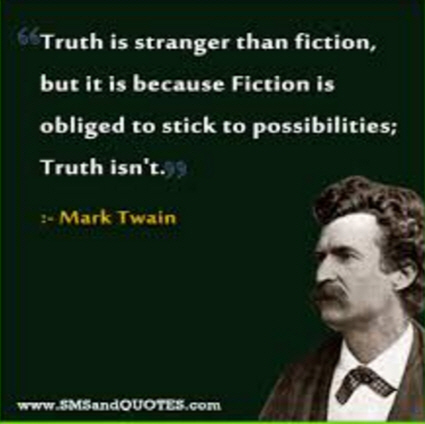
Truth is Stranger Than Fiction

At least, that’s what a lot of people say.  I always told my journalism students, that writing editorials and essays based on questionable facts was pure laziness and/or an intentional slanting of the piece. I see novels the same way. That is, I don’t think a skilled writer needs to subvert the truth in order to have an exciting plot that evolves through memorable, three-dimensional characters. Most of us have too guess a lot when we write about professions, situations, and places that we’re learning about through research rather than having been in those professions or situations or places. So, we have to accept the fact that no matter how much we check our facts, a “real life” person might say, “it would never happen that way.”
truthstrangerthanfictionOne way to combat that is to interview somebody in the group/profession/avocation you’re writing about. Before doing that, the author needs to do background research so that the questions don’t sound stupid and so clarifications of differing viewpoints uncovered in that research can be made by those you interview. I’ve found a surprising number of experts in all kinds of things that will respond to my questions via e-mail even though I’m not a big name author. I usually ask if it’s okay for me to include their name and/or organization in the acknowledgements section of the book.

Another way is to have a friend of colleague who’s conversant in your novel’s subject matter read through some or all of the manuscript.  If you have a presence on Facebook, the odds of finding somebody in the profession/avocation/group you’re writing about is certainly higher than our “real-life” circle of friends. Many people like the idea of being beta readers or in reviewing portions of the book relating to their own professions. Another source of information comes from bloggers who specialize in accurately covering their own hobbies and work. They’re often enthusiastic about authors who want to cover their areas of expertise correctly.

Finally, you can avoid some kind of “that doesn’t sound right” issues in your choice of your novel’s point of view. If you write the story in the first person, you’re going to be closer to the protagonist and his/her thoughts than you are if you write in restricted third person. It’s one thing to get procedures and techniques correct–via your research–but much more difficult to get the protagonist’s thoughts correct. How an individual lawyer, policeman, minister, hoodoo lady, doctor or CEO thinks about what s/he is doing is very difficult (unless you have a beta reader from that profession). Needless to say, using a character’s internal monologue about a subject you’re not totally conversant with is more likely to expose gaps in your research than a simple statement followed by the words “he thought.”

When I wrote Sarabande, a fantasy novel with a female protagonist, I found that with some advice from women, I could accurately portray a female character in a believable fashion. One reason for this was that the character came from a different universe and was reacting to our universe; what she might say or do or think was easier to “fake” because she came from another world.

However, when I wrote Conjure Woman’s Cat, about an elderly Negro conjure woman from the 1950s, I didn’t tell her story from her point of view. Why? Because I didn’t think I was capable of getting inside the thoughts of my character. So, I had her cat tell the story. This way, I never had to show her thoughts directly because, quite frankly, I wouldn’t know how to do that in a way that rang true. My wife and I have had cats in our house for an entire married life, so I’m fairly used to how they behave and figure it’s unlikely a lot of cats will read the novella and say, “We would never think something like that.”

We have to use our skills as writers and part-time researchers to get around the things we don’t know when we’re telling a story. I’m interested in super natural subjects, so I’m much more attuned to writing about them than, say, police investigations or espionage. So, I avoid the problem of lack of accuracy by staying away from stories I can’t do justice to and which–when it comes down to it–aren’t my cup of tea to write about.

Bottom line, I think accuracy makes a better novel. That’s my opinion. What’s yours?

–Malcolm

TJnewsletterpromo