I love the self-taught writer

“Everywhere I go I’m asked if I think the university stifles writers. My opinion is that they don’t stifle enough of them. There’s many a best-seller that could have been prevented by a good teacher.” – Flannery O’Connor
englishteacherI subscribe to several writer’s magazines and occasionally find an article I like. I like articles that make suggestions, start people thinking on their own, send aspiring writers off to their keyboards where they just go for it.

I made my worst grades in high school and college English classes because, (a) I already spoke English and didn’t know why I needed a course in my native language, and (b) When it came to writing–and worse yet, to reading–the teachers and the textbooks strayed far outside the boundaries of suggestion.

I balk at rules. Suggestions, though, are like writing prompts. (“A man walks into a bar, orders a glass of milk, and the bartender kills him.”) With a prompt or a suggestion, the sky’s the limit. With a rule, the creative person is stuck more or less in a coffin with no place to go. When you ignore the rules, your grade suffers, even when you do it well.

“Write an analysis of this classic book, discussing the symbolism I’ve already told you is it it,” the teacher tells us. Screw that. I’ll tell you what I see in the book, not what you see in it or what the author of our anthology of excerpts (complete with non-transparent discussion questions) sees in it. The book = me + the words. That’s it. You (the teacher) are not there. When the teacher doesn’t find his belief system in your term paper, your grade suffers, and woe be unto you if your belief systems makes more sense to the teacher than his or her own.

When I look through a writer’s magazine for suggestions, I stumble over dozens of advertisements for MFA programs with long lists of regular and visiting faculty members who will help “you” become a better writer. I don’t think this is possible and that what really happens is those who don’t want to write get properly stifled and that those who do only listen to the lectures and critiques and discussions to hear what fits the philosophy of writing they have before they walk in the door.

When kids are free do go outside and simply play, they come up with amazing things as they follow their whims and their imaginations and their feelings of that moment. This is how I visualize writers in the process of teaching themselves. They follow the intuition they have right now, rather than being given a list of literary terms and styles to use in a writing assignment. Unfettered is where our best work arises.

My opinion, to be sure. But try it (that’s a suggestion and not an order). In fact, this entire post is biased because it represents what I like. . .reading what I love, experimenting with stuff, and seeing what happens. Others may like short story instructors to say “today we’re using irony” and poetry instructors who say “today we’re using enjambment.”

It’s not that I think we should legislate against English classes for English speakers and creative writing classes for people who want to write creatively or even against running a Master of Fine Arts degree for people who want some resume material. We might see better books if we did that, but somehow, there’s something uncomfortably authoritarian about ridding ourselves of those who want to force rules upon us with yet another rule. So, we’re stuck with it, being chained to a system for writing freely.

Philosopher Denis Diderot purportedly said, “Let us strangle the last king with the guts of the last priest.” I’ve liked that statement ever since I first heard it in nursery school or kindergarten. A word of warning, if you play with that statement, substituting other professions into it, it’s best not to write a theme in English class that attempts to prove the truth of the argument that “We should strangle the last creative writing instructor with the guts of the last English handbook author.” It seemed funny at the time, but my teacher took it personally, which is what I intended while proclaiming that I was speaking, well, philosophically with a touch of irony.

Basically, I believe that if a person wants to write poems, short stories and novels, they should get on with it, run them up the flagpole, and see what people think. If nobody gets it, perhaps they need work. Well, writing is always work, so that’s win-win for everyone. As writers, I think we flourish when we put out moments of free play down on the page.

–Malcolm


A great example of local history for authors

I like history and folklore and frequently mention them in my books as part of what makes up the place where my story is set. Since history and folklore are tied to real people and what those people believe, the interesting tidbits we use need to be treated with respect.

We paint the reality of a place in part with old stories.

I’m currently reading Zora Neale Hurston’s Tell My Horse, a folkloric study of Jamaica and Haiti based on her trip there in the 1930s. Early on, she talks to a man whom she refers to as Brother Levi. What Brother Levi has to say about the meaning of the word “Christmas”might sound sacrilegious to some people. That’s fine, because if an author were to mention this story in a book, s/he would be doing so not as gospel or a religious tract, but to establish a strong ambiance for the location.

The writer doesn’t necessarily paraphrase a story like this. S/he has a character mention it or mention the days when Brother Levi was a strong influence on local culture and beliefs, or perhaps includes it in a narrative overview of the country’s beliefs that newcomers are unaware of and might come across over time.

Hurston’s Story

Brother Levi: “We hold a candle march after Joseph. Joseph came from the cave where Christ was born in the manger with a candle. He was walking before Mary and her baby. You know Christ was not born in the manger. Mary and Joseph were too afraid for that. He was born in a cave and He never came out until He was six months old. The three wise men see the star but they can’t find him because He is hid in the cave. When they can’t find him after six months, they make a magic ceremony and the angel come tell Joseph the men wanted to see him. That day was called ‘Christ must day’ because it means ‘Christ must find today,’ so we have Christ-mas day, but the majority of people are ignorant. They think him born that day.”

I have no plans to write about Voodoo in Jamaica. But if I were setting a novel there, I would find this snippet a delightful way of setting the stage, of showing an alternative point of view. I love reading folklore for what it is, but I take note of things that might one day become part of the depth of place I’m always trying to establish when I write.

–Malcolm

Malcolm R. Campbell is the author of the award-winning “Conjure Woman’s Cat” and its sequel “Eulalie and Washerwoman,” magical realism novels about a north Florida conjure woman’s battle against racism and the Klan.

Revising and rewriting old books

Looking at the older drafts of my book and short story manuscripts is similar to going down into the Grand Canyon and seeing the strata of past eras stacked up like cord wood.

Every revision of a book came at a different era of my life, eras that no longer represent the focus of my thinking in the present. Same story, of course, just as I’m still the “me” of ten or twenty years ago. But the ambiance is different. The emotions change, too, depending on whether I was angry about something similar to an event in the novel or, some years later, felt more mellow about it.

oldbookI’m reworking an old novel now that has gone out of print. I’m surprised by some of the things I find: (a) Wow, did I write that? (b) Crap, why the hell did I say that? (c) I don’t remember this scene at all.

I try never to change the basic story, but tend to polish a little here and clarify the meaning a little there. Of course, Amazon keeps everything, including books that came and went years ago and haven’t been in print for years. So, if I get this book fixed up the way I want it, there will be an author’s note at the beginning that tells readers the names of previous versions. (I’m not into the romance authors’ ploy of releasing old stories with new names and/or new covers so that readers buy them without realizing they read the things 20 years ago.)

Self discovery

A writer’s journey down into the depths of his older work shows him (hopefully) that he’s writing better stories today than he wrote when he first started out. Most of my really old stuff never gets revised! The work also shows him where he might have slipped in recent years as though he forgot about some of his better techniques. He sees changes in himself as well, for the work–as Virginia Woolf wrote in Orlando, “Every secret of a writer’s soul, every experience of his life, every quality of his mind is written large in his works.”

If you’ve ever come across a diary you kept years ago or the saved letters you wrote to an old friend or family member who’s since passed on, you know what I’m talking about. No matter how careful or flippant or circumspect you were, your secrets are still there–the secrets about yourself as you were then, whenever you wrote what you wrote. What a strange and eerie way to re-discover the selves we thought we’d outgrown and buried in the past.

I see all this when revise or rewrite old books. In some ways it’s a blessing, and it some way’s it’s not.

–Malcolm

If you love magical realism, Florida, conjure or a bit of mystery, I invite you to discover my two folk magic novels, “Conjure Woman’s Cat” and “Eulalie and Washerwoman.” 


Some scientists say we know little to nothing about reality

The bar room response to statements like “Some scientists say we know little to nothing about reality” is, “How would we know?”

As an author, I’m very conscious of the reality I create when I write a novel. What the readers see and when they’re allowed to see it via a biased or unbiased character is closely orchestrated.

Is this reality or one version of reality
Is this reality or one version of reality?

Author Zadie Smith (Swing Time) said in a recent interview, “People want to control how they are perceived. On Facebook or Instagram, you show others what you want them to see. My experience, though, is there is a lot more going on in the interior. You find out who you are by the things that you do, and it’s not always a pleasant discovery.” In Mother Night, Kurt Vonnegut said it this way: “We are what we pretend to be, so we must be careful about what we pretend to be.”

I “love” novels that claim to be based on true stories. My response is often, “so what?” Looking more closely, I want to ask, “based on whose perception of that purported true story?” Who told the story? Why did they tell it? Which witnesses or historians were the most accurate? How did the author adjust story events and characters to make a more exciting novel?

Police claim eye witness accounts are usually unreliable. Other than lying or supporting one agenda or another, an eye witness seldom sees an entire event. Without knowing it, his brain fashions the probable scenario for the things he missed and then he believes his entire account. And, a lie detector won’t catch the unintentional fabrication. Think of all the eye witnesses to historical events, the things covered on the nightly news, and other “true stories.” What did they see as opposed to their brains’ versions of what they think they saw?

Perhaps evolution’s to blame

realityAccording to some scientists, the reality problem is worse than we think it is. Donald Hoffman’s use of evolutionary game theory suggests that that our perception of reality is an illusion. According to his models and research, this happens because our evolution has created us to “see” what aids our fitness and safety more than an accurate picture of what’s in front of us.

“Evolution has shaped us with perceptions that allow us to survive. But part of that involves hiding from us the stuff we don’t need to know. And that’s pretty much all of reality, whatever reality might be,” Hoffman says.

Many gurus from the often diverse worlds of science and spirituality have long claimed that reality as we generally view it is an illusion, our own dream perhaps, or maybe the universe’s dream, or the result of our brains’ algorithm for converting what is–in actuality–energy into physical stuff.

I have always believed we create our own reality via our thoughts. I can’t prove that any more than I can say whether or not Hoffman is correct or way off course. I’m fairly certain about the truth of Zadie Smith’s view. As a writer, I delight in the chaos and uncertainty of all this, because it makes storytelling such a powerful reality-generating art. Those of us who write novels are very similar to those who are good at spinning yarns around a camp fire with versions that differ from one telling to the next. We see reality as fluid like a mixed drink that one bartender makes one way and another bartender makes another way, often depending on what s/he thinks the customer wants or his/her general mood of the moment.

In Harry Potter and the Sorcerer’s Stone, Snape said, “I can teach you how to bottle fame, brew glory, even put a stopper on death.” He did this with potions. Writers bottle truth, brew reality, and manage births and deaths with words. Enjoy it all, but don’t for a moment think it’s anything more than an illusion.

–Malcolm

Malcolm R. Campbell is the author of “The Sun Singer,” FREE on Kindle December 9, 1o, and 11.


So, you’re writing a novel and can’t think of a title for it

My muse tells me what my titles are going to be, so there it is.

But there are other approaches. Maybe a line out of a poem or your story’s plot in three words or the name of the main character along with a nice key word like “Joe’s Plague” or “Bob’s Dungeon” or “Mary’s Escape.”

booktitleTucker Max says, “The title is the first piece of information someone gets about your book, and it often forms the reader’s judgment about your book. Let’s be clear about this: A good title won’t make your book do well. But a bad title will almost certainly prevent it from doing well.”

Whether you’re shopping on line or in a bookstore, the title and the cover art are the first things you see. Their potential impact on sales is enormous.

Lynne Cantwell’s post in Indies Unlimited surveys a number of authors who have a smorgasbord of ways they come up with titles for their books. For me, it’s fun to see how others do this in case they have a technique worth borrowing.  Since I’m familiar with these authors’ books, it’s also instructive seeing when and how they decide on their titles.

Looking at what successful authors and teachers say about titles seems more reasonable than going to an online book title generator even though the headline of this post makes it look like a software-generated title is best: Book Title Generators: Free Tools To Help You Pick A Winning Title.

Agent Rachelle Gardner writes , “I was talking to a writer who mentioned she hadn’t worked too hard to come up with a great title for her book. When I asked her why, she said she’d been to a workshop taught by an editor at a major publishing house, who said, ‘Don’t get too attached to your title — there’s a good chance the publisher will change it anyway.’” Perhaps there’s some truth in that if you’re going with a big New York publisher. But most of us aren’t.

She quickly adds that you need to start with your best possible title even if you’re presenting the book to agents and editors who might ultimately suggest you change it. She follows that up with links to her post called How to Title Your Book.

Everyone who sees your book from beta reader to freelance editors to publishers will be impacted by your title. It shows them a lot about your intentions when it’s paired with your synopsis and/or sample chapter. So, what’s in a name?

Almost everything.

–Malcolm

Campbell’s Kindle books “At Sea,” “College Avenue,” and “Lady of the Blue Hour” will be free on Amazon on Black Friday. Click here for my website which has links to the books at the top of my home page.

Writers: Pay Yourself First

“When I fell off the horse, fumbling around in the aftermath of my Bookbub haze, habit alone got me back up. I had to write again — every day. With full commitment, without judgment, I had to do it. When I realized getting back on the horse was the only way through the pain, I saddled up. I committed to getting up an hour earlier than usual, sitting down at my desk immediately upon waking, and writing a thousand words a day until I’d finished another novel. I didn’t miss a day, I didn’t change my schedule, I didn’t let anyone or anything — including myself — steal my ten percent.”

Source: Writers: Pay Yourself First – Indies Unlimited

Years ago, K. P. Ambroziak read a book that said we should pay ourselves first, 10% off the top, and save that money before it can get siphoned off by taxes, bills and other expenses. I like her idea of applying this advice to writing.

If you work at home as a writer, it’s easy to get discouraged and start frittering away your time in the same way people fritter away money, a little here, a little there, until at the end of the month, they have nothing left of their paychecks. Losing time is a terrible thing for a writer. As Ambroziak says, one reason for saving money or time is the habit of it. At the end of the month, you can see that you’ve made progress whether your discourage or not about how fast you write or how well your books sell or the latest reviews you’ve gotten.

–Malcolm

The Kindle edition of my novel “Conjure Woman’s Cat” is on sale for 99 cents today (11-7-16).


Getting comfortable in your writing shoes

Comfortable doesn’t mean complacent. If you hike or climb mountains, you know that new shoes often hurt and need to be broken in before a major trek. The wrong kind of shoes and the wrong size shoes are often worse because the shoes have to match what you’re doing. The same thing is true of writers, figuratively speaking, because while genres and styles have a lot of things in common, each requires an approach you need to be comfortable with.

oldshoesDepending on which survey you look at, romance, action/adventure, science fiction and fantasy usually sell the most books. Unfortunately, some of the sub-genres in those groupings aren’t carried on the coattails of the most popular books.
For me, that means magical realism–which is what I write–is down at the 2% or 3% range of sales. Obviously, the the size of a writer’s audience will skew the figures for individual books, though J. K. Rowling discovered that as Snape said to Harry Potter, “fame isn’t everything” affects authors asd well as wizards. (Her fans hated “A Casual Vacancy.)

For me, “comfortable writing shoes” work best with magical realism. They work as poorly for other genres as wearing flip flops or high heels in the world series. To some extent, finding comfortable shoes is part of the journey to being comfortable with oneself. I’ve always wished I could be fluent in multiple language, play a Bach toccata and fugue on a massive pipe organ, water ski all the way across the bay and back without falling off, and knowing how to repair my own cars. After many years of discord about these things, I had to accept that they weren’t me.

I love writing and reading magical realism, but that doesn’t mean I haven’t wished I could turn out a great romance or spy novel from time to time to support my magical realism habit. But I can’t do it even though I have enjoyed many spy and FBI-related novels over the years just as I’ve enjoyed a lot of recordings of Bach over the years. But liking something doesn’t always translate into being good at it–though, it’s a nice start.

The hints and signs about our authentic selves are available for us to see early on, but we either don’t recognize them or actively deny them. Growing up, I spent most of my time out doors or reading about magic. These interests are closely linked in most magical realism. I learned more from nature than I did from school, especially my literature and other English classes. I was a fish out of water in those classes because the approach to writing and the great classics of the written word seemed counterproductive and false to me. I was the worst student in English classes and the most likely to openly defy the teachers.

I had one wonderful writing teacher. He didn’t give us theories, he asked us to write, and then we talked about what worked. This is how most of us learn most of what we know. We try things out. We experiment. Some things fail either because we don’t really like them or aren’t skillful in those areas or are just incompatible with them. Other things work. Finding out why they work is a Nirvana-like experience. You want to shout YES!!!!!!!!!!!!. Learning in this teacher’s class was about the only worthwhile course I had in my English minor in college. In that class, we focused on pure storytelling rather than on an approach better suited to a doctoral dissertation in literary or communications theory.

Like many others, I spent time trying to fit in because when you’re the only one in the class who disagrees with the teacher’s approach, it’s hard not to cave in to the pressure of the rest of the students and the system itself.

Now that I’m not in school–or teaching in one–I don’t have to answer to those who support the system. I can write what I want to write and wear the kinds of shoes and attitudes that fit my chosen genre. I’m comfortable with this now, though I certainly wasn’t comfortable with it in high school and college because I was a rebel when it came to the course syllabus and (as they call them) the expected “learning outcomes.”

I guess it comes down to the fact that I’d rather be happy than rich and I’d rather be comfortable as myself and as a writer than being part of the crowd making the scene at popular parties, bars like the fictional “Cheers,” or being the guy all the girls want to dance with. Life would have been so much easier if I’d figured all this out 40 years ago. So would my writing.

If you’re a writer, you probably know what you love to write even if nobody wants to buy it or Oprah doesn’t call or MGM doesn’t option your novels for movies. If you love writing fiction that catches on with huge numbers of readers, then that’s a mixed blessing. Financially, you’ll be secure, but as Snape said, “fame isn’t everything.” Fame tends to get in a person’s way and keep them from wearing their most comfortable shoes.

–Malcolm

ewkindlecoverMalcolm R. Campbell is the author of the recently released novel “Eulalie and Washerwoman,” a folk magic story set in the Florida Panhandle in the 1950s. 

Speaking of shoes, Campbell still wears the climbing boots he bought in the 1960s even though his knees really complain if he tries to climb anything higher than an ant hill.


This and that on a blustery October weekend

Sunshine and gusty weather here in northwest Georgia. Here’s a little this and that:

  1. matthew2My brother, sister in law, and publisher who live in two counties in central Florida came through the hurricane okay even though they’re still without power.
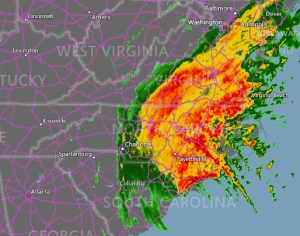
  2. As you see from the map, I live 275 miles from the Georgia coast. Sure, we have a wind advisory, but not a drop of rain. Meanwhile, my daughter and her family in Maryland will be getting rain soon if it isn’t already there. So, our drought continues while a lot of places have seen way too much water.
  3. The cover art work is done for my upcoming novel Eulalie and Washerwoman. I can’t show it to you yet because my publisher won’t be able to see it until her power comes back on. It looks good. It was done by the same artist who did the artwork for Conjure Woman’s Cat.
  4. While the hurricane was deluging Florida, I was writing a short story about a hurricane. I want you to know what I didn’t use any spells to attract Matthew even though Eulalie loves to whistle up the wind.
  5. I’ve added another poem to the selection in my Kindle stories and poems book College Avenue. When I originally uploaded the book, I couldn’t find a copy of my poem “Sock Puppet.” It first appeared in the former “Smoking Poet” Magazine, but was missing from their archives. Finally, my brother found a copy of it. Thanks, Barry.
  6. Okay, maybe I can show you a little piece of the cover art work, enough to tip you off there’s an alligator in the story:

ewgator


–Malcolm

Authors, do you have expectations of privacy?

“When I first heard yesterday that Elena Ferrante’s legal name may have been revealed, I thought it was because she died. This thought entered my sleepy head in part because I misinterpreted a friend’s tweet on the matter, but also because I couldn’t immediately imagine under what other circumstances that information would come to light. Ferrante is internationally beloved for her novels, especially the Neapolitan series; while I knew some people were unimpressed by her work, I’d heard of no one who wanted to hurt her. Outing her or doxxing her or whatever you might prefer to call it, was so clear and unnecessary a violation that I still can’t see it as anything other than an attempt to do her harm.” – Charlotte Shane in “The Sexist Big Reveal” in “New Republic”

Salinger, Pynchon, Lee, Watterson, and Rowling are among the widely known authors who have guarded their privacy carefully, although their methods have differed. Needless to say, when you have money and are famous, numerous people will seek you out for a variety of reasons, so living at a publicized address on a regular neighborhood street might be out of the question even if that’s the lifestyle you prefer.

Elena Ferrante

Elena Ferrante, who writes under a pseudonym, has been more private than most because her real name has never been divulged–until now if the information about her is correct. The writer who tracked her down and told the world her name has invaded privacy for that appear to be sexist reasons. Her trauma may well be immense, especially if she carries out her promise (made years ago) that she would stop publishing if her real name was revealed.

Author Platforms

Wikipedia photo.
Wikipedia photo.

New authors, especially those without major publishing deals and the publicity that comes with them, often approach privacy much differently than those who have achieved popular appeal and critical acclaim. We’re told to establish a platform. In many ways, this platform is who we are and what our specialties are. As for who we are, we’re encouraged to interact with prospective readers on blogs and the social media. Quite often, this means saying how and where we grew up, what kinds of jobs we’ve had, notes about our hobbies and family, and status updates about the slings and arrows of everyday life.

As for our specialties, if we write non-fiction, then we’re asked to establish our credibility in certain fields so that we have potential for article-writing assignments, subject-matter-related interviews, and even questions from the press about issues we might have the credentials to address. The same might occur in fiction if we have expertise in, say, certain areas of history, social issues, police or legal backgrounds, etc. Otherwise, our platform tells prospective readers the kinds of books we like to write and perhaps a little bit about our approach. This establishes us in the minds of prospective readers has an author in the genres they like to read.

Do we say too much?

When invasion of privacy cases reach the courts, one question that’s often asked is, “Did the individual involved have a reasonable expectation of privacy in the area where the alleged invasion of privacy occurred?”

Generally, one doesn’t expect privacy in public areas including one’s own yard that’s visible from the street. The whole business of camera-equipped drones and even satellites is complicating this inasmuch as both of them are capable of producing photographs of people in private backyards that aren’t visible except by air. Conversely, one does expect privacy within their own homes, especially when windows and curtains are kept closed.

Most of us who have talked about ourselves on the Internet and/or in the print media about our experiences and goals as we try to build our author platforms are unlikely to go to court five or ten years later and sue somebody for repeating what we said to the public in a Facebook status update, blog, or interview.

Yet, I often wonder if we say too much. For one thing, we’re competing with famous authors who seldom blab about their daily lives on Facebook. You don’t go to Rowling’s Facebook page and see her posting something about dropping a carton of eggs on her PC keyboard or going to the store for a new dress and not finding anything that fits. Unlike Rowling and others who are widely known, the public is NOT actively trying to find out more about us; also, we don’t have hundreds of events a year to publicize. So, what are we going to say on Facebook and our blogs if we don’t talk about ourselves?

And then, what happens if we become bestselling authors? We’ve pretty much given away the farm on Facebook and blogs if every scrap about our private lives is in print or on line somewhere. Not that we’ve said everything. Even so, do you want a rant you published on your blog 20 years ago on a bad day to be pulled out by critics and “proven” to be the gist of the plot for your latest novel? Probably not.

If our names become household names after we’ve given away the farm while paying our dues and becoming better writers and better known writers, do we have any expectations of privacy once we’re trying to maintain some semblance of a private life? Yes, but it’s going to be more difficult.

The public, and this includes the clown who outed Elena Ferrante, seems to believe that it has a right to know everything about well-known authors, movie stars, and others who are to varying extents in the public eye. Some readers believe an individual’s right to privacy ends the minute they publish a book or star in a film or TV show. Most of us need not lose a lot of sleep about being followed by voyeuristic fans and paparazzi any more than we need to worry about how our lives would change if we suddenly won a $50 million lottery prize.

For all of us who write, privacy is a balancing act. Since bestselling authors don’t write about their plumbing backing up on Monday, burning the steaks on Tuesday, feeling bumbed out about Presidential campaign ads on Wednesday, etc., the fact that newer and/or less widely known authors often do this draws a line between big time writing success and lesser known or unknown authors.  That is, to become known, we’re often told we must to the very things a well-known author would never do, and that ends us making us look like amateurs.

On the other hand, we can’t say “buy my book” every day in our blogs and Facebook updates. So, how do we engage with prospective readers? While all of us don’t say everything about our private lives, many of us probably end up saying too much. While we may not want to the privacy of an Elena Ferrante or a Jo Rowling, we might wake up one day and want more privacy than we’ve ended up with.

–Malcolm

Malcolm R. Campbell is the author of “Emily’s Stories” (paperback, audio book, e-book, and Italian/Spanish editions) and “Conjure Woman’s Cat.”