Readers of the three books in my Florida Folk Magic Series heard a lot about the piney woods because pines (Sand, Slash, Spruce, Longleaf, Eastern White, Loblolly, and Japanese Black) own the Florida Panhandle. We had forty pines in our yard. I grew up with them, came to love them, so that’s what my characters see.

When the fourth book in the series, Fate’s Arrows, is released in the near future, you’ll find more pines, beginning with a quotation from Gloria Jahoda (The Other Florida) that sets the stage for the book:
“Everywhere. . . there were pines, their long needles shimmering in a faint wind under the hot subtropical sun. In the country there were empty dirt roads, rutted by mule carts. In the towns sprawled rows of unpainted shacks without windows. Ancient Negro women sat fanning themselves with palm leaves as they stared drowsily from rickety porches at their zinnias and coral vines and heavy-scented honeysuckle bushes. Moss-draped oaks and lacy chinaberry trees shaded sandy dooryards. Scrawny dogs, the flies buzzing at their noses, slept among ragged-feathered chickens pecking for scratch feed. Locusts whined from tall magnolias with the steady pitch of power saws. But mostly there were those pines and the tang of their resiny branches and the dark straightness of their trunks. All of it looked like the south of the novelists and the poets, heavy with antiquity, romance, and misery.”
Jahoda wrote this in 1967. Living in Florida between 1950 and 1968, I saw the evolution of the world she describes. The panhandle world seemed, even then, to be the complete opposite of what snowbirds found in the peninsula and what people outside the state expected to see anywhere. The appalling Jim Crow racism was hidden away by the exuberant beauty of the land.

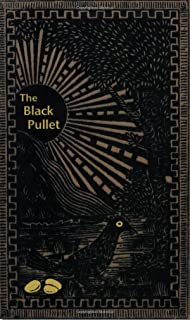 The Black Pullet, also known as the hen that lays the golden eggs, is a grimoire and a story combined. Purportedly, the book was written in the 1700s. The book relates the story of a French soldier serving in Egypt with Napolean’s army who is wounded and left for dead next to one of the pyramids. An old man emerges from a secret entrance to a pyramid, takes the soldier inside, and treats his wounds. The soldier discovers that there are a vast library and living quarters within the pyramid. All are richly adorned in the manner one would expect of royalty in those days.
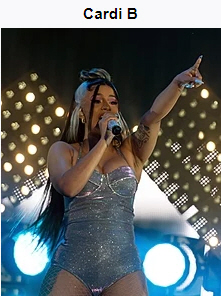 Since most of us didn’t have a lot of experience (sex-wise) in those days, people in the books were constantly doing stuff many of us couldn’t figure out. Needless to say, we couldn’t ask our English teachers or parents what those characters were doing. It would be like reading a book that mentions the Cardi B song WAP (go look it up if you haven’t heard about it) and then going to mom and saying, “Exactly what is WAP?”
 I was writing online documentation for a printing application that had so many parts to it that it looked like the documentation would never be finished. My salary was high enough that my wife and I could live on half of it and save half of it.
 Black titi (pronounced tie-tie), Cliftonia monophylla, sometimes called the Buckwheat Tree, is a perennial evergreen shrub/tree found in Florida’s wet flatwoods and bogs. Deer and bees like it a lot. Sometimes native plant nurseries can find it for your garden. The flowers are generally white and bloom in the spring.


 Malcolm's Round Table