105,000 Americans tell Congress to stop cutting critical funding for national parks

from NPCA

Washington, DC – Today, the nonpartisan National Parks Conservation Association (NPCA) announced that more than 105,000 Americans have signed their petition calling on Congress to stop cutting critical funding for national parks. The signatures were gathered through NPCA’s National Parks Protection Project.

“As we approach the Centennial of the National Park Service, we must ensure our national parks receive adequate funding for our children and grandchildren to enjoy,” said NPCA President Tom Kiernan. “This is by far the most successful petition drive we’ve ever had – in nearly 100 years of operations – and it’s time for Congress to take notice of how many people have joined this effort.”

NPCA founded the National Parks Protection Project as an effort to show both Congress and the American people why it is important to adequately fund the national parks for our children and grandchildren.

Our national parks not only protect America’s heritage, they are important to local economies nationwide. Research shows that every federal dollar invested in national parks generates at least four dollars of economic value for the American people. National parks support more than $13 billion of local private-sector economic activity and nearly 270,000 private-sector jobs.

“The federal government has a responsibility to keep our national parks adequately funded,” said Kiernan. “The National Parks Protection Project is our effort to explain why and I am grateful to the more than 105,000 people across the country who joined our effort.”

Click here for more information.

Glacier National Parki, where my three fantasy novels are set, has been plagued with these cutbacks. Even normal maintenance on trails, signs, structures and other parts of the infrastructure has been postponed again and again. When I first went to Glacier in 1963, the park advertised 1000 miles of trails. Now it advertises 700 miles of trails. If we are going to protect the wilderness, we need to spend what it takes to do it.

Malcolm

Kindle edition

Fantasy novel give-away on GoodReads

As the August 31st release date approaches for my concemporary fantasy novel Sarabande, I am celebrating with a book give-away on GoodReads. Three free copies are available. All you have to do is surf over to GoodReads, click on the ENTER TO WIN button and fill out the form. (If you’re not a member of GoodReads, registration is free.)

Sarabande is the 80,000-word story about Sarabande’s journey from her alternate-universe home deep in the Montana mountains to central Illinois in search of the once-powerful Sun Singer. She needs his help to rid her of the haunting ghost of her sister Dryad whom she killed in self-defense three years ago. She knows she has a 1,650 trip ahead of her. She does not know that the journey itself will be just as perilous as confronting the evil temptress Dryad.

Released by Vanilla Heart Publishing, Sarabande can be read as a stand-alone novel or as a sequel to The Sun Singer.  The e-book edition of Sarabande was released August 13 and is already available on Kindle.

Best of luck in the give-away. The entry deadline is October 1.

–Malcolm

After her sister, Dryad haunts her from beyond the grave for three long and torturous years, Sarabande undertakes a dangerous journey into the past to either raise her cruel sister from the dead, ending the torment…or to take her place in the safe darkness of the earth.

Sarabande leaves the mountains of Montana for the cornfields of Illinois on a black horse to seek help from Robert Adams, the once powerful Sun Singer, in spite of Gem’s prophecy of shame. One man tries to kill her alongside a deserted prairie road…one tries to save her with ancient wisdom… and Robert tries to send her away.

Even if she persuades Robert to bring the remnants of his magic to Dryad’s shallow grave, the desperate man who follows them desires the Rowan staff for ill intent… and the malicious sister who awaits their arrival desires much more than a mere return to life.

Who’s Afraid of Virginia Woolf?

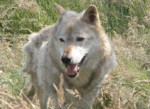
Grey Wolf

The answer to that question is: everybody.

For one thing, people don’t like authors whose last names are impossible to spell correctly: is it Wolf, Woolf, Woolfe, or Wooolf?

Plus, there seems to be that lingering question about whether Virginia Woolf is or is not on the endangered species list and whether or not she can be shot on sight in certain western states.

No self-respecting rancher reads such books as Mrs Dalloway, To the Lighthouse and Orlando because “the author of those books is eating out cattle.” Others say Virginia Woolf  is, obviously, an eastern predator and/or that no westerner would want to read an entire novel about a central-Florida city.

People of my generation, and that includes ranchers who are almost too old to ride a horse, fondly remember Virginia Woolf’s excellent job of acting in the bio-epic Who’s Afraid of Virginia Woolf. “She might have been a Liz Taylor clone, but she knew how to act.” Either Taylor or Woolf was married to Richard Burton on more than one occasion. It was hard to keep track in thos pre-Internet days.

True crime writer Megan Abbott (The End of Everything), in a recent interview on The Rap Sheet explained her shift from reading classics to more ramped-up novels with the quip: “How many times can you talk about Virginia Woolf before you want to kill yourself?”

Virginia Woolf

I really can’t answer that. For one thing, due to the mix-ups about her name and predator status, Woolf really doesn’t come up in conversations very often. In fact, I can go for months without hearing anything about Virginia Woolf. The last time I mentioned Woolf in  a bar, a guy drunk  on shooters said, “she took a bite out of my nephew’s puppy up in Richmond.” I said I was sorry to hear that.

These days, the vicissitudes of reading tastes have led people to read more about werewolfs than Virgina Woolfs (or should that be wolves?) Misinformation being the currency of the Internet, it probably wouldn’t be too difficult to get a viral campaign started that alledges Virginia Woolf did not kill herself in 1941. Weather historians have determined that there was a full moon on the night she drowned and, chances are, she became a shapeshifter and that we all have a very good reason to be afraid of Virginia Woolf.

This is pure speculation on my part. Wolves are generally feared for scatterbrained reasons, and Virginia is no exception. As kids, none of whom have heard of Virginia Woolf are fond of keying into their text messages when they make an important point: Just saying. . .

–Malcolm

In addition to his contemporary fantasy adventure novels Sarabande and The Sun Singer, Malcolm R. Campbell is also the author of the comedy/satire Jock Stewart and the Missing Sea of Fire. Campbell maintains that there is no reason to be afraid of any of his books except, perhaps, Garden of Heaven: an Odyssey which has a lot to say about wolves and wolfers.

Deltona, Florida Regional Library to host authors book fair in October

The Deltona Regional Library’s second Authors Book Fair Celebrating Writers and Readers will take place Oct. 15, 2011, in the library.  The doors open to the general public from 11:00 to 3:00 preceded by two workshops for authors from 8:45 to 11:00.

The book fair attracted 70 authors its first year and served as an introduction to authors and poets in Florida or those who call Central Florida readers their audience.

“This is an idea that took off,” said Melinda Clayton, author and co-chair of the event. “The Deltona Library is the perfect venue with indoor space for authors and rooms for speakers and workshops.”

“Our library receives many calls every year from authors who would like to do a book signing and this is the perfect opportunity to bring writers and readers together,” said Suzan Howes, regional librarian.

A single table at the book fair is $50 or $25 for a shared table.  “We want to keep our fees really reasonable for this fundraising event sponsored by The Friends of Deltona Library,” said Clayton.

The event is available for additional business sponsors to join those all ready committed: Ruby Tuesday, Holiday Inn Express and the Scrub Jay Café.

Workshops for Authors

 7 Steps for a Wildly Successful Book Tour presented by Sarasota author, Liz Coursen, who will have just completed an 81 city book tour.

Pamela Starr, Regional Development Director for Constant Contact will be conducting a social media workshop entitled:  How (and why) to incorporate
social media into your marketing strategy.

 Both presenters were enthusiastically received in other Deltona Library workshops.

Authors and publishers interested in setting up a table at the fair should call Christy Jefferson at 386.574.9376 for information.

I’m happy to say that my publisher, Vanilla Heart, will be attending the fair with an exciting assortment of books.

–Malcolm

Contemporary Fantasy Adventure

I’ll be your fantasy server this evening

Welcome to the world of fantasy. My name is Malcolm, and I’ll be your server this evening.

Today’s special is Sarabande, a bone-chilling new adventure about a young woman named Sarabande who risks a dangerous journey into her own past. With the help of the Sun Singer, she plans to raise Dryad from the dead so that her cruel sister’s ghost can no longer cause pain and suffering throughout a peaceful mountain valley.

Fantasy is a Dangerous Place

You’ll be reasonably safe in the world of fantasy while I am here to guide you. Otherwise, may I suggest that you read Sarabande during the daylight hours in the company of others. Do not read the novel at night unless the doors are locked.

Like abandoned mines, fantasy leads deep into the heart of strange landscapes, forbidden worlds and dreams, places where everyday reality fears to tread. Be careful and do not wander off alone, for the mysterious world of fantasy can be dangerous. That’s why I’m posting a warning sign here just like the one I saw recently in Virginia City, Nevada where gold and silver were once extracted from the earth.

Mining Fantasy Novels for Gold and Silver

While growing in a house full of books, I discovered high-quality ore in such fantasies as The Once and Future King and Lord of the Rings. Recently, others have discovered gold and silver in the Harry Potter books. The gold of dreams and the silver of mystery are not only exciting—they jump start the imagination.

I hope you’ll enjoy Sarabande. It’s available today in multiple e-book formats at Smashwords. Other editions will follow soon, including paperback. Dig deep, enjoy the ride, but please, read safely in well-lighted places.

Malcolm

Briefly Noted: ‘Border to Border: Historic Quilts and Quiltmakers of Montana’

The quilts featured in this richly illustrated, carefully researched book chronicle 150 years of Montana history. They tell stories about struggles for women’s suffrage, the Great depression, two world wars and Montana’s statehood. You’ll see detailed information about individual quilts and those who made them.

Published by the Montana Historical Society Press last year, Border to Border is available in both hard cover and paperback.

Excerpt from the Book

This lovely Goose in the Pond quilt was possibly the oldest one found by the Montana Historic Quilt Project, and it offered a bit
of a mystery to the documenters. The owners knew the quilt had traveled to Montana with Maxine Otis’s parents, who came to homestead near Hobson in 1916;  ther details about the quilt were sparse. Initially this quilt was thought to be made between 1830 and 1850, but these dates conflicted with family tradition that the quilt had been made in 1812. Upon closer inspection, the documenters discovered that the fabric was older than they originally thought, some of it dating to the late 1700s. A second look at the quilt also revealed a date and name buried in the quilting: 1811, Robert McInnis. Soon, additional hints about the quilt popped out of the fabric. An ink inscription appeared stamped in a corner block with the name Sarah H. Jones and the town Erie, Pennsylvania. Robert McInnis’s name was also inked into the quilt elsewhere, although by now the “c” and “I” in his name had started to fade. Whatever the bond Robert McInnis and Sarah Jones shared, the quilt was clearly a treasured possession. As reliable permanent ink was not available until the 1830s, the ink inscription was probably added after the quilt was made to leave a lasting record of those connected to it.

For more information about Montana quilts, see also the Montana Historic Quilt Project index. According to the site, “The Quilt Index” is a growing research and reference tool designed to provide unprecedented access to information and images about quilts held in private and public hands.”

–Malcolm

New fantasy adventure coming soon

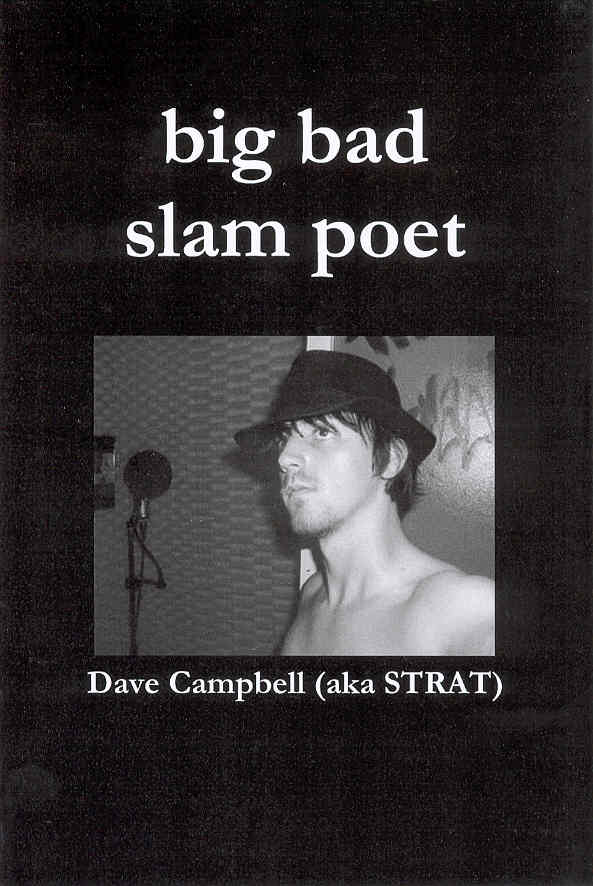
‘big bad slam poet’ released as e-book

The EBook version of Dave Campbell’s “big bad slam poet” was released on August 4, 2011.  This slam poetry EBook is available on iPhone, iPad, and iPod touch with iBooks and on the computer with iTunes.  It is also available from lulu.com as an EPUB for the Adobe Digital Editions computer format.

The EBook includes all of the poems in the print version of the book that was published in October, 2009.  Among the poems are “emergency”, “inspire”, “the way atlas shrugged”, and “kiss the scars”.  Some of the poems in the EBook are also performed by Campbell (aka STRAT) on a CD that has the same title as the book and that was released in November, 2009.

Campbell, who died in 2008, won numerous poetry slams and rap battles.  He is known to many in the Orlando area arts community and beyond as a talented poet and hip hop artist.  He grew up in the Orlando area and refined his poetry and hip hop skills while working at various jobs.  His book and his CD have insightful poems about relationships and life in general.  The name of both the book and the CD are also the title of one of Campbell’s poems.

Malcolm

Grandfathers: protectors and tricksters

The mini-golf ant is fake, or is it?

My mother’s father was a solid, responsible grandfather when it came to driving a nail straight, shooting a flawless game of pool, and finding where the fish were hiding in the river. He worked as a farmer, an auditor and a car salesman, so he knew a lot about the practical nuts and bolts of the world.  He also knew what was wrong with it and what was dangerous, so he was among my childhood protectors and instructors.

He also saw the humor in the unexpected, lurching out of dark shadows at night, playing practical jokes, and becoming a conspirator in the wild, imaginary tales my two brothers and I cooked up.

As a fan on tricksters in myths and legends, my first lessons in combining fact and fiction, the sacred and the profane and the practical and the ludicrous came from my Grandfather Gourley. As a child and a young adult, I simply saw that Grandpa liked making people laugh. Now, I wonder if he had somewhat of a trickster’s mindset: that is, creating the laugh as part of a learning experience?

In my novel The Sun Singer, my Grandfather Elliott character—who has as lot in common with my grandfather—is the one who stirs things up. Since my novel is an adventure story, Elliott’s grandson Robert gets into some dangerous situations because things got stirred up. Needless to say, Robert’s parents aren’t pleased when things get stirred up. After all, they expect grandfathers to serve as wise protectors.

My grandfather lived in Illinois. I lived in Florida. So, for many years I only saw in on vacations. Ultimately, he and grandmother moved to Florida, finding a house about four blocks away from us. My parents liked the arrangement for all the usual reasons about having family close rather than far away. I wonder, though, if my parents noticed that after grandfather came to town, things got stirred up more than  ever. My mother often told stories about the practical jokes her father played on her when she was a kid.

So, she had to know that having Grandfather Gourley in our neighborhood was somewhat like having a coyote or a fox in the hen house. When things went nuts, Grandfather acted innocent like he had no clue what could have possibly caused the latest hijinks. From him, I learned how to keep a straight face while household weirdness played itself out. While visiting my granddaughter last week, who is still very literal when it comes to the meanings of things said and done, I quite naturally felt a need to protect her from all possible harm and unpleasantness.

Yet, I also began my sacred task as a grandfather: working on getting her more acquainted with the figurative. (In small doeses, of course.)  My grandfather helped teach me about humor, magic, and the benefits of managed chaos. That’s a tradition I want to continue.

–Malcolm

Review: ‘Telling the Difference’ by Paul Watsky

Telling the DifferenceTelling the Difference by Paul Watsky

My rating: 5 of 5 stars

During the 1960s, high school English teachers carefully served from the literary canon a poesy stew of skylarks, nightingales and albatrosses with a few leaves of grass for seasoning. Contemporary poems howling through the streets in their underwear were adjudged unsafe in the classroom. We were left to discover the likes of Ginsberg and Ferlinghetti after school—at which point, our imaginations became enlightened.

Paul Watky’s collected poems in Telling the Difference (il piccolo editions from Fisher King Press, 2010) are an explosion waiting to happen that today’s students will only discover in a state of reality where lesson plans and outlines are prohibited even though Watsky prohibits nothing.

When yin and yang, sacred and profane, and laughter and tears are encouraged by the poet to sit side by side—perhaps even hold hands—in his work, the result is poetry that’s unsafe at any meter. In the book’s acknowledgements, Watsky notes that he is grateful to his wife and sons “for putting up with what poetry puts people through.”

Let this acknowledgement serve as a warning to the reader that Telling the Difference has the power to unleash the imagination at the borderline of chaos and enlightenment. Bound together, uneasy laughter and joyful pain have great power whether they are borne by a pet crayfish named Cumbersome “all tarted up with dust bunnies,” diver ants who’ll chew up “the fortuitous drunk passed out in the wrong place, Granny when she falls and can’t get up,” or a girl tied to “the nearly-wiggled-out pin of a fragmentation grenade.”

Watsky’s has organized Telling the Difference into four sections, “”Temple of Kali,” “The Closest,” “What People Learn,” and Piglet Mind,” bookended neatly in between a prologue called “All Good Things” and an epilogue called “Twins Discuss Heaven.” When the prologue suggests that saying “all good things must come to an end” is mere consolation like the “dummy nipples proffered between feeds,” the book’s stage is set for multiple associations between the transitory and the infinite. In the epilogue, George says “I believe in outer space. There isn’t room for heaven” and Simon explains that if heaven were real, we “would see Grandpa Seymour flying around in his coffin.” What else is there to say?

In reality, Watsky says a lot within the illusory confines of this 81-page collection. He speaks volumes about Bluejay’s warning in “Toad Fever,” a man who smashes walnuts with his manhood in “The Magnificent Goldstein” and the danger of words in “Language Fallen into the Wrong Hands.”

Telling the Difference is a wondrous, no-boundaries delight. However, if your hands are the wrong hands for a volatile serving of unsafe words, please remember that you’ve been warned that Watsky will put you through heavens, hells and hoops you didn’t know existed.
View all my reviews

Malcolm

Apgar Bike Path Getting a Facelift

from NPS Glacier National Park

Apgar Village Lodge

WEST GLACIER, MT. – Apgar Bike Path, a popular paved hiking and biking trail that connects Apgar Village with West Glacier, is under construction to prune roots and repave the path.

Roots growing beneath the bike path have caused the paved trail to buckle and break open. A contractor will prune the roots, then remove and replace the pavement in those sections. Initial pruning and removal of pavement has been completed between the park headquarters area and the Going-to-the-Sun Road.

Work continues on the trail between Glacier Institute Field Camp and Apgar Village. Trail users are encouraged to use caution as they will encounter some off-trail detours, temporary closures and equipment along the trail. Before biking or hiking the trail, please check trail conditions by contacting a visitor center, ranger station or calling 406 888-7800.

Work is anticipated to be completed by early August.

Apgar Fast Fact: The village and mountain are named after early homesteader Milo B. Apgar who arrived in 1892. The famous artist Charlie Russell, who maintained a summer home in Apgar, was among the famous residents and visitors to the area.

–Malcolm

With my third Montana novel (“Sarabande”) coming out this fall, I have updated my website to show the connection between my fiction and Glacier National Park’s Swiftcurrent Valley.