Book Bits is my new blog of writers’ links. Here you’ll find information about reviews, new titles, author interviews quotations, and book news. I invite you to stop by, skim through the offerings and click on a few links such as:
News:Harlan Ellison Would Kill Timberlake Film – “Harlan Ellison, filed a copyright suit last week that alleges that a new film borrows heavily from his 1965 short story” See the book’s listing on Amazon here.
Quote: “Always read stuff that will make you look good if you die in the middle of it.” — P. J. O’Rourke
I see these kinds of links every day and thought it would be fun to start sharing them.
–
Coming Attractions: Author Beth Sorenson (Divorcing a Dead Man) will contribute a guest post here on September 28 and L. E. Harvey (Impeccable) will be here on her birthday September 30.
Authors and readers of epic fantasy who see Tolkien as the avatar of imagined worlds, will find an in-depth look at the master of the genre in Tolkien scholar Jason Fisher’s recently released Tolkien and the Study of His Sources: Critical Essays. (McFarland, July 22, 2011). In this 240-page volume Fisher and other experts analyze Tolkien’s abundance of source materials. You can find an excerpt from the book here.
In addition to his own contributions, Fisher has drawn together essays from Tom Shippey, Nicholas Birns, E. L. Risden, Kristine Larsen, Judy Ann Ford, John D. Rateliff, Mark T. Hooker, Diana Pavlac Gilyer, Josh B. long, Thomas Honegger, and Miryam Libran-Moreno.
When asked in an interview about the popularity of Tolkien, Fisher said that “One reason Tolkien has been so popular is that his works contain ‘elements in solution’ of so many other works, authors, folktales, legends, and myths, that there is something immediately welcoming and familiar about his works, even when it is buried well beneath the surface. We feel as if we’ve been here before somehow, or in some other life. In a very real sense, we have. This, of course, does nothing to diminish Tolkien’s imagination or craftsmanship. If anything, it gives us that much greater reason to appreciate them.”
Verlyn Flieger, author of Splintered Light: Logos and Language in Tolkien’s World calls Fisher’s book “The most exhaustive examination yet published of demonstrable, probable, and conjectural sources for Tolkien’s legendarium.”
This book is for the most serious of Tolkien fans and students of literary criticism. Tolkien, of course, might be turning over in his grave because he thought his work should be attracting our attention rather than how he did it and what might have influenced him. Nonetheless, the J. R. R. Tolkien Copyright Trust allowed Fisher to include some previously unpublished materials.
You can read more from Fisher on his blogLingwë – Musings of a Fish, focusing on “J.R.R. Tolkien, C.S. Lewis, the Inklings, J.K. Rowling, and fantasy literature in general; language, linguistics, and philology; comparative mythology and folklore — and more.”
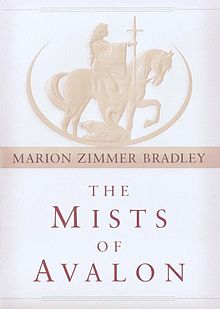
When the late Marion Zimmer Bradley’s The Mists of Avalon was published in 1983, Bradley (1930 – 1999) had already made a splash in the public’s fantasy reading consciousnous with her Darkover Series which she introduced in The Planet Savers in 1958. For a less experienced, less widely known author, tackling and re-imagining the legends of King Arthur and the Round Table from a femine perspective would have been a great risk.
After all, whoever writes about King Arthur is not only up against Thomas Mallory’s “Le Morte d’Arthur” (1485), Edmund Spenser’s epic Elizabethan poem ”The Faerie Queene” (issued in 1590 and 1596) and Alfred, Lord Tennyson’s twelve-part Victorian series of poems “Idylls of the King” (issued between 1856 and 1885), but some well-received modern versions of the story as well. Nobel Prize winner John Steinbeck’s “The Acts of King Arthur and His Noble Knights” (posthumously published in 1976), Mary Stewart’s Merlin Trilogy (1970, 1973, 1979) and T. H. White’s “The Once and Future King” (1958) probably top the list. Based on White’s novel, the musical “Camelot” had already made a hit on Broadway in 1960 and as a film in 1967.
In her 1983 New York Times review of “The Mists of Avalon,” Maureen Quilligan wrote, “Of the various great matters of Western literature – the story of Troy, the legend of Charlemagne, the tales of Araby – none has more profoundly captured the imagination of English civilization than the saga of its own imperial dream, the romance of King Arthur and the Round Table.” We continue to be fascinated with versions and off-shoots of the story whether they surface in nonfiction accounts such as “The Holy Blood and the Holy Grail” (1982), “The Da Vinci Code” (2003, film in 2006) or the continuing novels in the Avalon Series written by Diana L. Paxson.
The myths, whether you see them as illustrations of the hero’s or heroine’s journeys or as tales of struggling peoples of a bygone era, feature larger-than-life personages fighting the powers of darkness and opposing armies in quests focused on personal transformation and/or an ideal society. Merlin’s teachings appear and re-appear in various guises (such as Deepak Chopra’s “The Way of the Wizard: Twenty Spiritual Lessons for Creating the Life You Want”) as lessons for seekers on the mystical path, while King Athur and his knights have been presented—through tales of glory and folly—as archetypes to follow after or to be wary of.
Quilligan, in noting that Bradley looked at the Arthurian legends from the perspective of the women involved, said, “This, the untold Arthurian story, is no less tragic, but it has gained a mythic coherence; reading it is a deeply moving and at times uncanny experience.”
The stories of Arthur, his Knights, Merlin, Viviane, Gwynyfar, Morgaine, Igraine, and old Uther Pendragon come to us with such strength that it’s difficult for lovers of fantasy—perhaps even the general public—not to suspect there is a truth or a reality to them that cannot quite be proven. We react to the stories as though the authors are interpreting real events. Perhaps we’ll never know whether there was or wasn’t a King Arthur who had anything in common with the stories we read and rell about him, but we hope there was.
What great myths, though! They bring us the best and the worst we can be as humans with hints of the kind of magic many of us hope in our heart of hearts exists alongside our technological world of science and logic. The myths are a part of our shared vision of the world and humankind, waiting, ever waiting for more interpretations, versions and re-imaginings.
Yesterday afternoon, my wife Lesa and I attended the memorial service for our long-time friend Gordon Carper (May 10, 1935 – September 3, 2011) at the Berry College Chapel in Rome, Georgia. We listened to “You Raise Me Up” (Celtic Woman), “If I Can Dream” (Elvis Presley) and “Amazing Grace” (from both granddaughter Kallan Carper and Celtic Woman). We heard joyful, heartfelt and often humourous remembrances from Dr. Carper’s former Berry College colleagues (Richard Lukas, William Hoyt and Chaitram Singh) and from his former students (William Pence, Bert Clark, Timothy Howard and Greg Hanthorn). The memorial service, led by the reverend Paul Raybon, truly was the Celebration of a Life.
After the service, we spent time with family and friends at a reception at the college’s historic Ford Buildings before going back out to the Carper’s house. Lesa and I hadn’t seen some of those people in over 30 years. In the “Ford Living Room,” we continued what began at the memorial service, remembering and telling stories. A nationally known scholar, Gordon Carper taught at Berry College between 1965 and 2003, and those years overflow with memories from the untold numbers of colleagues and students impacted by Gordon’s teaching, mentoring and gregarious, you-oriented storytelling.
After a death, family and close friends are suddenly immersed in details. Doctors, funeral home directors, pastors, newspapers, florists, caterers, and others suddenly loom large in the daily schedule. While details steal away time for grief, they also provide a focal point of necessary busywork that can help friends and family cope with the loss during the stunning and confusing limbo of thoese first days.
Personal Notes
My wife Lesa was one of Gordon’s students at Berry College. I was one of his colleagues between 1977 and 1980. We were married at their house in 1987 with Gordon and Joyce standing beside us, and with their sons Noel and Todd and other friends standing around us. We can spin yarns about Carper-House Moments, Gordon and Berry College until the cows come home, and while staying with his wife Joyce for several days this past week, the stories we knew became intermissions of levity in between the tasks required to prepare for yesterday’s memorial service and all the guests who would arrive.
I won’t presume to speak for Lesa or Joyce, but I felt that we were all too busy to truly grieve. Lesa and I have spoken of this before: the fact that the paperwork and details of a death are so often the full focus of attention until after the memorial service or funeral come and go that there’s little time to think of much else. Not that the paperwork ends there, but it begins to fall away and during the long nights grief is likely to become a close shadow in all those streets, parks, rooms and other places where the memorial service memories and the Ford Living Room reception stories were born.
Lesa and I were part of a close-knit group of faculty and students who came together in the 1970s out of mutual respect, friendship and to support each other during an era in the college’s history when labor troubles tried very hard to trump the process of education. The “dark time,” as we call these years had a huge impact on all of our lives. Time has healed most of the wounds. Perhaps the wounds made us all stronger. While there was much to be said and done during the past week and at yesterday’s memorial service and reception, major dark time stories did not occupy center stage. We all know those stories and they flavor our thinking and they are, perhaps, a subtext to the wonderfully humorous and inspiring celebrations of Gordon’s life at public gatherings and during one-on-one conversations.
Yesterday, we—as a group—were given an opportunity to celebrate and consider the impact of a teacher, mentor, leader, and friend in our lives and in the lives of Berry College’s graduates for over a quarter of a century. Now we personally have time for the grief that begins after all has been said and done.
Today’s guest post by author Smoky Trudeau Zeidel (On the Choptank Shores – A Love Story) offers tough-love advice for aspiring writers who have become frustrated with the road to publication. Zeidel is the author of two novels, two non-fiction writing books, and a book of prose, poetry and photographs about the natural world (Observations of an Earth Mage). A book reviewer and a former writing instructor, Zeidel is also a professional editor.
KNOCK IT OFF: How to Be Treated Like the Writing Professional You Aspire to Be
by
Smoky Trudeau Zeidel
Recently, I’ve done a little bit of Web surfing, checking out places writers and aspiring writers hang out. You know the places: water coolers at Websites, Facebook pages, Yahoo groups. As I surfed, I found a disturbing trend.
There is a lot of whining going on among unpublished writers about the fact they are unpublished. Some of that whining is aimed at those of us who are published. Not only whining, but some very unpleasant name-calling.
I have a bit of advice for any of you who may be in that category of frustrated, unpublished writer, that advice being: KNOCK IT OFF!
You heard me right. But before you brand me a heartless meanie with no compassion for the little guy, let me assure you that isn’t the case. I taught fiction writing for many, many years. I’ve taught and coached literally thousands of unpublished authors, helping them learn their craft, polish their manuscripts, giving them guidance. Heartless meanie is not the right modifier here.
Let’s look at a handful of problems I’ve seen this past week:
Writers who want others to do their legwork for them. I’ve seen at least ten writers post comments to the effect that they’ve written a book, but don’t know what to do next. They beg “someone who’s been there” to tell them what to do next.
Writers who have an over-inflated opinion of themselves and their writing. I’ve seen people swear their book is as good as The Lord of the Rings trilogy, or that it is a guaranteed best seller. I’ve heard them say they write like Stephen King or J.K. Rowling.
Writers who cannot spell, yet complain they cannot get a publisher or agent to look at their book. The word “your” is spelled Y-O-U-R, not Y-E-R. It’s “for sure,” not “fer sher.”
Writers who complain that those of us who are published have written books that aren’t as good as theirs, or, worse still, they bash another writer’s blog, or Goodreads book reviews, or other online writing—or bash the author personally. This, perhaps, is the most dangerous thing of all I see on the Internet—writers complaining about—and sometimes downright bashing—other, currently more successful, writers. Bad karma, bad karma! If I see those posts where you trash talk someone else, publishers can see them, too. Don’t think for a minute they won’t find out you said unkind things. All they have to do is plug your name into a Google search and they can come up with who said what and where, and yes, they do Google writers. There is no anonymity on the Internet. If you can’t say something kind, it is best not to say anything at all.
If you are guilty of even one of these transgressions, you need to shape up! Here’s where that bit about me not being a heartless meanie comes into play: I’m going to give you some suggestions for doing exactly that.
Do your research
Do a Google search with the words “How to Get Published” in the search box. When I did that, I came up with 165 million results! If you can’t figure out what you need to do with that wealth of information at your fingertips, you perhaps need to find a different avocation.
I’m not suggesting you can’t ask for tips on your Facebook pages. Asking politely for tips is completely acceptable. But complaining that published writers won’t tell you what to do next is whining. No one likes a whiner.
Along the same lines, if you do happen to find an author who is receptive to giving your some hints, don’t abuse their good graces. It is fine to ask if they have any tips for you. It is not fine to ask them to critique for free your book, or to introduce them to your publisher. It is not fine to email or message them ten times a day.
Control your ego
Of course you think your novel is wonderful, and you should! Writing a novel is hard work; just completing the task is worthy of a congratulations. But don’t brag about how great it is. It’s up to readers and reviewers, not you, the writer, to say if your book is as good as some other book, or if your writing style is like a famous author’s.
Learn to spell, and learn proper punctuation, grammar, and syntax rules
I can’t emphasize this enough. If spelling is not your strong suit, look up words you are unsure of, and have someone who can spell well proofread your manuscript. Buy a Chicago Manual of Style, the industry-wide standard for all things word related, and study the chapters on punctuation. Learn how to use a comma. Never, ever have I seen so many books where the writer didn’t have a clue how to use a comma than I have in the past few months. It’s enough to make this editor pull her hair out. And watch your syntax. “This morning I saw a deer driving Rachel to work” is bad syntax—unless you have very talented deer in your neighborhood.
Be polite – Everywhere
That means on Facebook, in chat rooms, on Yahoo Groups, and when you comment on blogs. If you cannot be polite, do not say anything. I know my publisher lurks on Facebook, and I know of at least two other publishers who do the same. If I see your post, they will, too. One snarky comment could cost you dearly. You don’t hurt the author or publisher you are snarking about, because serious authors (and publishers) don’t take these snarks seriously—except when it comes to judging the person who is being snarky.
Bottom line is, if you want to be treated like an author, and not just a wannabe writer, you need to act the consummate professional. It’s no different from being a doctor, lawyer, or barista at Starbucks. Do your job well and be kind, and you will be treated accordingly. Whine and whimper about how unfair the world of publishing is, and expect to live with the consequences.
–
Smoky’s writing combo book containing both her books, Front-Word, Back-Word, Insight Out and Left Brained, Write Brained: 366 Writing Prompts and Exercises is available at both Amazon and Smashwords.
“A Pearl Harbor attack intensified hostility towards Japanese Americans. As wartime hysteria mounted, President Roosevelt signed Executive Order 9066 making over 120,000 West Coast persons of Japanese ancestry (Nikkei) leave their homes, jobs, and lives behind and move to one of ten Relocation Centers. This single largest forced relocation in U.S. history is Minidoka’s story.” — National Park Service, Minidoka National Historic Site
“Now, therefore, by virtue of the authority vested in me as President of the United States, and Commander in Chief of the Army and Navy, I hereby authorize and direct the Secretary of War, and the Military Commanders whom he may from time to time designate, whenever he or any designated Commander deems such action necessary or desirable, to prescribe military areas in such places and of such extent as he or the appropriate Military Commander may determine, from which any or all persons may be excluded, and with respect to which, the right of any person to enter, remain in, or leave shall be subject to whatever restrictions the Secretary of War or appropriate Military Commander may impose in his discretion. ” — Franklin D. Roosevelt, in Excutive Order 9066, February 19, 1942, resulting in the relocation into camps of 122,ooo Japanese, many of whom were born in the U.S. and were American citizens.
“The internment of individuals of Japanese ancestry was carried out without any documented acts of espionage or sabotage, or other acts of disloyalty by any citizens or permanent resident aliens of Japanese ancestry on the west coast; there was no military or security reason for the internment; the internment of the individuals of Japanese ancestry was caused by racial prejudice, war hysteria, and a failure of political leadership.” — Commission on Wartime Relocation and Internment of Civilians, April 15, 1988.
–
Hotel on the Corner of Bitter and Sweet by Jamie Ford
Had I written this powerful novel, my black sense of humor would have tempted me to weaken the story of Chinese American Henry Lee and Japanese American Keiko Okabe by including Franklin D. Roosevelt’s name in the book’s acknowledgements. Without his failure of leadership, there would be no bittersweet story to tell.
Ford knew better than that. Lee and Okabe are fictional characters living out their story between 1942 and 1986 against a backdrop of historical fact. Seattle existed in 1942 with Japanese and Chinese enclaves. Many of the residents in both sections of town were property owners, merchants, wives, school children and American Citizens. The Japanese residents of Seattle were removed and taken to Idaho where they were placed within the Minidoka Relocation Center until the end of World War II. Ford lets these facts speak for themselves.
In the author’s note he writes, “My intent was not to create a morality play, with my voice being the loudest on the stage, but rather to defer to the reader’s sense of justice, of right and wrong, and let the facts speak plainly.”
Hotel on the Corner of Bitter and Sweet is a universal love story. School children from diverse backgrounds meet and become friends. Their friendship isn’t supported by the prevailing social customs, the political realities of the day, or their families. In 1942, Henry Lee was sent to a white school in Seattle because his father thought it was in his son’s best interests. Born in China, Lee’s father dispises the Japanese because they have invaded his homeland. China is an ally of the United States. Since he doesn’t want young Henry to be mistaken for the enemy, he makes him wear a button that proclaims “I am Chinese.”
The other students at the white school see “Chinks” and “Japs” as subhuman and other and too alien to tolerate or befriend. While Henry grew up speaking Cantonese, his father has forbidden him from using it. Becoming a full American means speaking Enlish. When Henry meets Keiko at the school, he is surprised to discover that she’s never spoken any language other than English. Born in the U. S., she’s a full-fledged American even though the students who taunt Henry see her only as his “Jap girlfriend.”
We know before the novel begins that Keiko will be taken away. What we don’t know—actually, what we can’t know unless we have experienced it—is how Henry and Keiko will cope with the daily threats from whites, the ever-present fear of soldiers and FBI agents, the forced removal of people from the “Japantown” enclave in Seattle, or the forced separation that looms large and infinite in a person’s life. In part, the power of this story comes not only from the fact Ford lets the historical facts speak for themselves, but the thoughts and actions of his fictional characters as well. His understatement is finely tuned and carries the story well across its alternating time periods.
In 1942, Henry lives through the days of fear and friendships lost. In 1986, when the old Panama Hotel—a real Seattle Landmark—makes the news because its basement holds the stored-away belongings of many of the “evacuated Japense families,” Henry relives the old days, and wonders if he can come to terms with them and all that he lost and how he lost it. Even “now,” in the 1986 “present day” of the story, he is still wondering and still searching—for exactly what, he’s not sure—but he will know it when he finds it.
Ford has written a terrifying and poignant love story that’s as haunting as the ever-present jazz music Henry and Keiko love and as filled with hope as two young people in any time period of culture or circumstance who promise they will wait for each other forever.
In Garden of Heaven: an Odyssey, my protagonist David Ward is convinced that some of the people we meet on rainy city sidewalks and between the dry-as-dust shelves in ancient libraries began their lives as fictional characters. Whether they first strayed through a writer’s thoughts as a random notion, stalked him along the boundaries of his waking world in twilight dreams, or arrived at the very moment the pen first kissed the paper with their name, such individuals are called into life because an empty space must be filled.
David claims he wrote a novel about a woman who meets his protagonist at an old transfer house where the city’s streetcar lines come together, allowing people to transfer from one city car to another or from a south side local to a north side interurban. It’s impossible to know whether Ward dreamt up a character whose depth and outlook were the very same as the depth and outlook of the soul mate he was seeking or whether his muse was moonlighting as a matchmaker.
At a time when David was lost, the fictional character appeared in his life as a living, breathing woman, and while she was in the process of saving his life, he asked how she happened to meet him by happenstance on a warm, Indian summer afternoon. She said he called her when he wrote what he wrote about the transfer house. Clearly, he needed her too much for her to live out her existence on a printed page. She is, in David’s mind, a very real woman who is filling a very real empty space.
He’s fair certain the gods tampered with the workings of the temporal world on the day when she had her first independent thought. He’s convinced of her reality, and I believe him.
As an author of fantasy novels, I can’t claim what my characters claim. I will not try to convince you that David Ward stepped out of Garden of Heaven: an Odyssey, and became real, much less that a character in one of my character’s stories became real. Speculation along such lines leads to lunacy or into the “many worlds interpretation” of quantum mechanics that suggests that things that can happen, do happen.
Sarabande has entered dark territory
My protagonist in Sarabande was, for the many months I was actively at work on the novel, a very strong presence in my thoughts. She had a story to tell. Like a living and breathing person, it took her awhile to trust me enough to share the most personal events and feelings that had, for so many years, lurked powerfully in her thoughts. Figuratively speaking, I followed her on her journey from Montana to Illinois and back as a silent scribe. I could not intervene because my powers as an author do not allow me to tamper with the workings of my stories.
Now, the novel has been written and published and I feel rather lost because, fictional though she is, Sarabande’s voice—as interpreted by my muse—has been a voice constantly speaking. She needed me to hear her and disseminate her story to those who love fantasy worlds that hover close enough to our world that they rattle the windows as well as our thoughts while we’re reading a story.
When Sarabande was published, Sarabande stopped talking. There was nothing else for her to say. My muse became quiet as well. At the end of the novel, Sarabande understood many things. I understood them, too. Then she stepped into a well-lighted mountain cabin with two friends and closed the door. They have much to discuss, but I am no longer hearing Sarabande’s voice. I have no idea what is being said and done on the other side of that door. In the railroad business, “dark territory” refers to sections of the line where there’s no communication between a train and the outside world. That’s an apt description for Sarabande’s current whereabouts.
Many authors feel a bit lost when the finish writing a short story or a novel. The intense focus on the story for many months or many years is rather hard to replace with the chores of a normal day. The missing story-in-progress leaves an empty space. I can understand why a reader or a writer might speculate about his characters finding the wherewithal to transition from the world of fantasy into the world of reality as we currently understand it.
What’s Next?
Yet, Sarabande ended at a natural place. Tempting as it may be to write past that ending, I think my words would not ring true.
A friend of mine asked, “What next?” I really don’t know. Perhaps I’ll write about stone masons in 16th century France or mountain climbers on the summit of Mt. Everest. Perhaps Sarabande will ask my muse to ask me to write another story about her life in the universe next door. She’s independent of me now and, in that regard, just as real in my memory as the people I’ve met on rainy city sidewalks and between the dry-as-dust shelves in ancient libraries. I can no longer tell you what she’s thinking.
I don’t know what’s next. No doubt, there are a lot of probable fictional characters out there with stories to tell. Hopefully, there are dreamers amongst them who need a scribe who loves mixing fantasy and reality in the same glass. When one of them is ready to talk, my muse knows my phone number and we can talk about what’s supposed to follow the words “once upon a time.”
–
Coming September 6
Author Smoky Trudeau Zeidel (On the Choptank Shores – A Love Story) will be here with a guest post offering a bit of advice for unpublished authors called “Knock it Off.”
Support the protection of a Northern Arizona holy mountain
Northern Arizona ski resort Arizona Snowbowl has begun the construction of a 14.8 mile pipeline that will trasnport up to 180 million gallons of treated sewage water from the City of Flagstaff to the ski area, for artificial snowmaking.Not only will the proposed 10 million gallon wastewater pool harm the environment and public health (the treated sewage water has been proven to contain contaminants), but it will destroy land that is holy to more than 13 Indigenous Nations.
The peaks are their place of worship, where deities reside, and where they go to collect medicine and herbs. Klee Benally, who was arrested on Saturday August 13 for disorderly conduct and trespassing, explains: “How can I be ‘trespassing’ on this site that is so sacred to me? This is my church. It is the Forest Service and Snowbowl who are violating human rights and religious freedom by desecrating this holy Mountain.” (Click on the link for the story “Direction Action To Save Holy Peaks Continues” in Indigenous Action Media.)
With just a few minutes, you can take meaningful action to protect the Peaks. Call the USDA, which oversees the Forest Service, and let them know you support the preservation of this sacred mountain.
Take Action:
TODAY: take 5 minutes to call Tom Vilsack of the U.S. Department of Agriculture to urge the USDA to place an administrative hold on all development of the SF Peaks. Phone: (202) 720-3632
Contact Flagstaff City Officials and urge them to respect the environment, Indigenous culture, and protect public health by finding a way out of their
contract to sell Snowbowl wastewater. Phone: (928) 779-7699 Email: council@flagstaffaz.gov
–
This is the kind of post that I expect to see in “The Onion” or some other satirical newspaper or website. Unfortunately, this is one of those times we can get a bushel of industrial strength absurdity straight out of real life.
Melissa Studdard’s joyfully written “Six Weeks to Yehidah” takes us into ten-year-old Annalise’s magical dreamscape where thoughts become things and light manifests in sparkling colors that live and breathe and speak.
An inquisitive child by nature, Annalise prefers the woods and fields to staying indoors. So when she finds herself on a grand adventure with sheep that learn how to talk, she is more than ready to explore each new wonder than to worry overly much about the strange and happy world that rises up around her as she skips from cloud to cloud.
While the book is categorized as “young adult,” it might be more suitably labeled as “children’s literature” based on its dialogue and plot. Even so, the book is filled with deeply spiritual symbolism and tongue-in-cheek hero’s journey references that adults will enjoy while reading this well-crafted story to their children.
Like the classics that have come before it, “Six Weeks to Yehidah” will delight readers of all ages, each finding something new in it every time they rediscover Annalise’s story.
“As you review the list in search of your favorite book or series, it may help to keep in mind that, despite its rather grandiose name, the Top 100 Science Fiction/Fantasy Novels of All Time Summer Readers’ Survey isn’t, of course, a measure of literary quality, or boldness of ideas, or richness of detail — it’s a popularity contest.” — Glen Weldon in Monkey See
If you enjoy science fiction and fantasy, you’ll find a lot of old favorites on NPR’s list of the top 100. This list came about as a result of an NPR poll in which some 60,000 people voted for their favorites. The book sitting on the top of the list is The Lord of the Rings published between 1937 and 1949. Perhaps it’s popularity in the voting is due in part to Peter Jackson’s well-received trilogy of featue films released between 2001 and 2003. It’s a good choice, though, with over 29,000 votes in the poll. (The poll did not include young adult books; if it had, you can be sure J. K. Rowling’s Harry Potter series would have made the list.)
Lord of the Rings isn’t the only old book on the list. Weldon notes in his blog post that “only four titles in the top 20 have been published in the past ten years: George R. R. Martin’s A Song of Ice and Fire series at #5; Neil Gaiman’s American Gods at #10; the last few volumes of Robert Jordan’s The Wheel of Time series at #12; and Patrick Rothfuss’ Kingkiller Chronicle series at #18.”
#11
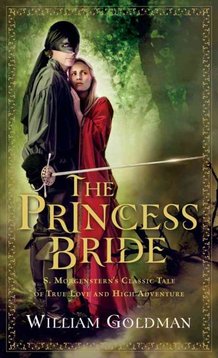
I’m somewhat surprised by this. Definitely, the older books on the list have staying power even if they got a boost in the poll in part from Hollywood–as was the case with William Goldman’s 1973 The Princes Bride that was adapted for the screen in 1987 by Rob Reiner. Rounding out the top five in the poll were The Hitchhiker’s Guide to the Galaxy (Adams), Ender’s Game (Card), The Dune Chronicles (Herbert), and A Song of Fire and Ice Series (Martin).
For me, the results for fantasy are somewhat skewed because the poll included science fiction. While there’s often a lot of overlap between the fantasy and science fiction genres that makes it difficult to categorize some novels as either one or the other, I would have enjoyed seeing the poll separated into two. That might have produced more representative results. For example, the inclusion of science fiction in the mix is partly responsible for the fact that The Mists of Avalon (Bradley) is sitting at 42 and that The Chronicles of Thomas Covenant (Donaldson) didn’t even make the list.
Nonetheless, the list is interesting. If you’re in the mood for a popular fantasy or a popular science fiction novel, it’s a good place to look. Next year, NPR plans to run a survey looking for people’s favorite young adult novels. I wonder how many times a Harry Potter book will make the list.
 Book Bits is my new blog of writers’ links. Here you’ll find information about reviews, new titles, author interviews quotations, and book news. I invite you to stop by, skim through the offerings and click on a few links such as: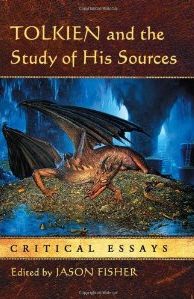






 In Garden of Heaven: an Odyssey, my protagonist David Ward is convinced that some of the people we meet on rainy city sidewalks and between the dry-as-dust shelves in ancient libraries began their lives as fictional characters. Whether they first strayed through a writer’s thoughts as a random notion, stalked him along the boundaries of his waking world in twilight dreams, or arrived at the very moment the pen first kissed the paper with their name, such individuals are called into life because an empty space must be filled.





 Malcolm's Round Table