The Dance of Sun and Moon – Stages on the Journey

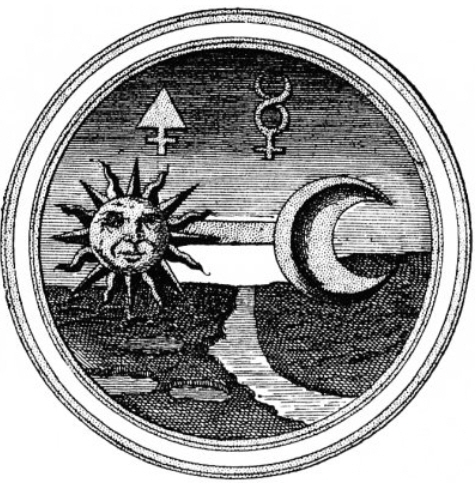
When the Sun and the Moon are viewed within the arena of Western esoteric traditions, including alchemy and the Tarot, they represent opposites that approach and retreat from each other even though they are destined to be merged into one. In these traditions, the Sun represents fire, masculine, positive (polarity), rational, visible world, and the consciousness mind. The Moon represents water, feminine, negative (polarity), intuition, hidden world, and the unconscious mind.

It is said that the enlightened being, often called The Wonder Child or viewed as the Philosopher’s Stone, is born from the merging of these apparent father/mother, king/queen opposites as depicted in the old art work shown here.

One of the many ways of illustrating the steps on the path to enlightenment, the goal of the hero’s and heroine’s journeys, is through the sequence of Major Arcana (trumps) cards in a Tarot deck. The Major Arcana  cards begin with “0 The Fool,” who is considered the innocent initiate at the beginning of the journey/quest and end with “21 The Universe,” which represents ascension. En route, the seeker finds “18 The Moon” and “19 The Sun.”

I like the description of the Moon and Sun  cards in the ancient quests of  knights for the Holy Grail. The Moon, then, is the Grail in the lake (beautiful water symbolism here) and the Sun represents the Grail lifted up into the pure light prior to completing the quest. Afterwards, the initiate/seeker reaches “20 Aeon” which is viewed as the rising of the Phoenix from the ashes prior to ascension.

Many Paths = One Destination

There are multiple layers of symbols here when we overlay the hero’s/heroine’s journey paths with all their traditional associations, including the Lesser Mysteries and Greater Mysteries, the cycles of the seasons around “the wheel of the year,” the Tree of Life, Tarot, alchemy and astrology. One need not study all of this, or even any of this, to understand seeker’s journey. The journey is who we are and what we are about. All of the paths to enlightenment are pointed toward the same end: transformation. Each of us focuses on the symbols we’re most comfortable with and attuned to.
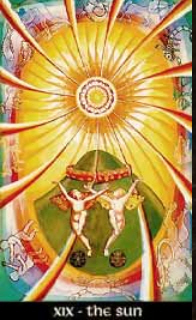
Some experts say that we’re impacted by these symbols even if we are not consciously aware of them or understand the little we may have heard about them. I am a novice in using Tarot and understanding the cards’ many connections to the Tree of Life, spiritual alchemy and the cycles of the seasons. Generally, though, I like the symbolism of the Thoth Deck of Cards. The Moon and Sun cards shown here are from that deck and have a fair amount of symbolism.

  • Moon: The overall tone here is night. In the Book of Thoth, the Moon is called the “Gateway of Resurrection.” During night and Winter, the waiting Sun is diminished or absent. The landscape here is severe and the stream is mixed with blood. The sacred scarab holds the sun in its darkness while the moon occupies the mind and cosmos.
  • Sun: The overall tone here is light, with the twelve major rays standing for the signs of the zodiac. The light emanates from a rose-like sun, standing for the flowering of the solar influence. The children above the green and fertile earth are forever young and innocent. They represent the seeker’s and/or humankind’s next stage.

The Writer’s Raw Materials

moon
moon

As a writer, I love the relationship of symbols and story ideas. They can strongly impact plots, themes and characters. There are many ways to characterize a journey. For example, readers of my hero’s journey novel The Sun Singer  will find numerous references to light and the other aspects of the so-called solar journey. For more information, see the Journey Page on my website and explore the information on the Joseph Campbell Foundation site. The book’s Glacier Park setting reminds park visitors and fans of “Going to the Sun Road” and the expanse of light one sees from high mountain trails.

Likewise, readers of my heroine’s journey novel Sarabande will find numerous references to water and the other aspects of the so-called lunar journey. The Heroine’s Page and the Sarabande Page on my website have more details. While the book’s story begins in the mountain high country, the plot (which is oriented around the moon’s phases) becomes more focused on rivers, dreams and the so-called “Underworld.”


sun
sun

For more information about Tarot cards in general, you might enjoy exploring one of my favorite sites: Raven’s Tarot Site. Here you’ll learn more about the Major Arcana (trumps), Minor Arcana (suits), and their correspondences with the Tree of Life, the classic elements, and astrology.

My first intention in both of these books is telling an exciting story. Both stories have many associations with myths and symbols. Those who know the myths and symbols will, perhaps, smile when they see the references. Those who do not consciously know the myths and symbols will still be subject to their spells.

As Rumi said, “What you seek, seeks you.” So, perhaps when you’ve finished reading the stories, you’ll be drawn into the “inner stories” behind the actions of Robert Adams (The Sun Singer) and Sarabande (Sarabande). When that happens, you’ll find that what you are looking for will begin to appear more often in your life in the form of books, websites and links, things you see on the way to work or on a hike, people who are interested in these subjects, and your dreams.

Meanwhile, as you read the novels, I hope you’ll enjoy the action while you are dancing with the Sun and the Moon—as they dance with each other.

–Malcolm

Briefly Noted: ‘The White House Boys’ and ‘The Boys in the Dark’ (updated 07-23-19)

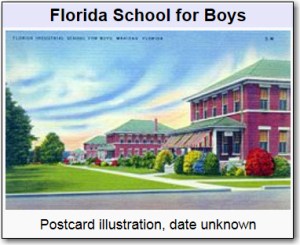
The dorms make the school look like a college.

Updates are collected at the end of the post. As you’ll see, the updates focus on the school rather than on the books. Most recent update is July 2019.

A writer friend of mine in Florida who knows I’ve been working on a series of short stories set in the Florida Panhandle, sent me this link as an idea for a story: Mystery surrounds graves at boys’ reform school. Here’s how it begins: This Florida panhandle town is the home of a mystery that has been lost to time.  A small cemetery buried deep into the grounds of a now-defunct boys reform school dates back to the early 1900s. Rusting white steel crosses mark the graves of 31 unidentified former students. (See updates at the end of this post.)

When I read the story, I didn’t initially recognize the school because its most recent name, Arthur G Dozier School for Boys, didn’t connect in my brain with the name, Florida Industrial School for Boys, used for the Marianna, Florida reform school when I was living in Florida in the 1950s and 1960s. The Florida Department of Juvenile Justice operated the school between 1900 to 2011.

Several facts became clear as I read the story and then followed links and Google searches to other stories. The use of the word “school” to describe a physical plant that looked Edenic but which contained unidentified graves of former “students” was misleading to the general public, including those of us who lived in the state capital 85 miles away who had no clue that some of the authorities there based their approach to “reform” on the worst techniques for the control of “undesirables” coming out of World War II POW camps.

The White House

The ugly truth

Connecting the dots, the boys’ “progress” in the school included a small white house where the rapes, beatings and other horrors occurred after which possibly some of them were buried in the unmarked graves now being investigated. Logically, this is unlikely because, as local historian Dale Cox notes, why would the state murder a student and then mark and maintain his grave? Others contend the graves are for those who died in an influenza outbreak and a fire.

Fortunately, most of the men survived; unfortunately, they have enough haunting memories to last a lifetime.

Some 300 of these survivors have formed an organization called The White House Boys. On their website, you will find news about recent press reports, stories contributed by those who are just now coming forward to tell the world what was happening in Marianna, and links to recent press reports about the State of Florida’s investigation that began several years ago.

I got through high school without any brushes with school authorities or police. Some of those who had problems, many of them trivial, were packed off to reform school. I don’t know if any of the White House Boys were in school with me at Tallahassee’s Leon High School. I haven’t yet seen any names I know. The “problem” students just went away: expelled, dropped out, or joined the service. If they caught the State’s attention through what (for them) was called “the justice system,” news stories in the local paper often said they were being sent to “reform school.”

The old secret.

Then, I had no concept what was supposed to happen at a reform school. Remedial classes? Encounter groups? Campfire sings? Rape and beatings never crossed my mind as mainstays of the curriculum. Right now, I’m too angry about it to remotely consider writing fiction.

I’m angry because it happened in a nearby town I visited often (due to the Florida Caverns State Park there), and I’m angry that it happened right under the noses of state lawmakers and they were either blind or indifferent to it, and I’m angry that even now the story about the investigation, the abuses and the graves has been going on across the border in Florida and I heard nothing about it until my friend sent me that link.

If you want to learn more, and you really don’t even though you must, click on the White House Boys link and/or do a Google search and you will find more than you can bear to know.

The Books

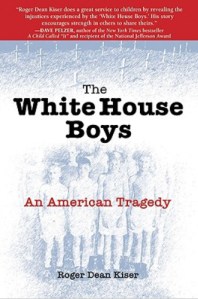
Two books are among those spelling out the details: The White House Boys and The Boys in the Dark.

The White House Boys: An American Tragedy, by Roger Dean Kiser, publisher’s description:

Hidden far from sight, deep in the thick underbrush of the North Florida woods are the ghostly graves of more than thirty unidentified bodies, some of which are thought to be children who were beaten to death at the old Florida Industrial School for Boys at Marianna. It is suspected that many more bodies will be found in the fields and swamplands surrounding the institution. Investigations into the unmarked graves have compelled many grown men to come forward and share their stories of the abuses they endured and the atrocities they witnessed in the 1950s and 1960s at the institution.

The White House Boys: An American Tragedy is the true story of the horrors recalled by Roger Dean Kiser, one of the boys incarcerated at the facility in the late fifties for the crime of being a confused, unwanted, and wayward child. In a style reminiscent of the works of Mark Twain, Kiser recollects the horrifying verbal, sexual, and physical abuse he and other innocent young boys endured at the hands of their “caretakers.” Questions remain unanswered and theories abound, but Roger and the other ‘White House Boys’ are determined to learn the truth and see justice served.

The Boys of the Dark: A Story of Betrayal and Redemption in the Deep South, by Robin Gaby Fisher, Michael O’McCarthy, and Robert W. Straley, publisher’s description:

A story that garnered national attention, this is the harrowing tale of two men who suffered abuses at a reform school in Florida in the 1950s and 60s, and who banded together fifty years later to confront their attackers.

Michael O’McCarthy and Robert W. Straley were teens when they were termed “incorrigible youth” by authorities and ordered to attend the Florida School for Boys. They discovered in Marianna, the “City of Southern Charm,” an immaculately groomed campus that looked more like an idyllic university than a reform school. But hidden behind the gates of the Florida School for Boys was a hell unlike any they could have imagined. The school’s guards and administrators acted as their jailers and tormentors. The boys allegedly bore witness to assault, rape, and possibly even murder.

For fifty years, both men—and countless others like them—carried their torment in silence. But a series of unlikely events brought O’McCarthy, now a successful rights activist, and Straley together, and they became determined to expose the Florida School for Boys for what they believed it to be: a youth prison with a century-long history of abuse. They embarked upon a campaign that would change their lives and inspire others.

Robin Gaby Fisher, a Pulitzer Prize–winning journalist and author of the New York Times bestselling After the Fire, collaborates with Straley and O’McCarthy to offer a riveting account of their harrowing ordeal. The book goes beyond the story of the two men to expose the truth about a century-old institution and a town that adopted a Nuremberg-like code of secrecy and a government that failed to address its own wrongdoing. What emerges is a tale of strength, resolve, and vindication in the face of the kinds of terror few can imagine.

Looks like a college - Wikipedia Picture
Looks like a college – Wikipedia Picture

I thank my friend for sending me the link. I don’t have the knowledge to turn this into a gripping novel. But then, I don’t need to, for those who were there are already telling their stories. I can’t so better. I wouldn’t presume to try. And, as a 1968 newspaper story about the school (Hell’s 1,400 acres) suggests, Florida didn’t just learn about this problem.

UPDATE:  From NBC news on December 11, 2012: Abuses at infamous Florida boys reform school even more widespread, report says – “Scientists have found 19 previously unknown grave shafts on the grounds of a notorious Florida reform school, suggesting that many more boys died there amid brutal conditions than had previously been known”

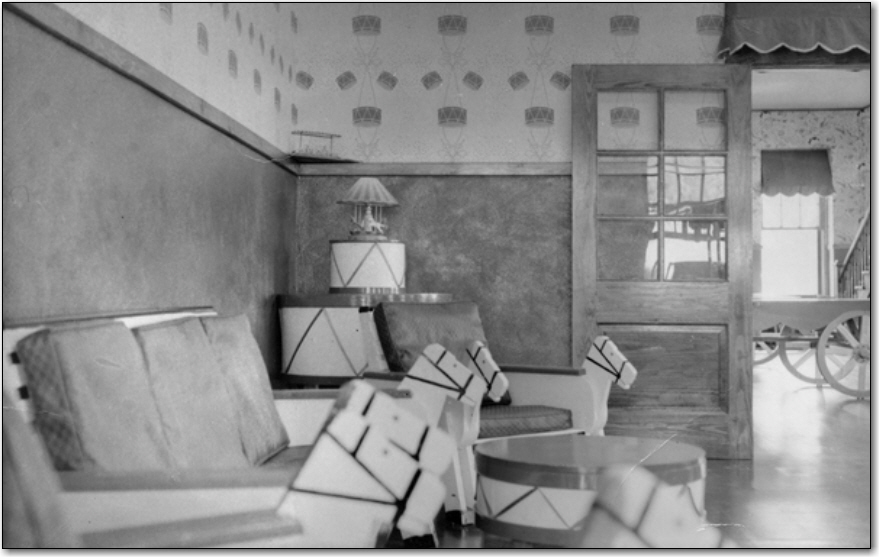
Dorm interior some time prior to 1959 - State Archives of Florida, Florida Memory, http://floridamemory.com/items/show/258560
Dorm interior some time prior to 1959 – State Archives of Florida, Florida Memory, http://floridamemory.com/items/show/258560

UPDATE: From “The Guardian” on August 7, 2013: Florida to exhume remains found at notorious Dozier School for Boys – “Governor Rick Scott and the rest of Florida’s cabinet voted unanimously on Tuesday to allow dozens of unmarked graves found in woods near the school to be opened up. The decision comes after a team of researchers found evidence of almost 100 deaths at the institution.”

1950s Interior view of one of the cottages - State Archives of Florida, Florida Memory, http://floridamemory.com/items/show/258653
1950s Interior view of one of the cottages – State Archives of Florida, Florida Memory, http://floridamemory.com/items/show/258653

UPDATE: (January 28, 2014): Remains of 55 bodies found near former Florida reform school – “Excavations at a makeshift graveyard near a now-closed reform school in the Florida Panhandle have yielded remains of 55 bodies, almost twice the number official records say are there.”

UPDATE: (August 8, 2014): Boy missing since 1940 ID’d at shuttered Florida boys school – “(CNN) — On their deathbeds — her father’s in the 1960s and her mother’s in the 1980s — Ovell Krell’s parents made her promise she’d never stop looking for her brother.” Joseph Johnson, Former ‘White House Boy’ from Knoxville confronts his past and recalls horrors of Florida reform published in Knoxville on August 31 and updated on September 11.

UPDATE: (September 21, 2014) Sister reveals story about brother sentenced to Dozier school – Havana Herald article about the circumstances of George Owen Smith.

UPDATE: (October 9, 2014): Did Florida boys school officials send family a casket filled with wood? Story about a coffin sent home to a family from the school without a body inside.

UPDATE: (March 8, 2016) State offers to rebury victims of Dozier School abuse – “A measure intended to help heal a community and people who suffered at a former reform school where the remains of 51 boys have been unearthed is headed to the desk of Gov. Rick Scott.”

UPDATE: (November 5, 2016) Special Report: Dozier School, What’s Next?  Talks are underway about what should be done with the school’s property so that it can transition into another use that would have a positive economic impact on the community. But first, the state has to relinquish the property.

UPDATE: (January 13, 2017) Discussions are underway about whether to tear down or preserve the building known as the White House where boys were abused.

UPDATE: (February 7, 2017) Suddenly, a newspaper and a blog post appeared showing the same group of photographs from the abandoned school: Inside the school of death: Sinister pictures show the rundown Florida building which had a ‘rape dungeon’

UPDATE: (April 4, 2017) Legislature to White House Boys: “We’re sorry . . . atrocities should never occur again”

UPDATE: (August 1, 2017) “The White House Boys bypass traditional claims process and will seek compensation for mental, physical and sexual abuse at a state reform school” in Dozier School for Boys survivors want state to pay See Also: “Florida lawmaker wants to compensate survivors of the Dozier School for Boys” 

UPDATE: (May 23, 2018) “White House Boys’ Tour Dozier Campus” – “MARIANNA, Fla. – Friday, the ‘White House Boys’ toured the Dozier School for Boys Campus and held a memorial service, for closure.The tour was private and members of the group would not talk with the media.”

UPDATE: (October 11, 2018) – Author Colson Whitehead’s latest novel, The Nickel Boys, will be released next summer. According to the New York Times, “Colson Whitehead was set to write a crime novel set in Harlem. But he couldn’t stop thinking about a story that haunted him, about the abuses — beatings, torture, neglect, suspicious deaths — that took place at the Arthur G. Dozier School for Boys, a reform school in the Florida panhandle that operated for more than a century.”

UPDATE: (April 12, 2019): More ‘possible graves’ found at Dozier School for Boys – Tampa Bay Times: “A company doing pollution cleanup at the old Dozier School for Boys property in Marianna, 60 miles west of Tallahassee, has discovered 27 ‘anomalies’ that could be possible graves.”

UPDATE: (July 17, 2019): Researchers to look for more graves at Florida reform school – “University of South Florida forensic anthropologist Dr. Erin Kimmerle will be back at the former Dozier School for Boys on Monday, the same place where she spent four years researching and unearthing the remains of boys buried on the massive 1,400-acre site in Marianna, located about 60 miles (96 kilometers) northwest of Tallahassee.” – Associated Press 7/23: No new graves were found.

UPDATE: (July 17, 2019) Rooted In History, ‘The Nickel Boys’ Is A Great American Novel (Review) – “It’s pretty rare for a writer to produce a novel that wins the Pulitzer Prize and the National Book Award and, then, a scant three years later, bring out another novel that’s even more extraordinary. But, that’s what Colson Whitehead has done in following up his 2016 novel, The Underground Railroad, with The Nickel Boys. It’s a masterpiece squared, rooted in history and American mythology and, yet, painfully topical in its visions of justice and mercy erratically denied.” – NPR. See also, this review: For The ‘Nickel Boys,’ Life Isn’t Worth 5 Cents.

Malcolm

Rowling’s Amazon Experience

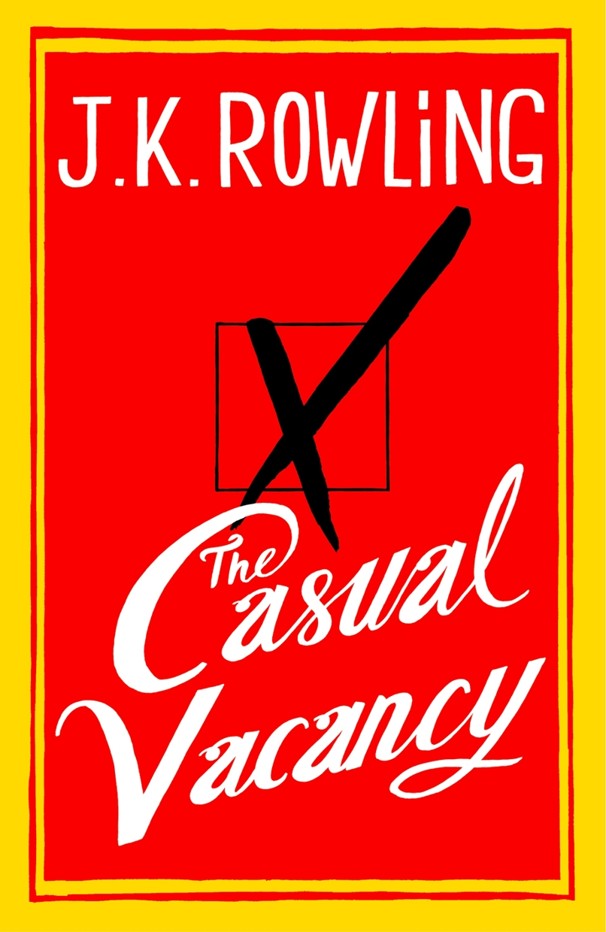
As the week winds down, and I sit here with a glass of dark red wine contemplating J. K. Rowling’s negative reviews on Amazon, I have come to the conclusion that the wrong people bought  The Casual Vacancy and then got mad about it. By the “wrong people,” I mean people who are reading literary fiction who normally stick to commercial fiction and people reading about troubled everyday characters who normally read fast-paced, high-energy page-turners.

As of this moment, The Casual Vacancy has 193 one-star reviews and 125 five star reviews. Who would have thought during the heady days of Harry Potter and midnight book sale parties that a Rowling book would fair so badly in the public eye?

Those who don’t like the book claim it’s dull, that nothing happens, that the people are gloomy low life trash, that they weren’t entertained because there wasn’t any humor in it, that the author’s normal charm was missing, that the characters were petty and had disgusting behavior, and that the story was filled with general dullness and lackluster material.

I don’t agree. Since I’m only 250 pages into the 500-page novel, I can’t write a review yet. So far, the book is a gem that I think may well be viewed as an important novel about small-town life in England long after the Harry Potter series has faded from the public consciousness. I say this even though, as a writer of contemporary fantasy, I’m a fan of the Harry Potter series.

I don’t want to spend the time doing this, but I suspect that some of the reviewers who claimed that the characters in The Casual Vacancy were trashy and disgusting, probably gave five stars to Stieg Larsson’s The Girl With the Dragon Tattoo whose characters were far more violent and disgusting. Why? Most of those reading Larsson’s riveting Millennium Trilogy want a rush of crime, sex and fast-turning pages rather than a book filled with characters who are rather like the Harry Potter’s Dursley family on a very bad day.

If somebody forced me to read the genres and styles I usually avoid, quite possibly I would want revenge. If I had just smoked or drank the wrong stuff, I might take out my frustrations on the authors of some very fine books that just don’t happen to be my cup of tea. But that would be unfair, rather like criticizing a sushi chef for preparing a meal for a person who hates fish.

The book reviewing world feels out of sync to me when people proudly claim they “reviewed” The Casual Vacancy based on the synopsis alone or trashed it in public after reading only a hundred pages then believe what they left on Amazon is a review. No, it was a non-review. Perhaps the wine has loosened my tongue, but I really want to tell such people to shut the hell up.

I’m enjoying the book. It has its own magic and its own truth.

Malcolm

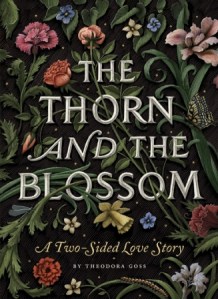
Briefly Noted: ‘The Thorn and the Blossom’ by Theodora Goss

When Theodora Goss’ novella The Thorn and the Blossom: A Two-Sided Love Story was released last year, the book’s imagery, dual stories and unique construction created a bit of a stir. In the story, Evelyn Morgan and Brendan Thorne meet by chance and become lovers after he hands her a copy of a medieval romance.

In her Bookslut review, Colleen Mondor said: “Slipcovered and with an accordion-fold binding, “The Thorn and the Blossom” is designed so it can be flipped and readers may thus enjoy Brendan and Evelyn’s separate perspectives of the same tale. While the publisher’s work is impressive, it is Goss’s handling of the story itself that really blew me away. You do not have to read these perspectives in any particular order; you can start with Brendan or Evelyn and either way you will not ruin critical moments or spoil the ending.”

Publishers Weekly said: “The fantasy elements are light, revolving mostly around Gawan’s story and Evelyn’s visions of fairies and trolls. Overall this makes the tale align more with old-fashioned romance than pure speculative fiction, but Goss’ appealing characters and modern magic atmosphere will continue to attract a following.”

Some reviewers on Amazon liked the unique look of the book, but found the accordion-style presentation difficult to read because the pages easily fell away in long folds. Other authors with two stories to tell in one book have solved this problem by formatting the stories from alternate ends of the book but with standard binding. Needless to say, the issue becomes a non-issue for those reading the e-book version.

Nonetheless, showing the same story from two points of view is an age-old technique that’s been handled in multiple ways, and whenever it appears it adds both drama and depth to the material. Readers naturally feel some stress when they are told it doesn’t matter which account to read first and also when they see that there will be no resolution to the contrasting viewpoints. The depth, aided in part in this case by Goss’ evocative language, comes from understanding that people see events and relationships differently rather than via the single, linear viewpoint commonly used in most fiction. So, the dual stories show us what we often miss in fiction, though we experience it in our lives.

Available in hardcover and e-book, “The Thorn and the Blossom” is likely to enchant lovers of fantasy, romance, and well-told tales.

You May Also Like: The Value of Expecting Synchronicity

Malcolm

Malcolm R. Campbell is the author of contemporary fantasy, including the gritty, magical adventure “Sarabande.” His paranormal Kindle short story, “Moonlight and Ghosts” was released last month.

Review: ‘Alexander’s Lighthouse’ by Don Westenhaver

Author Don Westenhaver (Nero’s Concert) returns to the ancient world with a historical thriller set in Alexandria Egypt at a time when the Roman Empire’s rule was being challenged by a group known as “The Mob.” Set in 92 AD, Alexander’s Lighthouse is a smooth mix of fictional characters and events in a thoroughly researched historical setting.

Marco, a young Greek doctor arrives in Alexandria to study for a year at the city’s Museum and Library with something most visiting students do not have: a famous Gladiator father remembered fondly by the Empire. He secures a meeting with the Roman Prefect Titus Cornelius which leads to a position with a museum department tasked with the discovery of new weapons and other practical equipment. Marco’s access to the royal palace, his courtship of the prefect’s daughter, and his work on secret projects soon bring him to the attention of the mob.

The historical detail in this well-written novel provides readers with three-dimensional characters living, working and fighting within the scope of the long-ago politics and culture of Egypt in the city founded by Alexander the Great after it came under Roman rule. While Alexandria is an advanced, shining city with more than the usual amount of tolerance for its mix of Roman, Greek, Egyptian, Christian and Jewish citizens, there are conflict areas ready to be exploited by Free Egypt, the latest incarnation of the mob.

The inventive plot features a weapon under development by Marco and three colleagues in the museum’s special projects group that both the Roman rulers and the Free Egypt rebels desperately want to have. Spies are everywhere. It’s difficult to know whom to trust. And the friction between those who relish the laws and order of Roman rule and those who want the return of an independent Egypt lurks beneath the surface. The story builds through one intrigue after another toward the inevitable open rebellion. Marco, his co-workers, the prefect’s daughter, Paula, and a rich and alluring widow named Nebit are simultaneously players and pawns in a very deadly game.

While the novel’s historical detail intrudes at times, the story moves at a rapid and believable pace in Westenhaver’s re-created Alexandria with a powerful what-if premise: what-if the weapon in the book had been created at the famous museum? No, it isn’t historical. But as Westenhaver says in the Author’s Note, “My only defense is that the weapon should have been invented much earlier than it was.”  (It contained well-known and commonly used materials.)

Like Nero’s Concert (2009), Alexander’s Lighthouse has great depth along with the kind of action that keeps readers turning pages. The novel is available in trade paperback and on Kindle.

Malcolm

Malcolm R. Campbell is the author of four novels, including the contemporary fantasy “Sarabande.” His “Book Bits” writers’ links appear several times a week on his blog The Sun Singer’s Travels.

Contemporary fantasy for your Kindle.

Do I Dare Disturb the Universe?

And indeed there will be time
To wonder, “Do I dare?” and, “Do I dare?”
Time to turn back and descend the stair,
With a bald spot in the middle of my hair –
(They will say: “How his hair is growing thin!”)
My morning coat, my collar mounting firmly to the chin,
My necktie rich and modest, but asserted by a simple pin –
(They will say: “But how his arms and legs are thin!”)
Do I dare
Disturb the universe?
In a minute there is time
For decisions and revisions which a minute will reverse.

— T. S. Eliot in “The Love Song of J Alfred Prufrock”

What’s Your Tree

Julia “Butterfly” Hill disturbed the universe for 738 days by sitting in a 1,500 redwood tree from December 1997 to December 1999 to keep the 180-foot tree from being cut down. Her efforts saved the tree. Though many people, including those who agreed with her, said she was carrying her protest to an extreme level, the very nature of what she did attracted attention, garnered support, and that resulted in an agreement that saved the tree. In spite of one attack by morons with a chainsaw, the tree is carrying on its long life.

Most of us wouldn’t have done that because when all was said and done, the practical ramifications of sitting in a tree for two years would have probably made us unemployable, not to mention the loss of income that would have bankrupted us.  There is so much noise in the world, that it’s hard to know what any of us can do or say to disturb the universe enough to make a difference.  Today, authors hear that “it” is all about “platform.” One has to have a “platform” filled with Facebook and Twitter and blogs and Pinterest and LinkedIn to have any hope of seeling books. The trouble is, everyone else is out there in the same social media trying to sell their books. It’s hard not to get lost in the crowd.

Anyone who wants to follow his or her beliefs and passions and work for meaningful change is likely to feel just like the writers who are trying to sell their books: what must I say or do to be heard? Fortunately, there are many organizations we can associate with that will help us be heard as part of a group. If you want to fight to save redwoods, for example, you can join the Nature Conservancy, the Sierra Club, the National Parks and Conservation Association and many other groups. Many of them want hands-on help as well as your donations and your help in letter-writing campaigns.

In 1967, I came within several breaths of going to Sweden to avoid being drafted and forced to participate in a war I did not support. I had the means and the opportunity. The reasons why I didn’t are both complex and unclear, but within the context of this blog, my leaving the U.S. (and being banned from coming home for many years) would not have changed U.S. policy in Vietnam. If I had been famous, perhaps living in Göteborg might have either changed a few people’s minds or convinced everyone who knew me that I was nuts.

It’s a hard call, I think, to figure out the difference between running away and leaving because you cannot accept what your country, town, company or organization is doing. I absolutely cannot accept the United States’ policy of using drones to kill people it doesn’t like in foreign countries. In my view, that is unconstitutional and in violation of international law. This practice hasn’t been discussed very much in the Presidential race because few people are upset enough about it to disturb the universe. And, like those of us who have considered sitting in trees or moving to Sweden, we’re more likely to scuttle our own universes rather than impacting the national debate.

I would like to disturb the universe when it comes to the use of drones in sovereign foreign countries, the spying on Americans done with little uproar based on so-called “security reasons,” the mistreatment of the environment, the intrusion by governments and religious groups into a woman’s personal rights, and a dozen or so other issues. But I never quite know how.

The Quiet Approach

Whenever my frustrations about issues get too strong, I use every relaxation technique I know to pull myself back into what I believe is an essential truth: as Joseph Campbell said “We’re not on our journey to save the world but to save ourselves. But in doing that you save the world. The influence of a vital person vitalizes.”

Seriously, we’re not burying our heads in the sand when we admit that we cannot save the world. While some people will make very noticeable positive impacts, most of us will have to take a quieter approach. Perhaps we’ll donate some money to Planned Parenthood or we’ll add our name to a petition about oil pipelines through sacred Indian lands or we’ll spend the weekend with a volunteer group that’s clearing brush and deadfalls off a national forest or national park trail.

And who knows, there the ripples from such quiet actions influence. The universe we must dare to disturb, I think, is ourselves. Are we following our beliefs? Good, then doing so may impact a friend and then a neighborhood and after that, who knows who will step aside from their busy day-to-day life to help. We’ll probably never meet the people we influence,  but that doesn’t matter. We won’t have a page in wikipedia that tells the world who we are and what we did. That doesn’t matter either.

The hardest thing is, perhaps, that first step. Are we following our beliefs? If not, we need to disturb ourselves greatly. Once that happens, the universe that matters will never be the same again.

Malcolm

Turning (selected and well-disguised) Secrets into Fiction

While growing up in Florida, my secret story often sounded like old Florida adventure novels.

“A secret story should be yours alone: about who you are, who you want to be. Who you believe yourself to be, under all the social conventions and expectations. Are you secretly a sorceress? A priestess? A charmer of animals or teller of fortunes? Are the trees your friends? There is something wonderful about having a secret identity, something that no one knows about you.” – Theodora Goss in her post “Your Secret Story”

Along with “Where do you get your ideas?” the question people ask me the most is, “How much of each story is true?”

Some of the actual events merged into a short story or novel come from an author’s experiences. For example, my Kindle short story “Moonlight and Ghosts” draws slightly on my experience as a unit manager years ago in a center for the developmentally disabled. Other events in an author’s work come from what author Theodora Goss describes as one’s secret story.

A secret story, often begun in childhood, is the story we tell ourselves about ourselves, a lifelong imagination-run-wild romp of the things we fantasize about doing or being. In childhood, many of us imagine being wizards or Knights of the Round Table or Superman.

As we grow older, perhaps we change our story to make it more plausible. These stories can be, but usually aren’t, the same as our dreams and goals. Perhaps they come to mind as an all-in-good fun episode we imagine while we’re falling asleep or mowing the yard. Perhaps they have a deeper impact and become our personal myth.

What ever they are, we seldom tell them to each other. Yet, to a writer, they are so much a part of his/her imagination, selected fragments of them wind up in stories or, in some cases, serve as the catalysts for stories.

I wonder if we become truly happy and/or in a state of bliss when our secret story and our daily life become one. Before that happens, these stories are a great source of ideas for the next novel or short story.

You May Also Like:

  • I have brought back my “Book Bits” writing links posts twice a week on my Sun Singer’s Travels blog. Each post includes 8-10 links for recent book news, reviews, how-to articles and features.
  • The Real Magic of the Unlimited Self tells the story behind the story for my “Moonlight and Ghosts” Kindle short story. (Sometimes the magic is real.)
  • Or, see my website for my latest news.

-Malcolm

Contemporary fantasy for your Kindle.

Glacier Park Fund and Glacier Association to Merge

from the Glacier Park Fund

West Glacier, MT, September 25, 2012 – The Board of Trustees of the Glacier National Park Fund and the Board of Directors of the Glacier Association (formerly the Glacier Natural History Association) have agreed to a merger of these two Glacier National Park Partners.

The merger will be effective January 1, 2013, and the new organization will be the Glacier National Park Conservancy. The conservancy’s goal will be to generate financial support for the Park in an era of reduced federal budgets through increased private fundraising and philanthropic activities, and continued operation of the bookstores within Glacier National Park and at other federal agency partner sites in Montana.

The Glacier Park Fund has provided close to $4 million to Glacier National Park and is pleased to take another exciting step in growing our commitment and support to Glacier.

From extensive support of trails, to research and management of wildlife and plants, to educational programs and preservation of the red buses and historical records, artifacts and buildings, the Glacier National Park Conservancy (GNPC) will continue in the same tradition of helping to preserve a quality of visitor experience while protecting a very special national treasure.

The Glacier National Park Fund was established in 1999 as the non-profit fundraising partner of the Park. The Glacier Association is a non-profit cooperating association of the National Park Service that was originally formed in 1941 and incorporated in 1946.

As a 1980s volunteer with the Glacier Association when it was called the Glacier Natural History Association and as member of both organizations, I look forward to seeing a strengthening of the efforts of both approaches to park stewardship and fundraising through the merger.

–Malcolm

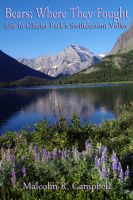
Malcolm R. Campbell, the author of contemporary fantasy and satire, also created the Kindle e-book “Bears; Where They Fought” about the land and history of Glacier National Park’s Swiftcurrent Valley. His article about the Glacier Park flood of 1964 appears in NPS-produced “A View Inside Glacier National Park – 100 Years 100 Stories” available through the Glacier Association on line bookstore.

Visit the Glacier page on my website.

It’s really spooky: ‘Moonlight and Ghosts’

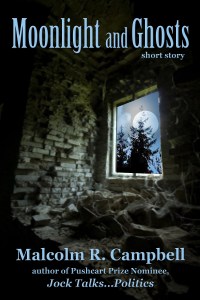
I’m happy to announce my really spooky short story “Moonlight and Ghosts” was published today by Vanilla Heart Publishing in an e-book format.

Publisher’s Description: On a moonlit night, Randy’s intuition is drawing him back to an abandoned psychiatric hospital where he once worked. He and his friend, Alice, have heard the ghost hunters’ claims the building is haunted, filled with strange lights, apparitions and the voices of former patients calling for help. The Forgotten point Randy and Alice to a crime in progress… and there’s not much time to save the victim.

That abandoned building…

There used to be an abandoned psychiatric hospital and developmental center near the house where I grew up. Before it was converted from a secondary hospital for use by the state department of mental health, I visited patients there–and it all seemed normal enough. It closed for a variety of reasons, including lack of funding and ended up sitting as an abandoned and often vandalized building for over two decades.

During this time, it became a magnet for ghost hunters. The more I looked at the pictures on line, the more my imagination started tinkering with an idea for a story. Like the main character in the story, I once worked as a unit manager at a center for the developmentally disabled. Fortunately, I never worked in this building. But what if I had and what if I went back on a moonlit night and found several ghosts waiting for me with an emergency message?  Hmmm…

I hope you like it!

Price: 99 cents on Kindle, and in multiple formats, on Smashwords.

Watch the Book Video on YouTube

Read the beginning on Amazon (use “look inside”) or on Smashwords (use “view sample) for free.

Malcolm

Book Review: ‘Goatsong’ by Patricia Damery

Each chapter heading of Patricia Damery’s beautifully written novel Goatsong begins with the words “tell me about.” Sophie’s daughter Stacey is asking her mother to tell her the old and ever-changing family stories about the days she spent as a ten-year-old child with the three Goat Women on Huckleberry Mountain and was reborn into the fullness of the world.

Young Sophie’s single mother works as a waitress at an all-night diner and sleeps all day, sometimes alone and sometimes with the man she brings home: “Ma didn’t want me making noise during the day while she slept, so I left the house and did all kinds of things most kids would not have the opportunity to indulge in, you might say.”

That summer, Sophie meets Nelda, Dee and Ester on the mountain above the Russian River in northern California, and in the process of learning about herding goats, “logging in” garbage dumped alongside the roads, and dancing naked in the meadow, she discovers love and acceptance from her ad hoc surrogate family. Among other things, Sophie learns to see and acknowledge that which others often miss, roadside trash included.

Wise, practical and nurturing, Nelda knows the Goatsong. Strong, persistent and dependable, Dee takes exception to those who dump garbage on the mountain as well as those who won’t lift a hand to stop it. Forever taking notes as the women do their daily errands, the relatively silent Ester is a witness, logging in the garbage. She finds, for example:

“1 beer bottle, label torn and unreadable, green.
1 plastic freezer bag, Safeway, good condition.
1 16 oz. paper cup, 7-11, good condition.”

The three Goat Women, who know they are “undesirables” from the townspeople’s point of view, accept Sophie as one of their own during their daily adventures on a mountain that Damery describes with the prose of a poet. The novel is a hymn to nature and natural living as well as an eternal and memorable story. Original, unorthodox and wise, the Goat Women provide Sophie with an unfettered, practical and loving worldview that is absent at her home and school.

In their own way, the goats (Natalie, Boris and Hornsby) are also Sophie’s teachers. The author, who has run a biodynamic farm in the Napa Valley for the past twelve years with her husband, said on her blog this past summer that “Walking the goats is truly an art.” Damery brings her knowledge of that art into her novel, creating goat characters who are as three dimensional and essential to the story as the women.

In the introduction, Damery writes that “Goatsong is the mysterious combination of humility and that essential ability to climb above, like a goat, or a song. To know the Goatsong of tragedy, Nelda told me, is to be reborn.”

When you read Goatsong, you are breathing in fresh air off the Pacific ocean, smelling the sweet scent of the bay laurel, and cooling your tired feet in sacred streams flowing through old redwoods in the company of wise women who, without agenda, may well change you as they changed the ten-year-old Sophie in those old family stories about the town of Huckleberry on the Russian River.

Malcolm

a young woman’s difficult journey