The Next Big Thing: a novel in progress

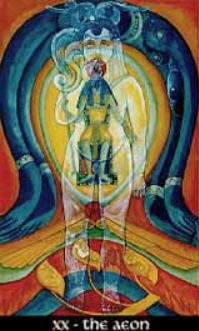
“The Aeon is the symbol for the Rise of Phoenix, it stands for a time of insight, the true understanding of the circle of life, of growing and fading.” – Raven’s Tarot Site

When author T. K. Thorne (“Noah’s Wife”) invited me to participate in a “blog chain” that focuses on the working title of our next book, I faced the same problem she did when she sat down to write her post. Which book do I want to talk about? Should I talk about the collection of short stories or my next Glacier Park Fantasy novel in the series that includes “The Sun Singer” and “Sarabande”?

I’ve decided to talk about the novel.

  1. What is your working title of your book?  “Aeon”
  2. Glacier Park’s Chief Mountain – M. R. Campbell photo

    Where did the idea come from for the book? When I wrote “The Sun Singer,” I knew the book’s Grandfather Elliott character would eventually return to a mirror-image universe (set in another time period) hidden within the mountains of Glacier Park Montana. “The Sun Singer” was his grandson Robert Adams’ story. Now it’s time to tell Tom Elliott’s story.

  3. What genre does your book fall under? Contemporary fantasy.
  4. Which actors would you choose to play your characters in a movie rendition? I’ve been waiting for Clint Eastwood to call and say he wants to play Billy, an Indian medicine man, in a movie version of “Sarabande.” So far, nothing. Maybe he’s been waiting for the Tom Elliott role to be ready.  There’s a role for Mila Kunis and another for Angelica Huston.
  5. What is the one-sentence synopsis of your book? An aging avatar returns to the land of Pyrrha to fulfill the ancient prophecy, overthrow the evil king and neutralize the traitorous sorcerer, and prepare the land for the arrival of the goddess.
  6. Will your book be self-published or represented by an agency? Neither. I will submit the novel to the publisher directly.
  7. How long did it take you to write the first draft of your manuscript? I am still working on it.
  8. What other books would you compare this story to within your genre? Although I write contemporary fantasy and Stephen R. Donaldson writes epic fantasy, Tom Elliott’s quest has some similarities to that of Thomas Covenant in Donaldson’s “Chronicles” cycle. Needless to say, “Aeon” can best be compared to “The Sun Singer” and “Sarabande.”
  9. Who or what inspired you to write this book? I wrote “The Sun Singer” based, in part, on my own psychic experiences and my love of magic and Glacier National Park. “Aeon” is the logical next step in the cycle. As the title suggests, I also like the meaning behind the trump #20 in the Tarot deck.
  10. What else about your book might pique the reader’s interest? The story is going to be a wild ride that begins on a Harley Davidson FXE Superglide Shovelhead. After that, what’s the worst that could possibly happen? Among other things, that means the production company for a movie version will have to spend a truck load of money on special effects.

I’ll keep you posted. By that I mean, don’t call me (unless you’re Clint, Mila, or Angelica), I’ll call you.

Now, for the next installment of THE NEXT BIG THING blog chain during the week of November 26th, check out the blogs of authors Melinda Clayton, L. E. Harvey and Pat Bertram.
Malcolm

Stop by my Facebook page!

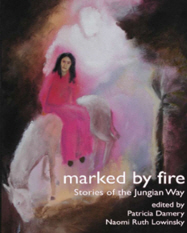
Briefly Noted: ‘Marked by Fire: Stories of the Jungian Way’

“Marked by Fire: Stories of the Jungian Way,” edited by Patricia Damery and Naomi Ruth Lowinsky, Fisher King Press; First edition (April 15, 2012), 196 pages

From the Publisher:

When Soul appeared to C.G. Jung and demanded he change his life, he opened himself to the powerful forces of the unconscious. He recorded his inner journey, his conversations with figures that appeared to him in vision and in dream in The Red Book. Although it would be years before The Red Book was published, much of what we now know as Jungian psychology began in those pages, when Jung allowed the irrational to assault him. That was a century ago.

How do those of us who dedicate ourselves to Jung s psychology as analysts, teachers, writers respond to Soul’s demands in our own lives?  If we believe, with Jung, in “the reality of the psyche,” how does that shape us? The articles in Marked By Fire portray direct experiences of the unconscious; they tell life stories about the fiery process of becoming ourselves.

Contributors to this edition of the Fisher King Review include: Jerome S. Bernstein, Claire Douglas, Gilda Frantz, Jacqueline Gerson, Jean Kirsch, Chie Lee, Karlyn Ward, Henry Abramovitch, Sharon Heath, Dennis Patrick Slattery, Robert Romanyshyn, Patricia Damery, and Naomi Ruth Lowinsky.

From Co-editor Patricia Damery

In a recent blog post, Patricia Damery (“Snakes,” “Goatsong”) mentioned that a guest at an event for this book asked why and how the chapters in this anthology came to be so interesting, to be more than simply personal stories.

Damery said, in part, that, “The personal stories in Marked by Fire are not journal entries but ones much further down the line, ones that have been “worked.” That is what analysis does: it takes the raw material of everyday life, the prima materia, and composts it, until it fertile ground, food for soul development. Although complexes may still be there, they do not obliterate contact with the Self or the Divine.”

These stories have a much wider application than analytical psychology, impacting everyone who appreciates the depth and scope of Carl Jung, comparative mythology, and the trials and joys of every seeker/self on the path.

You May Also Like: New York and Romance the Way We Were, my review of Mark Helprin’s “In Sunlight and In Shadow”

Malcolm

Kindle Edition

Malcolm R. Campbell is the author of contemporary fantasy novels and the recent paranormal Kindle/Nook short story “Moonlight and Ghosts.” The story draws on Campbell’s experience as a unit manager at a developmental center.

Dear Reader: If you buy books like widgets, I don’t want you

“We get on social media, we try different kinds of events, we create interesting displays, we sell the hell out of the books we love, but none of that reaches the boardrooms where the big decisions are made. If I could get one wish from the ghost of Sylvia Beach, it’s that she, or someone who cares about the inherent value of books, gets a seat in those boardrooms to advocate for readers not consumers, for books as a pillar of culture not as a unit of sales, and for bookstores as community centers not retail outlets and merchandise showrooms.” – Josh Cook of Porter Square Books, Cambridge, Mass

We hear stories from time to time about artists, jewelers, furniture makers and other stubborn souls who, after perfecting the art and the craft of their work for nearly a lifetime, refuse to sell their work to customers whom they believe won’t appreciate the work for its inherent beauty and artistry or who try to prostitute themselves, the art and the artists by acquiring the perfect bentwood rocker, diamond ring or sonnet at a rock bottom price.

Amazon, the Internet and parents who rear children to believe they (the children) are the center of the universe are conspiring like planets in trine to create a book buying atmosphere in which many (but thankfully, not all) prospective readers feel entitled to free, or almost-free books. This attitude is strengthened by the unfortunate, but popular, mindset that anyone selling or making anything is corrupt, cheating at taxes, and trying to rip off customers one way or the other. Therefore, like every other false right people are claiming to have these days, cheap books have become a component of the public’s feelings of entitlement and a way to get back at those who are purportedly stealing us blind.

If you listen to Amazon and to those who believe Amazon has done more for authors and readers than anyone since Gutenberg, then you are hearing that an e-book is just a file.  That means that neither the publisher nor the author is paying printers to print it, nor warehouses to store it.  Those who buy books as units or widgets or just files, see no value in the product other than the momentary gratification of reading them. They not only do not see the inherent artistry in the storytelling, nor the expenses an author incurs in creating that file which might include: (a) a year or two of full-time work, (2) hiring at editor, (3) paying for cover art, (4) travel and other research, (5) promotional efforts including mailing off free review copies, maintaining a website, traveling to book signings, purchasing bookmarks and fliers.

Some authors who have become household names by selling their books through large publishers, can take their fame—as well as their talents—off into the self-publishing world and earn a living selling books for a dollar or two on Amazon. They will lead you to believe that any author or publisher who asks you to pay, say, $5.00 for an e-book is ripping you off because (after all) the book is just a file.

According to the Census Bureau, the current poverty income level in the United States is $8,959. Looking at this simplistically, if I take a year to write an 80,000 word novel, I would have to sell at least 8,959 copies of that book on Amazon at the $1 price to break even at the poverty level. If I had any expenses in creating the book, I’d be under the poverty level.

In spite of the success stories we read about from time to time, most self-published books sell less than a hundred copies. Small-press authors are lucky if they sell 1,500 copies. In both cases, the authors are under the poverty level.

My great hope is that my readers will be happy with my books and will feel that a near-lifetime of art and craft has gone into them. I’m just an everyday, journeyman writer, so I do not feel like a “Hemingway in the making” or a “not-yet-discovered” Pat Conroy or John Grisham. Nonetheless, I do work very hard to tell exciting stories, with three-dimensional characters, pitch-perfect descriptions and themes that provide food for thought. Yet, and I tell you this without vanity or guile, if you want to purchase any of my novels at rock-bottom prices to you and to others like you, don’t bother.

If you think my e-book is just a file rather than the words and the work within the file, I don’t want you buying any of my books because, while we might have to agree to disagree about this, I don’t think you will appreciate them for their value as art/craft/culture. And, if you are earning an income above the poverty level, my strong belief is that if you want me to live below the poverty level selling my books with a rock-bottom, Amazon-style price, then you’re not the kind of person who will appreciate me as an author.

Based on the comments I’ve received on this blog, either directly, or when I post the links on Twitter or Facebook, I know that my regular visitors agree with the Josh Cook quotation I used to set the stage for this essay. I’m not talking to you because that would be rather like preaching to the choir. I’m talking to the people who will find this post via search engines with search words like “rock bottom prices” and “Amazon.” If you are one of those people and if you came here hoping I can “get it for you wholesale” or give it away for nothing, then I don’t want you.

For everyone else out there who respects books for their stories, words fail me in telling you how much I appreciate you.

Malcolm

Glacier Park Fund Lists Park Funding Accomplishments and Needs

The Glacier National Park Fund has supplemented the park’s declining federal funding to the tune of $3.5 million dollars for the past 13 years. After looking at the rationale for the Fund’s merger with the Glacier Association (reported in September), I believe the combined organization will offer increased support for the park during the next 13 years,

As a member, I enjoy the late-in-the-year mailings that detail how the Fund’s support has helped Glacier National Park during the recent season as well as getting a heads-up on emerging projects.

In 2012, contributions from the Fund helped the park complete repairs on Sperry Chalet (see 2011 avalanche damage post), the lookouts on Scalplock and Swiftcurrent, and the Belly River ranger station. Year-to-year maintenance on trails continues (as always), with an emphasis on the Ptarmigan Wall, Avalanche Lake, and Loneman Lookout trails. Some 3,500 grade school students participated in the Winter Ecology School Program and the Teacher-Ranger-Teacher training. Research work went forward on harlequin ducks, fishers and bats, bear-proof food storage containers were added to campground, and the citizen science program kept up its use of volunteers for countless projects.

Highline Trail – David Restivo, NPS

Upcoming Needs

You can see a list of the Fund’s 2013 projects online. Here are a few of the highlights:

  • The creation of a Glacier Conservation Corps youth group to assist with trail maintenance, weed control and restoration. If the Fund raises $50,000 by December 31, it will receive a matching grant from the National Park Foundation.
  • Damage to the popular Highline Trail during a July thunderstorm will require $20,000 in additional repairs in order to safely open the trail during 2013. (I agree with those who say that if visitors take one hike in the park, this should be it.)
  • The well-received Citizen Science and Adopt a Trail programs both need additional funding.

Exciting and much needed projects, I believe, that support the Crown of the Continent’s natural beauty and cultural heritage.

Malcolm

Malcolm R. Campbell is the author of nonfiction and fiction focused on Glacier National Park, including “The Sun Singer” which is set in the Swiftcurrent and Belly River valleys.

A Glacier Park Fantasy Novel

Dona Nobis Pacem

One night in 1967, I picked up a white candle on the campus of Syracuse University and joined a long line of students that moved like a ribbon of continuous light across the dark campus. We did not use the words Dona nobis Pacem (Grant us Peace) as many bloggers are saying across the world on this November 4th day in which we blog for peace. We were, of course, protesting the Vietnam War in those days when many of us sang  “Where have all the flowers gone.”

Since that night of candles and songs, at least 10,960,000 have been killed by wars. “Gone to graveyards every one,” the old Pete Seeger folk song tells us. “When will they ever learn?”

My Scots ancestors once sang—and often still sing—an old song called “The Flowers of the Forest,” a lament about the grief of the women and children after James IV and his 10,000 men died at the Battle of Flodden Field in northern England in 1513.  I wonder if Pete Seeger ever heard the words: “The Flooers o’ the Forest, that fought aye the foremost, The pride o’ oor land lie cauld in the clay.”

Perhaps There’s Hope

Since 1967, we have had many occasions to ask “When will they ever learn?”  Even in these days of terrorists and unstable governments and territorial disputes that seem to have no solutions, there may be hope. In his October 2011 article in Foreign Policy “Think Again: War,”  Joshua S. Goldstein writes that even though 60% of Americans responding to a recent survey thought a third world war was likely, fewer people per year have been dying in wars in years between 2000 and 2011 than in the 1950s through the 1990s.

One reason for the decline is the smaller scale and scope of the conflicts after World War II, Korea and Vietnam. According to Goldstein, “Armed conflict has declined in large part because armed conflict has fundamentally changed. Wars between big national armies all but disappeared along with the Cold War, taking with them the most horrific kinds of mass destruction. Today’s asymmetrical guerrilla wars may be intractable and nasty, but they will never produce anything like the siege of Leningrad.”

Is there reason for hope in such an analysis? Goldstein suggests that the world seems more violent now than it ever did in part because information is more accessible and pervasive. Whether it’s via 24-hour news channels, online news sources, or social networks like Twitter and Facebook, we hear one way or the other about every car bomb, every attack and every atrocity. On such days, I’m still tempted to ask, “When will they ever learn?”

Higher Standards

We still have work to do, and this isn’t it. – Wikipedia Photo

The world, writes Goldstein, also seems more violent because society’s standards have risen. A day’s worth of fighting in Iraq or Afghanistan brought news of battle deaths that were a tiny fraction of the numbers killed per day in World War II. Yet our anger about every five soldiers or civilians killed in recent these conflicts was, it always seemed, much higher than for every 5,000 killed in the 1940s.

We’re less tolerant of violence now. The in-your-face nature of TV war reporting that began during the Vietnam War is showing us in ways we cannot accept where the flowers are going and how they got there. The images out of Iraq showed us more of what we didn’t want to see.

Perhaps we are learning. Perhaps our flowers of the forest will remain in the forest and the day will come when laments and folk songs about war and grief can be left on dusty shelves and slowly forgotten. Until then, we still say Dona Nobis Pacem and hope people are listening.

–Malcolm

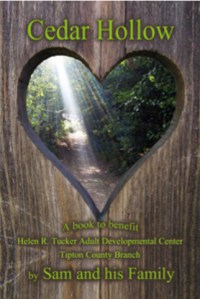
Briefly Noted: ‘Cedar Hollow,’ by Sam Franklin’s family

“Cedar Hollow,” by  Patty Hayner Franklin, Bill Franklin, Eric Thomas Johnson, Melinda Clayton, Samuel Joseph Franklin, Frankie Johnson, W. Michael Franklin and Tracy R. Franklin, Vanilla Heart Publishing (October 2012), 150 pp, paperback and e-book

While Cedar Hollow is the fictional town in Melinda Clayton’s novels (“Appalachian Justice,” “Return to Crutcher Mountain” “Entangled Thorns”), the Franklin Family is lovingly real as are the flavor, ambiance and wonders in this book.

All author and publisher proceeds from this anthology, created by Sam Franklin’s family, will go to the “Helen R. Tucker Adult Developmental Center, Tipton County Branch [in Tennessee] where Sam currently spends many of his days interacting, learning, growing, and experiencing life. With great honor, Vanilla Heart Publishing is pleased to support this center and the people who make it possible.”

Pushcart Prize Nominee Short Story Erma Puckett’s Moment of Indiscretion by Melinda Clayton is included, along with stories, poems, lyrics and music score, recipes, and more from Sam and his Family, including his father, mother, sisters, and both his eldest brother and his brother-in-law.

Excerpt about Sam from his sister, Melinda Clayton

My brother is funny and sweet. He likes basketball, dancing, and singing. He loves old reruns of shows he watched as a child. He likes to play the keyboard and the drums. He loves foods that aren’t healthy for him, but always follows the doctor’s orders. Most of all, he loves his family.

And, by the way, he has Down Syndrome.

Just one little sentence in the whole of who he is.

There’s a lot of prose and poetry to look forward to in this anthology. Even so, I’m also tempted by the recipes for Darryl Lane’s trout, Peggy Mitchell’s burgers, Kay Lanley’s key lime pie, and Beryl Dickson’s holiday cookies.

Malcolm

P.S. Vanilla Heart is also my publisher, Melinda Clayton is my friend and I was once a unit manager in a developmental center where some residents had Down Syndrome. You might say I am fully biased in favor of this book in every possible way.

Are we suffocating beneath a deluge of Internet drivel?

“Suddenly thanks to Google Books, JS-TOR and the like, all the great thinkers of all the civilizations past and present are one or two clicks away. The great library of Alexandria, nexus of all the learning of the ancient world that burned to the ground, has risen from the ashes online. And yet—here is the paradox—the wisdom of the ages is in some ways more distant and difficult to find than ever, buried like lost treasure  beneath a fathomless ocean of online ignorance and trivia that makes what is worthy and timeless more inaccessible than ever.” – Ron Rosenbaum, “The Last Renaissance Man,” a feature in “Smithsonian Magazine” about Lewis Lapham of “Lapham’s Quarterly”

Search Engine

Men my age are often called curmudgeons because we decry the best of the past that often is, or appears to be, lost to us.

As a journalist and writer, I wonder what happened to objective news. (Yahoo even cites personal opinion blogs as news sources.) As a grocery shopper, I wonder why I can no longer buy Winesap apples at the grocery store. As a movie viewer, I wonder why–after all the years when movie screens and TVs were getting larger and easier to see, the “in” thing now is to watch movies on screens the size of a postage stamp on one’s cell phone.  And, as an author, I wonder why rants on Amazon are considered “reviews.”

Nonetheless, I think Lewis Lapham might well be right when he suggests that the Internet is “decapitating our culture, trading the ideas of some 3,000 years of civilization for…BuzzFeed.”

On any given day, the Yahoo “news” main story is more likely to be about either the jaw-dropping dress or the hideous fashion blunder of an actress than a news story about anything that remotely matters.

Why is this?

There are a lot of usual suspects…parents “rearing children” to believe they are entitled to everything free or almost free…the whole “teach the test” approach to education…liberal arts colleges giving way to colleges that offer direct training for one industry or another…Twitter and other nasty sites that champion having a short attention span…something in the drinking water…deadly rays from cell phones…and, perhaps, various forms of self-centered greed.

Take your pick.

Half Empty or Half Full

When asked whether a glass is half empty or half full, positive people supposedly say it’s half full. That beats empty. On the other hand, perhaps the correct answer is the glass is larger than necessary, rather like using a gallon jar for a task requiring a thimble.

We can see the drivel all too easily. On the other hand, we can tune it out. The Internet is far too large to contain only what each of us wants. Whether we see the amount of drivel as information democracy or an unlimited smorgasbord, the challenge is finding better ways to tell the drivel sites from the trash sites, and to discover new ways of finding the hidden gems.

For every one hundred people who appear on Leno’s “Jay Walking”  bits in which he asks everyday people simple questions about history, geography and culture who can’t tell us the capital of their own state, there are (hopefully) five people who knew all the answers but didn’t make the show because correct answers aren’t funny. (I wonder why the incorrect answers are funny.) I’m not sure the amount of drivel in the world is increasing but rather that it’s more visible with the Internet, more TV channels, 14-hour news, and the social media.

On its “about us” page, Lapham’s Quarterly says it, “embodies the belief that history is the root of all education, scientific and literary as well as political and economic. Each issue addresses a topic of current interest and concern—War, Religion, Money, Medicine, Nature, Crime—by bringing up to the microphone of the present the advice and counsel of the past. Valuable observations of the human character and predicament don’t become obsolete.”

I find many treasures on the Internet. Finding them is, at times, like going to a garage sale and looking through somebody else’s trash for something I will treasure. Finding one’s treasure has never been easy. Even before Gutenberg made the dissemination of the written word easier to do when he introduced movable type about 1439, there was a lot of drivel in the world. It didn’t take long for people to decry books they thought were either hopeless or heretical.

When Newton Minnow told the National Association of Broadcasters in 1961 that television was a “vast wasteland,” the notion that the drivel outweighed the most wonderful programs being produced wasn’t new.  Minnow suggested more government involvement in fixing the problem than I liked. It’s really difficult to force people to read only the best books and watch only the best movies and TV shows. It’s utterly impossible to say which books/films/shows those are.

In the half-full/half-empty glass puzzle, one can always begin with too small a glass, meaning that some of the water isn’t going to fit. Even though the too-large glass has a lot of air in it, there’s space available for whatever we want to add. Perhaps it’s more water. Perhaps it’s rocks. I like seeing empty space in a glass or on the Internet because that means there’s always room for more. If only 5% or 10% of that more is any good, we still end up with a greater number of tasty sips of water (or, perhaps, Scotch) than before.

There used to be a joke site or two claiming that “you have reached the end of the Internet,” meaning the last possible URL that was out there. Scary thought. In some ways, an online facility with more drivel also has more treasures. Each of us can decide which are which and how to tell the difference.

Malcolm

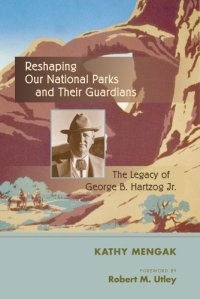
Briefly Noted: ‘Reshaping Our National Parks and Their Guardians’ by Kathy Mengak

Reshaping Our National Parks and Their Guardians: The Legacy of George B. Hartzog Jr., by Kathy Mengak, with a foreword by Robert M. Utley, University of New Mexico Press (April 2012), 336 pp

When Glacier Park’s Centennial Program Committee received the George and Helen Hartzog Volunteer Group Award for promoting the park’s 2010 centennial, many visitors were unfamiliar with the man who led the National Park Service between 1964 and 1972 or with the award established in 1998 (and subsequently supported via a fund created by his wife) to honor those donating time to help the parks.

Published earlier this year, Kathy Mengak’s Reshaping our National Parks and Their Guardians ably tells the story of the highly successful NPS director who added 72 new parks to the system during a contentious political era in American history. In his book review in the Autumn 2012 issue of “Montana The Magazine of Western History,” Craig Rigdon writes that while the author’s “fondness for Hartzog is evident…she provides a fairly balanced review of his career.”

Originating with Mengak’s dissertation at Clemson University, the book draws heavily on twelve years of interviews conducted with Hartzog and other key officials. Hartzog died in 2008.

Kurt Repanshek (National Parks Travler) writes that Hartzog “was a cigar-chewing, Scotch-loving, Stetson-wearing, lover of fishing, hard-charging director who often knew exactly what he wanted and found a way to get it. One way or another.” His review of the book is posted here.

From the Publisher

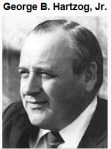
Wikipedia Photo

This biography of the seventh director of the National Park Service brings to life one of the most colorful, powerful, and politically astute people to hold this position. George B. Hartzog Jr. served during an exciting and volatile era in American history. Appointed in 1964 by Secretary of the Interior Stewart Udall, he benefited from a rare combination of circumstances that favored his vision, which was congenial with both President Lyndon Johnson’s “Great Society” and Udall’s robust environmentalism.
 
Hartzog led the largest expansion of the National Park System in history and developed social programs that gave the Service new complexion. During his nine-year tenure, the system grew by seventy-two units totaling 2.7 million acres including not just national parks, but historical and archaeological monuments and sites, recreation areas, seashores, riverways, memorials, and cultural units celebrating minority experiences in America. In addition, Hartzog sought to make national parks relevant and responsive to the nation’s changing needs.

I like Rigdon’s comment that while most people remember the National Park Service’s first two directors, Stephen Mather and Horace Albright, Reshaping Our National Parks and Their Guardians demonstrates that “some of the most critical years in the agency’s history took place during George B. Hartzog’s tenure as director.”

–Malcolm

Malcolm R. Campbell is the author of “Bears; Where They Fought: Life in Glacier Park’s Swiftcurrent Valley” and two contemporary fantasy adventures set in the park, “Sarabande” and “The Sun Singer.”

All three books, from Vanilla Heart Publishing, are available on Kindle. “Sarabande” and “The Sun Singer” are also available in trade paperback.

Keeping up with author and book news

Have you found my re-started “Book Bits” posts yet?

They run twice a week on my Sun Singer’s Travels weblog. An earlier version ran daily, but after a hundred posts, I realized that keeping up with author and book news wasn’t leaving me any time to write. This time, the posts featuring links to book news, author interviews, book reviews, writing tips and features, and commentary about today’s publishing world are under control. Hmm, well, they seem to be.

Not long after shutting down the daily “Book Bits,” I started to miss it. Plus, I was still spending time reading about authors and books. So, why not bring it back? I’m enjoying it. I hope you will, too.

I’ll continue to use this blog for book reviews, briefly noted posts about new books, writing ideas, and musings about some of my writing themes such as the recent Tarot card post. The readers’ and writers’ links, announcements and personal writing notes will be in Sun Singer’s Travels. Nature, natural cycles, magic, and fantasy will usually appear in Magic Moments.

You can keep up with all of us at Vanilla Heart Publishing via our Reader’s Group. Be the first to hear about new books, author presentations and talks, and a variety of other programs.

You’ll also find links to writing samplers, book trailers and websites for VHP’s authors: Smoky Trudeau Zeidel, Chelle Cordero, Marilyn C. Morris, Kate Evans, Robert Hays, L.E. Harvey, Collin Kelley, Malcolm Campbell, Charmaine GordonJanet Lane Walters, Anne K. Albert, S.R. Claridge, Melinda Clayton, Angela Kay Austin, Joice Overton, Ramey Channell, Scott Zeidel and Namid.

Have fun with all of the blogs. Leave comments. Ask questions. And, for goodness sakes, leave the online world every day and take some time reading.

Malcolm

Malcolm R. Campbell is the author of contemporary satire and satire novels. His paranormal story “Moonlight and Ghosts, how available on both Kindle and Nook, was published last month.

Briefly Noted: Fairy Tales from the Brothers Grimm: A New English Version by Philip Pullman

Fairy Tales from the Brothers Grimm: A New English Version,  by Philip Pullman, Penguin (11/8/2012), 400 pp

Best known for his Dark Materials trilogy (The Golden Compass, The Subtle Knife, The Amber Spyglass) Philip Pullman turns his attention to the now-classic fairy tales published by Jacob and Wilhelm Grimm in 1812. Most of us were brought up on one retelling of these stories or another, including the Disney versions. Pullman’s retelling focuses on his favorites with an imaginative approach that honors the originals.

From the Publisher: Philip Pullman, one of the most accomplished authors of our time, makes us fall in love all over again with the immortal tales of the Brothers Grimm. Pullman retells his fifty favorites, from much-loved stories like “Cinderella” and “Rumpelstiltskin,” “Rapunzel” and “Hansel and Gretel” to lesser-known treasures like “The Three Snake Leaves,” “Godfather Death” and “The Girl with No Hands.” At  the end of each tale he offers a brief personal commentary, opening a window on the sources of the tales, the various forms they’ve taken over the centuries and their everlasting appeal. Suffused with romance and villainy, danger and wit, the Grimms’ fairy tales have inspired Pullman’s unique creative vision—and his beguiling retellings will draw you back into a world that has long cast a spell on the Western imagination.

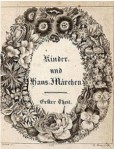
Frontispiece of first volume of Grimms’ “Kinder- und Hausmärchen” – Wikipedia

From Ron Hogan (founder of Beatrice): Right away, you get a sense of the comic earthiness to Pullman’s characters–and since, as he notes in his introduction, the characters in Grimm’s tales don’t have psychological motivations or interior lives as such, dialogue becomes the chief instrument through which a storyteller can give them personality. It’s a tool Pullman uses to masterful effect. Even a simple, 16-word exchange between the protagonist of “Lazy Heinz” and his equally slothful wife can reveal volumes about the characters.

Pullman includes notes, sources and information about each tale’s variations. This one looks like a good read for cold Winter nights.

–Malcolm

Malcolm R. Campbell is the author of the contemporary fantasy novels “The Sun Singer” and “Sarabande,” both of which are available in trade paperback, Kindle and Nook from Vanilla Heart Publishing. His paranormal short story “Moonlight and Ghosts” was released for Kindle and Nook in September.