Budget Falls Short for Parks; Glacier Plowing Facilitated by Donation

from the National Parks and Conservation Association

NPCAlogoBackground: The release of President Obama’s 2014 budget April 10 proposes that the National Park Service budget would increase by $56.6 million over FY12, but the increase is partially offset by programmatic decreases to park base operations. The proposal includes important investments but also provides a reduction of nearly a hundred staff in park operations.

“The National Park Service is experiencing deep impacts from the sequester and other continued reductions. This year will be the most challenging in some time for national park superintendents who will have fewer rangers and smaller budgets to manage each park from Yellowstone to Acadia. Funding the operations of the National Park Service needs to be more of a priority than it has been to date. We’re pleased that the President recognizes the need to reverse the mindless sequester, but it will take more than that recognition to address the reality facing national parks.”

“The sequester has already cut more than $130 million from the National Park Service budget, forcing places like Yellowstone, Acadia, Independence Hall, and Cape Cod National Seashore to delay seasonal openings, close visitor centers, picnic areas, and campgrounds, and eliminate ranger positions that are critical to protecting endangered species and historic buildings, as well as greeting park visitors and school groups. Further cuts will only impair the national park experience.

“National parks draw international tourists and are economic engines that support more than $30budget billion in spending and more than a quarter million jobs. Yet they suffer from an annual operating shortfall exceeding half a billion dollars and a maintenance backlog of many billions more. And in today’s dollars, the Park Service budget has now declined by more than 20 percent over the last decade.

“We need the President and Congress to make sure America’s national parks are open and well-staffed and nothing in this budget provides us with any confidence that will happen. Our national parks are not just great destinations to visit, they are our national treasures that should be treated with honor. They drive the economy for many rural and urban communities. The severe under-funding of our most prized places needs to be reversed. We hope to work with the President and Congress as they debate how to repair a failed federal budgeting process to better address the true causes of the nation’s deficits and better serve our national parks and the American people.”

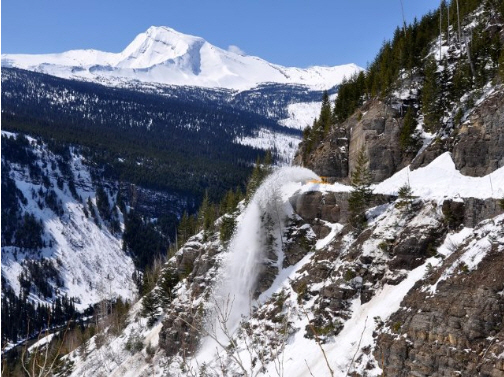
Glacier National Park

NPS Glacier Photo
NPS Glacier Photo

According to NPS Glacier, “The park’s base budget of approximately $13.5 million was reduced by $682,000. The park must absorb that cut in the remaining months of this fiscal year that ends September 30.”

Due to Congress’ failure to adequately support the parks, budgets were already far short of basic infrastructure and operating requirements. Cutting funding further through a failure of the federal budgetary process adds insult to injury. Inasmuch as jobs and tourism income in areas with parks benefit greatly, any reduction of park hours, season dates, and attractions impacts more than the parks themselves.

Fortunately, a donation to NPS Glacier by the Glacier National Park Conservancy has kept budget cuts from delaying the spring plowing of the Going to the Sun Road. However, visitors will see impacts elsewhere:

  • Delayed trail access and decreased trail maintenance,
  • Reduction in native plant restoration,
  • Reduced shoulder-season access to campgrounds and visitor centers,
  • Decrease in entrance station hours,
  • Less maintenance work on park facilities, roads and utility systems,
  • Limited and delayed emergency response outside the core season,
  • Decreased educational programming and ranger-led activities,
  • Less back-country volunteer coordination,
  • Reduction of revenue from impacted campgrounds, and
  • Reduced partner financial aid assisting interpretive programs resulting from loss of revenue of partner bookstores in park.

What a pity.

Malcolm

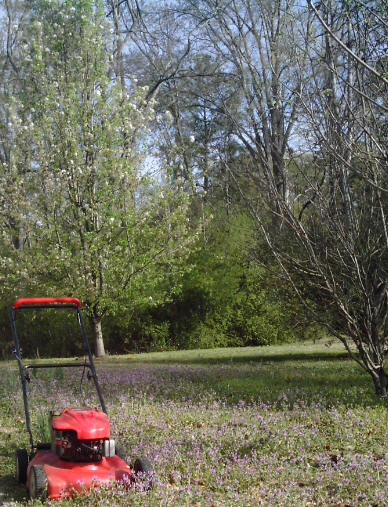
Lawn Mowing for the First Time This Year

mower2My wife tells me that if we’re going to hike in the mountains late in the summer, we need to start getting in shape now. Walking from our house to the main street and back again is two miles, round trip. After mowing the lawn today for the first time this year, I see it’s time to star walking that walk.

Every muscle aches as though I spent the day playing football rather than walking behind our relatively light-weight rotary lawn mower. The first-of-spring grass-and-weed combination was almost too high for the mower, so my excuse is that things ache because I had to do more pushing.

I can tell you from experience, the first adventure in lawn mowing gets harder every year. Goodness knows what a five mile hike at 5,000 feet of elevation would have been like.

When I lived in Florida, I went to a college summer session at the University of Colorado in Boulder. It took me weeks to get used to the elevation. When I came back, though, I felt like Superman in my Gulf Coast World.

I’m hoping that means that when we get back from the mountains this year, I’ll feel half my age while mowing the lawn for the last time before winter, such as it is, in Georgia.

Malcolm

Malcolm R. Campbell’s contemporary fantasies, “The Sun Singer” and “Sarabande,” are set in the mountains of Glacier National Park, Montana

Read it now on your Kindle

A notion about the gospel of your life

“Quests are personal journeys, and every step is taken alone.” –Deepak Chopra, The Way of the Wizard

DCFC0152.JPGIf there is a subtle message in my novel The Sun Singer it is this: the great words of the great masters about our life’s journeys are—at best—hints. The ideas from the rest of us are mere notions.

The words of the masters may suggest to us that there are other worlds and other levels of consciousness and other levels of awareness. And they may also suggest techniques that will help us find the doorways, paths, enlightenments, and awakenings we desire.

After that, the great words are lies insofar as our journeys are concerned. The great masters’ great words describe the great masters’ journeys. As such, they are the gospels of the great masters’ experience.

My journey is mine alone. Your journey is yours alone. Neither journey can be undertaken by following in the great masters’ footsteps or by concretizing the great masters’ thoughts into a recipe book. We alone know the terrain upon which we’re walking and when all is said and done, the great masters’ view from the mountaintop will never be ours. Attempting to see what they saw creates blindness.

I am continuously writing my story just as you alone will write the gospel of your life, and it will be based on your awareness of your own experience. Nothing else matters; nothing else exists. You and I are both the creators of our paths and the ones who walk upon them enjoying the scenery and surprising ourselves with the wonders we encounter.

Malcolm

From the Archives: This post was first published in my blog in 2005.

Read it now on your Kindle

Blog Traffic is Often a Puzzlement

I appreciate those of you who regularly stop by, read, leave comments, and subscribe. Without Google Analytics, I often wonder where some of the other blog traffic comes from.

Suddenly, a two-year-old review of “Labyrinth” by Kate Mosse gets 35 viewers. Last week, an old article called “Branding at Sea” about the USS Ranger was ranked as a top post. Sometimes I can figure out these puzzles. A news story prompts a sudden search. An author comes out with a new book, leading people here to reviews of earlier books. But most of the time, I can’t track down the why of sudden bursts of traffic to old posts.

I often post news and articles about Glacier National Park, the hero’s journey, and the heroine’s journey, so I’m not too surprised to see search terms listed on my dashboard from readers looking for more information. My new novel “The Seeker” will be coming out soon. That means more fantasy and magical realism posts. Later this year, I plan to visit Glacier National Park, so you’re pretty much guaranteed to see more posts about Swiftcurrent Valley and Many Glacier Hotel.

Coming soon, is a very interesting guest post from author Dianne K. Salerni (“We Hear the Dead”). If I told you the subject, you’d probably think I was making it up. I’m already wondering what kind of search terms will lead people to that post.

I’ll have another book review to post in several weeks. I liked this author’s collection of short stories. It’s fun seeing him focus his talents on a novel. When I post reviews, I often see more traffic for the older reviews.

If you don’t find what you’re looking for here, check out my Magic Moments blog for more posts about fantasy, the natural world and sometimes a bit of Zen. Several times a week, I post links to book and author news, writing tips, and book reviews in “Book Bits” which appears on Sun Singer’s Travels.

The traffic on the older posts on those blogs is also a puzzlement, but I figure the Universe, Google and the Internet in general pretty much know who needs to stop by for a visit. When I start following links, I often end up at sites and blogs I’ve never heard of and find that it’s almost as though I was destined to go to them and read a specific article or post that somehow applies to whatever I’m doing.

Even if Google Analytics were available for WordPress blogs, I’m not sure it could figure out the logic of traffic that the fates send to one place or another.

Malcolm

Briefly Noted: ‘Butterfly Moon,’ by Anita Endrezze

“Endrezze is adept at making her settings and landscape reflective of what is happening in the psyches of her characters and the situations of their lives. She captures her reader with vivid language and some very unique and startling images.” – M. Miriam Herrera

“When I first found Anita Endrezze’s poems, I felt I had come home. Here was the passion, the eloquence, the originality, the insistent song, that I longed to find. But how could I feel so at home? Endrezze is half-West European, half-Yaqui, her origins, her culture, so far from mine.” – Leah Shelleda

butterflymoonWhat we are drawn to, in part when landscapes and psyches are merged, in part when there is a persistent original song, are ideas and images that speak truth to us even though we’re on vastly different temporal world paths than the authors of the poems and stories.

When a read the selection of Endrezze’s poems included in Shelleda’s deep-ecology friendly collection, The Book of Now: Poetry for the Rising Tide, I, too, felt at home within Endrezze’s words. I looked for more of them because they seemed essential. I’m pleased to say that I found them in multiple places, and for a lover of myths and folktales, best of all in her Butterfly Moon collection of short stories.

The world turns, for some of us, where myth and landscape meet, where worlds merge and where tricksters often command the seasons. Trena Machado put this well in her New Pages review of Butterfly Moon:

“In the mythic way of seeing, there is the archaic layer of our anthropomorphizing nature and the earth that we have lost in our Western culture of commerce and science as we strain the limits of the earth’s balance. Nature has its-own-life-to-itself for which we were once more attuned, held reverence and enlivened by: ‘The house was a forest remembering itself. The pine trees that held up the walls dreamed of stars dwelling in their needles. Jointed, branched, rooted, the trees still listened to the wind.’”

The University of Arizona Press blurb is right when it says that Anita Endrezze’s stories are “Enjoyably disturbing, these stories linger—deep in our memory.” This 160-page book was published last September at a time when industrial excesses and environmental concerns occupied much of our attention, if not our overt commitment. No, this is not a Sierra Club tract; it’s pure storytelling at a time when, in addition to the joys of reading, we need to be disturbed and otherwise shaken up.

Malcolm

On Location: Longleaf Pine along the Florida coast

97% of this forest is gone, leaving only isolated pockets of longleaf pines

“The average American’s view of the natural communities of the Southeastern U.S. is that it is comprised mainly of swamps, alligators and big, old moss-hung cypress trees. On the contrary to this view, when early explorers visited the southeastern region they saw “a vast forest of the most stately pine trees that can be imagined, planted by nature at a moderate distance. . . enameled with a variety of flowering shrubs.” Fire defined where the longleaf pine forest was found and fostered an ecosystem diverse in plants and animals.” – Longleaf Alliance

I have been working on another short story for my evolving “Land Between the Rivers” collection about the animals who lived along the Florida Gulf Coast before man showed up and who are now endangered species.

These stories are set in what is now called “Tate’s Hell Forest,” a diverse habitat along the gulf coast near the mouth of the Apalachicola River. This mix of swamps and wet prairies and mixed forests used to flow into the continuous longleaf pine forests as shown on the map.

Why I Like the Setting

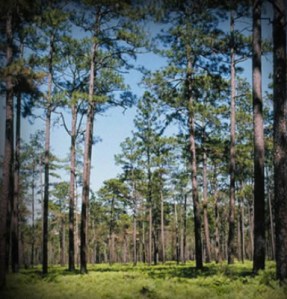
When men came, the found a forest they could drive their wagons through. - Longleaf Alliance Photo
When men came, the found a forest they could drive their wagons through. – Longleaf Alliance Photo

The endangered gopher tortoise, the main character in my current story, loves sandy areas for creating its underground burrows and depends on the grasses and other plants the grow on the floor of a well-maintained longlreaf pine forest. Unlike hardwood and mixed forests, longleaf forests feature widely spaced trees with minimal brambles, mid-level trees and shrubs. These forests are maintained by natural fires that roar through and clean away the clutter that would eventually destroy the forest.

The den of a gopher tortoise is great protection against such fires, fires that often run through quickly without burning as hot as summer fires in hardwood forests, especially where brush has built up.

In addition to logging off most of the longleafs and replanting with slash pines and loblolly pines, many don’t understand the need for fires and tend to put them out before they do what nature intended.

Fortunately, enlightened forest management specalists are showing show landowners, as well as active forest companies, the value of these trees, not only commercially as tree farms, but for the environment as well. Click here if you live in the Southeastern United states and would like to visit a longleaf pine forest park or recreation area near you.

Realism and Magic Together

gophortortoiseAccording to Seminole legends, the Earth’s animals emerged from the Creator’s birthing shell in a specific order long before man arrived. My stories about the animals of this time focus on their learning what their living place is all about—what to eat, how to find shelter, how to raise their young. I mix my talking animals out of myth with settings as realistic as I can make them. So now I’m studying the tortoise’s habitat.

Every time I pick a new animal and a somewhat new habitat, I have a good excuse for learning more about the Florida world where I grew up. I started writing these stories when several sequences in my upcoming novel The Seeker were set here and I fell in love with the place all over again.

Malcolm

Coming March 2013
Coming March 2013

Novelist Returns to Nonfiction with Patton’s Oracle Memoir

authcoverphoto (2)Today’s guest post is by Robert Hays (“Blood on the Roses,” “The Life and Death of Lizzie Morris”) who returns to his nonfiction roots with Patton’s Oracle: Gen. Oscar Koch, as I Knew Him. Since my writing career also began, like my father’s and Robert Hays’, in journalism, I wondered how Robert handled the move from fiction to nonfiction for this book.

Returning to Nonfiction

After four novels, I returned to non-fiction for my new book, Patton’s Oracle: Gen. Oscar Koch, as I Knew Him. I love writing fiction—the freedom to create settings and characters, the magic of working with different plots, the fun of trying ideas just to see if they work—but I also find great satisfaction in non-fiction. I’ve spent most of my adult life as a journalist. I loved newspaper reporting and the prospect of offering readers factual information that I consider interesting and important never wears thin.

Oracle cover 001 (2)What’s new for me in Patton’s Oracle is the addition of subjective material to the mix. The book is a biographical memoir, my effort to recount a marvelous four years of friendship and work with Oscar Koch, an unsung hero of World War II who became my personal hero as well.

Oscar Koch was a brilliant intelligence officer who deserves great credit for his behind-the-scenes role in the success of his celebrated commander, Gen. George S. Patton Jr. My military service had been two years as a draftee enlisted man and I had just turned 31 when I met Gen. Koch, who besides having a distinguished military career of almost forty years was well beyond twice my age. Surely the likelihood of us finding things in common was slight. But we live in a world of chance and in this case the unlikely came to pass.

I discovered the general to be a modest, scholarly and charming man. He found no glory in war, and sought none for himself. He was not enthusiastic when I asked to make him the subject of a personality profile article for the St. Louis Post-Dispatch. I believe he consented principally as a favor to me. He was pleased with the article, though, and invited me to collaborate with him on a book that had become his final goal in life.

kochGen. Koch was a joy to work with. His book quickly became almost as important to me as it was to him. But shortly after we began, he was diagnosed with terminal cancer. From that point forward I knew this was a race against time. We finished the book, G-2: Intelligence for Patton, but Oscar Koch did not survive to see it published. It came out in 1971 and still is in print.

As I summarized this experience in Patton’s Oracle: “I was granted only four years to share life with the general, a period that was far too short. In the beginning he lifted my spirits as we joined in a common purpose. In the end, I endured the anguish of watching an insidious cancer purloin the life from his body even though he never would surrender his gallant spirit. But what a remarkable four years it was, how grateful I am to have had that privilege.”

Patton’s Oracle is my tenth book. But it is the one I’ve wanted for decades to write, timid that I might not do justice to the subject. Even though the words are my own, there are passages that bring tears to my eyes. And of the ten, it is the book that is dearest to my heart.

You can find Robert Hays on the web on WordPress and on Facebook.

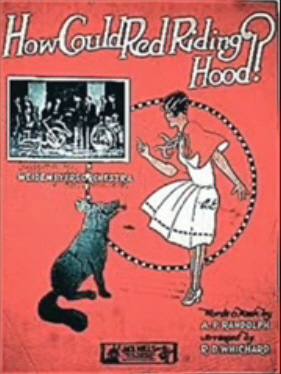
How could Red Riding Hood Have been so very good

lrrhsongHow could Red Riding Hood Have been so very good And still keep the wolf from the door? – from A. P. Randolph’s 1926 hit song

Midnight, the clock strikes. It is Christmas Day, the werewolves’ birthday; the door of the solstice stands wide open; let them all sink through. See! Sweet and sound she sleeps in granny’s bed, between the paws of the tender wolf. – from Angela Carter’s retelling of the fairy tale in The Company of Wolves.

Little Red Riding Hood
Went walking through a wood.
She met a wolf and stopped to chat.
Don’t ask what happened after that!
Armand T. Ringer (Martin Gardner) in Are Universes Thicker Than Blackberries?: Discourses on Gödel, Magic Hexagrams, Little Red Riding Hood, and Other Mathematical and Pseudoscientific Topics

Traditionally, Little Red Riding Hood was one of the first fairy tales most of us were told as children, and then later, it became one of the first stories we told our children.

I heard the Grimm’s 1812 version first, probably because my parents liked the happy ending in which LRRH is rescued by the hunter. The moral of this version was don’t stray from the path. Charles Perrault’s 1695 version, which is grimmer than the Grimm’s version, admonishes children not to talk to strangers.

Like many children, I probably thought the story was just another example of a bad day in the woods and/or that this is just the sort of thing that happens to kids who don’t listen to their parents about strangers and paths. The prospective bawdy messages behind the story were lost on me in the days when I listened to bedtime stories.

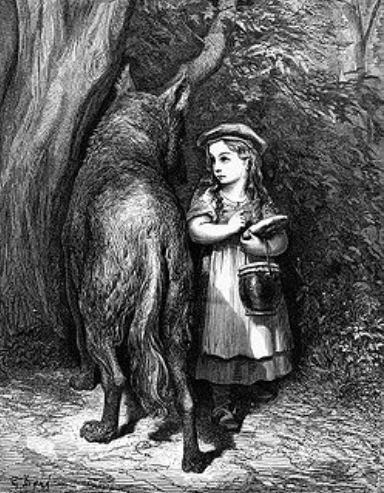
Gustave Doré's 1901 illustration
Gustave Doré’s 1901 illustration

Adults, from psychologists to folklorists to parents, have variously found deeper meanings in the story or missed the point altogether.  In Little Red Riding Hood Uncloaked: Sex, Morality, and the Evolution of a Fairy Tale, Catherine Orenstein notes in the introduction that two California school districts banned the book in the 1990s because of an illustration showing a bottle of wine in LRRH’s basket.

“The story line of Red disrobing and climbing into bed with the wolf passed muster,” writes Orenstein. “But the wine, they said, might be said as condoning the use of alcohol.”

The Objective Observer

As I grew older, questions came to mind about the story. They were, in fact, very similar to those of Dr. Eric Berne’s  (Games People Play, What do you say after you say hello?) questions of an objective observer: “What kind of a mother sends a little girl into a forest where there are wolves? Why didn’t her mother do it herself, or go along with LRRH? If grandmother was so helpless, why did mother leave her all by herself in a hut far away?”

These questions sound similar to those a police officer might ask. And, in real-life events, they make sense.

Arthur Rackham's 1909 illustration for "The Fairy Tales of the Brothers Grimm"
Arthur Rackham’s 1909 illustration for “The Fairy Tales of the Brothers Grimm”

Berne further speculates that maybe mom wanted to get rid of the kid and hoped for the worst out in the woods. This would would allow mom to play the “Ain’t it Awful” game. Berne was, as always, delightfully cynical and LRRH certainly provided food for thought for those studying transactional analysis, psychological games and scripts. But, rather than uncovering what the fairy tale means, the objective observer approach primarily suggests there’s more in the story than initially meets the ear.

A Treasure Hunt

I like searching for potential meanings and versions. The LRRH story came out of an oral tradition long before Perrault’s version was published. Orenstein writes that it began as a tale for adults, has changed over time, and that various versions include bits and pieces of the fairy tale’s earlier incarnations.

In his 1983 book  The Trials and Tribulations of Little Red Riding Hood, Jack Zipes found at least 147 versions of the story. Of these, Perrault’s version wasn’t the most morbid. Since Zipe’s book came out, more versions have been added, including  Philip Pullman’s 2012 rendition in Fairy Tales from the Brothers Grimm: A New English Version.

Psychologists have had a field day with LRRH and have supplied their views of the fairy tale’s meaning in books, including Erich Fromm’s 1951 Forgotten Language: An Introduction to the Understanding of Dreams, Fairy Tales, and Myths and Bruno Bettelheim’s 1976 The Uses of Enchantment: The Meaning and Importance of Fairy Tales.

Fromm believes LRRH is experiencing unconscious sexual impulses and wants to be seduced by the wolf. Bettelheim says she’s in the nymphet stage of life and is less innocent than she seems. Other psychologists search fairy tales, including LRRH, and find them to be communicating eternal archetypes.

beasttoblondeWhile I see the archetypes in the larger-than-life worlds of myths, I’m less sure about their importance in the domestic-related arena of fairy tales. In a way, the tales seem to relate more to the time, place and moral issues of their settings—like snapshots. In From the Beast to the Blonde, Marina Warner says that searches for a tale’s universal significance tend to overshadow the human behavior illustrated by the story.

“I began investigating the meanings of the tales themselves, but soon found that it was essential to look at the context in which they were told, at who was telling them, to whom, and why,” writes Warner.

Unfortunately, her beautiful book is out of print and that makes the treasure hunt of looking for meanings in fairy tales a little more trying. However, it’s still listed on Amazon along with third-party sellers.

So Where Are We Now?

uncloakedOrenstein suggests that society has a vested interest in LRRH, “in the messages she wears, and those she covers up.” Little Red Riding Hood Uncloaked: Sex, Morality, and the Evolution of a Fairy Tale is, fortunately, still in print, and well worth including in a LRRH treasure hunt.

I also like Jane Yolen’s thoughts about the fairy tale from Touch Magic:

“Anthropologists have read it as a folk memory of old menstruation myths or sun/moon myths. Freudians point to it as a possible incest story, or a pregnancy fantasy. Marxists have seen it as the triumph of the proletariat over the evil capitalists who would lure them into a cozy relationship and then devour them. And moralists through the ages say it means simply: You women should not go to bed with strangers who may turn out to be ‘wolves.’ Who is right? They are all right. For as the writer writes about himself or herself, so the adult reader reads.”

Personally, I like the ambiguity of multiple versions, meanings, tellers and time periods.

Finding Out More

Annotations for Little Red Riding Hood on SurLaLune

The Path of Needles or Pins: Little Red Riding Hood by Terri Windling

Excerpt from The Company of Wolves by Angela Carter

Little Red Riding Hood, Wikipedia overview

Malcolm

Malcolm R. Campbell is the author of fantasy, paranormal, and magical realism novels. 

A talk with Scott and Smoky Zeidel, authors of ‘Trails’

scottandsmokyIt’s a pleasure to welcome Smoky and Scott Zeidel to Malcolm’s Round Table to talk about their new book Trails: Short Stories Poetry and Photographs released in paperback and e-book this month by Vanilla Heart Publishing.

Smoky is the author of fiction and nonfiction, including The Storyteller’s Bracelet (2012) and Observations of an Earth Mage, (2010). Her husband Scott, who plays the guitar, teaches music history as an adjunct professor at Mt. San Antonio College in California.

MALCOLM: Trails has been dedicated to the squirrels. Is this the entire family of tree or ground squirrels or a bird-feeder robbing band in your yard?

SCOTT: The squirrels are metaphors for nature. So, to answer your question, the book is dedicated to every type of squirrel in the world, the little bastards.

SMOKY: I started to say, “He doesn’t really mean that last part.” But then, I looked out my studio window, and there’s a pregnant ground squirrel out on the deck, ripping a rug to shreds, to get wool to line her nest, and I think, maybe Scott’s right.

trailsMALCOLM: I’ve had many conflicts with squirrels over the years, usually a difference of opinion about just who the bird feeders are for. Scott, when you write that you once thought everyone remembered their own birth, I thought of people who had either bad vision or better than normal vision and supposed everyone’s eyesight was the same. What has this memory given you that others do not have—long-term vision, connectedness to your family going back in time, insight into the big picture of our incarnation, or something else?
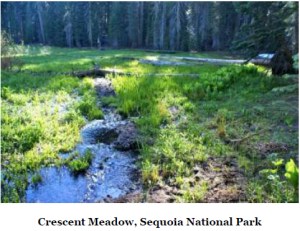
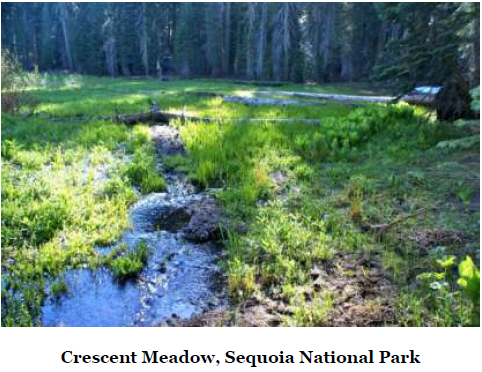
crescentSCOTT: I can’t speak for others, but, like I said, I do remember my birth. Nevertheless, was I instantly awake, instantly aware, at the moment of my birth? On a purely rational level, is this even possible? I think not. On a metaphysical level, when did my life really begin as a sentient being? When will it end? These are the big questions.

MALCOLM: Smoky, some people say that old stories change every time they’re told. Did you hear different versions of your childhood stories over time and do you now find yourself telling them differently when you relate them to others? Do you begin to wonder what parts of them have slowly become fiction?

SMOKY: I assume you’re referring to the stories I relate in the book about how I became a storyteller; the stories about my mother being a turkey murderer and my uncles’ wild snake stories. Hell, when I heard them the first time I wondered how much of them were true and how much my mother and my uncles made up. Even as a little girl I recognized these magical stories as being part truth, part fiction. What I garnered from them wasn’t whether my elders were being totally truthful or not, but rather the love they poured into the stories as they told them. Stories without love are dull, and seldom are they remembered. But these stories? There was so much love in them it wouldn’t have mattered if my mother said she’d slain a dragon, or my uncles done battle with Kaa (from Rudyard Kipling’s The Jungle Book) himself. The stories would have stayed with me.

MALCOLM: Scott, when you follow Smoky into the hospital for seemingly an infinite number of visits leading back to her being struck by lightning in 1989 and you sit, as you wrote, in another waiting room that looks the same as all the others, do you see it all as being within the hands and plans of the universe or do you watch people, read books and wait in a stoic limbo mode?

SCOTT: My intention was not to be particularly deep or philosophical here. I’m just a man. This is what I do; this what everyone should do. We all should hold out our hands and arms to others, friends, enemies, loved ones. What else is there? I comfort Smoky because this is what I do.

MALCOLM: Smoky and Scott, before either one of you wrote the first word of this book, did one of you say to the other, “Let’s co-author a book about life, walking and nature” or was it a muse or a publisher that suggested the project?

SCOTT: Our wonderful publisher, Kimberlee Williams, suggested the project. She has been so supportive and helpful. Kimberlee is our muse.

SMOKY: Let me clarify that “Kimberlee is our muse” thing. I talk about Muse frequently in the book; Kimberlee is not that muse. Kimberlee could ask me a thousand times to dive naked into a freezing mountain river and I wouldn’t do it. Muse, however… well, you’ve read the book, Malcolm. And whoever reads this here, on your blog, can read the book to learn more about that Muse.

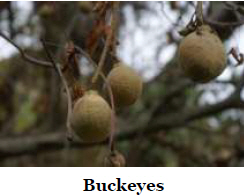
buckeyeMALCOLM: Smoky, has it taken a lifetime to learn the lesson of the California buckeye, that it’s part of a continuing process of life rather than a work of art to be preserved for all time as it was during one moment? Or, did the beauty of nature’s changes come to you more as an epiphany when you looked at the seeds you collected?

SMOKY: The beauty of nature’s changes first came to me when I was three years old and sitting in a blooming apple tree in my parents’ back yard. (I wrote about that experience in my “I Am Nature” essay in my book, Observations of an Earth Mage.) I’ve always been keenly in tune with the cyclical nature of Nature. In tune so much, in fact, I feel intense physical pain when rain is coming, for example, or when I’m near a place where our Mother Earth has been ravaged by bulldozers or mining equipment. The lesson of the buckeye is best summarized as a lesson in the impermanence of beauty; the impermanence of life as we know it. Life goes on, of course. It just changes form. The buckeye becomes a sprout, then a seedling, then, over time, an enormous tree. It would be wrong—it would be impossible, in fact—to try to contain it in any one form, no matter how beautiful. We also talk about that in the last chapter of Trails.

MALCOLM: Scott, you traveled a long way—and many years—from your childhood play in the dirt outside your house to the Big Sur where you re-discovered the land on a rainy night while reading Vonnegut. Do you wonder now why the journey to the Big Sur took as long as it did or whether you had missed signs and hunches early on that you needed to go there, or somewhere, to re-connect?

SCOTT: I do wonder why it took so long. I certainly missed signs along the way, many signs. When I would sit at a table in one of my many Ph.D. seminars, I felt like a robot, a machine, waiting for something. But sometimes I felt something taping, taping on my shoulder. Now I know what it was. It was Poe’s raven. It was my muse. I just brushed it away.

MALCOLM: Smoky, you write that you “find there are two kinds of people: those who believe it is possible to talk and listen to trees, rocks, animals, and rivers, and those who do not.” You talk and listen. Are you “wired differently” or are whose who don’t understand the dialogue brainwashed that it’s impossible or too busy to consider it?

SMOKY: Brainwashed might be too harsh a term. I think children hear Nature speaking. But as they grow, they’re told to put aside their playful, creative natures and buckle down and study hard so they can get a good job and support a spouse and 2.3 children and begin the cycle all over again. The quashing of creativity quashes the ability to hear Nature speak. By the time we reach adulthood, we’ve learned the only people who talk to rocks and trees are crazy people. So call me crazy, but I know what I know, and I know when Nature and her children—the rocks, trees, birds, rivers—are talking to me. And I think other people hear it too. They just don’t remember the language. It’s not unlike being dropped on some random street in, say, the Middle East, and all you hear is Farsi. You hear something. You just don’t understand it. The good thing is, this is a skill that can be re-learned, understanding what the trees and rocks are saying. You just have to sit still and listen long enough.

MALCOLM: Scott and Smoky, what draws you to the Kings River in the Sierras? Would another river serve the same purpose or is the voice of this one Sympatico with your thoughts and feelings?

SCOTT: All mountain rivers inspire us: the movement, the sound, the color, the smell. So sensual. But there are many levels to a mountain river. They’re veins through the natural world; they’re Gaia’s poetry; they’re the beauty of life; they’re spirit. But the Kings River is special; it’s a mountain river on steroids.

SMOKY: For me it’s all that Scott said, but I’d add one thing: the Kings was the river of a profound spiritual renewal I experienced and write about in Trails. While other rivers are sacred to me—the Little Pigeon in the Smokies especially comes to mind—none of them have affected me, spiritually, as profoundly as the Kings. The Little Pigeon is the river of my heart; the Kings is the river of my soul.
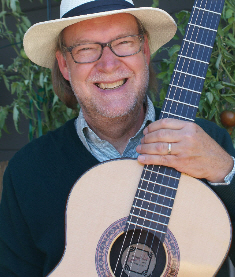
scottMALCOLM: My feelings about mountain rivers are the same. Smoky and Scott, one of you is inspired by a guitar and one of you is inspired by Snake. Is this an example of opposites (or differences) attracting, or is there a synchronicity here that lurks within your respective muses?

SCOTT: Yes, synchronicity! Someone strums a snake; someone strums a guitar. There’s really no difference. As Rumi said, “Everything is music.”

SMOKY: Our muses are definitely entwined, which evokes an image of Snake. And music is a theme of our lives: there are times we live our lives at a fevered pitch, and times when we sit in quiet repose. There are slow, dark sonatas when I am sick; there are times the music plays so fast we can hardly dance fast enough to keep up.

MALCOLM: Does each of you have a favorite line from the book that best communicates the depth and breadth and intent of the book?

SCOTT: For me, it’s what I just said, “Everything is music.”

SMOKY: For me it would be “ …we went to the mountains, deep in the wild Sierra, to refresh our tired bodies and restore our faith in all that is Nature, and wild, and sacred, and good.” I hope our book, Trails, is like that, that it restores readers’ faith that there is good, and it is as close as our own back yards.

MALCOLM: Thank you for stopping by the Round Table today with your wonderful background about Trails.

Trails is available on Kindle, Payloadz and OmniLit. More formats will be released in the coming weeks.

Getting Out of School on the Ides of March

Today’s Guest Post is by Trick Falls, the noted essayist from the long-gone Writing-Up blogging community. For only $1000000000000, he consented to come out of retirement and write up a few words about the Ides of March in a school house far away.

Me And Pratt Down By The School Yard

by

Trick Falls

Once upon a time, during those spring school days when time moved slower than an unwound clock, my brother Pratt and I met during recess at PS666 in Two Egg, Florida, to smoke a few Marlboros and figure out a way to legally skip school on the Ides of March for a party at Becky Thatcher’s folk’s beach house while her folks were serving time at the nearby federal correctional institute for spitting on the sidewalk while the preacher’s wife (dressed as the Statue of Liberty) marched by in the 4th of July parade the previous year. Everyone in our senior class, except for those serving time, was going too be at Becky’s.

“Most of the guys are going to sneak out,” said Pratt.

“Mama will find out,” I said. “She finds out everything.”

“She may be only 37.5% psychic,” said Pratt, “but the times when she’s right, it’s always about us.”

“Then she’ll walk around for days saying, ‘Well, it’s against the law’ and we’ll never have a chance to whitewash our lies again.”

Pratt bummed a stronger cigarette–a Gauloise if you need to know–from vice principal Jenkins who just lost another game of hopscotch out on the sidewalk. “Tastes like burnt frog dung,” said Pratt, “but now that I’ve cleared plane geometry out of my head, I can think about this in greater depth.”

“We need a note from home claiming we’re probably going to be sick that day,” I said.

Pratt smoked for a few minutes while I pretended I didn’t know him, mainly because he was turning green. Then he flipped the remains of Jenkins’ cigarette butt into a passing car and nodded sagely even though he despised sage for ruining good stuffing and heaven knew what else.

“We can hardly claim one of us is going into surgery for a C-section that day,” he said.

“You’re smarter than you appear to be,” I said. “Let’s say that our psychiatrist wants us to stay inside because we’re terrified of the Ides of March,”

“Who the hell are they?”

“It’s a date, the date of the beach blanket bingo party at Becky’s.”

“I never was any good at French, other than the kissing,” said Pratt. He laughed at his own joke, causing people to look at us like we were about to forge a note to our home room teacher Old Lady Geranium. Her real name was Edith Cranesbill, but her perfume smelled like the geraniums planted out next to the gym, so we called things as we smelled them.

“Latin,” I said.

“No matter,” said Pratt. “I’ll forge a note during study hall and hand it to Old Lady at the beginning of 6th period.”

“Go for it,” I said, and the bell rang and called us in from our goodhearted play, ready to take on solid book learning.

Late in the day, I was looking out the window rather than listening to Old Man Johnson lecturing about how the Invasion of Normandy was NOT Pickett’s Charge with modern weapons (I had to ask), when I saw Mama pick up Pratt out in front of the building. She didn’t literally pick him up because even in her Sunday-go-to-meeting dress, she weighs 120 pounds whereas Pratt weighs about twice that much due to his addiction to pizza. She pulled up to the curb and Pratt got into the car after he was led out to the street by Principal Harold G. Smith.

At that point, I lost track of the Normandy Invasion whereupon I missed a pop-test question at the end of the period when I said that the Southern forces never should have listened to Ike at Gettysburg. I felt bad. I was afraid of jeopardizing my straight-C  average.

That night, when I asked Pratt what happened, he said he got suspended for forgery, specifically, for forging a note to Old Lady Geranium about the Ides of March. He was gleefully philosophical about it because he would be free and clear to go to Becky’s party while I would be conjugating Latin and/or French verbs with the goody-two-shoes kids.

“How the hell did you get caught?’

“I still don’t know,” he said. “She looked at the note for two seconds and then marched me down to the principal’s office. Here, take a look at the note I penned.”

Dear Mrs. Cranesbill,

Ever since my sons, Pratt and Trick, heard about the warning about the Ides of March in Ivanhoe, they have been worried that they would suffer a terrible fate unless they were kept in a padded cell for the Ides of March holiday festivities. According to their shrink, Doctor Bob Anima (no longer pronounced as “enema,”), they are to be confined to bed rest, with or without female companionship as we understand it these days, with a sufficient amount of Valium not to merit being taken away.

Yours Truly,

Niagara

“Pratt,” I said, “if anyone ever tells you that crime doesn’t pay, let them know that they’ve been misinformed.”