Memorial Day, a Day of Memories Sweet and Sad

At first light, the memories will find us. They are infinite and deep, though time has stripped away the individuals’ names, their faces even, who fell lifetimes ago on our behalf. Those who fell, fell for the future, for generations hardly close enough to dream about, for worlds not yet born and hopes not yet conceived.

Following the journeys of the fallen, we cannot help but think of Lincoln’s Words, “we can not dedicate…we can not consecrate…we can not hallow this ground.” It has already been consecrated, and we cannot add or detract from it as we keep the sweet and sad memories close in our hearts.

Before the twilight’s last gleaming, we will have followed our fathers and grandfathers, our mothers and grandmothers, our friends and our neighbors’ friends down the long miles of Memorial Day. It is, as Lincoln said in 1863, the “unfinished work which they who fought here have thus far so nobly advanced.”

Our dedication comes at a great expense of time and money as we walk the aisles our ancestors walked according to the customs of their times. The aisles are more modern now: the pickle barrel and the checker board have long since been replaced with the folkways of a new century. But we are diligent. We soldier on from appliances to apparel, from tools to jewelry, from sports and fitness equipment to automotive sales.

When evening comes, the remains of the day will sit upon tables and counter tops in either paper or plastic comprising our developing memories, both sweet and sad, of our trek across the sacred ground, kept pure and holy for those whom we follow into the night.

JTpoliticspushcartCopyright (c) 2011 by Malcolm R. Campbell

Excerpted from the Pushcart nominated Jock Talks…Politics

Stephen King, Joyland and the Lure of Pulp

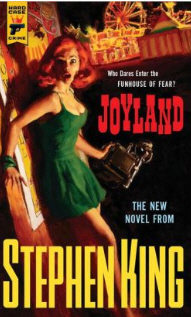
joylandA haunted carnival funhouse gives a supernatural spin to events in Thriller Award–winner King’s period murder mystery with a heart. In the summer of 1973, 21-year-old college student Devin Jones takes a job at Joyland, a North Carolina amusement park. Almost immediately, a boardwalk fortune-teller warns that Devin has “a shadow” over him, and that his destiny is intertwined with that of terminally ill Mike Ross, a 10-year-old boy who has “the sight.” – from the Publishers Weekly review of Stephen King’s “Joyland” (June 2013 release)

Anyone Stephen King’s age or older has been impacted by pulp fiction whether we’ve read any of it or not. Pulp, referring to the cheap paper, covered a lot of genres from westerns to mysteries to sports to gangsters. It was cheaply produced and, so some people say, never could have seen the light of day in the up-scale “slicks” or “glossies”—the magazines and books printed on better paper.

The cover art, which was usually suggestive, garish, colorful, and over the top, meant that readers typically wouldn’t let their parents, teachers, office workers, pastors, and spouses see the books. In terms of magazines, most pulps died out during the 1950s as the sixty-year-old publishing approach began to run its course. Today, the book covers that were once considered scandalous are now considered “camp” and/or treasures of a bygone era that began with Argosy Magazine and included authors H. Rider Haggard,  Edgar Rice Burroughs and Talbot Mundy.

“Undeniable…charm [and] aching nostalgia…[JOYLAND] reads like a heartfelt memoir and might be King’s gentlest book, a canny channeling of the inner peace one can find within outer tumult.” – Booklist

The cover of Stephen King’s upcoming novel Joyland screams PULP. Published by Hard Case Crime, the look of the book is intentional as its author takes a nostalgia trip back to his roots and the fiction he grew up reading. The publisher is a friend of pulp:

Hard Case Crime brings you the best in hardboiled crime fiction, ranging from lost noir masterpieces to new novels by today’s most powerful writers, featuring stunning original cover art in the grand pulp style.

Though King embraced e-books early on, Joyland will be available in paperback only. That’s made bookstores happy and caused other people to wonder what King is up to when he says, “I have no plans for a digital version. Maybe at some point, but in the meantime, let people stir their sticks and go to an actual bookstore rather than a digital one.”

Pulp seems to be less pulpy on a Kindle or a Nook. Perhaps that, and the nostalgia of those pulpy old days is sufficient rationale for the paperback-only release. Personally, I would like to see some other major writers delay the release of the digital versions of their books. Only the prosperous could afford to do that, to go against the tide that often washes e-books up on shore before the paperback and hardcover releases.

Some years ago, literary agent Mort Janklow said of King, “That’s a fellow sitting up in Maine having fun, but it’s not a way to run a business.”

No, it probably isn’t. But I like it. I like it even on a day when I’m talking to the regional library system about including e-book editions of my novels on their e-lending lists. I like it because it’s fun. And yes, I’ll buy a copy at a bricks-and-mortar bookstore because that’s part of what pulp fiction is all about, walking in, making sure Mom, Dad or the school teacher aren’t around, and grabbing a copy of the latest hardboiled story off the spinning rack of books.

I remember the thrill of all that and I’ll enjoy going back in time to renew my memories. Unlike the old days, this book has glowing reviews from mainstream reviewers. I almost wish it didn’t.

–Malcolm

Review: ‘Suffering Succotash: The Comic Life of Molly Maise,’ by Lula Mae Barnes

Satire from the archives

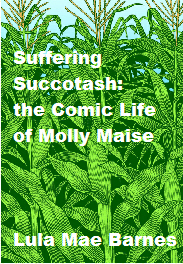
Suffering Succotash: The Comic Life of Molly Maise,” by Lula Mae Barnes (Corn Fritter Press, September 2012), 4,837pp with illustrations, index, maps, and bibliography.

SufferingSuccotashAs time goes by, fewer and fewer people remain on this Earth who suffered through depression-era and Thanksgiving meals constructed substantially of succotash.

“As far back as the Revolutionary War,” writes Lula Mae Barnes in her new and overly definitive biography of the 1770s Rhode Island innkeeper, dancer and lady of the evening Molly Maise, “people were thankful to live off succotash when times were hard and just as thankful to get rid of the vile mixture when good fortune smiled upon them again.”

Barnes, who spent the last fifty years uncovering the obscure details of the inventor of succotash, claims that the mixture of corn, various forms of beans and minced oaths is far too improbable a concoction to have occurred by accident.

Young Molly Maise, an innkeeper on Aquidneck Island who supported the “divine cause of everything that wasn’t British,” devised succotash as a “devious treat” for British sailors enjoying her favors in the days leading up to the 1778 Battle of Rhode Island. Ever after, she claimed her succotash made the sailors so ill, they scuttled their own fleet to kill the pain. While historians agree that the fleet was scuttled, they do not cite succotash as a cause.

According to Barnes, Maise spent a lifetime giving humorous talks, some bawdy, about the ills of succotash and the role it had in the war. While her speeches and dance routines, including “The Succotash Rag” (which pre-dated the American Ragtime boom by one hundred years) were well attended, she failed to gain the validation as a soldier and inventor she was seeking.

In fact, the biography’s references clearly indict most, if not all, of the United States’ founding fathers, soldiers, newspapermen and historians of a “treasonous level of guilt” for their roles in covering up the role of Molly Maise and succotash in “the cause of freedom.”

Barnes’ epic work clearly shows that every human’s recipe for defeat is based on the foods they eat, how they mix them together, and what they name the resulting entree. Had Maise called her corn and beans a Corn & Bean Medley, history might have duly honored her for the suffering her invention caused herself and all the generations that followed.

The epitaph on Maise’s tombstone reads: “Loose corn and beans sink ships faster than loose lips.”

Jock Stewart

jtalksbooks

Review: ‘Butterfly Moon,’ by Anita Endrezze

butterflymoonThe fifteen stories in this finely honed and well-polished collection have the power to cut away assumptions and alter a reader’s focus and direction as only a storyteller’s magic can do. Borrowed and reshaped from older folktales out of Anita Endrezze’s heritage and imagination, these stories take on new life in their contemporary settings.

In her author’s note, Endrezze writes, “I hope Butterfly Moon will take you adrift in another world that challenges and transforms your perceptions, yet leads you back home to yourself.”

Reality, the oldest shapeshifter we know, dances lightly on the pages of Butterfly Moon and often gives way to enchantments, supernatural events, and the whims of gods and fate. As prospective blessings for the reader’s journey, these stories don’t necessarily fit the traditional narrative arc of a problem leading to a climax. Endrezze’s tales are often unresolved slice-of-life glimpses into her characters and settings that end with a dire occurrence, an acceptance of fate, a troubling paradox or the workings of karma.

The joy, anger, life, and death in Endrezze’s vision are not bound by time, nor are they distinctly separate from the active and sentient world in which they’re set. “On This Earth” begins with the words, The house was a forest remembering itself. The pine trees that held up the walls dreamed of stars dwelling in their needles. When Desetnica leaves home to roam the world in “The Dragonfly’s Daughter” because she is the tenth child, it’s clear that the forest is watching when The blackberry bushes parted their thickets as I waded through green knots of fruit. After I passed, still following the dragonfly, the vines knitted together again, so that I was lost to the other side of kinship and orphaned into the unnamed forest.

While tightly knit into the stories’ plots, myth and symbolism add depth without intruding into the author’s economy of words, understated approach and matter-of-fact reverence to the cultural origins of her material. Endrezze does not explain or editorialize, but her omniscient care is everywhere through this collection from the paradoxes of “Raven’s Moon” to the grim unfolding of “The Vampire and the Moth Woman” to the humor of “Jay (Devil-may-care!)”

For the lovers of myths, legends, and folktales, this collection is highly recommended and a unique delight.

Malcolm

Malcolm R. Campbell is the author of paranormal short stories and contemporary fantasy novels, including the recently released mix of love and fate called “The Seeker.”

Mortsafes: Protection FROM the Dead or FOR the Dead?

diannephotoI am happy to welcome Dianne K. Salerni (“We Hear the Dead,” “The Caged Graves”) with a somewhat spooky guest post about Mortsafes. I first met Dianne when we were both book reviewers for the same site. Since then, I’ve greatly enjoyed her books.

Mortsafes

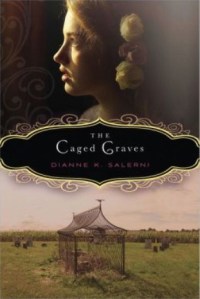
Given the current popularity of vampires and zombies, it’s no wonder that anyone stumbling across a mortsafe would automatically think of the undead. But these iron cages, found mostly in the U.K. and especially Scotland, were designed to protect the dead, not the living.

Mortsafe in Greyfriars Kirkyard, Edinburgh - Wikipedia Photo
Mortsafe in Greyfriars Kirkyard, Edinburgh – Wikipedia Photo

In the early 19th century, fresh bodies were in great demand in medical schools, where students practiced dissection to learn anatomy.  The lack of any legal way to acquire such bodies led inevitably to grave-robbing, which for a time became a rampant problem near places with medical schools, like Edinburgh. “Resurrection men” were forced to widen their net, transporting bodies across great distances, as people caught on and took steps to prevent their loved ones’ bodies.

Iron cages, ugly, practical, and effective, started appearing in Scotland around 1816. The general practice was to remove them after six weeks or so, although some survive in various cemeteries around the U.K., left in place and forgotten.

Asenath grave Sarah grave in background in PA - Bob Salerni photo.
Asenath grave; Sarah grave in background in PA – Bob Salerni photo.

In the United States, to the best of my knowledge, there are only two mortsafes in existence – a pair of lovely, iron cages over two graves in Catawissa, Pennsylvania, a town nestled between the Susquehanna River and the Pocono Mountains. These mortsafes are quite different, and a bit of a mystery surrounds them.

First of all, they are decorative, which suggests they were meant to stand more than the usual six weeks – and in fact, they have done so. Secondly, they are the only mortsafes ever reported in this region, which is located nowhere near a medical school. Grave-robbing did occur in 19th century America.  One particularly gruesome incident occurred less than five months before these mortsafes were built, but it happened 275 miles away in Cleveland, Ohio.

Sara Ann grave in PA. Bob Salerni photo.

The graves belong to two young women, Sarah Ann Boone and Asenath Thomas. They were sisters-in-law, and they died within a couple days of each other in June, 1852. The cause of death is not recorded, and I find it strange that – although they were both married – there are no graves for their husbands nearby. In fact, the whole cemetery is odd, in that all the headstones seem to belong to women and children. I examined every headstone left standing and found only one for a grown man.

It has been suggested that these two mortsafes were merely decorative, meant to display the affluence of a grieving family burying two young women in such a short span of time. However, decorative or not, they are definitely cages, and they are odd. In order to trim the grass, it would have been necessary to unlock the cage doors and crawl inside, which violated a contemporary taboo about walking over graves. This seems like a very bizarre way to memorialize beloved members of one’s family.

One has to wonder: Why cover the graves of these women – and only these two women? Who were they in life, and how did they die? I can only assume something very unusual happened in Catawissa, Pennsylvania during the summer of 1852. We may never know the truth, but I certainly did my best to create an entertaining story out of it.

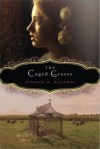
cagedgravescoverDianne K. Salerni is an elementary school teacher in Pennsylvania and the author of two historical novels, WE HEAR THE DEAD (Sourcebooks 2010) and THE CAGED GRAVES (Clarion/HMH 2013), and a middle grade fantasy series, THE EIGHTH DAY (forthcoming from HarperCollins beginning 2014).

Follow Dianne on Facebook

Author’s website

Hello Pinterest Fans

joyoftravelEver cautious, I was the last to arrive on MySpace. “What is Facebook all about?” I used to wonder. I’m “on” Twitter, but there are days when I don’t know how to keep up with the tweets. True to form, I didn’t show up on Pinterest’s doorstep the day they opened for business.

In fact, I stayed away until this past weekend. All my colleagues at Vanilla Heart Publishing were all already creating boards and pins (whatever that meant) and wondered why I wasn’t.

This weekend, I was too tired to do anything else after mowing the yard, so I looked at Pinterest. Hmm, not too bad. I set up boards called Joy of Travel, Books for Fantasy Lovers, This and That from My Blogs, and Resources for Writers. Things went smoothly. It was fun. Here’s the link.

Coming up Next: Author Dianne Marenco Salerni (“We Hear the Dead,” “The Caged Graves”) will be here in several days with a great guest post. With today’s zombie fad, we usually hear about protecting the living from the dead.  However, there have been times when the dead needed to be protected from the living.

Malcolm

seekergiveawayStop by GoodReads for a chance at winning a free copy of my new novel about love, magic and fate. The giveaway ends May 21, 2013.

The seared images of ‘Body Heat’

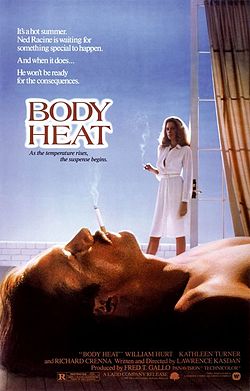
bodyheatposterNed: I need someone to take care of me, someone to rub my tired muscles, smooth out my sheets.
Matty: Get married.
Ned: I just need it for tonight.

–from “Body Heat” starring William Hurt as Ned and Kathleen Turner as Matty

From the sex to the crime to the moody saxophone music to Florida’s hot summer days when small-town lawyer Ned Racine meets the married, but overtly sexual Matty Walker, “Body Heat” was, in 1981, the kind of film everyone talked about. Men wanted to be Ned even though things ended up badly. Women wanted to be Matty because she got everything she wanted.

When I watch this film today on DVD, it still plays well. I do like noir films. I did grow up in Florida in the days before air conditioning when everyone sweated when the temperature outside reached 98.6 degrees or higher. And, John Barry’s music is the kind of music I remember hearing in blues bars on those summer nights when I was hoping to meet somebody like Matty Walker who didn’t want me to kill a husband for her. But it’s more than that, though what is is, is hard to define

Movies have become more permissive since 1981. Skimpy clothing, more innuendos, racier language than Ned Racine ever used, and more body heat than most people experienced in “real life.” Think of it: The near-nudity on “Survivor” is more extravagant, the language on “Hells Kitchen” is more profane, and the urgent sexual encounters on “Grey’s Anatomy” are more frequent than in most of the films we saw thirty-two years ago.

My wife and I saw “Body Heat” in a packed theater with another married couple. Afterwards, all of us commented about the same sexual encounter when the audience was stunned into an overt hush. When Ned throws a porch chair through the front door of Matty Walker’s house while she stands inside at the foot of the stairs waiting, leading to wildly hot sex in the foyer, nobody in the audience moved, chewed popcorn, breathed, looked at anyone else, or even risked allowing a tangible thought to enter their brains.

If you saw this film thirty-two years ago or even last week, that scene may well be hard-wired into your memory of movie moments. Watching the movie now, my experience of the film is partly based on how I reacted to it with five hundred other people that night. I can still feel that stunned hush.

As an author, I look closely at what produces a stunned hush in readers and movie goers. It need not be sex. It may be a car chase, a serene moment in a beautiful setting, or a conversation in a bar while a a bluesy enchantress sings out her troubles. What exactly makes for the perfect combination of setting, action, and words to thoroughly capture (and control) the heart and soul of a reader or a viewer?

Perhaps you remember a film or a novel with a scene that has stayed with you long after you first saw it or read it. Maybe the scene is tied together in your memory with the weather, the daily news, the people you were with, and the kind of day you were having when that fictional moment stopped you in your tracks. We know it when we see it and we know it when we read it…

Ned: Maybe you shouldn’t dress like that.
Matty: This is a blouse and a skirt. I don’t know what you’re talking about.
Ned: You shouldn’t wear that body.

Malcolm

Malcolm R. Campbell is the author of four novels, including the recently released “The Seeker,” a story with a high degree of body heat between the covers.

seekerbanner

Review: ‘The Best of Glacier National Park,’ by Alan Leftridge

The Best of Glacier National Park, by Alan Leftridge, Farcountry Press (April 30, 2013), 136 pages, photographs, maps, resources

BoGlacier cover flat r1.indd“We’re here! What should we do, what is there to see?” In the preface to his practical and well-illustrated Glacier National Park guidebook, Alan Leftridge writes that as a park ranger, he often heard those questions from excited visitors who “wanted to start making memories.”

Many of Glacier’s two million annual visitors travel a long way to reach northwestern Montana, and when they arrive, they are not only in awe of the scenery but of the scope of the prospective activities that await them in a 1,012,837-acre preserve with 762 lakes and 745.6 miles of trails. While Glacier is best experienced without hurry or stress, the economics of vacation travel make it necessary for visitors to maximize their time in the park.

The Best of Glacier National Park highlights, as Leftridge puts it, the park’s “iconic features.” The book begins with an overview of park facts, geology, and cultural history. This is followed by twenty-six “best of” chapters describing everything from scenic drives, picnic areas and nature trails to wild flowers, birds and photography opportunities.

Each chapter includes a map, color photographs and clearly marked headings and subheadings that make the information easy to find. This book is meant to be used as a quick and easy reference whether you are stopped at an overlook on the Going-to-the-Sun Road or standing in a subalpine fir forest on the Swiftcurrent Nature Trail. The hiking sections, which are broken down into nature trails, day hikes and backpack trips, include directions and special features you’ll want to see and photograph.

Glacier’s rangers, naturalists, boat crews and saddle tour operators are probably asked more questions about the park’s flora and fauna than anything else. The “Best Wildlife” chapter includes a mammal checklist and tells you where to find marmots, deer, elk, bighorn sheep, moose and bears. The book includes appropriate warnings about Grizzly bears, suggesting that they be observed at a distance. “Best Birds” highlights ospreys, eagles and ptarmigans, among others.

Naturally, “Best Wildflowers” begins with beargrass. Leftridge notes that “It is a myth that bears rely on this lily to satisfy their diet. If you see beargrass’ tall stalks with missing flower heads, know that other animals, including rodents, elk and bighorn sheep, nibbled here.”

According to the National Park Service, there are 1,400 plant species in Glacier. While “best” is a subjective term, this guidebook focuses on such popular and showy wildflowers as the Glacier Lily, Indian Paintbrush, Lupine and other visitor favorites.

Naturalist John Muir said Glacier National Park includes the “the best care-killing scenery on the continent” and suggested that visitors  “Give a month at least to this precious reserve. The time will not be taken from the sum of your life. Instead…it will make you truly immortal.”

Whether you have a month, a week or a only few days for the high country known as the Crown of the Continent, The Best of Glacier National Park is an excellent all-purpose, general guidebook for discovering everything to do and see when faced with thirty-seven named glaciers, 175 mountains, and 151 maintained trails of waiting memories.

Malcolm

TSScover2014A former Many Glacier Hotel summer employee, Malcolm R. Campbell is the author of nonfiction and fiction with a Glacier Park focus, including Bears; Where They Fought: Life in Glacier Park’s Swiftcurrent Valley and three contemporary fantasy novels set in the park, “Sarabande,” “The Seeker” and “The Sun Singer.”

Miscellany: New, upcoming, and around the Net

Here are a few updates about one thing and another, this and that, and things from that drawer most families have the kitchen that contains stuff that didn’t end up some place else.

New

  • EmilyaudioI’m happy to announce that my three-story Kindle set, Emily’s Stories, is now available as an audio book. The stories feature a fourteen-year-old girl who talks to birds and ghosts and, just possibly, tinkers a little bit with reality. That’s what I would expect from a curious, sharp and savvy young lady. Personally, it was strange (in a good way) to hear my words being read back to me by narrator Kelley Hazen. Kelley also narrates my Vanilla Heart Publishing colleague Marie Hampton’s Hunting Heartbreak. Stay tuned for more audio books from VHP later this year. It’s an exciting new way to tell you our stories.

Upcoming

  • I’m looking forward to posting reviews of two new books about Glacier National Park in late May, Best of Glacier and Glacier Park Lodge. This year marks the 100th anniversary of the famous lodge built by the former Great Northern Railway on the edge of the park. You can still get there by train via AMTRAK’s Empire Builder.cagedgravescover
  • Author Dianne Marenco Salerni (“We Hear the Dead” and her upcoming “The Caged Graves”) will be hear in two weeks with a spooky guest post. With today’s zombie fad, we usually hear about protecting the living from the dead.  However, there have been times when the dead needed to be protected from the living. It’s a great post with some wonderful photographs. Dianne and I used to contribute book reviews to the same review site, so it’s doubly fun to see her latest novels coming out and showing up with glowing reader responses on similar sites.

Around the Net

You’ll find some of my favorite places in the blogroll. In my search for author and publishing news for my “Book Bits” posts on my Sun Singer’s Travels blog, I look at a great many blogs and sites each week. But here are some posts I wanted to share (including one of mine own) outside the realm of reviews and author news:

Smoky Zeidel photo
Smoky Zeidel photo
  • My friend and colleague at Vanilla Heart Publishing, Smoky Zeidel (“The Storyteller’s Bracelet”), has been blogging about the the beauty of the California coast. I haven’t been back to the state where I was born for many years, so I’m contenting myself to read about it in In Search of the Pacific Crest Trail. This is the second in a two-part posting. Smoky is known as the Earth Mage for good reason.
  • Since I have blogged here in the past about the hero’s journey, I see a lot of visitors stopping by after having searched for more information. I would like to suggest The ongoing series of posts on C. LaVielle’s Book Jacket Blog about the hero’s journey and the Major Arcana from the Tarot deck. The deck’s Major Arcana, when followed in numerical order, are a representation of not only the hero’s journey, but the seeker’s journey. Yesterday’s post is The Sun, Part I.
  • Montucky photo
    Montucky photo

    My Montana friend “Montucky” has been running his Montana Outdoors blog for some years now and has gathered over time a surprising variety of high country photographs. He spends a lot of time on trails and forest service roads and always has his camera. You’ll see scenics, river pictures, and hundreds of wildflowers. Most recently, he showed us the beauty of Lichens and moss. Montucky makes frequent posts, and I have found a lot of serenity in stopping by his blog of late to see the last snowfalls and the first spring flowers. His blog is almost as good as flying out to Montana, though considerably less expensive! (However, as soon as Hollywood calls and makes me an offer for this book or that, I’m buying a plane ticket or a suite on the Empire Builder.)

  • Florida Memory photo
    Florida Memory photo

    In my recent post on my Sun Singer’s Travels weblog, I couldn’t resist placing my characters in Florida’s Garden of Eden, I continue a series of novel-location-essays focused on my new contemporary fantasy novel The Seeker. In the 1960s when the novel is set, the Florida Panhandle preserve now called the Apalachicola Bluffs and Ravines was touted as being the location of the Biblical Garden of Eden. There were signs all over the place, including one that said “Here Adam and Eve Built Their First Home.” The Garden of Eden trail is still there, but a lot of the former rhetoric and publicity about Arks and gopher wood has faded into the past. The habitat is exceptionally rare no matter what you believe about its past. I habitually use many real settings in my novels and short stories as a way of contrasting fantasy and reality, adding depth to my locations, and (in a small way) keeping a bit of local history alive.

Malcolm

Book Review: ‘Bitter Orange’ by Marshall Moore

Bitter Orange - Cover - 1600x2500 - 300dpiMarshall Moore follows his collection of enigmatic and delightfully twisted short stories, Infernal Republic, with an equally inventive novel about a character we can’t always see. Notice how protagonist Seth Harrington is already fading away on the book’s cover.

If Bitter Orange were a feature film showing at your local theater, a sign on the door would say: ABSOLUTELY NO ONE ADMITTED DURING THE LAST 15 MINUTES. The why of things doesn’t appear until the final pages and it’s well worth the wait.

The problem Seth Harrington thinks he has isn’t the worst problem he has. Personally impacted by 9/11, Harrington has allowed his days and nights to take on an out-of-focus aimless quality as though he isn’t engaged in his life. In spite of a fling with Elizabeth in Spain, he can’t connect with people, either because he isn’t sure of what, if anything, he wants or because others aren’t seeing him as he is.

Others not seeing him is the problem he thinks he has. By fits and starts, he is becoming invisible—literally. But unlike the daring-do characters out of comic books and high fantasy, Harrington not only can’t control his growing ability, he doesn’t seem inclined to use it to save the world or fight crime. In fact, he first uses it to steal a bottle of wine from a convenience store.

Other than his aimlessness, Harrington’s a likeable enough everyman trying to negotiate the world while getting past bitter memories and making sense of the seemingly random chaos of his daily life. In Spain, after telling Seth that Seville Oranges are bitter and bullfights are cruel, Elizabeth says, “So we came all this way for bitter oranges and cruelty to animals. And we meet here instead of back home in the States. What does that say about us?”

Back in San Francisco, Elizabeth—who becomes Seth’s tattoo artist of choice because she’s very good—wants to remain as important to him as she ever-so-briefly was in Spain. While Seth is, or potentially is, more attracted to his roommate Sang-hee (even Elizabeth begrudgingly sees it), he cannot seem to embrace the life he prefers. He speculates about just what that says about him.

As the invisibility problem becomes more complex, Seth travels to Portland and Las Vegas to try and find himself. He notes that the people in those towns can’t see him either. He feels bad taking advantage of that fact.

Marshall Moore tells an inventive story, one with prose as likeable as his protagonist, though some readers may want a  more highly focused plot. Moore keeps both the reader and his protagonist guessing about just how and why a man becomes invisible and whether the problem Harrington thinks he has is literal or figurative.

The solution to the problem provides a fitting climax to a well written, fanciful tale. Poor Seth: he didn’t see it coming.

Malcolm

Malcolm R. Campbell is the author of contemporary fantasy novels, including “The Seeker,” released this month by Vanilla Heart Publishing.

seekerbanner