Love that writing advice, the good, the bad, and the strange

If you spend a lot of years writing, you’ll hear a lot of advice. In addition to writing books and the features and lists of tips on Internet sites like NPR, Flavorwire, The Millions and Brain Pickings, Facebook and Twitter supply advice. I visit these sites every week to keep up with books, authors and publishing for my Book Bits blog of links to reviews, author interviews, book news, and “how to” articles for writers.
gallicoSome wise and/or humorous words about writing have been around for so long, they’ve become almost lame, yet each new generation of readers and writers discovers them and posts them in writing blogs and Facebook. You’ve probably seen a few of these before:

  • “You simply sit down at the typewriter, open your veins, and bleed.” – Red Smith, Ernest Hemingway and Paul Gallico have been credited with versions of this one.
  • “If you don’t have time to read, you don’t have the time (or the tools) to write. Simple as that.”  – Stephen King and other authors tell us that if we don’t read, we can’t possibly write. (Aspiring writers have enjoyed King’s advice in “On Writing: A Memoir of the Craft.”
  • “Read, read, read. Read everything — trash, classics, good and bad, and see how they do it. Just like a carpenter who works as an apprentice and studies the master. Read! You’ll absorb it. Then write. If it’s good, you’ll find out. If it’s not, throw it out of the window.” – It’s not surprising that William Faulkner’s version of that advice is longer.
  • stephenking“The difference between the right word and the almost right word is the difference between lightning and a lightning bug.” – Mark Twain’s version of this age-old wisdom is memorable.
  • Professional writers don’t sit around every day waiting for their muses to contact them or for imagination to strike. They sit down and write. – So many people have said this, it would take the rest of this post to list them all here.

Famous Authors often Dispense Advice in Lists

  • “There are three rules for writing the novel. Unfortunately, no one knows what they are.” – W. Somerset Maugham – Okay, this is actually a non-list and probably not very helpful.
  • “Every character should want something, even if it is only a glass of water.” – from Kurt Vonnegut’s eight tips.
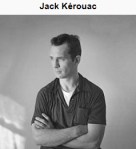
  • kerouacphoto“Write the way you talk. Naturally.” – from David Ogilvy’s ten tips. Actually, most people don’t talk like anything I want to read, especially if they use the words “you know” ten times in each paragraph.
  • “Write what you want bottomless from bottom of the mind.” – Jack Kerouac’s advice from his thirty beliefs and techniques, most of which are as unclear as this one…even if it’s true.
  • “Abandon the idea that you are ever going to finish. Lose track of the 400 pages and write just one page for each day, it helps. Then when it gets finished, you are always surprised.” – from John Steinbeck’s six tips. . .this one probably annoys writers who begin with an outline and a list of character traits and motivations for each character.
  • “Forget the books you want to write. Think only of the book you are writing.” – from Henry Miller’s eleven commandments

And then there are the random gems

  • woolfphoto“Writing is like sex. First you do it for love, then you do it for your friends, and then you do it for money.” – Virginia Woolf…probably true, though most of us try to keep some semblance of love in it.
  • “The first draft of anything is shit.” ― Ernest Hemingway…typical Ernest.
  • “Write the kind of story you would like to read. People will give you all sorts of advice about writing, but if you are not writing something you like, no one else will like it either.” ― Meg Cabot…this sounds reasonable, though it has a sting to it for those of us who like reading James Joyce.
  • “Everywhere I go I’m asked if I think the university stifles writers. My opinion is that they don’t stifle enough of them. There’s many a best-seller that could have been prevented by a good teacher.” ― Flannery O’Connor…this seems more true today than when Flannery said it.
  • Every journalist has a novel in him, which is an excellent place for it. – Russel Lynes…Russel is obviously more cynical than Flannery.
  • “Cut out all these exclamation points. An exclamation point is like laughing at your own joke.” ― F. Scott Fitzgerald…this one ends my lists on a more practical note while also serving as another example about why we shouldn’t write like we talk.

What are your favorite tips, even the ugly ones?

Malcolm

99 cents on Kindle
99 cents on Kindle

Malcolm R. Campbell, who used to dispense writing tips as a college journalism instructor, has turned his talents over to the dark side of writing paranormal short stories and contemporary fantasy novels.

Follow me on Twitter

Catch my author’s page on Facebook

Poll: Most Americans See Population Growth as Threat to Wildlife, Climate

from the Center for Biological Diversity:

biologicalMIAMI— A new poll finds a majority of Americans believe the world’s growing human population is driving wildlife species toward extinction and is making climate change worse. Respondents also said addressing the human population — which topped 7 billion in 2011 — is an important environmental issue and that society has a “moral obligation” to address wildlife extinctions related to population growth.

The national poll of 657 registered voters was commissioned by the Center for Biological Diversity. It was conducted by Public Policy Polling on Feb. 22, 23 and 24. The poll has a margin of error of +-3.85 percent.

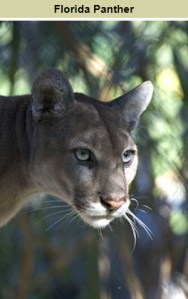
floridapanther“It’s now more clear than ever that Americans are concerned about the toll that human population growth is having on wildlife and our planet,” said Jerry Karnas, population campaign director at the Center. “Population is clearly a driving factor in so many of our environmental issues today, whether it’s sprawling development crowding out Florida panthers and sea turtles, loss of wild habitat for San Joaquin kit foxes in California or the climate crisis pushing polar bears ice seals toward extinction. It’s heartening to see that most Americans understand these connections and don’t want to see them ignored.”

“Although it’s an issue that doesn’t get talked about that much, this poll shows population is an emerging environmental issue that Americans recognize, especially when it comes to protecting wildlife from extinction,” said Jim Williams, of Public Policy Polling.

Among the poll’s results released today:

  • 64 percent said that, with the human population expected to hit 10 billion by 2050, wildlife will be adversely affected.
  • 61 percent said they are already concerned about the rate that wildlife are disappearing.
  • 60 percent said they “strongly agreed” or “somewhat agreed” that human population growth is driving animal species to extinction.
  • 60 percent said our society has a “moral responsibility” to address wildlife extinctions in the face of a growing population.
  • 59 percent said they “strongly agreed” or “somewhat agreed” that addressing the effects of human population growth is “an important environmental issue.”
  • 57 percent believe human population growth is “significantly impacting the disappearance of wildlife.”
  • 57 percent said they “strongly agreed” or “somewhat agreed” that population growth is making climate change worse.
  • 54 percent said stabilizing population growth will help protect the environment.

kitfoxThe Center for Biological Diversity launched its human population campaign in 2009 to highlight the connection between the world’s rapidly growing population and the effect it has on endangered species, wildlife habitat, the climate and overall environmental health. As part of the campaign, the Center has given away nearly 500,000 Endangered Species Condoms intended as a way to get people talking about this critical issue.

The Center advocates for a number of ways to address population, including universal access and adequate funding for family planning services, empowerment of women, sustainable development, a reduction in the consumption of natural resources and personal decisions that lessen the impacts on wildlife and the environment.

“If we’re going to address some of the biggest environmental problems we face, population has to be part of the conversation,” Karnas said. “These poll numbers show Americans are ready to start talking about population and dealing with impacts.”

To download a copy of the poll go to http://www.biologicaldiversity.org/population_poll.

Background

Government scientists have highlighted population as key environmental issue in recent months.

coloradoIn a decision to protect 66 coral species under the Endangered Species Act, the National Marine Fisheries Service said population and consumption of natural sources was “the common root or driver” of ocean acidification and other threats corals face.

The Department of the Interior recently released a report on the future of the Colorado River, concluding that, in 50 years, the river that supplies water to 40 million people may be unable to meet the demands of a burgeoning human population.

The U.S. Forest Service issued a report with another grim prediction: that 36 million acres of the nation’s forests will be lost to houses, strip malls and roads by 2050. That’s an area 16 times larger than Yellowstone National Park.

You May Also Like: Mare Cromwell’s Messages from Mother, a guest post on Smoky Talks

Malcolm

Review: ‘Crescendo’ by Deborah J. Ledford

crescendoIn music, “crescendo” indicates a gradual increase in force or loudness. If Deborah J. Ledford’s three-book Steven Hawk/Inola Walela Thriller Series (Staccato, 2009, Snare, 2010, Crescendo, 2013) were a concerto, the audience would leave the concert hall at the end of the performance electrified by the force of the third movement and the virtuosity of soloist Inola Walela.

Crescendo (Second Wind Publishing, January 27) begins with great force when antagonists Preston Durand and private investigator Hondo Polk push Billy Carlton to tell them what he knows about the location of Durand’s son and ex-wife. The book’s volume increases when Inola’s partner is killed during a traffic stop by a bullet that might have come from her gun and a female passenger in the stopped car is struck and killed by another vehicle just after she says, “I got you the money.  Where is my son?”

Though she’s a decorated Bryson City, North Carolina police officer, Inola is put on administrative leave pending a departmental investigation into the deaths at the scene. She’s told to stay away from the investigation, including trying follow up on her gut feeling that the woman’s son has been kidnapped.

Inola’s fiancé Steven Hawk, now the county sheriff, wants to play everything by the book. He tells Inola that there’s no evidence of a kidnapping and the city police and county sheriff’s departments can’t take action until evidence and leads, if any, materialize—and she is to stay home.

Readers of the Steven Hawk/Inola Walela Series were introduced to Inola in Staccato when Hawk, who was a sheriff’s deputy then, first became aware of her: “Hawk had noticed Inola Walela, the only female cop on the Bryson City police force. She was captivating, beautiful, smart, tough, exactly what he hoped to find in a woman.”

Inola, who played a larger, but secondary, role in Snare, is Ledford’s on-the-hot-seat protagonist in Crescendo. She comes into her own in this tense novel as a three-dimensional, risk-taking police officer who needs to find the young woman’s son and who has kidnapped him even though she may be suspended or terminated regardless of what she learns.

This is a richly told psychological and physical thriller. Ledford, who knows her characters and her settings well, increases the volume of this story until the last shot is fired.

Malcolm

Malcolm R. Campbell is the author of contemporary fantasy novels, including “Sarabande’ and “The Sun Singer.”

We could fill cemeteries with neglected books

books“There was a time when a learned fellow (literally, a Renaissance man) could read all the major extant works published in the western world. Information overload soon put paid to that. Since there is “no end” to “making many books” – as the Old Testament book Ecclesiastes prophesied, anticipating our digital age – the realm of the unread has spread like a spilt bottle of correction fluid.” – The Guardian in “In theory: the unread and the unreadable”

Carlos Ruiz Zafón writes about a “cemetery of forgotten books” in his novel The Shadow of the Wind. This cemetery is a library maintained by the secret few who know about it and who may lend you a volume if you will protect it for life. After reading the article in “The Guardian” which led me to The Neglected Books Page which led me author Jo Walton’s lengthy 2010 Neglected Books: The List (with a science fiction and fantasy focus), I wondered if we should build a cemetery, that is, a library, of forgotten AND neglected books.

neglectedbooks

You probably have some favorite authors and books that never seem to catch on with the general public. With my Georgia focus, I can usually name several Georgia authors who seem to be lost in the shuffle even though they have won awards and/or had a book or two made into a movie. While I’ll probably read the upcoming Dan Brown book Inferno, I don’t usually follow fads. Reading outside the latest fad, I’m usually able to think of wonderful books that are being overlooked.

“The Guardian” article mentions information overload. That’s certainly a factor. Adults aren’t known for reading a lot of novels per year. Perhaps high school and college literature classes made fiction seem boring. Perhaps the latest reality show, movie, or trending Internet story gets in the way. There are plenty of reasons.

One can also say that small press authors, not including those published by old-line prestigious small presses, are likely to feel neglected. For the most part, small press books do not get reviews from Kirkus, Booklist, Publishers Weekly and major newspapers. There usually are no noteworthy interviews with small press authors or off-book-page stories about their work. With few exceptions, their books are not entered into awards competitions, included on the media’s best-books-of-the-year lists, optioned for movies, or remotely on the radar of most prospective readers.

If you ask a major critic, book reviewer, literary magazine, or publishing magazine what a neglected or a forgotten book is, it is normally considered one from a major publisher that was well reviewed, but had lower than expected sales and was allowed to go out of print. Books by popular authors that don’t catch on like the authors’ other works are also in the “neglected” category.

The cemetery/library in The Shadow of the Wind resonated with me in part because of the novel’s notion that “Every time a book changes hands, every time someone runs his eyes down its pages, its spirit grows and strengthens.” In “real life,” a secret library that almost nobody knows about won’t serve our need. Perhaps books need patrons or people who love them and talk about them or people who share them with their friends. Perhaps we need more adventurous readers who will commit to buying five books a year that are not on the bestseller list. We need more reviewers: writers often wonder why people say, “hey, I loved youshadowofwindr book” but then don’t follow that up with a reader review on GoodReads or Amazon.

I think I’m only talking about band-aids here unless more people find more reasons to read. According to ParaPublishing, 27% of adults in the U.S. don’t read books for pleasure (based on figures from a few years ago). What books are the remaining adults going to pick from: an old and forgotten book, a book from a small press author, or the book sitting in the bookstore window and at the top of the national bestseller lists? No wonder so many books are forgotten and/or neglected and/or passed over—depending on your definition of those terms.

Years ago when literature and other liberal arts courses were more valued in high schools and college than they are now, most of the students in my classes came from families where their parents read almost no books. The students learned from home that reading wasn’t valued. Our town’s public library has reading classes for kids, and I love seeing the kids there. But I wonder, is the excitement of the reading program reinforced by parents at home or are the kids just dropped off at the library by parents who need time to run some errands elsewhere?

Reading is an investment in time more than an investment of money. I get offers via e-mail, Facebook and GoodReads for free downloads and sample chapters. I read a lot, but I can’t keep up with the deluge. I try to promote new authors on my blogs and on Twitter, but sooner or later, I want to read the books I hear about rather than free books I’ve never heard about. It’s book overload even for those of us who read a lot.

riflogoPerhaps reading just isn’t a modern-day avocation and perhaps it’s too late to change that. Can reading-oriented groups help or did we let lack of reading get so far out of hand that the problem is too broken to fix? More and more people are writing and publishing, but their viable readership seems to be getting smaller no matter how much time we all spend arguing about whether e-books should be almost free or should sell for enough to support the authors who wrote them?

  • So, what books and authors do you like that have fallen into the neglected or forgotten categories?
  • What happens when you tell your friends about these books? Do they yawn and then spend another evening watching reality TV shows or reading only the top ten book on their genre’s bestseller list?

Malcolm

trilogybanner

Speculative Supernatural Novels and the Growing Fantasy Genre

CowanToday’s guest post by Laura K. Cowan (The Little Seer) examines speculative supernatural fiction and its relationship to fantasy. As authors, we often like to push the envelope, so to speak, and explore new realms. Speculative fiction of all kinds has been a popular arena of late.

It’s difficult to sort through all the variables that make for good fiction as new genres and sub-genres come on the scene, but one important consideration is the readers’ comfort level. Some fantasy readers stick to one area, while others see all the colors and hues of fantasy as a tempting smorgasbord. I’m always tempted to try new treats. How about you?

Speculative Supernatural Novels and the Growing Fantasy Genre

The fantasy genre is a diverse one, from the elves of high fantasy to pookas and werewolves at the intersection of fantasy and fairy tales, all the way to the dark fantasy of authors like Neil Gaiman with mainstream appeal. But a growing number of writers not satisfied with the status quo is beginning to write a new sub-genre called speculative supernatural. What is it and why should fantasy readers care?

Well, as a speculative writer, I suppose I’m biased, but I think readers of fantasy will embrace the speculative supernatural genre for one reason: it’s never boring! In a similar way that science fiction takes a “What if?” question of technology or science and stretches it into the future, speculative supernatural takes a “What if?” question and pushes into the spiritual or supernatural. Everything from weird ghost stories to spiritual warfare novels with warring angels and demons, to the cosmological stories that explore the physical and metaphysical nature of the world can fall under speculative supernatural, and that can take a reader and a writer down a very deep rabbit hole indeed. Isn’t that where all the best fantasy fiction goes?

Angels, Demons and Dreams

SEER FINAL V 2013-FrontThis week, my debut novel The Little Seer was pushed to the top of the Amazon Bestseller lists for free fiction when I made the first book of the novella trilogy, Exodus, free for 5 days. We all love free, but what I think really made this book an instant hit with readers was the premise. The story follows a young girl who wakes from a nightmare that her church is destroyed by a tornado and her pastor orders crows to peck out her eyes, only to discover deep cuts on her arms where she was attacked. And it only gets stranger from there, as her dreams unfold in her waking life and she finds herself the focus of a spiritual war over her life and town that could decide the fate of millions.

The supernatural angle of this book is obvious: angels, demons, and a behind-the-veil look at heaven as it manifests itself in our minds and around us at all times. But in order to make this story really gripping, I had to bring the supernatural into the natural in a literal way. “What if your dreams could really hurt you?” I asked myself. “What if what appears to be the safe choice spiritually could not only devastate your soul but risk your life?” “What if God wasn’t who you were told he was, and neither were you? How would you find the truth? ” And suddenly my character was an armchair theologian no more. She found herself diving deep into symbolic prophetic dreams and the depths of her own mind to seek answers to pressing questions, even as her family and church and community fell to pieces.

A Viable Fantasy Sub-Genre

The books I’m working on for the next few years all contain a similar thread of speculative thought and supernatural themes, but I’m excited to see how this work doesn’t fit in a box. It’s too out there for the Christian market even when it does contain angels and demons, but it’s too spiritual for a mainstream market. I think fantasy is the ideal home for my work, because my next novel Music of Sacred Lakes deals with a mystical connection with nature through a haunting that saves a young man’s life, and my upcoming short story collection The Thin Places: Supernatural Tales of the Unseen actually takes 30 separate speculative “What if?” questions and spins them in all directions, from modern mythology to the marriage of fairy tales and time travel. Like I said, never boring, and who knows interesting stories better than fantasy fans?

Welcome to the speculative supernatural genre. Let’s jump in together and see how deep the rabbit hole goes.

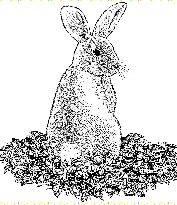
rabbitOn February 19th, Amber McCallister, who often reviews speculative fiction, will overview The Little Seer and provide an excerpt on her Wonderings of One Person weblog. Erin El Mehairi will be interviewing Laura on February 20 at Oh for the Hook of a Book! 

The Little Seer is available on Amazon in paperback and on Kindle.

You can also find Laura at her website and on Facebook and Twitter at @laurakcowan. And, I would like to thank her for stopping by Malcolm’s Round Table today.

–Malcolm

The Annual Library Book Sale

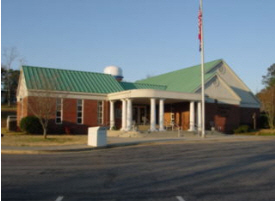
jeffersonlibraryEvery year, our local library holds a book sale that has become so popular it can no longer be held in the library’s modest lecture room. Now it occupies a huge space at the civic center where multiple tables have been set up with books grouped under multiple subject headings and genres by the Friends of the Library and other volunteers. This year’s library sale will be next week and, as usual, I have collected a box of books to donate for the sale.

The sale has been a good fund-raiser for the library as well as an opportunity for readers to find some great books marked down even lower than the used books (when the shipping costs is factored in) on Amazon. The books tend to sell at a blanket price depending on whether they’re hard cover or paperback. This streamlines the checkout procedure, though I think there are some cases where a few of the more popular, recent books could be marked up.

The Murphy’s Law of Donating Books

Over the years I’ve discovered a universal truth about book sales, a truth that also applies to anything sold on eBay or Amazon or donated to book drives held for various worthy causes: You may not have looked at the book for years, but once you sell it or give it away, you’ll sooner or later want to look at it again, Years ago, after finishing my first fantasy novel The Sun Singer, I sold off an Allerton Park brochure (where the real Sun Singer statue stands) on eBay because the book was done and I needed the money. Years later, I bought it (not the same copy) back on eBay because it was the only source for information I was using to market the novel.

Now, once again, I remember that a book by Eric Berne (widely known for Games People Play) that I’ve been looking for around the house for several days was, in fact, donated to the library book sale several years ago. I wanted information for an upcoming post on this blog about the multiple meanings behind the popular Little Read Riding Hood fairy tale. I’m still going to look at LRRH, as Eric Berne calls her, but the post would be easier to write if I still had Berne’s book about psychological scripts.

My wife and I will probably got to this year’s library sale. I’ve gotten in trouble there before, mainly for buying only one or two books when the librarians remembered me donating 50 books. “Malcolm, you need to take away more than you bring.” Sorry Laura and Amy, but the house isn’t big enough.

I don’t expect to find any books by Eric Berne, but there’s probably going to be something tempting on one of those tables. The librarians know that those of us who are addicted to books are going to show up!

Coming on Monday, February 18th:  Speculative Supernatural Novels and the Growing Fantasy Genre, a guest post by Laura K. Cowan (“The The Little Seer”)

You May Also Like: ‘Loki’s Wolves’ is coming in May, my latest post on Magic Moments.

Malcolm

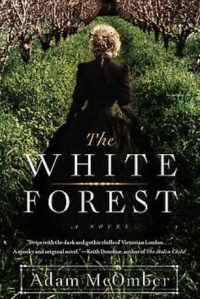
Briefly Noted Novel: ‘The White Forest’ by Adam McOmber

whiteforestAdam McComber’s The White Forest (which I’m currently reading when I should be working) introduces protagonist Jane Silverlake, a young lady with an affinity for man-made objects that transcends psychometry. It’s as though they have souls and agendas that are much more than simply the traces of those who made them or owned them.

The novel is set in Victorian England at a time when some people are interested in the latest frontiers of spiritualism while others think anyone with odd talents is a witch. Jane has only shared her talent with two close friends and, soon after the novel begins, one of them disappears. Jane’s best friend is distraught as well as suspicious, and the police are looking at everybody.

From the publisher

In this hauntingly original debut novel about a young woman whose peculiar abilities help her infiltrate a mysterious secret society, Adam McOmber uses fantastical twists and dark turns to create a fast-paced, unforgettable story.

Young Jane Silverlake lives with her father in a crumbling family estate on the edge of Hampstead Heath. Jane has a secret—an unexplainable gift that allows her to see the souls of man-made objects—and this talent isolates her from the outside world. Her greatest joy is wandering the wild heath with her neighbors, Madeline and Nathan. But as the friends come of age, their idyll is shattered by the feelings both girls develop for Nathan, and by Nathan’s interest in a cult led by Ariston Day, a charismatic mystic popular with London’s elite. Day encourages his followers to explore dream manipulation with the goal of discovering a strange hidden world, a place he calls the Empyrean.

A year later, Nathan has vanished, and the famed Inspector Vidocq arrives in London to untangle the events that led up to Nathan’s disappearance. As a sinister truth emerges, Jane realizes she must discover the origins of her talent, and use it to find Nathan herself, before it’s too late.

Praise from the Chicago Sun-Times

“What sets “The White Forest” apart from other contemporary novels is Adam McOmber’s careful attention to language. While it is the Columbia College professor’s first full-length novel, “The White Forest” is written with an imaginative and haunting prose reminiscent of H.P Lovecraft.”

Praise from Kirkus Reviews

“Teeming with as many twists and turns and shadowy characters as the narrow Victorian streets in which the tale is partially set, McOmber creates a . . . supernatural mystery that bombards the senses with rich dialogue and imagery.”

Opening Lines

“When Nathan Ashe disappeared from the ruined streets of Southwark, I couldn’t help but think the horror was, at least in part, my own design. I’d infected him, after all, filled im up with my so-called disease. The rank shadows and gaslight in the human warens beyond Blackfriars Bridge did the rest. Madeline Lee, my dearest friend, would come to hate me for what I’d done.”


This well-written mystery/historical/fantasy has lured me into another world.

Malcolm

gohFBcover

Great Fiction: Location, Location, Location

These days, most people say they like character-driven novels. As Barbra Streisand sang years ago, “People who need people, Are the luckiest people in the world.” We want to read about people, pretend to be them, laugh at them, hate them, learn from them and, if nothing else, see what they’ll do next.

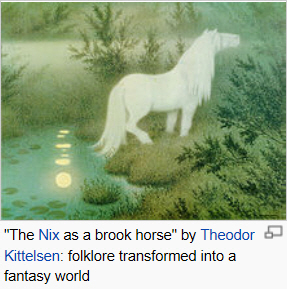
nixNonetheless, location can make or break a novel. Picture this:

  • The Night Circus set in the day time or, worse yet, Dubuque.
  • The Prince of Tides without the tides or, worse yet, without the the lush bays and swamps an estuaries of the South Carolina coast. (“It was growing dark on this long southern evening, and suddenly, at the exact point her finger had indicated, the moon lifted a forehead of stunning gold above the horizon, lifted straight out of filigreed, light-intoxicated clouds that lay on the skyline in attendant veils.”)
  • Jonathan Strange & Mr Norrell set in modern times or, worse yet, within the 1950s neighborhood of Happy Days or the early 1960s city ambiance of American Graffiti. (“Where does the wind come from that blows upon your face, that fans the pages of your book? Where the harum-scarum magic of small wild creatures meets the magic of Man, where the language of the wind and the rain and the trees can be understood, there we will find the Raven King.”)
  • All the Pretty Horses moved from Texas onto a Star Wars planet or, worse yet,  the Catskill Mountains.

Setting is more than a generic backdrop for the action

In his essay, “Setting as Character,” Crawford Kilian wrote, “Whether it’s Scott Fitzgerald’s 1920s Long Island or Tolkien’s Shire, the setting really is a kind of character in the story. Geographically and socially, the setting shapes the other characters, making some actions inevitable and others impossible.” The novels I listed above not only didn’t happen somewhere else, they couldn’t.

ozmapOn a similar note, a recent post on ProActive Writer, explored the importance of settings with the idea that “ignoring setting, or even giving it only a passing consideration, will lead to an unconvincing story.” The post views setting as the framework or the skeleton that holds up your plot and characters. Some authors build worlds for their novels before writing the novels; others let the worlds evolve while they write their stories. Either way, the worlds—real or imagined—must be convincing, they must fit the story like a warm mitten on a winter evening.

My Location Settings

I say all this as a way of introducing a series of posts on my Sun Singer’s Travels blog about the location settings in my novels. These easy-to-read posts explain each setting, show or describe what happened there in the novel, and explain why I chose the setting.

My approach to settings is organic and intuitive. By that I mean that I don’t make fiction-class lists of the attributes of the settings I want to use. No literary theory here; just places and reasons why I liked them. So far, the series has three installments:

Future posts will look at the world of a city in the Midwest, an aircraft carrier, a bridge over a wild river, and a sailor town. Stop by and see what you think. Whether you agree or disagree with my rationale, perhaps these posts will help you choose the best possible settings for your short stories and novels.

Malcolm

Malcolm R. Campbell is the author of contemporary fantasy novels.

Read it now on your Kindle

A few updates – interview, a new review, Book Bits, and Glacier Park

  • coracoverI enjoyed my interview over at Deanna Jewel’s blog Tidbits. It will be posted there until February 8. Stop by, say “hello,” and sign up for a chance at a free copy of my e-book ghost story “Cora’s  Crossing.” We talked about food, Scotch, writing advice, contemporary fantasy, and location settings.
  • Meanwhile, I’m trying to wrap up everything I need to do for my fantasy adventure trilogy that’s coming out this year. The Seeker is the first novel in the series, planned for a March 2013 release. For more information on the trilogy, surf over the my website page for an overall synopsis and a book trailer for The Seeker.  My website also has a new inspirations and links page with info for writers and lovers of fantasy.
  • For those of you who try to keep up with the latest book reviews and author news, I’m publishing ” Book Bits” several times a week on my Sun Singer’s Travel’s blog. Essentially, this is a page of links. The most recent “Book Bits” post was uploaded today.
  • portoI enjoyed reading The Woman of Porto Pim by the late Italian author Antonio Tabucchi. An English edition translated by Tim Parks is schedule for release in June from Archipelago Books. I posted my review of this collection of stories this morning on Literary Aficionado. If you’re on GoodReads, you’ll also find a copy of my review there.
  • With a bit of luck, I might just make it out to Glacier National Park late in the summer season. I’m looking forward to it and hope we don’t get any early snowfalls that kluge up the trip. We’ll see if I can get some pictures of many of the locations I use in my fantasy novels. I’m also curious to see how Many Glacier Hotel looks after the recent updates and refurbishments. Once again, the Federal government is providing insufficient funds for the park’s most basic needs. Here’s a recent story about that:  National Park Service memo details $2.5M in proposed budget cuts at Glacier, Yellowstone.
  • mythmoorI can’t resist sharing this quote from Terri Windling’s blog: “Current cant equates fantasy with escapism, and current fashion would have it that fantasy is both easy to read and to write. It isn’t. When it is done honestly, by a skillful writer, fantasy takes us far enough beyond our daily perceptions to open us to the essential realities beneath it. This is the true goal of all art.”- Ellen Kushner
  • And, for a bit of Jock Stewart satire: High Video Game Score Guarantees Lucrative Government Employment

Malcolm

It’s late. Do you know where your characters are?

“Great characters are the key to great fiction. A high-octane plot is nothing without credible, larger-than-life, highly developed en-actors to make it meaningful.” – Donald Maass in “Writing the Breakout Novel”

“I do a basic outline and a basic character sketch of my main characters. I find it helpful to have an idea where I’m going, even if I diverge, which I often do. I like to really think about all my characters’ backstories and motivations. Even if they aren’t central to the plot, I need to understand who they are to bring them to life.” – S. J. Laidlaw in an interview with Debbie Ridpath Ohi

charactersQuick. What are your characters doing just before you tell their story? You need to know this even if you’re not going to mention it.

Let’s say your muse has hauled you back into the 19th century. The day is cold. People are shopping, making their way home, thinking about what? You need to know what whether you tell your reader or not. A mother and a daughter, perhaps, are walking along a well-traveled street, heading home where they will find, perhaps, a burning house or a warm meal or a message from a friend.

You know their names, I’ll bet.  Perhaps you wrote their names down on a sheet of paper and listed their ages, the color of their hair and eyes, whether they’re fat or thin or short or tall, and even a favorite song/book/meal/season. Is it time to write your story?

Maybe yes, maybe no. Some people—S. J. Laidlaw— for example, want to outline their plots and ponder their characters before they say, “Once upon a time.” Others—myself included—want to figure out where the story is going and who the characters are while writing the first draft.

Ponder First, Write Later, or Vice Versa

If you ponder before writing, you might call the little girl “Helen” and call her mother “Anne” and then start visualizing how Helen spends her day at school, with friends, and around the house; and then you’re thinking about Anne and whether she’s sewing, cooking, answering letters or trying out for a part in a play or writing about her recent trip to the Azores. None of that’s in the story about the burning house, warm meal or the message from a friend, but you need to know it.

If you discover your characters while writing, perhaps a colorful doll in a shop window will catch Helen’s eye and, while walking down the cold street, she’ll think about her doll house at home next to the window that looks out on a dull alley, something you didn’t know about until you wrote the words, and while Helen is thinking about the dolls in the house and how they might interact with the doll in the shop window, Anne is thinking about the shocking news story on page one of the morning paper about an arsonist. Well, that’s interesting.

Getting to Know You (your  characters, that is)

Either way, your story won’t get memorable characters if all you do is tell their story. You need to know each of them like a lover, a mentor, a brother, a sister, a parent, a priest or a spouse. Now you’re getting somewhere, getting to the point where your characters fulfill some of the bullet points in Maass’ book such as “engrossing characters are out of the ordinary” and/or that larger-than-life characters “have conflicting sides and are conscious of self.”

Suffice it to say, memorable characters probably don’t spend their evenings watching “American Idol” or reality shows about cooking or buying a new house. They can, but only if it takes them from ordinary to out-of-the-ordinary like, say, learning that Hannibal Lecter watches “Chopped” on the Food Network, or that sweet little Helen looked into a tiny crystal ball in her doll house and saw an episode of “Survivor: Philippines” and thought tribal council was a real event in the future.

If you were to see me on a city street standing in front of a book store and thought, hmm, there’s a story in that, I might end up (in your mystery/thriller) throwing a brick through the window before stealing the money out of the cash register. Or, I might end up smiling at the crowd there before going inside to sign copies of my latest novel, er, Lust in the Poison Ivy. Either way, who I am before that story begins is part of my motivation, the choices I’ll make, the way I’ll feel while throwing the brick or autographing a book, and the way I interact with the other characters.

You’ll Never Tell All You Know

Perhaps your readers will never know for sure why I threw the brick, but you better know. Maybe they won’t know that Lust in the Poison Ivy is based, in part, on a bittersweet affair I once had in a patch of English Ivy years before most of my readers were born: then, when a red-haired girl approaches and I see her smile, you know she reminds me of somebody I knew long ago and that that’s why I say something special in her copy of my book.

Sooner or later, you finish your short story or novel. You’re ready to send it to a publisher. At this point, it’s late in the realm of story creation, and so I’m wondering if you’ll know what your characters were doing after you wrote the words “The End.” If you do, then the chances are good they’re really three dimensional and will move your readers to laughter, joy, horror, tears or adventure.

Malcolm

Malcolm R. Campbell is the author of contemporary the fantasy novels “The Sun Singer” and “Sarabande,” and (coming soon) “The Seeker.”

Read it now on your Kindle