Indie Authors – The Publicity Dilemma

“Most books, both traditionally published and self-published, don’t sell well.” – Mark Coker, Smashwords founder

Free Kindle Book
Free Kindle Book

Self-publishing has made the world of books more democratic. Authors who never could find an agent or a publisher’s editor to give their books a chance in the traditional publishing world can now publish and distribute their books through such platforms as Smashwords, Kindle, and CreateSpace.

But then what?

While self-published and small press authors are no longer the black sheep who couldn’t get published by a “real publisher,” book marketing for indie authors partly includes re-training the reading public and partly creating a platform that makes the books worth the time and cost to the reader.

Retraining the Public

Free Kindle Book
Free Kindle Book

When I talk to friends who are not authors, they tell me that 99.99% of the books they buy are traditionally published books from widely known publishers and authors that they heard about from friends, feature stories in newspapers and online publications, and from reviews by professional reviewers. While, book bloggers, social media, and reader reviews are making a dent in reader reliance on old-style marketing techniques, people tend to buy and read what they’ve always bought and read unless we show them something better.

I’m a writer and not a marketing expert, so I’m not going to try and compete with advice you can get from books like the two free Kindle books by Smashwords founder Mark Coker. (If you don’t own a Kindle, download the free “Kindle for PC” application from Amazon and read the books on your computer screen.) Otherwise, here are a few thoughts:

  • Yes, we need to show friends and other prospective readers samples of our work so they’ll see that it’s good. But we also need to talk about other self-published and small press books to let people know there’s a lot of stuff to read out there that’s not coming from giant, traditional publishers. Talk about the authors you’ve discovered in the genres you know your friends like.
  • Yes, we need to converse with other people in “real life” and in the social media, but unless (or until) you’re a celebrity, most people other than your closest friends don’t care what you’re having for dinner tonight or how many times a day your cat threw up a hairball. We need to be accessible while maintaining the ability to morph our off-line and online presence into that of a professional writer.

Platform and Presentation

Naturally, we need to begin with the best book we can write and design. While a small press will usually provide professional editing, formatting and cover design, you will either have to learn how to do such things or pay somebody else to do them if you self-publish.
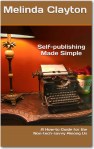
claytonpublishSince the book will be competing with professionally edited and designed books, asking your kids to create the cover artwork with crayons or your spouse to look through the manuscript for typos isn’t going to cut it. Part of your investment in your book may well include hiring a professional cover designer and editor or finding some very talented beginners or students who will provide great work at a lower cost. Maybe you can barter with other professionals: you write their news releases and they copy edit your books.

There’s a learning curve with professional-level self-publishing. I’m wary of many of the online services that offer help. Perhaps  I’m cynical and think that after I pay $500 for somebody to arrange a blogging tour, will I break even when/if the book starts to sell. Novelist Melinda Clayton has done some of our self-publishing homework for us in her recently published Self-publishing Made Simple: A How-to Guide for the Non-tech-savvy Among Us. Here are a few more thoughts:

  • Developing an online persona in blogs, social media sites, and our own websites can easily trap us into an overall approach that appears to be ALL ABOUT ME. While we’re writing the book, we’re focused on the story and how can best tell it. Sure, some people are curious about such things. But, too much of that, and their eyes glaze over.
  • Yes, an author’s fame helps sell books. Some people will buy everything their favorite author writes as long as it’s good. Prospective new readers will, however, read the reviews, the interviews and the feature stories about an author’s new book. When presented with thousands of prospective books a month, most of us are more likely to reject a book than to try it out. Why? We don’t have time to study each book in depth, so we weed them out quickly. . .wrong price, wrong genre, uninteresting story, unattractive cover. In short, there’s nothing in it for us. Take your best shot fast with something interesting that stops that rejection train.
  • This leads to the true focus of our pitch. It’s not ALL ABOUT ME, it’s ALL ABOUT YOU. We need to show prospective readers the book’s features and benefits. Show them in everything you say and do, including the book’s online description and back-cover copy, what’s in it for them.
  • Avoid blog interviews that rely on generic questions unless there’s a wide variety of them and you get to choose which ones to answer. More often than not, generic questions such as When did you first know you wanted to be a writer and Are you a plotter or a pantser make you sound like an amateur. Plus, they focus on you, your issues, and your writer’s journey rather than what’s in the book for the reader to enjoy.
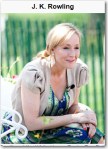
  • Readers were attracted to Rowling's books before they were attracted to her story about writing them. he story in your novel comes before the story of your life.
    Readers were attracted to Rowling’s books before they were attracted to her story about writing them. The story in your novel comes before the story of your life.

    Sorry about this, but saying you’re a work-at-home mom, an avid reader, or a dad who makes up bedtime stories for his kids isn’t going to sell your book. First, there’s nothing unique about any of that. Those are not the prerequisites for becoming a writer no matter how important they are in your own life. Second, focusing on your personal life is still ALL ABOUT ME. Focus on hobbies, avocations, and career information that not only shows the reader you’re deeply involved and knowledgeable about the people, places and themes in your books, but that you share a common ground.

  • Success Breeds Interest. That’s a long-time proverb from management and supervision courses. I think it’s true of writers and how they relate to the public. Even if we’re not selling loads of books, being negative online about one’s lot in life doesn’t make us very attractive. Obviously, lack-of-success probably breeds apathy. So, a positive approach is the basis of a successful platform. Many writers disagree with me, but I think it’s bad form to ask for reviews and for readers to tell their friends about your book. That sounds like lack of success to me for, if people like your book, they’ll spread the word without being asked. If you’re having trouble with your publisher, your editor, your cover designer, with Amazon, or with anyone else, save comments about that to writers’ forums and private messages. There’s a double standard here, I know: if J.K. Rowling sues somebody, it’s news–if indie writers complain, it’s unattractive and unsuccessful sour grapes. Don’t bash your publisher online.
  • You are not a charity case even if you’re broke. When I worked with nonprofit organizations, a lot of executive directors thought that if they simply announced an event, the public would show up in record numbers. Why? Because the charity or museum is a good cause. Well, there are hundreds of good causes out there, so using that as one’s rationale isn’t going to draw people to weekend events. Nonprofits have to sell the event. What wonders will the public experience by attending it? What’s in it for them? We show our lack of professionalism and continue the ALL ABOUT ME mindset if we present ourselves as people who need to be rescued rather than professional writers to be read if we focus our efforts on asking people to help us succeed. This kind of sentimentalism isn’t going to sell books. Count on it. If you say you’re broke, it suggests that you’re not any good.

If you’re a writer, best of luck finding the combination of publicity techniques and approaches that work for you. If you’re a reader, remember that those of us who focus on storytelling don’t always know how to tell you about our stories.

Malcolm

Malcolm R. Campbell is the author of magical realism novels, including “Lena.”

Irony – The Sharp, Double-Edged Sword

conciseOxford“Irony: A subtly humorous perception of inconsistency, in which an apparently straightforward statement or event is undermined by its context so as to give it a very different significance. “In various forms, irony appears in many kinds of literature from the tragedy of Sophocles to the novels of Jane Austen and Henry James, but is especially important in satire, as in Voltaire and Swift.”  – Oxford Dictionary of Literary Terms

If the protagonist in a novel says, “He is a bad doctor,” and lets it go at that, he has made an assertion. If the protagonist is a doctor, we might believe his statement. However, in fiction–as well as in nonfiction–assertions are much stronger when backed up by facts. Backing up assertions is part of showing rather than telling.

Now, consider this line from George Orwell’s Burmese Days: “In the evening, the wounded boy was taken to a Burmese doctor, who, by applying some poisonous concoction of crushed leaves to his left eye, succeeded in blinding him.”

Thiss is verbal irony. The audience knows the doctor did not intend to blind his patient, yet he did so because he was inept. There are two levels of meaning in irony: the meaning on the surface and the unexpected, actual meaning. The use of the word “succeeded” and the term “concoction” here rather than “medicine” are strong indicators that the author’s intention here is ironic.

Sentimentality is an Assertive Showing

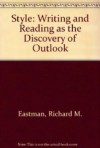
StyleEastman“The sentimentalist over-urges or mis-urges his readers to feel emotion,” says Richard M. Eastman in Style: Writing as the Discovery of Outlook. “Many good writers simply allow the reader without urging, to infer his own emotion from detail well chosen and carefully drawn.

“The ironist actually counter-urges in such a way as to draw his reader forward into active collaboration toward the desired response.” (Eastman changed the book’s title in the edition shown here.)

Irony can be understated or overstated. Either way, it shows–with the reader’s interpretative help–rather than tells. However, in most novels other than dark satires, it’s best used with some restraint. Too much irony is like too much hot sauce on the taco.

(More often than not, when people say–in conversation–that something is ironic, it isn’t. It’s usually simply odd or strange. The Guardian had a nice article about this some years ago.)

In using irony, as Eastman says, a writer can rather bluntly signal irony by overtly saying what is obviously false: “This rain is Mother Nature’s way of drying the field for the baseball game.” However, this is rather weak because its surface meaning isn’t really believable. As you see here, we have a blurry lines between sarcasm an irony.

When you lead the reader realistically toward a conclusion that suddenly collapses at the end of the passage, the impact–as in the Orwell quote–can be very great. Double meanings can also point symbolically to the novel’s overarching themes in many subtle ways. Irony is one of the many tools on the writer’s drawing board for luring the reader into a memorable story.

Malcolm

My short story “The Lady of the Blue Hour” is free on Kindle for five days. Read about the blues, the band trip, the empty house, and a mysterious lady looking for the dead.

Book Note: ‘More Montana Moments,’ by Ellen Baumler

moremontanamomentsHistorian Ellen Baumler (“Montana Moments: History on the Go,” April 2012) returned six months later with another book of Montana vignettes originating from her “History on the Go” radio program in Helena, Montana. Published by Montana Historical Society in October 2012), the 220-page book is available on Kindle and in paperback is aptly titled More Montana Moments.

The cover art, “Laugh Kills Lonesome,” comes from Charlie Russell. The text is supplemented with illustrations.

From the Publisher

Forget dreary dates and boring facts. More Montana Moments serves up a fresh batch of the most funny, bizarre, and interesting stories from Montana’s history. Meet the colorful cast of the famous and not-so-famous desperadoes, vigilantes, madams, and darned good men and women (and a few critters) who made the state’s history. Best of all, each vignette takes about two minutes to read. So have fun exploring Montana—and enjoy a little history as you go.

From the Montana Historical Society Bookstore

When Evelyn Cameron first rode into Miles City in the dark blue divided riding skirt she had ordered from California, oh, the scandal it caused. Ellen Baumler tells that story and more in More Montana Moments, a collection of more of the most funny, bizarre, and interesting stories from Montana’s history.

From the Book

“Artist Charles Marion Russell carefully chose the subjects of his art based on personal experience. He, more than any other western artist, painted what he knew with great longing and nostalgia for the cowboy way of life he lived and loved so well. In 1925, a year before his death, Russell painted “Laugh Kills Lonesome,” a tribute to this vanishing cowboy lifestyle…He painted himself into the picture as an old cowpoke stoppping by the warm and friendly circle fo a cup of coffee by an a hearty laugh at the end of a long day in the saddle.”

You can keep up with Ellen Baumler at her Montana Moments site.

Malcolm

Set in Montana, Malcolm R. Campbell’s contemporary fantasies include “The Seeker.”

‘The Goldfinch’ – total immersion

After reading the reviews of Donna Tartt’s The Goldfinch at The Los Angeles Review of Books and The New York Times, I dare not try to compete with the experts by reviewing the book here.

GoldfinchI liked the book a lot, especially the puzzled-together plot, the symbolism of the painting, and the carefully written prose. I’ll confess that I almost stopped reading the book when I reached the one-hundred page point because I was so thoroughly exasperated with protagonist Theo Decker’s attitude and behavior.

Since I had several review books waiting for reviews, I stopped reading The Goldfinch for several weeks. When I returned to it, I had to remind myself that Decker’s behavior was realistic for a thirteen year old who had just lost his mother in a terrorist explosion. He was suffering a form of post traumatic stress syndrome, and the genius of Tartt is that her Proust-like prose immerses the reader in it.

Tartt has returned to the morbid themes she wrote about so well in her earlier novels. She does it even better this time, though total immersion in such themes isn’t always easy for a reader, especially those of us who have a worldview that contrasts so greatly with Decker’s that we really don’t enjoy being inside his head.

The language is worth the trip. Some reader reviewers think the novel is too long and that Decker is an unsympathetic and reactive character. In an era where books are getting shorter and attention spans are getting shorter, I understand these comments. Early on in the book, I thought it was over-written because I was drowning in Decker’s thoughts. I’ll stipulate that it’s difficult to find sympathy, much less, empathy for the protagonist. But feeling that isn’t a requirement in a novel.

With Tartt’s typical “verbose” approach, Decker, and especially his friend, the amoral Boris, are more real than real. Yet, their reality doesn’t intersect smoothly with the reality most of us experience. This is a slipstream approach and she handles it well. The painting anchors the book in amazing ways again and again and again.

For better or worse, I always felt like I was there while reading about Theo Decker. The prose is exceptional even though you may end up knowing more about Theo Decker than you can bear to know.

Malcolm

Kindle Version
Kindle Version

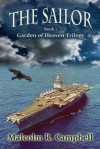
Malcolm R. Campbell is the author of five contemporary fantasy novels, including “The Sailor.”

Visit me on Google+

Follow my blog with Bloglovin

The power in stories that are told to us

“Modernity and electronic media in particular is killing the storyteller. ‘When electricity came,’ as they say in Ireland, ‘the fairies flew out the window.’” – Richard Hamilton in “Tell me a story,” Aeon Magazine

Wikipedia graphic
Wikipedia graphic

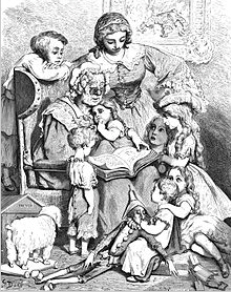
While reading Richard Hamilton’s article about storytelling, I began thinking about how often my parents read me stories, beginning with the old fairy tales. Hamilton quotes folklorist Joseph Bruchac about the spellbinding power of the story when a person hears it being told: “Unlike the insect frozen in amber, a told story is alive… The story breathes with the teller’s breath.”

When my parents and other great storytellers told stories, the stories came alive because of voice tone, volume, pacing, facial expressions, gestures, and the slight variations in the tale that were being dynamically tailored to the moment and to my reactions. Ghost stories told on camping trips could become really scary when the storyteller merged them in with the landscape we saw in the flickering light of the campfire.

The old myths we read, captured in the figurative amber of the printed page or the Kindle screen were once communicated from storyteller to storyteller. They changed in the telling as did many of the legends we have inherited here in the United States from Indian Nations. Time, audience and circumstances impacted the tale. They lived in the moment with those hearing them.

As authors, we know we cannot exactly duplicate (on Kindle or paperback) the aliveness of a story the way a storyteller can. We hope our words, combined with the readers’ imaginations, will make up for the lack of our oral tradition in an Internet world. I am pleased, of course, that two of my books (“Jock Stewart and the Missing Sea of Fire” and “Emily’s Stories) are available as audiobooks. When the narrators do their work well, the audio book can take one back to their childhood days and duplicate a bit of the pleasure of hearing a story told.

When I’m doing research, I dislike podcasts and videos with a passion. Why? Because my eyes can scan a printed page or a PC screen for the information I need much faster than an audio or video discussion of the same subject will provide it.  Whether it’s the Internet or video game or cell phone texts or something else, we’re all (it seems) developing shorter and shorter attention spans.

Yet audio books are very popular these days even though they take more time to listen to than it would take for a reader to go through the Kindle or paperback version. I suspect a lot of people are multitasking. They’re driving to work while listening to the book. That’s good and bad, I guess. They enjoy more books: that’s good. Their attention isn’t focused on the story: that’s bad.

As an author, I hope that the audio book narrator’s power of delivering a good story will partly compensate for the fact that the listener is watching traffic and maybe even exchanging small talk with others in the car. We don’t kid ourselves when we write stories to be read and/or stories to be told: we know most of our readers and listeners consider stories as a luxury rather than a necessity. We’re happy that people enjoy the stories even though the distractions around them are taking away some of those stories’ power.

What about you? Do you listen to audio books for the experience of hearing a story read to you by a powerful narrator or do you listen to them because that’s the only way you can squeeze novels into a busy schedule? And, when the story is one that resonates with you, do you try to find time to listen to it in a quiet room with no other distractions, almost the way many of us heard stories when we were young?

Malcolm

Available on Kindle and as an audio book

Malcolm R. Campbell’s three-story set, narrated by actress Kelley Hazen, is available directly from Audible or from the book’s Audible listing on Amazon.

Follow me on Facebook and Twitter

2013 without sex, drugs or rock and roll

britneyI’m proud of all of you who made up the 12,000 views this blog had during the past year. You came here to read author interviews and reviews and fiction and fantasy rather than searching for sex, drugs or rock and roll.

I’m proud of myself, too, for I said nothing about JLo, JLaw or Miley on her wrecking ball, and didn’t display any gratuitous pictures of Britney Spears, much less any of the year’s babes rocking jaw-dropping dresses on various runways, beaches, street corners, parking lots and other places where “regular people” wearing such clothes would be arrested.

I ignored Justin Bieber, Cory Monteith, anyone named Kardashian, the “Duck Dynasty” drama, said nothing good about “Breaking Bad,” and said nothing bad about the NSA taking over Santa’s job of compiling naughty and nice lists. I kept quiet about Michael Douglas and Catherine Zeta-Jones being spotted together for first time since the split.

Instead, the busiest day on Malcolm’s Round Table was August 7th with most of you reading “Briefly Noted: ‘The White House Boys’ and ‘The Boys in the Dark.'”

orangeblackSuffice it to say, Piper Kerman didn’t stop by to tell us why orange is the New black. Would that have been a hot post? Probably. Instead, my most-read posts here (in addition to the White House Boys) were:

As an author of contemporary fantasy, I considered writing a cautionary tale about a young man who discovers that “the whole Hollywood thing” is more of an illusion than we thought. Joe Doaks, my protagonist, would discover that 99% of the hunks and babes we see on the Yahoo “news page” are really holographs projected by a Wizard Of Oz kind of guy who hides behind a curtain.

Then it occurred to me: but hey, that’s not a fantasy.

I’m hoping 2014 will also be a fun year on this blog without sex, drugs or rock and roll. Thank you for all your visits and comments in 2013. Oh, and in case you were wondering, Britney Spears Says She Loves Jennifer Lopez And Wants To Act.

Malcolm

Malcolm R. Campbell is thinking about being the author of books with titles like “Pretty in Orange,” “Researchers Discover the 51st Shade of Grey,” and “Wrecking Ball Breaks Up Pot Party.”

Borne back ceaselessly into the past

newyear2013Yesterday tugs at me
like undertow.

Beach bums say
(from birds’ first cries at break of day
to sweet whispers of sunsets and red sails)
that I better watch out
or I’ll be fetched far from the happy shore
along with childhoods, daisies, favorite books,
meaningful looks, old fishermen’s shoes and folktales,
and hauled downward below the continental shelf
where everything that ever happened
is stored for safekeeping
in Davy Jones’ locker.

Titanic is there,
with  Lusitania, Edmund Fitzgerald, Empress of Ireland,
assorted sea monsters, sirens and songs, silenced now,
except in dream remnants flying like prayer flags
while their dreamers ceaselessly seek their future.
Yesterday caresses my feet like undertow
and the lifeguards say
I better watch out
or I’ll be ripped from an uncertain littoral
strewn with shells where long-gone creatures once lived
downward below the surface of known thought
where everything that ever happened
is locked away with ghost stories.

Yesterday whispers to me
like undertow
and the philosophers say
that I better watch out
or I’ll be come and gone with fleeting gestalts,
sunny afternoon dust motes, twilight inklings,
eye-blink gods and lives without faults
left out of history’s footnotes
that are kissed and missed forever
by all that has been borne
into the sleep of the deep.

Ceaselessly,
beach bums, life guards and philosophers
warn me with each red sky of morning
and every menacing grey twilight of gales
that yesterday is made of mirrors and smoke,
merely a mirage of dreams and lights across the bay.
Nonetheless, tomorrow or sooner than tomorrow,
I will ignore those fading cries of reason
because I’m watching less out than in,
aging upon the new season like spirits in oak.

Tomorrow, then, when yesterday calls me
with the words of wondrous once-upon-a-times,
turtle doves and lonely lost loves,
she will promise me many worlds, quantum leaps,
vision quests, and cave shadows in perfect pantomimes,
and like all I lack,
I’ll be borne back.

copyright (c) 2013 by Malcolm R. Campbell

Merry Chrismas, Yuletide Greetings, Happy Hanukkah, Joyous Kwanzaa!

seasonsgreetingsIn the mystery school tradition, when members gather for solar festivals and fellowship, they often use the phrase “the god of your heart” when referring to the Creator or the Supreme Being because the term embraces all religions and practices for those variously might be celebrating Christmas, Yule, Hanukkah, Kwanzaa and other holy days and year-end reflections.

In that spirit, seasons greetings to you within the spirit of the god of your heart.

At this time of year, I enjoy reading how people from different faiths and traditions celebrate or commemorate the days between the Winter Solstice and Twelfth Night.  For some of us, this is the Festival of Rebirth often symbolized by seeds in the ground waiting for spring while memories of sunshine and growing things are symbolized by candles, Yule logs, and evergreens.

Best wishes for the season and thank you for stopping by Malcolm’s Round Table throughout the year.

Malcolm

Book Review: ‘New Dimensions of Being’ by Nora Caron

NDB cover smallAuthor Nora Caron (Journey to the Heart) returns with the gentle and deeply spiritual sequel New Dimensions of Being about a young Canadian woman named Lucina who has moved to Oaxaca for a much-needed change of scene. Fluent in Spanish and acclimated to the warm climate and culture of Southwestern Mexico, the former computer professional works as a waitress and shares her apartment with her boyfriend Teleo.

While she is happy with her decision to move to Oaxaca, Lucina’s sleep and serenity are being disrupted by frightening nightmares. Then she discovers she is pregnant. Her uncertainty about motherhood at this time in her life puts a strain on her relationship with Teleo and widens the scope of her spiritual quest.

New Dimensions of Being is a story about mentors. Teleo is an herbal healer; John is a shaman, Maria–a former actress–is wise in the ways of predatory men (vampires, as she calls them); Teleo’s mother is a midwife with strong connections to spirit as indigenous cultures view humankind’s relationship with Earth, gods and elemental forces; and Weeping Willow brings Lucina the Hopi worldview and its prospective  connection to her nightmares.

Each of these mentors has a role to play in Lucina’s quest, imparting wisdom and advice out of their experience. What does she want to do about her pregnancy, her relationship with Teleo, and her role as a woman at a time of spiritual shifts?

Written in a natural, easy-to-read style, New Dimensions of Being brings us a believable protagonist who is learning how, exactly, to define herself. At times, she is more reactive than active, when some of the mentors’ stories become lengthy.

However, her reactions ring true and her progress along her spiritual path will appeal greatly to women who are reclaiming their feminine energy and power in a patriarchal world, and to others who are focused on a more natural and cooperative relationship with Mother Earth.

GoodReads and the year in books

If you’re a regular GoodReads visitor, you probably got an e-mail in the last could of days called See Your Year in Books. Mine began: “Congratulations! You read 21 books this year!”

This told me one thing: I haven’t been very diligent entering the names of the books I’m reading at GoodReads, for that is a fraction of the real number. Nonetheless, it was fun to look back:

2013books

We tend to sum up our yearly joys and sorrows, don’t we, from major news events and all those “best books of the year” lists to our own career and family milestones. I look at all these book covers and realize that authors pulled my imagination in many different ways in 2013. I also see that I forgot to buy some of the books I couldn’t wait to read when I first heard about them.

If you’re an avid reader, perhaps you’re also surprised at some of the books you read and some of the books you forgot about. Perhaps I need to get more organized. Hmm, sounds like a New Year’s resolution, doesn’t it?

Malcolm

FREE (for one more day)

Three folk tales set in the swamps and flatwoods of the Florida Panhandle at the dawn of time. Why doesn’t the Florida Panther roar? Why does the Snake Bird need to dry its wings. And what unlikely food is the black bear’s favorite?