Glacier Park, Inc. Terminates 63-year Employee

Tippet worked in an office in the lower level of Glacier Park Lodge at East Glacier, MT.

Ian B. Tippet, an employee with Glacier Park, Inc. (GPI)–the Viad subsidiary that manages hotels at Glacier Park–was terminated by the company February 24th in spite of an understanding that would have allowed the former Many Glacier Hotel manager and GPI personnel director to work as a consultant with the company as long as he’s ready, willing and able.

After Tippet posted an update on his Facebook profile two days ago that his promised position for the upcoming summer season at Glacier Park Lodge would not be continued, hundreds of current and former GPI employees as well as National Park Service personnel began offering their support on his page, via phone and e-mail. At the same time, stunned comments of concern and outrage are being posted on GPI’s Facebook page in the “recent posts by others” listing.

KAJ18 in Kalispell, Montana covered the story in Six-decade Glacier NP employee let go, noting that the last time Tippet didn’t work for the company, Truman was the President of the United States.

“I’m very disappointed,” he told MTN in a lengthy phone conversation from Phoenix Tuesday. “As of today I don’t have a job at Glacier. All I have is the ability to go up to my cottage and twiddle my thumbs. What the hell am I going to do?”

When I spoke to him outside his office at Glacier Park Lodge in September, he was looking forward to coming back this coming summer. I hope GPI will reconsider its decision. If you are a long-time friend of Mr. Tippet or a friend and fan of the park and wish to express your concern about this matter, contact Dan Hansen GPI Marketing and Public Relations Manager in Whitefish, MT at 406-863-4703 or via e-mail at hansen@glacierparkinc.com

Or, you can protest directly to GPI’s top management at Viad Corporation:

Mr. J. K. Fassler, President
Glacier Park, Inc.
Viad Coorporation
1850 North Central Avenue
Phoenix, AZ 86004

Update March 1, 2014

Ian B. Tippet updated his Facebook profile a day ago, saying that while he will not be working or volunteering at Glacier Park Lodge this coming summer, he had a personal meeting with the GPI chairman. GPI will continue to provide a cottage as well as meals in the employee dining room, while Mr. Tippet works on his book about life and work in Glacier Park over the years. I’m pleased that GPI had the courtesy to meet with him and attempt to make things right after mishandling the situation at the outset.

Malcolm

Malcolm R. Campbell was hired by Tippet as a season employee at the park’s Many Glacier Hotel for two seasons many years ago.

Getting away from it all (unplugging from the grid)

DCFC0028.JPGWriters often bemoan that fact that their days are fractured like a puzzle just out of the box because they need (want, are addicted) to checking online news, Facebook, Twitter, LinkedIn, Pinterest, Goodle+ and a variety of apps, newsletters and news sites multiple times a day.

I’m not sure writers are unique. Some people are so addicted to the grid that they can’t sit and have a conversation on what (we hoped would be) a quiet evening over dinner without constantly checking e-mail and/or answering every incoming cell phone call. It (this “need” to stay plugged into the grid as though we’re part of the BORG on Star Trek) is part of today’s world.

The need isn’t new. Twenty years ago we were asking why people went camping or hiking and had to take their portable TV sets and boomboxes with them (“serenading”) everyone else in the campground. This past summer while hiking in Glacier National Park, I saw more than half the other hikers had their earphones in for music rather than giving themselves an hour or so for experiencing the natural sounds from wind to water falls to birds. No doubt, they would also miss the warning growl of a grizzly hear on the trail as well.

As a writer, I feel the need to keep up (in case Hollywood calls with a movie deal, I guess) and if I’m not careful, I feel over-informed and maxed out by the day’s constant flow of largely extraneous input.

Perhaps we need to devise our own 12-step programs for spending less time plugged into everything else. An hour here and an hour there might get us used to being comfortable with bird songs, silence and the usually drowned out voice of our inner selves. An Internet and cell phone diet, perhaps, for enjoying the writing we’re doing, the books left to be read, or the sound of the wind through the pines.

In time, perhaps we’ll be comfortable with ourselves again.

Malcolm

Malcolm R. Campbell is the author of novels and short stories that take both protagonists and readers away from it all, including “Emily’s Stories” and “The Seeker.”

Looking for Celia Wird and a Ticket to the Bestseller List

cursedbydestinity“For those of you craving romance with an edge, some thrills or a paranormal slant, here is a trio of steamy, suspenseful books. If the edge-of-your seat intrigue doesn’t send your pulse skyrocketing, the gorgeous and courageous heroes certainly will.” – Lois Dyer in “Shock and Awww”

According to Lois Dyer’s BookPage column, my pulse will skyrocket (probably against my doctor’s orders) if I read Cynthia Eden’s Burn for Me, Cecy Robson’s Cursed by Destiny or Sharon Sala’s Going Twice. I didn’t like the concept of burning for anybody or the cover on Going Twice, so that left me with the cover with the full moon, the wolf and “tigress shape-shifter Celia Wird” (as the publisher describes her).

Checking Amazon, I saw that Cursed by Destiny has 58 reader reviews, an average review rating of 4.6 and is  #106,547 in books. Okay, that number isn’t exactly shouting “bestseller,” but the book’s only been out since January 7.

Here are my thoughts:

  • I can continue writing about wholesome people but use the same sexy temptress shape-shifter tigress lady on the cover. This is potentially dishonest and sooner or later word would get out that Wird wasn’t in the book.
  • I could go to a biker bar and find somebody who looks like Wird, take her picture and use that on the with cover with a little from Photoshop for the wolves in the background. This potentially would start a fight in the bar and since I’m not quite as strong as the Terminator in the movie who beat up everyone in the biker bar, I’d end up with hospital bills that far exceed the attitudes of my insurance company.
  • I could write about a shape-shifter who looks like Celia Wird but change her name to something like Lucy Wolfbane or Marge Gravestone. Unfortunately, writers are supposed to write what they know and I don’t know any shape-shifters, much less anyone who looks like Celia Wird and, while I haven’t checked, I don’t think my wife wants me looking for Celia Wird even for “research purposes.”
  • I could wait until the next Friday the thirteenth and then take a candle and some Tarot cards into a cemetery want call upon the forces of darkness to send me a tigress to interview for the book. The last time I sat in a cemetery with a candle, the cops showed up and claimed that they were had not been sent by dark forces.
  • Convinced that Celia Wird using the name of Marge Gravestone was my ticket to the bestseller list, I took a copy of Cursed by Destiny to the local Starbucks and asked if they’d seen her around. They said “not lately” and suggested I check the tombstone department at Walmart because “people dressed like that just love Walmart.”
  • What’s a writer to do? I checked Amazon and found 1000000000000 books that tell writers what to do. They all promise that if we do those things, we’ll end up on the bestseller list. Since none of those books are on the bestseller list, I figured the authors had all decided to start looking for Celia Wird.

In a BookPage interview, Anna Quindlen (who looks a lot more wholesome than Celia Wird) said that, “I think every writer feels she is one book from irrelevancy.” I wanted to send her an e-mail and ask for the rest of the story because I know a lot of writers who are just starting out and, without having to work at it, already believe they’re irrelevant. Odds are, most of them aren’t trying to battle their way out of obscurity by selling out to Celia Wird.

Some of those writers claim they don’t care about the money because “the important thing is getting my words out there.” My response (which doesn’t go over well) is that money is the universe’s way of telling you whether or not anyone is reading those words. Other writers say they’re publishing on Kindle and CreateSpace for the “joy of it.” I’m not sure what that means, but as Quindlen confesses, “It’s no substitute for being able to pay the gas bill.”

So, I continue to look for Celia Wird even though it’s rather like the Dr. Richard Kimball’s search for the one-armed man.

Malcolm

Malcolm R. Campbell–if you haven’t guessed it already from reading this post–is the author of fantasy fiction, including “The Seeker.”

Throwback Thursday: Kim’s Guide to Florida

1950 edition
1950 edition

In 1934, Ethel Byrum Kimball of Anna Maria, Florida wrote the first edition of a soon-to-be-popular publication called Kim’s Guide to Florida. According to a story in The Miami News called Homemaker Writes New Florida Book Guide to State, the guide included “high points of interest, centering about places throughout the state with just enough of comment to stir the imagination or clarify vague knowledge.”

When my family moved from Oregon to Florida in 1950, my father bought a copy of the ninth edition of the guide to help all of us acclimate to the state and plan future vacations that took us from Tallahassee to Pensacola and from Jacksonville to Key West. Based on the guide, we saw attractions that now seem rough and tumble and unsophisticated in their style and presentation compared to the high-style condos and theme parks that would later take over much of the state’s formerly pristine property.

In the introduction to the ninth edition, Kimball wrote, “Ponce de Leon led the way to Florida. During the more than four hundred years since that memorable occasion, Progress has marched valiantly over this ‘Land of Flowers.’ He has left much of the old and added the new, complementing the magnanimous gifts of Nature.”

While I often argue that “progress” went too far in Florida, concealing or destroying many of the ‘gifts of Nature,’ the spirit of the Sunshine State in the 1950s was a heady combination of cattle, orange groves, backwoods and coastal local businesses and tourist attractions. In an article called “The Nation’s Solarium,” the guide said the state was, among other things, “a place for rejuvenating rest to the weary and ill, a place where children grow strong and a nation recreates.”

What to See

Florida was salt war fishing, fresh water fishing, state parks and the Everglades National Park, flowers and plants, forest lands and the “romance of citrus.” Florida was marine shells and subtropical fruists and tourist attractions grouped by city. There were multiple black and white photographs of major points of interest. Ads invited tourists to visit Monkey Jungle, Theater of the Sea, Ravine Gardens, Cypress Gardens, Ste. Anne Shrine, Rainbow Springs and the “Spring of the Mermaids” called Weekiwachee.

We saw the state from Wakulla Springs to Silver Springs and from Castillo de San Marcos to Bok Tower guided by Kim’s Guide to Florida. Many of the older attractions have disappeared over the years, but looking through my 1950s copy of the guide long after the fact, I think that each of our vacations in those days could easily have been filed under the words “it was quite a trip.”

–Malcolm


Review: ‘What Casts a Shadow?’ by Seth Mullins

“Events are not things that happen to you. They are materialized experiences formed by you, according to your expectations and beliefs.” – Seth via Jane Roberts

whatcastsNOTE:  Over the years, Seth Mullins and I have discussed in various blogs and e-mails our affinity for the metaphysical information from the entity known as Seth who was channeled by Jane Roberts between 1963 and 1984 and subsequently chronicled in a series of books beginning with The Seth Material in 1970 (republished in 2011). Seth Mullins has previously explored spirituality, dreams and reality in Song of an Untamed Land and Song of the Twice Born while I have explored similar themes in my novels.

I hadn’t heard from him in some time when I received an e-mail asking my current address so he could send me a copy of his new novel What Casts a Shadow? (January, 2014).  He said that, among other things, the novel was an exploration of Seth’s view of reality in a contemporary story. Yes, there are multiple Seths here, but the one in Italics refers to the Seth as channeled by Jane Roberts and the Seth without the Italics refers to the author of this inventive novel.

What Casts a Shadow?

While the Seth material channeled by Jane Roberts was immensely popular during the 1970s and 1980s and continues to have a wide following today, my experience is that rather than feeling empowered by the phrase “you create your own reality,” a fair number of people fear and/or angrily reject the idea. For one thing, the idea doesn’t appear to make logical sense. Otherwise, people say either “if I create my own reality, why is my life filled with so many disappointments?” or “my thoughts must be totally screwed up to have created what I’m experiencing.” People had a similar reaction to ideas about “the law of attraction” as presented in The Secret and other books.

Seth Mullins’ protagonist Brandon Chane in What Casts a Shadow? has similar reactions when a psychologist suggests that the “world out there” isn’t out there. After Brandon’s mother died, he was stuck living with a drunken and abusive father who believes neither Brandon nor his new heavy metal rock band will ever amount to anything.

After his father lashes out at him prior to a performance, Brandon thinks: “My world is painted black; my entire inner landscape is barren. All the roads in my head lead to horrific ends. At the bleakest margins of this particular attack, I didn’t even care about the gig. I wanted nothing but oblivion.”

Mullins’ three-dimensional character is in many ways symbolic of creative people who want to express their unique visions of life through art, music, writing and other avenues but simultaneously believe that the world (or fate) is against them. Brandon and his best friend Tommy want to translate their feelings into their music; their music, they hope, will be their salvation.

Brandon reacts to the slings and arrows in his life with violence. Physical fights seem justified and bring release. Writing songs and performing them in front of an audience also bring release, but at the beginning of What Casts a Shadow? the songs aren’t as potent as knocking somebody down.

After a confrontation that involves the police and an interview with a consulting psychologist at the police station, Brandon ends up on Saul’s doorstep. Saul is a licensed therapist who believes individuals create their own reality.

Saul is a “new age” guru with a more or less conventional counseling approach. That is, he doesn’t sell guided-meditation CDs, lead drumming groups in the woods or ask his patients to recite affirmations. Instead, he asks Brandon to see his beliefs as beliefs rather than as facts and to compare his experiences with the states of mind leading up to them.

Mullins has created a protagonist that readers can easily identify with who has dreams that are running afoul of a seemingly apathetic world with bad people in it. Other than Saul’s active listening, Brandon will find clues that he might not be not doomed and worthless: Tommy understands him, his younger sister trusts him, the girl he meets doesn’t run away from him, and the music is evolving. Yet, his violence and anger feel so natural and justified!

Transformation and “success” in Brandon’s world will not come from a magic spell, a miracle drug or the intervention of a benevolent spirit guide. He will have to slog it out like we all do, day by day, doubt doubt, and reaction by reaction. What Casts a Shadow? will pull both open minded and skeptical readers into its story because that story mirrors so much of today’s world.

Malcolm

If it’s Sunday, this must be spaghetti

If my pasta ever looked like this, it was at the Mueller's factory.
If my pasta ever looked like this, it was at the Mueller’s factory.

For some of you, it’s a Superbowl night and you’ll be teary eyed after watching the puppy and the Clydesdales in the Budweiser commercial, assuming you haven’t already seen it on Yahoo, Facebook or YouTube, and then–like me–you can forget about the game and find something else to watch while feasting on spaghetti.

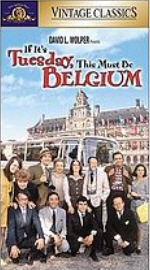
If you’re old enough to see the hidden reference in the title of this blog, you’re probably too old to be surfing the net on a computer. By the way, very few people use the <g> symbol any more to show they’re grinning, so if you leave a comment with a <g> or a <vbg>, then you probably saw the 1969 film “It it’s Tuesday, This Must Be Belgium.” It starred Suzanne Pleshette who was hot in those days.

Here’s the thing about spaghetti.

When the sauce is home made even when the pasta isn’t, it (the whole shebang) tastes better the second day around like beef stew, pot roast and possibly haggis. Serving spaghetti on a low key Sunday when there’s time for the sauce to simmer a couple of hours in the Dutch oven while I play Angry Birds and Words with Friends, guarantees that I’ll have a passable meal tonight and a superb meal on the typical high-stress Monday when Hollywood, some insurance agent, and reporters are all trying to talk to me at the same time.

tuesdayIn real life–as opposed to my author’s fantasy life where I remember Suzanne saying, “Malcolm, at least we had Belgium”–I’ll be buying groceries. If I lose track of what day it is, all I have to do is notice the Hunt’s Tomato Sauce on the aisle to remind me, If it’s a Grocery Store, This Must be Monday. Like traveling tour groups who go to Belgium on Tuesdays, I tend to fall into a pattern of doing the same thing on this week’s days as I did on last week’s days.

A Writer’s Structure

That way, I don’t have to think about what I’m going and can get all the chores done on auto-pilot while I’m actually thinking about how the main character in my next novel is getting off the mountain without falling. (My wife always knows when I’m thinking about the novel-in-progress because I’m rather absent from the reality she perceives.)

While contemplating a sex scene in the novel I was working on, I was once interrupted on a Monday by somebody wearing a red apron. He asked me if I was lost.

“Yes,” said. “I can’t find the sluts.”
“They’re on aisle three next to the tomatoes,” he said, without missing a beat.

Suzanne
Suzanne

My sense of order tends to create disorder around me, so I try to control it by making spaghetti on Sunday, grocery shopping on Monday, reading review books on Tuesday (though seldom in Belgium), going to the pharmacy on Wednesday…well, you get the drift.

If this were an upscale scent-empowered blog, you’d be able smell the vine-ripened tomatoes transforming themselves into spaghetti sauce with judicious amounts of rosemary, oregano, and a random bunch of secret herbs and spices.

Magic

You’d also know–from the oregano alone–that as a contemporary fantasy writer who dabbles in magic (for artistic purposes), I tend to be superstitious: Hell’s bells, it’s Sunday and I accidentally made haggis. The week is doomed almost as surely as going to Belgium on a Thursday.

Well, haggis would doom the week no matter what day one made it. But, for purposes of magic and this blog, haggis is a never on Sunday kind of event.

Some of you who are imagining the tomato aroma are probably sitting there with 55-gallon drums of salsa and bathtubs full of chips thinking, “Hell, if it’s Super Bowl Night, it Must Be Sunday.” Okay, that works for today, but it’s not the kind of thinking that’s going to get you through next week, is it? It would be safer to say, “If The Good Wife is On, it Must be Sunday.” At least, you’d be right more than once a year.

I need more order than pacing my life with Super Bowl Sundays. Toilet bowl Saturday’s come around a lot more often and give a writer the kind of structure he needs to put up with “real life” while building fantasy words in for his books. If you’re not a writer, don’t try anything in this post at home.

Malcolm

SOF2014lowresMalcolm R. Campbell is the author of the comedy/mystery “Jock Stewart and the Missing Sea of Fire,” some of which was written in a Kroger store while he was buying tomato sauce on aisle three.

When it comes to books, why aren’t we buying locally?

“Several studies have shown that when you buy from an independent, locally owned business, rather than a nationally owned businesses, significantly more of your money is used to make purchases from other local businesses, service providers and farms — continuing to strengthen the economic base of the community.” – Sustainable Connections

An online friend of mine is being forced to close her bookstore. One of the unfortunate aspects of this is the disappearance of a venue for local authors.

e-readerlinkBookstores, of course, are struggling as e-books grab a larger share of the readership. Some stores have tried to counter this by installing Espresso Book Machines that will print any POD book within a few minutes. For the store, this isn’t cheap. Other stores are teaming up with providers to offer e-books.

Several years ago, the New Yorker Magazine published a cartoon showing a downtown merchant taking the delivery of books from Amazon even though there was a bookstore right next door.

Why has it come to this? Why has it become easier to order from Amazon and wait a day or two for the book to arrive rather than driving 15 minutes to the nearest store?

Some people don’t have time to drive to the bookstore, and they argue that it takes less time to order an Amazon book that will arrive on their doorstep than it does to drive. Perhaps so. Other readers say that Amazon offers bigger discounts and–when the orders are large enough–free shipping.

Perhaps we’ve become so isolated from our friends, neighbors and local business people that we see no reason to support them by buying local. Are we so in love with celebrity authors that every book we buy has to be a mega-bestseller rather than a lesser-known book written by somebody who

Click on graphic to learn mor3e
Click on graphic to learn more

lives near us who’s placed that book on consignment at the bookstore down town?

Seriously, is Amazon really cheaper? The book itself might be, especially in those states where Amazon isn’t paying sales taxes. Buying local supports local schools, public works, related businesses, and provides jobs. It helps the economy. Buying from Amazon, hurts the local economy because it gives nothing back to it.

Newspapers have long known the proverb: Nearest, dearest. That is, people tend to care about local news, especially when if impacts them in some way. I wish we were applying this proverb to local businesses and local authors, giving them our support before helping Amazon and faraway authors first.

We can use the IndieBound store finder to find bookstores near us. Maybe we’ll be driving past one on the way to see a movie, buy groceries or stop at the hardware store. Why not stop for a few minutes and see what they have to offer?

Malcolm

SOF2014lowresMalcolm R. Campbell is the author of the mystery/comedy “Jock Stewart and the Missing Sea of Fire.” In Commerce Georgia, you’ll find my paperback books at the Bookstand of Northeast Georgia.

Georgia Bookstores Selling E-Readers

Georgia
A Cappella Books Atlanta, GA
A Novel Experience Zebulon, GA
Avid Bookshop Athens, GA
Bound to Be Read Books Atlanta, GA
Charis Books and More Atlanta, GA
Eagle Eye Bookshop Decatur, GA
Horton’s Books & Gifts Carrollton, GA
Read It Again Books Suwanee, GA
The Bookshelf, LLC Thomasville, GA

Review: ‘Firelight of a Different Colour’

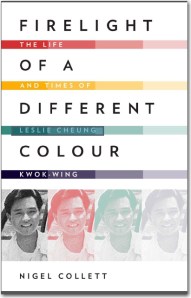
Firelight of a Different Colour: The Life and Times of Leslie Cheung Kwok-wing, by Nigel Collett, Signal 8 Press (February 25, 2014), 486pp, bibliography, notes and index

firelightWhile many of Leslie Cheung’s songs, recordings, concerts and films were widely known outside of Southeast Asia during the 1980s and 1990s, the impact of his death by suicide in 2003 on fans in Hong Kong, China, Taiwan, Japan and Korea probably wasn’t deeply understood by most of the English-speaking world.

Yet, in the years leading up to and including the British handover of Kong Kong to China in 1997, Cheung was in many ways the very embodiment of the colony’s film and recording industries.

Collett’s thoroughly researched Firelight of a Different Colour is both a tribute to Leslie and a likely resource for all future biographies and documentaries about the widely respected actor and highly popular Cantopop star.  For many English-speaking readers, the book is a wonderful, in-depth introduction to Leslie, Hong Kong’s entertainment business, and to the difficulties of gay performers within the colony’s compact and often-hostile media environment.

During the months leading up to his death, Leslie was plagued by clinical depression, fatigue and multiple physical ailments that friends and fans couldn’t help but notice. Yet, they were unprepared to lose him to anything other than early retirement. His death created shock waves followed by an outpouring of grief that, even now, suggests Collett has left “the pain still too raw for a full biography” from the viewpoint of the family and many fans.

Collett sees this book as provisional and fully hopes it will be superseded by true biographies and assessments. The strength of the book for those future works comes from its encyclopedic approach to Leslie’s life and career along with the collected footnotes and bibliography. The weakness–which is a small one at that–also comes from a linear and occasionally exhaustive presentation of facts (large and small) that includes lengthy plot summaries of films.

Inasmuch as films, concerts, and other celebrity events are strongly visual events for fans, the book would have been well served with the inclusion of personal and professional photographs of Leslie and other film and recording stars, concert venues, album covers, movie posters and production stills from “Farewell, My Concubine,” “A Better Tomorrow” and other films.

On balance, Firelight of a Different Colour represents the author’s very diligent attempt to re-energize the memories of fans, introduce Leslie to a wider audience, and gather the resources of another era for the writers and researchers of the future. It’s a must read for fans and a heart-felt introduction to those meeting Leslie for the first time within its pages.

Briefly Noted: ‘Badluck Way’ by Bryce Andrews

Badluck Way: A Year on the Ragged Edge of the West, by  Bryce Andrews, Atria Books (January 7, 2014), 256 pages

badluckwayAn “Indies Introduce” selection on the January Indie NEXT List, Badluck Way is a memoir about a 23-year-old Seattle man’s work experiences on the Sun Ranch in southwestern Montana.

Writing in the Missoula Independent, Kate Whittle notes that a lot of “starry-eyed men and women” visit Montana, can’t fit in, and soon leave.

“Author Bryce Andrews,” she says, “is one of these adventurers who found a better fit in the West, and learned to love it for things that even native Montanans might not appreciate…

“He’s become a 21st century kind of cowboy, one who’s studied environmental science and conservation, understands the importance of riparian habitats, and he can ride an ATV, rope a heifer, fix a fence and knock back a few beers at the saloon afterward. He can read landscapes like some of us read a street map; he prefers the habitat of open spaces and jagged peaks.”

From the Publisher

Andrews - Simon & Schuster photo. Click on the photo to see the book video on Andrew's author's page.
Andrews – Simon & Schuster photo. Click on the photo to see the book video on Andrew’s author’s page.

In this gripping memoir of a young man, a wolf, their parallel lives and ultimate collision, Bryce Andrews describes life on the remote, windswept Sun Ranch in southwest Montana. The Sun’s twenty thousand acres of rangeland occupy a still-wild corner of southwest Montana—a high valley surrounded by mountain ranges and steep creeks with portentous names like Grizzly, Dead Man, and Bad Luck. Just over the border from Yellowstone National Park, the Sun holds giant herds of cattle and elk amid many predators—bears, mountain lions, and wolves. In lyrical, haunting language, Andrews recounts marathon days and nights of building fences, riding, roping, and otherwise learning the hard business of caring for cattle, an initiation that changes him from an idealistic city kid into a skilled ranch hand. But when wolves suddenly begin killing the ranch’s cattle, Andrews has to shoulder a rifle, chase the pack, and do what he’d hoped he would never have to do.

From the Book

“On my first morning in the bunkhouse, I woke up shivering and listened to the harsh squalling of magpies. Through a little window, past trim boards cracked and shrunken by age and exposure, a handful of stars still pocked the predawn sky. I lay motionless as they faded into the daylight. An insistent, hissing wind slipped through gaps in the window casing. The Madison wind is pitiless. It is a sandblasting, constant presence, meant for howling around the eaves of broken shacks and the scattered bones of winter-killed cattle. Passing cold and dry across my skin, it reminded me how far I was from Seattle.”

97% of the ranch is protected by conservation easements.

Author Interview

In a Bookselling This Week interview, Andrews talked about the challenge of looking after dumb, slow livestock on a vast range with quick-witted predators.  “I hope that Badluck Way conveys a deep appreciation for the work of ranching and an equally strong sympathy for wild animals, like the wolf,” he said.

This book brings readers lyrical prose, common sense, violence and a growing appreciation for the continuing need for understanding in the co-existing world of rangers and wild animals.

Malcolm

Malcolm R. Campbell’s contemporary fantasy novels, including “The Seeker,” “The Betrayed,” and “The Sun Singer,” are set in northwestern Montana.

Idle thoughts about ‘Sex, Rain, and Cold Fusion’

Sex, Rain, and Cold FusionSex, Rain, and Cold Fusion by A.R. Taylor

My rating: 4 of 5 stars

This book fits into the “clever” and “hoot” genres and/or categories. It rocks and rolls from beginning to end with characters, events and language usage that are off-the-scale nuts.

In many ways, the plot–which is deliciously tangled–doesn’t matter because we’re all along for the ride and where we end up doesn’t matter. . .it’s one of those “the journey is more important than the destination” kind of books, er, in a wry way.

My only cautionary words are these: reading this book is rather like eating a cake that’s 99% frosting. You feel guilty but you keep doing it anyway.

View all my reviews

You can learn more about the author of this book on her website.


Malcolm

Malcolm R. Campbell is the author of “Jock Stewart and the Missing Sea of Fire,” a comedy/satire that is also flat nuts.