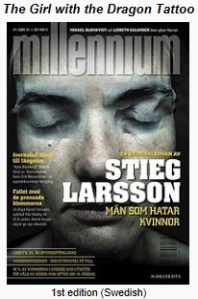
“Quercus Publishing has announced it will publish a fourth installment of Stieg Larsson’s Millennium series.” – Quill & Quire
We often ask: “Why is Hollywood re-make happy?” Or, “Why are some writers sequel-to-a-dead-author’s books happy?”
Is it the money? Is it the vanity of stars and directors and authors who think they can do it better? Or, is it simply easier to tinker with something old rather than coming up with something new?
Perhaps, all of these. And then, there’s another matter I’ll mention in a moment.
As a writer, I cannot imagine finding any joy of creation by re-doing already successful screen plays or by adding sequels to an acclaimed author’s series. Perhaps as satire. “The Girl With No Tattoos Whatsoever.” – Now that, I would like.
Otherwise, I see the characters of a novel as being an extension of the original author. While it’s highly unlikely anyone will find new stories to tell about my fictional characters Robert Adams (“The Sun Singer”) or David Ward (“The Seeker”), I promise to haunt anyone who tries to do it. In fact, maybe I’ll hired a wizard too put a hex on the books.
The estate of Stieg Larsson has authorized David Lagercrantz to write a fourth novel in the Millennium series. Even if I spoke perfect Swedish, I wouldn’t line up to read any work that trades on the heritage of the dead.
Likewise, as the “Quill and Quire” article points out, Ian Flemming has been dead for 50 years, but a new James Bond novel called Solo came out this fall. While the Guardian says it’s better than some of the originals, it has as much to do with Flemming as many of the Bond films.
In September, Publishers Weekly announced that the Agatha Christie estate, has authorized Sophie Hannah to write a new Hercule Poirot. Poirot is famous for saying, “It is the brain, the little gray cells on which one must rely. One must seek the truth within–not without.” One might say the same thing about authors and fictional characters: that it’s better to create your own rather than use somebody else’s creations.
There was a lot of talk, especially here in Georgia, about why the Margaret Mitchell Estate authorized Rhett Butler’s People by Donald McCaig in 2007. The first Gone With The Wind sequel, Scarlett (also auhorized) was written by Alexandra Ripley in 1991 and a lot of fans didn’t like it because it took Scarlett away from Atlanta and dodged all the questions fans might have about the character’s life after GWTW.
A Good Reason for the Sequels
Why such sequels? Many say that estates worry about the potentially expiring copyrights on original works and authorize sequels they can oversee before one of the vultures flying over the original author’s grave swoops in and writes his/her own version of the now-famous characters. What if Scarlett went out and got a dragon tattoo, for example. What if Rhett showed up in a Star Trek holodeck and said he always thought Scarlett should have married Ashley? The potential horrors are infinite.
I see the point in protecting the copyrights because there’s a lot of bad taste in the world and, sorry to say, some novelists and screenwriters are willing to disseminate it to make a buck. But otherwise, it seems like grave robbing.
“One of the best things about folklore and fairy tales is that the best fantasy is what you find right around the corner, in this world. That’s where the old stuff came from.” — Terri Windling
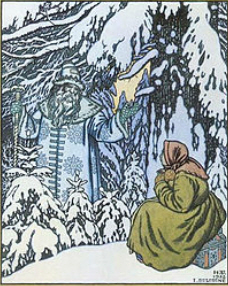
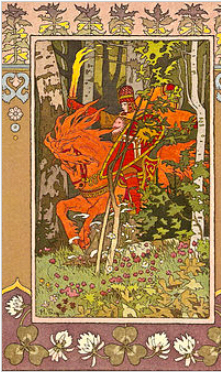
Ivan Bilibin’s illustration of the Russian fairy tale about Vasilisa the Beautiful
For American audiences, the most famous fairy tales, including those brought to the screen by Disney and others, all came from somewhere else. Such is the power of books and film.
Of course, once upon a time, the more famous stories we know were once local yarns from real places. In fact, many places got their names from something that once happened there with people who were well known at the time. To those who knew the origin of the name, a river or forest or mountain pass was more than water, trees and rocks. It was all that, plus what happened–and, what might happen again.
Almost all places have stories associated with them. You can find some of the more notorious and/or most interesting by running Google searches with such phrases as “Florida ghost stories,” “Glacier Park legends,” and “Illinois haunted places.” The people who live in a town or county often grow up hearing multiple versions of these stories along with others that never get into books, newspapers or websites.
We tell stories to each other almost every day. Sometimes, this is pure gossip. At other times, it’s neighborhood news with a bit of opinion thrown into it.
Storytelling is a very natural pastime even without a front porch or a campfire. We share the good, the bad and the ugly with each other. When that which we’re sharing is larger than life, or stranger than normal, it begins turning into a legend associated with the place where we live.
When we camped pine forests, we told and re-told the tall tales about what happened there “years ago.”
As a writer of contemporary fantasy, I always love weaving local ghost stories and legends into my work. For one thing, those stories are just as much a part of a place as are the rivers, mountains and towns. Also, they have a lot of flavor in them whether it’s pure local color or an amusing or frightening tale that could have happened anywhere.
Our stories are stronger, I think, when we consider the legends and tall tales connected to a place as part of our research. Almost every town has a haunted house, cemetery, or lover’s lane. If you live there, you know about it already. If you don’t, it’s not too hard to track down through ghost hunter and haunted websites.
Plus, for those of us who love blurring the line between fiction and reality, ghost stories about the places where we’ve set our short stories and novels add a nice touch of mystery.
“My objective when choosing the pieces for the anthology was to ensure that they reflected not only literary merit but also the multicultural nature of the website [Writer’s Drawer], as well as universal themes with which we can all identify.” – Beryl Belsky, from the Preface
A Certain Kind of Freedom presents ten stories in Short Fiction, ten first-person essays in Stories from Life, eleven poems in Poetry, and three poems in East Asian Style Poetry. While the short stories comprise the most dynamic section of the book, the anthology as a whole successfully fulfills Belsky’s objectives in the preface.
The title story about two young people who go kayaking in a cove that may or may not be dangerous or cursed, superbly introduces feelings of dread and a finely wrought narrative tension that characterizes most of the stories in Short Fiction. Susan Rogers’ “A Certain Kind of Freedom” employs a technique favored by director Alfred Hitchcock: placing everyday people into an unusual and chilling situation.
Kate and Ryan, who are visiting the Mediterranean coast, are experienced kayakers. The day is beautiful and the seas are calm. Yet Kate is preoccupied with “pink sky in the morning, sailor’s forewarning,” World War II dogfights that occurred in the area, and the unknowns of deep water once they paddle outside the sheltering cove. Rogers builds the tension well, foreshadowing a harrowing conclusion that, while not unexpected, is both surprising and sad.
In “Abigail,” Elizabeth L. Abrey also places an everyday person in an usual situation. While exploring her new house, Ruby Jordan gets locked in the basement. Once she extricates herself, everything seems fine. But then it isn’t–just possibly, getting locked in the basement wasn’t an accident.
Especially poignant is Leandré Grobler’s “Cry of the Fish Eagle”about an elderly aboriginal couple living in a secluded valley far from civilization who discover they are being watched by outsiders whom they do not understand. The watchers are well-intended researchers. As the tension builds, the reader can only wait helplessly for the inevitable clash of cultures that will destroy everyone.
Fans of Beethoven will love Tyger Schonholzer’s “Immortal Beloved,” an exquisite fantasy that re-imagines the circumstances behind the master’s famous “Immortal Beloved” letter to an unknown woman. The letter was never mailed. The intended recipient was never identified by historians. Could Schonholzer’s version be true? The romantic amongst us will want to think so.
All of the stories succeed, though some better than others, because they are tightly written and build toward well-plotted and appropriately foreshadowed conclusions. The essays in Stories From Life are generally informal and, while they introduce interesting characters, themes and settings, have a slice of life quality about them that often lacks unity and direction.
Bryan Clark’s “The Smoke Bird,” about an aboriginal mystic, Carrie King’s “The Ticket,” about an expectant mother barred from boarding a ship, and D. K. Srivastava’s “The Decision That Changed Her Life” about a Hindu bride waiting for her arranged marriage to begin are standouts in this section.
The offerings in Poetry are generally free verse with several of the poems falling into the prose-formatted-into-broken lines category. However, the poets’ passions shine through in such words as these in Syed Asad Ali’s “I Have Been in Love Twice”: …with you and with the idea of you; and maybe the reality of love lingers in between both of these.
Paige Lederman’s, memorable poem called “Fear” shows how a ten year old felt when hurricane Sandy hit New York’s Rockaway Beach in 2012, Dev Pillai’s tautly written “Paradox” looks at a moment in the past that was “incomplete yet content,” and Jane Tarlo’s bittersweet “It” bring strength to this section.
The three poems by Leon Zeldis, Jane Tarlo and Yael Shalev in East Asian Style Poetry comprise the strong final section of A Certain Kind of Freedom. These works clearly demonstrate the style and tone expected in the form, perhaps most effectively in Zeldis’ “Seven Chinese Poems” that begin:
Then,
Before the leaves went wild wind lofted,
The sky darkened
And I sat down crying.
Belsky concludes the book’s preface with the hope that A Certain Kind of Freedom will become the first of a Writer’s Drawer Book Series. Belsky and her contributors have made a strong start with this collection. For authors of future books in the series, this volume sets the bar high; for readers, it offers enjoyable prose and poetry that deserve multiple readings to fully explore.
Malcolm R. Campbell is the author of the contemporary fantasy “The Seeker,” a story about a mountain vision quest, a flood, a girl, a swamp, and a summer romance on the rocks.
Other than family and friends, nobody buys an author’s book after seeing a lame, blog-tour question answered like this:
“I’m very passionate about writing. I knew in the first grade I wanted to be a writer, but didn’t start trying to be one until after having another career in the insurance industry that finally burned out, leading me to think, holy crap, what am I going to do with my time now?”
Okay, perhaps I exaggerate.
But here’s the problem: answers like that don’t sound like anything a professional writer would say, and by professional, I’m talking about career authors who have spent years paying their dues and perfecting their art and craft.
Sure, sooner or they’re asked when they started writing, but it’s usually within the context of a larger, more detail-oriented professional sounding interview.
Blogs Mass Producing Author Interviews Don’t Help Anybody
If a blogger asks the same questions to every guest, including the typical first question, “Can you tell us something about yourself?” then the resulting interview is only preaching to the choir, the choir being the author’s friends, family, and co-authors at a publisher or critique group.
In a world where most people buy most fiction from authors with major buzz at major media outlets, few serious readers are going to select a book from an unknown author after reading a generic interview.
Real Interviews are Journalism
Books are an investment of money and time. Make them sound worth it.
While breaking news and short deadlines often cause reporters to ask bad questions, real interviews are done by reporters, magazine staff writers and competent freelancers who do their homework first. Homework means: research your guest before you start asking questions.
This is where most blog-tour bloggers fail. They’re looking for quantity rather than quality, so naturally, they don’t read the guest author’s book, study their websites, see what they say about themselves on Facebook, or so anything else to provide enough background from which to ask intelligent questions.
These bloggers are well intentioned. They see the generic interview as a service. And, on high-traffic blogs including those in which a guest author can answer, say, five out of a list of 50 possible questions, some authors may be getting decent publicity. The rest the authors are, I think being harmed more than helped.
Why? Because most readers are savvy enough to see the difference between a journalistic-style interview with a professional author and a talking-over-the-backyard-fence generic interview with an unknown author. Generic questions just scream: This is amateur stuff.
Most people have a limited book budget and are careful about what they buy: they’re not going to buy an amateur book because they can’t afford to spend the money on it, and even if they could afford it, they don’t have time to read it.
Perhaps Doing a Few Interviews Well is Better
Personally, I think a blog’s traffic goes up when it includes interviews in which readers see that the blogger actually knows something about the guest author’s work AND that s/he isn’t asking every author the exact same questions.
Publishing has become more democratic. There are more venues and more ways to get one’s workinto print. Meanwhile, social networking sites encourage authors to get out there and shoot the breeze with as many followers as possible. It’s easy to see how this leads to blog interviews where the blogger and author act like just plain folks as though the author is the friendly neighbor who suddenly decided to write a book.
The bottom line is, people don’t spend money to buy a book written by their next door neighbor who just decided, what the hell, I think I’ll be an author. We need bloggers willing to learn their subjects and present unknown authors in the best possible light rather than making them look like amateurs.
Now that would be an interview that makes both the blogger and author look like the kind of people we want to read again and again.
Today’s guest is Nora Caron, author of Journey to the Heart and the recently released sequel, New Dimensions of Being. From Montreal, Quebec, Caron works as a private English teacher and Kangen water distributor when she’s not in the American Southwest working on films.
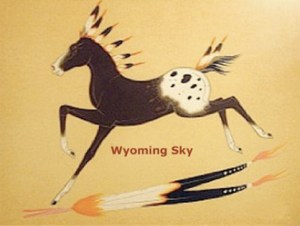
She co-wrote the script for Wyoming Sky, a film currently in development by her own film production company, Oceandoll Productions.
Malcolm: Welcome to Malcolm’s Round Table. You’ve been busy lately touring on behalf of New Dimensions of Being. I won’t ask you to tell tall tales about appearing in multiple towns and multiple stores, but I’m guessing it’s been an adventure. What are the high points?
Nora: I adore meeting new people and not knowing who will show up. Every bookstore has its own energy and I never know what to expect! It’s like a dream every time in which I don’t know what will happen. In the past I used to try to organize everything and count on certain people to show up but now I just go with the flow. Sometimes people don’t talk and other times, like in Texas recently, they just open up magically and incredible life stories are shared in the room. The best part of touring is that afterwards, you come home with new friends and unforgettable memories, not to mention great new ideas for future novels.
Malcolm: When you wrote Journey to the Heart, did you know that your protagonist Lucina had another story to tell or did she start appearing in your thoughts and dreams later?
Nora: I had several people come up and ask me, “So what happens after? I want to know more! Please!” I had never thought of writing a trilogy but I realized after much meditation that Lucina’s story indeed was not over. When I started writing the second book, I had so much to say that I couldn’t wait to start the third. I literally wrote two books one after the other without taking a break, something I thought I would never pull off given all my other work that I must juggle daily. I can honestly say these books wrote themselves through my fingertips, as though powerful forces were pushing their way to print.
Malcolm: I can understand a resident of Quebec being fluent in French. But how did the German and Spanish come into the picture? How does being multi-lingual influence your work as a writer in English?
Nora: My mother speaks many languages and it was a sort of necessity growing up in our household to master different languages. I lived for a while in Berlin back in 2001 and loved the German culture very much, and it was at that moment that I began learning German. In 2002, I traveled to Mexico where I heard Spanish for the first time and couldn’t shake it from me. It was in University that I minored in German and Spanish because I knew that being multilingual would help me later down as I traveled the world. Speaking different languages allows me to study other cultures and people more in depth, and allows me to see more clearly how other people live and interact. The fact that I speak Spanish gave me an inside perspective on Mexico which is everywhere in my first three novels. I believe that to know different languages gives you freedom to explore worlds that remain hidden sometimes to the common outside tourist.
Malcolm: How does a person living in the ice and cold of Quebec become fascinated with the American Southwest? Yes, I know it’s warmer there, but I think there’s more to it than that?
Nora: Although I am born in ice and cold and gray skies, my spirit is far from that energy. It was in the south of the US that I started to feel myself fully, especially in California and Arizona. I find the people more welcoming and friendly, and I adore the dry heat. I am an outdoors person, I love running and swimming so winters in Quebec are a little death for me each year. In my heart, I am a true Californian: wild, free-spirited, open-minded, rebellious, and very liberal. Plus I love the joy and lightness of being in the southwest which is rare to find in my part of the world. Up here people are constantly fighting the weather hence that reflects in their personalities. Quebecers are rough, tough, and often not the happiest people on earth. I believe climate shapes people much more than we imagine.
Malcolm: You’re one of the few authors I know who also has an IMDb listing. What led you to acting and to your work in the Wyoming Sky project?
In the summer of 1884, the proud daughter of a horse rancher returns home from back east, only to face hardship and danger on the Wyoming frontier. To save her father’s ranch, she must move a herd of rare horses over 100 miles, with a gang of killers in hot pursuit.
Nora: When I first went to Los Angeles seven years ago, I befriended a wonderful actor named Ingo Neuhaus who became one of my closest friends on earth. One day he threw me into a short film Online Dating and we had so much fun, that we decided to work together on other short films. I had done television and theatre in the past, as well as film studies, so I felt like I was re-connecting with a part of me that had been sleeping for a long time. Three years ago, Ingo and I started writing our first feature film Wyoming Sky and once the script was complete, we realized we had something really special in our hands. Several people in Hollywood jumped on board, and last year we formed our film company with Brad Neuhaus and we became Oceandoll Productions. Since then, we have been raising funds for Wyoming Sky and recently launched a Kickstarter campaign for development money. It’s such a pleasure to be doing films with such talented men as the Neuhaus boys! There is never a dull moment and we like to think we are different from other filmmakers because we take time with people and listen to people rather than just think about ourselves. Hollywood can be very narcissistic at times, sadly.
Malcolm: In her novel The Goldfinch, Donna Tartt describes Nevada as a place of “wide horizons, empty skies, spiritual clarity.” I also get this feeling when I visit my granddaughters there, and I sense it lurking behind the scenes in your work set in the Southwest. How do you visualize the region when you approach it as a writer—and perhaps someday as a resident?
Mojave Sunset
Nora: Since I did travel in Mexico, the scenes in my novel come from a first-hand account as well as much research about the places my narrator visits. I feel at home in places with wide horizons and clear skies, and one of my favorite places to visit was the Mojave desert in California. It was there that I heard the calls of the coyotes and slept under the starlit skies, and dreamed of shamans and witches and transformations. I hope that my descriptions of places in my novels stir that sense of wonder in readers, wonder about the mysterious unknown, the Other Side, the world of magic and spirits, and rebirth and death.
Malcolm: Thank you for stopping by Malcolm’s Round Table. Best of luck with your Kickstarter campaign for Wyoming Sky and your tour for New Dimensions of Being.
–
The Story: In New Dimensions of Being, Lucina is haunted by terrible recurring nightmares. Unsure of what they represent, Teleo and her seek answers but the quest opens up many new areas of life Lucina is not certain she can cope with. Discovering that she is pregnant, Lucina faces a huge decision: Is she ready to become a mother or not? As Lucina stumbles around to find the right path for her, she realizes that keeping love alive is much more complicated than she originally thought.
On the Web: You can visit Nora on the web here; you and learn more about her campaign to raise money for Wyoming Skyhere.
Since many of them (the authors) have bailed me out of jail for various misunderstandings with the local police force, I’m writing this column about local authors’ books that are gathering dust at the Main Street Book Emporium. These are books by people you’ve never heard of, but they’ve put their hearts and souls into these volumes and, what the hell, they (the books) are cheaper than a Happy Meal and make more nutritious stocking stuffers on Christmas Day.
Lust Behind a Motel 6 Billboard on Route 2, by Cane Molasses – a cautionary tale about a young man who lived behind a faded billboard on the road to Prairie View. When it rained, Zeke got wet. When the sun came out, Zeke got warm. When a bus of wayward cheerleaders broke down, Zeek got lucky until he had to start running from the linemen of the county.
Rats in the Birdbath, by T.Z. – Local rapper T.Z. turns his talents for profanity to fiction in this gritty story about a man who discovered that the rats in the birdbath tasted better than the sparrows. This is a dark urban fantasy that should be read primarily by people who believe the end of the world came and went already and that nobody noticed.
My Dustbunnies Don’t Eat Your Carrots, by Sally Hyde – A young man, who thoughtlessly ran out on his upscale family, is accused of murdering his mother-in-law because she purportedly made fun of the dust bunnies in his apartment. Hyde, who claims in the introduction that she was the mother-in-law who was murdered, says it took her years of communicating with wackos with Oui-Ja boards to get the truth into print.
Coffee Tables Without Books, by Lucille Smith-Whitson – A specialist in old furniture shows discouraging evidence that most coffee tables collapse sooner or later under the weight of expensive “coffee table books” that people never read. “People put books like ‘Bombay Harlots’ and ‘The Glaciers of Saudi Arabia’ on their coffee tables to impress their friends. Yet, the dust on those books tips off visitors to the fact the host never cracked the cover,” writes Smith-Whitson. The result: the books pile up even after the cows come home and crack the table tops.
Write this Damn Book Yourself, by Clark Trail – Trail, who believes too many wackos are writing books these days and uploading them to Kindle and CreateSpace, has published a book with multiple cover-art inserts for desperate people who just can’t seem to get published in spite of the fact their writing looks like a theme out of a remedial English class. The secret: blank pages. Clark suggests non-writers pick the most exciting cover art, fill in the blank pages, and display the books on their coffee tables.
The Shooting of Dan McGrew’s Brother, by Joe Smith – At a press conference Smith claimed that even though this book appears to be a ripoff of the famous poem by Robert Service, he (Smith) thought the whole thing up last year when he and a bunch of the boys were whooping it up in the Malamute saloon.
51 Shades of Purple, by Bambi Hill – This tell-little book by a young woman who claims to have slept with many of the world’s still-living monarchs, shows that most of the kings were drunk or bored when the one-night-lie-downs occurred at a Motel 6 on Route 2. “Kings are not as powerful as you think,” Hill gushes in the introduction.
How to Repair Your Betamax, by Clyde Clinton – After discovering most Radio Shacks and other geeky stores no longer have Betamax repairmen, Clinton uses his own collection of vintage units do demonstrate everything that can possibly go wrong with them. He says that while he has sold only one copy to a Betamax museum, he hopes the thing will one day “go viral.”
Emily Dickinson: The Biker Babe Years, by Norma “Harley Girl” Johnson – Johnson re-imagines the life of the famous poet as a “hot momma taking names and kicking asses vixen who rides with a group of hell raisers called The Cardboard Monkeys.” Johnson pushes the envelope in this novel, especially in the chapter called “Going Down On the Road.”
The Homogenization of the American Family, by Robert Elderberry and James S. Mason – According to Elderberry and Mason, new research charting the DNA of 99% of America’s families, shows that “more children that previously known” were fathered by milkmen who were supposed to be delivering milk rather than babies.” Elderberry told reporters at a Main Street Book Emporium launch party that he got most of the data by hacking into the NSA’s secret database of real and imagined ancestors.
Give the gift of books. Your friends will never forget you for filling up the blank space on their coffee tables because who the hell drinks coffee in the living room these days?
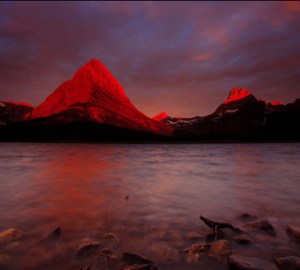
Alpine Glow at Many Glacier Hotel. Notice that true alpine glow is being pushed out by the direct light. – photo by Jeff Pang
Lucky short-term tourists and almost all long-term visitors to Glacier National Park learn about the beauty of alpine glow (called alpenglow in many parts of the world). While some mistake sunlight on the mountains at sunrise and sunset as alpine glow, true alpine glow occurs only when the sun is below the horizon. It comes from light that’s reflected by snow, water or ice particles in the atmosphere. There is often a red or purple hue within the glow.
One of my three jobs at Many Glacier Hotel in the park’s Swiftcurrent Valley required me to be on duty by 5 a.m. several days a week. When I walked over the rise that separated the hotel from the dorm, I checked my watch to make sure I wasn’t late because the hotel manager, Ian B. Tippet was always there before dawn. Since he was there, he firmly believed everyone else should be there.
Grinnell Point and Heavy Shield Mountain across Swiftcurrent Lake from the hotel – photo by Joe Dsilva
While the light in the manager’s office near the lobby attracted my attention first, those mornings when alpine glow bathed the peaks and turned glaciers and snow patches into shimmering light sources, my early hours job gave me a gift most employees and guests slept through.
When I saw Ian Tippet at the park this fall, we joked when he said, “we always began promptly at 5 a.m., a beautiful time to be awake.” I agreed, but didn’t mention that I looked at his office window before breathing in the sky.
I always wanted to see the alpine glow on Mt. Everest, or even in the Alps where the term originated. However, the mountains of Glacier made many early mornings worth losing sleep over.
Chief Mountain: Home of the Thunderbird – Physical, Historical, and Spiritual Perspectives, by Dave Shea, Thomas Printing, 2010, Second Edition, 42pp, photographs, maps, charts
Backcountry ranger, wildlife biologist and botanist Dave Shea worked in Glacier National Park for almost four decades, spending many years at the Belly River Ranger station in the shadow of Chief Mountain. Shea writes that those who have seen that shadow in the valley in March and September call it “the sacred shadow.”
This tightly written, encyclopedic book shows that Shea has come to understand the rock, natural forces, legends and people behind that shadow very well. Without a doubt, Chief Mountain (Nináistuko) is the one of the most distinctive, visible and photographed peaks in Montana.
While Glacier specialists and friends of the park will have seen most of the geological information in the first part of the volume elsewhere, the book is an able summary of Chief’s setting within the Rocky Mountain Front as well as its importance and current status as a sacred site to the Blackfeet Nation. In addition to the spectacular cover photo by B. Riley McClelland, the author’s photographs are a beautiful addition to the book.
From the Publisher
For 36 years, Dave Shea prowled Glacier Park’s wilds as a backcountry ranger, patrolling trails, managing wildlife, leading search and rescue efforts. And for 11 of those years, he and his wife, Genevieve, lived, quite literally, in the shadow of Montana’s most sacred mountain. And so it’s appropriate, perhaps, that when Dave Shea set out to put the peak on the page, he did so in what could be described, in terms of size, as a booklet, but in scope is most decidedly a full-blown book.
Reviewer’s Comments
“It’s clear Chief has become a character in Shea’s life, a fully animated wonder complete with presence and with moods and with attitude,” writes Michael Jamison in the Missoulian. “In a cave, near the summit, lives Thunderbird and the Thunder-Maker Pipe. The Wind Spirit resides here, as does Old Man Napi. The Sacred Shadow reaches far into the backbone, and each spring and autumn darkens other peaks with the outline of the Chief.”
Shea, described by the Missolian as “one of Glacier Park’s last old-school patrol rangers – a man competent and comfortable and completely content in the backcountry,” is also the author of the NPS field checklists “Mammals of Glacier National Park” and “Birds of Glacier National Park.”
Malcolm R. Campbell, a seasonal employee at Many Glacier Hotel in the park in 1960s, is the author of contemporary fantasy novels including “The Seeker.” “The Seeker” is partially set in Glacier during the historic flood of 1964.
“A fairy tale is a type of short story that typically features European folkloric fantasy characters, such as fairies, goblins, elves, trolls, dwarves, giants, mermaids, or gnomes, and usually magic or enchantments. Fairy tales may be distinguished from other folk narratives such as legends (which generally involve belief in the veracity of the events described) and explicitly moral tales, including beast fables.” Wikipedia
Rapunzel – an illustration from the Brothers Grimm adaptation
Are parents reading fairy tales to their children today? I hope so. At Thanksgiving, people often tell us to ponder what we’re thankful for. That’s probably to keep us from thinking it’s all about food, football and getting stuck washing dishes in the kitchen. I’m thankful for fairy tales, the ones my parents read to me, the ones I read to myself, and the ones kept alive in all their forms and versions by those who love the stories enough to spend their lives collecting, translating and studying them.
Here’s what those lovers of the stories have to say about them. . .
“The more one knows fairy tales the less fantastical they appear; they can be vehicles of the grimmest realism, expressing hope against all the odds with gritted teeth.” – Marina Warner, From the Beast to the Blonde: On Fairy Tales and Their Tellers
“Deeper meaning resides in the fairy tales told to me in my childhood than in the truth that is taught by life.” ― Friedrich von Schiller
Father Frost acts as a donor in the Russian fairy tale Father Frost, testing the heroine before giving her riches.
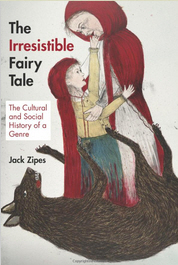
“Fairy tales begin with conflict because we all begin our lives with conflict. We are all misfit for the world, and somehow we must fit in, fit in with other people, and thus we must invent or find the means through communication to satisfy as well as resolve conflicting desires and instincts.” ― Jack Zipes, The Irresistible Fairy Tale: The Cultural and Social History of a Genre
Fairy tales are more than true: not because they tell us that dragons exist, but because they tell us that dragons can be beaten.” ― Neil Gaiman, Coraline
“Fairy Tales always have a happy ending.” That depends… on whether you are Rumpelstiltskin or the Queen.” ― Jane Yolen,Briar Rose
“If you want your children to be intelligent, read them fairy tales. If you want them to be more intelligent, read them more fairy tales.” – Albert Einstein
“Fairy tales were not my escape from reality as a child; rather, they were my reality — for mine was a world in which good and evil were not abstract concepts, and like fairy-tale heroines, no magic would save me unless I had the wit and heart and courage to use it widely.” ― Terri Windling
“People need to believe in more than what they see in everyday life. Somewhere inside, we all know that there is more out there than we experience normally. A belief in the other world can help explain why things happen to us. It can give us hope. I feel that we all hope we never get to be too old to fly to Never-Never Land or go through a wardrobe into Narnia. We want to think that there is something looking back at us when we look at the stars. We want to think that just around the bend in the forest, we’ll find fairies dancing in a ring. I hope that my work affirms those beliefs,” she continues. “I want people to think of my work as a key to that other world.” – Wendy Froud
“ Truly, I think the degree to which the bourgeoisie has appropriated the culture of the poor is very interesting, it’s very shocking. Fairy tales are part of the oral tradition of Europe. They were simply the fiction of the poor, the fiction of the illiterate. And they’re very precisely located.” – Angela Carter, author and also the translator of Charles Perrault’s work
“More effectively than any of the other tales, ‘The Emperor’s New Clothes’ established Andersen’s reputation as a man who created stories for children — not just in the sense of target audience, but also as beneficiaries of something extraordinary. The lesson embedded in it is so transparent that its title circulates in the form of proverbial wisdom about social hypocrisy. But more importantly, ‘The Emperor’s New Clothes’ romanticizes children by investing them with the courage to challenge authority and to speak truth to power.” – Maria Tatar, author of The Classic Fairy Tales
“I will tell you, too, that every fairy tale has a moral. The moral of my story may be that love is a constraint, as strong as any belt. And this is certainly true, which makes it a good moral. Or it may be that we are all constrained in some way, either in our bodies, or in our hearts or minds, an Empress as well as the woman who does her laundry. … Perhaps it is that a shoemaker’s daughter can bear restraint less easily than an aristocrat, that what he can bear for three years she can endure only for three days. … Or perhaps my moral is that our desire for freedom is stronger than love or pity. That is a wicked moral, or so the Church has taught us. But I do not know which moral is the correct one. And that is also the way of a fairy tale.” ― Theodora Goss, In the Forest of Forgetting
“Far more often [than asking the question ‘Is it true?’] they [children] have asked me: ‘Was he good? Was he wicked?’ That is, they were far more concerned to get the Right side and the Wrong side clear. For that is a question equally important in History and in Faerie.” ― J.R.R. Tolkien, On Fairy-Stories
“The way to read a fairy tale is to throw yourself in.” ― W.H. Auden
“People who’ve never read fairy tales, the professor said, have a harder time coping in life than the people who have. They don’t have access to all the lessons that can be learned from the journeys through the dark woods and the kindness of strangers treated decently, the knowledge that can be gained from the company and example of Donkeyskins and cats wearing boots and steadfast tin soldiers. I’m not talking about in-your-face lessons, but more subtle ones. The kind that seep up from your sub¬conscious and give you moral and humane structures for your life. That teach you how to prevail, and trust. And maybe even love.” ― Charles de Lint, The Onion Girl
The two illustrations are from Wikipedia. Click on the book cover graphics to see Amazon’s listing for them. Happy Thanksgiving and happy reading.
The program offers professional artists the opportunity to pursue their artistic discipline while being surrounded by the park’s inspiring landscape. The program seeks professional artists whose work is related to the park’s interpretative themes and supports the mission of the National Park Service.
The program provides an artist with uninterrupted time to pursue their work and the opportunity to engage and inspire the public through outreach programs. Park housing is provided for a four-week session during the summer or fall season.
The artist is required to present several public programs during their residency. The programs must be related to their experience as the artist-in-residence and can be demonstrations, talks, exploratory walks, or performances. Digital images of selected work produced as a part of the residency may be used in park publications, websites and presentations for education and outreach.
Artists of all disciplines are encouraged to apply. Applications are available online at https://www.callforentry.org. The deadline to apply is January 30, 2014. For more information contact the park at 406-888-7800.
–
Click here for a list of Glacier’s past artists in residence.
 We often ask: “Why is Hollywood re-make happy?” Or, “Why are some writers sequel-to-a-dead-author’s books happy?”


 Nora: I adore meeting new people and not knowing who will show up. Every bookstore has its own energy and I never know what to expect! It’s like a dream every time in which I don’t know what will happen. In the past I used to try to organize everything and count on certain people to show up but now I just go with the flow. Sometimes people don’t talk and other times, like in Texas recently, they just open up magically and incredible life stories are shared in the room. The best part of touring is that afterwards, you come home with new friends and unforgettable memories, not to mention great new ideas for future novels.