Writers, what brings you feelings of awe?

“The heart of it all is mystery, and science is at best only the peripheral trappings to that mystery–a ragged barbed-wire fence through which mystery travels, back and forth, unencumbered by anything so frail as man’s knowledge.” – ― Rick Bass, The Sky, the Stars, the Wilderness

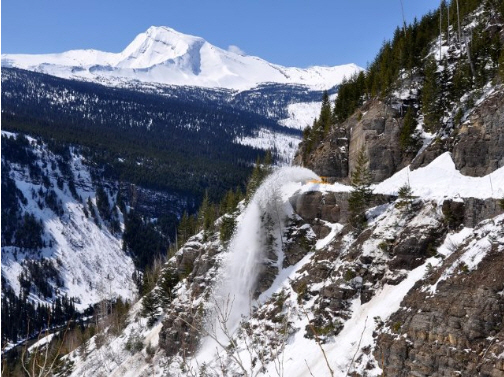
Montana thunderstorm - photo by chrisdat on Flickr
Montana thunderstorm – photo by chrisdat on Flickr

We often use the phrase awe-inspiring to describe sunsets, powerful storms, scenic mountain vistas, our favorite music, heroes and heroines and all manner of other things that are larger and more wondrous and more powerful than ourselves.

Before we can tell memorable stories, we need to discover what in our lives is awe-inspiring and then hold that close in our hearts and celebrate it and allow it to flavor our writing. When we do this, we link up to the readers’ on-going search for the kinds of plots and themes and characters that add magic and wonder to their lives.

Larger than life characters are part of the mix. So, too, exotic locations, the dangers of wind and sea and storms, tranquility and peace so dear one can almost touch their source, memorable choices that place characters at risk, and love in many forms.

If you, as a writer, feel awe as you think about the subject matter, location, plots, themes and characters of a prospective story, you have a better chance of connecting with readers than you would if everything about the project seemed rather flat and monotonal.

Your story need not be something over the top like Lord of the Rings, The Da Vinci Code, Raiders of the Lost Ark or Game of Thrones to inspire awe as you write it and as readers discover it. Quiet moments can also inspire awe; so can low-key plots. The awe comes from you and on how you react to the world.

If mountains inspire you, then you will write of mountains. If children inspire you, they will find their way into your stories. If something attracts and holds your attention and “asks you” to contemplate its beauty, mystery and power, then you will end up the best kind of nourishment for writers.

Malcolm

I find awe and wonder in mountains. I cannot help but write about them. You will find mountains in The Sun Singer, Sarabande and The Seeker and, I hope, a dash of awe. They also contain magic, but you expect that because they are contemporary fantasies!

A Glacier Park Novel

Contest Winners, Saturday’s Writing Prompt, etc etc etc

  • realmccoysToday’s Writing Prompt: “Bubba, if I catch you eatin’ plastic one more time, I’m gonna tan your hide.”
  • The Real McCoys (lost episode): Luke (Richard Crenna) tells Grandpa Amos (Walter Brennan) that he dreamt of going where no man has gone before. Kate (Kathleen Nolan) overhears the conversation and accuses Luke of fantasizing about Deanna Troi (Marina Sirtis). Grandpa tells Luke to get the stars out of his eyes before the police show up.
  • Inspiration: Bones, by Smoky Zeidel, “Last month, as we walked along Pebble Beach in Big Sur, enjoying the roar of waves crashing on shore and marveling at the abundance of wildlife on the beach, Scott made the most intriguing find in what I refer to as a bale of kelp hay (who knows what marine biologists call it; bale seems fitting, though). He found a single vertebral bone, tangled in the detritus.”
  • Only $4.99 on Kindle (I know you can afford it!)
    Only $4.99 on Kindle (I know you can afford it!)

    Springtime Giveaway for The Seeker: Congratulations to the winners of the giveaway contest for my new contemporary fantasy novel. The winners are Cynthia, Kathy, Charmaine and Terry. Thanks for entering the giveawat!

  • Quotation: “If ever there is tomorrow when we’re not together… there is something you must always remember. You are braver than you believe, stronger than you seem, and smarter than you think. But the most important thing is, even if we’re apart… I’ll always be with you.” ― A.A. Milne
  • Lists: 11 Neil Gaiman Quotes on Writing, by Chris Higgins – “Neil Gaiman is a prolific author spanning genres — he has hits in the worlds of comics, young adult fiction, grownup fiction, television, film, and even nonfiction (I particularly enjoyed Don’t Panic, his Douglas Adams/HHGTTG companion). Here, eleven quotes from Gaiman on writing.” Mental Floss
  • rangerlogoFrom the Oh, Well Department: Since previous posts about the USS Ranger here on Malcolm’s Round Table have gotten a lot of hits, I had high hopes for Navy to Scrap Historic Aircraft Carrier Next Year. I thought the USS Ranger Foundation, a group trying to turn the decommissioned aircraft carrier into a museum in Oregon, would see the post and explain why they appear to have given up on the project. This is one post that didn’t get any traction. To bad.
  • Words to the Wise: “A good storyteller is a person with a good memory and hopes other people haven’t.” – Irvin S. Cobb

Malcolm

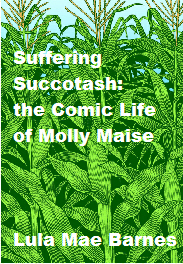
Review: ‘Suffering Succotash: The Comic Life of Molly Maise,’ by Lula Mae Barnes

Satire from the archives

Suffering Succotash: The Comic Life of Molly Maise,” by Lula Mae Barnes (Corn Fritter Press, September 2012), 4,837pp with illustrations, index, maps, and bibliography.

SufferingSuccotashAs time goes by, fewer and fewer people remain on this Earth who suffered through depression-era and Thanksgiving meals constructed substantially of succotash.

“As far back as the Revolutionary War,” writes Lula Mae Barnes in her new and overly definitive biography of the 1770s Rhode Island innkeeper, dancer and lady of the evening Molly Maise, “people were thankful to live off succotash when times were hard and just as thankful to get rid of the vile mixture when good fortune smiled upon them again.”

Barnes, who spent the last fifty years uncovering the obscure details of the inventor of succotash, claims that the mixture of corn, various forms of beans and minced oaths is far too improbable a concoction to have occurred by accident.

Young Molly Maise, an innkeeper on Aquidneck Island who supported the “divine cause of everything that wasn’t British,” devised succotash as a “devious treat” for British sailors enjoying her favors in the days leading up to the 1778 Battle of Rhode Island. Ever after, she claimed her succotash made the sailors so ill, they scuttled their own fleet to kill the pain. While historians agree that the fleet was scuttled, they do not cite succotash as a cause.

According to Barnes, Maise spent a lifetime giving humorous talks, some bawdy, about the ills of succotash and the role it had in the war. While her speeches and dance routines, including “The Succotash Rag” (which pre-dated the American Ragtime boom by one hundred years) were well attended, she failed to gain the validation as a soldier and inventor she was seeking.

In fact, the biography’s references clearly indict most, if not all, of the United States’ founding fathers, soldiers, newspapermen and historians of a “treasonous level of guilt” for their roles in covering up the role of Molly Maise and succotash in “the cause of freedom.”

Barnes’ epic work clearly shows that every human’s recipe for defeat is based on the foods they eat, how they mix them together, and what they name the resulting entree. Had Maise called her corn and beans a Corn & Bean Medley, history might have duly honored her for the suffering her invention caused herself and all the generations that followed.

The epitaph on Maise’s tombstone reads: “Loose corn and beans sink ships faster than loose lips.”

Jock Stewart

jtalksbooks

Budget Falls Short for Parks; Glacier Plowing Facilitated by Donation

from the National Parks and Conservation Association

NPCAlogoBackground: The release of President Obama’s 2014 budget April 10 proposes that the National Park Service budget would increase by $56.6 million over FY12, but the increase is partially offset by programmatic decreases to park base operations. The proposal includes important investments but also provides a reduction of nearly a hundred staff in park operations.

“The National Park Service is experiencing deep impacts from the sequester and other continued reductions. This year will be the most challenging in some time for national park superintendents who will have fewer rangers and smaller budgets to manage each park from Yellowstone to Acadia. Funding the operations of the National Park Service needs to be more of a priority than it has been to date. We’re pleased that the President recognizes the need to reverse the mindless sequester, but it will take more than that recognition to address the reality facing national parks.”

“The sequester has already cut more than $130 million from the National Park Service budget, forcing places like Yellowstone, Acadia, Independence Hall, and Cape Cod National Seashore to delay seasonal openings, close visitor centers, picnic areas, and campgrounds, and eliminate ranger positions that are critical to protecting endangered species and historic buildings, as well as greeting park visitors and school groups. Further cuts will only impair the national park experience.

“National parks draw international tourists and are economic engines that support more than $30budget billion in spending and more than a quarter million jobs. Yet they suffer from an annual operating shortfall exceeding half a billion dollars and a maintenance backlog of many billions more. And in today’s dollars, the Park Service budget has now declined by more than 20 percent over the last decade.

“We need the President and Congress to make sure America’s national parks are open and well-staffed and nothing in this budget provides us with any confidence that will happen. Our national parks are not just great destinations to visit, they are our national treasures that should be treated with honor. They drive the economy for many rural and urban communities. The severe under-funding of our most prized places needs to be reversed. We hope to work with the President and Congress as they debate how to repair a failed federal budgeting process to better address the true causes of the nation’s deficits and better serve our national parks and the American people.”

Glacier National Park

NPS Glacier Photo
NPS Glacier Photo

According to NPS Glacier, “The park’s base budget of approximately $13.5 million was reduced by $682,000. The park must absorb that cut in the remaining months of this fiscal year that ends September 30.”

Due to Congress’ failure to adequately support the parks, budgets were already far short of basic infrastructure and operating requirements. Cutting funding further through a failure of the federal budgetary process adds insult to injury. Inasmuch as jobs and tourism income in areas with parks benefit greatly, any reduction of park hours, season dates, and attractions impacts more than the parks themselves.

Fortunately, a donation to NPS Glacier by the Glacier National Park Conservancy has kept budget cuts from delaying the spring plowing of the Going to the Sun Road. However, visitors will see impacts elsewhere:

  • Delayed trail access and decreased trail maintenance,
  • Reduction in native plant restoration,
  • Reduced shoulder-season access to campgrounds and visitor centers,
  • Decrease in entrance station hours,
  • Less maintenance work on park facilities, roads and utility systems,
  • Limited and delayed emergency response outside the core season,
  • Decreased educational programming and ranger-led activities,
  • Less back-country volunteer coordination,
  • Reduction of revenue from impacted campgrounds, and
  • Reduced partner financial aid assisting interpretive programs resulting from loss of revenue of partner bookstores in park.

What a pity.

Malcolm

Lawn Mowing for the First Time This Year

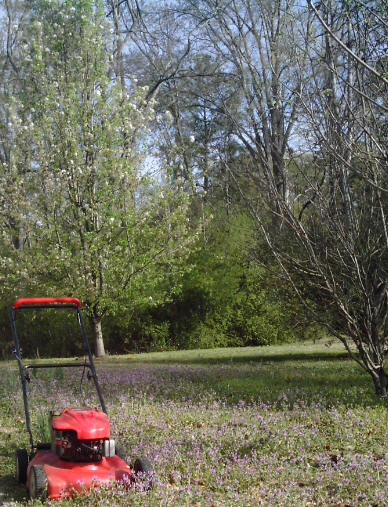
mower2My wife tells me that if we’re going to hike in the mountains late in the summer, we need to start getting in shape now. Walking from our house to the main street and back again is two miles, round trip. After mowing the lawn today for the first time this year, I see it’s time to star walking that walk.

Every muscle aches as though I spent the day playing football rather than walking behind our relatively light-weight rotary lawn mower. The first-of-spring grass-and-weed combination was almost too high for the mower, so my excuse is that things ache because I had to do more pushing.

I can tell you from experience, the first adventure in lawn mowing gets harder every year. Goodness knows what a five mile hike at 5,000 feet of elevation would have been like.

When I lived in Florida, I went to a college summer session at the University of Colorado in Boulder. It took me weeks to get used to the elevation. When I came back, though, I felt like Superman in my Gulf Coast World.

I’m hoping that means that when we get back from the mountains this year, I’ll feel half my age while mowing the lawn for the last time before winter, such as it is, in Georgia.

Malcolm

Malcolm R. Campbell’s contemporary fantasies, “The Sun Singer” and “Sarabande,” are set in the mountains of Glacier National Park, Montana

Read it now on your Kindle

Blog Traffic is Often a Puzzlement

I appreciate those of you who regularly stop by, read, leave comments, and subscribe. Without Google Analytics, I often wonder where some of the other blog traffic comes from.

Suddenly, a two-year-old review of “Labyrinth” by Kate Mosse gets 35 viewers. Last week, an old article called “Branding at Sea” about the USS Ranger was ranked as a top post. Sometimes I can figure out these puzzles. A news story prompts a sudden search. An author comes out with a new book, leading people here to reviews of earlier books. But most of the time, I can’t track down the why of sudden bursts of traffic to old posts.

I often post news and articles about Glacier National Park, the hero’s journey, and the heroine’s journey, so I’m not too surprised to see search terms listed on my dashboard from readers looking for more information. My new novel “The Seeker” will be coming out soon. That means more fantasy and magical realism posts. Later this year, I plan to visit Glacier National Park, so you’re pretty much guaranteed to see more posts about Swiftcurrent Valley and Many Glacier Hotel.

Coming soon, is a very interesting guest post from author Dianne K. Salerni (“We Hear the Dead”). If I told you the subject, you’d probably think I was making it up. I’m already wondering what kind of search terms will lead people to that post.

I’ll have another book review to post in several weeks. I liked this author’s collection of short stories. It’s fun seeing him focus his talents on a novel. When I post reviews, I often see more traffic for the older reviews.

If you don’t find what you’re looking for here, check out my Magic Moments blog for more posts about fantasy, the natural world and sometimes a bit of Zen. Several times a week, I post links to book and author news, writing tips, and book reviews in “Book Bits” which appears on Sun Singer’s Travels.

The traffic on the older posts on those blogs is also a puzzlement, but I figure the Universe, Google and the Internet in general pretty much know who needs to stop by for a visit. When I start following links, I often end up at sites and blogs I’ve never heard of and find that it’s almost as though I was destined to go to them and read a specific article or post that somehow applies to whatever I’m doing.

Even if Google Analytics were available for WordPress blogs, I’m not sure it could figure out the logic of traffic that the fates send to one place or another.

Malcolm

On Location: Longleaf Pine along the Florida coast

97% of this forest is gone, leaving only isolated pockets of longleaf pines

“The average American’s view of the natural communities of the Southeastern U.S. is that it is comprised mainly of swamps, alligators and big, old moss-hung cypress trees. On the contrary to this view, when early explorers visited the southeastern region they saw “a vast forest of the most stately pine trees that can be imagined, planted by nature at a moderate distance. . . enameled with a variety of flowering shrubs.” Fire defined where the longleaf pine forest was found and fostered an ecosystem diverse in plants and animals.” – Longleaf Alliance

I have been working on another short story for my evolving “Land Between the Rivers” collection about the animals who lived along the Florida Gulf Coast before man showed up and who are now endangered species.

These stories are set in what is now called “Tate’s Hell Forest,” a diverse habitat along the gulf coast near the mouth of the Apalachicola River. This mix of swamps and wet prairies and mixed forests used to flow into the continuous longleaf pine forests as shown on the map.

Why I Like the Setting

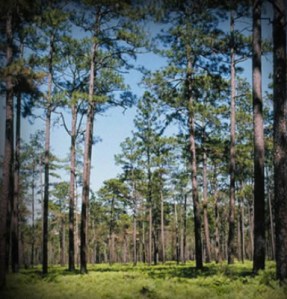
When men came, the found a forest they could drive their wagons through. - Longleaf Alliance Photo
When men came, the found a forest they could drive their wagons through. – Longleaf Alliance Photo

The endangered gopher tortoise, the main character in my current story, loves sandy areas for creating its underground burrows and depends on the grasses and other plants the grow on the floor of a well-maintained longlreaf pine forest. Unlike hardwood and mixed forests, longleaf forests feature widely spaced trees with minimal brambles, mid-level trees and shrubs. These forests are maintained by natural fires that roar through and clean away the clutter that would eventually destroy the forest.

The den of a gopher tortoise is great protection against such fires, fires that often run through quickly without burning as hot as summer fires in hardwood forests, especially where brush has built up.

In addition to logging off most of the longleafs and replanting with slash pines and loblolly pines, many don’t understand the need for fires and tend to put them out before they do what nature intended.

Fortunately, enlightened forest management specalists are showing show landowners, as well as active forest companies, the value of these trees, not only commercially as tree farms, but for the environment as well. Click here if you live in the Southeastern United states and would like to visit a longleaf pine forest park or recreation area near you.

Realism and Magic Together

gophortortoiseAccording to Seminole legends, the Earth’s animals emerged from the Creator’s birthing shell in a specific order long before man arrived. My stories about the animals of this time focus on their learning what their living place is all about—what to eat, how to find shelter, how to raise their young. I mix my talking animals out of myth with settings as realistic as I can make them. So now I’m studying the tortoise’s habitat.

Every time I pick a new animal and a somewhat new habitat, I have a good excuse for learning more about the Florida world where I grew up. I started writing these stories when several sequences in my upcoming novel The Seeker were set here and I fell in love with the place all over again.

Malcolm

Coming March 2013
Coming March 2013

Love that writing advice, the good, the bad, and the strange

If you spend a lot of years writing, you’ll hear a lot of advice. In addition to writing books and the features and lists of tips on Internet sites like NPR, Flavorwire, The Millions and Brain Pickings, Facebook and Twitter supply advice. I visit these sites every week to keep up with books, authors and publishing for my Book Bits blog of links to reviews, author interviews, book news, and “how to” articles for writers.

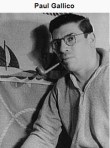
gallicoSome wise and/or humorous words about writing have been around for so long, they’ve become almost lame, yet each new generation of readers and writers discovers them and posts them in writing blogs and Facebook. You’ve probably seen a few of these before:

  • “You simply sit down at the typewriter, open your veins, and bleed.” – Red Smith, Ernest Hemingway and Paul Gallico have been credited with versions of this one.
  • “If you don’t have time to read, you don’t have the time (or the tools) to write. Simple as that.”  – Stephen King and other authors tell us that if we don’t read, we can’t possibly write. (Aspiring writers have enjoyed King’s advice in “On Writing: A Memoir of the Craft.”
  • “Read, read, read. Read everything — trash, classics, good and bad, and see how they do it. Just like a carpenter who works as an apprentice and studies the master. Read! You’ll absorb it. Then write. If it’s good, you’ll find out. If it’s not, throw it out of the window.” – It’s not surprising that William Faulkner’s version of that advice is longer.
  • stephenking“The difference between the right word and the almost right word is the difference between lightning and a lightning bug.” – Mark Twain’s version of this age-old wisdom is memorable.
  • Professional writers don’t sit around every day waiting for their muses to contact them or for imagination to strike. They sit down and write. – So many people have said this, it would take the rest of this post to list them all here.

Famous Authors often Dispense Advice in Lists

  • “There are three rules for writing the novel. Unfortunately, no one knows what they are.” – W. Somerset Maugham – Okay, this is actually a non-list and probably not very helpful.
  • “Every character should want something, even if it is only a glass of water.” – from Kurt Vonnegut’s eight tips.
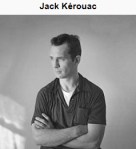
  • kerouacphoto“Write the way you talk. Naturally.” – from David Ogilvy’s ten tips. Actually, most people don’t talk like anything I want to read, especially if they use the words “you know” ten times in each paragraph.
  • “Write what you want bottomless from bottom of the mind.” – Jack Kerouac’s advice from his thirty beliefs and techniques, most of which are as unclear as this one…even if it’s true.
  • “Abandon the idea that you are ever going to finish. Lose track of the 400 pages and write just one page for each day, it helps. Then when it gets finished, you are always surprised.” – from John Steinbeck’s six tips. . .this one probably annoys writers who begin with an outline and a list of character traits and motivations for each character.
  • “Forget the books you want to write. Think only of the book you are writing.” – from Henry Miller’s eleven commandments

And then there are the random gems

  • woolfphoto“Writing is like sex. First you do it for love, then you do it for your friends, and then you do it for money.” – Virginia Woolf…probably true, though most of us try to keep some semblance of love in it.
  • “The first draft of anything is shit.” ― Ernest Hemingway…typical Ernest.
  • “Write the kind of story you would like to read. People will give you all sorts of advice about writing, but if you are not writing something you like, no one else will like it either.” ― Meg Cabot…this sounds reasonable, though it has a sting to it for those of us who like reading James Joyce.
  • “Everywhere I go I’m asked if I think the university stifles writers. My opinion is that they don’t stifle enough of them. There’s many a best-seller that could have been prevented by a good teacher.” ― Flannery O’Connor…this seems more true today than when Flannery said it.
  • Every journalist has a novel in him, which is an excellent place for it. – Russel Lynes…Russel is obviously more cynical than Flannery.
  • “Cut out all these exclamation points. An exclamation point is like laughing at your own joke.” ― F. Scott Fitzgerald…this one ends my lists on a more practical note while also serving as another example about why we shouldn’t write like we talk.

What are your favorite tips, even the ugly ones?

Malcolm

99 cents on Kindle
99 cents on Kindle

Malcolm R. Campbell, who used to dispense writing tips as a college journalism instructor, has turned his talents over to the dark side of writing paranormal short stories and contemporary fantasy novels.

Follow me on Twitter

Catch my author’s page on Facebook

Great Fiction: Location, Location, Location

These days, most people say they like character-driven novels. As Barbra Streisand sang years ago, “People who need people, Are the luckiest people in the world.” We want to read about people, pretend to be them, laugh at them, hate them, learn from them and, if nothing else, see what they’ll do next.

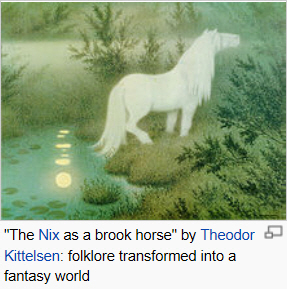
nixNonetheless, location can make or break a novel. Picture this:

  • The Night Circus set in the day time or, worse yet, Dubuque.
  • The Prince of Tides without the tides or, worse yet, without the the lush bays and swamps an estuaries of the South Carolina coast. (“It was growing dark on this long southern evening, and suddenly, at the exact point her finger had indicated, the moon lifted a forehead of stunning gold above the horizon, lifted straight out of filigreed, light-intoxicated clouds that lay on the skyline in attendant veils.”)
  • Jonathan Strange & Mr Norrell set in modern times or, worse yet, within the 1950s neighborhood of Happy Days or the early 1960s city ambiance of American Graffiti. (“Where does the wind come from that blows upon your face, that fans the pages of your book? Where the harum-scarum magic of small wild creatures meets the magic of Man, where the language of the wind and the rain and the trees can be understood, there we will find the Raven King.”)
  • All the Pretty Horses moved from Texas onto a Star Wars planet or, worse yet,  the Catskill Mountains.

Setting is more than a generic backdrop for the action

In his essay, “Setting as Character,” Crawford Kilian wrote, “Whether it’s Scott Fitzgerald’s 1920s Long Island or Tolkien’s Shire, the setting really is a kind of character in the story. Geographically and socially, the setting shapes the other characters, making some actions inevitable and others impossible.” The novels I listed above not only didn’t happen somewhere else, they couldn’t.

ozmapOn a similar note, a recent post on ProActive Writer, explored the importance of settings with the idea that “ignoring setting, or even giving it only a passing consideration, will lead to an unconvincing story.” The post views setting as the framework or the skeleton that holds up your plot and characters. Some authors build worlds for their novels before writing the novels; others let the worlds evolve while they write their stories. Either way, the worlds—real or imagined—must be convincing, they must fit the story like a warm mitten on a winter evening.

My Location Settings

I say all this as a way of introducing a series of posts on my Sun Singer’s Travels blog about the location settings in my novels. These easy-to-read posts explain each setting, show or describe what happened there in the novel, and explain why I chose the setting.

My approach to settings is organic and intuitive. By that I mean that I don’t make fiction-class lists of the attributes of the settings I want to use. No literary theory here; just places and reasons why I liked them. So far, the series has three installments:

Future posts will look at the world of a city in the Midwest, an aircraft carrier, a bridge over a wild river, and a sailor town. Stop by and see what you think. Whether you agree or disagree with my rationale, perhaps these posts will help you choose the best possible settings for your short stories and novels.

Malcolm

Malcolm R. Campbell is the author of contemporary fantasy novels.

Read it now on your Kindle

A few updates – interview, a new review, Book Bits, and Glacier Park

  • coracoverI enjoyed my interview over at Deanna Jewel’s blog Tidbits. It will be posted there until February 8. Stop by, say “hello,” and sign up for a chance at a free copy of my e-book ghost story “Cora’s  Crossing.” We talked about food, Scotch, writing advice, contemporary fantasy, and location settings.
  • Meanwhile, I’m trying to wrap up everything I need to do for my fantasy adventure trilogy that’s coming out this year. The Seeker is the first novel in the series, planned for a March 2013 release. For more information on the trilogy, surf over the my website page for an overall synopsis and a book trailer for The Seeker.  My website also has a new inspirations and links page with info for writers and lovers of fantasy.
  • For those of you who try to keep up with the latest book reviews and author news, I’m publishing ” Book Bits” several times a week on my Sun Singer’s Travel’s blog. Essentially, this is a page of links. The most recent “Book Bits” post was uploaded today.
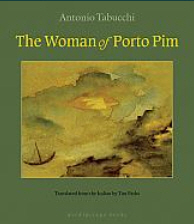
  • portoI enjoyed reading The Woman of Porto Pim by the late Italian author Antonio Tabucchi. An English edition translated by Tim Parks is schedule for release in June from Archipelago Books. I posted my review of this collection of stories this morning on Literary Aficionado. If you’re on GoodReads, you’ll also find a copy of my review there.
  • With a bit of luck, I might just make it out to Glacier National Park late in the summer season. I’m looking forward to it and hope we don’t get any early snowfalls that kluge up the trip. We’ll see if I can get some pictures of many of the locations I use in my fantasy novels. I’m also curious to see how Many Glacier Hotel looks after the recent updates and refurbishments. Once again, the Federal government is providing insufficient funds for the park’s most basic needs. Here’s a recent story about that:  National Park Service memo details $2.5M in proposed budget cuts at Glacier, Yellowstone.
  • mythmoorI can’t resist sharing this quote from Terri Windling’s blog: “Current cant equates fantasy with escapism, and current fashion would have it that fantasy is both easy to read and to write. It isn’t. When it is done honestly, by a skillful writer, fantasy takes us far enough beyond our daily perceptions to open us to the essential realities beneath it. This is the true goal of all art.”- Ellen Kushner
  • And, for a bit of Jock Stewart satire: High Video Game Score Guarantees Lucrative Government Employment

Malcolm