It’s late. Do you know where your characters are?

“Great characters are the key to great fiction. A high-octane plot is nothing without credible, larger-than-life, highly developed en-actors to make it meaningful.” – Donald Maass in “Writing the Breakout Novel”

“I do a basic outline and a basic character sketch of my main characters. I find it helpful to have an idea where I’m going, even if I diverge, which I often do. I like to really think about all my characters’ backstories and motivations. Even if they aren’t central to the plot, I need to understand who they are to bring them to life.” – S. J. Laidlaw in an interview with Debbie Ridpath Ohi

charactersQuick. What are your characters doing just before you tell their story? You need to know this even if you’re not going to mention it.

Let’s say your muse has hauled you back into the 19th century. The day is cold. People are shopping, making their way home, thinking about what? You need to know what whether you tell your reader or not. A mother and a daughter, perhaps, are walking along a well-traveled street, heading home where they will find, perhaps, a burning house or a warm meal or a message from a friend.

You know their names, I’ll bet.  Perhaps you wrote their names down on a sheet of paper and listed their ages, the color of their hair and eyes, whether they’re fat or thin or short or tall, and even a favorite song/book/meal/season. Is it time to write your story?

Maybe yes, maybe no. Some people—S. J. Laidlaw— for example, want to outline their plots and ponder their characters before they say, “Once upon a time.” Others—myself included—want to figure out where the story is going and who the characters are while writing the first draft.

Ponder First, Write Later, or Vice Versa

If you ponder before writing, you might call the little girl “Helen” and call her mother “Anne” and then start visualizing how Helen spends her day at school, with friends, and around the house; and then you’re thinking about Anne and whether she’s sewing, cooking, answering letters or trying out for a part in a play or writing about her recent trip to the Azores. None of that’s in the story about the burning house, warm meal or the message from a friend, but you need to know it.

If you discover your characters while writing, perhaps a colorful doll in a shop window will catch Helen’s eye and, while walking down the cold street, she’ll think about her doll house at home next to the window that looks out on a dull alley, something you didn’t know about until you wrote the words, and while Helen is thinking about the dolls in the house and how they might interact with the doll in the shop window, Anne is thinking about the shocking news story on page one of the morning paper about an arsonist. Well, that’s interesting.

Getting to Know You (your  characters, that is)

Either way, your story won’t get memorable characters if all you do is tell their story. You need to know each of them like a lover, a mentor, a brother, a sister, a parent, a priest or a spouse. Now you’re getting somewhere, getting to the point where your characters fulfill some of the bullet points in Maass’ book such as “engrossing characters are out of the ordinary” and/or that larger-than-life characters “have conflicting sides and are conscious of self.”

Suffice it to say, memorable characters probably don’t spend their evenings watching “American Idol” or reality shows about cooking or buying a new house. They can, but only if it takes them from ordinary to out-of-the-ordinary like, say, learning that Hannibal Lecter watches “Chopped” on the Food Network, or that sweet little Helen looked into a tiny crystal ball in her doll house and saw an episode of “Survivor: Philippines” and thought tribal council was a real event in the future.

If you were to see me on a city street standing in front of a book store and thought, hmm, there’s a story in that, I might end up (in your mystery/thriller) throwing a brick through the window before stealing the money out of the cash register. Or, I might end up smiling at the crowd there before going inside to sign copies of my latest novel, er, Lust in the Poison Ivy. Either way, who I am before that story begins is part of my motivation, the choices I’ll make, the way I’ll feel while throwing the brick or autographing a book, and the way I interact with the other characters.

You’ll Never Tell All You Know

Perhaps your readers will never know for sure why I threw the brick, but you better know. Maybe they won’t know that Lust in the Poison Ivy is based, in part, on a bittersweet affair I once had in a patch of English Ivy years before most of my readers were born: then, when a red-haired girl approaches and I see her smile, you know she reminds me of somebody I knew long ago and that that’s why I say something special in her copy of my book.

Sooner or later, you finish your short story or novel. You’re ready to send it to a publisher. At this point, it’s late in the realm of story creation, and so I’m wondering if you’ll know what your characters were doing after you wrote the words “The End.” If you do, then the chances are good they’re really three dimensional and will move your readers to laughter, joy, horror, tears or adventure.

Malcolm

Malcolm R. Campbell is the author of contemporary the fantasy novels “The Sun Singer” and “Sarabande,” and (coming soon) “The Seeker.”

Read it now on your Kindle

The tedious (but necessary) part of editing

When I read an author’s work for the first time, I quickly discover his or her habits, pet phrases, favorite sentence structures, and unique approaches to dialogue or description. I also see whether or not s/he has taken a word, phrase or mannerism that was magical the first time it appeared and then reduced its impact by using it excessively throughout the rest of the novel.

For example, if the author describes war in chapter one as “an honorable horror” or sex with a main character as “wanton enchantment,” I might like the creativity of those phrases. If, as I read, I begin to see “honorable horror” or “wanton enchantment” showing up multiple times, I think, what a pity, you’ve just destroyed the impact of the right words at the right time, by using them every time.

Habit Words

Most of us are so used to the way we talk and write, we don’t always notice our own beautiful phrases and favorite words, much less those occasions when we overuse them. You’ve probably seen talk show hosts and others joking about people who can’t say anything without saying “like” and “you know” several times per paragraph. In most cases, the “like” and “you know” people don’t know how odd they sound to others because they don’t realize how often they say those words.

As writers, we’re often unaware of the special phrases in our own work that become trite through overuse by the end of an article, novel or short story, much less the everyday words we habitually rely upon so often that they become as trite as “like” and “you know.”  For one person, foods may typically be “tasty” or friends might be “dear” or one thing or another might be “memorable.”

In conversation, perhaps we can get away with our habit words. In writing, they become blemishes.This is not to say we need to eliminate them or, worse yet, use a thesaurus for a series of minor variations on them. But we do need to see how we’re using them and whether they are really serving us well when they appear frequently in our work.

Editing

A good editor will not only find your errors and inconsistencies, s/he will also find your watered down beautiful phrases and your overused habit words. For authors, the task is more difficult because we’re often focusing on scenes, chapters and plots while our distracting habits fly by unnoticed.

When we copy edit our manuscripts closely, though, pet phrases and habit words might start getting our attention. Perhaps we change them on the spot or perhaps we start making a list of words we might be overusing. Once the major elements of a work are fixed, the spelling and grammatical errors caught and the punctuation and overly complex sentence structures are fixed, it’s time to go through the manuscript again with what (for me) is a tedious by necessary part of editing.

I suggest using your word processing software’s search feature as one way to find your habit words. If you creatively wrote “an honorable horror” in page one of your book, search on the word “honorable” and see how often it appears. You may be shocked to discover you not only used “an honorable horror” multiple times in your 80,000-word book, but that you started using the word “honorable” in other combinations, i.e., “an honorable moment,” “an honorable job,” or “an honorable disposition.” Worse yet, the word combination will be coming out of the mouths of multiple characters as though they met somewhere and agreed to adopt a new pet phrase.

The search feature will also show you whether you’ve used habit words so often they’ll become a distraction to readers. One author might describe everything from people to days to dinners to experiences as “fine,” while another may use the word “dear” over an over. If the search feature tells you the word “fine” appears a hundred times in your book, you might want to go look at why that’s the case.

By the time you clean the pet phrases and habit words out of your manuscripts, I think you’ll see that your prose is not only stronger, it’s more on point in every scene and sequence of dialogue.

Malcolm

Malcolm R. Campbell is the author of the contemporary fantasy novels “Sarabande.” “The Sun Singer,” and the upcoming “The Seeker.”

Turning (selected and well-disguised) Secrets into Fiction

While growing up in Florida, my secret story often sounded like old Florida adventure novels.

“A secret story should be yours alone: about who you are, who you want to be. Who you believe yourself to be, under all the social conventions and expectations. Are you secretly a sorceress? A priestess? A charmer of animals or teller of fortunes? Are the trees your friends? There is something wonderful about having a secret identity, something that no one knows about you.” – Theodora Goss in her post “Your Secret Story”

Along with “Where do you get your ideas?” the question people ask me the most is, “How much of each story is true?”

Some of the actual events merged into a short story or novel come from an author’s experiences. For example, my Kindle short story “Moonlight and Ghosts” draws slightly on my experience as a unit manager years ago in a center for the developmentally disabled. Other events in an author’s work come from what author Theodora Goss describes as one’s secret story.

A secret story, often begun in childhood, is the story we tell ourselves about ourselves, a lifelong imagination-run-wild romp of the things we fantasize about doing or being. In childhood, many of us imagine being wizards or Knights of the Round Table or Superman.

As we grow older, perhaps we change our story to make it more plausible. These stories can be, but usually aren’t, the same as our dreams and goals. Perhaps they come to mind as an all-in-good fun episode we imagine while we’re falling asleep or mowing the yard. Perhaps they have a deeper impact and become our personal myth.

What ever they are, we seldom tell them to each other. Yet, to a writer, they are so much a part of his/her imagination, selected fragments of them wind up in stories or, in some cases, serve as the catalysts for stories.

I wonder if we become truly happy and/or in a state of bliss when our secret story and our daily life become one. Before that happens, these stories are a great source of ideas for the next novel or short story.

You May Also Like:

  • I have brought back my “Book Bits” writing links posts twice a week on my Sun Singer’s Travels blog. Each post includes 8-10 links for recent book news, reviews, how-to articles and features.
  • The Real Magic of the Unlimited Self tells the story behind the story for my “Moonlight and Ghosts” Kindle short story. (Sometimes the magic is real.)
  • Or, see my website for my latest news.

-Malcolm

Contemporary fantasy for your Kindle.

Allowing a story to happen

Some writers begin with an outline while others just start writing. Either way, the story is likely to have a mind of its own. Characters will do and say unexpected things. Research will turn up new ideas that alter the original ideas for a scene. Regardless of the overall plan, or lack of a plan, the story will need a bit of space in which to grow.

You’ll know when it’s better to wait patiently than to press on with your typing. This often happens at the end of a scene. Now it’s time for the characters to do something else. But what? Or, it may be time for for the writer to check in on another character. But who? Or, perhaps you’ve written up to the edge of A BIG SCENE and you’re not exactly sure how that big scene ought to get underway.

At times like this, I find it better to stop writing for 15 minutes, an hour, or perhaps for the rest of the afternoon and do something unrelated to the novel or short story I’m working on. If the next scene of the story seems close, but isn’t quite resolving into my thoughts, I’ll do something relatively mindless like playing a game of Freecell, hearts or Angry Birds. If I think the scene needs more time to come to mind, I’ll go do errands or mow the lawn.

When I distract myself, the next scene in the story always occurs to me out of nowhere.

I suppose there are many theories about this. I really don’t want to know them. If I did know them, the whole process might simply stop working. Anyhow, I have my own theory about it.

If you think about some of the methods people use to relax, especially those who do psychic readings or are using biofeedback to get rid of a headache or a sore back, the process begins with visualizing a relaxing place, slowing the breath, and then follows through various self-hypnotic methods that will slow one’s brainwaves and heart beat.

Now, I’m not suggesting Tarot card readers ought to begin with a game of hearts on their computers before spreading out the cards or that Freecell will send energy up and down your chakra system to improve your well being. Perhaps. At any rate, my mindless activities tend to produce the same results as structured or unstructured meditation. The result? I’ve stepped away from the story, relaxed, and allowed it to happen.

My won/lost percentage for Freecell, hearts, chess and other games on my computer isn’t good because once I begin playing them, the next scene of my story is likely to occur at any moment and to be so compelling that I can’t wait to get back to my Word file and start typing again. At that point, I’m ready to quit the game in a second and get back to the larger-order of fun: writing.

I suppose we all have our little tricks and superstitions. One way or another, they seem to be in our writer’s tool kits as the magic behind the curtain that allows our stories to happen.

Malcolm

a heroine’s journey adventure for your Kindle

Inspiring Blog Award Nomination

Thank you, Christine, for nominating Malcolm’s Round Table as an inspiring blog in yesterday’s post on your C. LaVielle’s Book Jacket Blog. I’ve been enjoying your posts, especially those that focus on individual Tarot cards and the hero’s journey. The hero’s journey has been a long-time special interest of mine, so when others write about it, I usually find my way to their words.

Now, in the spirit of the Inspiring Blog Award, I’m supposed to tell you seven things about me.

  1. My website’s bio page says that I was raised by alligators in the Everglades. I’ve given this matter further thought, and suspect that it may not be true. I did enjoy reading  Karen Russell’s novel Swamplandia! (which was a deja vu experience) about a Florida theme park featuring alligator wrestlers, and I did grow up in Florida: I’m reasonably sure about these things.
  2. Among other things, I like anchovies and feta cheese on pizza. I had a boss who insisted on ordering pizza with pineapple on it on Friday afternoons to celebrate the end of the workweek. Ursula, I gotta tell you, I never understood the pineapple. Of course, most people don’t understand anchovies because (possibly) evil spirits brainwashed them when they were kids.
  3. The URL for this blog lists it under knightofswords. This is the Tarot card that signifies me for those of us who view the court cards as knights, queens, princes and princesses. The Knight of Swords is a card of wind and storms.
  4. My sun sign is Leo. I guess most of you have figured that out already.
  5. My introduction to myths and heroes’ journeys began in secondary school when I read every book I could get my hands on about the Arthurian legends. My favorite King Arthur book is T. H. White’s The Once and Future King.  So, no surprise that I would call this blog Malcolm’s Round Table.
  6. My writer’s muse is named Siobhan and she appeared as a character in my contemporary fantasy Sarabande and in my hero’s journey novel Garden of Heaven: an Odyssey.
  7. My first jobs were delivering telegrams and newspapers (though not at the same time).

Seven Blogs that Inspire Me

  1. Montana Outdoors
  2. Smoky Talks
  3. The Drawing Board
  4. Lingwë – Musings of a Fish
  5. In the Labyrinth
  6. Patricia Damery
  7. The Spiritual Edge

The Round Table

I’ve never been able to settle down and confine this blog to a tightly focused subject area. As an author, I’m going to talk about my books along with the themes and settings in them. This has led to a fair number of posts about Glacier National Park, the hero’s journey and the heroine’s journey, the environment, and fantasy and magical realism. I also review books here and at Literary Aficionado. I’m glad Christine enjoys stopping by the Round Table, and I hope you do, too.

Malcolm

Contemporary fantasy for your Nook at $4.99.

Briefly Noted: ‘Voices of the Elders’ by Shelly Bryant

Shelly Bryant (Cyborg Chimera, Under the Ash) is a prolific poet whose work never fails to inspire readers with pointed and poignant images that rise from the earth on the wings of spare words. Her new collection Voices of the Elders from Sam’s Dot Publishing is startling in the risks taken, the variety of its forms and references and the scope of its vision.

The fifty-five poems in this 59-page volume, many of which have appeared in “Aoife’s Kiss,” “Scifaikuest,” “Sloth Jockey” and other publications, are grouped into four sections—seduction, obstruction, destruction and abduction.

Jason Gantenberg aptly describes Bryant’s scope in these groupings in the book’s introduction: “What I’ve always loved about Shelly’s writing is the breadth of genres and periods in which she embeds her thoughts. There are few writers who will quite so fearlessly juxtapose classical Anglo-Saxon fantasies about fairies and dragons with ruminations on supernovae, historical fiction with futurism, cynical politics with whimsy.”

In “Oort” Bryant writes of “a failed planet” that’s “denuded of destiny,” followed by “Styx” an “eternal river” with an “ever-changing flow,” followed by “Bargain Hunter” about a young man in a store who makes a five-dollar purchase out of books for “aficionados with loads of cash.” The poem ends with these lines:

producing pleasure
properly pirated porn
just like the real thing

“Keep it in the Family,” begins:

familiarity
and its child
contempt
creep into familiar lines

And “Voice of the Elder” ends:

the elder dryad
to the swirling storm
raises his dying howl

I will return to “Memories Shared, Standing on Your Balcony,” the writer’s block in “Project,” “Men of Renown” with their Achilles heels and the other fresh-faced words in Voices of the Elders many times, for while they speak to me of today’s world in today’s language, they are, I think, penned by an old and very wise soul.

–Malcolm

Sometimes my research won’t support what I want to do

I fact check everything I put in my stories and feel very nervous about the things I can’t track down.

In my short story in progress, two college students explore a cave and find a fair number of bats. When they leave the cave, they discover that while they’ve been very dry inside, the world has gotten very wet outside.

I wanted one of my characters to say something like, “Holy deluge Batman, there’s been a change in the weather.”

My story is set in 1962. Guess why I can’t use that phrase.

As you can see on Robin’s Page, there are over 356 “holy something or other” phrases listed from the Boy Wonder. No, “holy deluge” isn’t there, but that’s not the problem. My character wanted to mimic Robin, not quote him.

The Batman television show where we heard “holy whatever” over and over aired on ABC between 1966 and 1968. So there it is. My character can’t mimic something that hasn’t started yet.

Sometimes research giveth and sometimes it taketh away.

Malcolm

Contemporary fantasy for your Nook at only $4.99.

Knowing the history of your favorite states makes your stories better

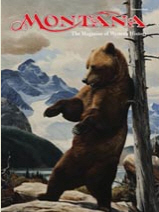
I have been a member of the Montana Historical Society for at least 25 years even though I live in Georgia. Why? I fell in love with the state after working two summers in Glacier National Park. Since the state’s history and environment fascinate me, I look forward to each new issue of the Society’s award winning Montana The Magazine of Western History.

The places where my novels are set always figure strongly into their plots and themes. Much has been written about the Rocky Mountains and Glacier National Park. I try to keep up so I can make my descriptions as accurate as possible and to ensure that my plots are viable within those settings. Even though I don’t write historical novels, I also feel that knowing the history of an area adds to my understanding of a state or region and enriches my storytelling.

Unlike many of our high school and college history classes that focused a great deal on remembering dates, reading the articles and reviews in a historical magazine is a joyful experience. There’s no pressure to take notes and/or to guess which five facts will be on a pop quiz or the final exam. In the  Summer 2012 issue of Montana The Magazine of Western History, the lead article “The End of Freedom: The Military Removal of the Blackfeet and Reservation Confinement, 1880” by William E. Farr features the Indian reservation on the east side of Glacier National Park.

One can hardly visit Glacier without learning about the tribe’s association with the park. If you reach the park by car or train from the east, you’ll pass through the Blackfeet reservation. This well-written article definitely increases my sense of place and the people who are important there.

As a writer, I want to know what I’m writing about—in depth. Obscure facts come to mind long after I read an article and influence plot development in ways I can never predict when each issue of the magazine arrives. My membership in the Montana Historical Society has, I think, been an important component in shaping my three novels set partly within the state: The Sun Singer, Garden of Heaven: an Odyssey, and my recent contemporary fantasy, Sarabande. I always hope that readers, especially those who live in the places I write about, will think that I live there, once lived there, or have spent a great deal of time seeing the sights on multiple vacation trips.

Most states have state, county and local historical societies, tourism departments, and preservation groups that are worth their weight in gold for writers who see place almost like another character in each story.

Table of Contents – Current Issue

  • The End of Freedom: THE MILITARY REMOVAL OF THE BLACKFEET AND RESERVATION CONFINEMENT, 1880, by William E. Farr
  • Protest, Power, and the Pit: FIGHTING OPEN-PIT MINING IN BUTTE, MONTANA, by Brian Leech
  • Breaking Racial Barriers: ‘EVERYONE’S WELCOME’ AT THE OZARK CLUB, GREAT FALLS, MONTANA’S AFRICAN AMERICAN NIGHTCLUB, by Ken Robison
  • Building Permanent and Substantial Roads: PRISON LABOR ON MONTANA’S HIGHWAYS, 1910–1925, Jon Axline
  • Signs of the Times: THE MONTANA HISTORICAL SOCIETY’S NATIONAL REGISTER SIGN PROGRAM, by Ellen Baumler
  • REVIEWS:  Jiusto and Brown, Hand Raised, reviewed by Jon T. Kilpinen / Hedren, After Custer, reviewed by James N. Leiker / Courtwright, Prairie Fire, reviewed by Sarah Keyes / Schackel, Working the Land, reviewed by Susanne George Bloomfield / Wood, Hunt Jr., and Williams, Fort Clark and Its Indian Neighbors, reviewed by Steven Reidburn / Pasco, Helen Ring Robinson, reviewed by Alexandra M. Nickliss / Flint and Flint, eds., The Latest Word from 1540, reviewed by Thomas Merlan / Harvey, Rainbow Bridge to Monument Valley, reviewed by Lawrence Culver

For me, such articles grab my attention like a page-turner novel. Since the reading is fun, I tend to remember it later on when I’m telling another story about the state.

Malcolm

A contemporary fantasy set in Montana, and available on Smashwords in multiple e-book formats.

Creating Magical Animals in Fiction

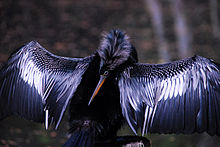
I grew up seeing Anhingas in Florida swamps. A bit of Internet research told me why they dry their wings before flying.

Animals in fantasy, folktales, faerie, and magical realism often have the ability to perform magic, change shapes, influence human events, know the future, or serve as guides between realms or worlds. While the needs of these genres are not the same, it helps to start off with as much knowledge as you can about real animals in their natural habitats. Once you know what an animal eats, how and where it sleeps, what its habits are, and what it looks like, you can branch off from there.

While most readers cannot recite the same specifics as a wildlife biologist, they do have a sense about how animals move around in their environments, and what kinds of animal habits in a work of fiction come across as true or apparently true, and what is blatantly impossible. If you’re writing faerie tales or folktales or creating animals “from scratch” like those we saw in the Harry Potter books, you have more latitude than you do in contemporary fantasy or magical realism.

My feelings about this are somewhat based on my own manner of writing, insisting on accuracy to a fault. For example, in a recent story my two main characters were driving between two real-life towns while listening to a real-life CD. My accuracy thing while writing this is to see how many miles the people will travel at normal speed and then look at the playing times of the cuts on the CD. It doesn’t have to be exact: but personally, I don’t want my characters to purportedly listen to 30 minutes of music during a ten-minute drive.

Likewise, even in fantasy and folktale, I don’t want my animals eating or sleeping in places they never eat or sleep in real life. Sure, magical powers can account for a lot of differences between real animals and fantasy or folktale animals. But the wider the gap you have between the animal in your story and the animal in real life, the less viable your story is and the greater the odds the readers won’t go along with it.

If I had the time and money, I would go into the field with a wildlife biologist and listen while s/he describes the animal behaviors and habitats we’re looking at. Like most writers, I can’t invest in $100 worth of highly specific books from Amazon just for a short story. This means relying on dozens of websites to find the foundation facts for my story.

I was trained as a journalist, yet as a novelist I believe in magic. That means I dislike and have trouble following stories or novels where everything is totally fabricated. If nothing in the story is real, it will probably not attract an audience.

I anchor my stories with verifiable facts about the animals and the settings. Perhaps you will anchor your stories in some other way. But when it comes to creating magical animals in fiction, it won’t hurt to know what your animals do and don’t do, eat and don’t eat, and are capable of and not capable of in “real life” before you start adding the fantasy elements, animal totem qualities, traditional myths and legends involving the animal, superstitions and the stuff you imagine as you put yourself in the animal’s self and walk around a bit.

If you place magical powers on top of a totally unrealistic animal, your story is going to be very difficult to write, much less keep a reader’s attention. A little careful research into your animal in nature will improve the magical animal in your story.

See Also: Part 2, for more information about the magic

Malcolm