Asking for your readers’ time

clockWhen new authors offer free books on their blogs and on Amazon, they sometimes find there are very few takers. “It’s free, for goodness sakes,” they say and begin to wonder if there’s something wrong with their post, their Amazon page listing or the Internet.

In an era where readers expect free and/or cheaper books, let’s set aside the argument that people don’t really value what they don’t pay for.  That’s a thorny question for another day.

The first problem an unknown author has with free books is simple: prospective readers don’t even know the books exist, much less that they’re free. Obviously, if J. K. Rowling or Stephen King make their books free for a weekend, everyone will know about it. News travels fast.

But, if you’re unknown, “free” doesn’t make you known. So, before you start with “free,” the stage must be set via blogs, Facebook and other networking sites. If you have a following, people will see your posts about an upcoming “free book weekend.” If you don’t have a following, find a subject related to the book to draw people to your post. People who don’t know about you won’t search for your book and your name, but they will be searching for trending topics that might relate to your book.

Okay, what if you have a huge following and few people download your free book? There are probably a lot of reasons. One of them is, of course, that people who follow each other are doing it primarily to get their names out there, not to buy anything.

More importantly, though, is the matter of the reader’s investment. “Free” might bring a book into a reader’s house when they already know about it and already want to read it. Or, if you’re writing nonfiction–where author’s name recognition is less important than fiction–people may download “free” when it’s about their hobby, career, favorite vacation spot, or a national issue they follow.

The primary reason “free” doesn’t work for unknowns who haven’t already created a lot of buzz is very simply this: the reader doesn’t want to spend the time to read the book. Readers expect a lot of bang for their buck; more to the point, while they may waste many hours a day playing games on the Internet or watching silly television shows, they’re more protective of their time when it comes to reading books.

Mental Algorithm: DO I PURCHASE THIS BOOK?  DO I DOWNLOAD IT IF IT’S FREE?

Most readers have a figurative decision tree inside their heads…how long is the book…have I heard of the author…what’s it about…are other people reading it and saying nice things about it…is there already talk of a movie deal…how many stars and how many reviews does it have on Amazon…are Kirkus, Publishers Weekly, The Huffington Post, Flavorwire, Slate, Salon and the nearest metro newspaper talking about either the book or the author?

You see where that’s going. Each time the reader says “no” in the decision tree, the book becomes less likely to be downloaded for free, much less purchased.

We can argue all we want that the reader spends time and money on other things, things that may seem frivolous when compared to the book. The thing is, those other things are known things. On Facebook, Candy Crush Saga provides a certain kind of fun within known time frames. A Happy Meal at McDonalds provides a known eating experience.

What an unknown book, free or marked down, provides for the amount of time it will take the average reader to read it, is unknown. As long as it is, “free” will mean very little to prospective readers who are already zoned out and maxed out by the thousand other prospective free/cheap books they can download today, tomorrow and for the rest of their lives.

“Free” may be nice, but it isn’t magic. You need better than free to tempt your readers.

Malcolm

Your authentic author’s voice is who you are

“When you engage in a work that taps your talent and fuels your passion — that rises out of a great need in the world that you feel drawn by conscience to meet — therein lies your voice, your calling, your soul’s code.” – Stephen Covey, quoted in Terri Windling’s blog

“Each life is formed by its unique image, an image that is the essence of that life and calls it to a destiny. As the force of fate, this image acts as a personal daimon, an accompanying guide who remembers your calling.” – James Hillman, in “The Soul’s Code: In Search of Character and Calling”

“In short, every secret of a writer’s soul, every experience of his life, every quality of his mind is written large in his works.” – Virginia Woolf, in “Orlando”

booksartIn school, we are taught to emulate the great masters and/or to consider many overlapping recipes for how short stories and novels should be written so that it takes most of us a fair amount of time to discover our “author’s voice,” the mix of style and syntax and word choice that makes our writing “us” and not somebody else.

Editors look for a distinctive author’s voice. Without it, the writing is flat or an imitation of authors the writer likes. Sometimes, an editor can tell who a writer’s favorite author is by reading a page or two out of a submitted manuscript. If an author admires Stephen King or J. K. Rowling, the last thing s/he needs to do is try to write like either of them. At best, we end up with a parody. At worst, we have “false fiction,” that is to say, “Joe Doaks pretending to be Stephen King while writing a novel called ‘Carney Land.'”

The real Joe Doaks and what he might have been gets lost in the shuffle. Perhaps, had he allowed himself time to discover his own true voice and to develop his craft into the art that was possible in the beginning, he might have become a better writer than King. Or just as good as King, but different.

As James Hillman might suggest, Joe Doaks is ignoring his own calling, the themes that are really important to him, and spending his talents on other things.

In her post “Craft and Art,” author and college professor Theodora Goss says that in her creative writing classes, she focuses on the craft of writing. When a student with talent applies himself or herself to the writing craft, Goss says that she can then “point the way to art and say, if you wish, that’s where it is, in that general direction . . .” The same is true, I think, of an author’s voice.

Perhaps an author can hide who s/he is from the novels s/he writes, but it’s a lot of trouble. If we hide, we distort our author’s voice and the flow of intuition running through our consciousness as we write. If we’re not hiding, then it’s quite likely that our world view will lurk between the lines of our fiction even if the fiction is about characters that don’t resemble us in any way.

Most of us learned as children that there was a difference between “Dad telling a story,” “Mother telling a story” and “Grandpa telling a story” even when it was the same story. The difference was voice. Dad approached stories like a journalist, Mother like an ever-hopeful teacher, and Grandfather like a farmer who saw life in its most basic form. Their voices turned a potentially flat story into a “story being told by [Dad, Mother, Grandpa].”

We are, I think, drawn back to our favorite authors over and over again because we not only like their plots and characters, but the way they tell their stories. Of course, this factor in the public’s purchase of books makes it hard for young writers to get started. We saw an example of this in the recent revelation that Robert Galbraith (“The Cuckoo’s  Calling”) really wasn’t a debut author, but J. K. Rowling writing under a pseudonym. While, reviewers gave “Galbraith” high marks, few people bought the book before they found out Rowling was the author.

To some extent, those purchases are partially celebrity worship. But they also suggest that a fair number of readers like what they’re reading when the book is “Jo Rowling telling a story about ABC or XYZ.” Whether it’s our stories at bedtime, tall tales told around a campfire, or the novels we buy at the local bookstore, we discover that a hard-to-define mix of genre, craft, art and voice draws us to one storyteller more than another.

Starting out, it’s hard to resist the temptation NOT to write like King or Rowling because, after all, the bestseller list is so clearly telling us that is what readers want.  We might even sell our first book because we’ve written a book kind of like King’s “Joyland” or kind of like Rowling’s “The Cuckoo’s Calling.” But that kind of “success” really represents a great loss, the loss of our own author’s voice and our own storytelling passions.

When we follow our intuition and allow our stories to develop naturally as we write them, there’s a lot of ourselves in them even though they’re not about us. Our author’s voice develops and becomes stronger when we admit (to ourselves) “this novel is ‘me telling a story.'” I’m not talking about vanity here, but authenticity.

Or, more simply said, in being himself or herself while writing, an author is engaged in honest storytelling.

Malcolm

My world view, that each person has unlimited potential, is clearly visible in “The Sun Singer,” “Sarabande,” “The Seeker,” and “The Sailor.” I knew no other way to tell these stories.

Only $2.99 on Kindle.

Adding atmosphere in a navy novel

1-MC speaker
1-MC speaker

If you have watched movies set on board Navy ships, you have probably seen the captain use the “1-MC” shipboard-wide public address system to make announcements. Or, if the main characters weren’t bridge officers, you probably heard 1-MC announcements in the background. Some, like “General Quarters” require an immediate response. Others are informational in nature and/or apply to certain people.

In my recent contemporary fantasy The Sailor, I wanted to give a bit of the flavor of ship board life by interspersing 1-MC announcements in between segments of action and dialogue. If my book were an audio book, complete with sound effects, I might have these playing in the background. In print, I hope I achieved the same effect by distributing them throughout the text.

My book is set aboard an aircraft carrier. A sailor on a large ship can easily get the feeling that 1-MC announcements are impersonal, come out of nowhere, and are examples of a lot of paperwork and regimentation and tradition that doesn’t always mesh with the reality of most of a man or woman’s hour-by-hour duties.  Typical 1-MC announcement:

“Now hear this, now here this, secure from General Quarters. Now set Condition Yoke.” Condition Yoke was the readiness condition set while at sea or in port during wartime.

I added to the atmosphere by also using interspersed bits of “from the bridge” dialogue and official “from the deck log” comments. These are rather stylized in nature and further serve to make the ship at times seem like a rather alien place. Typical bridge dialogue:

“Left five degrees rudder.” “Left five degrees rudder, aye sir, my rudder is left five degrees.”

Each 1-MC message begins with a specific call from a boatswain's pipe to get the crew's attention.
Each 1-MC message begins with a specific call from a boatswain’s pipe to get the crew’s attention.

Typical deck log entries:

00-04 Maneuvering on various courses and speeds while conducting flight operations 04-08 Steaming as before. 08-12 Steaming as before. 0939 Received daily muster report. No new additions or deletions. 12-16 Steaming as before. 1225 Completed flight operations for this date. Set course 140° Speed 25 knots.

If I were writing about a downtown Chicago car chase,  I might mention the weather, the sound of the elevated, and the horns of taxis. For a wilderness scene, there are birds, animals, bad weather and inhospitable terrain. Some times, such things provide ambiance and sometimes they directly impact the plot.

As both a reader and a writer, I like it when a story contains the sighs and sounds around the edges of the action because such things provide atmosphere and even some unexpected plot twists.

“Sweepers, sweepers, man your brooms. Give the ship a clean sweep down both fore and aft. Sweep down all lower decks, ladder wells and passageways! Now sweepers.”

Malcolm

Kindle Edition
Kindle Edition

My muse wants to know what I’ve done for her lately

Today at high noon, while the storm was frightening my cats,  I got an e-mail from my muse that said, “Do not forsake me, O My Darling.”

Darling? What’s that about?

I let that ride in my reply: “Say what?”

“What have you done for me lately?” she asked.

According to tradition, falling trees take precedence over writing new stuff.

Well, a lot of things. I thought about writing something. I mulled over some ideas. I wondered whether or not to dream up a short story for the Harper’s Bazaar contest. And I read the kinds of books that fire up my imagination and make it more likely I’ll write something. I told her all this.

Her response was, “pfffft.”

I wanted to tell her that writers, like normal people, become preoccupied with life. We’re concerned about GMOs in our food, fellow writers who are under the weather, why Cote de Pablo is leaving “NCIS,” and whether or not the Copyright Office has heard of our books. Okay, sometimes we wonder if anyone has heard of our books, but the muse doesn’t want to hear whiny points of view like that.

Some writers say that if we don’t write every day, we’re screwed, we’re going to lose our touch, we’re not being true to our art and craft. To that, I say (as Colonel Potter said on M*A*S*H): “Horsehockey.”

On the other hand, if there’s no manuscript in progress, then chances are good there won’t be, say, a Pulitzer Prize coming in the mail next year.

Many of us go through periods of limbo when, frankly, we have nothing to say. My friend Smoky Zeidel calls these “fallow times.” I like that. We need times when we can renew ourselves.

My muse told me, “At your age, you don’t have time for fallow times.”

You really know how to hurt a guy, I thought. I didn’t say that because I was busy saying: “I thought you’d forgotten my birthday, DARLING.”  (We were now in Facebook chat mode and we all know how klugey that is.)

“Heaven’s no,” she said. “I’m sending you a dream tonight about a prospective new novel that’s going to be bigger than The Cuckoo’s Calling.”

“Please tell me it’s not a private eye story about a body that falls and/or is thrown off a balcony with a name like The Ostrich’s Calling.”

“You’ve been sticking your head in the sand too long already,” she snapped. “What I have for you is a dark Southern charmer called Rabbit on a Hot Tin Roof.”

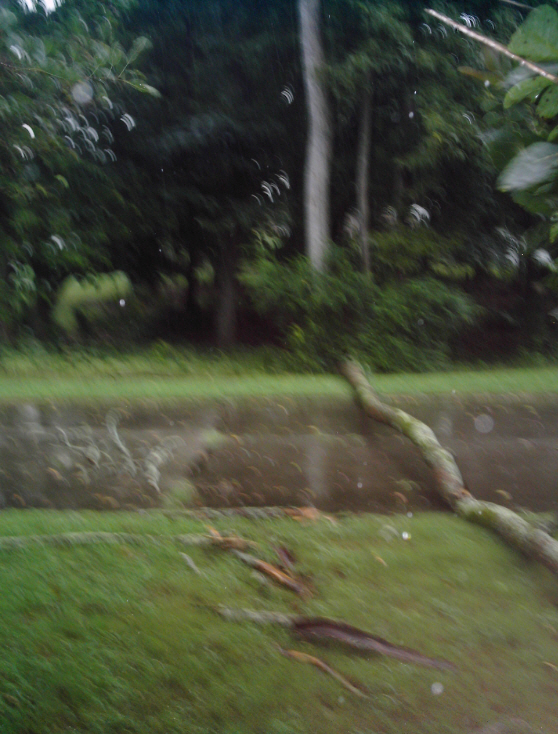
Fortunately, I heard the storm blow a tree down across the driveway, giving me an excuse to run outside in the rain and snap a blurry photograph. I wondered though: “When a tree falls outside a writer’s house, does his muse hear it?”

Malcolm

The library and College Avenue remembered in fiction

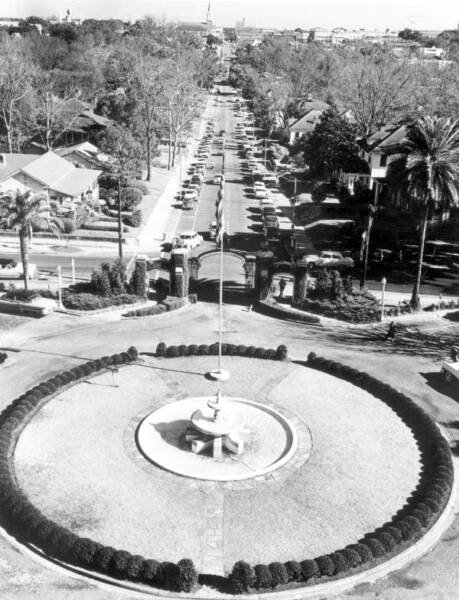
College Avenue in 1964 looking from the unniversity toward downtown

I grew up in a town where College Avenue led straight from the main business district to the university’s main gate.  I liked the sweeping hill, the brick paving, and the older homes that owned the street as it drew closer to the university’s administration building. As I wrote The Seeker, College Avenue at night looked like the perfect place for a stalker.

And I knew exactly where that stalker would come from: the university library. I worked there as a student assistant to help pay the bills. It was my favorite place on campus except for the fact somebody there was spying on young women. He pushed books out of the shelves in a signature way so he could, apparently, look up dresses and ogle legs.

We never caught him. One minute an aisle leading through the open stacks was pristine; the next minutes there were books on the floor. I often wondered what kind of a sick person was on the loose. I never knew, but my imagination supplied plenty of details for the 1960s-era College Avenue chapter of The Seeker.

Protagonist David Ward is there in the dream world because he fears the stalker is following his girl friend Anne Hill. There’s little he can do, though, but watch the night unfold. He feels as powerless as I did in the library trying to get “the library guy.”

Except from The Seeker

Kindle Version
Kindle Version

David stood at the corner of College and Monroe in Tallahassee, Florida. To the north: the primary downtown business area, including the Florida Theater, which was showing Send Me No Flowers with Rock Hudson and Doris Day. To the west: the State Theater presented Elvis Presley in Roustabout. Farther west, College Avenue grew dark as it approached the university and the night beyond.

He dreamt and he knew he was dreaming. The sounds of the city were clear and, so, too, the conversations of the people on the sidewalk between the theaters, and some of their thoughts as well, expectations of popcorn, concerns about recent exams and questions about who they would see this evening and whom they would be with. Unlike his standard dreams, David walked like a ghost, unseen and unheard among the students and family groups and scattered grandparents. Yes, he could follow Anne or Nick or even RC without their knowledge. But if danger threatened, he could shout no warnings nor take any action.

He walked north and found Anne in front of the Florida Theater with Marta and Karen. Karen and Marta wanted to go out to a hamburger place with three students in a double-parked car. Anne didn’t.

“I’m fine, just a bit of a headache,” she said.

“We should stay together,” said Marta.

Staying together is smothering me.

“The streets are crowded,” said Anne. “It’s a safe night for walking back to the dorm.”

The car pulled away and Anne walked toward College Avenue with David, though she didn’t know it. Her hair was in a ponytail and she wore a light blue sweater against the gentle chill of the evening. The rivers of people coming and going from the theaters converged at College Avenue with cars driven by dates, friends, and parents in a clamor of horns and shouted greetings.

Very few people are walking toward the campus. The hill is dark past Schwobilt’s Department Store and the Baptist Church. Not good. Somebody’s whistling off key across the street. Maybe I should see Roustabout. Afterwards, perhaps a group of students will head back toward from front gate.

David also heard the whistling, but he saw no one there, heard no thoughts to follow within the rag-tag, repetitive “Lord, I Want to be a Christian” that swirled like an ill wind around the YMCA building and several small clothing shops across the street.

Anne hovered hear the ticket booth within the safe glow of light beneath the marquee.

“Go inside, Anne,” he said. While she didn’t hear him, David heard her think of him, wishing she had invited him down for Thanksgiving. The young woman in the glass booth
looked up, smiled.

David would hate Roustabout, but at least he would be here.

“I’m thinking about it,” said Anne.

This is silly.

She looked at the movie posters in the glass cases. Glanced across the street, and then walked away, comforted—he could tell—by the elderly couple standing in front of the jewelry store. She heard them talking about wedding rings and didn’t want to intrude. The Big Bend Bookstore caught her eye. She tried the door. It was locked.

Why are they closed so early? A good night for strolling, movies, and bookstores. I could pick up a copy of Herzog even though Marta thinks it’s strange.

Except for the wedding ring couple and the two girls looking at clothes in the Schwobilt’s window, people were disappearing into the night. The lady in the ticket booth turned off her light after putting up a SOLD OUT sign. Anne stood in front of the bookstore looking at the stacked up bestsellers for ten minutes. David saw a few tempting titles, but then, he wasn’t really there.

But he who whistled that song was there.

He’s watching me.

David stared past the clothing shops toward Monroe Street. Nobody. The notes we louder now and more off key, rather like the sound from a poorly made slide whistle prize out of a cereal box.

“Anne, go inside the theater.”

In my heart, in my heart, in my heart. Damned mocking notes, it’s “Nick of Time” Nick looking for girls to pray with him and then what, a private communion?

The song unsettled her. She hurried across Adams Street and tried the locked door at Schwobilt’s as the notes of the song grew closer, then farther away; there were no polices car in sight, no wedding ring couple, and no RC.

The dorm will be safe. No men in the hall.

David walked through every shadow and looked around all the corners, but the tune was everywhere at once.

The church was locked.

No sanctuary here. Just: “ … be a Christian, to be more loving, to be more holy, to be like Jesus,” over and over like a 45 rpm record stuck on a turntable replaying until the power fails.

If I were to visit my old hometown today, I seriously doubt I’d feel comfortable walking down College Avenue at night: I’ve seen that stalker scene so many times, the street has changed.

Malcolm

Old Manuscript: a window in time

eatonI’ve been looking through a manuscript that I packed away in an Eaton’s Corrasable Bond typewriter paper box 30 years ago. It’s a window into the past.

Eaton’s Corrasable Bond was a popular ease-erase typewriter paper that was popular back in the 1950s through the 1970s because mistakes could be erased easily without smudging. The fact that this old manuscript was created on a typewriter on a kind of paper that’s no longer made reminds me just how old the story on these pages is.

It also reminds me how frustrating it was to create on a typewriter. Unless one was a flawless typist, it was nearly impossible to create a perfect manuscript for submission to a publisher in the days when (a) everything was submitted by mail, and (b) Xerox copies of manuscripts were frowned upon.

eaton2As great as this paper was, it couldn’t be used for the final version. Why? Ease-erase also meant easy-smudge. It didn’t take long for the words to smear and suggest to the publisher that a lot of people had already looked at it. For the submittable version, we shifted over to Berkshire bond. It was hard to erase, but it didn’t smudge.

While we did have correction fluid and correction tape, it had to be used sparingly because it made the manuscript look less than pristine.

Who I Used to Be

My father was fond of the phrase, “Who I am to be, I am now becoming.” I didn’t like the phrase, because the only time I heard it was after being lazy or doing something overly wrong. Yet, it’s got some truth to it because I see hints of my current writing style in the old manuscript.

Things that were funny then, seem lame or pathetic now. But some of the words still sing. I look at this old manuscript and remember the high hopes I had for it at the time. I know when  “the time” was because my return address is typed in the upper left-hand corner of the first page of the MS. That address is five houses old.

From today’s perspective, I’m glad nobody bought the story five houses ago. Chances are, it would be long forgotten by now what with the short shelf life of books that aren’t in the bestseller category. In many ways, finding this old MS is a gift: it’s a chance to see the writer I was and a chance to see if the story still has enough punch to it that would make it worth revising.

It’s too soon to tell. Stepping into the past is a journey of it’s own, something a lot of people do with old photo albums and journals. The old MS is a window on my reality of those years because, like many authors, I insert bits and pieces of “real life” into my stories in a camouflaged fashion.

If you’re a writer–or a non-writer who keeps a personal journal or diary–how do you feel when you find old words packed away in a dusty box in the garage or the attic? Is it bittersweet, pure nostalgia, or”I can’t believe I wrote this”?

Malcolm

Malcolm R. Campbell is the author of satire, paranormal short stories and contemporary fantasy novels including the recently released novel of fate and magic called “The Seeker.”

Only $2.99 on Kindle.

The groundhog day approach to the web site

websiteintroThere are says when I wake up and think, I’ve seen all this before.

A lot of those days involve the web site.

I see many authors’ web sites I like. The bad news is, if I’ve heard about the author, that means they’re well known enough to just possibly not really need a web site. The best of these sites have a charming yet professional bio, a display of book covers and blurbs, and a list of reviews and events.

That is to say, these sites take a minimal approach because, really, most readers will only find the site after they’re reading the author’s books.

My web site goes through stages. During stage one, it’s rather minimal because the sites of the most successful authors out there tend to set the stage for what a successful author’s web sit looks like.

Visitors arrive, take one look, and think, “this is a successful author.”

On the other hand, debut and other lesser known authors can’t get people to start reading their books if they take a minimal approach. Let’s say your name is J. K. Rowling and you wrote Harry Potter. If so, people will find your site because they’re using “Rowling” and “Harry Potter” as search terms.

If your name is Zeke Boswell and you wrote a book called The Bird Bath Blues, you can be sure of one thing. Nobody is using “Zeke Boswell” and “The Bird Bath Blues” as search terms. And, because they’re not, there’s a tendency to keep adding more and more stuff to the site with an ever-expanding list of key words until your site stats show people are actually visiting the site and staying long enough to read the stuff you put there.

Of course, as you add stuff, you remember adding stuff before. The web site is turning into the 1993 movie “Groundhog Day.” You realize that you started out with a spartan, professional web site at least a dozen times before and that over time you get adding this and adding that until it finally became a maze of pages, plots, links, pictures, and goodness knows what else.

There was so much goodness knows what else on it that has become a yard sale or a sleazy flea market.

So, you get ticked off and throw away 99% of the site and embarked on yet another fresh start.

You knew from watching Bill Murray going through the same day over and over, that the whole shebang was going to keep happening until you learned something very important.

Until then, the web site is going to look wonderful, but have no visitors and sell no books. That’s when the tinkering begins. Or, you can keep it like it is when you have it the way you like it and hope for the best. Easier said than done.

Now, if I can just resist the urge to tinker with the site for a while, maybe I can break the cycle.

Malcolm

A coming-of-age adventure for your Kindle

Remembering ‘The Mainline of Mid-America’ in Fiction

IClogoKnown as The Main-Line of Mid-America, the Illinois Central (chartered in 1851), connected Chicago with Sioux City, Omaha, Mobile, New Orleans and points in between. Perhaps its most famous train was the City of New Orleans which began running in 1947 and still operates today under Amtrak. Steve Goodman’s 1971 folksong “City of New Orleans,” celebrates that train with its “Good morning Anerica how are you” in recordings by everyone from Judy Collins to Willie Nelson.

When I was in college in Florida and working in Glacier National Park in the summer, I traveled by train. Even though the Great Northern Railway sold its historic park hotels in 1950, the railroad still provided low-cost tickets to seasonal park employees such as bellmen, maids, desk clerks, and waiters. On my return trips, I rode the Illinois Central’s lesser-known train called the Seminole. Since Tallahassee had no north-south rail service, I got only as far as Albany, Georgia (100 miles away) where my parents picked me up.

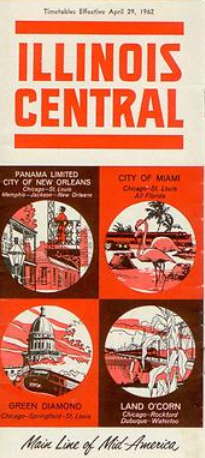
Passenger Timetable
Passenger Timetable

My worst experience aboard that train came one winter when I was coming home from a visit with friends in Chicago. Somewhere north of Albany in Central of Georgia Railway territory, the train stopped in the middle of a forest recently glazed over by an ice storm. A trainman came through after a while, and said we were free to get off and stretch our legs because we were going to be there a while. A huge tree lay across the tracks. The train crew, with help from the passengers, attacked that tree with fire axes. It took four hours and many blistered hands to clear the tracks. (My parents saw more of Albany that day than they planned.)

Nostalgia Through Fiction

In my recent contemporary fantasy The Seeker (Vanilla Heart Publishing, April 2013) my main character travels from Chicago to Albany via the Seminole to see his girl friend. Since I rode that train many times, it was fun re-creating ambiance of 1960’s train travel in the novel.

Several months later, the sequel called The Sailor, included some of my memories of the Great Northern Railway. In fact, my protagonist David Ward got to do what I always wanted to do: run the train.

In both novels, train travel is a relatively minor part of the action. But I like to make my settings real as well as historically accurate. Train travel was by no means perfect, but it was how we got where we wanted to go when airline travel was still too expensive for most people. There’s nostalgia in the memories, and that’s another reason I included them in my fiction.

Illinois Central Excerpt from The Seeker

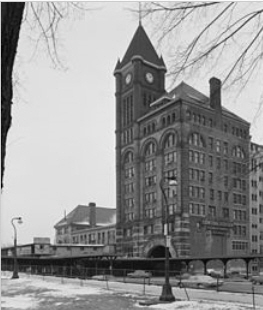
When the taxi dropped David off beneath the clock tower of the 72-year-old Romanesquestyle Illinois Central terminal in Chicago for his May 1 trip to Florida on IC train #9, the Seminole, he wondered if Anne still considered the spontaneous marriage proposal he sprang on her while the Empire Builder raced between Williston and Minot, North Dakota last September with a no-holds-barred, unconditional, leap-of-faith yes.

I loved IC Station in Michigan Avenue. It was built in 1893. It was torn down in 1974 when municipal vandalism won out over preservation and common sense.

Thirteen stories up, the clock read 4:00 PM. Roughly 21 hours later and 940.7 miles down the Main Line of Mid-America, Anne would meet the Jacksonville-bound train at Albany, Georgia as —she claimed—a “different person.” “Za aníwaz?” Eagle would ask. Had she become a blonde? Taller, thinner, shorter, heavier? Or, more like Katherine Hepburn and less like Elizabeth Taylor?

As he found his seat in the old heavyweight coach in the chocolate and orange colored train, the “different person” comment, made so lightly on the phone several weeks before, played on his mind in a minor key.

By the time the pair of General Motors E9 diesel locomotives eased the train out of the station at precisely 4:45 PM, the minor key was dangerously close to a dirge. He was going south from Chicago with love, but was his blind date Daniela Bianchi, playing the sexy Tatiana Romanova with the bedroom eyes; or Lotte Lenya as the sinister agent Rosa Klebb with a lethal knife in her shoe?

At 63rd Street, he opened Barnard Malamud’s A New Life to the first page in hopes that “S.Levin, formerly a drunkard” would be entertaining enough to distract him from idle speculations about the Wicked Witch of the West vs. the Good Witch of the North.

Journey's Beginning
Journey’s Beginning

Dinner—between Champaign and Effingham—distracted him. For one thing, he shared a table with Ed and Mary Saunders of St. James Street in Waukegan, Illinois, who were heading to Miami for their gala fiftieth wedding anniversary celebration at the Fontainebleau, and Mary had a lot to say about Ed’s failure to book them on the more luxurious City of Miami instead of the more utilitarian Seminole. For another thing, the Canapé Lorenzo set before him on the railroad’s coral china was actually quite good—as were the Athens Parfait (compliments of Ed Saunders who, according to the waiter, was a snake when it came to forgetting the tip) and coffee for desert.

David fell asleep south of North Cairo, Illinois, soon after Laverne told S. Levin, “I’ve never done it before with a guy with a beard.” He awoke abruptly 245.9 miles later in Haleyville, Mississippi. A New Life lay on the floor at his feet. He looked at his watch, almost 5:00 AM. The car was quiet until a woman leaving the restroom at end of the coach misjudged the uneven movement of the train through a pair of switches, screamed “shit” in a voice loud enough to wake the unborn before falling against the push-down door handle and careening out into the noisy vestibule. The sleeping passengers’ heads moved, shoulders scrunched or unscrunched, feet slid out into the aisle or were pulled in tight, and arms stretched out like the legs of large insects in a continuing wave from the front to the rear of the car. And then all was at rest again.

Then the squalling wheels in the coach’s rear truck in a tight curve fetched up the memory of the caterwauling panther of a nightmare that must have stalked him thirteen miles up the track at Hackleburg … he had been running between small ponds beneath a bright moon … Coowahchobee sprang out of the dark stand of hatrack cypress and chased him through shallow water … trapped, suddenly, in an unyielding thicket of titi … the small white flowers exploded over head like a dying constellation when … brown eyes above a deep growl that ran through him seconds before the claws snagged his left arm … as the large cat dragged him away from the water, he was conscious first of the pain and then of the dance of its exceptionally long tail … a vague sound deep in the swamp—the novel hitting the floor or the horn of the diesel at an ungated crossing—brought him back to his reclining coach seat on the southbound Seminole. The name Anne wrote in her last letter—Coowahchobee—was the Seminole name for the increasingly rare Florida panther. He had looked that up in the college library.

Kindle Version
Kindle Version

David wandered into the dining car a little before 8:00 AM as the train arrived in Birmingham. Couldn’t sleep. Every time he closed his eyes he saw the panther’s eyes. He tried to read, but S. Levin’s fate—teaching English composition in a college with no love of the liberal arts—ticked him off. Was he destined to end up like that? Long before Laverne commented about his beard, Professor Fairchild told Levin to focus on the college’s pet grammar book and “give your students plenty of wholesome, snappy drill.” Holy shit. Death by panther was a more merciful fate. Ed and Mary were nowhere to be seen, and that fact alone almost nullified the impact of the Coowahchobee nightmare. He ate his bacon and egg soufflé in peace and drew strength from the sunny Alabama morning.

I hope you enjoy the book, including my memories of the old trains.

Malcolm

Glacier: looking forward to a visit with a few mixed feelings

Long-ago days
Long-ago days – the employee picture

Although my novels (The Sun Singer, Sarabande, and The Seeker) are set in Glacier National Park, I haven’t set foot in the park for many years. (I worked there as a seasonal employee in the 1960s and visited in the 1970s and 1980s.)

Later this summer, I’m looking forward to seeing the place I have always thought was the most beautiful place on Earth. All my photographs and slides are old and faded, so I hope to capture some new memories along with some new pictures.

And yes, I plan to take a red bus ride up to Logan Pass and back, have a nice meal in the now-renovated Many Glacier Hotel dining room, and walk around Josephine and Swiftcurrent Lakes on a trail I once knew like the back of my hand.

I’ll be there with my wife and my brother and his wife. We travel well together and pretty much take a casual approach to sightseeing, dining and hanging out in scenic locations with a variety of activities.

But, like anyone going back anywhere, I worry about it being anticlimactic or that it will be changed more than I want to know.

The worst of the here and now

I already know that there are fracking operations on the Blackfeet Reservation a stone’s throw from the park’s eastern boundary. I want to say, “I told you so” about such problems because after Glacier was called the most threatened park in the system in the 1980s, I campaigned strongly for legislation that would keep certain kinds of development farther away from pristine wilderness areas. This is worse than having a tar factory go up in city subdivision.

The response was, “we can only protect the park itself.” My reply was, “if you don’t restrict development outside the park, you’re not protecting the park.” And so it went.

Also, I already know there are 300 miles fewer trails than there were when I worked in the park. Inadequate funding is the main cause. On the plus side, Many Glacier and other park structures have been seeing some renovation work through various campaigns and grants. That makes our historic, National Register structures last longer so more people can enjoy them.

I can tell I’m out of touch. When I called reservations at Many Glacier Hotel, I asked for the Alpine Suite. That was the hotel’s best suite when I worked there. Nobody had ever heard of it. I described where the two Alpine Suites were, and learned they’d been converted into regular rooms.

The lure
The lure

The first few times I went back, the bellmen would always show me that the wall of names in the bellman room was still there. My name was there along with many other familiar names from past years. I already know this space has long-since been converted into a restroom.

If we stay on an upper floor in the main section of the hotel, we’ll appreciate the standard elevator that took the place of the old manually operated, cage-style elevator that guests were seldom allowed to ride. It was a great old elevator, one that probably would fail most building codes in the country if it were still there.

The last time I was in the Swiftcurrent Valley, my knee went out on a hike up to Grinnell Glacier. I was astounded. Those of us who worked at the hotel used to stroll up there dozens of times during the summer. Since then, my knees and ankles have grown weaker, so I wonder how much hobbling around I’ll be able to do.

In the past, I’ve always seen people there that I know. This time I won’t. It was fun having the manager, fishing guide, houskeeper, wranglers and others remember me on past return trips. This time, it will be rather like going back to your old high school long after the teachers, coaches, bus drivers, and administrative staff have all retired.

So, how will it go? I think we’ll all come home with some genuine new memories, memories of Glacier and ourselves in the here and now rather than Glacier as it was or might have been. And if that means our pictures show a bunch of weak-kneed, out-of-shape people sitting on the balcony watching the boats on the lake and the ospreys flying high over the nearby peaks, so be it. Maybe a young couple will talk by and ask, “have you folks ever been here before.”

Maybe I’ll say, “Sure, I used to jog up to the glacier and back after dinner and climb with the mountain goats.”

They’ll pretend to believe me.

Malcolm

A Glacier Park novel for your Kindle

Briefly Noted: ‘ The Patience of Pearl: Spiritualism and Authorship in the Writings of Pearl Curran’

“The Patience of Pearl: Spiritualism and Authorship in the Writings of Pearl Curran,” by Daniel B. Shea, (University of Missouri Press, November 2012), 296pp, 15 illus.

patienceofpearlPearl Lenore Curran, a St. Louis music teacher, wrote (or possibly channeled) multiple novels and hundreds of poems between 1913 and and 1937 under the name Patience Worth.  Curran was not a spiritualist. She tried out a friend’s Ouija board and, depending on one’s viewpoint, she began communicating with either her subconscious mind or a discarnate entity who lived in England in the 1600s.

The lure of spiritualism brought many people to Curran’s door, some of who listen to the readings, reported the phenomena in books and newspapers, and even spoke with Patience through Mrs. Curran. Some suggested Patience was a real spirit. Others said Curran was being coached, for she had no educational background for speaking and writing about 17th century England using many words and phrases that were not common in the 20th century United States.

Regardless of the source of the material, it was not only voluminous, but attracted rave reviews. To learn more about Curran and Patience Worth, see the September 2010 “Smithsonian Magazine” article “Patience Worth: Author From the Great Beyond.”

Like books such as Irving Litvag’s Singer in the Shadows: The Strange Story of Patience Worth and Casper Yost’s Patience Worth: A Psychic Mystery, the “Smithsonian” article focuses chiefly on historical facts and the opinions of spiritualists. Professor Shea’s The Patience of Pearl focuses on the works themselves within the scope of Curran’s life and Patience Worth’s literary voice.

In his introduction, Shea writes that “it does seem odd that a woman who wrote with brief but notorious success less than one hundred years ago could still be, as Lucky Jim once put it, so strangely neglected.” He suggests that the way they were written discredited them from the beginning as part of spiritualism’s table tapping and purported revelations from entities from another time or place.

From the Publisher: “The Patience of Pearl uncovers more of Curran’s (and thus Patience Worth’s) biography than has been known before; Daniel B. Shea provides close readings of the Patience-dictated writings and explores the historical and local context, applying current cognitive and neuro-psychology research…Novelistic in its own way, Curran’s life included three husbands and a child adopted on command from Patience Worth. Pearl Curran enjoyed a brief period of celebrity in Los Angeles before her death in 1937. The Patience of Pearl once again brings her the attention she deserves—for her life, her writing, and her place in women’s literary history.”


In one of her poems, Patience/Pearl wrote:

Lo, are my songs like birds
Within a wicker hung, and thou,
Beloved, hast loosed the latch
And let them free!

Shea’s thorough overview is an open door.

–Malcolm