Irony – The Sharp, Double-Edged Sword

conciseOxford“Irony: A subtly humorous perception of inconsistency, in which an apparently straightforward statement or event is undermined by its context so as to give it a very different significance. “In various forms, irony appears in many kinds of literature from the tragedy of Sophocles to the novels of Jane Austen and Henry James, but is especially important in satire, as in Voltaire and Swift.”  – Oxford Dictionary of Literary Terms

If the protagonist in a novel says, “He is a bad doctor,” and lets it go at that, he has made an assertion. If the protagonist is a doctor, we might believe his statement. However, in fiction–as well as in nonfiction–assertions are much stronger when backed up by facts. Backing up assertions is part of showing rather than telling.

Now, consider this line from George Orwell’s Burmese Days: “In the evening, the wounded boy was taken to a Burmese doctor, who, by applying some poisonous concoction of crushed leaves to his left eye, succeeded in blinding him.”

Thiss is verbal irony. The audience knows the doctor did not intend to blind his patient, yet he did so because he was inept. There are two levels of meaning in irony: the meaning on the surface and the unexpected, actual meaning. The use of the word “succeeded” and the term “concoction” here rather than “medicine” are strong indicators that the author’s intention here is ironic.

Sentimentality is an Assertive Showing
StyleEastman“The sentimentalist over-urges or mis-urges his readers to feel emotion,” says Richard M. Eastman in Style: Writing as the Discovery of Outlook. “Many good writers simply allow the reader without urging, to infer his own emotion from detail well chosen and carefully drawn.

“The ironist actually counter-urges in such a way as to draw his reader forward into active collaboration toward the desired response.” (Eastman changed the book’s title in the edition shown here.)

Irony can be understated or overstated. Either way, it shows–with the reader’s interpretative help–rather than tells. However, in most novels other than dark satires, it’s best used with some restraint. Too much irony is like too much hot sauce on the taco.

(More often than not, when people say–in conversation–that something is ironic, it isn’t. It’s usually simply odd or strange. The Guardian had a nice article about this some years ago.)

In using irony, as Eastman says, a writer can rather bluntly signal irony by overtly saying what is obviously false: “This rain is Mother Nature’s way of drying the field for the baseball game.” However, this is rather weak because its surface meaning isn’t really believable. As you see here, we have a blurry lines between sarcasm an irony.

When you lead the reader realistically toward a conclusion that suddenly collapses at the end of the passage, the impact–as in the Orwell quote–can be very great. Double meanings can also point symbolically to the novel’s overarching themes in many subtle ways. Irony is one of the many tools on the writer’s drawing board for luring the reader into a memorable story.

Malcolm

My short story “The Lady of the Blue Hour” is free on Kindle for five days. Read about the blues, the band trip, the empty house, and a mysterious lady looking for the dead.

2013 without sex, drugs or rock and roll

britneyI’m proud of all of you who made up the 12,000 views this blog had during the past year. You came here to read author interviews and reviews and fiction and fantasy rather than searching for sex, drugs or rock and roll.

I’m proud of myself, too, for I said nothing about JLo, JLaw or Miley on her wrecking ball, and didn’t display any gratuitous pictures of Britney Spears, much less any of the year’s babes rocking jaw-dropping dresses on various runways, beaches, street corners, parking lots and other places where “regular people” wearing such clothes would be arrested.

I ignored Justin Bieber, Cory Monteith, anyone named Kardashian, the “Duck Dynasty” drama, said nothing good about “Breaking Bad,” and said nothing bad about the NSA taking over Santa’s job of compiling naughty and nice lists. I kept quiet about Michael Douglas and Catherine Zeta-Jones being spotted together for first time since the split.

Instead, the busiest day on Malcolm’s Round Table was August 7th with most of you reading “Briefly Noted: ‘The White House Boys’ and ‘The Boys in the Dark.'”

orangeblackSuffice it to say, Piper Kerman didn’t stop by to tell us why orange is the New black. Would that have been a hot post? Probably. Instead, my most-read posts here (in addition to the White House Boys) were:

As an author of contemporary fantasy, I considered writing a cautionary tale about a young man who discovers that “the whole Hollywood thing” is more of an illusion than we thought. Joe Doaks, my protagonist, would discover that 99% of the hunks and babes we see on the Yahoo “news page” are really holographs projected by a Wizard Of Oz kind of guy who hides behind a curtain.

Then it occurred to me: but hey, that’s not a fantasy.

I’m hoping 2014 will also be a fun year on this blog without sex, drugs or rock and roll. Thank you for all your visits and comments in 2013. Oh, and in case you were wondering, Britney Spears Says She Loves Jennifer Lopez And Wants To Act.

Malcolm

Malcolm R. Campbell is thinking about being the author of books with titles like “Pretty in Orange,” “Researchers Discover the 51st Shade of Grey,” and “Wrecking Ball Breaks Up Pot Party.”

Stories where we live

from the archives. . .

“One of the best things about folklore and fairy tales is that the best fantasy is what you find right around the corner, in this world. That’s where the old stuff came from.” — Terri Windling

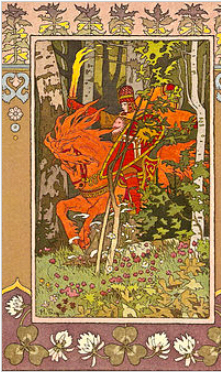
Ivan Bilibin's illustration of the Russian fairy tale about Vasilisa the Beautiful
Ivan Bilibin’s illustration of the Russian fairy tale about Vasilisa the Beautiful

For American audiences, the most famous fairy tales, including those brought to the screen by Disney and others, all came from somewhere else. Such is the power of books and film.

Of course, once upon a time, the more famous stories we know were once local yarns from real places. In fact, many places got their names from something that once happened there with people who were well known at the time. To those who knew the origin of the name, a river or forest or mountain pass was more than water, trees and rocks. It was all that, plus what happened–and, what might happen again.

Almost all places have stories associated with them. You can find some of the more notorious and/or most interesting by running Google searches with such phrases as “Florida ghost stories,” “Glacier Park legends,” and “Illinois haunted places.” The people who live in a town or county often grow up hearing multiple versions of these stories along with others that never get into books, newspapers or websites.

We tell stories to each other almost every day. Sometimes, this is pure gossip. At other times, it’s neighborhood news with a bit of opinion thrown into it.

Storytelling is a very natural pastime even without a front porch or a campfire. We share the good, the bad and the ugly with each other. When that which we’re sharing is larger than life, or stranger than normal, it begins turning into a legend associated with the place where we live.

When we camped pine forests, we told and re-told the tall tales about what happened there "years ago."
When we camped pine forests, we told and re-told the tall tales about what happened there “years ago.”

As a writer of contemporary fantasy, I always love weaving local ghost stories and legends into my work. For one thing, those stories are just as much a part of a place as are the rivers, mountains and towns. Also, they have a lot of flavor in them whether it’s pure local color or an amusing or frightening tale that could have happened anywhere.

Our stories are stronger, I think, when we consider the legends and tall tales connected to a place as part of our research. Almost every town has a haunted house, cemetery, or lover’s lane. If you live there, you know about it already. If you don’t, it’s not too hard to track down through ghost hunter and haunted websites.

Plus, for those of us who love blurring the line between fiction and reality, ghost stories about the places where we’ve set our short stories and novels add a nice touch of mystery.

Malcolm

99seeker

The e-book edition of “The Seeker” is also on sale at Smashwords and OminiLit

Bloggers: Stop asking guests, ‘When did you first know you wanted to be a writer?’

Other than family and friends, nobody buys an author’s book after seeing a lame, blog-tour question answered like this:

“I’m very passionate about writing. I knew in the first grade I wanted to be a writer, but didn’t start trying to be one until after having another career in the insurance industry that finally burned out, leading me to think, holy crap, what am I going to do with my time now?”

Okay, perhaps I exaggerate.

wordcloudBut here’s the problem: answers like that don’t sound like anything a professional writer would say, and by professional, I’m talking about career authors who have spent years paying their dues and perfecting their art and craft.

Sure, sooner or they’re asked when they started writing, but it’s usually within the context of a larger, more detail-oriented professional sounding interview.

Blogs Mass Producing Author Interviews Don’t Help Anybody

If a blogger asks the same questions to every guest, including the typical first question, “Can you tell us something about yourself?” then the resulting interview is only preaching to the choir, the choir being the author’s friends, family, and co-authors at a publisher or critique group.

In a world where most people buy most fiction from authors with major buzz at major media outlets, few serious readers are going to select a book from an unknown author after reading a generic interview.

Real Interviews are Journalism

Books are an investment of money and time. Make them sound worth it.

While breaking news and short deadlines often cause reporters to ask bad questions, real interviews are done by reporters, magazine staff writers and competent freelancers who do their homework first. Homework means: research your guest before you start asking questions.

This is where most blog-tour bloggers fail. They’re looking for quantity rather than quality, so naturally, they don’t read the guest author’s book, study their websites, see what they say about themselves on Facebook, or so anything else to provide enough background from which to ask intelligent questions.

These bloggers are well intentioned. They see the generic interview as a service. And, on high-traffic blogs including those in which a guest author can answer, say, five out of a list of 50 possible questions, some authors may be getting decent publicity. The rest the authors are, I think being harmed more than helped.

Why? Because most readers are savvy enough to see the difference between a journalistic-style interview with a professional author and a talking-over-the-backyard-fence generic interview with an unknown author. Generic questions just scream: This is amateur stuff.

Most people have a limited book budget and are careful about what they buy: they’re not going to buy an amateur book because they can’t afford to spend the money on it, and even if they could afford it, they don’t have time to read it.

Perhaps Doing a Few Interviews Well is Better

Personally, I think a blog’s traffic goes up when it includes interviews in which readers see that the blogger actually knows something about the guest author’s work AND that s/he isn’t asking every author the exact same questions.

Publishing has become more democratic. There are more venues and more ways to get one’s workinto  print. Meanwhile, social networking sites encourage authors to get out there and shoot the breeze with as many followers as possible. It’s easy to see how this leads to blog interviews where the blogger and author act like just plain folks as though the author is the friendly neighbor who suddenly decided to write a book.

The bottom line is, people don’t spend money to buy a book written by their next door neighbor who just decided, what the hell, I think I’ll be an author.  We need bloggers willing to learn their subjects and present unknown authors in the best possible light rather than making them look like amateurs.

Now that would be an interview that makes both the blogger and author look like the kind of people we want to read again and again.

Malcolm

99seeker

Writing: That spellbinding call to adventure

starwarsposter“Every story involves a problem or Central Dramatic Question that disrupts the Ordinary World. The Hero must enter the Special World to solve the problem, answer the dramatic question, and return balance. The Ordinary World allows the storyteller to contrast the Ordinary and Special worlds. The ordinary World is the Hero’s home, the safe haven upon which the Special World and the Journey’s outcome must be compared. Areas of contrast may include the Special World’s physical and emotional Version of characteristics, its rules and inhabitants, as well as the Hero’s actions and growth while traveling through this Special World.” – Stuart Voytilla in Myth and the Movies

“It is a very strong rule in drama, and in life, that people remain true to their basic natures. They change, and their change is essential for drama, but typically they only change a little, taking a single step towards integrating a forgotten or rejected quality into their natures.” – Christopher Vogler, The Writer’s Journey: Mythic Structure for Writers

“When a great adventure is offered, you don’t refuse it.” – Amelia Earhart.

harrypotterfilmsIn Hero’s Journey stories, the dynamic question that stirs up the everyday life of the protagonist is referred to as “The Call to Adventure.” The event that gets the hero’s attention also gets the reader’s attention. Sometimes the reader knows about the event before the protagonist. In The Cuckoo’s Calling, for example, a body falls off a balcony in the first sentence of the book. Cormoran Strike, a private investigator, reads about the event in the newspaper but doesn’t know he will be involved until he’s hired to investigate the crime. If the Call to Adventure is delayed in the story, authors must decide how to keep readers engaged until the dynamic event occurs. Sometimes the would-be hero will need a series of calls before s/he reacts.

highnoonHere are some events from popular movies that disrupted the day-to-day life of the main character and created the circumstances that pulled him or her into a journey:

  • Star Wars: Luke’s life is turned upside down when a droid with a message from Princes Leia arrives on his planet.
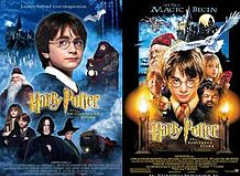
  • Harry Potter and the Sorcerer’s Stone: Owls bring letters from Hogwarts inviting Harry to enroll. Each of the subsequent films/books in the series introduced the action through a new call to adventure. Each film/book was a journey, and the series was an overarching odyssey of journeys.
  • High Noon: A villain arrives at the small town’s train station. Like Notorious, this movie followed a mythic structure long before the format became widely known through the works of Joseph Campbell. The general public became more aware of Joseph Campbell after his interviews with Bill Moyers on PBS in the 1980s. Hollywood executive Christopher Vogler adapted Campbell’s work for authors and scriptwriters in his The Writer’s Journey: Mythic Structure for Storytellers and Screenwriters released in 1992.
  • hungergamesposterNotorious: The Cary Grant character, T.R. Devlin, asks the Ingrig Bergman character, Alicia Huberman, to infiltrate a spy ring.
  • The Matrix: A message on Neo’s computer screen tells him to follow the white rabbitt
  • You’ve Got Mail: A mega-book store opens around the corner from Kathleen’s small store forcing her to fight for her business
  • The Lion King: Mufasa tells Simba that one day the kingdom will be his.
  • Close Encounters of the Third Kind: After a UFO burns electrical lineman Roy Neary’s face and vehicle, he receives psychic images of Devil’s Tower. On the conscious level, a man wants to know more about a UFO; on the subconscious level, the story not only affects Roy, but has ramifications for all of human kind.
  • The Wizard of Oz: Toto runs away after being grabbed by Miss Gulch. The musical numbers an animated scenes in this movie often obscure the fact that it’s a journey film. Like Mary Poppins, this film shows that journey films and books need not be overtly dark, deep and inaccessible, and often attract wide audiences who are looking for “pure entertainment.”
  • wizardozField of Dreams: Ray hears a voice say “If you build it, he will come.” Like many journey films, this one is a very personal story about a man and his father. Yet, the results of Ray’s baseball field impact a lot of other people as well.
  • The Hunger Games: Katniss Everdeen’s destiny is changed when her sister is randomly selected as a Hunger Games contestant. The resonance of this film with large audiences shows, I think, the inherent power of a mythic story even though most of those in the theater are viewing the story quite simply as an adventure.

The Call to Adventure may look random, but in a mythic sense–as Joseph Campbell saw it–the call was, in fact, the hero’s destiny. While that destiny may be personal, if often has ramifications for the protagonist’s family, town or nation.

Great myths–those many of us grew up hearing in school–tended to be about gods, national heroes and the destinies of peoples and nations. Fairytales, on the other hand, made similar things more personal and practical for everyday people. Both myths and fairytales have a lot to teach us about the human condition and its great themes as well as about how page-turning stories should be told.

Stories demand a certain amount of plausibility, so most protagonists–no matter how complacent they fieldofdreamsmay seems–are more or less ready for the adventure. They live under dysfunctional, dissatisfying, static or dangerous conditions. The Call to Adventure is the spark that ignites the waiting combustible material. As authors, we start our stories by upsetting the status quo: that is what the Call to Adventure does in fiction.

Malcolm

Malcolm R. Campbell is the author of the Garden of Heaven Trilogy, a series of contemporary fantasy novels with many hero’s journey themes. They include “The Seeker,” “The Sailor” and “The Betrayed.” All three novels are available on Kindle, Nook, OmniLit, Smashwords and iTunes.

betrayedbanner

A writer’s perspective – seeing the world anew

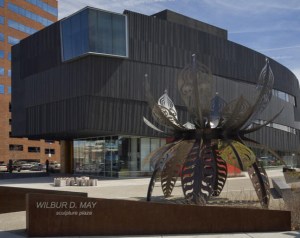
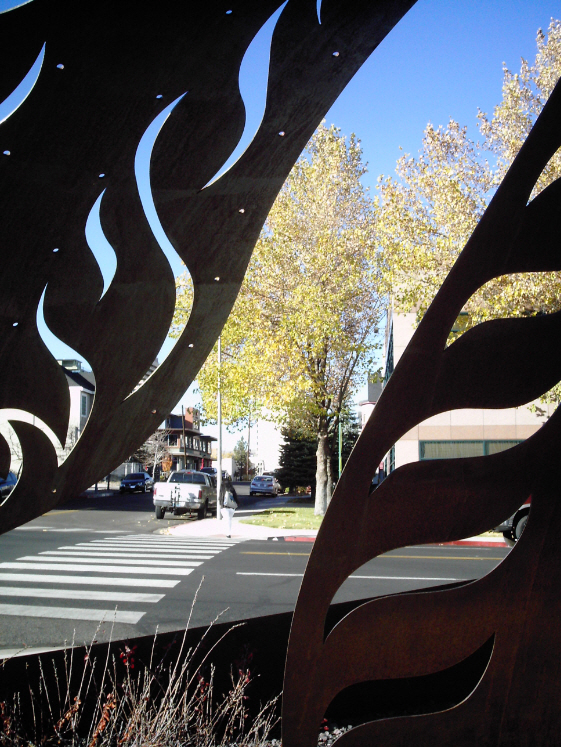
mayplazaAfter a family visit to the Nevada Museum of Art in Reno, the adults rested on a stone wall while my two granddaughters burnt off energy racing around the adjoining Wilbur D May Sculpture Plaza.

They were fascinated by the 19-foot-wide, 12-petal lotus flower created by sculptor Kate Raudenbush.

Called the Guardian of Eden, the metal sculpture inspired Buddhist symbolism, Hindu and Egyptian creation myths, ancient Flower of Life symbol. Even though I was tired, I couldn’t resist seeing what my granddaughters saw while standing in the shade beneath the Guardian.

Stand in an unusual place and see the world anew.

The world looks very different from within the sculpture. My five-year-old granddaughter, Freya, liked standing close to the leaves and looking at the museum building and the others at that intersection through the holes. I can’t say what she saw, but I saw a world defined–created, perhaps–by the sculpture. The shade beneath the Guardian was part of it and so were the bits and pieces of West Liberty Street obscured by the petals.

That which was visible by my changed perspective beneath the sculpture was more important than that which was covered up. In many ways, the sensation is like staring at the spaces between the leaves of a tree rather than focusing on the leaves.

Children naturally explore their world and the, play with it–so to speak–by looking at it from slides and swings, by handing upside down on a jungle gym, peering at it through a stand of weeds, the hair of a doll or the holes in a colander.

As writers, we do this, too. When we do, what do we see? What do we imagine? And what new stories can we tell? It’s fun to speculate about such things and then go out and create one’s own adventures.

Malcolm

Malcolm R. Campbell is the author of contemporary fantasy, including the recently released “The Betrayed,” a story of lies, deceit and corruption on what appeared to be an Edenic college campus. Click on the banner to grab your Kindle copy today.

betrayedbanner

Man plus Woman equals What?

“As soon as a man and woman of almost any age are alone together within four walls it is assumed that anything may happen. Spontaneous combustion, instant fornication, triumph of the senses. What possibilities men and women must see in each other to infer such dangers. Or, believing in the dangers, how often they must think about the possibilities.” – Alice Munroe

If the Yahoo home page is even remotely accurate in suggesting what people wonder about, then people appear fixated on revealing dresses and bathing suits, who celebrities are sleeping with, and older people who’ve “still got it.”

“It” is the danger of a man and a woman alone in a room.

If novel sales are even remotely accurate in telling us what we like, then we like speculating about what might happen in that room (car, forest, castle, swamp) when a man and a woman are alone. According to the Romance Writers of America (RWA) Romance was the top-performing category on the best-seller lists in 2012, generating $1,438 billion in sales.

“Romance” in novels is often linked to the danger of “Man plus Woman.”

Like many other authors who read a lot of books, I am variously amused, excited, disgusted, bored and curious about the what the reporter says s/he will tell me about in his/her celebrity story or what the author promises to reveal between the covers of his/her novel. As an author, I usually care a lot more about how the writer/reporter tells the man+woman story than what happens when the man and the woman are together. Not much is new on that score, but I guess we like hoping there might be.

There are times when I think the cynics are wrong about the $ sign being our defining symbol. Perhaps it should be a bed.

The old newspaperman Horace Greeley once said that the thing most readers are interested in the most is themselves. I know a lot of us are interested in having money, friends, security, good food, successful children, great health and long lives. A lot of that involves the $ sign.

Yet, when reading habits come into play, a lot of us apparently want to be in the bed when–as celebrity journalists’ would say–somebody arrives in a jaw-dropping outfit and asks, “How about a night of spontaneous combustion?” Or, if we can’t be there, we like hearing about people who are.

I’m not a romance novelist or a celebrity journalist, so I try very hard not to focus my writing on the sexual what that happens in the “Man plus woman” equation. But, as I look at the importance of the bed in our culture, I sometimes wonder if I need more beds in my books.

Malcolm

On Location: in St. Louis for a Ghost Story

Forest Park
Forest Park

While working on a ghost story set in St. Louis for an anthology of Missouri stories, I had to face three realities:  (1) I hadn’t been in St. Louis for a long time, (2) I didn’t have a budget that would allow me to rent a plane and fly up there to do research, (3) My setting had to be believable to people who lived in St. Louis.

The story features a modern-day student and a a real historical figure, Patience Worth, channeled years ago by Peal Curran. I was vaguely aware of Patience Worth and the sensation she created a century ago as she turned out books and poems that were quite well received.

I knew what I wanted the story to do. But I needed to familiarize myself with the writings of Patience Worth so that my ghost in the story sounded like the “real” spirit. Fortunately, her writings are accessible on the Internet, and a kind expert in the subject gave me many wonderful pointers.

Settings

The Skinker-DeBaliviere neighborhood.

While it was crucial to “get Patience right,” the settings were also important. It took a while for me to nail down whether the house where Pearl Curran channeled Patience was still standing. Once I found it, it didn’t take long to discover a picture of it using Google’s Street View. I also looked at the adjacent streets in the historic neighborhood where the house still stands.

While I don’t reveal the address of the house in the story, I needed to see it online so that when my young, modern-say protagonist drives down the street, she’ll see something that not only is real, but that sounds real to anyone who knows the area.

Kennedy Forest

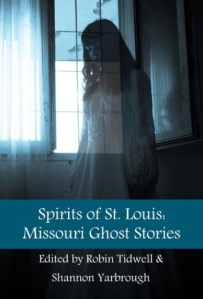
spiritsanthologyNear the historic house is Kennedy Forest, a part of the city’s Forest Park, the seventh largest munipal park in the nation. While there are a lot of pictures and descriptions online and while Google Street View showed me what it looked like, a forester helped me make sure I had the tree types correct. Why? I wanted my character to go to that forest and see what is really there.

I also found major streets so that my character could drive from the Patience Worth house to the park on real streets with accurate descriptions. The descriptions add ambiance to the story and bring the real setting into believable focus.

A lot has been written about Patience Worth, the historic district where the channeling too place, and the nearby landmarks. All of this greatly helps a writer while s/he is working on a story set in a town s/he hasn’t seen for a while. The age of the house and the park fit my needs perfectly: I wanted something very old to appear in a modern world, and the locale itself helped me tell my story “Patience, I Presume.”

My approach is always to research settings and subject matter extensively and then let the story tell iself once I’ve immersed myself into the time and place where it unfolds. If you’re a writer, you probably approach your stories quite differently. We never know when we think of a story what we’ll need to do to get it down on the page the way we imagine it. I start with my atunement to place and work outward from there.

You May Also Like: How I Researched a Ghost Story – Filed under “writing tips,” this provides a step-by-step approach to the online research that worked for me.

Malcolm

Write sloppy, then cut

penBeginning writers often lack the confidence to write sloppy, anything-goes first drafts. Veterans will tell you these writers have an internal editor that judges every word before it reaches the page or screen.

Sometimes the internal editor looks like Mom, Dad, Reverend Johnson or Professor Smith in the English department. These people have opinions about writing, right and wrong and what you ought to do with your life. If you can hear them saying “tisk tisk” while you write your first draft, that draft is probably going to be anal.

Neither your imagination nor your flow of words needs to be restricted when you write the first draft.

It also takes confidence to cut words. Veteran writers refer to a writer’s favorite scenes and sentences as “your darlings.” These are wonderful in the wrong way. They’re funny, tragic or the best poetry you’ve ever seen. The problem? They don’t fit the story.

Many students in a creative writing or basic news reporting classes are shocked when their short stories and practice news reports come back marked with a red pen. Instructors cut unnecessary words we use in conversation but shouldn’t be using when we write.

Adverbs have a bad reputation. Adjectives are next on the list of suspects. So are weak verbs. Look at each one while you’re cutting words and see if it adds anything to the sentence.

On Facebook these days, it’s rather a fad to say “I’m totally addicted to this TV show.” The word “totally” adds nothing because addicted is addicted. Many TV news reporters didn’t get the message when they took basic reporting in college and heard the instructor say “stop using the words ‘totally destroyed.'” A destroyed condition is already total.

Saying “so totally addicted” might sound “in” on Facebook and at the local mall, but the words slow down your writing. Worse yet, they date your writing; by that I mean, once they do out of style, your story will go out of style, too.

Consider this exercise: Look for short story and creative nonfiction writing competitions with strict maximum word counts. Think of a plot or subject and then write the first draft with the idea that you’re going to have twice as many words as you need. Now cut the first draft so it fits the competition’s requirements. You’ll be amazed at how much stronger the work becomes when the unnecessary words are polished away.

Sculptors have said that creating a statue out of a block of marble is a process of taking away the unwanted stone. You’re doing this when you delete the words you don’t need.  The resulting writing sings just as the sculptor’s best work looks like stone that lives and breathes.

Your first-draft sloppiness gets all the ingredients in place. Editing smooths away everything that will get in the way of the final story.

Malcolm

LandBetweenCoverMalcolm R. Campbell is the author of contemporary fantasies, folktales and paranormal short stories. His latest three-story set, “The Land Between the Rivers,” was released on Kindle September 29.

Moose Drool without the Moose

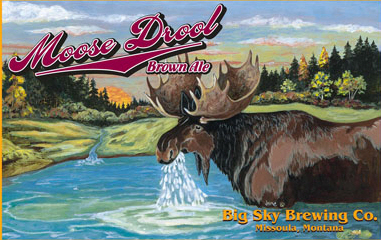
moosedroolThe closest my wife and I came to a moose during a ten-day trip to Glacier National Park with my brother Barry and his wife Mary was an ice cold can of Moose Drool brown ale. For the most part, the critters were absent.

We discussed photo shopping this picture and saying, “Hey, guys, we saw this moose in Lake Josephine, but frankly the scenery doesn’t look much like Lake Josephine.

We did see several grizzly bears, ground squirrels, a coyote, a flash of brown that was purportedly a wolverine, and an osprey.

We were assured by the bartender at Many Glacier Hotel that Moose Drool isn’t made with actual drool. Most of the drool during the vacation was caused by various renditions of huckleberries: huckleberry water, huckleberry ice cream, huckleberry margarita, and huckleberry pie.

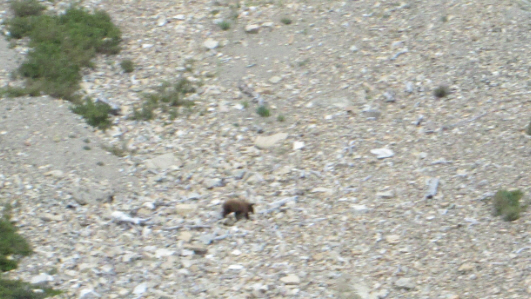
Grizzly bear near Many Glacier - Photo by Barry Campbell
Grizzly bear near Many Glacier – Photo by Barry Campbell

One of the grizzly bears was on the talus high above the road between Many Glacier and Babb. We saw it several times and  began to wonder if the National Park Service was paying it in huckleberries to pose there for tourists.

Seeing the cars and buses stopped for this bear–with everyone pointing–reminded me of similar scenes with black bears in the Smoky Mountains.

In spite of the lack of wildlife, we had a good trip. Well, we could have done without the cold rain and the hail storm we got into on during a hike near Hidden Falls. So far, four of my novels are partially set in Glacier. With another novel on the drawing board, it was nice to see many of the settings I plan to use.

Ground Squirrel at Logan Pass - Photo by Lesa Campbell
Ground Squirrel at Logan Pass – Photo by Lesa Campbell

I have a lot of location choices. Plenty of places for action, battles, people sneaking up on other people, and the other kinds of things that happen in contemporary fantasy novels.

Coming soon, The Betrayed, the third novel in my “Garden of Heaven” series named after a Glacier Park Valley near Hidden Falls.

Next year, Aeon will complete the trilogy that includes The Sun Singer and Sarabande, both of which are partly set in Glacier Park’s Swiftcurrent Valley.

So far, I haven’t thought of a way to include Moose Drool in one of my books other than to suggest that an ice cold glass of it goes very well with the stories.

They’re books to drool for.

Malcolm