It’s time for the WordPress annual report about what the heck happened here

blogcollageAccording to the gurus at WordPress, two of my posts were hogging most of the visitors in 2105. One of them is two years old. This years’s favorite is Okay, who in my zip code is an Ashley Madison User? and the still-visited post from 2013 is The Bare-Bones Structure of a Fairy Tale. The first one I understand; as for the second one, I have no idea why there are so many hits.

You can see the entire report here: https://knightofswords.wordpress.com/2015/annual-report/

As you’ll notice if you read the report, a lot of you are still curious about Navy slang, but fewer of you are looking up stories about the White House Boys this year as stories about the Dozier School in Marianna, Florida haven’t been in the news as often. I probably will have little or nothing more to say about the aircraft carrier Ranger which the Navy, showing lack of sense, decided to scrap rather than turn into a museum. (I’m biased about this, I know.)

Guest Posts

This blog has always been open to guest posts from other writers, though I have to say I never really solicited them. If you’re an author and want to contribute a guest post of 500 to 750 words, send me an e-mail at malcolmrcampbell@yahoo.com with the words GUEST POST IDEA in the subject line.

I don’t run guest posts that are direct sales pitches to buy a person’s book. However, I will run an author’s picture and a book cover picture for anyone whose guest post runs in the blog. To see what I’m looking for, take a look at How to Write a Decent Guest Post on my Sun Singer’s Travels Blog. Then, if you want to try it out, send me an idea of what you want to say or send me the post itself to the e-mail address above.

Meanwhile, I’ve appreciated the 15,000 people who stopped by the blog this year. Best wishes for 2016.

Malcolm


Comparing apples, spiders and switchblades

Consider this: your editor assigns you the task of looking at the available apples, spiders and switchblades and compiling the top ten for 2015 into an annotated list for the upcoming Sunday paper.

appleYou could look at the apple, spider and switchblade lists that have already come out, mix them up a little, and create your own list. It helps if you’re already familiar with some of the suggestions from the other lists so that you can write what you know rather than stealing what you don’t.

Or, you can try to do a little research, though time is short, and you might–out of well-intentioned ignorance, write something like “1. The Black Widow spider, while ubiquitous is illegal if its legs are over five inches long.”

You see the trouble right away–or, actually, multiple troubles. First, the attributes that make for a good apple don’t necessarily work for knives even though red is often a popular color for both. Second, even if these disparate items did have enough attributes in common to be placed on one authoritative list, nobody has first hand knowledge of all of the potential candidates.

spiderFor those who take the herd-behavior approach to creating their best of the year list, you can weed out all the apples, spiders and switchblades that nobody’s ever heard of even if you’ve heard of a few of them and think they’re superior to those that everyone’s heard of. Your editor has told you before that nobody wants to see a top ten list of stuff they don’t know anything about.

Needless to say, if the best switchblade you’ve ever seen in your life is made by the Ace Knife Company of Two Egg, Florida, you can’t mention the knife unless it was reviewed by, say, Kirkus, the Washington Post or the New York Times, and/or sold 100,000 units. If Oprah picked it for the Knife Club, that’s another plus.

To create a viable list, then, you have to balance shameless popularity with actual quality and ensuring value. The creators of viable lists are often forced to acknowledge sentimental favorites such as the case of the inventor of the most famous apple in the world who, after years of not doing anything, comes out with a new apple that’s said by people who actually tasted it to be a bad apple. This bad apple will probably be on everyone’s list, so it better be on your list as well.

switchbladeSometimes inventors have a drawer full of old stuff that never worked in the past and they hook it all together as an all-purpose apple, spider or switchblade and manage to get it into the homes of 10000000 people because they (the inventors) are already famous. People buy the things because they don’t want to be left out. Critics are forced to acknowledge that even though an item has no redeeming value that they can find, it may have redeeming value they can’t see. So they write stuff like, “Joe Smith’s new 52-leg Swiss army spider is a cutting-edge insect that’s as tart and sharp as a Granny Smith without falling into the mundane trap of being routinely useful.”

Having thought all this through in my usual cynical fashion, I walked off the job when my editor told me to compile our newspaper’s top-25 list of 2015 books. Frankly, it seemed pretty much like comparing apples, spiders and switchblades and equally absurd.

–Malcolm

Malcolm certifies that he did not write this post simply because none of his books showed up on any of the year’s best books for 2015 lists.

Jock Stewart’s Thanksgiving Memories

  • thanksgiving2015clipart2002 – Turkey and smoker blow up taking out 27 windows of the Smith family’s house next door. Fire department called. Grandpa reminded by battalion chief that this has happened before. Grandpa punches chief and spends holiday in jail much to the family’s relief.
  • 2003 – Mother and Aunt Irene wake up at 4 a.m. to prepare turkey, discover it’s not quite thawed out, decide to drink Irish coffee until they can stuff turkey with Mother’s traditional radishes and spam stuffing, get soused and use too much sage. Most of family gets sick and spends holiday in emergency room.
  • 2004 – Nothing happens. Family decides this is the most boring Thanksgiving ever and resolves to do better in 2005.
  • 2005 – Two distant cousins get pregnant while mostly everyone is asleep on the couch pretending to watch football game. After a family vote, we decide that “stuff happens” and that we can all be thankful this year wasn’t a repeat of 2004.
  • 2006 – Two distant cousins bring their brand new babies and they (the babies) look like everyone else in the family. Nobody steps up to the figurative plat to take responsibility for 2005’s “stuff happens” because they’re all too busy getting the green apple quick step from Mother’s radish and apple pie. DFACS is called and confiscates the babies pending a full review.
  • 2007 – Everyone arrives drunk and nobody gets anything to eat until Dad fries up grits and jalapenos on Black Friday. Smith family gets disgusted and moves out of town until holiday is over.
  • 2008 – An argument begins during a missed call in the big football game. Grandpa settles argument by unloading his new 12-guage shotgun into the TV set. Everyone laughs and agrees this is the best Thanksgiving ever.
  • 2009 – Family agrees to go their separate ways this year to promote family harmony. We eat at a fast foot restaurant where the French fries are soggy and cold but not as bad as Mother’s French fries. We’re more thankful for that than you can imagine.
  • 2010 – Every gets their calendars mixed up and arrives a week early for Thanksgiving. By the time the holiday arrives we’re all sick of each other and go home.
  • 2011 – A political argument breaks out right after the turkey is carved. The blue state family members sit on one side of the table and the red state family members sit on the other. Grandpa throws stuffing at Uncle Walter whom we realize isn’t even part of our family and just dropped in to check the sump pump. We agree to hire TSA reps to maintain front door security in 2012.
  • 2012 – TSA reps confiscate Mother’s carving knife so we end up having to use a hedge trimmer at the table. The noise makes it hard to talk about anything. We’re grateful for that after last Thanksgiving’s blue state/red state argument.
  • 2013 – Things go smoothly without TSA goons at the front door until Grandpa boots up his new smoker in the guns and ammo closet. Nobody is harmed, but the smoker, the closet and multiple firearms are a total loss. We end up getting an injunction to ensure that Grandpa and a turkey smoker won’t be allowed in the house at the same time.
  • 2014 – Dad buys Stouffer’s TV dinners and we all agree our dinner has never tasted this good in the past. Mother’s feelings are hurt and she files for a divorce. Dad admits that some or all of the family’s extra children might be his. I hide in my room with enough crack to last until Christmas.
  • 2015 – Too soon to tell. Dad and Mom are back together again and are happily working in the kitchen preparing our surprise dinner. The place smells like sauerkraut and this doesn’t bode well. Fortunately, we ordered a 55-gallon drum of mimosas and will be well fortified against whatever happens.

–Jock Stewart

When free and cheap transcend plots and themes

The header of an e-mail message this morning proclaimed: “Download Two Free Audio Books.”

I get e-mails like this all the time, variously titled Get Free Books, This Week’s Deals, and 99¢ Books in Your Favorite Genres.

ebooksodaThese deals don’t tempt me at all. I can’t imagine basing my reading choices on books that happen to be free or cheap this week. For one thing, the list of books on my To Be Read List is already long enough. Reading the books I select based on plots and themes (and, yes, on authors’ names) will represent an investment in time. Seeing a deal for a cheap or free book doesn’t grant me a cosmic gift of 30-hour days of extra reading time.

booksendsMy books have benefited from their listings in newsletters like ebooksoda and booksends. When I reduce the price and advertise the book in a newsletter for 99¢, there’s a lot of movement on the book’s Amazon page. My hope here is that people who are already tempted by a book from an author they don’t yet know (me) will try out the book while it’s on sale. Some of those who enjoy the book come back and write reviews.

Newsletters, tweets and e-mail messages offering low-cost books definitely offer a service too readers. I’ve found and enjoyed books by known and unknown authors this way. I image lots of people do.

99centsNonetheless, I’m bothered about the process because after seeing the seemingly infinite number of pitches and promotions for cheap and near-cheap books, I start worrying that everything I say about the plots and themes of my own books–or recent books I’ve enjoyed–doesn’t matter to anyone without the presence of a deal.

Seriously, are large numbers of people reading books based on free and cheap rather than anything else? Or, with the advent of e-books (after all, it’s just a file), is there no room in the economy for books that sell at a high enough price to actually pay the authors’ for the time it took to write them?

Most little-known authors won’t sell 11787.8787879 books to earn $11,787 during the year. ($11,787 is the federal poverty level threshold for one person.) In fact, if they’re paying to get their books included in the deals newsletters, they’ll be running at a loss if they sell 11787.8787879 copies at 99¢.

noAmazonThe economics from the author’s perspective are rather grim when the marketplace–with Amazon’s constant pushing–looks at the default book price for anyone who isn’t on the New York Times bestseller list as 99¢. Amazon, of course, can make a profit when selling by volume because Amazon isn’t using up a year or two worth of writing hours to create the books on its site.

For authors and others who love great books and well-told stories, the main concern here really isn’t personal income because earning enough to live on is assumed for the most part to be impossible. The biggest concern is that more and more book-buying choices aren’t based on great books and well-told stories, but on free or cheap. When that happens, quality becomes the lowest common denominator in ones book-buying choices.

Wikipedia photo
Wikipedia photo

I used joke with my mother about the “savings” of spending a several extra hours’ worth of shopping time each week (and a lot of extra gallons of gasoline in the car) for going to multiple grocery stores to “benefit” from a few pennies off here and a few pennies off there. My view was that she was running in the red looking for deals. Now, the Internet makes the deals easier to find with little time and energy devoted to the search.

So where do we end up? Are books’ plots and themes losing out to free and cheap because the Internet helps us find the deals without having to spend much time looking for them? Or, are readers who care about plots and themes still finding the books they’ve always loved at a reduced price?

I don’t know if quality is suffering or not. But I worry about it.

–Malcolm


Magical Realism Writing Tips – Importance of Belief

When an author writes a novel or short story in the magical realism genre, magic is always a natural  and unquestioned component of the characters’ lives and the environment in which they live. As an author, you’re more likely to write a believable story if–while you’re writing, at least–you assume the magic is real.

This is my favorite blog because the writer has many years of experience and a great archive of posts for many Hoodoo subjects.

This doesn’t mean you must personally subscribe to the philosophy and practices of the magical system in your story whether that system is a known collection of beliefs such as hoodoo or Voodoo or a fictional system you built from scratch.

I prefer using practices based on actual belief systems because they already have a rich, varied and somewhat known lore that is often much deeper than anything a most of us can make up.

When I wrote Conjure Woman’s Cat about a root doctor (another name for a conjure practitioner), I began by reading books and web sites written by people who practice hoodoo. When I had a question, I asked them, usually making it clear that I was researching a novel rather than following the belief system myself. (You’ll see some of the sites/books I consulted in the folk magic category of my Myth and Magic Resources post.)

At times, I’ve read paranormal and magical realism books by authors who take a known system–say, witchcraft–and have their characters doing things that are completely outside the realm of the practice whether it’s Wicca or the traditional craft. Hollywood has done this a lot, but I feel more anger about it when I find it in a novel by a known writer who can look stuff up and talk to experts and keep the magic within the realm of what a system claims is possible. Witches do not worship the devil nor utilize spells that look like they originated in the Harry Potter series or Lord of the Rings.

This is a more commercial site with products to sell. However, it also has a wealth of information about spells, herbs and candles.

Yes, we all take liberties when telling a good yarn, and even when we don’t, it’s probable that (in my case) a real conjure woman will find things in my book that are unrealistic. I try to make the material as accurate as possible for a fiction writer–as opposed to a real practitioner who writes a novel based on their own experiences.

One way to make your story accurate is through the use of multiple sources. This helps you understand the magical approach well enough to write about it in your own words.

Of course, if you make up the magic from scratch, it helps if you set limits on it (so that your characters aren’t all-powerful) and keep it consistent. Don’t state a magical rule on page 25 and then have a character successfully ignore that rule on page 250.

For your readers to believe, you have to believe. Most of them will believe while they’re reading the story. That’s how you need to feel. I didn’t become a conjurer after I wrote Conjure Woman’s Cat, and I don’t expect my readers to do so either.

If you don’t believe while you’re writing, the story won’t ring true because your author’s point of view is that it isn’t true.

There’s a lot of anecdotal evidence that a fair number of people believe witchcraft, hoodoo and Voodoo work. Frankly, I don’t have an opinion about that and did everything possible while writing to refrain from judgement.

What we hope for when we write magical realism is that our readers will be carried away by the story as though everything in it is absolutely possible, maybe not in their own lives, but in the lives of our characters.

When magicians like Penn and Teller walk out on the stage in front of you or when you see them on TV, you know that what they’re doing is an illusion. You’re in the audience to be fooled and when the magician carries off a trick perfectly and you can’t figure it out, you laugh and applaud and ask for more.

A magical realism short story or novel is also an illusion. If both the magic and the realism in the story are done well, you’ll be fooled into thinking everything you read did happen or could happen. Neither the stage magician nor the writer dares approach his or her audience with any doubts about the effect s/he is trying to achieve. Doubts kill the performance, on stage or in writing.

And then, too, sometimes that stage magician and that writer include a bit of real magic under the guise of illusion. We always want you to think, “hmm, I wonder.”

–Malcolm

KIndle cover 200x300(1)SarabandeCover2015Malcolm R. Campbell is the author of the contemporary fantasy novel “Sarabande” and the magical realism novella “Conjure Woman’s Cat.”

Website


Keeping those sequels consistent

At a book signing for his award-winning novel A Distant Flame, Philip Lee Williams told us that before he started worked on the manuscript, he created a timeline showing where everyone was at every moment as Union troops approached Atlanta. I told him my wife was going to hear about that because she thinks I’m overly picky about research. He said a lot of people’s eyes glazed over at the thought of such a timeline.

sequelI’ve been reading Diana Gabaldon’s “Outlander Series” ever since the first book appeared in 1991. I’m reading Written in My Own Heart’s Blood (2014) now. I doubt she outlined all of the English, Scots, and American history her series has covered leading up to the current novel set during the American revolution.

But her large, 800-page books are remarkably detailed and have a large cast of characters on multiple timelines. I wonder how she keeps it all straight. I wonder if Williams would have to re-read A Distant Flame in addition to his Civil War timeline if he wrote a sequel.

sequel2Readers–like Star Trek fans–are always the first to catch inconsistencies the author and his/her editors missed. A minor character’s eyes change color between books or episodes, a battle fought one year is suddenly at a different time and place, a person who said he didn’t know the main character turns out to have met them dozens of times in earlier books.

I’m an intuitive writer. That means I never outline anything and don’t know before writing a scene how it’s going to end. I’ve had a good editor and she sees things I miss. But she can’t fix major goofs. I worried about making Sarabande consistent with The Sun Singer. And now, as I work on a sequel to Conjure Woman’s Cat, I’m amazed at how often I have to go back and check things to make sure the new book isn’t out of sync with the earlier book.

This is the only time I wish I were disciplined enough to write an outline. Truth be told, I sort of cheated in English classes where we were expected to turn in both the outline and the term paper because I always wrote the outline after the paper was done. I suppose I can do now, but my eyes glaze over at the thought.

It’s strange re-reading ones own work. I come across passages that I’m surprised that I was able to write. Other passages, I wish I’d handled slightly differently. And I marvel at how my detail-oriented mind will consider the growing seasons of plants the characters see while hiking through the woods, but cannot remember who they were hiking with.

Of course, if you’re submitting to major publishers and agents, they’re going to require a synopsis. I’ve written those several times and have to confess that having them later on as reference does help keep sequels consistent. Some writers make character lists and spend a great deal of time writing little character studies about them that include height, weight, eye color, hair color, and other details. If I did that, I wouldn’t have to search through my previous books using terms like “hair” or “eyes” to see what color I chose.

It’s not that that stuff doesn’t matter. It does. It’s an important part of making the character and his/her actions seem real and valid. Nobody ever accused me of having an encyclopedic mind. I’m horrible at Scrabble, Jeopardy and Trivial Pursuit. I think it all goes back to a college geology course in which the teacher said, in this class we don’t memorize things for tests; instead, we talk about larger concepts because anyone with a good set of reference books can look up the details.

That was my new mantra. Never again would I consider listing all the battles of a war and memorizing the dates they happened–much less all the characters in one of my books and the colors of their eyes, hair and favorite shirts and blouses.

While, I love writing without an outline, it plays hell with keeping all the facts straight when it’s time to write a sequel. Yes, I know, I can forget writing sequels. Unfortunately, I like the characters too much and can easily think of more stories to tell about them.

If you write, how do you keep your characters straight from book to book to book. If you read novels in a series, do you catch yourself going back to earlier books because you think the author has gotten something backwards?

Since I write magical realism, fantasy and paranormal stories, I’m ready for any reader who finds any inconsistency. “Hey, Dude, it’s magic.”

–Malcolm

SarabandeCover2015Malcolm R. Campbell is the author of “Sarabande,” a contemporary fantasy coming out in a new edition from Thomas-Jacob Publishing on November 1. You can pre-order the Kindle edition now.

In remembrance of things past: stuff that’s gone with the wind

“I felt once more how simple and frugal a thing is happiness: a glass of wine, a roast chestnut, a wretched little brazier, the sound of the sea. Nothing else.”
― Nikos Kazantzakis, Zorba the Greek

I miss lots of things. Some day, you will, too. You’ll tell your children and others who are forced to listen to your nostalgia about the best of what you had and how nobody cares about it any more.

In no particular order, here’s today’s remembrance of things past:

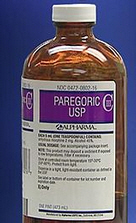
  • paregoricBeing allowed to purchase paregoric and codeine over the counter at a drug store.
  • Endive (escarole) and watercress in grocery store produce departments.
  • A smaller federal government.
  • A society that didn’t expect parents to monitor their kids’ activities 24/7 and actually allowed them to walk or ride bikes to school.
  • People who came over to dinner who talked to me around the table rather than talking and texting with people who weren’t there.
  • Family doctors who actually treated things rather than sending everyone off to see a specialist who charged a whole lot more money to tell you what you already knew.
  • Bubble gum with baseball cards.
  • endiveBaseball before it had a playoff system prior to the World Series.
  • Weddings that didn’t cost $25,000 to $50,000.
  • A dial tone.
  • Coffee in a one-pound can or sack.
  • Woolworth’s, McCrory Stores, A&P, Foremost Milk, and Grapette.
  • Neighborhoods where people didn’t own automatic weapons for whatever reasons they own them now.
  • Vent windows in cars.
  • McCroryThe Atlantic when it was called The Atlantic Monthly and published fiction and poetry rather than being a quasi-political magazine.
  • Book review sections in most major newspapers.
  • Reporters who didn’t find ways to get their personal opinions into their stories.
  • The Hardy Boys.
  • Cameras that used film.
  • Young people who didn’t expect to have (right out of college) the kinds of houses, cars and furnishings their parents took a lifetime of hard work to acquire.
  • Christmas decorations that weren’t put out before Thanksgiving and weren’t thrown out before nightfall on December 25th.
  • A restaurant entrée that included meat, several vegetable side dishes and a salad rather that a slice of nearly raw meat perched on top of sautéd greens and a swipe of colorful sauce across the plate prepared by a food stylist.
  • twistedclawcoverPlaying outside with old toys and a lot of dirt.
  • Clean rivers.
  • Multiple varieties of U.S.-grown apples.
  • Stuff in stores that wasn’t encased in hard-to-remove clear plastic.
  • Route 66.
  • Airports without TSA.
  • Seeing a movie in a theater for $1.00.
  • Buying a candy bar for 50₵
  • Having a ₵ sign on my keyboard.
  • Silver dollars and $2 bills.
  • Catalogue, Hallowe’en and Doughnut rather than Catalog, Halloween and Donut.
  • Getting a margarita without an act of Congress to have it served without ice, without goofy flavorings and with salt around the rim of the glass.
  • A wedge of lettuce with thousand island dressing with the blue plate special at the lunch counter.
  • City streets before texting.
  • Gas stations where the attendant pumped the gasoline, washed the windows, checked the oil and water, and swept the car floors with a whisk broom.
  • A Walmart-free town.

–Malcolm


‘Time let me play and be Golden in the mercy of his means’

“Other than childhood, what was there in those days that is not here today?”
–St.-John Perse

The past is a bittersweet smorgasbord of delights that are forever new in a writer’s memory rather like Dylan Thomas’ “Fern Hill” where he was “green and carefree” and “famous among the barns.”

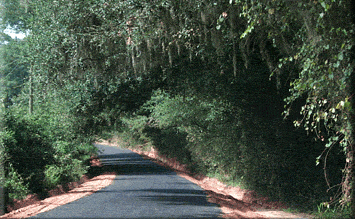
Canopy road en route to the farm - Leon County (FL) Public Works photo
Canopy road en route to the farm – Leon County (FL) Public Works photo

My Fern Hill was owned by Mr. Henry who arrived at my best friend’s house around the corner and drove everyone who wanted to go out to his farm for a morning of unfettered play. The woods and the fields were ours for the day, all because Mr. Henry wanted to do something for others, as a debt he owed the doctor–my best friend’s father–who saved his life.

We worked, too. We stacked bales of hay in an old lime house, helped build fences, fought an occasional grass fire, moved cattle from one field to another, cleaned up stuff that didn’t belong where it got left. Every Saturday ended with a line of beer cans on a row of fence posts behind the house where each boy held a .22 rifle and five .22 shorts. “Fire when ready.” And we did.

One day I went off to college and never saw Mr. Henry again. Another day, I heard that he had passed away. He was one of those teachers who didn’t know he was a teacher, and his lessons have long survived him and perhaps most of those who were for a few short years “young and easy under the apple boughs.”

I don’t remember truly thanking him for what he did other than telling him we had had a great time when he brought us back to town. If spirits read the verse of those of us who are still here with our memories, perhaps he found this poem of mine published several years ago.

Debt, Paid in Full

Without fail at first light,
the old Ford materialized on Saturday mornings
to carry us out the canopy road to Mister Henry’s farm.

When Doctor Smith saved Mister Henry’s life,
his patient saw within that unexpected miracle a living,
breathing obligation to be repaid with time and space.

While Mister Henry had reason to believe
one’s days are numbered, he knew the doctor’s children
and children’s friends perceived an infinity of time on their hands.

We took for granted our Saturdays would never end
and loosely defined our mornings with minnows and tadpoles
in the branch trickling through the sweet Southern woods.

We presumed all fences were made for climbing,
claiming all fields and building infinite afternoons with bales o hay
stacked high in the lime house en route to heaven.

We blended work and play on those magical acres,
carrying home tall tales of our grand adventures as talismans
to protect us from the world outside our dreams.

Within the immortality of youth, we saw little threat
from the bull in the field, the copperheads in the woods
or the eventual day when the Ford would not appear.

Without fail or sufficient thanks at last light,
childhood and Mister Henry’s farm slipped into the night
before we knew the debt was more than right.

from Forever friends, edited by Shelagh Watkins, 2011

–Malcolm

Website for my Florida novella “Conjure Woman’s Cat”

Thanks for the editors

At this very moment, an editor is going over the manuscript for Thomas-Jacobs Publishing’s re-release of my contemporary fantasy Sarabande. I’m glad she is. She sees what I cannot see along with inconsistencies and goofs I wouldn’t recognize if I did see them.

Note: none of my editors look like this.

I could blame my cataract surgery for making my right eye see so much better than I need new glasses to read the words on the screen. (My old glasses are now too strong.)

However, if my editor sees this post, she can remind me (and all of you) that I was overlooking a lot of typos before the surgery.

Sometimes my wife reads over things I’ve written that I think are error free. Nope. She was a newspaper editor so she catches a lot of stuff.

So does my publisher, but she likes to check and double-check, so an editor reads my stuff after she reads my stuff. It must be a fact of life that a writer can go over his or her work a hundred times and guess what? It’s still waiting for the editor’s red pen.

Unfortunately, the red pen is gone. My wife and I are old school: we grew up editing copy (news copy) on a double spaced printout. I find more errors this way than I do when looking for typos and missing punctuation on the screen. I have to admit that Word’s Revision/Markup makes it easy for publishers and editors and writers to communicate over time about manuscript corrections.

But I still prefer edits on paper. My eyes are attuned to the page rather than the screen. Even so, I miss a lot. You probably do, too, whether you edit on the screen or print out a hard copy and look for your favorite pencil.

That’s why I firmly believe everything should go through an editor even though it’s not always easy to arrange this in today’s Kindle Direct Publishing world. If your spouse didn’t work for a newspaper, at least get your pets to review everything before you hit the “Save and Publish” button.

Thanks Lesa (wife), Smoky (editor) and Melinda (publisher).

–Malcolm

TSScoverjourneysMalcolm R. Campbell is the author of “The Sun Singer,” a contemporary fantasy that is currently on sale on Kindle.


You may live in Wiregrass Country and not know it

By and large, people have forgotten wiregrass. Time was, it occupied the forest floor where longleaf pines grew. Sadly, most of the longleaf pine forest is gone as well.

Wikipedia photo
Wikipedia photo

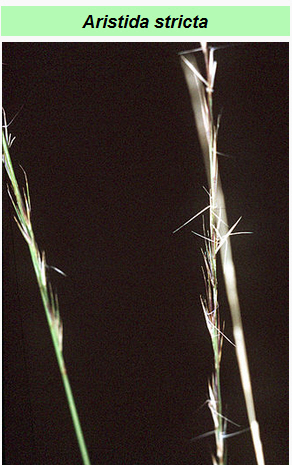
The deep South is wiregrass country and for those who remember, there’s a lot of folklore in and around those old woods. “Progress” killed the longleaf pines. And, wiregrass, too. (Some people call it “Pineland Three-awn.”)

Like longleaf pines, wiregrass needs fire to prosper. Native Americans in the Florida Panhandle and south Georgia knew this and so did incoming settlers. They burned off the grass yearly. This helped the forest by clearing out all the understory clutter of brush that choked pines and pine seedlings. The grass, which returned soon after the burns, came up fresh and new and was succulent enough for cattle for a while before getting wiry and inedible.

In some ways, Smoky the Bear helped kill off our wiregrass and longleaf pine forests because he kept brainwashing us with the phrase “Only You Can Prevent Forest Fires.”

But here’s the thing: forest fires are a natural part of environmental renewal. Preventing them where they are needed harms the forest. In the 1940s, the forest service banned controlled burning and we have been paying for that mistake ever since even though the practice is now more in favor.

wiregrasscountryIn Wiregrass Country, one of my favorite folklore books about the world where I grew up, Jerrilyn McGregory writes that “Wiregrass (Aristida stricta) depends on fire ecology to germinate. Its fire ecosystem created a unique set of circumstances, tied closely to a way of life…Although it was once the most significant associate in a community of species that formed the piney woods, many human inhabitants of the region have lived and died without knowing the plant.”

I grew up with wiregrass and longleaf pines and miss them. Perhaps that’s why I’m working on another novel set in “Wiregrass Country.” Maybe talking about wiregrass and pines will remind people what we once had and will help garner support for restoration efforts.

Traditions in Wiregrass Country run deep even though they often seem out of place in an increasingly “citified” world. If you grew up there, you probably ate mullet, went to peanut festivals and rattlesnake roundups, knew well the “shape note” old-style hymns of Sacred Harp music, fished or played a rousing game of fireball and loved storytellers.

If you didn’t grow up there, you missed a lot. Same goes if you grew up there in a suburban neighborhood and never ventured out into the piney woods and small towns.

Maybe it’s time to go see what it’s all about.

–Malcolm

KIndle cover 200x300(1)Malcolm R. Campbell’s “Conjure Woman’s Cat” is a magical realism novella set in the wiregrass and piney woods country of the Florida Panhandle.