Creating a Book Cover on the Cheap

Since the release of my Vietnam novel At Sea is a relatively modest Kindle production, I didn’t want to spend money for a cover photograph, artist or a cover designer. It’s a hard choice. The expense might produce a cover that increases sales or it might run the whole project in the red.

I wanted a cover that showed readers At Sea is set on an aircraft carrier. When I was in the navy, the pictures I took as a navy journalist belonged to the navy. There are many stock images of aircraft carriers on navy sites, but they cannot be used without permission for a book cover or advertising.

Many self-published books end up with little or no art work on them and rely on print, color, and a few simple graphic shapes. I don’t think these attract attention or help sell the book. Plus, they give prospective readers little to no idea what the book might be about. I definitely needed an aircraft carrier on my book’s cover.

Finally, I found an old color slide of the USS Ranger’s flight deck I took when I was part of the crew:

flightdeckA

Several issues come to mind. Although a lot of people are doing a lot of things, the picture doesn’t have the dynamic punch it would have if it showed the ship navigating a stormy sea or a plane taking off.

Even though the color was muted due to the age of the Ektachrome slide, it still brings out detail, potentially leading some readers to infer this book is nonfiction. Also, it’s a landscape rather than a portrait photo. The first thing I did was get rid of the color:

AtSeaCoverPhoto

Now it’s less busy and the black and white photo rather lends itself to older times such as a book about a war that happened in the 1960s. Whether or not this picture would “work” depended on how it was cropped, how the title displayed, and how dramatic color might be added to the resulting book cover:
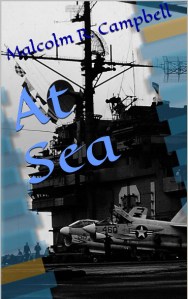
AtSeaBookCover

First, the detail has been downplayed via black and white and cropping. The cropping provided a portrait format and the added color framed the image of the two planes and the ship’s superstructure. To keep the author’s name and title from looking static, I have them displayed at an angle.

I like the two planes displayed on the cover because the main character works in the ship’s aircraft maintenance department and is best friends with one of the air wing’s pilots.

The result works for me because it came together without my having to hire an artist and/or pay for an expensive stock photo. Perhaps you would have approached it differently.

Doing a cover on the cheap won’t work if it looks cheap. Perhaps my ideas here from rough photo to finished cover will give you some ideas for your next cover.

–Malcolm

Note: Another version of this story was originally published as “The Sailor,” a book that’s now out of print.


If you send a reviewer a screwy book, please call it back

If you’re like me, and for the sake of the world I hope you’re not, you occasionally accept a book to review and then before you’ve finished reading the first five hundred words, thoughts like these come to mind:

  1. bookreviewMy doctor won’t prescribe enough meds for me to finish this book.
  2. Burning toast would make a more compelling plot.
  3. If I shut my eyes, maybe the book will go away.
  4. Can a reviewer go into the witness protection program if s/he (a) stops reading the book and acts like it got lost in the mail, or, (b) gives it a negative review in hopes the truth will keep him/her safe and then discovers that it won’t?

Why can’t the authors who have books like this send me an honest e-mail in advance that warms me that the book has put a hex on every reviewer who tried to read it up to now?

Where was the author when the memo went around reminding people that Italics isn’t an easy type font to read, meaning don’t use it for 90% of the book. (Reminds me of some of my classmates who highlighted everything in every textbook which had the effect of highlighting nothing.)

Goodness knows, I don’t want to send you an e-mail that hurts your feelings–much less that makes you go buy a gun–that tells you this thing (or baby/pride and joy/life’s work/last thing between you and the poor house) isn’t cutting it.

If you were a real mensch, you would realize that I’m stuck: (a) ending up in an asylum after “doing the right thing” and reading your entire book and/or (b) lying about the book in a glowing review, and/or (c) going into the hiding in Two Egg, Florida until the whole thing blows up or blows over.

Frankly, I just want my life back and don’t think that’s too much to ask.

–Malcolm

SOF2014lowresMalcolm R. Campbell is the author of the comedy/satire Jock Stewart and the Missing Sea of Fire.

Why I became a writer – this is the whole ‘truth’

from the archives

My life began at a Gulf Oil Service Station at Immokalee, Florida, back in the days when the attendants came out with a whisk broom and swept the beach sand out of your car while they pumped your gas for you.

Papa at work

Word is, I was swept out of the back seat of our 1949 Nash even though I didn’t look like beach sand. Since authorities were certain that even though I was an ugly five-week-old baby, somebody would claim me sooner or later, they put me in the service station window with a sign that said IS THIS YOUR BABY?

Word is, I was there several weeks and learned how to use a whisk broom. By the time I had a resume, whisk brook operator didn’t cut it with modern day gas stations where nobody did nothing for nobody. I also learned how to tell the difference between swamp gas, ghosts and aliens from other planets. However, the feds have classified this and so I can’t tell you unless I move out of the country–like, to Russia maybe.

An aging alligator couple took pity on me and raised me as one of their own. They taught me to swim and they taught me to lurk in the water with only my eyes showing so that I could grab hapless ducks in my teeth and bring them home for Duck a la Orange.

Mugsy Walters Requesting Lunch Money

When I got to high school, playground bullies made fun of my swamp dialect and taunted me with phrases like “see you later alligator” and “after while crocodile.” That’s what they said after they stole my lunch money.

Papa Gator said, “Son, you’re never going to bring home the bacon with your teeth like your brothers and sisters. You’re going to have to use your wits.” That advice has served me well.

I convinced the playground bullies of several truths: (1) When I grew up, I was going to be a famous writer and would put all of them in my books for better or worse, (2) Looking good in a novel was a good way to pick up chicks, something they needed to think about since their teeth weren’t large enough to grab anyone at the prom, (3) Papa Gator knew where they lived.

No doubt, truth number one (1) got their attention; that, along with my weekly column in the school newspaper called “Alligator Alley Gossip.” Everybody read it, but nobody wanted to be in it: Is that hickey on a certain red-haired girl’s neck a true love bite or did somebody forget their lunch again? Once again, a lover’s lane romeo with the initials W. S. forgot the distinction between “Jail Bait” and “Gator Bait.” Note to S. T.: old lady Anderson doesn’t keep the test answers in her drawers any more.

The world has moved on from the Immokalee I once knew. The Gulf Oil Station was torn down years ago. Seaboard closed down the rail line. Most of the gators, including many who still remember my name, have retreated deeper into the swamps. And now, the people coming to town aren’t there for the fishing, but for the Zig Zag Girlz Blackjack at the Seminole Casino.

The basic truth comes down to this. If you can’t earn a living with your teeth, you need to go out and find an occupation that fits your station in life, one that honors how you were brought up. Even those who don’t know my first adult meal was a pine warbler on toast or that I still make slaw with swamp cabbage, walk carefully around any writer who just might put them in his books.

Papa Gator would be proud.

–Malcolm

VisitingAuntRubyCoverMalcolm R. Campbell is the author of the “Tate’s Hell Stories” series which includes the new Kindle short story “Visiting Aunt Ruby.” Papa Gator has friends in Tate’s Hell Swamp, so if you’re in the Carrabelle area, stop in and say hello.

Write down your memories for your kids. . .

…but you better have something extraordinary to say if you want to convince me a published version of those memories will be a bestseller.

When I was a kid, I read books about explorers who kept journals about where they went and what they saw. Some of them happened to know how to draw and included illustrations showing where they went and what they saw.

memoirsecretsI was just an everyday kid going to school. Nothing unique there. In spite the fact most of the people who knew me at school would describe me as nondescript, I kept logs (I liked sea stories) and journals (because guys didn’t keep diaries with hideous phrases such as “Dear Diary, Jenny looked at me in between classes today like she wished we were alone in the dark”).

The thing is, I was already too much aware of the fact that writers’ journals and private papers often got published after they were dead and (hence) unable to stop greedy heirs from trying to make a buck off stuff that was supposed to be private. Practically speaking, what this meant was that I made myself look better in my journal entries than I was.

“How will this read in the future?” I asked. This kept my journals from being the cathartic process of self-discovery modern-day advocates of journaling claim is possible. You’ll heal. You’ll change your life. You’ll grow. Maybe so, but truth wasn’t for me.

Consequently, I saved the healing/growing process for my fiction where I tell a story about somebody else while including disguised secrets about myself that I would never dare write down in a journal. These days, everybody and his/her brother is writing a memoir, including people who’re still in high school. But why?

I can’t decide whether all these memoirs by “regular people” are a service to human kind or examples of arrogance run amok.

Maybe some day my kids and your kids will be interested in some of our best true stories about life in an era that will seem very foreign to them by the time they’re reaching middle age. Maybe they’ll want to know about their family and where there ancestors came from and what it was like to live during those dark ages times when telephones were attached to the wall with a cord and didn’t show movies.

But, should you publish those memories as a book? I have no answer to this because–being 37.5% psychic–I know that the moment I say that we shouldn’t, people will come up with a hundred examples of “regular people’s” memoirs that had a great impact on the world. That can happen.

I do like the idea of continuity, the kinds of things we read about in oral history projects that give folks in later generations a sense of what life was like for people in their parents and grandparents generations. Perhaps we can provide that kind of information for our kids. Maybe they’ll never read it. We may never know.

My folks used to send a Christmas letter out every year. Years later, my brothers and I would actually find ourselves referring to these old letters because we could no longer remember what year we saw Niagara falls or when our father received an award. If I’d kept a journal, I would know all this.

If I did know it, I find it hard to imagine that thousands of people would race to the bookstore to buy even a well-edited version of that journal, along with a snappy title and a jaw-dropping cover.

An author’s fiction already contains enough secrets in it than he dares disclose any other way.

–Malcolm

VisitingAuntRubyCoverMalcolm R. Campbell is the author of “Visiting Aunt Ruby,” and Kindle short story that he’ll swear on a stack of Bibles didn’t happen in “real life.”


Is having your book ‘out there’ enough for you?

This article (Only 40 Self-Published Authors are a Success, says Amazon) has prompted some people, including me, to ask why Amazon defines financial “success” as having sold a million e-books over the last five years. Self-published writers tend to price their books between $3 and $5, and often at only $0.99. They can earn up to 70% of the retail price. In my view, one can sell a lot fewer than a million copies and still be earning a decent income.

amazonlogoAt the same time, the article has prompted others to say that just having their books “out there” is all they need to feel successful. They feel that if they do a great job of writing a story, have a great editor and a wonderful cover artist/designer, they are fine with the results of their avocation. Far be it from me to criticize that view. One might have similar feelings about creating music, making art, sewing quilts and other creative arts and crafts.

I am grateful for each reader, for every honest reviewer, for having a wonderful publisher and editor, and for all of those who’ve interviewed me, talked about my books, and otherwise been supportive. All of that is a viable form of success.

If you sense that a “however” is coming, you’re right.

However

Even the IRS considers that if we never show a net profit as a writer, we aren’t really a business. Writing books isn’t a free undertaking. One has to buy reference books, a computer, an Internet connection, office supplies, travel to locations where the novel is set, and (if self published) pay for your editor and cover designer. If these costs exceed the amount of money from royalties and direct sales, then one is running at a loss. Whether one calls his or her writing a business or an avocation, those costs can reduce the happy feeling one gets for having his or her books in print and getting some good reviews.

The people who run stores will seldom hear about self-published books.

I grew up in another era, long before e-books and Kindle Direct Publishing, so I believe writing (fiction, especially) is always a long-shot proposition. One can never expect to earn a John Grisham or a J. K. Rowling income, or even enough to write full time. Most writers can’t survive on writing income alone and, as more and more readers expect 99 cent or free books, it’s getting harder and harder for most writers to cover costs, much less see real profits. So, my “however” is that if one wants to have a successful writing career, that “success” has to at least provide enough income to cover expenses.

Creative people are somehow expected to take pleasure in the work they do even if they are bankrupt. I suppose you can say that writing passion exceeds having a viable business, or that we feel at our best when we’re creating what we create. However, while I don’t need to sell a million e-books to feel successful, I do need not to be running in the red. I don’t think that’s too much to ask in order to feel successful in a career where–some have said–winning the Powerball is a better bet.

So, having my books “out there” is not enough. It’s wonderful, but if “out there” is all there is, it’s not paying the bills. Worse yet, it’s costing writers money and taking them away from their families.

If you’re a reader and/or a writer, do you think it’s possible to feel successful as a writer–or any other creative artist–if you’re expenses are higher than your sales?

See alsoFalling book prices could force authors to abandon their keyboards – The article notes Amazon’s penchant for running at a loss with low prices and low payouts to writers.

–Malcolm

The gold in old manuscripts

Those of us who aren’t poets occasionally think up interesting couplets and quatrains that never go anywhere because the rest of the poem never comes together. Maybe professional poets also have this problem.

manuscriptWhat’s more likely for novelists is writing about a wonderful character or an exciting event in novel manuscript that never gels as a whole. Perhaps we write the entire novel, but see that it doesn’t quite work. Unlike the couplet that comes out of the blue without a poem to go with it, the pure gold scenes in unfinished or unsubmitted novels might not have originally caught our attention when we viewed them as part of a larger work.

Old manuscripts gather dust if we printed them out or were often saved in earlier versions of Word and filed away in an archive with a directory (folder) name like “OldStuff” or “Archive.”

If you’re in between major projects–or stuck in your current work in progress–reading through those old manuscripts might be the jolt you need to throw off your temporary writer’s block; or just maybe one of your favorite scenes with a memorable character can be pulled out of the “OldStuff” bin and turned into a short story.

Odds are, the scene will require rewriting so that it stands on its own as a short story with a beginning, middle and end rather than being a wandering slice of life that disappoints readers. Your options are unlimited because the scene you choose no longer has to fit into the novel you extract it from.

goldmineI’m thinking of this idea because I have some older books that are out of print that include a few scenes I happen to like a lot. Fixing them up was a lot more fun than I expected. Characters I liked when I wrote the original, suddenly emerged more fully formed in the revision. If they were evil, they became really evil in the short story. Or, if they were funny, they turned into first class hoots.


We often waste time trying to resurrect old novels that we already know are hopeless messes–good practice works, perhaps. But when we find a scene we can upload as a great Kindle short story, it’s like going into an abandoned mine and finding a shining nugget that got overlooked the last time anyone was there.

–Malcolm

KIndle cover 200x300(1)Malcolm R. Campbell is the author of “Conjure Woman’s Cat,” a 1950s-era story about granny vs. the KKK that will be 99¢ on Kindle February 4, 2016.

Learn more at: http://www.conjurewomanscat.com/

about those days when we fight with our words

We try, don’t we, to make the words in our stories and novels flow smoothly like a languid river on a summer day. That seldom happens naturally; that smooth flow is often created with a lot of fits and starts before we get the words right.

There are days, though, when we fight with our words. On those days, smoothly flowing prose seems impossible.

If we don't relax, we'll never get the words right.
If we don’t relax, we’ll never get the words right.

That often happens when we go into a scene not fully decided what it’s supposed to accomplish. Or, if we do know, then something else is out of sync: the character’s motivations and beliefs, our background research about subject matter outside our comfort zones, or that we’re trying to cram far too many things into a scene–which, in reality–would play out as a very casual moment.

What do you do when this happens to you?

I glanced at my last post here which was about moonshine, and thought maybe a few swallows of white lightning would smooth out the words. As tempting as that may be, it seldom works.

Fighting with the words usually doesn’t work either because the longer it goes on, the worse the scene looks. Pretty soon, it’s real easy to think that one ought to just quit the writing business and do something more honorable like teaching or working on the railroad or beekeeping.

One way or the other, one needs to take a break from the words whether it’s for an hour or a day and think about something else. This is why so many of us surf the Internet: we’re doing something else so we can avoid looking at that messy paragraph where we’re temporary bogged down.

If I stay away from the manuscript for a while with things seriously divert my attention, I’ll sooner or later start hearing the words of that troublesome scene flowing like a river again. Then I go back to it and start typing, wondering why the solution wasn’t obvious from the beginning.

Knowing when to step away is, I think, an important part of the writing process. Since none of us quite know how the creative process works, it’s easy for a fight with words to turn into serious doubts about our abilities as writers: How can such a simple scene become impossible to write? Why don’t we know what the characters need to say and do here? Where’s that smooth-flowing river of words?

I’m guessing most writers know what I’m talking about. We might follow different prescriptions for curing the problem? Maybe you go to a movie, read a magazine, work in the yard, stop at a bar where your friends hang out, anything to take your mind off the words that aren’t coming out right.

If you have a sure-fire cure, tell us about it in the comments. Your secret won’t make you rich, but you’ll feel better about yourself for sharing it.

–Malcolm

selfeselect

Librarians: My novella “Conjure Woman’s Cat” has been selected by Library Journal for its national Self-e Selection listing.  If your library is not already part of the program, click here for more information.

Moonshiners were misunderstood by too many for too long

“The South is no stranger to small-batch spirits. Moonshiners were microdistilling long before such a word existed. The clear (often questionable) spirit was available only if you knew someone who knew someone. But the landscape of legal moonshine has changed dramatically. Now, this grain distillate sits conspicuously in stores—all taxes paid. And according to the American Distilling Institute, the number of craft distilleries is growing by 30% each year. Here are some of our favorite “moonshines” to come out of the woodwork. And they actually taste good.” – Southern Living

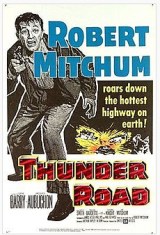
thunderroadI’m glad to see legal moonshine showing up in restaurants and liquor stores. Try a glass. You might be surprised. And now that it’s legal and sort of a fad, you won’t need to worry about lead poisoning because some clown used the radiator of his Ford truck in the still.

When I watch old movies that I’ve seen before, I always pretend I haven’t seen them before. That means pretending, for example, as I watch Kate Winslet running through the ship, that this time Titanic won’t sink and that Jack won’t die in the icy waters. I felt the same way about the moonshiner movie “Thunder Road.” I always wanted the movie to end well with moonshiner  Lucas Doolin (Robert Mitchum) getting away from the Feds forever and retiring in Cuba or Bermuda.

I grew up in a shine-free house (not counting furniture polish and floor wax) 

My parents, who didn’t allow booze in the house in those days, couldn’t figure out why I liked that movie, much less why I was on the moonshiners’ side in real life. Then, as now, I thought people should be able to make all the spirits whey wanted without any interference from the government. And what’s the deal with those taxes–really out of line, I thought then–and still think now.

This is one of the eight brands featured in the Southern Living article.

Moonshining was big in Florida where I grew up and big in the Smoky Mountains where we went on many vacations. I wanted my parents to pay somebody who knew somebody to get us a Kerr jar full of high quality shine. But they never did, stealing from my brothers and I what could have been a wonderful part of the vacation experience. Seemed like it would have helped us in school and kept us from getting summer colds and chigger bites.

Now, for research purposes only, I can taste it so that when I describe Eulalie in Conjure Woman’s Cat as making plenty of her own jick and sipping it regularly, I can make the scenes accurate. There’s nothing better than accuracy.

One challenge for the moonshiner, of course, was buying all that sugar and all that corn for the mash without attracting attention. Fortunately, in Florida one could grow sugar cane and buy the corn from a farmer across the road who loved the shine.

Nothing beats telling stories while passing the jar back and forth on the back porch. As kids, we had all the sugar cane stalks to chew and juice to drink we wanted because it was old on street corners. If we could have dipped those stalks in sweet, syrupy smooth shine, life would have been better for everyone.

Now with it being legal (as long as you take care of all those licenses and fees), the newspapers are no longer filled with those horrifying pictures of a bunch of cops chopping apart beautiful stills or smashing bottles of moonshine so it all went to waste.

Good Lord, it must have taken a special kind of stupid to dump a hundred gallons of Granny Henderson’s best hooch into the Wakulla River. 

Folks would be better off if there was more sipping happening now. At any rate, for those of you who are keeping score, when Eulalie and her friend Willie talk about the taste of apple-flavored shine in the novella, I’m writing what I know.

–Malcolm


Great Energy Shift? I don’t know, though we definitely need one

“As we are heading into the Age of Aquarius, new energies are encompassing our bodies and are reflected in various physiological symptoms. Within this transition of the ages, many people will begin to feel many of these energy shift symptoms on a regular basis as our bodies are adjusting and upgrading to the higher frequencies.”

– from the Esoteric Metaphysical Spiritual Database

Is there really a great spiritual energy shift coming? I have no clue. I do know what there are hundreds, perhaps thousands, of spiritual coaches, mentors, facilitators, teachers and writers spreading the word across the Internet that the shift is coming or has already begun and that they have the meditations, symbols, light language, breathing exercises, visualizations, and podcasts that will definitively place you on the right road to be part of it all.

I hope they are right.

newageThe world’s a mess now. We’re hearing this from both ends of the political spectrum, from experts at think tanks and research centers, and from mainstream and alternative religious leaders.

Perhaps there is a great spiritual transformation on the horizon. Or, perhaps there isn’t, but soon will be because it will be created by all the people passionately telling us that a great change is coming. Maybe they are creating their own self-fulfilling prophecy, assuming they aren’t really the first to know a secret the rest of us don’t accept yet.

In the 1960s and 1970s there as a new age movement with a lot of talk about the Age of Aquarius, the Silva Method, Transcendental Meditation, making love not war, and many people were convinced “this was it” in the same way others were convinced years ago that World War I was the war to end all wars. But then life went on with the same old problems and a lot of the new age faithful slowly returned to logical, mainstream lifestyles.

I often think we’re attracted to new age ideas and books like “The Secret” because we’re looking for a spiritual quick fix. I don’t necessarily think the beliefs behind the former new age movement or the current spiritual shift movement are wrong. My own beliefs are by no means mainstream. I just think it’s hard to stay the course. One goes to a spiritual retreat and returns to the real world freshly energized and with a new sense of purpose and certainty. But in the face of what the rest of the world thinks, they have trouble maintaining that high, keeping up with the visualizations and meditations, and slowly slip back into the muck of a mainstream lifestyle.

Perhaps there are more seekers now. Perhaps they have more endurance and will persevere in spite of the fact that everything they see in their workplaces, in their communities and on the news is telling them quite strongly they’re wrong.

At my age, I no longer have youth’s passion to be a preacher for any belief system, much less advertise myself on line as a spiritual coach. In fact, if I did have the energy, I wouldn’t do it because–great energy shift or not–I see beliefs as very personal and not something to be sold or taught. You’ll find some of my beliefs echoed in the beliefs of the characters in my novels. That’s the best I can do. I didn’t get the memo about a great energy shift, so I’m not going to try to convince you there is one, much less sell you a course about how to ride the whirlwind.

Truth be told, I’ve always thought that–as well-intentioned as  it may be–the missionary approach is misguided and arrogant. How can one say that his/her beliefs are better than the spiritual beliefs of another person or group? Perhaps I’m hiding behind my books. Hard to say. They are stories, though, rather than sermons.

My approach to spiritual ideas is that we all have the capability of discovering them for ourselves. I may be wrong about that, and since that’s possible, I won’t offer you a podcast or a DVD to bring you around to my way of thinking. If my novels and short stories suggest there’s something “out there” other than science, technology and doggedly earning a living, then I’m pleased. I don’t know any secrets to sell you, and that includes the real or imagined great energy shift.

–Malcolm

SarabandeCover2015Malcolm R. Campbell is the author of “Conjure Woman’s Cat,” The Sun Singer,” and “Sarabande.”

Website: http://www.conjurewomanscat.com/


Writers: How Tall Are You?

“If you aren’t in over your head, how do you know how tall you are?

– T. S. Eliot

In his article in the January/February 2016 issue of Poets & Writers Magazine called “Project Empathy,” Lee Martin advises those writing memoirs to keep in mind that the words on the page will never be as real as the lives we have lived.

poetswriterscover“We have to accept that fact and then forget it, so our subject matter won’t overwhelm us.” He goes on to suggest additional ways writers can approach difficult material…getting at emotionally charged issues through small details…letting the story tell itself without trying to say everything we feel about the horror of it or the joy of it.

In response to the quotation from Eliot, he says that “We should all feel as if we’re in over our heads when we write; that’s how we know we’re writing about something that really matters.”

If you have access to a library with a copy of Poets & Writers, I suggest reading this article whether you’re writing a memoir or writing a novel. I’ve often found the magazine available at Barnes & Noble stores.

When we think about how tall we are as writers, it doesn’t mean believing we’re taller than somebody famous. And when we think about writing about something that really matters, it doesn’t mean becoming full of ourselves because we are tackling an important subject of the day.

We do know what matters to us. We often avoid it, thinking who am I to write about this, thinking I can’t deal with this, thinking others have more dramatic stories to tell about this, and what this reminds me of are the lists of things we never want to talk about even with our loved ones or best friends. If you’ve known another person for a long time, you know what you cannot ask them because they refuse to discuss it. Maybe it’s something that happened in a war, the lost of a spouse or a child, a huge embarrassment at work.

If you have things you won’t talk about, they may be the stories you should be telling. Why? Because they’re important to you. Even in your silence, they have played a profound role in shaping your life. “Sooner or later,” writes Martin, “we have to face who we are in the world around us. We have to respond. We have to speak from the truest part of ourselves.”

When we respond–or, at least, try to respond–we find out how tall we are. A lot of us learn through the stories we read. We step into another person’s shoes and find out what it’s like to see what they have seen. What have you seen? Perhaps it will make a good story and perhaps it will resonate with the very people who need to hear it.

If you hurt while you’re writing it, you’re probably getting it right.

–Malcolm

Malcolm R. Campbell is the author of “Conjure Woman’s Cat,” a story about racism and folk magic in northern Florida in the 1950s. The Kindle edition is on sale for 99 cents on January 6th.