Sea of Grass

Sea of Grass was a 1936 Conrad Richter novel about the cattlemen vs. the homesteaders on prairie land referred to as a “sea of grass.”  Katharine Hepburn, Spencer Tracy and Melvyn Douglas starred in the 1947 Elias Kazan film based on the novel.
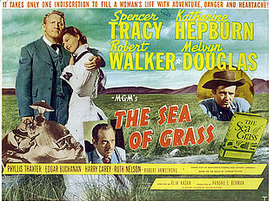
seaofgrassEven though I saw this movie a long time ago, I think of it when the “yard” gets out of control. I put that word in quotation marks because when you live on a section of a farm, yard grass tends to run into general non-yard grass along the roadway, between the out buildings, and into other seemingly huge expanses green stuff between the house and the fence.

The plan is for the cattle to stay on the other side of the fence. We’ve talked about the getting several goats to help tend to the grass on this side of the fence. More trees, too, so that there are vast areas natural ground cover rather than the grass.

The problem with the grass, other than the fact there’s a lot of it, is that, say, on a Monday it looks pretty good. Then there’s a monsoon on Tuesday and Wednesday. On Friday, the grass is suddenly several feet high and that’s a chore even for the riding mower.

I’m generally a fan of prairie and am fascinated by the tenacity of the grass with it’s long root systems searching for moisture during dry periods. Mowing that grass is another thing. There’s an old Ford tractor (still runs) sitting in one of the out buildings and we’re really tempted to buy a bush hog for it so we can reduce a day-long mowing adventure down to a half-day adventure.

On the Christmas list!

Frankly, I think the neighbors sneak over here at night and throw 10-10-10 fertilizer in all the yard and non-yard miniature prairie habitats so that when we get up in the morning still tired from mowing the day before, the grass looks again like it hasn’t been cut in weeks.

The neighbor on the other side of the fence who leased and then bought the majority of our old farm, suggests that we bale our into large rolls so he can put it in the barn to dry for his cattle. Interesting idea.

My wife mowed for two hours after dinner last night. I mowed for two hours this afternoon after the grass finally dried out enough from last night’s rain. Grass (not marijuana) doesn’t make for a very philosophical or celestial post. It’s more something to do while I’m cooling off from our sea of grass.

There’s more to mow, of course. While mowing, the yard seems about the size of the Tallgrass Prairie Preserve in Kansas:

tallgrass

There used to be 170 million acres of tallgrass prairie in the U.S. Now, about 96% of it’s gone. Somebody obviously loaded up some of that 96% and brought it down to north Georgia during a night with no moon so I would have to cut it.

If you just bought yourself a brand new riding mower and then realized you don’t have a yard, feel free to bring it out to our place. We’ll even give you a free beer when you’re done unless you run over the shrubs or tear off a section of the back porch.

–Malcolm

KIndle cover 200x300(1)Malcolm R. Campbell is the author of “Conjure Woman’s Cat,” a granny-vs-the-KKK novella set in the Jim Crow era of the Florida Panhandle. The Kindle edition is on sale for 99 cents today (9/10) and tomorrow (9/11).


No, doc, I don’t want Bette Davis eyes

A year ago, my optometrist said, “you’re going to need to do something about the cataract in your right eye.”

Thinking he meant, a waterfall, I said I hadn’t been dripping water, tears-wise or otherwise.

eyeHe informed me that I was going to have trouble seeing within the year.

Noticing that I was driving blind more often than not, I went to an eye doctor a week ago and he said, “Holy crap, man, you’re still looking at the world with eyes made during World War II when factories slapped out millions of eyes per second without a lot of paperwork for the war effort.”

He surfed out to Wikipedia where he gets most of his medical information and showed me an eye diagram. “When you were born, we didn’t know about half this stuff, so your eyes not only aren’t compatible with Windows 10, you’re missing a lot of the world’s important developments such as texting and more nudity.”

He got out a catalogue published by the American Academy of Ophthalmology called “Fabulous Eyes.” It contained a list of the replacement eyes available for those of us about to undergo cataract surgery.

bettedavis“There’s been a run on Bernie Sanders eyes lately, and that means a waiting list. Since you’re a writer, maybe you’ll want something exotic like Bette Davis eyes.”

“I remember the song,” I said.

“According to the song, with these eyes you’ll either know how to make a ‘crow blush’ or a ‘pro blush’ depending on which recorded version of the song you like.”

I informed him that Bette Davis’ eyes were older than the ones I was currently using and probably had fewer working parts.

As it turns out, there are more eyes out there than you can poke out while running with scissors. Since they (the eyes) are purportedly windows of the soul, I didn’t want to make a flippant choice. Truth be told, I’ve gotten used to the way I’ve always seen things even though I’m seeing less other them.

In “My Ancestor Was an Ancient Astronaut,” Toba Beta wrote,  “Eyes shows lies.” That ruled out a lot of eye models, especially those from celebrities, political candidates and serial killers.

Muir-Einstein-Newman Eyes, Model
Muir-Einstein-Newman Eyes, Model “MENJ38-25774.”

Finally, it appeared that I was best suited for a combination eye, one with the attributes of John Muir, Albert Einstein and a dash of Paul Newman. “Eyes don’t make you smart,” the doc cautioned, saying that I shouldn’t expect to be rich and famous with rich and famous eyes looking out at the world.

“With the MENJ38-25774 eyes, you might go into the salad dressing business or be able to shoot a good game of pool.”

“More likely,” I said, seeing through my glasses darkly, “I’ll turn into Brick Pollitt and say, ‘I’m ashamed, Big Daddy. That’s why I’m a drunk. When I’m drunk, I can stand myself.'”

“That can happen,” he said. “My assistant here thinks she’s Helen of Troy and wants go go into the ship launching business.”

Frankly, I thought his assistant looked more like Bette Davis.

–Malcolm

New Jock front CVR full sizeMalcolm R. Campbell is the author of “Jock Stewart and the Missing Sea of Fire,” a satire similar to this post in that it has characters who are likely to say anything (and often do).

10, 11 (or maybe 12) things you don’t know about me

Every 25-30 seconds, I see a new article about a celebrity (that I usually haven’t heard of) called something like 25 things you don’t know about ___________ (whoever)

meetauthorI don’t know why I click on those stories because most of the things on the list are boring and/or fall into the TMI (to much information) category. No doubt, some massive computer somewhere records my click, gives the site a higher rating, and insures that I’ll probably be bothered by a lot more of these kinds of stories the next time I show up on the Yahoo home page.

You never click on those do you? If not, how did you show up on this post? Okay, since you’re here (and the NSA already knows you’re here), you might as well read the list.

  1. Barbra Streisand and I share a fear. We both get stage fright every time we walk in front of a large audience. I solved that by not doing it (walking in front of a large audience) while she solved it by singing.
  2. millieThe first actress I had a crush on was Millie Perkins. Since you probably don’t know who that is, this proves I’m a lot older than you. She never wrote back so nothing came of it.
  3. I was raised by alligators in a Florida swamp. Sure, I had regular parents and they were nice people, but they weren’t as exciting as the gators. I learned more from gators than I did from my school teachers. I’ve kept this secret all the years because, well, who the hell knows why, maybe because I didn’t figure anyone would believe it. I’m not even sure I believe it, even though I remember Papa Gator telling me that tourists love gators.
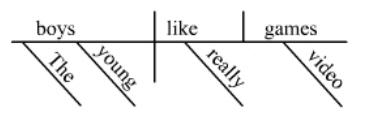
  4. sentencediagramAlthough my first language was (and still is) English, my grade school and junior high school English teachers didn’t think so because I made lousy grades. I knew how to speak and write my native tongue, but couldn’t force myself to study grammar, learn parts of speech and do other silly things. (Hell is an afternoon spent diagramming sentences on the chalkboard.)
  5. If I'd spent ten years learning how to cook, I'd be better off than a failed piano player
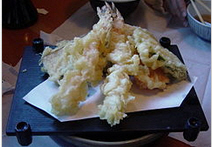
    Tempura – If I’d spent ten years learning how to cook, I’d be better off than a failed piano player

    I took piano lessons (against my will) for some ten years and now I can proudly say that I can play chopsticks with fewer errors than people who think chopsticks are only used for eating tempura and other cool foods. I happen to like tempura, but most people don’t. As an experiment, ask some random guy on the street what he thinks of tempura and he’ll probably tell you it’s a kind of paint.

  6. One reason I didn’t go “the Barbra Streisand route” to conquer my stage fright was simply that I can’t sing. I learned this on the job when I delivered signing telegrams to people’s houses and didn’t get any tips. I did better with regular telegrams and candygrams. Yes, I know, I sound like some guy who grew up on the frontier when I mentioned delivering telegrams. No, I didn’t ride a horse.
  7. I kept this ancient radio until we moved last year. I found a guy who actually knew what it was and had been looking for one to restore.
    I kept this ancient radio until we moved last year. I found a guy who actually knew what it was and had been looking for one to restore.

    I was a ham radio operator when I was in high school and once had my receiver on Radio Moscow because our high school band was playing some Russian music. A visitor to our house thought I should tell the Feds that I was picking up “the commies” on my radio. Goodness knows what he told his folks when he got home. I still know Morie Code but there’s not a lot of call for it.

  8. I believe in magic. As a writer, this has caused problems with some magazines and publishers who wanted me to place my work in the fantasy or paranormal genres while I was complaining, “but this stuff actually happened.” I lost all those arguments. My parents (not the alligators) weren’t comfortable with my my magic books, telling me that later in life, people would just assume I was crazy. They were right about that.
  9. I’m a Leo. Okay, I guess you probably already figured that out.
  10. madonna2Madonna and I used to sit in one of those Rocking Chairs on the front porch of a Cracker Barrel restaurant and talk about the Kabbalah until too many people started taking selfies with us in the background. Frankly, I think they cropped me out of them, the bastards.
  11. Contrary to popular belief, I was not born on a tabletop in Tennessee and did not kill my first bear when I was only three.
  12. Mercifully, this list is coming to an end with the news that I tend to put hexes on people who don’t read my books or who give them bad reviews (or no reviews). Since you don’t believe this, there’s nothing to worry about. 🙂

–Malcolm

Malcolm R. Campbell looked up how to put hexes on people while working on his novella “Conjure Woman’s Cat.”

Thank you to my 26,250 visitors

83grandThis blog has been staggering along for awhile like a sailor trying to find his way back to the ship after a night on the town in a foreign port. (Been there, done that.)

When I started Malcolm’s Round Table, I was thinking of King Arthur (indirectly in my family tree) and the Knights of the Round Table. Not that I would admit that I was looking for the Holy Grail. I had no idea what I was going to say or that I’d end up saying it for some 1,050 posts about everything from writing to Glacier National Park, to the USS Ranger to the Florida locations for some of my recent stories.

Somehow along the road, 26,250 of you stopped by for some 83,252 visits. And, according to the WordPress gurus, the busiest time has been Thursday at 2 p.m. This tells me you guys are logging on at work after drinking your lunch.

Thursday2pm

Seriously, were you trying to stay awake or were you looking for the Holy Grail? (And, were you successful in either quest?) Truth be told, I bring to this blog and to most of my fiction the premise that every one of us is on a hero’s journey in search of that moment and/or that insight that transforms us into the individual we were destined to become if we allowed it to happen.

In my novel The Sun Singer, I explore the hero’s journey from a masculine perspective. In Sarabande, I look at the journey from a feminine perspective. A recent article on Brain Pickings called “If Librarians Were Honest” caught my attention because it’s based on the premise that “If librarians were honest, they would say, No one spends time here without being changed…”

Vision of the Holy Grail at the Round Table.

Hero’s and Heroine’s journeys change us, often in spectacular ways under dangerous circumstances. Libraries can also change us. Potentially, every book, article, and post we read will change us a little or a lot. We never quite know at the beginning of a journey or a book, just who we will be at the end of it.

So, it’s a glorious risk, right?

Perhaps I should have posted this yesterday on my birthday because each of your visits is a gift. It’s a gift of your time, just as reading The Sun Singer, Sarabande, and Conjure Woman’s Cat is a gift of your time. Perhaps you felt different when you finished some of the posts and some of my stories.

Or, perhaps you were changed in imperceptible ways. If you’re also a writer, you will know that you not only change as you read but also as you write. I’m slightly different than I was when I wrote, “This blog has been staggering along for awhile like a sailor trying to find his way back to the ship after a nigh on the town” at the beginning of this post.

We don’t often notice the smallest changes in ourselves because movies and books lead us to believe that when we find the Holy Grail, we’ll find it all at once rather than little by little. Perhaps we need a magic mirror that shows us, not how we’ve aged over time, but how we’ve changed.

If we did, I think we’d not only be surprised by the results, but we’d all feel a lot better about ourselves. At any rate, that’s why I write and that’s why I’m happy that 26,250 of you have stopped by to read.

–Malcolm

KIndle cover 200x300(1)Malcolm R. Campbell is the author of the 1950s-era novella “Conjure Woman’s Cat” about a conjure woman who fights back against the KKK with folk magic.

Visit my website to learn more.


Has Oprah called yet?

Me: Has Oprah called yet?
Publisher: No, but I hear she’s been busy this week.

While this version of Has Hollywood called? or Did we get anything back from the New York Times? is an on-going joke, it represents the secret hope of many writers.

metroWe hope somebody influential will see our manuscript or finished book and show it to somebody else who will take it to the right people and, voila! it’s suddenly being turned into a movie with Oscar Buzz surrounding it.

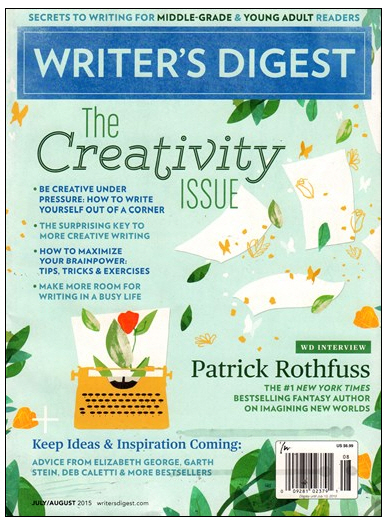
Years ago, I sent Writer’s Digest Magazine a terse letter about their featured profiles of “writers who have made it.” I haven’t read the magazine for years, but at that time, it was filled with how-to articles and tips covering everything from writing well, to creating a query letter to finding an agent or a publisher. These articles represented, I think, the best thinking at the time about turning one’s wont to write into a published novel.

oprahMost issues also featured a writer who was finally published. These profiles pointed out that the writer spent years perfecting his or her craft, revising and editing and rewriting and then went onto their saga of query letters and rejection slips and never giving up hope. That is, they dutifully followed all the magazine’s directions for success.

Then, near the end of the article, something magical happened. An agent happened to move in next door, a famous writer stopped by the house at a garage sale, somebody in the publishing biz was looking in dumpsters and found a coffee-stained draft of the novel and, voila, the writer was discovered.

After reading these profiles for years, I finally got fed up because every one of them ended with a magical event of some kind. Following the magazine’s how-to articles might have helped the writers become prepared for the magic. But none of them showed a writer succeeding without being rescued, found, discovered or stumbled over by an publishing angel who could make things happen.

Writer’s Digest never responded to my letter.

WDcoverThe results of the magazine’s approach are probably similar to the results of many biographies and feature articles about now-famous writer who were discovered by somebody sometime.

We’ve all been brainwashed into thinking that without being discovered, our books will never reach the New York Times Bestseller list. (Actually, that might be true.)

We’ve been taught to follow the best and the brightest of the gurus of the day when it comes to writing well, building a platform, paying for a good editor, promoting our books, getting interviewed and going on blog tours and heading to one convention of another.

Yeah, I’ll do all that. But secretly I know that nothing will happen until Oprah calls and the world turns on its axis causing my publisher to say, “MGM says they’re ready to rock and roll.

–Malcolm

KIndle cover 200x300(1)Malcolm R. Campbell is the author of “Conjure Woman’s Cat,” a novella set in the Jim Crow era of the Florida Panhandle that features Eulalie battling the KKK with folk magic.


Historic Cabin Destroyed by Glacier Park Fire

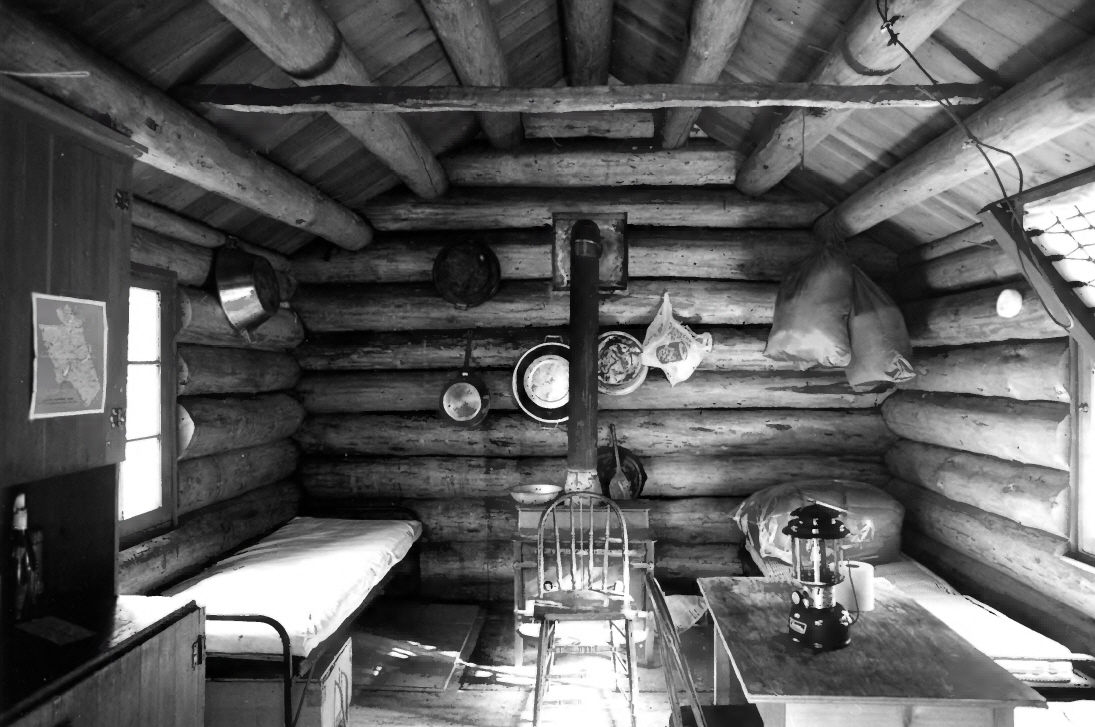
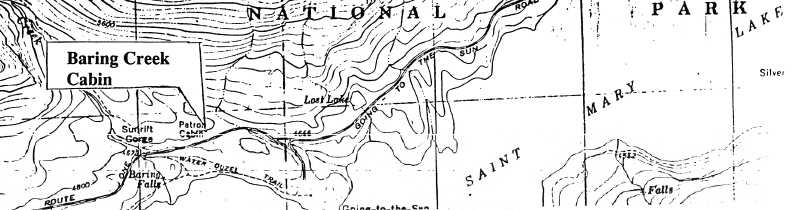
The 4,000-acre (as of 7/23/2015) Reynold’s Creek Wildland Fire in Glacier National Park’s St. Mary Valley has destroyed the historic Baring Cabin. Also called the Sun Camp Fireguard baringcabinCabin, this National Register listed property was built in 1935 as part of a compound of buildings used by the park service.

It was the last remaining structure before being destroyed by the fire on 7/22 that–according to latest reports–has come within 200 feet of Rising Sun Motel and is being moved by high winds toward the now-evacuated village of St. Mary at the junction of Going-to-the-Sun Road and highway 89 on the eastern side of Glacier Park. The cause of the fire has not been determined.

The cabin was built by Harry E. Doverspike at the mouth of Baring Creek, according to NPS Division of Landscape baringcabininteriorArchitecture specifications, a mile east of the Going-to-the-Sun Chalet. The chalet as removed in 1948. The cabin, which has housed park personnel on an as-needed basis, was fully staffed into the early 1960s.

The 20×25-foot cabin (including a covered porch) was built in the rustic architecture style and  featured a stone foundation and chimney, log walls and a singled roof.

It was listed on the National Register in 1999 based on its history and architecture.

baringcabin3

While the Blackfeet name for the creek is ápa-oápspi (weasel eyes), the name “Baring” was applied to the creek and the falls in honor of the old-line banking family who visited the area frequently during the 1920s. Author and explorer James Willard Schultz (Apikuni) named the creek, falls and nearby glacier (since changed to Sexton).

You can track the fire on this frequently refreshed map.

–Malcolm


A something or other with no name

“To name a thing is to acknowledge its existence as separate from everything else that has a name; to confer upon it the dignity of autonomy while at the same time affirming its belonging with the rest of the namable world; to transform its strangeness into familiarity, which is the root of empathy. To name is to pay attention; to name is to love.” – Maria Popova in How Naming Confers Dignity Upon Life and Gives Meaning to Existence

We tend to view the world through the lens of our language. Students taking language classes are often surprised that many of their pet phrases and notions have no twin in the language they’re being taught. Why not? The native speakers of that language see the world differently. My stories about, say, Glacier National Park, would be much different if they had been written in Blackfeet or Kootenai.

As a storyteller (writing in English for others who speak English), I see that naming things is both a sign of respect and acknowledgement as well as a limiting factor. When you name a mountain “Chair Rock,” you’re doing a normal thing. But you’re also making it difficult to see the rock any other way. If you see a translation of a story that includes “Chair Rock,” the name may suddenly be further away from your world view than the author will ever know.

In many cultures, people hide their true names–sometimes called “basket names”–from people outside the family because those names are linked to their true selves and telling them gives others a power over you. I can respect that. When I write, there is much that I refuse to say.

americahorsewithnonameThere’s an old gag about Dewey Bunnell’s song “A Horse with No Name,” recorded by America in 1971, that what with all that time in the desert, couldn’t the guy name the horse?

It’s hard to visualize the song, originally called “Desert,” with a horse named Fury or Flicka or Mr. Ed. Perhaps he didn’t respect the horse other than to say he was, in fact, riding a horse rather than something or other. Or, perhaps, the horse didn’t want its true name to be known.

Here, I’m respecting Dewey Bunnell and America by mentioning them. For a writer, that’s intentional because–as is often the case–those names have been forgotten while–in this case–the song is still widely known.

The specifics we include in our storytelling are there not because we are are name dropping or “adding a bunch of description” (as some call it) or playing with a place names dictionary or a “this date in history” website.

They are in the story because they confer the “dignity of autonomy” and because they’re an affirmation of their existence, as Maria Popova calls it. The realities in a story tie the story to a time and place as part of what happened their or how the world moved there. They are also in the story because the characters living in that time or place would know them and have empathy for them–as perhaps you, the reader, will know them as you read.

I included a glossary in the back of Conjure Woman’s Cat because the story includes folk magic terms, blues songs and performers’ names that they characters in the story would know. If Conjure Woman’s Cat were nonfiction, I could have included footnotes. The glossary seemed less distracting.

Part of research is changing what a writer knows about his or her story in progress from a something or other to something specific and loved and known within the context of the tale and the language in which it’s told. To paraphrase Jim Croce, like the pine trees and the croaking toad, everything in the story has a name.

If an author gets those names right, s/he can immerse you into the real and/or fictional world where those names arise even though–like maps–they’re not the territory.

–Malcolm

KIndle cover 200x300(1)EScover2014Malcolm R. Campbell is the author of “Conjure Woman’s Cat” and “Emily’s Stories.”

Listen, writers, this is gospel or my name’s not John Doe

A Facebook friend of mine claims that every story you want to write is sitting “out there” in limbo or maybe Topeka waiting for you to discover it, copy it into a DOCX file, and send it off to HarperCollins for $1000000000000000.

Does that sound crazy or what?

actorsFar be it from me to dispute it because the gospel truth is stranger than fiction. Working writers use meditation, dreams, magic, quantum entanglements and whiskey to meet with their characters once a month and talk about stories. Think of these people as, not beta readers, but beta writers.

Every one of them has ideas. Like actors, they all want to direct. These meetings are like casting calls (when you have a new story to write), brainstorming sessions (when one of them wants to run an idea of the flagpole) or encounter groups (when the sock puppets get out of control).

It’s completely safe because weapons are checked at the front door and watched over by a guy who looks like Dirty Harry. If you get too close to the guns, he says, “Well, you gotta ask yourself, do you feel lucky punk?”

theoaksI meet with my characters at a seafood joint called The Oaks in Panacea, Florida. The real Oaks has been closed for years, but with powerful meditation techniques and/or a shot of Scotch, the place returns out of the Ochlockonee River mist with the same reality that Brigadoon appeared to Tommy Albright and Jeff Douglas in the Scottish Highlands.

Since Eulalie (Conjure Woman’s Cat) is the best cook, she fixes fried mullet, hush puppies and slaw for the crowd while we shoot the breeze over old times, swap recipes for cathead biscuits and saw mill gravy, and stay away from the guy guarding the weapons.

Last night, Eulalie asked how her next story was coming along and I had to tell her it was running behind schedule. Emily (Emily’s Stories) said I promised her she could look for ghosts at the old Perkins Opera House in Monticello, Florida. “I know where it’s hiding,” she said.

nogunsRuby (The Seeker) wanted to know why she didn’t didn’t have a part in Snakebit. “Anne and I are like family,” she reminded me. “Who the hell do I have to sleep with to get another story?”

Laurence Adams (The Sun Singer) showed up even though his story doesn’t take place in Florida and said, “If you had finished writing another story set in Glacier National Park, it would be selling like hot cakes this summer during the hotel’s 100th anniversary. Please tell me you people aren’t eating mullet. High class Floridians don’t even eat mullet.”

You can see why we check our weapons at the door.

Okay, here’s what you do.

  1. meditationChoose a real place for your meeting. Make sure the owners (if any) don’t know about the meeting.
  2. If you know the names of your characters or prospective characters, write them on a piece of paper in blood (hopefully not yours) and bury it (the paper) in a deserted graveyard while nobody’s watching. If you are looking for fresh ideas, include words like “Chainsaw Killer,” “Honest Lawyer,” and “Sexy Vixen.”
  3. Steal somebody’s meditation techniques off the Internet and suddenly feel like your eyes are getting tired, that your brainwaves are entering the alpha state, and that you can “see” your meeting hall filling up with wonderful people and probably a feel wannabees. (Don’t over-do the meditation and go into a stupor.)
  4. Check all weapons.
  5. After finishing your favorite foods and beverages, ask your current and prospective characters if they believe stuff like “every story you want to write is sitting ‘out there’ in limbo or maybe Topeka waiting for you to discover it, copy it into a DOCX file, and send it off to HarperCollins for $1000000000000000.”
  6. When they say, “Does that sound crazy or what?” tell them you’re ready to hear some better ideas. Listen carefully with an open mind and an open heart. (This means not saying, “Hey, dirtbag, what kind of bozo idea is that.”)
  7. tonightshowNow, listen, writers, this is gospel or my name’s not John Doe: When you come out of your meditation (assuming you come out of it), you will have the best darned ideas for the best darned stories in the best of all possible worlds.
  8. This is important: Don’t discuss your new idea with anyone specially friends and family for they’ll share it with everyone and before you know it, some clown from Chicago or Miami will be sitting in a chair on the “Tonight Show” telling the world about YOUR BOOK. Well, it would have been your book if hadn’t blabbed the storyline to people who can’t keep a secret.
  9. Write the thing. Then give Jimmy Fallon a call. I know, I know, he’s no David Letterman or Johnny Carson, but he’s probably good for couple hundred grand in sales.

There you go.

–Malcolm

KIndle cover 200x300(1)99centsMalcolm R. Campbell is the author of the Jim Crow era novella, “Conjure Woman’s Cat,” which is on sale on Kindle today (July 18th) for only 99 cents. Eulalie claims she gets a 50% cut of the action or else.


Zeke Zany interviews me to get more words for his blog

zanyZeke Zany here at Zany Antics & Books where I chronicle my life as a car mechanic and part-time gigolo while working on my epic novel about a man who fixes the transmissions of rich widows. I’ve wanted to be a writer ever since I accidentally spelled a four-letter word beginning with “F” with my ABC blocks and my daddy’s reaction taught me the power or writing. Today’s guest is Malcolm R. Campbell who’s going to fill us in on who he is and why.

Zeke: Tell us about yourself

campbellphotoMalcolm: Well, Zeke, if you’d done your homework like a real interviewer, you’d know that I made my first fortune by selling my novels under pseudonyms that just happened to be the most famous names on the planet, starting with my bestselling novels Hunt for Brown November and Hunt for Blue December “by Tom Clancy” in 1987 and 1986. They were so good, even Tom thought he’d written them and came to my cell in the state pen to shake my hand.

Zeke: What are you currently writing/working on?

Malcolm: I’m writing answers to your one-size-fits-all interview questions. I’m working on getting done writing these answers as soon as possible, preferably before the Scotch runs out.

Zeke: When did you discover you wanted to be a writer?

Malcolm: I never discovered any such thing. Unfortunately, a muse named Siobhan with nothing better to do latched onto me like ugly on and ape (even though we’re both beautiful people) and demanded that I go into the biz. We got off to a bad start when critics around the world laughed at my debut novel To Kill a Blue Jay written under my Lee Harper alias.  Since then, it’s been “write good, or else.”

Zeke: Is there any part of you in your characters.

Malcolm: The worst parts. That’s what sells, Zeke.

Zeke: Are you a plotter or a pantser?

Malcolm: As God as my witness, I’m going to kill the next person who asks me this lame question. This question is so lame, it takes two crutches to hold it up. Suffice it to say, I wear pants at all times except during baths and sex.

Zeke: If Hollywood gave you the power to cast your novel in progress, what stars would you pick?

Wikipedia photo
Wikipedia photo

Malcolm: Hollywood never gives writers that power. You just want some names in this post that will attract search engines. Well, I can help you out with that: Olivia Wilde, Mila Kunis, and Megan Fox in my soon-to-be-released Three Bucks in the Fountain.

Zeke: When you are developing a book, what tools or techniques do you use, e.g. timelines, Ouija boards, character interviews, copy and pasting from obscure novels, sentence diagrams, or novel writing software?

Malcolm: Jack Daniels and a pencil work for me.

Zeke: Has your technique changed over time?

Malcolm: I started out with Ripple and a pen, but that’s what landed me in the slammer.

Zeke: Where you you get your ideas?

Malcolm: The mother ship beams them down.

Zeke: What kind of writing environment do you prefer: couch, bed, coffee shop, music, noise, abandoned hearse, the great out doors.

Malcolm: Siobhan says my best work comes when I’m writing in the drunk tank, and I’m sure as hell not calling my muse a liar.

Zeke: Do you have any advice for aspiring writers.

Malcolm: Avoid bloggers with canned interview questions that make you look like an amateur. Otherwise, promise your mother that “I’ll be all around in the dark – I’ll be everywhere. Wherever you can look – wherever there’s a fight, so hungry people can eat, I’ll be there. Wherever there’s a cop beatin’ up a guy, I’ll be there. I’ll be in the way guys yell when they’re mad. I’ll be in the way kids laugh when they’re hungry and they know supper’s ready, and when the people are eatin’ the stuff they raise and livin’ in the houses they build – I’ll be there, too.”

Zeke: Where can we find you on the Internet?

Malcolm: http://www.peoplefinders.com

Letterman just took the last train to the coast

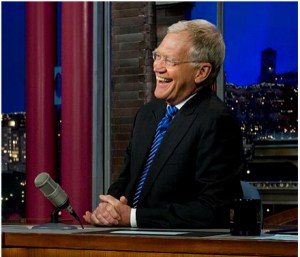
lettermanIn today’s here today, gone tomorrow world, I’m reminded of my age when I remember events, books, and TV programs that the mainstream youth culture has never heard of or considers ancient history.

Today, fewer and fewer people remember Dinah Shore and Steve Allen. Johnny Caron is fading into history. And now David Letterman has pulled the plug. If not the most popular, he was perhaps the most innovative and literate of the late night hosts.

His influence will be felt by people who’ve never heard of him. But that’s okay. After 33 years of sitting behind his desk, he’s bound to have had an impact. One wonders, will he escape the “scene” and fade away quickly like Carson or will we see his name as one of the voices on The Simpsons?

It was difficult to keep up with Letterman after a while because of full-time jobs and the need to get some sleep before sitting in a cubicle all day. Even when I didn’t see the show, I saw clips and felt a sense of things being right with the world knowing he was there with a new top ten list, some low-key satirical jokes, a new band, and some intentionally lame comedy bits.

A lot of notable people came and went on Letterman’s show. Everyone has their favorite interviews. But Dave was more than those interviews: he was middle America trying to make sense of everything outside middle America.

Don’t quote me on this, but Letterman shouldn’t have left even if (ultimately) he had to do the show from a hospital bed hooked up on life support, he should have stayed the course: “Tonight, Ladies and Gentlemen, the top ten reasons I’m still alive.” That would keep our link with the past up and running, making us feel better about ourselves and our world.

This isn’t the say the comedy died. Let’s just say that it’s changed and quite possibly that means the world as we know it is over. Change is a scary thing.

–Malcolm

Malcolm R. Campbell is the author of Conjure Woman’s Cat, a 1950s-era novella about Jim Crow, conjure and the klan in the Florida Panhandle.