Too much interior monologue will kill a good story

“Interior monologue, in dramatic and nondramatic fiction, narrative technique that exhibits the thoughts passing through the minds of the protagonists. These ideas may be either loosely related impressions approaching free association or more rationally structured sequences of thought and emotion.” – Encyclopaedia Britannica

True stream-of-consciousness fiction can yield a lot of exciting passages about a character’s inner life (which s/he may or may not confuse with reality) as well as plot-advancing impressions that mesh well with the story line.

When I think of “too much interior monologue,” I’m not bashing well-written stream of consciousness techniques in spite of the fact that readers who don’t like literary fiction will hand out one- and two-star reviews for such novels on Amazon. When an author’s protagonist thinks about the situation s/he is in, that’s interior monologue.

Naturally, it’s normal and relevant to think about the situations we’re in. On the other hand, when this thinking does on for hundreds of words in multiple places in a novel, then it is likely to ruin the story. Writers are told that most of what they put in a novel should advance the plot. Overused interior monologue doesn’t advance the plot: instead it puts the plot on hold.

I just finished reading a novel with an interesting plot. A protagonist with a history of panic attacks which s/he manages with prescription medication (as much as possible) undergoes a traumatic experience before being put into an unrelated but more dangerous situation where her life and the lives of others is at risk.

I’m not going to identify the novel or even count the number of words in it and compute what percentage of it is plot-stalling interior monologue. My impression, though, is that 40% of the novel is interior monologue along the lines of. . .I need to keep my self from screaming. . .I need to relax. . .maybe I didn’t see what I think I saw. . .can I trust person XYZ. . .maybe if I told my story and/or got certain people to trust me, they would believe me and/or help me.

Stop Talking to Yourself and Do Something!

A little bit of this is fine. But when it goes on and on and on, there’s really nothing happening. Yes, maybe this would happen in real life, but writers are also told that writing fiction that copies real life–as a 24/7 video camera might view it–is bad because a lot of that real life stuff is trivial. In the novel I just finished, the character’s fight to keep her panic under control and her considerations about what may or may not be happening can be conveyed to the reader much faster.

When I see excessive amounts of interior monologue, my first thought is that the writer doesn’t really have enough depth in the plot to make a novel. That is, there are two few events and dialogue passages to sustain a book-length story. So, the interior monologue pads the length of the book out to the minimum number of words the author or publisher feels are necessary to call the book a novel rather than a short story, novelette, or novella.

I liked the plot of the novel I just finished. I liked the satisfactory ending and the fact that the protagonist’s experience ended up making her a stronger person ready to take stock of a lot of decisions about her life that had been stalled. I think it’s a shame, though, that the story was dragged down by the interior monologue instead of being pushed forward with a greater number of plot elements.

Dan Brown’s “Teaching Moments” Come to Mind

Dan Brown and others who write novels about ancient secrets with a modern twist to them are often criticized for stopping the action through the insertion of a lot of exposition in which one character tells another character what the ancient secrets are all about. This is a slick way of telling the reader what those secrets are about. If you were going to write a spoof of such books, you’d have one character pull a knife on another character and then–so to speak–freeze the action while the character tells somebody else why all this matters (for, say, a thousand words) and then go back to the knife fight.

That really tears apart the pacing of the action. It’s also very frustrating to the reader. Excessive interior monologue has the same negative impacts.

–Malcolm

Malcolm R. Campbell is the author of “Conjure Woman’s Cat,” “Eulalie and Washerwoman,” and other magical realism and fantasy novels.

Feds Nab Bad Writers Committing Crimes With Plot Generators

Washington, D.C., January 2, 2018, Star-Gazer News Service–Homeland Security Agents announced here today that a massive sting operation has resulted in the arrest of thousands of writers with low Amazon rankings committing crimes with the help of plot generator software rather than writing great American novels.

Chief of station Liberty Valance said that the writers were caught when the modus operandi of a “larger than usual” number of crimes matched the formal structure of short stories and novels.

“Over and over again, we were seeing exposition, conflict, rising action, climax, falling action, and resolution,” said Valance. “We also saw a correlation between writers who purchased plot generator software who were getting rich even though their Amazon rankings–with numerous one-star reviews–were in the toilet.”

Publishing insiders have worried for years that plot generator software was more likely to be used for planning perfect crimes rather than perfect fiction.

“If a writer’s any good, s/he doesn’t need a software package to create the plots for his or her novels,” said Bennett Surf, director of the American Association of MFA (manufactured authors) Colleges and Universities.

Analysts discovered that writers were launching their plot generator apps and typing in phrases like “knock over liquor store,” “make money via insider training,” “run over granny with a reindeer,” and “overthrow government” rather than using the software for the purpose for which it was intended.

“That purpose,” said Surf, “was bilking prospective writers out of hundreds of dollars by selling them a product that promised that a lack of imagination and writing skill need not keep their fiction off the New York Times bestseller list of the Pulitzer and Booker prize winners circles.”

Valance said that most of those caught designed first person crimes rather than third person or omniscient narrator crimes, making it easy for profilers to “pin the tales on the wannabees.”

A white paper issued by attorneys for the top ten plot generation applications said that the programs were dispensed for purposes of fun and relaxation, and that all of those “spending hard-earned cash” for the products signed terms of service agreements in which they promised not to use computer-assisted plotting for anything other than novels, novellas, novelettes, and short stories.

“We even banned the use of plot generators for poetry because sonnets and limericks are usually horrible and potentially criminal,” said Plots-R-Us CEO Bill Smith.”

“There never have been any writing shortcuts (other than sleeping with somebody in the publishing business) and now–thanks to the Homeland Security Department’s agents and analysts–crime no longer pays as well as it did,” Valance said.

The White House praised Valance for no longer being a decorative drapery. “Today, it’s curtains for wordy criminals,” President Trump tweeted.

–Story by Jock Stewart, Special Investigative Reporter


Excellent Source for Self-Publishing Help

“I was recently tasked with putting together a publishing workshop for my local library. As I researched and gathered information, I realized everything they needed to know was available right here, on IndiesUnlimited.com.”

via Everything You Need to Self-Publish – Indies Unlimited

As author Melinda Clayton says, there’s a wealth of information stashed under the Knowledge Base and Resource Pages menu selections on the Indies Unlimited main screen. Sometimes I think we become so accustomed to the menu selections on blog-oriented sites, we forget they’re there and miss out on the links and other information they lead to. We read the posts of the day and move on.

Self-publishing can seem like a daunting process when an aspiring writer first decides to take the plunge. In addition to Indies Unlimited, you can find helpful resources on sites such as Poets & Writers, Association of Writers and Writing Programs, Jane Friedman, and Writers Digest.

The information is “out there.” Half the battle is knowing where to look.

–Malcolm

Magazines That Just Couldn’t Cut It

For every successful magazine, hundreds fail either because they’re flat stupid, were published before their time, or were written and edited by nuts. Here are my memories of those that didn’t make the grade.

  • Jupiter Images graphic

    Bad House Keeping – Written by trailer trash for trailer trash, but went off the rails when it also tried to appeal to artists, writers and other dreamers who didn’t have time to keep house.

  • Bizarre – Featured photographs taken by readers while they were drunk about stuff that seemed funny at the time but, as it turned out, was trivial and boring later on.
  • Croquet Digest: Readers were never sure whether this magazine was about the game or fried rolls of bread and meat. Those who thought it was about croquettes unsubscribed then many of those who thought the magazine was about croquet claimed to be using croquettes instead of balls because what else were they good for?
  • Hades Home Journal: Editors thought this take-off on “Ladies Home Journal” would document what life was like for most housewives, that is to say, life in a hell of dirty diapers, burnt food, endless dust, and unfaithful husbands. Even those who sent in true stories hated the magazine because they wanted to pretend life in housewife hell didn’t exist.
  • HayBoy: This original spoof of “Playboy” failed because–contrary to marketing predictions–nobody wanted to see cartoons and photographs about scantily clad men working on a farm.  Even the dazzling articles about crop rotation and the center spreads featuring John Deere, Ford, Massey Fergusson, Case, and Farmall tractors couldn’t save the magazine.
  • Homewrecker: Based on high divorce rates, publishing moguls decided there was probably a huge audience of wanton women who were being neglected by mainstream media. This publication pioneered in the publication of ground-breaking techniques for stealing a man away from goody-two-shoes women who were reading “Good Housekeeping” and “House Beautiful.” Basically, the church got ticked off at this magazine and said everyone associated with it was going to hell, so that pretty much scared advertisers and readers away.
  • McBalls: This magazine, aimed at the husbands of women who lived their lives by the gospel of “McCalls,” focused on dangerous methods of barbecuing, high-energy and potentially fatal sports, living lives based on the “hey, honey, watch this” philosophy, and featured centerfolds of stuff that blew up or caught on fire. The magazine had a spectacular first year, but after that it lost readers when most of them died.
  • Photoclay – A bunch of potters in a collective run by visionary manufacturers of wheels, kilns, and other craft supplies, saw the success of “Photoplay” and thought, “why not clay?” As it turned out, nobody much cared about pictures of clay or even the gory pictures of stuff that blew up in the kilns.
  • Popular Seance – This magazine was the best of the best during the spiritualism craze, featuring articles by spirits such as Patience Worth, Ouija Board techniques, and how to contact uncle Danny in the afterworld to find out where the hid all his gold. Then a horde of spoilsports came along and said spiritualism was mostly frauds taking people’s money. Subscribers thought that was a real downer and left the magazine to become Tarot card readers.
  • Everyone can’t produce a successful magazine.

    Popular Quantum Mechanics: When the magazine came out, nobody knew squat about quantum physics, so naturally they thought everything in the magazine was about a bunch of frauds taking people’s money.  How, people asked, could there be multiple universes when one was bad enough? How could a butterfly flapping its wings in Tallahassee, Florida, cause a rain form in Walla Walla, Washington? The magazine was a true gem that failed before people were ready for it.

  • La Vie Fille de la Joie: Hookers, according to the magazine’s cover blurb, brought an infinite amount of joy to men who “weren’t getting any at home.” The photographs and articles, according to even the most Victorian critics, were tastefully done and “made calling a call girl seem like a religious experience.” As had happened before with people just having a bit of fun, the church got ticked off at this magazine and said everyone sleeping with daughters of joy was going to hell. This idea bothered people and they canceled their subscriptions even though they continued to find love with unknown ladies leaning against lamp posts.
  • New Porker: This brave magazine was the champion of pigs and could tell you how to bring home the best bacon, carve a pork roast, and cook center-cut pork chops with out drying them out. The trouble was, most people think pigs are  gross, stupid, and filthy and balked at the idea of leaning anything more about them. Even the hog-calling “Sooie Short Stories” series couldn’t save the magazine.
  • Saturday Evening Fencepost: The trouble began when the magazine couldn’t entice Norman Rockwell to do their covers art featuring farmers, farmers’ wives, and hired hands sitting on fence posts creating sonnets about barbed wire, gates, barns, and silos. Somehow, a nasty campaign by other magazines convinced readers that this magazine was for people who were “dumb as a post.” Even those who knew they were dumb as a post didn’t want to be told they were dumb as a post.
  • Silver Scream: Since “Silver Screen” was a popular magazine, why not focus on the dark site of making movies, starting out with some of the best screams anyone ever heard in a feature film? As it turned out, readers didn’t want to focus on the shower scene in “Psycho” as much as editors thought, so the magazine went under with a whimper a few years after it began.
  • The Smart Seat: This magazine, a jibe at the popular “Smart Set,” featured seats, mainly toilet seats, but occasionally various hot seats and other places people found themselves sitting. The magazine was funny at first and then it wasn’t, some say because a story called “Toilet Seats I’ve Known and Loved” grossed people out. Then, too, legislatures claimed that using the word “ass” in a periodical made the whole thing obscene and got the copies removed from the shelves.
  • If you can’t be Vogue, be Vague.

    The UnAmerican Girl: With “American Girl” all the rage in those days, girls who weren’t American weren’t getting any news coverage. Unfortunately, the name of the magazine gave readers the impression that the magazine was about commies and other nefarious women who were out to take away America’s freedoms. Actually, that was probably true, though it was never proven. Even though many men thought dating an unAmerican girl was sexy, the FBI thought it wasn’t, and that pretty much killed the magazine.

  • Vague: The publisher wanted to compete with “Vogue,” but never figured out how to do it. The result was a wishy-washy magazine that wasn’t about anything other than people who had no idea what they were doing. It was not surprise that those people didn’t have any money, consequently they could afford subscriptions or buy anything from the magazine’s advertisers. The whole thing was so nebulous that nobody ever knew when there the magazine was sold, what it was about, or when it went out of business.

The tale of two literary forums (updated 02/07/19)

If you were out on the Internet in the 1980s, you probably remember that CompuServe was a major ISP, providing e-mail and forums for millions of users. In those days, almost every hi-tech company, whether hardware or software, had a forum staffed in part by representatives of the company to help people with bugs, usage issues, and other information. In addition to these forums, CompuServe also maintained forums for pets, religion, political discussions, hobbies, and literature.

Jupiter Images art

The forums all provided discussions in threads–originally in a DOS/non-graphic mode–that looked sort of like the outline-style comments on many blogs as well as on Facebook posts. As CompuServe (which became part of AOL) lost market share over time, these forums dwindled in number so that on December 14th when the remaining forums were shut down by CompuServe’s parent (a Verizon subsidiary), there were relatively few forums left compared to the old lineup.

In the late 1980s and early 1990s, I was a regular participant on CompuServe’s Literary Forum. That name was later changed to Books and Writers. Those who participated in the forum in those days had a rare treat, seeing the birth of now-bestselling author Diana Gabaldon’s Outlander series. In those days, she was a very active participant and helped many of us get our start in the writing business. She answered questions from everything from craft issues to publication and promotion issues. While her active participation seemed reduced to me due to her busier schedule, she was still on the forum when CompuServe pulled the plug this month.

Like many early participants, I was lured away from the forum by the more cutting-edge software at MySpace and then Facebook. Also, the software at CompuServe’s forums changed so that when you replied to a comment, your reply was no longer posted beneath the message you were responding to, but at the end of the thread. For me, that made navigation a punishing task. Plus, many of the people I knew there when I was a regular had drifted away, and so I had less incentive to go there as fewer and fewer people knew me. My personal opinion was that the staff had become a bit heavy handed, though others didn’t see it that way.

Now, there are two forums to choose from

  1. The management of the former CompuServe forum, that is to say, the forum’s contract holder and the staff members (called Sysops and Section Leaders) changed the name back to Literary Forum. You can find it here: http://www.thelitforum.com/
  2. Meanwhile, a group of former-participants at the CompuServe forum who disagreed with various of the forum’s policies, started its own Literary Forum. You can find it here: https://forumania.com/      This screen is a landing page for multiple forums, one of which is Literary Forum with a button to click on to go to the forum. UPDATE: This forum has closed.

Both forums are new. So there are probably software issues still to be worked out. The first forum listed here has more posts because they apparently were able to bring over posts from CompuServe. The Forumania Literary Forum doesn’t have a fan base and has fewer discussions to involve yourself with. I am a participant in both forums, but have a strong preference for the new Literary forum on Forumania.

Both forums require you to create an account if you want to respond to posts or start your own threads. Both are free. Both forums offer sections (groupings of threads) that will appeal to many readers and writers. There are discussions of current books, genres, the writing craft, and promotional matters.

I invite you to look at each of them, learn how they are organized, and see if you can find a niche there that fits your preferences for talking about the books you’re reading and/or the books you’re writing and promoting. Unfortunately, neither forum has been able for afford software that places responses to threads in the order they’re posted. I figure that if Facebook and WordPress can display responses in an outline form, everyone ought to be able to do it–and CompuServe knew how to do it decades ago. So navigation isn’t as user friendly at either place as it is at other websites.

However, I received a lot of writing help and inspiration at the original Literary Forum when I was starting out. Perhaps you’ll find this kind of help at one of these literary forums as well. They are worth the time and effort and a good place to make some new online friends.

–Malcolm

Malcolm R. Campbell is the author of magical realism, paranormal, and contemporary fantasy novels and short stories, many from Thomas-Jacob Publishing.


Should our fiction focus more on why you should beware of those you love?

“Stay away from the ones you love too much. Those are the ones who will kill you.” – Donna Tartt, The Goldfinch

“You’re more likely to be hurt or killed by someone you know or love. And you’ll probably be at home when it happens.” – Mother Jones Magazine

“Over half of the killings of American women are related to intimate partner violence, with the vast majority of the victims dying at the hands of a current or former romantic partner” – The Atlantic

“Over the past 10 years, more than 20,000 American children are believed to have been killed in their own homes by family members. That is nearly four times the number of US soldiers killed in Iraq and Afghanistan.” – SPCC

As I look at articles written for and about writers and their work these days, the focus of late seems to be mirroring the political issues debated in the press, in Congress, in churches, and in social media.  I am seeing more essays, poems, and short stories by writers who–like everyone else–are trying to make sense of environmental problems, personal rights, racial issues, economic imbalances, health care priorities, terrorism, immigration, and religion as it impacts governmental policies.

Some writers write to figure stuff out: the resulting poem or short story might help readers figure stuff out. And if the writer is good, this can be done without making the poem or story sound like a political tract or a news release from a social service organization. It’s been said that many people learn more history from well-written historical novels than they do from the basic history courses they were required to take in high school and college? Why? The drama of the story catches their attention. The same can be said about fiction that focuses on the issues of the day.

For those of us who haven’t yet become immune to the horrors reported in the daily news, the quotes at the beginning of this post are shocking. The thing is, most news stories about family-related abuse and murder focus on one family or one person. So, while the numbers of the dead, dying, and traumatized continue to add up through the calendar year, nothing focuses our attention on them with high amount of impact of terrorist shootings such as 58 people killed and 546 injured at the Las Vegas Harvest music festival on October 1.

We lost our innocence a long time ago, those of us who–as children–believed that the world would be better off by the time we grew up than it has turned out to be. We believed in Superman and other heroes who would find ways to prevent every potential Las Vegas horror without infringing on our liberties. And we believed in the power of churches, laws, social service institutions, education, and the general evolution of society to end the abuse and murder of family members, especially women and children.

So here we are today, focused on terrorism–which we seriously do need to sanely address–while deaths and injuries of family members stack up like cord wood with fewer headlines to remind us that those we love are more likely to hurt us or kill us than a terrorist or some other thug on the streets. I’ve seen novels and poems about this, but not enough. It’s easier to find novels about fighting terrorism than fighting child and spousal abuse. I’m not surprised: after all, a government security contractor that isn’t bound by the rules governing police/FBI fighting a group that wants to blow up Washington, D. C. is more likely to be a bestseller than a novel about a woman who keeps calling the local police department with fears about what her husband might do.

We can do better, I think. We can look at family-oriented abuse and murder and–perhaps, first–join nonprofit groups that are fighting it and educating the public about it. But writers can take another step. They can experiment with themes and plots and characters and find compelling ways to tell stories about individuals who are–so to speak–living in hell next door while we focus on people caught up in the national news miles away. We need writers creating short stories, essays, memoirs, and poetry about this as a means of figuring out why it’s happening, and of reminding readers that it’s happening closer than they think.

–Malcolm

Counting words and pages as you write is a real ‘who needs it’

“Abandon the idea that you are ever going to finish. Lose track of the 400 pages and write just one page for each day, it helps. Then when it gets finished, you are always surprised.” – John Steinbeck

Who knows, maybe counting words and pages helps you when you write. National Novel Writing month emphasizes speed, and that helps some people. Personally, I don’t like worrying about speed, the number of words I write in a day, or a “count down” of sorts about the number of words I have left to write before the story or novel is done.

So naturally, I’m going to start this post with the quote from Steinbeck. If he were alive and well and writing in 2017, I suppose he’d say the same thing even though novels have gotten shorter and many authors are more prolific than the famous people we studied in high school and college literature classes.
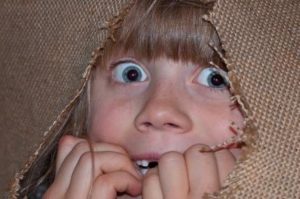
Years ago when I was in high school, English teachers would give us classroom assignments in which we had to write an essay or a story with a minimum word count during the one-hour class period. Most students cared more about getting past that minimum word count more than they cared about style and substance. How do I know? We’d all write for a while with pencils on lined paper and then, suddenly, the silence would be broken by people using their pencils to count how many words they had so far. Tap tap tap tap tap, followed by a sigh or a groan if their work so far was well short of what they needed or a pleased smile if they had more than enough words down on the page.

Teachers always complained about this because the resulting work wasn’t cohesive. Sometimes it read well for a while, but then faltered when the student realized after lots of pencil tapping that s/he was twenty five words short of the minimum. So, more words were added, and they seldom fit because they were tacked on after the student thought s/he was done.

Novels can easily sound like that if we watch word counts too closely when we write. Sure, we know that novels are expected to be a certain length: maybe your genre needs 60,000 words or maybe it needs 100,000 words to fit what publishers expect. So, ultimately, you’ll need to know your word final word count. But you don’t need to know it every day. Well, of course you know it because–if you’re writing in Word, for example–the word count is displayed at the bottom of the screen.

Personally, I usually have a sense about a story from the beginning even though I never outline or know how it’s going to end when I start out. That sense is this: is the story long enough for a novel, novella, or short story? That way, I just tell the story and the number of words written at any given moment really doesn’t matter. Again (personally), I don’t like writing advice that suggests that I should complete a specific number of words/pages per day. I tend to write scenes from start to finish because that’s how I view the story. That might not work for you.

I guess I prefer the natural approach. When you’re sitting around a dinner table or at a bar swapping yarns, you just say what you need to say without worrying–half way through it–how long it is. You tell it until it’s done. Or maybe you tell the most important part of it until you’re done with that. You’d probably get tongue tied if somebody had a computer at the table counting your words, one with a gong or a buzzer on it if you used too many or didn’t use enough.

The tellers of tales have a sense, I think, about how long they can talk. If people ask for a story about the time you were on a sinking ship, you know you can talk longer than you might talk if you were telling a joke. And, unlike the writer alone at his/her computer, you can see the expressions on people’s faces and sense whether you’re losing them or keeping them interested. But mainly, you tell the story.

That seems to me to be more important than finishing the novel in a month or dutifully basing one’s writing schedule on completing 1,000 words every day. However, if you’ve been reading this blog for a while, you know that outlines, schedules, and deadlines bother me and that I think they are harmful to the story you’re writing. If they work for you, keep using them!

I want to concentrate on the story as it unfolds because that’s what works for me.

Malcolm


A bestselling author’s book piracy story

“A pirated copy isn’t ‘good advertising’ or ‘great word of mouth’ or ‘not really a lost sale.’”

via Contents of Maggie Stiefvater’s Brain

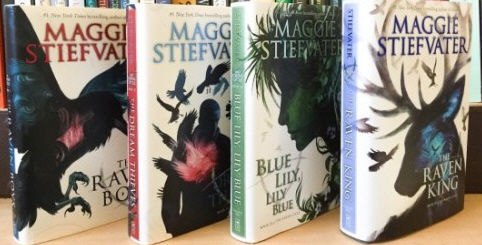
A lot of authors dismiss book piracy with blasé misconceptions like those Maggie Stiefvater quoted above. They’re wrong. Maggie Stefvater almost lost traction her Raven King series (a series I like, btw) because pirated copies were diluting sales to the extent that her publisher thought the public was losing interest.

As she says, authors generally expect the first book in a series to sell the best and for sales to go down in the follow-up books. But she tried a nifty way of proving that there was more to it than expected reader attrition.

This is a cautionary tale for authors, especially those who think piracy either doesn’t hurt you or that it might actually help you. Click on the link to see how she saved her series.

–Malcolm


Getting Started with KDP, Smashwords, and CreateSpace

“A note before we begin: All of the sites request some of the same information, so you will need to have it handy. They will ask for your name, your address, your email address, the password(s) you want to use, and some very basic financial information: your Social Security number for US residents, and the routing number and account number for the bank where you want them to deposit your royalties. And okay, another note – each will have different requirements for

Don’t be afraid. We’re here to help.

book covers, so make sure to read those on the respective sites.”

Source: Indie Author 101: How to Get Started with KDP, Smashwords, and CreateSpace – Indies Unlimited”

Good information here for authors who are just starting out in the often-confusing world of self-publishing.

Kindle, CreateSpace, and Smashwords are basic to your sucess.

–Malcolm

My novels and short stories are primarily released by Thomas-Jacob Publishing. However, with information such as Lynne Canwell discusses in the post, I send some of my work directly to Kindle.

I Talked to 150 Writers and Here’s the Best Advice They Had 

  1. Neglect everything else.

“It starts with a simple fact: If you’re not making the time to write, no other advice can help you. Which is probably why so many of the writers I talk to seem preoccupied with time-management. “You probably have time to be a halfway decent parent and one other thing,” David Mitchell, the author of Cloud Atlas, told me. That can mean mustering the grit to let other responsibilities languish. As he put it in short: ‘Neglect everything else’.”

Source: I Talked to 150 Writers and Here’s the Best Advice They Had | Literary Hub

After getting past a really strange writing process John Irving advocated, this feature story has a lot of food. I quoted the first item on the list because I think we find it hard to neglect everything else. For one thing, everything else is easier than writing. Plus, the other stuff usually has deadlines and measurable results like, say, getting the yard mowed and not missing your doctor’s appointment.

Unless you’re a professional writer, freelance or novelist, you probably don’t have firm writing deadlines. Novels often take forever to write. So it’s easy to put off writing that novel while doing other stuff that can actually be crossed off a TO DO list.

We say our writing matters. If so, it’s got to be near the top of the list of things we actually spend time doing.

–Malcolm