“A series can be great for authors because it can draw in readers and keep them. If they like your first book and its characters, they’re likely to forge ahead and buy more books in the series. This is why there are so many series out there.”
Very helpful post for authors, beginning with whether there’s one plot that continues throughout all the books or whether a character or a setting remains the same while the plots change.
When done well, a series will make for a continuing use of a great plot or a great protagonist and engage readers for (possibly) many years.
There’s a lot to consider, and R. J. Crayton does a great job with this thorough post.
“Write because you enjoy it. Write for the long term. If you want immediate money, get a job. This writing career is about loving to tell stories. Readers want to hear about how great your story is, not how many copies you sold or how brilliant your promotion campaign was. Readers want to be lulled and drawn into a new world they love, not sold a popular fad.” – Hope Clark
If you’re on the staff of a magazine or newspaper, write news releases for a profit-making corporation or non-profit organization, write advertising copy, are among the listed writers for a television series, create computer documentation, or are employed in other positions that require you to create strings of words for pay, then you have a writing job and receive paycheck and possibly even have a benefits package.
However, none of those positions are on people’s minds when they dream of becoming a writer. They’re dreaming of the Pulitzer Prize or the Nobel Prize or the New York Times bestseller list or of seeing the words “based on a story by. . .”in the credits of a blockbuster movie.
As Hope Clark said in a recent Funds for Writers newsletter that for most writers, sometimes it seems like nobody’s out there because few readers write Amazon reviews or comment on writers’ blogs. So that’s why she advises dreamers to write because they enjoy it.
When we’re young, and don’t know any better, we see our current novel in progress as the next bestseller published by a major New York Publisher. Subsequently, we’re depressed to learn they don’t look at unsolicited manuscripts and that most of the agents who send work to those publishers also don’t look at unsolicited manuscripts.
If you’re a Hollywood star or even a famous serial killer, you’ll probably get a contract from a major New York Publisher because they think your book will sell 50,000 copies or more. Seems unfair, doesn’t it? But then, publishing is a business. Yes, that seems unfair, too, doesn’t it? Perhaps it will seem less unfair if we acknowledge that most people in other professions don’t start at the top. They work their way up. Other than famous people, I think the same is true of writers.
We really have to like what we do. And when it comes down to the words on paper, we need to enjoy putting them there and acknowledge those words are there for our prospective readers. Those readers need to find something that inspires them, takes them into exciting places with exciting characters, or provides a respite from a long days at the office.
Yes, it’s hard to know what readers might want. I think that means that we have to do the best we can as writers and hope we connect with somebody out there who enjoys reading our words. Looking at writing as a lottery where we might strike it rich usually dooms us to failure. If it happens, it happens. Until them, telling stories is what inspires us more than seeing our names up in lights.
“Know what direction you are going instead of waking each day without defined purpose. Of course you have days off. Of course you build in a day of rest. But having missions and goals give more substance to your dreams. And the more organized you are, the more you accomplish, and the more efficient you become at reaching more dreams. The planning makes you seem oh so shrewd and wise.”
Sound advice from author Hope Clark as part of her current blog tour in support of her latest novel Newberry Sin. I’m the worst person to advise anyone about planning because I seldom do it. That’s my loss. But I see that those who keep their priorities straight tend to get more done. That certainly applies to writers. If everything else comes first, then a person really doesn’t want to be a writer.
–Malcolm
P.S. I’m currently reading and enjoying “Newberry Sin” and plan to post a review of it here soon.
After yesterday’s post, a Facebook friend said he saw a similarity between my comments about magic and religious faith. That’s a correct observation.
Many people who study magic or what might be called esoteric principles are, in fact, strong and committed believers in either spirituality or an organized religion. They see their studies as an extension of their religious faith instead of a replacement for it.
The reason many of us use the phrase “the god of your heart” is because we know that before you come to the study of esoteric ideas and techniques, that you may well be a strong believer of an organized religion. Magic is not intended to change that or supplant that.
When using magical/psychic techniques, many people also include the phrase “if it’s the best for all concerned.” This is one way of admitting that none of us can know what “the cosmic” (God, the Creator) has in mind for a particular situation. It’s best to work in harmony with that rather than in opposition to that.
One thing that becomes clear when using the powers of one’s mind is that meditation does not counteract what you are doing and thinking the rest of the day. Let’s say that you spend 15 to 20 minutes every morning thinking positive thoughts about your attunement with the universe and a similar amount of time meditating every evening. This is a great start. However, if you spend large portions of the rest of the day in combative, worry-filled, negative, and overtly cynical states of mind, you are undoing everything you put in motion with your meditations. You have to live the positive, non-doubting confidence of your meditation 24/7.
Hoodoo practitioners often then say that when you cast a spell, don’t look back. Why? Because looking back suggests you don’t have full confidence in the spell and have to check on it. The same can be said for multiple forms of magic as well as prayer. If you pray for something and then pray for the same thing again, what are you doing? You’re saying you don’t believe your first prayer was effective, so you’re going to try a second prayer. The universe heard you the first time. There is no need to doubt it.
One of the greatest negatives when attempting magic is logic. Most of us are trained (or brainwashed) to use logic to understand the world. However, logic and magic do not necessarily bring you the same kinds of information. People who are learning to use their innate psychic abilities can be derailed by logic.
Let’s suppose somebody tells you their husband is late arriving home from work and wonders if you can use your evolving senses to discover where he is. The best way to go here is to immediately relax, slow your brainwaves via biofeedback or self-hypnosis techniques, and “look” for the person. This process will be much more difficult if you allow yourself to think about all the logical reasons the man is late: his boss kept him late, his car wouldn’t start, he had a early evening work-related event to attend and forgot to tell you about it, he was in a wreck on the freeway or his car broke down. Once you ponder all of those scenarios, it is difficult to keep your mind open to clues about what actually happened.
The world operates on logic. It’s difficult to set that aside and try an approach that’s not based on logic. This doesn’t mean logic doesn’t work. It does mean that logic can easily derail the novice practitioner of magic.
Quite often, the magical “answer” to a question you might have will seem like it’s “simply” your imagination. I urge you to explore that and see if your are coming to know things you have no logical reason to know. I have found, for example, that when I embark on a shamanic journey, that what begins with my imagination usually morphs into something that is actually true. You may need to experiment with this for a while to develop your confidence in the reality of the moment–that is, to see the difference between that you are pretending to see and what you are actually seeing.
Magic is so different than the beliefs we have been given since childhood and from the mainstream “truths” about how the world works, that it requires a strongly alternative mindset to accomplish. The first step is learning that the truths you’ve been taught from childhood are not the whole story.
The number one problem we run into during the vetting process here at Indies Unlimited is a book’s description, also sometimes known as the book sales pitch or the book blurb. Too long, too short, too detailed, too vague, too too too, blah blah blah. What it comes down to is: many authors cannot write a book description on their own.
K.S. Brooks thinks it might be okay if a writer doesn’t automatically know how to write a pithy, industrial strength description for his/her book. We’ve lived with the manuscript for months, possibly years. We “know too much” about it to create the best 250 or 500 words of description the book needs to sell.
Her article on Indies Unlimited includes links to related how-to articles along with a list of considerations. If you’re publishing your books yourself or going through a small press that relies on you to write the description for Amazon and the back cover, this article will give you a running start.
In the musical “Singing in the Rain,” Donald O’Connor sings a song called “Make em Laugh” which features the advice from his dad who said he needed to be a comical actor.
I thought about this song while reading an interview with author David Swann on Daily Write. Swann said that he likes writing that’s similar to conversations at a funeral where laughter and tears form a strange mix. Swann mentions that “‘The writer Simon Brett says writers shouldn’t ask, ‘Wouldn’t it be funny if A,B,C, D, happened?’ Instead, he says it’s better to ask: ‘Wouldn’t it be tragic if it weren’t funny if A,B,C,D happened?'”
The juxtaposition of laughter and tears has for centuries been a storytelling technique that makes em laugh. In a theater, or at a play or a reading, those in the audience want to laugh because they can’t help it, but they look around first to see if anyone else is laughing. When you have a book in your hands, you don’t have to check out the mood of the rest of the audience.
I can’t help but think of the scene in the movie “Cat Ballou” where the drunken gunslinger (Lee Marvin) stumbles into a funeral, blows out the candles, and sings “Happy Birthday” to the dearly departed. Of course, the movie was a spoof just as “Blazing Saddles” was a spoof. Nonetheless, it’s hard not to think of the reactions of “every day people” to a drunk at a funeral. Maybe it’s gallows humor. Or, maybe some of us are flat nuts.
Writers, I think, are among those who see the tension of putting things together that “don’t belong together.” Laughter arises out of that tension. So do tears. And perhaps, so does a new way of looking at the world.
I enjoy watching movies or reading books where my sense of what I would do with the plot or the dialogue at one point or another lets me guess what the next line in the dialogue really needs to be. I’m disappointed when I’m wrong, but not because I like being right. I’m disappointed because I see that an opportunity was lost to drive a point home toward laughter or tears. The resolution to the tension of opposites that could have been there has been left out, rather like hearing the first part of the “shave and a haircut,” ditty without hearing the “two bits.”
Since people tend get very nervous when I say, “What’s the worst that could possibly happen?” or “What could possibly go wrong?” I say those things a lot because people are so superstitious about hearing them. As a writer, I have a license that allows me to scare people and watch their reactions. What I see, makes me a better writer.
I’m very superstitious, but not about those questions. So, I know how thin the line is between reality and fate, humor and fear, and belief and astonishment. Without shame, I exploit how thin that line is. Since I’m and old writer, I can tell you that’s an old writer’s trick that might help you when you’re trying to make em laugh.
Most people are scared to answer that question. In fact, they’re down right superstitious about even hearing the question.
Those who do answer the question tend to say either: (a) I would smite so and so, or (b) I would create world peace. Smiting a bad guy is easy. Creating world peace is easier said than done because there are too many variables involved for a mere human to deal with.
Okay, here’s where you find out that’s a trick question.
Those who aren’t writers often say that within any given novel, the author is a god. S/he can smite everyone who needs smiting and decree world peace without having to worry about the mechanics of it.
There are risks of acting too God like while writing a novel or a short story. Presumably, God (Himself and/or Herself) doesn’t have to worry about bad press whenever He or She manifests and Act of God. Human beings, being what they are, tend to believe that if an Act of God occurs and it’s bad, it must be their fault. They sinned, and so an Act of God paid them back.
If a writer puts an Act of God into his/her story, chances are nobody will believe it and the author will be paid back with a slew of one-star reviews on Amazon, and God help him or her if the book sells well enough to attract the attention of critics who will say, “The book was a wondrous sweeping saga until the last chapter when the good guys were trapped and suddenly–without warning or proper foreshadowing–a tsunami kills all the bad guys.”
Critics and readers alike will say, “I hate it when that happens.”
Basically, critics and readers don’t want the author to play God as s/he writes because the resulting story is unsatisfying, outside the reality of the novel, an example of the author writing himself/herself into a hole and cheating to get out of it, and other nasty criticisms.
Readers, frankly, are never willing to say that the author moves in mysterious ways and let it go at that. Authors who move in mysterious ways are variously bad, experimental, sinful, crazy, or tetched. Critics and readers typically want more order than authors want. They want the books they read to be safe and to fit within the world as they see it.
The bottom line is, the author can’t play God and has to let the story unfold however it unfolds. If you–as the author–step in and take any action whatsoever, it has to be sneaky and impossible for critics and readers to detect.
So, the author’s answer to the question “If you were God, what would you do next?” is “Little to nothing.”
That’s the reality of being an author. You have the power, but you can’t use it.
“I love blogging and blogging has loved me back. I’ve been offered paid freelance writing gigs and paid speaking engagements because of my blogs and I’ve used the See Jane Write blog to grow a small women’s writing group into an award-winning business. A blog can also be a great way to build an audience for the book you want to write.
“Make 2018 the year you finally launch (or relaunch) your website and blog. Here’s a guide to get you started.”
From time to time, people see that I’ve been blogging for many years and ask me how to start a blog. Seriously, folks, I’m not the one to ask because I break too many of the rules and/or some aspects of blogging don’t interest me.
However, Javacia Harris Bowser does know how to blog and offers one of the best overviews about getting started. She begins with domain name and theme considerations and works her way through the steps to having consistent content. (I’m inconsistent, but I see that consistency is better for most bloggers.
If you’re serious about writing a blog, See Jane Write before you do anything else.
I don’t know whether writing is an addiction, a calling, or just one job out of the many we could have chosen. The down side to writing novels is that if one doesn’t become famous or sort of famous, there’s no money in it. I often wish I’d become a freelance writer with a lot of magazine and newspaper writing opportunities.
I’d be earning a living with my words even though it wouldn’t be James Patterson, Dan Brown or Nora Roberts kind of money. Since I write contemporary fantasy and magical realism, it’s a paradox that the money I did make from writing came from writing computer documentation and help files. I can be intensely logical when I want to, so my user manuals were always well thought of.
The thing is, being intensely logical isn’t the real me. In fact, though I often rely on it, I’m not a fan of logic because I think it gives us an inaccurate picture of the world. While I was working on my novel-in-progress today, I thought of all this. I thought, “why do writers have to write” and “There must be another occupation that pays better.”
Like being a grave digger, maybe.
I thank the writing gods and the muses that I don’t want to write poetry. Good Lord, there’s a thankless task, more thankless than writing novels. I admire poetry, but really, I can’t write it and don’t ever buy books and magazines filled with it. I grieve for the poets.
But I also mourn the fact that writing novels is partly skill and craft and partly a popularity contest. If your name is James Patterson or John Grisham, you make money no matter what you do. Everyone else is ignored by reviewers and bookstores and don’t really want to tell friends they write novels because they’ll say they’ve never heard of them.
Early on, I wanted to work for the railroads. That would have been a much safer choice. I like trains, I really do. I was once a volunteer at a railway museum. Most of us there were jealous of the people who worked for Amtrak or the freight railroads. Whether they loved their jobs or not, they made a living wage. Writers don’t. But we keep writing because, in many ways, writing is not only a lot of fun, it’s a career we can’t do without.
So, maybe writing is an addiction.
But, it’s a fun addition once you realize there’s not going to be any money in it anymore than few of those who play little league baseball are going to end up playing for a major league team and being selected for the All Star Game.
If you’re an aspiring writer, I know this post doesn’t sound very encouraging. As Patti Smith acknowledged in M Train, writers are bums. So, it’s best to know that’s the reality of the biz at the outset.
“If I write in the present yet digress, is that real time? Real time, I reasoned, cannot be divided into sections like numbers of the face of a clock. If I write about the past as I simultaneously dwell in the present, am I still in real time. Perhaps there is no past or future, only the perpetual present that contains this trinity of memory.”
– Patti Smith in “M Train”
Writers are seldom in real time. We’re writing about yesterday or years ago and we’re writing about tomorrow and aeons into the future, creating time machines with words. If I’m sitting in a room in the purported here and now and you walk in and sit down in a vacant chair, you may soon observe that I’m not really there; I’ve gone deep into the past where time and space are so real that I can taste her breath in my mouth while noticing that the color of her lipstick matches the color of the dawn’s “sailor take warning sky.”
Patti Smith follows–figuratively speaking in her own time–the gurus who postulate an “eternal now.” Interesting, perhaps true, but that concept doesn’t help us get to work on time or remember when to feed the cats. Time used to be all mixed up before the railroads created time zones at high noon on November 8, 1883. Before that, time was a roll-your-own approximation of the sun, moon, stars and custom. But, you cannot run a railroad–other than the Polar Express–through roll your own or the eternal now.
As the New York Times said looking back at the date and time in 1983, “Some citizens grumbled about ‘railroad tyranny’ and tampering with ‘God’s time.’ The Mayor of Bangor, Me., deplored the change as an ‘attempt to change the immutable laws of God Almighty.’ The Indiana Sentinel lamented, ‘The sun is no longer boss of the job.'”
I’m reminded of the verse in Isaac Watts’s old hymn “Our God, Our Help in Ages Past”:
A thousand ages in Thy sight Are like an evening gone, Short as the watch that ends the night Before the rising sun.
That verse made quite an impression on me the first time I sang it in church. I felt small, awash in an almost-timeless universe, awash in the power of my own thoughts and words to take me away from the “now”–as defined by the railroads–into fluid moments so far away most people have forgotten them or not yet imagined them.
When a writer writes, the time is always now or, if not now, whatever we say it is. From time to time, I ask people, “Is it yesterday yet?” Nobody seems to know. They haven’t yet noticed that the right creative thought and/or the well written book will take them into yesterday with or without clocks and time zones.
I guess people notice the eternal now when they read and become lost in the story. Writers are always lost in the story, and I think that’s a blessing even though it plays hell with temporal appointments ruled by clocks.
1960 movie poster
When I read H. G. Wells’ novel The Time Machine, I thought what a wonderful invention that would be, this long before “Star Trek” invented the “temporal prime directive” stating that the people in our time couldn’t tamper with the people in another time. Science fiction writers love playing with the notion that if a person simply strolls through the past, his/her presence there might change the world. What would happen to you if you accidentally killed your great great grandfather?
If there really is an eternal now, then the answer to that question is probably “nothing.” For years, writers have wondered if a time machine might make it possible to “go back” and save President Lincoln. Some say that, had he lived, reconstruction wouldn’t have become the hellish mess that it was. A character in Stephen King’s 11/22/63 figures out how to return to Dallas on the date in question and save President Kennedy. The world resulting from that was a horrible mess, darker than the dark ages. As it turns out, playing God is dangerous because we don’t know what God knows in the “evening gone” since Lincoln and Kennedy were shot.”
Yet, when we write, we are playing God. Sometimes I wonder if our play is confined to the pages of our novels. Perhaps our stories have impacts we can’t imagine and will never know. Best we can do is hope that our muses keep us on the straight and narrow so that we always write the right thing when the time is right.
–Malcolm
Malcolm R. Campbell is the author of magical realism and contemporary fantasy novels, a fact that shouldn’t surprise you after reading this post.
 However, none of those positions are on people’s minds when they dream of becoming a writer. They’re dreaming of the Pulitzer Prize or the Nobel Prize or the New York Times bestseller list or of seeing the words “based on a story by. . .”in the credits of a blockbuster movie.
 The reason many of us use the phrase “the god of your heart” is because we know that before you come to the study of esoteric ideas and techniques, that you may well be a strong believer of an organized religion. Magic is not intended to change that or supplant that.
 I thought about this song while reading an interview with author David Swann on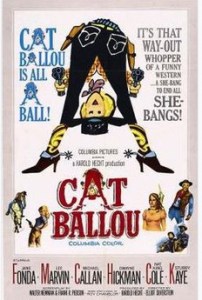
 Since people tend get very nervous when I say, “What’s the worst that could possibly happen?” or “What could possibly go wrong?” I say those things a lot because people are so superstitious about hearing them. As a writer, I have a license that allows me to scare people and watch their reactions. What I see, makes me a better writer.
 Those who aren’t writers often say that within any given novel, the author is a god. S/he can smite everyone who needs smiting and decree world peace without having to worry about the mechanics of it.
 From time to time, people see that I’ve been blogging for many years and ask me how to start a blog. Seriously, folks, I’m not the one to ask because I break too many of the rules and/or some aspects of blogging don’t interest me.
 I’d be earning a living with my words even though it wouldn’t be James Patterson, Dan Brown or Nora Roberts kind of money. Since I write contemporary fantasy and magical realism, it’s a paradox that the money I did make from writing came from writing computer documentation and help files. I can be intensely logical when I want to, so my user manuals were always well thought of.
 As the New York Times said looking back at the date and time in 1983, “Some citizens grumbled about ‘railroad tyranny’ and tampering with ‘God’s time.’ The Mayor of Bangor, Me., deplored the change as an ‘attempt to change the immutable laws of God Almighty.’ The Indiana Sentinel lamented, ‘The sun is no longer boss of the job.'”

