Magic: Initial Considerations

After yesterday’s post, a Facebook friend said he saw a similarity between my comments about magic and religious faith. That’s a correct observation.

Many people who study magic or what might be called esoteric principles are, in fact, strong and committed believers in either spirituality or an organized religion. They see their studies as an extension of their religious faith instead of a replacement for it.
The reason many of us use the phrase “the god of your heart” is because we know that before you come to the study of esoteric ideas and techniques, that you may well be a strong believer of an organized religion. Magic is not intended to change that or supplant that.

When using magical/psychic techniques, many people also include the phrase “if it’s the best for all concerned.” This is one way of admitting that none of us can know what “the cosmic” (God, the Creator) has in mind for a particular situation. It’s best to work in harmony with that rather than in opposition to that.

One thing that becomes clear when using the powers of one’s mind is that meditation does not counteract what you are doing and thinking the rest of the day. Let’s say that you spend 15 to 20 minutes every morning thinking positive thoughts about your attunement with the universe and a similar amount of time meditating every evening. This is a great start. However, if you spend large portions of the rest of the day in combative, worry-filled, negative, and overtly cynical states of mind, you are undoing everything you put in motion with your meditations. You have to live the positive, non-doubting confidence of your meditation 24/7.

Hoodoo practitioners often then say that when you cast a spell, don’t look back. Why? Because looking back suggests you don’t have full confidence in the spell and have to check on it. The same can be said for multiple forms of magic as well as prayer. If you pray for something and then pray for the same thing again, what are you doing? You’re saying you don’t believe your first prayer was effective, so you’re going to try a second prayer. The universe heard you the first time. There is no need to doubt it.

One of the greatest negatives when attempting magic is logic. Most of us are trained (or brainwashed) to use logic to understand the world. However, logic and magic do not necessarily bring you the same kinds of information. People who are learning to use their innate psychic abilities can be derailed by logic.

Let’s suppose somebody tells you their husband is late arriving home from work and wonders if you can use your evolving senses to discover where he is. The best way to go here is to immediately relax, slow your brainwaves via biofeedback or self-hypnosis techniques, and “look” for the person. This process will be much more difficult if you allow yourself to think about all the logical reasons the man is late: his boss kept him late, his car wouldn’t start, he had a early evening work-related event to attend and forgot to tell you about it, he was in a wreck on the freeway or his car broke down. Once you ponder all of those scenarios, it is difficult to keep your mind open to clues about what actually happened.

The world operates on logic. It’s difficult to set that aside and try an approach that’s not based on logic. This doesn’t mean logic doesn’t work. It does mean that logic can easily derail the novice practitioner of magic.

Quite often, the magical “answer” to a question you might have will seem like it’s “simply” your imagination. I urge you to explore that and see if your are coming to know things you have no logical reason to know. I have found, for example, that when I embark on a shamanic journey, that what begins with my imagination usually morphs into something that is actually true. You may need to experiment with this for a while to develop your confidence in the reality of the moment–that is, to see the difference between that you are pretending to see and what you are actually seeing.

Magic is so different than the beliefs we have been given since childhood and from the mainstream “truths” about how the world works, that it requires a strongly alternative mindset to accomplish. The first step is learning that the truths you’ve been taught from childhood are not the whole story.
Malcolm


Try Magic: What have you got to lose?

If you’ve read this blog and/or my books for a while, you know that I don’t doubt the reality of magic. Magic is–or should be–an optional subset of mysticism, that is to say, a direct communion with the god of your heart. I have always thought magic worked better within the context of one’s belief system rather than as an end in itself.

When some people read books filled with promises–like “The Secret” they are often inspired to try what they otherwise might not try. Sometimes they succeed. They’re more likely to succeed right after reading the book because they are attuned to the idea that all things are possible. So, before doubts enter into their thoughts, they often see things happen that they might never have expected prior to reading the book.

Magic, and by that, I don’t mean the sleight of hand and illusions of stage magicians, is always part of a larger system of thought, a way of looking at the world that isn’t confined to the limitations of every-day logic. For example, the hoodoo practices I talk about in my Florida Folk Magic novels are part of the culture in which they thrive. One can’t extract the spells and modes of thinking from the culture and expect them to work.

The same could be said about magic within the “old religion” (true witchcraft rather than Wicca), Hawai’ian mysticism (Huna), the practices of shamans in multiple cultures, Celtic (Druid) worldviews, and others. The first problem many people have after they finish a book or a weekend retreat or a class on magic and/or psychic techniques is merging their new knowledge into their own culture.

If you live in, say, Orlando, Florida, it’s difficult to merge, for example, Huna practices into your daily life because Hawai’ian mysticism is not the world view of most people living in Orlando. So, whatever you have learned, you will be at a disadvantage unless you can shield yourself from the mainstream worldview where you live and work.

Magic need to be culturally dependent, that is, it can be eclectic and not an integral part of a specific culture. While the tenants of this magic don’t synchronize well with what most of one’s friends and colleagues believe in, they are easier to pursue than those that are part of a minority group or culture. Nonetheless, the magic is still part of an altered way of looking at truth and the world and the “big picture” and cannot be separated from it. I have found this an easier route than, say, following hoodoo or Huna or Native American belief systems. There is nothing wrong with those systems other than the fact that (for me) I’m not attuned to those cultures. So, my approach is based on my own culture instead of somebody else’s culture.

You can find magic and mysticism at The Rosicrucian Order and The Silva Method that aren’t based on the cultures and rituals of marginalized groups. These are, so to speak, somewhat generic. Or, if you’re looking for inspiration, perhaps you’ll find if at Duirweigh Studios or in the books by Joseph Campbell. These are all routes to magic.

One of the best books–which you can find free on the Internet–about magic is James Allen’s As a Man Thinketh. Really, this old book says it all. For magic to work in your life, your worldview–whether “generic” or based on a particular culture–must accept the tenants and practices of the magic. Seriously, the magic and everything that surrounds it must be part of your life.

When it comes down to the nitty gritty, magic won’t work if you don’t think it will work, or if you have doubts about it. That’s a tall order because we’re expected to believe before we have any proof. I know, that’s not logical, so you must set logic aside before you practice magic. And don’t rush it.

–Malcolm

Sunday Clatterings: magic to tennis to spring

When stuff falls on the floor, it (the stuff) clatters. This is what happens when people try to spring forward into daylight savings time when they first wake up. Florida’s trying to stay on daylight savings time. I’d rather see the whole country standardize on standard time instead of the “extra sunshine” nonsense. I love the sound of clocks hitting the floor: doesn’t everyone?

The day before the hard freeze.
  • Several days ago, I was convinced spring had arrived. Rain had jump-started this year’s crop of weeds in the yard. The buds on the Japanese Magnolia were about to zap into full bloom. Then we had a hard freeze and flowers everywhere got ruined. Then it rained again. At least we’re not living in East Glacier or Browning, Montana where February was a record snowy month.
  • Better vision today after going back to the ophthalmologist Wednesday so he could use his lase to get rid of the cloudiness in my right eye and, while I was there, touch up a few missed spots in my left eye.
  • For reasons unknown, everyone’s eyes glaze over on Facebook whenever I mention I’ve been watching tennis and/or that I’m happy that the Williams sisters won their matches at the tournament in Indian Wells, California. I guess most people don’t like tennis or are unaware that the Williams sisters have dominated women’s tennis for a quarter of a century. I thought I’d mention this in today’s post so your eyes would glaze over, too.
  • I pre-ordered my Scots language copy of the first book in the Harry Potter series, Harry Potter and the Philosopher’s Stane. Amazon was proud of itself for saving me 5 cents because pre-orders lock in the price; then they had to apologize for delivering it late. It was supposed to arrive on the 8th and it’s still not here. If th’ book isnae ‘ere by Tuesday, a’m aff tae speil bagpipes in th’ amazon affice.
  • It’s comfort food week compliments of my wife’s dentist. He extracted a compacted molar several weeks ago. Things seemed to be going well with her gum healing up until the bone spurs appeared. (Think of chewing food with a cactus in your mouth.) So, we were back to the dentist two days ago so he could make another incision and grind down the spurs. That means soft food: mac & cheese, ravioli, ice cream.
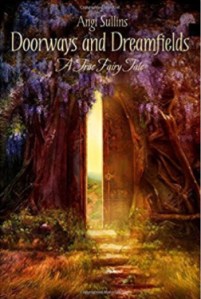
  • I’ve been thinking about Angi Sullins’ comment in the introduction to her book Doorways and Dreams. She (and I agree) doesn’t see real magic as the stuff out of Harry Potter. Instead she says that it’s a “more-ness shimmering behind our everyday reality.” It shimmers in our dreams and meditations and sometimes in things one sees out of the corner of his eye. I figure that has long as it’s there, it’s a practical energy we can use to better understand and create the reality going on around us. If you’ve read my books, you’ve seen how it works.
  • If you like mystery/thrillers, see my review of Jane Harper’s Force of Nature. If you like satire, see my latest Jock Stewart post about hoodoo workers hexing Congress.

Have a great week.

–Malcolm

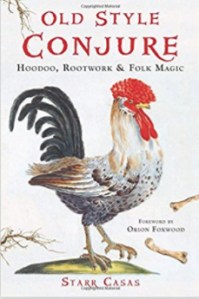
Briefly Noted: ‘Old Style Conjure’ by Starr Casas

Those who know Mama Starr Casas from her Old Style Conjure website, need no introduction to this practical guidebook published in September. Like her website commentaries, it’s blunt, practical, based on the culture she grew up in, and overviews works (spells) and approaches in an easy to understand manner. The book reminds us that conjure (hoodoo, rootwork) is directly linked to African American ancestors, the Christian Bible, and common sense approaches to magic based on the materials at hand in a typical Southern household.

Conjure workers are usually Christian. I like Casas’ statement, “If you remove the Bible from Old Style Conjure work then what you are doing really isn’t Conjure work! It then becomes something else. If you can hold the greatest Conjure book ever written in your hands and learn the power from it; why in the world would you let anyone stop you?” She also doesn’t agree with people who mix hoodoo with other forms of magic in a roll-your-own approach.

Publisher’s Description:

Conjure, hoodoo, rootwork―these are all names for southern American folk magic. Conjure first emerged in the days of slavery and plantations and is widely considered among the most potent forms of magic. Its popularity continues to increase, both in the United States and worldwide. This book is a guide to using conjure to achieve love, success, safety, prosperity, and spiritual fulfillment. Author Starr Casas, a hereditary master of the art, introduces readers to the history and philosophy of conjure and provides practical information for using it. Featuring Casas’s own rituals, spells, and home recipes, the book provides useful information suitable for novices and seasoned practitioners alike.

In its pages, you’ll learn about:

  • Bone reading
  • Candle burning
  • Conjure bags
  • Building your own conjure altar

Research or Practical Use

This book is readable and should be very helpful to those who are interested in folk magic as an avocation, want to try out spell work themselves, or are fascinated by the history and culture of hoodoo. Students of magic will also enjoy the inspirational forward by Orion Foxwood.

–Malcolm

Malcolm R. Campbell is the author of two hoodoo novels, “Conjure Woman’s Cat” and “Eulalie and Washerwoman.”

Reading separate books together

“Sometimes they would sit in the parlor together, both reading – in entirely separate worlds, to be sure, but joined somehow. When this happened, other people in the family couldn’t bring themselves to disturb them. All that could be heard in the parlor was the sound of pages, turning.” ― Alice HoffmanBlackbird House

People who read together in silence–except for the sound of pages turning–in the same room are usually comfortable together. I’m thinking of families and friends, not passengers on a plane or people in a waiting room at the train station.

Some say that when you use the technique of astral projection, you imagine yourself away to other worlds as a shaman does, leaving your body unattended. To some extent, this happens when we read. Books carry us away upon spells of words just  as surely as dreams carry us away while we’re sleeping.

During a family visit, we all sat in the living room reading our very disparate books. We weren’t there, yet we were there, linked both by our trust in leaving our bodies unattended and by our common, quiet activity. It’s a good feeling, almost as good as lovers who feel secure in silence while they sit on a park bench and day dream, holding hands or leaning against each other.
In the evening, the living room lamps create pools of light where each reader sits. Yet those pools overlap and we are all one within our shared light. I suppose we could each do this with laptop computers or phones for texting, but the books truly have more magic in them making for a deeper experience.

I hope you have also found this to be true.

–Malcolm

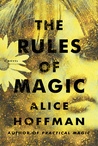
Review: Alice Hoffman’s ‘The Rules of Magic’

The Rules of MagicThe Rules of Magic by Alice Hoffman
My rating: 5 of 5 stars

“The Rules of Magic,” the prequel to Alice Hoffman’s 1995 bestseller “Practical Magic,” sparkles with the same wisdom and magical realism as the witching story of Sally and Gillian Owens did twenty two years ago. The characters, stories and writing style of this stunning prequel fit hand-in-glove with the characters, stories and writing style of “Practical Magic,” not an easy bit of conjuring for an author to face when going back to a story she told before she truly knew the magical rules when she first wrote about them.

This backstory about Sally and Gillian’s aunts Franny and Bridget (AKA “Jet”) focuses on a theme about life’s curses and blessings and what individuals wish to make of the fate and destiny they are given. Early on, Franny and Jet’s mother asks the sisters whether they’re opting for courage or caution in their unfolding lives. Their answers make for a cohesive story. Clearly, Alice Hoffman opted for courage when she traveled back to 1995 to continue the story of the Owens family.

The book contains wonderful surprises, making it much deeper than a family tree tacked on to the front of a famous novel many years later. The book offers its own multiple levels of depth and angst and joy while changing in positive ways the way many of us who read it will view the characters and themes of the original novel. (Emerging writers considering magical realism as a potential genre for their work will find both novels to be a demonstration of how an author can utilize magic and realism seamlessly in novels set in today’s world.”

While the ending of “The Rules of Magic” represents the best of all possible worlds for the two novels and their characters, turning the last page might be depressing for some readers. The reason is simply this: nobody wants the story to end because when it comes down to it, we need these characters, their joys and sorrows, and their magic in our lives.

View all my reviews

–Malcolm

Malcolm R. Campbell is the author of the magical realism novels “Conjure Woman’s Cat” and “Eulalie and Washerwoman.

Tarot cards after all these years

“Tarot reading is an excellent way to learn more about one’s self, have a closer look at your inner self or to examine your very own intentions and ambitions.”

Raven’s Tarot Site

I’ve been tinkering with the I Ching and the Tarot since I was in high school. I don’t do readings for other people. In fact, most people don’t know that I know anything about these divination systems because once they know, they walk on the other side of the street whenever they see you.

knightofswordsI was happy that C. LaVielle contributed a Tarot and storytelling guest post on January 11th because she focused one of the reasons I like both the I Ching and the Tarot: understanding the characters in my stories.
Like Joseph Campbell’s Hero’s Journey, both the I Ching and the Tarot present ways of looking at the world. The Tarot, of course, is closely linked to the Tree of Life of the Kabbalists.  The future isn’t fixed. At least I don’t think it is. So I don’t use any of these ways of looking at the world for predicting the future. In fact, they tell me what I know that I don’t know that I know. That is to say, they tell me what the unconscious part of me knows to be true even though the conscious part of me hasn’t figured it out yet.

My sun sign is Leo and the card representing me in the Tarot is the Knight of Swords (called King of Swords in most decks). This is why the URL for this site includes “knight of swords.” When I do Tarot readings for myself, the knight is me. When I do readings about novels I’m writing, the knight is always the logic of the story, cruel at times, to be sure, but nonetheless the fiery part of air as the card is described.

As a character in one of my novels said, he doesn’t want to see the future because that would spoil the surprise. It would also impact what he (or any of us) choose to do right now. Our power is always in the now. I see that, but the characters in my stories don’t always notice it. Plus, seeing the future would give us the false idea the whole shebang out there is engraved in stone when, actually, nothing except epitaphs are engraved in stone.

As a knight of swords, I’m a trickster (among other things), so that means I’m always stirring things up. That’s one reason I write fiction–to stir things up. That’s also why I like my Tarot deck: it shows me that even when I don’t consciously know I’m doing it, I’m stirring things up–and creating ideas that I let other people carry out to completion after I’ve wandered off to something new.

I see this as the author’s first duty–sowing seeds, suggesting things that bother people while making them think, suggesting that things aren’t what they appear to be, telling people that whatever goes bump in the night is real, finding the story inside everything that happens.

It’s one hell of a thing to do, but somebody’s got to do it. Fortunately, my Tarot deck “advises me” when it’s time to step back before the mob shows up on my door step.

–Malcolm

Thyme for cooking, conjure and health

“Thyme (/ˈtaɪm/) is an evergreen herb with culinary, medicinal, and ornamental uses. The most common variety is Thymus vulgaris. Thyme is of the genus Thymus of the mint family (Lamiaceae), and a relative of the oregano genus Origanum.” – Wikipedia

If you’re a Simon & Garfunkel fan, you probably remember their third album “Parsley, Sage, Rosemary and Thyme.”

If you have an herb garden, you know that thyme is easy to grow, looks nice and smells good.

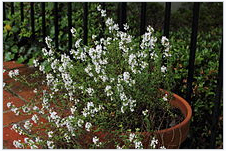
thymeIf you have a spice rack in the kitchen, no doubt there’s some thyme there. I add thyme to my spaghetti sauce. A lot of recipes call for its use in roasts, scrambled eggs, chowder, biscuits and with potatoes and other vegetables. Sunset says that “Thyme is a kitchen workhorse, infinitely useful with a wide range of meats and vegetables, and also with both savory and sweet fruit dishes. With cooked dishes, try adding thyme at the beginning and then a little more at the end, just before serving to make its flavor pop.”
Medicine

The leaves and oil of thyme have a lot of claims behind their efficacy in treating diarrhea, stomach ache, whooping cough, colic, soar throat, flatulence, and as a diuretic. The Natural Society website states that “The volatile essential oils in thyme are packed with anti-septic, anti-viral, anti-rheumatic, anti-parasitic and anti-fungal properties, which explains why thyme-based formulas are used as an expectorant, diuretic, fungicide and antibiotic.”

Spirituality

When used as incense, it’s been said to stimulate courage and purify homes and temples. According to Wichipedia, “It was mixed in drinks to enhance intoxicating effects and induce bravery and warriors were massaged with thyme oil to ensure their courage. Women wore thyme in their hair to enhance their attractiveness. The phrase ‘to smell of thyme’ meant that one was stylish, well groomed, poised, and otherwise attractive. Thyme is a Mediterranean native spread throughout Europe by the Romans. Their soldiers added it to their bathwater to increase bravery, strength and vigor. It enjoyed a long association with bravery. In Medieval England, ladies embroidered sprigs of thyme into their knights’ scarves to increase their bravery. In Scotland, highlanders brewed tea to increase courage and keep away nightmares.”

Conjure

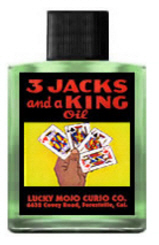
You can buy this curio online in several places

My interest in thyme, other than using it a lot in my cooking, is for its folk magic applications. Hoodoo practitioners use it to help their clients sleep, usually as an incense placed on charcoal or leaves placed inside or beneath a pillow for a so-called “magic dreaming pillow,” and for attracting money. Growing thyme in a garden, grows your wealth. It protects you and helps your income if you tie the leaves up in paper money and bury it where two paths cross beneath a full moon. It can also be added to bath crystals and sachets–or even as a perfume.

Add it to a mojo bag with bayberry, cinnamon, and alfalfa to attract money. Some practitioners mix it with galangal, vetiver, patchouli and cardamon when making Three Jacks and a King oil for gambling. (Massage the oil into your hands when you pick up the deck of cards and “feed” your mojo bag with it.) Traditionalists recite the 23rd Psalm when they use the oil. Some folks dress (coat) candles with it or even sprinkle it on poker chips.

Catherine Tronwode, author, practitioner and owner of the Lucky Mojo Curio Company, says that old time recipes like Three Jacks and a Kind, are “slightly different — some placing emphasis on catching lucky numbers through dreams, others on being hit with lucky “coincidences” or hunches, and still others on obtaining uncanny runs of finger dexterity at cards or dice — or all of these combined with luck at love and games of chance — but they have in common the underlying aim of enhancing the magician’s internally generated forces, enabling action upon the external world.”

For information about the use of thyme and other plants in conjure, consult Hoodoo Herb and Root Magic: A Materia Magica of African-American Conjure by catherine yronwode. For plant usage in pagan, Wicca and traditional witchcraft, see Cunningham’s Encyclopedia of Magical Herbs by Scott Cunningham.

–Malcolm

Malcolm R. Campbell is the author of two folk magic novels, “Conjure Woman’s Cat” and “Eulalie and Washerwoman.” Both books are available in e-book, audiobook and paperback editions.


Writing magical realism: step-by-step suggestions

When the magic within a story is accepted as usual within an otherwise realistic setting, you’re probably reading or writing magical realism. It requires a light touch: if the magic becomes too overt or too over-the-top in terms of Hollywood special effects, then you’re out of the magical realism genre realm into fantasy, occult or science fiction.

Here’s an example

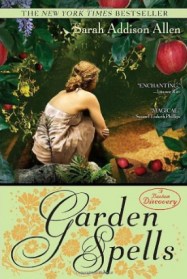
gardenspellsIn her novel Garden Spells, Sarah Addison Allen tells a story about a woman named Claire Waverly living alone in the family’s old house in a small town. Her family has always been viewed by others as odd or unusual in some way. She runs a catering business that’s in high demand because she’s not only a great cook, but uses the products of her own garden to enhance her dishes in ways that seem to help those who need to be helped: their luck or their emotions improve, they feel better, find their lives improving. She doesn’t advertise this: if she did, it would sound like an unbelievable health food scam and would no longer be magical realism. Each member of the Waverly family has a special gift that causes others to see them as slightly odd and/or highly talented.

The novel works on many levels as magical realism because: (1) We’re not seeing Harry Potter magic, (2) The small town setting lends itself to local legends and gossip that create an eerie overlay of maybe and perhaps that’s never quite analyzed in the light of day, (3) The magic is low key, not the kind that in other novels would turn into a thriller, witchcraft hysteria, (4) Her characters do what they do without overtly using “magical techniques” that require practice, meditations, or the stuff of either fantasy or dark arts novels.

If you  want to write magical realism, it helps if you’ve read a lot of it and have a feeling for the genre as well of being comfortable leaving a lot of things unsaid or hinted at rather than approaching the unusual in your story with a full-bore emphasis on “creepy stuff” as  Stephen King might approach similar material. Here are a few suggestions

Tips for Writing Magical Realism

  1. This magical realism book review site is a great place to learn tips about what works and what doesn't.
    This magical realism book review site is a great place to learn tips about what works and what doesn’t.

    Unlike fantasy, magical realism has strong plots and characters that would draw readers through the story if there were no magic at all. It’s hard to imagine the Harry Potter books without wizards and their magic. Garden Spells might work as a story in a small town even if the Waverly family didn’t have unusual talents.

  2. Choose a setting that lends itself to magic, unanswered questions and unusual events without attracting the attention of, say, the news media or the police or others who might shine a strong light on it. Small towns and rural settings both have legends and myths (whether you make them up or do a riff on those of the real place where you set your story).  Since a lot of people in today’s society get spooked by swamps, remote mountains, piney woods in the moonlight–along with the real or imagined creatures that might be there–going off the beaten track for your story gives you a lot of opportunities for implying that, say, the land is conscious or that birds and animals have unusual motives, or that keeping on the “right side” of folk beliefs is the healthy thing to do.
  3. The people who create the magic seldom talk about their magic; if they do, they don’t see what they do as any different from the way anyone else uses the tools of his/her trade to do or to create what most people cannot do or create. If you borrow from a real magical tradition such as Voodoo, witchcraft or hoodoo, research (or your own knowledge) will bring you a lot of ideas about ways of living a magical without turning the practitioner into a caricature.  As the author of a magical realism story, you never ever demean the myths, legends, beliefs, spells and practices of your magical characters or the enchanted landscape in which they live.
  4. If you use a real wilderness or other remote setting, your book will be more believable if you research the flora, fauna, weather and people who live there now–or lived there in the past.  For one thing, you need realism to play off against the magic. For another, it’s hard to show characters moving around in an area if you don’t know what it looks like. And finally, natural magic uses things from the land that witches and conjurers grow, harvest or find. Don’t make this up: it will kill your story. Find out what kind of leaves are used for the spell you want, research what the plants look like and whether they grow in the area where your story is set, and make that a natural part of your narrative.
  5. Refer to an area’s legends and myths. For real settings, you’ll find these from folklore societies, books with titles such as “The Ghosts of Quincy” or “Florida Legends” and “Creation Myths of the Sunshine State.” Your job is usually not to retell any of these stories, rather to refer to them the way people in a city might mention in passing the day the trolley car first came by the house or the fact that some accident happened years ago in a certain place. For example, in my novel in progress, one character tells another not to eat gopher tortoises because they were created by the devil. The legend about that is longer than this post, but in a magical realism book I can simply refer to that as a fact and move on. I always prefer to use nuggets out of the real myths and legends from a place rather than making them up from scratch. For one thing, they fit the place well. For another, they convey a folklore truth that many people living there have heard before and/or a bit of folklore I want to help keep alive.
  6. Certain events/feelings that are told as metaphors in a mainstream realism novel can be told as though they actually happened. Be careful with this, or it won’t seem believable within the story’s context and the character’s beliefs. For example, in realism, a character who needs to apologize to another might say, “I felt as though I was so small, I could hide under the dining room chairs until my parents left for work.” In magical realism, you don’t include the words “as though” or “as if.” You state it like it’s temporarily the case. Interior monologue and/or lyrical propose are two ways you can do this so that a typically unrealistic event suddenly seems plausible within the magic of the moment. For example: “When my conjure woman is angry, she is taller; she doesn’t look smaller when she walks down to the far end of the beach.”

amfolklore

There’s no recipe here. In a sense, you have to feel it and sense it before you can do it. Once you practice the genre a lot, you don’t have to consciously think about the components any more than a person with years of experience thinks about what s/he does to make a bicycle work. It also helps if you have an open mind and a sense of wonderment or even magic about people and the natural world.

At any rate, I toss off these suggestions as ideas that might work. Or might not.

Malcolm

Malcolm R. Campbell is the author of the magical realism novel “Conjure Woman’s Cat.”

When magic creates the ride, all the writer can do is hang on

“A bit of advice
Given to a young Native American
At the time of his initiation:
As you go the way of life,
You will see a great chasm. Jump.
It is not as wide as you think.”
― Joseph Campbell


Magic is like drugs. However, once you let it take over, you’re not lost. You are found. Logic, the more addictive drug, will become your greatest trap because, like an old bad habit, it works on you, makes you think that magic is a a delusional part of your unconscious that’s escaped into your mind like devils, makes you doubt yourself.

magicbookWhenever I run back to logic, I stop writing. I stop writing because logic tells me loud and clear that hanging on to a magic carpet as my fingers type words on the screen is no way to write a book. It’s illogical. One must plot and plan and outline the who shebang from beginning to end. Yes, that makes sense. The thing is, I don’t know the story I’m telling until I’m telling it, and then all I know is what happens next.

When logic gets a hold of me, I’m scared to write: I don’t think I can do it because I don’t know how I do it. As I mentioned in my last post, we create our own reality. So, we meditate, play around with the law of attraction, go on shamanic journeys, repeat affirmations and cast spells, but how quickly that can fade in the chilling light of day when the car won’t start or your spouse is sick or the man you hired to build a fence around part of your property hasn’t shown up for six weeks or the trees in your yard of dying for lack of rain. Where’s the magic now?

Logic breeds on itself. The more I think I need it, the more I use it, doubting myself more and more in the process.  Sooner or later, I say to hell with that and jump the growing chasm of doubt. The rains come, the fence gets built, my wife gets well, and the words flow.

Some say magic gives the practitioner more control. I suppose if one thinks of magic is the wizards in the Harry Potter books hurling never-fail spells across the room, then perhaps it does. But there’s a paradox here. Exerting control is logical thinking. To live and write by magic means surrendering to the greater part of oneself and the universe and one understanding that the less one pushes, the smoother the ride.

A couple of days ago, I used the word “epitaph” in a figurative way in my work in progress. The moment I did it, I knew it wasn’t figurative at all. Magic knew where it was going before I did and logically it made so sense to go there. After resisting that idea for two days, I saw I had no choice but too get out of the way of the story in the same kinds of ways our greater selves ask us to step out of the way of the directions our lives are meant to go.

MRbloghop2016Too much logic ensures it’s going to be a bumpy ride.

When I was in the navy, I often heard the proverb “Smooth seas don’t make good sailors.” Maybe we need a few of those hard knocks of life to finally understand we’re going about it all wrong and start seriously looking for a better way.

I think I ran through every pothole the universe had to offer until I realized I was gripping the wheel as though my life and art depended on it. Early in life, we often become brainwashed into thinking we need to grip that wheel the way we do.

Whenever writer’s block looms  large before me, I remind myself to let go while I write. My hope is that my readers will let go while they read.

–Malcolm

Malcolm R. Campbell is the author of the magical realism novella “Conjure Woman’s Cat,” available in paperback, e-book and audiobook.

This post is part of the Magic Realism Blog Hop. About twenty blogs are taking part in the hop. Over three days (29th – 31st July 2016) these blogs will be posting about magic realism. Please take the time to click on the frog button for a list of other blogs in the hop. Links to the new posts will be added over the three days, so do come back to read more.