Free Lone Pine State Park Workshop for Early Childhood Educators

from NPS Glacier National Park:

WEST GLACIER, MONT. -Glacier National Park, in partnership with the Flathead Community of Resource Educators (CORE), and Project Learning Tree, is sponsoring a free one-day workshop for early childhood teachers and youth group leaders on Thursday, October 20, 2011.


The free workshop will be held at Lone Pine State Park Visitor Center, 300 Lone Pine Road, Kalispell, from 9am to 3:30pm. Teachers can receive six Office of Public Instruction renewal units for attending.

The training offers pre-school and elementary school teachers, daycare providers, home-school parents, 4-H leaders, Girl and Boy Scout leaders and others an opportunity to explore many of the educational trunks available for use in classrooms, at troop or group gatherings or outdoor education programs.

Educational trunks about forests and timber, wetlands, wolves, birds, bears, fire in the ecosystem and more will be featured at the workshop. In addition, Project Learning Tree (PLT) facilitators will be presenting activities from the new PLT Early Childhood Guidebook. All participants will receive a copy of the guidebook. There is no cost for the workshop due to sponsorship from Montana Department of Natural Resources and Conservation and Plum Creek Timber Company.

Participants must register in advance as there are only 20 slots available. Teachers can register for the workshop through PIRnet at http://www.kalnet.io-solutions.com/pir. Other youth group leaders may register by calling Patti Mason at 406-752-4220. For more information about the Flathead Community of Resource Educators (CORE) visit http://flatheadcd.org/

The USDA offices (NRCS & FSA) and the Flathead Conservation District are located behind Jo Ann Fabrics and the Sweetheart Bakery store in Evergreen off of LaSalle. The address is:  133 Interstate Lane, Kalispell, MT  59901. Click on Office Location to see where the new office is located, or call us for directions, 752-4220.

Conservation Districs (CDs) focus on Water Quality, Coordinated Resource Management and Planning/Watershed Planning, Education, Riparian Management and Urban/Suburban Activities.

Malcolm

contemporary fantasy set in Glacier Park

Breathing in the Land

Virginia Falls - NPS photo

During the summers I worked in Glacier National Park, I hiked the same trails many times, partly because they served as feeder trails to longer hikes, or somebody suggested going for an after breakfast walk, or the sky and the air seemed to be offering an invitation.

Over the course of three summers, I learned a lot about my favorite trails. Most of it was five-senses knowledge. The number of miles between one place and another. The steepest climbs. The best-tasting water. Mountain sheep meadows. Wildflowers. Birds. But, over time, a fair amount of what I picked up was intuitive knowledge. I came to know those trails the way one knows any good friend. And, like what we know about a good friend, that knowledge as in large measure a felt thing.
In earlier times before we became entertained and enslaved by such distractions as cars, cell phones and the Internet, people walked the same paths everyday to get to school, work, the high pasture, the fishing hole, or to buy supplies. While the walking was focused on the practical need to get somewhere and do something, it nonetheless became a ritual, supplying the individual with a great deal of felt knowledge over time.
Breathing in the Land
Glacier cedars - NPS photo

As a writer in love with symbols and metaphors, I like thinking of what I learn about the land as breathing it in. It takes time and commitment to breathe in anything or anyone. You don’t walk into the woods once and come away with a head full of knowledge any more than you learn everything about your prospective soul mate on the first date.

Anthropologist Mary Catherine Bateson calls this breathed-in-over-time knowledge a longitudinal epiphany. In her book Peripheral Visions: Learning along the Way, she likens this knowledge with what a husband and wife experience from taking time to have breakfast together every day for 40 years or in making it a habit to go somewhere and watch the autumn leaves falling every year.
Our attention spans have become too short for very much ritual whether it’s formal, as in a religious service or a meditation, or whether it’s informal as in eating dinner with one’s spouse every night or hiking between Many Glacier Hotel and Grinnell Glacier every morning while in the national park.
Bateson writes that “Rituals use repetition to create the experience of walking the same path again and again with the possibility of discovering new meaning that would otherwise be invisible.” One has to walk the path, I think, to gain the knowledge; you don’t learn it by reading what somebody else experienced on the path or by using MapQuest or Google Earth to look at the path.
A Favorite Tree or Meadow
One need not visit their favorite national park and can hike, for example, around Lake Josephine every evening at dusk or listen to the water at Virginia Falls at the break of day. Like the Glacier Park cedar in the photograph, the old oak tree in your backyard will work or, perhaps, a meadow, lake or stream in a nearby park.
Decide how much time you can spend, and then sit in or walk through or around this place once a day, once a week, or once a month. Listen, observe, smell, touch with nothing on your mind other than where you are and what you are breathing in with your five senses and your  intuition.
Don’t expect a psychic experience the first night that fills your head with a hundred years worth of history nobody knows about the place. Instead, experience the changes from visit to visit.In time, you will form a relationship with that place.
You will trust it and know it because you have made the commitment to go there and be there. In time, you will know that place through the loving ritual of your walking and your breathing in everything you encounter.
–Malcolm
contemporary fiction set in Glacier Park

The Magic of Harry Potter

from Sarabande’s Journey:

J. R. R. Tolkien is credited with bringing epic fantasy back into the lives of mainstream readers. We can also claim that J. K. Rowling’s popular Harry Potter books not only fired up the reading public’s love of contemporary fantasy, but introduced the concept of books to people who seldom read novels at all.
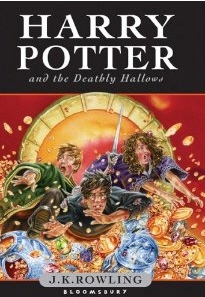
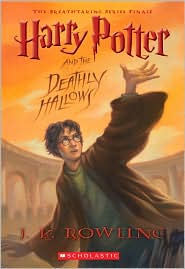
Fourteen years after her U. K. publisher (Bloomsbury) released the first, tentative thousand copies of  Harry Potter and the Philosopher’s Stone (renamed in the U.S.), her fans continue to wait for word, any word, that there might be another Harry Potter novel. In 2007, the release of Harry Potter and the Deathly Hallows sold a record 8.3 million copies in the United States in the first 24 hours.

Any other author would have been told not to use the word “hallows” in a book title since the term wasn’t in the public’s consciousness. But Potter fans lined up and bought the book while debates raged on about what “hallows” might be.

The popularity of  Rowling’s books has been called a “black swan event.” Developed by Nassim Nicholas Taleb and explained in his book The Black Swan: The Impact of the Highly Improbable, the theory examines rare events that could never have been predicted or planned and that even in hindsight, usually cannot be duplicated. Taleb himself considered Harry Potter, as a publishing event, a black swan.

Journalist Will Hutton believes Rowling’s success transcends the quality of the books themselves. “Rowling is repeating the Da Vinci Code effect – but much more shrewdly,” he writes. “In the creative industries success always begets more success, but in an era of globalisation the success can be very big indeed, as both Rowling and Dan Brown can testify.”

Hutton, and others, think globalization and the viral phenomenon of ideas, books, movies songs suddenly becoming popular seemingly everywhere is more responsible for Harry Potter’s popularity than the quality of Rowling’s books.

Is Harry Potter’s Success Simply Books Going Viral Around the Globe?
U.K. cover

Based on Hutton’s theory of why a Da Vinci Code Effect book does so well we could, let us say, create a look-alike universe without television, cell phones, satellites providing news in real time, and the Internet, and then display the Harry Potter books (one person at a time) to 8.3 million readers. Hutton would say that Rowling’s sales in that universe would be a fraction of what they are here. He may be right.

But that still leaves us with the question of: “If the outside influence of millions of people saying the books are great is what caused each reader to pick up a Harry Potter book, what caused them to enjoy it so thoroughly and read and re-read it so passionately?”

While peer influence is a powerful thing, reading is a solitary act. Top ten songs are easy to share in a way that further leads to their enjoyment and popularity. People listen to them together in cars and break rooms and parties and hear them in large groups at concerts. While the Harry Potter movies were shared by theater audiences in real time, the books were not. Each reader had to choose to sit in a chair, curl up in a hammock, or prop up in bed and read the book by himself and herself. Like all reading, Harry Potter represented an investment in time.

Many have said that in addition to Rowling’s creative and imaginative mix of characters, themes, and settings, the books’ success comes in part through their believable account of a rather geeky (yet lovable) underdog becoming so empowered, he was able to effectively battle against the adult, experienced and highly skilled bad wizards in the book. Noticeably, the good adult wizards teaching magic at Hogwarts had very little to do with the triumph of good over evil in each book.

In a world where most of the news is bad and most of the global issues seem impossible to solve, the prospective readers of the Harry Potter books found a wonderful antidote in Rowling’s books to the negativity, hopelessness and alienation prevalent in so many people’s lives and world views. Rowling’s stories are inspirational: even the most hard-hearted and logical adult can read them with a sense of wonderment and empowerment.

Far from being escapist reading that captures readers’ imaginations while they are reading, the Harry Potter books—through some we-don’t-really-understand-it mix of Rowling’s genius and a black swan publishing event—continue to delight and inspire readers after they finish the books.

In Fantasy, Magic is a Positive Symbol for What You Can Do in the Everyday World

While J. K. Rowling’s Voldemort is just as nasty as the bad guys found it occult horror books, the Harry Potter series illustrates one important difference between fantasy and other so-called paranormal books. In fantasy, magic is viewed as normal and a capability that the book’s protagonist can become allied with and even learn. This is the case even when there are Voldemort-type characters who are using the magic for evil reasons. In occult horror books, the magic, whether its seen as a typical component of the location or not, is something that is nonetheless alien and evil and to be feared. In supernatural horror stories and most mainstream fiction, the occult is considered abnormal, evil and threatening.

In fantasy, magic is seen as normal, as a talent both good guys and bad guys can utilize, and as something to be embraced. In many respects, the acceptance of and learned proficiency with magic represents a character’s personal transformation either figuratively or literally. Transformation is an important theme in fantasy. As such, we view it in fantasy fiction as symbolic of the non-magical transformations we can seek out an attain in our non-magical real world.

This is part of the empowerment one feels, I think, when they read Rowling’s books. The books stimulate the readers’ imagination, and they begin to feel the first inklings of wonderment about the prospects for their own success in becoming the best people they can be. They may still have a “Heart of Darkness,” as Joseph Conrad suggested in his novella published in 1902, but they can transcend it.

The Harry Potter books weren’t written as guides for living or as recipes for personal success. However, the magic (real and figurative) that readers discover in them and then internalize is a large part of their power.

–Malcolm

a contemporary fantasy of the dark moon

My Birthday Gift to You

Pennsylvanian L. E. Harvey, author of “Unbreakable Hostage,” “Loving Her,” “Imperfect,” and the recently released “Impeccable,” contributes today’s guest post. The Kindle edition of Impeccable was released on September 9 by Vanilla Heart Books. The trade paperback edition is due out in November. You may also like Lauren’s previous guest post “On Writing as Entertainment” which appeared here in April.

My Birthday Gift to You

Today is my birthday. Normally, I’ve hated my birthdays. And today throws me one foot deeper into my thirty-something’s and one frightening step closer to the big four-oh. Yet, today, I can’t help but have a stupid grin on my face.

You see today just plain rocks.  Today is bringing me quite a bit of change in my personal life in addition to the bigger number.  Professionally, though, I am celebrating not just my age, but also the release of my newest book, Impeccable.

Impeccable is the sequel to Imperfect, a book that I have discussed with the fabulous Malcolm Campbell previously. (See L. E. Harvey’s novels focus on women’s strengths.)  Now, we continue the story.  Now we see how everything from Imperfect ties together and affects every character.  Now we, and the characters, move forward.

So many people were shocked to hear there was a second book.  Ah ha!  Leave it to a writer to be tricky (we love doing that)!  Anyway, yes, there is a
second book.  Yes, Impeccable is it.  No, Imperfect is not the ending to it all.  And Impeccable is not the ending you expected.

Impeccable is the emotional, cerebral twin to the logical Imperfect.  Together, they blend and create a full story of which I am tremendously proud.  I always say that these two books are sure to touch your heart and change your mind.  I say that with good reason: as I wrote them, that is how they impacted me!

These books are not thrillers, nor are they erotic, nor are they fantasy, nor are they exciting.  They are simply touching.  They were written from my heart and I was literally transformed in the process of writing them.  I know that if I can be that affected by a book, you most certainly will be too!

So today, I am celebrating! I am celebrating my day, but moreover, I am celebrating my book.  I am celebrating a book that I loved writing.  I am celebrating a book that touched me on a spiritual level.  And I am celebrating a book that I hope – no I know – will have a tremendous impact on its readers and our society today. That is worth celebrating, don’t you think?

Would you please celebrate along with me?  Could you help me revel in my birthday?  Would you go out on a limb and purchase your copy of Impeccable today?  You might just be surprised at just how deeply this book touches you.  And it will only make my birthday grin bigger!

Thanks, and happy reading!

Publisher’s Description for Impeccable

Carol – abandoned – waiting… for what, she couldn’t know. She couldn’t see that there was more life waiting for her. Carol is forced to face the demons of her past as well as begin to face life without Alex. Struggling to make sense of it all, Carol experiences her new life and all of the highs and lows that come with that life. Will Carol finally make peace with both her past and present?

Teaser from the Novel

She couldn’t feel her body. She felt nothing, no pain, nothing, no heat, and no cold. She couldn’t feel anything. Where was she that she lacked all sensation? Carol diligently tried to focus on her surroundings and tried to make sense of all the activity going on around her, but she was unable to sustain that for long. Once again her eyes rolled back and Carol was consumed by black.

Fantasy briefly noted: Redemption in Indigo

Karen Lord’s debut novel Redemption in Indigo (Small Beer Press, July 2010) was this year’s winner of The Mythopoeic Fantasy Award for Adult Literature at Mythcon 42 in July. The novel also won the William L. Crawford Fantasy Award and Frank Collymore Literary Competition. The awards are a testimony to the book’s creative storytelling.

Writing in the Los Angeles Times, reviewer Jayna Brown, said that “Lord’s strengths as a writer are her witty, often satirical understatement and her ability to juxtapose folk- and fairy-tale devices with modern idioms and cultural references.” Brown noted Redemption in Indigo’s Senegalese, Caribbean, and European influences.

Publishers Weekly said that Lord’s “retelling of a Senegalese folktale, packs a great deal of subtly alluring storytelling into this small package.”

Publisher’s Description

Karen Lord’s debut novel is an intricately woven tale of adventure, magic, and the power of the human spirit. Paama’s husband is a fool and a glutton. Bad enough that he followed her to her parents’ home in the village of Makendha—now he’s disgraced himself by murdering livestock and stealing corn. When Paama leaves him for good, she attracts the attention of the undying ones—the djombi— who present her with a gift: the Chaos Stick, which allows her to manipulate the subtle forces of the world. Unfortunately, a wrathful djombi with indigo skin believes this power should be his and his alone.

Excerpt

A rival of mine once complained that my stories begin awkwardly and end untidily. I am willing to admit to many faults, but I will not burden my conscience with that one. All my tales are true, drawn from life, and a life story is not a tidy thing. It is a half-tamed horse that you seize on the run and ride with knees and teeth clenched, and then you regretfully slip off as gently and safely as you can, always wondering if you could have gone a few metres more.

Thus I seize this tale, starting with a hot afternoon in the town of Erria, a dusty side street near the financial quarter. But I will make one concession to tradition…

…Once upon a time—but whether a time that was, or a time that is, or a time that is to come, I may not tell—there was a man, a tracker by occupation, called Kwame. He had been born in a certain country in a certain year when history had reached that grey twilight in which fables of true love, the power of princes, and deeds of honour are told only to children. He regretted this oversight on the part of Fate, but he managed to curb his restless imagination and do the daily work that brought in the daily bread.

Today’s work will test his self-restraint.

–Malcolm

contemporary fantasy about a woman's trials and choices

Finding Thomas Hall – Author Beth Sorensen Discovers Her Passion in a College Course

Sorensen

Today’s guest post has been contributed by Beth Sorensen, author of “Crush at Thomas Hall” (Chalet, August 2010) and “Divorcing a Dead Man” (Chalet, August 2011). My review of her romantic mystery, “Crush at Thomas Hall” appeared here on Malcolm’s Round Table in September 2010. Sorensen lives in Delaware with her husband and three children.

Finding Thomas Hall

When I sat down to write Crush at Thomas Hall, I already knew I wanted my story to take place in Virginia. I was born and raised there and the eastern coast of the commonwealth as only a native would. Most people, however, would not necessarily associate wineries with this part of the United States. And until I was in my mid-twenties, neither did I. Until I returned to Old Dominion University in the mid-nineties, to finish a degree I had started six years earlier. My interests had changed and so did my major. I enrolled in the geography program and set myself on a track that included taking classes year-round.

As a single mom, I often took a night classes. I was fortunate to have the help of family with my son and I could knock out a three credit class while only being away from home one night a week. In the summer of 1996 I enrolled in the geography of wine. Sounds like an easy class, right? Wrong! It turned out to be two nights a week of six weeks. One night lecture, the other lab. Okay, so the lab was fun, but lecture was no joke. The history of wine, wine in early America, how and what type of grapes are grown, how wine is made, stored, and sold were all topics on the syllabus.

I fell in love with every part of the class and when I went out on our field assignment, this was a 400 level class; I fell in love with wineries as a location. I had the great pleasure of spending several hours at Ingleside Winery with their then wimemaster Tom Payette. The day left me with a true sense of what vineyard and winery life was like. I visited others that summer and discovered that they were all beautiful and romantic with a touch of mystery. And for our final, we had to design our own winery and defend its practicality.

So when it came time to choose which winery to use as a setting for my romantic mystery series I knew exactly where it would take place. A winery of my own design, named after my great-grandmother’s maiden name, Thomas Hall.

Protagonist Cassandra Martin from “Crush at Thomas Hall” returns in “Divorcing at Dead Man,” available in Kindle and trade paperback editions.

Cassandra Martin’s life is bordering on perfection. She has settled down in the Northern Neck of Virginia and has an amazing job running a winery. In addition, she plans to marry the man of her dreams, sexy billionaire Edward Baker.

However, in Cassandra’s world, perfection usually means the earth is about to drop out from under her and this time is no exception. What starts as a series of prank calls, soon reveals her abusive, late husband, Tony Martin, is very much alive and looking for her, three weeks before she plans to remarry. Now she must do the unthinkable as a devout Catholic, divorce Tony. When secrets  alienate her from her fiancé, Cassandra begins to question the advances of a man that wants more than her friendship. And when she wakes up after having been  drugged and kidnapped, Cassandra begins to wonder if she’ll live long enough to decide whether or not she wants to walk down the aisle.

The Writer’s Comfort Zone

Robert Hays

Today’s guest post is by Robert Hays, author of four novels, including Blood on the Roses (Vanilla Heart, July 2011) and The Life and Death of Lizzie Morris (Vanilla Heart, January 2009). He has worked as a newspaper reporter, public relations writer, magazine editor, and university professor and administrator.

The Writer’s Comfort Zone

Most writers seem to do their best work when they stay within their own comfort zone. This may be through genre—once you’ve written a couple or romance novels, for example, or a murder mystery or two, you’re likely to begin a new work of that kind with a better idea of where you’re going with your story and have a good sense of its possibilities and  limitations. I don’t consider myself a genre writer, but after being a journalist for most of my adult life I’m definitely a realist. This means my comfort zone is in settings that will seem familiar to readers and characters that are like people I know. Further, my story line is likely to be based on actual experiences, either my own or those I’ve read about or heard about and can research for realistic detail.

I love Malcolm Campbell’s exotic fantasy novels, particularly since he uses my home region—central Illinois—as a setting. But I could never write what he writes. Or if I did no one would want to read it. I’m glad there are writers, like Malcolm, who are more creative than I.

Being a realist has its advantages. When I decide that I want to tell a story based on some past experience, I’m half way home. This was especially true in the case of my newest work, Blood on the Roses. During my last few years of teaching at the University of Illinois, I learned that students today—our best and brightest twenty-year-olds—have little knowledge of the history of racism in America. Perhaps they’ve heard about it in school, but they don’t really understand it or comprehend how bad it was. They have never experienced anything like it.

Understanding Our Past

I believe we need to know and understand our past. The bitter as well as the sweet, the ugly along with the beautiful. We need to know the wrongs if we are to make sure they don’t happen again.

Blood on the Roses is about racism and other prejudices. It is set in east Tennessee in 1955, which just happens to be the year before I was sent to the South by the U.S. Army and witnessed racial segregation as state policy for the first time. It also is the time of the Emmett Till murder in Mississippi and just months after the U.S. Supreme Court outlawed school segregation. I remember very well the “Impeach Earl Warren” billboards along major highways in  the South. This all became fodder for my mill, and the reader will understand that this is an authentic story of life at that time.

I love the South. I love Southern people. I’ve been married to one for decades, as a matter of fact. Blood on the Roses is not an indictment of Southern people or the Southern way of life. It is an indictment of racism as it existed then, and as it must never be allowed to exist again. And it is solidly grounded on my realistic journalist’s view of the world as I saw it.

Visit Robert Hays’ blog site at http://authorroberthays.wordpress.com/ or his personal web site at http://home.comcast.net/~roberthayswriter/site/. You may also like his review of Kathryn Stockett’s bestselling novel “The Help.”

Glacier’s Winter of Destruction

Plowing near Two Medicine in March - NPS photo

If you visited Glacier National Park this year, or if you live in northwest Montana where you see park news, then you know Glacier’s snowfall during the winterwas double the usual amount. Sperry Chalet sustained avalanche damage. Going to the Sun Road, chalets and hotels opened late.

The Daily InterLake reported that these late openings were partially responsible for the park’s reduced number of visitors this year, 20% lower than last year’s record highs. The paper noted that “Going-to-the-Sun Road’s July 13 opening over Logan Pass was the latest in park history.”
According to the Glacier National Park Fund, “Many of Glacier’s trails suffered from heightened fallen-tree damage and erosion with most of the high-country trails remaining impassable until late July or early August.” The Fund noted that in addition to the avalanche at Sperry, “significant damage” was found in other structures as well.
The Glacier Park National Park’s call to action campaign, which began with a July 15th fundraiser featuring former First Lady Laura Bush, is raising money to help pay for repairs to trails and historic structures. “Philanthropy has always played an important role in creating and maintaining our national parks and today that need is greater than ever,” Bush said.
So far, $50,000 has been raised. Another $100,000 is needed. If you would like to make a donation in support of this campaign, you can do so on the Fund’s website. The fund notes that “of the 1000 miles of trails 20 years ago, only a little more than 700 miles remain open today.” We don’t need to see more of those spectacular miles fading away during the next 20 years.
Malcolm R. Campbell is the author of three novels partially set in Glacier National Park, including his new contemporary fantasy Sarabande.

A writer’s world view: effective rather than futile

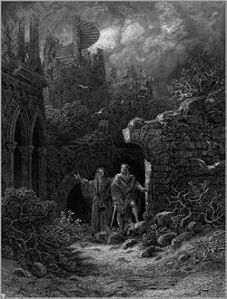
Merlin advising Arthur

How do you see the world? Looking at the major issues we face—global warming, AIDS, terrorism, overpopulation, unemployment, renewable energy, the environment—do you view the world as “too broke to fix” or still within our capabilities to drastically improve and correct?

The books writers write are often impacted by their world views. Some agree with Jean-Paul Sartre’s statement that “Man is a futile passion.” In fact, looking at most of the fiction published during the last hundred years or so, I suggest that most authors either agree with Sartre or think the public agrees with Sartre and wants to read stories that corroborate this world view.

In my latest post on Sarabande’s Journey, World of Wonder finding ‘Life in Truth,’ I wrote that “a lot of mainstream fiction has fled from wonder, pulled by science, technologies and difficult-to-solve world issues into realism, powerlessness, despair and alienation.” Some of this fiction gives us happy endings, but they’re usually small endings in a sea of troubles. That is to say, the lovers who will live happily ever after will do so as long as the screwed-up world allows it.

The alternative proposition to readers and writers who agree with Sartre is neither naiveté nor the false believe that life will save warring factions from themselves if only the parties involved will sit down and sing “Kumbayah” together. While naiveté and “Kumbayah” bring their adherents many positive moments and, perhaps the illusion of positive action, they are—I believe—taking a bury-your-head-in-the-sand approach to the problems of the world and, worse yet, to their own personal development.

In my novel Garden of Heaven: an Odyssey, my protagonist—who is trying to create a magical cloud inside his apartment—is advised to close his eyes. Why? Because as long as he sees that the cloud isn’t there yet, he’ll become more and more convinced he can’t create it. When he stops looking, he’s successful.

Now, I would never suggest that we stop being aware of the world’s problems and thereby give up on all the logical, science-and-techology-based approaches to solving them. Instead, I prefer the approach advocated by mythologist Joseph Campbell: “We’re not on our journey to save the world but to save ourselves.  But in doing that you save the world.  The influence of a vital person vitalizes.”  As long as we, as individuals, focus on the huge problems of the world for which we see no viable solutions, we not only feel more alone, but more powerless as well.

Whether or not you were around or not during the 1960s, you’re probably aware that Washington, D. C. and/or the Kennedy administration was often referred to as “Camelot.” Rightly or wrongly—and regardless of political viewpoint—the Camelot we hoped for was on a par with the heroic dreams of the legendary King Arthur and his noble knights. Perhaps our hope was based on all the wrong reasons and perhaps it had too much “Kumbayah” and “Make Love Not War” in it, but it was hope. Hope has, it seems to me, become a rare commodity in both our lives and our fiction.

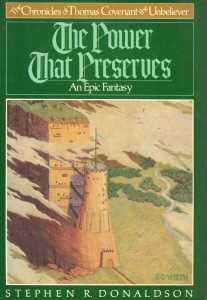
Looking at the rhetoric, few people believe that America as either a dream or a hope or a goal will ever become the Camelot of our imagination. Variously, it’s too late, too broke to fix, or too besieged by problems no man or woman or group can solve. In the minds of many, America is rather like the tragic world of King Arthur in Tennyson’s epic poem Idylls of the King. Epic fantasy author Stephen R. Donaldson summed up Camelot, as viewed by Tennyson like this:

Tennyson’s technique is to take a genuine, honest-to-God “epic” character (Arthur) and surround him with normal, believable, real human beings who lie and cheat and love and hate and can’t make decisions. So what happens? The normal, believable, real people destroy Arthur’s epic dream.

Donaldson suggests that many of us think we’re not capable of doing anything else because we believe that since “man is a futile passion” that we are powerless and incapable of creating a living, breathing real Camelot. He writes fantasy, in part, to demonstrate that man is capable of being an effective passion.

An Alternative to Sartre

I quoted storyteller Jane Yolen in my latest Sarabande’s Journey post, so those of you who read that will, I hope, forgive the repetition. In her book Touch Magic, she says that Life in Truth (as opposed to the world we see with our eyes) “tells us of the world as it should be. It holds certain values to be important. It makes issues clear. It is, if you will, a fiction based on great opposites, the clashing of opposing forces, question and answer, yin and yang, the great dance of opposites. And so the fantasy tale, the ‘I that is not you,’ becomes a rehearsal for the reader for life as it should be lived.”

My philosophy of life does not include the viewpoint that men and women are powerless or that they don’t matter or that “evil” and “blame” are independent forces out there in the real world. As an individual, I believe in Life in Truth; that is, among other things, both a Joseph Campbell approach and a Jane Yolen approach. In my contemporary fantasies, The Sun Singer and Sarabande as well as in my magical realism adventure Garden of Heaven: Odyssey, I focus on stories with intense—and sometimes horrible—personal trials. And yet, my characters also find answers, answers that focus on themselves rather than on those who would destroy them or the world they believe in.

While I write contemporary fantasy rather than epic fantasy, I agree with Donaldson’s point of view about the value of fantasy fiction. His characters look within for answers, and this allows them to see the “real world” just the way it is while simultaneously seeing their dreams; that is to say, the world as it should be.

Paradox or not, I can reconcile Life Actual (the so-called real world) and Life in Truth, and understand clearly that while I don’t have what it takes to solve the large issues of the day, I am learning all that I need to know to solve the problems of myself. One day, as long as I don’t stare too intently at the problems themselves, the worlds of reality and of imagination will become one.

Malcolm

sharp-edged fiction without the futility

Commentary: ‘The Help’ by Kathryn Stockett

Kathryn Stockett’s bestselling novel The Help focuses on a secret project (fictional) in Jackson, Mississippi (real)  in the early 1960s put together by an idealistic white girl named Skeeter and a group of black maids led by the stable Aibileen and the sassy Minny. Other primary characters include Skeeter’s young peer group for whom the maids work, Hilly and Elizabeth and Celia.

In those days, there were lines one did not cross when it came to the acceptable and unacceptable interactions between white employers and their black (this term wasn’t in general use in those days) domestic help. Skeeter, who is somewhat naive and hopeful about the future, crosses those lines. She takes risks and so do Aibileen and Minny. They fictionalize their names and call their town Niceville. If they are caught sharing stories with each other (much less writing them down), they might be beaten or killed. And then there’s the matter of trust, the trust the maids must put in a white woman who’s not acting like the other white women do.

I liked the book.

The Book Has Already Been Thoroughly Reviewed

Yet, there are already 4,523 Amazon reader reviews of The Help, and numerous articles and reviews of both the movie and the novel in the press. It’s unlikely that I have anything new to add to the discussion at this late date. In general, the book has been well received by readers and reviewers. Its controversial nature has brought out the usual kinds of dissatisfaction about miscellaneous errors of fact, the realism or lack of realism of some of Stockett’s characters’ viewpoints and actions, whether or not Jackson as characterized in the book approximates Jackson as it was almost 50 years ago. Some of the critics have forgotten that The Help is a work of fiction and not an anthropologist’s treatise about Southern race relations and domestic help of the 1960s.

On top of the controversy is, perhaps, one issue: denial. Because the picture of black and white relationships painted in The Help isn’t pretty and because it depicts bigoted (though usually nothing like the overtly nasty Hilly Holbrook in the novel) whites hiring generally accommodating blacks in a complex mix of discrimination and trust, most people want to hide this picture under the rug. Understandably, nobody wants to focus on it, much less applaud it. My view is that pretending that it didn’t happen doesn’t really help us move forward as a homogenized people.

In addition to being a well-told story, The Help brings to light what those of us living in the South saw day to day, but seldom hear talked about. As Stockett portrays in her book, whites did not see blacks as their equals, yet they trusted them as integral members of the household to cook, clean and look after the children. My family moved to the South when I was six years old, to a town I’ll call Nicetown, that was much smaller than Jackson but that featured some people who acted like most of the characters in Stockett’s novel. Very few people acted like Skeeter, or, if they did so, they kept it quiet. The closest person to Skeeter in the book was my mother who was fairly outspoken (as was my father) against segregation.

1960s Nicetown Fact of Life

Maids in our white neighborhood were a fact of life. They came on the city bus which let them out in front of our house, and from there they fanned out to nearby streets where they worked. My best friend’s family had a maid who was, while the parents were gone, the surrogate parent figure in the house. She was more stern than the parents, but also much loved as long as no lines were crossed. She did not eat with the family, ride in the front seat of their car, go to their church, or talk with them friend-to-friend.

Like Skeeter’s Niceville, my Nicetown provided separate schools for blacks and whites, separate swimming pools and restaurants and neighborhoods, restrooms labeled men, white and colored, and drinking fountains labeled white and colored. There were separate churches, too, until our minister said our church was open to everyone; those who didn’t like it left and started another church. Like them or not, the lines were hard to cross because “separate but equal” made certain that interaction was minimized. Stockett gets this right in her book.

My grandparents had a maid who kept their house spotless even though she was older than they were. She treated us, my brothers and I, as the surrogate grandparent when she was left in charge of the house. Like my best friend’s maid, she was friendly and talkative until one started to cross a line and act like we were black or she was white. It wasn’t done, and if you tried to do it, the maids grew quiet and their employers talked about how we’d get in trouble—the same kind of trouble Skeeter risks in the novel—if we didn’t act with proper decorum.

The picture Stockett paints in her novel is a picture I saw, though naturally (as a boy growing up) I wasn’t privy to either the adult conversations of the maids or to the discussions of the Skeeter Phelans or those few in my neighborhood what most resembled The Help’s pretentious Hilly Holbrook, more moderate Elizabeth Leefolt, or the redneck Celia Foote. While I can say that I saw Minny, Aibileen, Elizabeth, and Hilly in my neighborhood, I don’t see these characters in The Help either as stereotypes or as representatives of everyone else in 1960s Jackson.

Dialect, Southern Accents and Anger

Some have criticized Stockett for her use of black dialect. Her fictional maids speak the same way the real maids in my neighborhood in Nicetown spoke. Stockett’s use of this dialect in the book is not only accurate but works as an excellent means of showing the otherness with which whites saw their black help as well as how the black help felt about themselves. Language is a part of one’s culture, not the stereotyping put down of a white author writing about black characters.

I do think Stockett should have included the Southern accents of her white characters as well. She said, I believe, in an interview that she never thought of her own family when she was growing up in Jackson as having an accent. When I moved into the South, most of those I met thought I was the one with the accent. Perhaps Stockett saw it this way, and grew up believing that the Southern accent, while meanly ridiculed by people from other parts of the country was, in fact, Standard Speech. The book would, I think, have been a truer painting if Skeeter, Hilly, Elizabeth and Celia also spoke in their own dialect.

I also would have liked seeing a little more anger expressed by the maids when they talked amongst themselves, though maybe not even in Skeeter’s presence. In reality, of course, anything approaching anger would have been a difficult passion to hold onto in those days because feeling anger led people to say and do potentially dangerous things. The emotions tended to have calluses over them, for self preservation and perhaps sanity. Even so, readers will leave The Help knowing how the help feels about whites in general and their employers in particular.

These are my impressions, then, of The Help, rambling as they may be. Stockett has done a difficult piece of writing, trying to accurately portray another time and place to an audience who will for the most part judge everything in the book by today’s norms. Stockett is a bit like Skeeter, hopeful and undaunted by the likely criticism. There’s a lot to admire in The Help, and part of what I like about it is that it makes the painting of how we were out from under the rug so that we can no longer deny it.

Malcolm

Malcolm R. Campbell is the author of four novels, including the recently released contemporary fantasy Sarbande. He grew up in Florida and currently lives in northeast Georgia.