Blurring Reality and Fiction

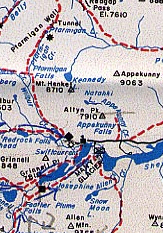
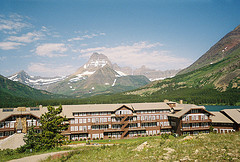
Many Glacier Hotel

As the author of two contemporary fantasies and one magical realism novel, I enjoy blurring the line between the real settings in my novels and the stuff I make up.

Real settings provide a foundation for the magic of my imagination whether they’re well-known locations such as Glacier National Park or personal locations such as the house my parents owned in Eugene, Oregon when I was in kindergarten.

However, the trickster in me wants the reader to always be in doubt where reality begins and ends. When people tell ghost stories around a camp fire, the stories often begin with: “Many years ago in these very woods on a summer night just like this one, a monster watched a patrol of Boy Scouts cooking their evening meal.”

Suddenly, everyone around the camp fire starts hearing strange noises in woods—perhaps it’s just the wind, or perhaps it isn’t. When I set my contemporary fantasy novels Sarabande (2011) and The Sun Singer (2004) in Glacier Park, I not only had a lot of photographs and reference materials helping me make my descriptions accurate, but also the benefit of knowing that many of my readers will have been there or seen pictures or TV programs about the area. (I also had my memories of hiking a good many trails in the park.)

So, is there magic at Many Glacier Hotel in Swiftcurrent Valley? Maybe yes, maybe no.

Garden of Heaven

In Garden of Heaven: an Odyssey (2010), I used well known locations in Glacier National Park such as Chief Mountain and Many Glacier Hotel. For my own personal amusement, I also used the starter-house my parents owned on Alder Street in Eugene. While I barely remember the house, I do have pictures of it. My readers, of course, don’t know anything about an obscure street in Eugene, but they have heard of the town. That’s why I used the name in this stream-of-consciousness, vision quest sequence in the novel:

My mother at the house in Eugene

He woke up in the centre of the prairie where the land lay like a calm sea and the black mountains were small in the west. On his mind there was a predominant thought, ‘I am east of the sun and west of the moon,’ and though that was true, for it was sometime past noon, the thought was on his mind in a strange déjà vu way, pulling him he knew not where.  His memory danced like a frail aspen leaf in the north wind until he was carried southwest by south on more or less a straight course past the grey ice of Api-natósi, the north fork of the Flathead, the Kootenai National Forest, the Bitterroots, south of Couer d’Alene Lake, the boiling confluence of the Columbia and Snake, the Cascades, to Eugene and Alder Street, to the little buff-coloured house with the blue roof and white picket fence and a snowman to the left of the driveway, and then inside to a room bluer than the roof where an inviolate circle of light from the lone lamp encompassed mother and child, she in a chair reading aloud from an old tan book of stories, he sleepy-eyed beneath covers hearing about trolls, witches, winds that talked, a castle, and a prince, the stuff that dreams and futures are made of before seasons matter and life hardens the soul.

In a vision quest, the real and the unreal are often tangled up. I always want the reader to wonder which is which. In this passage, most readers will recognize the real places such as the Snake River and the Cascades even if they’ve never been to the area. I added “Alder Street” just for me because I’m a spinner of tall tales that are occasionally true.

Malcolm

NaNoWriMo – Try writing with a ‘theme song’

Did you sign up for National Novel Writing Month (NaNoWriMo)?

Good for you.

If you participated last year, as I did, then you’ve probably gotten a few e-mails from program director Lindsey Grant with links and advice. Here’s a crucial reminder from a recent note: Warn your friends, family, neighbors, and pets about the upcoming challenge. The more people who  know what you’re working on, the more accountable you’ll feel and the likelier you are to hit the 50,000-word goal.

Now is the time to write at flank speed. If you weren’t in the Navy, flank speed means “fast.” Others will remind you to either shoot your inner editor or lock him or her in a closet this month. You can’t write at flank speed if you’re cutting, pasting, backspacing, using the thesaurus, or playing Angry Birds while you try to think of the perfect word.

All good.

While writing my recently released contemporary fantasy novel Sarabande during last year’s NaNo, I also used a theme song. Actually, it was a theme album.

Some people go to sleep every night listening to a DVD with a selection of restful music, an appropriate radio station, or a white noise machine. The music, or the surf or waterfall on the white noise machine, quickly become associated with sleep. The sound works somewhat hypnotically…sleep…sleep.

I picked a CD with Native American flute music by Mary Youngblood. I knew it would work because I’d used it before. I also knew it wouldn’t make me sleepy. Whenever I sat down for my NaNo writing, I put on my headphones and started the music. It was a jumpstart, and it automatically got me thinking of my characters and plot.

For best results, try not to listen to your writing music when you’re not writing. That might dilute its impact during NaNo when you need at least 1,667 words a day to reach that 50,000-word goal.

I’ve written three novels using theme song music. Sarabande was the second time out for Mary Youngblood’s Beneath the Raven Moon. While writing The Sun Singer, I used a new-age instrumental album called Nivana Road by Deuter. In my case, the music had a double connection. First, it became hypnotic and associated with writing. Second, Sarabande has Native American themes and The Sun Singer has new age themes.

You may not find music that mirrors what you’re writing about. If you do, it’s a bonus. If you don’t, I’m guessing that after listening for a couple of flank-speed, NaNo sessions, you’ll soon find those word counts a bit easier to reach because you will be in the zone with your work—thanks to the theme song.

Malcolm

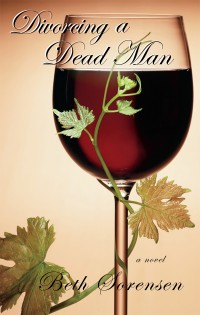
Review: ‘Divorcing a Dead Man’ by Beth Sorensen

In her fine-vintage debut romantic mystery Crush at Thomas Hall (Chalet, August 2010) Beth Sorensen introduced readers to Cassandra Martin who buried an abusive husband Tony, left home to see the world and ended up in northern Virgina running a small winery and deeply in love with the son of Thomas Hall’s owner, Edward Baker. In spite of murder and embezzlement, Cassandra and Edward appeared destined to lead a charmed life at the end of the novel.

The title of Sorensen’s sequel, Divorcing a Dead Man, is the first clue to the fact there may be more than grapes to be crushed at the winery—potentially, hearts and lives, as Cassandra discovers that Tony faked his death and wants to control her life again if he doesn’t kill her first. As a rich, successful CEO, Edward is used to getting his way, and to him that means controlling Cassandra’s life as well.

In my review of Crush at Thomas Hall, I noted that while former college professor Cassandra Martin was an intelligent protagonist when it came to running the winery, she was indecisive about personal matters, especially emotional commitments. She remains indecisive in Divorcing a Dead Man.

But, she has cause:  two men want to control her life, one out of hate and love; one man makes threats while the other keeps secrets; she is a devout Catholic who must now contemplate filing for divorce while her wedding is approaching as a potential train wreck; and, since Cassandra’s life is in danger, those closest want to hover even closer when she would prefer to run the winery (or run away) and have some unfettered time to think.

While Divorcing a Dead Man is not quite as tightly written as Crush at Thomas Hall, this contemporary romance successfully develops the character of Cassandra Martin in an environment of danger and betrayal. Meanwhile, Cassandra is not without doubts. While Tony was a mistake, she wonders as she accuses Edward of trying to run their relationship like a corporation, if marrying him will be another mistake.

Sorensen has written a compelling story about relationships and how easy it is for them to come into question and come under fire during times of great stress. From the outset, it’s clear that Cassandra and Edward are deeply in love and want only the best from each other. It’s also clear, whether fate plays a deadly hand or not, that they’re facing a steep learning curve in how to make a relationship work with very little time to do the necessary homework.

Malcolm R. Campbell is the author of four novels, including the recent contemporary fantasy, “Sarabande.”

Lions, Tigers and NaNoWriMo, Oh My

“Warn your friends, family, neighbors, and pets about the upcoming challenge. The more people who know what you’re working on, the more accountable you’ll feel and the likelier you are to hit the 50,000-word goal. (And the family hamster will be a lot more understanding when you don’t refresh his chlorophyll chips as regularly.)” — Lindsey Grant, NaNoWriMo Program Director

NaNoWriMo is one of two things: (1) a popular writing program that arrives every November that encourages aspiring writers to write a 50,000-word novel in a month while posting their daily word counts on the organization’s web site, or (2) a sign that the end of the world is near.

Since it’s always 5 o’clock somewhere, my alterego Jock Stewart dropped by this afternoon with a bottle of expensive Scotch and a tale of woe. He knew the that the Scotch would get my attention if the woe didn’t.

We settled down in a couple of lawn chairs to watch the traffic and the dark clouds of a real or imagined storm coming into town from Rome, Calhoun, Dalton and other points west.

“Campbell,” he said, “Lucinda signed me up to write a NaNoWriMo novel this year.”

I sipped my Talisker pensively because there are very few of us in town who drink our Scotch neat, much less a brand that makes this claim: “Deep and stormy like the ocean crashing over the rocky shores of its island distillery, Talisker is the only Single Malt Scotch Whisky rugged enough to call the Isle of Skye its home.”

The Scotch reminded me of Fiona, prompting me to say (with complete disregard for the potential impact of my words), “I once dated a lass from the Isle of Skye.”

“What?”

“I once dated a lass from the Isle of Skye.”

“That’s what I thought you said.” Stewart shook his head back and forth in the way people do when they feel like it may not be screwed on straight. “Why’d you say it?”

“If Fiona and I were still dating, I’d be in sitting in a lawn chair in the front yard of Dunvegan Castle listening to the sweet lass singing Mo rùn geal dìleas rather than listening to you singing the blues about a mere 50,000 words of fiction.”

“I bet James Joyce never wrote a novel in a month,” said Jock, opting to drink from the bottle rather than his now-soggy Dixie cup.

“Of course not,” I said.

“So, how can a lesser man do what the master could not?” asked Jock, continuing to drink from the bottle while shoving gthe Dixie cup into the snake-infested broom sage that took over my yard a year ago when the lawn mower ran out of gas.

“You write ten times that much for the Star-Gazer every month,” I said, grabbing the bottle for a couple of swallows.

“Oh hell,” he said, “that’s writing the facts, telling people about all the horror that went on in the world while they were at work, or having a nooner with the secretary or shooting 8-ball down at the watering hole.”

“Make it a horror novel.”

“Does NaNoWriMo allow novels filled with true facts?”

“Sure,” I said, “the truer the facts, the more like fantasy and/or drunkeness the whole thing will be.”

“I could copy and paste my stories into a DOC file, do a little editing, and bingo, my daily word quota of 1,667  words would be done. Could I do that?”

“Sure, but don’t go blabbing about it on Facebook or twitter or some clown will yell ‘foul’ or, worse yet, other people will start doing Heaven only knows what?”

“Turning their diaries into novels,” he said.

“Turning their spam e-mail into novels,” I said.

“Turning their tweets into novels,” he said.

“When will it ever end?” I asked.

“It won’t end,” he stated, becoming a bit formal as he tried to obscure the fact that there he was, a middle-aged man slouched in a lawn chair next to a stand of rat-infested broom sage staring at the curse of NaNoWriMo. “It’s too late for it to end.”

“I know, Jock, but you can do it.”

He flipped open his laptop and skimmed through the news stories he’d written since the dawn’s early light.  “Okay, I got it,” he said. “Listen to this headline: GIRLS GIVEN EQUAL RIGHTS TO BRITISH THRONE.”

“How the hell can you possibly turn that into a novel?” I asked.

“It’s going to be a cautionary tale about the sad fact that up until a few minutes ago, women were not permitted to use the country’s restroom facilities. My heroine, the fetching Lucinda, will be accosted by lions, tigers and whatever other beasts are running abroad in England while she is doing her business.”

“Is she in the circus business?”

“Hells bells, man, she’s going to the bathroom without the bathroom. She’s out on the moor where the hounds of the Baskervilles are still running loose. She’s scared and embarrassed. I mean, who wouldn’t be, out there in your altogether when frightening creatures show up.”

“Then what happens?”

“I can’t tell you. Suffice it to say, the book will be a reality inspired bodice ripper.”

“Ah, a romance.”

“Not really. Lucinda isn’t the kind of girl who sings old-time stuff like Mo rùn geal dìleas. She’s a latrine-hating, outhouse-kicking woman who believes she can sit on the throne just as well as any man.”

“Kirkus Reviews will love it,” I said, finishing the last of the Scotch while Jock was hastily Googling a few sites for background information about latrines and outhouses.

“Who cares about Kirkus? I just want Lucinda to love it.”

“If so,” I said, carefully, “you better not use her name in the story.”

“You’ve got a point there,” he said. “This NaNoWriMo stuff is going to be a walk in the park. Just promise me to blurb the book with some family sounding schmalz so the title doesn’t come up during next year’s Banned Books Week.”

“All sweet Meghan wanted in life was a room of her own,” I said. “How about that?”

“Needs work,” he said.

–Malcolm, who wrote the first half of his contemporary fantasy Sarabande during NaNoWriMo and recalls using words stronger than “oh my” when he was fighting with his daily 1,667 word counts.

The allure of doorways

“Edward Hopper found stillness in motion and geometry in light. His simultaneously strong and subtle images of houses, streets and intimate rooms invite us to quiet our minds and open our eyes to the beauty of the commonplace as revealed by shadow, sun and the warmth or artificial lights.” — Charley Parker

Walk through an exhibit of Edward Hopper paintings and you’ll immediately see he was drawn to windows from both sides and in every  magnitude of light. He is best known for his painting of a brighly lit diner as viewed from the dark street outside called “Nighthawks.” Painted in 1942, the original can be found at the Art Institute of Chicago. If I were an art collector, most of the rooms in my house would be filled with the work of Jamie Wyeth and Andrew Wyeth, but hidden away in my den in the company of paintings of mountains and mountain trails would be Nighthawks.

Nighthawks by Edward Hopper

I am a nighthawk. I like lonely diners where nighthawks can stop for coffee or a piece of pie. I wrote somewhere that in the days before gasoline was expensive, my best ideas came from driving at night, and there was a time when I knew every waitress and fry cook in a one hundred mile radius around Tallahassee, Florida, where I grew up.

Doorways and Supersitions

While windows draw me to look in or out, figuratively or literally, I cannot resist the allure of doorways. Of the many sounds our four cats hear throughout the week, the doorbell causes the greatest disruption. Their response is a mixture of excitement and foreboding until they see who is there and what they want. There are so many doorway-related symbols and superstitions, I won’t even begin to list examples, but most of them come down to the fact that a threshold is a portal between worlds or areas of activity.

The front door to my house separates, in terms of custom and use, inside from outside. Doors separate rooms from each other and often define the activities on one side or the other. The doorway itself is where the danger lies because, as anthropologist Victor Turner observed, the space within the entryway is “betwixt and between.” It reflects both inside and out, but is—in fact—neither.

Doorway superstitions revolve around the spirits and tricksters that are said to lurk, live and cause mischief or bad luck at the undertain spaces between rooms, zones, worlds, and realms. Doorways themselves can make us feel welcome or unwelcome, hopeful, fearful or inspired. They can symbolize the steps in a project, rites of passage, personal development and transcendent expirences.

Shamanistic journeying often begins with a portal, door, or cave entrance. The children in The Chronicles of Narnia fantasy novels by C. S. Lewis enter another world through a doorway in an old wardrobe. Alice’s Adventures in Wonderland by Lewis Carroll uses a rabbit hole to link our world with a world of magic. In my contemporary fantasies The Sun Singer and Sarabande, I use arches, a waterfall cave and a special door in a cabin to connect the world of Glacier National Park with a look-alike universe.

Liminal Space

In myth and psychology, thresholds such as those between worlds and those encountered during rites of passage ceremonies and meditation, are referred to as liminal space. The term comes from “limin,” Latin for threshold. It’s considered an intermediate state, rather like the twilight zone, dusk and dawn, a sleeper’s focus as they begin to awake, and transitional in nature.

Personally, I am drawn to doorways because my point of view about the world is very much shaped by what happens or what can happen in liminal space. As an author, I find that doorways and the boundaries between worlds, either hinted at or utilized, literal or figurative, with or without a guardian entitity or ritual of passage, are among the important tools of the art and craft of fantasy.

Doorways not only open up worlds for my protagonists Robert Adams (The Sun Singer) and Sarabande (Sarabande) to find and step into, but a vast amount of symbolism relating to stages of life or development. In Sarabande, for example, a plunge into a cold mountain lake can be seen as just what it is (a wet and cold experience) as well as a figurative dive into the unconscious and/or a realm of dream and magic:

Her laugh had the rare quality of a wolf’s howl. She flung the dryas flower at Sarabande, then swam or somehow moved closer and playfully pushed her sister’s head under water like she did when they were children playing in Turquoise Lake. Then the light or the clouds changed and Dryad vanished.

Sarabande rubbed the water out of her eyes. The mare’s tail clouds were gone along with the sun and—from growing shadows within the spruce and fir forest in lower valleys—most of the day. She waded ashore, cold. There was no time to change.   She ran down the valley’s long steps, wishing she could fly. Gem—what must she think?

The surface of the lake is the perfect place for fantasy authors and other tricksters to move a character in and our of dream or magic. The liminal space where rooms meet, where night and day come together at the blue hour, and where sleep and dream snuggle up next to each other is the place where things happen. Sometimes those things are obvious and filled with wonderment or terror and sometimes they are more intuited than visual.

Give a fantasy author a doorway (or even an everyday window) and he or she will build you a world, a place where the imagination is unfettered and where change itself is the order of the day.

Malcolm

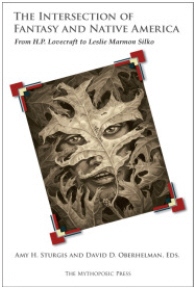
Book of pioneering essays explores fantasy with Native American influences

In 2006, author Amy Sturgis  presented a paper at the  Mythopoeic Society’s Mythcon 37 in which she suggested that specialists in fantasy studies and Native American studies have a lot to offer each other. In an August 2009 interview, Sturgis said, ‘Both sides I think are missing out on great opportunities to talk about and share the remarkable — and remarkably similar — literature in their respective fields. In my talk I recommended ways of bringing together those who love fantasy and those who love Native America.”

After her Mythcon talk, Sturgis was approached by the Mythopoeic Society Press and asked to edit a book of essays that would use her paper as a catalyst for exploring: (1) Native American mythology in literature, (2) Native American authors writing works with fantasy elements, (3) non-Native fantasy authors incorporating Native America into their own work.

As an author interested in the cultures and stories of the native nations traditionally associated with the locations in which my novels are set, I’m was happy to see the publication of The Intersection of Fantasy and Native America: From H.P. Lovecraft to Leslie Marmon Silko (Mythopoeic Society Press, October 2009) with pioneering work about the long-neglected impact of native themes in fantasy genre novels.

Publisher’s Description

A number of contemporary Native American authors incorporate elements of fantasy into their fiction, while several non-Native fantasy authors utilize elements of Native America in their storytelling. Nevertheless, few experts on fantasy consider American Indian works, and few experts on Native American studies explore the fantastic in literature. Now an international, multi-ethnic, and cross-disciplinary group of scholars investigates the meaningful ways in which fantasy and Native America intersect, examining classics by American Indian authors such as Louise Erdrich, Gerald Vizenor, and Leslie Marmon Silko, as well as non-Native fantasists such as H.P. Lovecraft, J.R.R. Tolkien, and J.K. Rowling. Thus these essayists pioneer new ways of thinking about fantasy texts by Native and non-Native authors, and challenge other academics, writers, and readers to do the same.

Author’s Comments

In an April 2009 interview in which she was asked about myth, fantasy and science fiction, Sturgis said, “All three are involved in the project of answering the question of what it means to be human: the nature of humanity; the nature of humanity’s relationship to the earth, the cosmos, the infinite; and other questions like these. The very first storytellers, through their mythological stories, parables, and other tales, were trying to come to some sense of the world and to figure out their place in it. I see mythology as a “mother figure” out of which the other two have grown.”

Reviewer Opinions

  • “With excellent and accessible scholarship, this book opens wide the door of Native American mythology and fantasy by connecting it with the fantasy many of us already know and love.” — Travis Prinzi, Author of Harry Potter and Imagination and editor of Hog’s Head Conversations.
  • “The essays in Sturgis and Oberhelman’s The Intersection of Fantasy and Native America open our eyes to the kinship between families of literature hitherto seen as separate-fantasy and Native American fiction-showing their interconnections in subject matter, in techniques of dream and trance and magical realism and post-modern meta-narrative, and most importantly, in their ability to penetrate appearances in search of underlying truths. The result is that we see each in light of the other and both as parts of the larger, so-called mainstream, and as essential to our understanding of literature, its  writers and readers, in the 21st century. –Verlyn Flieger, Professor of  English, University of Maryland at College Park, Author of Interrupted Music, A Question of Time, and Splintered Light.

The myths flowing out of classic Greek and Roman mythology and the impact of fact and fiction about kings and queens and elves and faerie folk from faraway worlds have, I believe, partially obscurred the role of Native American folktales and belief systems in creating both our world view and the fantasy fiction given birth by our imagionation in the place where we live. By examining the work of widely known authors, The Intersection of Fantasy and Native America helps interpret the rich landscape we may not have noticed just outside the front door.

–Malcolm

contemporary fantasy with native themes

Changing Writing Hats When the Need Arises

Today’s guest post is contributed by author Phyllis Zimbler Miller

I met Mitch Miller in January of 1967 when I a freshman and he a junior were both writing for the editorial staff of MSU’s college newspaper, the State News.

During Mitch’s time at MSU he wrote, among other things, articles about the Vietnam War, especially as he was a member of R.O.T.C.  I wrote feature articles, such as on the controversy of a college health clinic giving out birth control pills.

Fast forward ahead:  We married in September 1969, and in May 1970 Mitch went on active duty at Ft. Knox, Kentucky,  for Armor Officers Basic.  I went with him although the Army had not officially invited me.  (For a fictionalized account of my experiences, see my novel Mrs. Lieutenant, which was a 2008 Amazon Breakthrough Novel Award semifinalist.)

When we returned to the States in May of 1972, I eventually became a reporter and editor for Philadelphia’s weekly Jewish newspaper, the Exponent.  Mitch went to law school on the GI Bill and then I went to Wharton to get an M.B.A.

In the summer of 1980 we moved to Los Angeles, where we got “bitten” by an interest in writing for the entertainment industry.  We both took several screenwriting courses at UCLA Extension.  And we began writing and  rewriting and writing and rewriting screenplays that did not sell.

Both of us had to learn to go from a newspaper reporting style to a screenplay format where characters’ inner thoughts could not be portrayed.  The only way a screenplay character could convey his/her thoughts was by telling it to someone, talking to himself/herself, or by certain representative body actions.  (Remember when a movie actor would light a cigarette to show nervousness?)

Then I got interested in writing mystery novels – and I again had to learn a new writing style.  I had to write POV (point of view) characters whose thoughts I could convey while being careful not to switch to a different POV in any one section of a novel.

It took me 20 years of writing and rewriting the novel Mrs. Lieutenant, plus hiring an expert to figure out the one thing missing from the story, before I knew the book was ready to go.  And, of course, the book was then rejected by agents and publishers.

I decided to self-publish at the same time I submitted the manuscript to the Amazon Breakthrough Novel Award competition. Being named a semifinalist helped convince me that there was a market for this type of book.

And as ebooks exploded from a slow start by Kindle in late 2007, I got an idea.  Why not take Mitch’s and my screenplay “Lt. Commander Mollie Sanders,” which had been a 2005 Nicholls Fellowship quarterfinalist, and combine the script with a prequel script we had written titled “A Needle in a Haystack” in order to create an ebook?

Now I had to change writing styles again, and some people feel there is not enough character development in the book Lt. Commander Mollie Sanders.  (This is why we call the story a technothriller rather than a novel.) This ebook is meant to be an action/adventure story with a female
protagonist rather than the usual male protagonist.

On the other hand, some of the criticism of the character Mollie Sanders has been revealing of other people’s own issues. In fact, it has been so revealing that I felt compelled to write the post “A Fictional Character Is Fiction.”

In the end, though, I am grateful for having the opportunities to learn different writing styles and to then have the option to determine which ones work best  for me and for the stories I’m telling.

And,  oh, yes, who would have thought my journalism undergraduate degree would be so helpful now in writing short blog posts?

Phyllis Zimbler Miller (@ZimblerMiller on Twitter) is the co-founder of the marketing consulting company Miller Mosaic, LLC.
You can learn about her fiction and nonfiction books at http://budurl.com/PZMbooks

Walking My Future Novel’s Setting

While I was working as a seasonal, college-student employee at Glacier National Park, my father said, “One day you’ll write a book about this.” As I walked the mile between the hotel and the camp store for Cokes, candy bars and other “health foods,” I visualized long nature articles about the park for National Geographic Magazine that would combine with proposed climbs of K2 and Mt. Everest and canoe rides down the Amazon into a hiker’s guide to exotic trails.

Little did I know I would one day set three novels in the park.

Like most college students, I was used to walking—and sometimes running—across a campus to get from one class to another. While working at the park, I not only walked around every lake near the hotel, but hiked to every waterfall, tunnel, mountain pass, and alpine meadow. Why? For a lot of reasons. For a Florida boy, the mountains were an exciting new environment. Plus, in those days, seasonal employees weren’t allowed to bring cars into the park. So, we talked. Going to the camp store was child’s play. By the end of the summer, a 25 mile hike as an easy stroll.

A Sack of Guidebooks

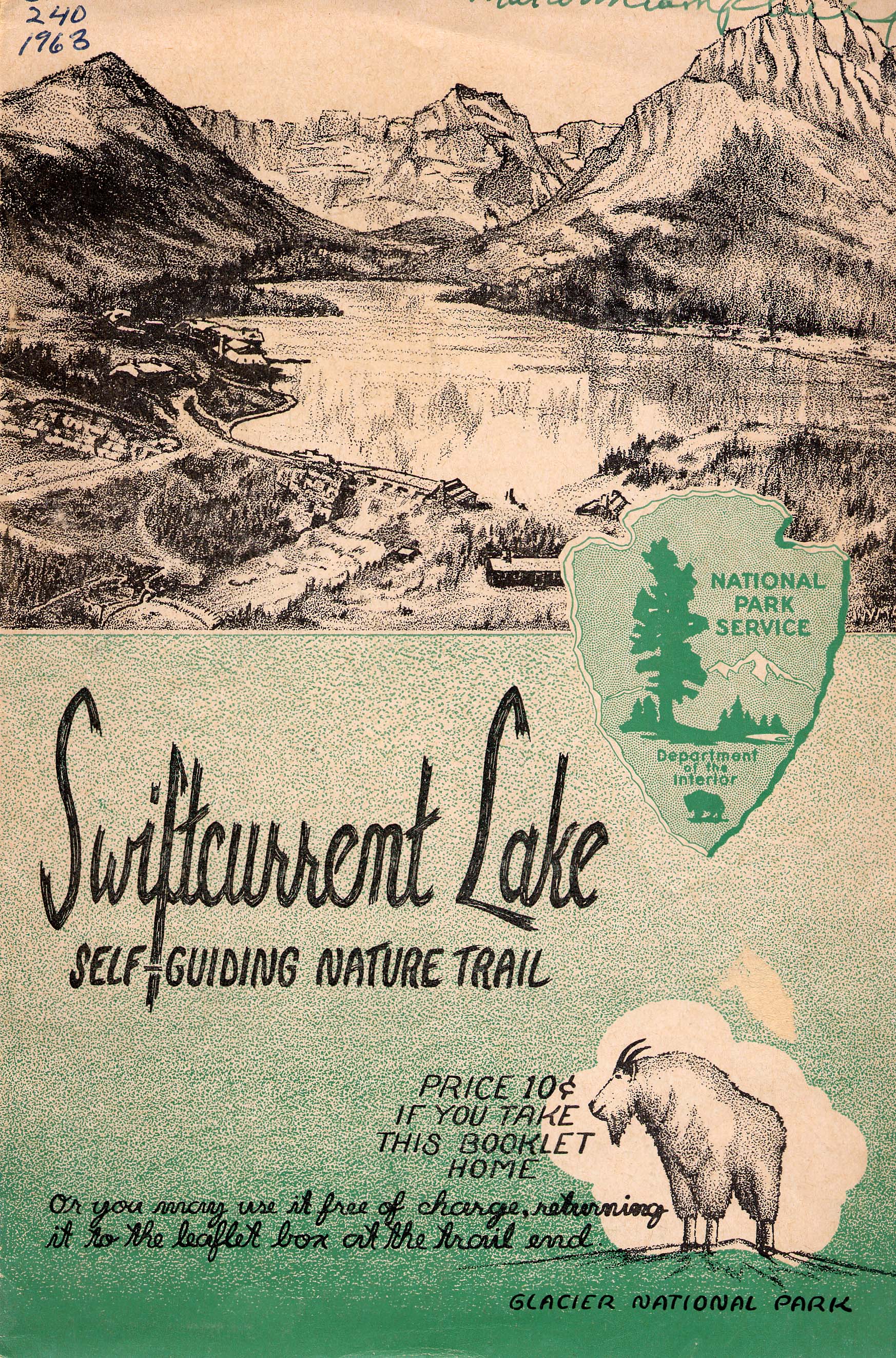
There used to be a wood box on a post near Many Glacier Hotel with a handfull of walking guides for tourists taking their first hike around Swiftcurrent Lake. If you wanted to keep the guide, you put a dime in a slot. If not, you put the guide into a similar box where the trail neared the camp store. I kept mine and along with it, brought home a sack full of guidebooks.

These materials are a writer’s dream. They allow me to merge my imagination and memories of the trails and mountains with specific factual information about the trees (subalpine fir, willow), wildflowers (fireweed, beargrass), and mountains (Grinnel, Allen). Even though I write contemporary fantasy, I want the setting to be as realistic as possible, and while I didn’t know it when I was a hotel bellman, all thosde after-work hikes were taking place in a world that would one say be part of The Sun Singer, Garden of Heaven: an Odyssey, and my new novel Sarabande.

I never wrote those National Geographic Magazine articles, much less climbed K2 or Everest, but I did write a few articles and essays about the Swiftcurrent Valley in Glacier National Park. Looking at the valley from a journalist’s or feature writer’s perspective helped me collect my thoughts for the fiction I would set there later.  Unfortunately, I haven’t been back to the park for many years, but all that time walking around in the setting of my future novels rather engraved the sights and sounds in my memory.

Sarabande Excerpt – from a Fictional Cabin at the Park’s Lake Josephine

Lake Josephine and Mt. Gould - twbuckner photo

The bright yellow of a late morning sun filled the bedroom when Sarabande awoke. She felt the light move before she opened her eyes and pulled the tangled folds of the quilt away from her face. A summer breeze followed the light, fluttering the blue curtains with a breath that smelled of fir trees, larkspurs, gentians, and stones from snow-melt streams. Pine siskins chirped to each other amongst the ferns and mosses, olive-sided flycatchers pipped from tree-top perches, and children laughed. The laughter came and went with the coming and going of a rumbling, technology-sounding hum. Sensing no threat in the sound, she projected outside and found that a boat traveling up and down the lake with visitors was powered by whatever made the pervasive hum. The visitors got off the boat, looked around, laughed, and then got back on the boat and went away.  They surrounded the cabin with their smells of strange soaps and fabrics, completely unaware of the magic in their midst. Whether it was the good night’s sleep or the rhythms of the water in the box of warm rain, her normally sharp senses intensified while she slept. Within the quilt of interlocking rings, she acquired—or was acquiring—Bear’s sense of smell, Eagle’s sight, and the quivering alertness of chipmunks and butterflies.

–Malcolm

an exciting adventure for only $4.99 on Kindle

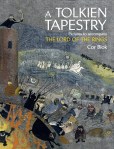
Briefly Noted: Cor Blok’s LOTR paintings collected in ‘A Tolkien Tapestry’

Dutch artist Cor Blok was fascinated with J. R. R. Tolkien’s The Lord of the Rings when it was published and subsquently created a series of 140 paintings that he hoped might accompany an illustrated version of the epic. Tolkien met Blok, liked his work, and even purchased some of the paintings.

Now, Pieter Collier  from the Tolkien library has tracked down these paintings and worked with Blok to create A Tolkien Tapestry: Pictures to accompany The Lord of the  Rings (HarperCollins, September 2011). While the illustrated version Tolkien and Blok hoped to see never materialized, this new book provides LOTR fans with a strong dose of the magic such volume might have contained.

According to Collier, “The approximately 100 full-colour paintings in this new book are presented in story order so that the reader can enjoy them as the artist intended. If one looks at the art works one by one you can easily tell the complete tale of The Lord of the Rings. So all the paintings are accompanied by extracts from The Lord of the Rings and the artist also provides an extensive introduction illuminating the creation of the series and notes to accompany some of the major compositions.”

From the Publisher’s Description: This brand new full-colour art book reveals in sumptuous detail more than 100 paintings based on The Lord of the Rings by acclaimed Dutch artist, Cor Blok, many of which appear here for the first time. Fifty years ago, shortly after The Lord of the Rings was first published, Cor Blok read the work and was completely captivated by its invention and epic storytelling. The breadth of imagination and powerful imagery inspired the young Dutch artist, and this spark of enthusiasm, coupled with his desire to create art that resembled a historical artefact in its own right, led to the creation of more than 100 paintings. Following an exhibition at the Hague in 1961, JRR Tolkien’s publisher, Rayner Unwin, sent him five pictures. Tolkien was so taken with them that he met and corresponded with the artist and even bought some paintings for himself. The series bears comparison with the Bayeux Tapestry, in which each tells an epic and complex story in deceptively simple style, but beneath this simplicity lies a compelling and powerful language of form that becomes more effective as the sequence of paintings unfolds.

Some of Cor Blok’s paintings from this book will also appear in the official 2012 Tolkien Calendar from the Tolkien Library. His work was also featured in previous Tolkien Calendars. A Tolkien Tapestry can be purchased directly from Amazon.UK and through associated sellers at Amazon.US. Blok, who was born in 1934, is a retired professor of art history. He lives in Amsterdam where he is at work on a graphic novel.

In an interview about the paintings. Blok was asked what it was like to meet the author. “Nothing very exciting,” he said. “Unknown young artist visits Famous Author, that kind of thing, though the Famous Author behaved amiably enough.”

Malcolm

contemporary fantasy with a sharp edge


Glacier’s Plants – Western Serviceberry

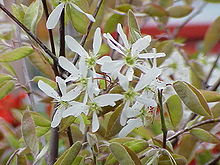
Serviceberry - Wikipedia photo

This rosaceous shrub is often divided into several poorly defined varieties, but the delicate white flowers make it easy to recognizee. The apple-like fruits are 3/8 t0 1/2 inch in diameter, becoming dark purple at maturity. — “Plants of Waterton-Glacier National Parks” by Richard J. Shaw and Danny On.

Like many Glacier Park hikers, I snagged hundreds of the more widely known huckleberries, ending up with purple fingers, and usually missed out on this highly versatile and widespread berry.

As Shaw and On suggest, you’ll find it called by multiple names throughout the country, including sarvis berry, sarviceberry, wild pear, chuckley pear, wild-plum, Saskatoon, Juneberry and shadbush. In Canada, Saskatoon, after an old Cree word, is the preferred name. In fact, Saskatoon, Saskatchewan is named after the berry. The variety in the park is Amelanchier alnifolia.

The berries were one of the traditional foods of the Blackfeet. They were mixed into pemmican with dried meat and eaten raw. You’ll find them referenced in the works of George Bird Grinnell (How the Blackfoot Lived), Walter McClintock (The Old North Trail), James Willard Schultz (My Life as an Indian) and other western writers.

In my old, dog-eared copy of The Old North Trail, I enjoy reading McClintock’s detailed accounts of Blackfeet stories and customs, including the sarvis berry information in chapter XXXXVI:

DURING my visit at Brings-down-the-Sun’s camp, the women were gathering their
winter supply of sarvis berries. The bushes, which the old chief so carefully
guarded, were loaded down with ripe fruit. Their method was to strike the bushes
with sticks, catching the berries in blankets, and then spreading them in the
sun to dry. Berry-bags for carrying them were made of small skins from deer
legs, wolf-pups or unborn calves of large animals such as the elk, or deer, or,
most often, of the buffalo. I saw a beautiful berry-bag made of a spotted fawn
skin and ornamented with coloured porcupine quills. Sarvis berries are a
favourite article of diet with all the plains-tribes. They are eaten raw or
cooked in soups and stews. My Indian friends warned me that the berries
sometimes make people very ill, who are not accustomed to eating them.

The berries work well in jams, pies, beer, cider and wine, though some people supplement them with huckleberries for color and taste. When you’re gathering them, you may have to fight off a few bears, squirrels and chipmunks. Moose and elk like the foliage.

In my contemporary fantasy, Sarabande, the native healer stirs flour, sugar and dried meat into a pot of boiled berries for a soup that can be eaten hot or cold. If you want to try the berries in pie, you’ll find two recipes here.  Here’s a pie recipe that includes rhubarb. For wine, check this site.

Since the serviceberry—under one name or another—can be found throughout Canda and the United States (except Hawaii), chances are you might enjoy a few tasty berries on your next summer hike.

Malcolm

contemporary fantasy set in Glacier Park