New Logo and Blog for the National Parks and Conservation Association

When I joined the National Parks and Conservation Association (NPCA) in the 1960s after working in and taking trips to many of the parks, the group had a oval-chaped logo with the silhouettes of three bears. That logo was around for 50 years.

Now NPCA has decided it’s time for a change: “After about a year and a half of research, focus-group testing, surveys, and outreach, NPCA finally unveiled a modernized logo yesterday.” Naturally, some people wanted to keep the old logo. I support the changes, the logic of which is explained here.

Even before setting three of my novels in Glacier National Park, I was a “friend” of the parks. Since I live in the southeast, I’ve been to Smoky Mountain National Park more than any other. When I joined the NPCA, the Internet as we now know it did not exist. I depended on the print magazines from the Sierra Club and the NPCA for parks and conservation information.

Now, I’m happy that with the logo, the NPCA has also updated its online presence with a new blog called the Park Advocate. As NPCA suggested to members in this morning’s e-mail message, “Check out the blog for regular news on the parks, read about NPCA’s latest work in the field, enjoy photos and videos from around the country, and share your ideas and opinions on issues affecting our national parks.”

What a great way to keep up! Even if you’re not at NPCA member, the blog and its RSS feed will help you keep up with the latest news about the National Parks.  If you’re a Facebook member, you’ll find the NPCA is there, too.

Malcolm

If you’re a fan of Montana’s Glacier National Park and/or are planning a visit to Many Glacier Hotel, you might enjoy my e-book about the history of Swiftcurrent Valley: “Bears, Where They Fought.”

The 15-page booklet is available on your Kindle for only 99 cents. (Click on the cover to learn more.) You’ll also find it included in Vanilla Heart Publishing’s anthology of fiction, nonfiction and poetry “Nature’s Gifts.”

BOOKS: Are we raising the cute baby alligator that will ultimately eat us alive?

Small juvenile crocodilians are deceptive – they seem easy enough to handle, and persuasive dealer talk can easily convince people to part with their cash. But do not be fooled. As they grow larger, crocodilians rapidly become stronger and more boisterous. After only a year, many people can no longer handle their animals and it is very common to see 1 to 2 year old animals being given away or illegally released into the wild. Larger crocodilians are, without a doubt, extremely dangerous animals. – crocodilian.com

“The evidence is, in fact, absolutely conclusive that the Standard Oil Company charges altogether excessive prices where it meets no competition, and particularly where there is little likelihood of competitors entering the field, and that, on the other hand, where competition is active, it frequently cuts prices to a point which leaves even the Standard little or no profit, and which more often leaves no profit to the competitor, whose costs are ordinarily somewhat higher.” – Eliot Jones. The Trust Problem in the United States 1922

Human beings are strange animals in that they rush hell-bent-for-leather to participate in their own demise.
When I was a kid, one of the first things I learned about people and their money is that the most powerful bragging rights come from getting something cheaper than your neighbor got it. Woe be unto the guy at the neighborhood barbecue who paid five cents more for a sparkplug or a hundred dollars more for a new car than the guy flipping chickens on the grill.

When economic times are tough, saving a nickel on a sparkplug or a c-note on a car makes logical sense. People are trying to scrape by everywhere they can. In fact, scraping by has almost trumped bragging rights over buying something cheaper than our neighbor bought it for.

Looking Down the Road

In Florida where I grew up, a lot of folks thought it was cute to buy baby alligators. How cute. Certainly more exciting than a puppy, cat, or a goldfish in a bowl. If one kid got one, his friends all wanted one. It was all the rage, rather like bragging that you were the first person to drive to the edge of town and shop at the new big box store. (When I was a kid, one of the first things I observed about people is that they feel powerful when doing things are all the rage and that they feel sheepish when they’re not doing them.)

Baby alligators grow up and when they do, their not as cute as they once were. So it is, that on a dark and stormy night, the alligator is wrestled out to the nearest lake or swamp before it figures out, “hey, I can eat the family.” In the wild, it may go off and live a beautiful life or it may lurk around the fringes of the neighborhood where it hunts for pets and small children.

Remembering Ida Tarbell

One of the first term papers I ever wrote when I got into one of those classes where we were taught how to find sources and use lots of footnotes was about Ida Tarbell and her 1904 book The History of the Standard Oil Company. When Standard put up a new gas station in town, they offered low prices until all the other gas stations went out of business trying to compete with them. Ultimately, the company was broken up even though its remnants, including Exxon in the U.S. and Esso in Canada are doing quite well.

Bragging rights about cheap products followed by the need to scrape by have both been powerful incentives for helping build the businesses that ultimately got big enough to eat us alive. Perhaps Standard Oil is too far away into the past to be a good case in point. Okay, think Walmart and every other big box store that showed up in your home town and ultimately killed all the local businesses.

Statistics show that more dollars leave a community when people shop at big box stores than when they shop at the locally owned shops in what’s left of the down town. Few people care because, truth be told, they feel really sheepish admitting that they paid 15 cents more for a gallon of paint at Bob’s Hardware than their neighbor paid for the same paint at Home Depot. And goodness knows, who wants to admit they paid 10 cents more for a pound of hamburger meat at Jenkin’s IGA than they would have paid at Walmart?

Amazon Used to Be Cut, but It’s Still All the Rage

Baby alligators grow up and become angerous. While Amazon has grown up, most people don’t view it as dangerous in spite of the all the charges that surfaced over the Christmas holidays about predatory practices, removing the middle man, wanting to be the only publisher in town, and offering “democratic, be-your-own-publisher” deals to authors who claim “New York Publishers” are a vicious monopoly that won’t let them in the door.

But Amazon is selling books at low prices. Isn’t that all the justification we need for helping the cute little bookselling company make its way in a cruel world where everyone wants to scrape by—if not brag about getting great books cheaper than the bricks-and-mortar and other online booksellers are offering them for.

Well, as The New York Times noted in a yesterday’s feature story about whether Barnes & Noble can survive, Amazon is now worth $88 billion. It’s almost big enough to eat us alive. When Powell’s books is gone and when Barnes & Noble is gone, will we still be able to brag about lower prices when Amazon is the only bookseller/publisher/distributor in the country?

I wonder. And as I wonder, I think about all the people who rushed out to buy gasoline at the Standard Oil Station because it was cheaper than the gasoline over at Bill’s Friendly Service Station. When Bill’s folded up, there was hell to pay, but (what with bragging rights over low prices) the handbasket ride toward monopoly was a heady experience. Bob’s Hardware is gone, too, as is Jenkin’s IGA.  In fact, pretty much the entire center of town stands empty.

According to that article in The New York Times, we’ve lost 20% of our independent bookstores in the United States since 2002.  Sure, the economy has been bad and now e-books are all the rage. When people want paperbacks, there are bricks and mortar and online alternatives to Amazon. When people want e-books, Amazon isn’t the only game in town. But now, by default, they run to Amazon.

Will Amazon eat us all alive one day? I wonder. At $88 billion in assets, I guess it can eat whoever and whatever it wants. But maybe it won’t. Maybe everything will be okay as long as we keep our pets and small children inside the house reading the books purchased from the full-grown set of jaws on the edge of the neighborhood.

Malcolm

Top Ten Things a Writer Should Never Do

Elmore Leonard’s “10 Rules for Good Writing” include Never use the words “suddenly” or “all hell broke loose” and Try to leave out the part that readers tend to skip.

Savvy advice from an old pro. But suddenly, it occurs to me that there’s more to it than that.  After all, nobody wants to wistfully look back on a writing-career-that-could-have-been and be forced to admit that all hell broke loose when s/he violated one of Malcolm’s Top Ten Things a Writer Should Never Do.

  1. Never use words like “wistfully” and “forced to admit.”
  2. Do not drink cheap wine while describing successful people because, when all is said and done, your prose will end up smelling of sour grapes.
  3. Do not try to screw over the bastards who tried to screw over your writing career unless you’re pretty sure you won’t get caught because if you do get caught, you will personally be all said and done before having a chance to write your swan song.
  4. Never grab pithy quotes off the Internet from people you’ve never heard of because you might end up looking bad without knowing why all hell broke loose.
  5. Use of the passive voice is to be avoided.
  6. If you’re walking around quoting W. Somerset Maugham’s statement that “There are three rules for writing the novel. Unfortunately, no one knows what they are,” stop doing it immediately. We’re all sick of hearing it and it won’t make you look smart.
  7. Don’t believe experts who say that to produce good writing “You simply sit down at the typewriter, open your veins, and bleed.” Nobody uses typewriters these days and you’ll just end up with blood on your hands when the cops bust in and accuse you of causing all hell to break loose.
  8. Never say things like “I’d sell my granny’s fanny to get a good agent” because even if you don’t, people will think you did.
  9. Never kill a book reviewer without first writing yourself an airtight alibi.
  10. Never plagiarize material from writers who have already admitted that they stole most of their stuff from somebody else.

Malcolm

Malcolm R. Campbell is the author of the comedy/satire “Jock Stewart and the Missing Sea of Fire” and the “Jock Talks” series of scandalously inappropriate e-books.

He is forced to admit that while writing satire, you can do all the things you should never do and get away with it.

Review: ‘The Infernal Republic’ by Marshall Moore

The Infernal Republic, collected short storeis by Marshall Moore, 228 pages, Signal 10 Media Inc (2/14/2012)

Marshall Moore’s seventeen short stories in The Infernal Republic not only push the envelope, they destroy it. Endlessly inventive and varied, these twisted tales tend to focus on strange—and potentially warped—characters who are often in lose-lose situations that resolve (more or less) in ironic twists of fate. For readers who love outside-the-box storytelling, each normal, abnormal and paranormal gem in this book is a surprising flight of fancy into regions that are portrayed in straight-forward and hauntingly explicit detail.

The collection begins with Liesl and Joanna in “Urban Reef (or, It’s Hard to Find a Friend in the City)” enjoying wine and small talk in a Portland, Oregon restaurant while watching a potential suicide jumper on an adjacent building. If he jumps, how much of a mess will it make. Not for the squeamish, this one, nor many of the other offerings either as the book wends it devious way through incidents and conversations that we watch, rather like Interstate car wrecks, in spite of the fact that we’re really good people who are not in any way part of Moore’s world or his imagination.

The book ends with “The Infinite Monkey Theorem” in which Yaweh and Lucifer make a bet about whether or not a large number of monkeys at a large number of typewriters will or won’t ultimately produce the complete works of Shakespeare. The protagonist in this story gets to manage the operation off in a special pocket of temporary space that is described as “near Hell but not quite in it.” In spite of the space and the deities involved, there are logistical matters to attend to as well as issues of trickery and the wager’s true intent.

En route to “near Hell” via Portland, readers will encounter a building that ejects an apartment “like an enormous video-cassette,” a “well-mannered boy” named Jason who doesn’t want to go home, heroes who compete as Prime Combatants with remarkable (and not always pleasant) paranormal powers, a house that wakes up and suddenly becomes sentient, a boy with detachable body parts, a motivational speaker who’s been kidnapped by a cruelly benevolent organization that wants her to grasp the errors of her ways and then accept a punishment of hero own choosing.

Marshall Moore’s seventeen stories will take you where you’ve never been before and—in some case—where you might prefer not too have gone (had you known at the outset just how strange things were going to get).  The Infernal Republic is rather like a smorgasbord of dishes that you didn’t even know could be consumed as food in polite society. You won’t be able to walk away.  And when you finally learn who won the bet about the monkeys and the typewriters, you’ll be glad you kissed your normal reading habits goodbye and hung on for the ride.

Malcolm

Malcolm R. Campbell is the author of magical realism, contemporary and fantasy novels, including “Sarabande.”

What do you expect from a book review?

A recent article in The Guardian, YA novel readers clash with publishing establishment, focuses on a recent book review flame war that raged across GoodReads and Twitter about reader reviews and author and agent responses. In the court of public opinion—which can be both a slippery slope and a bumpy ride—authors, publishers and agents risk a great deal by responding directly to negative reviews that have been published by readers on blogs, Amazon, GoodReads and other sites.

Regardless of subject matter, the consensus across the Internet seems to be that all opinions are equal. In one sense, this is true. Under our guarantees of freedom of speech and press, each of us has the right to say what we think about anything. When it comes down to basics, we all matter.

The confusion—and book reviewing is not the only place where this happens—is that when we say all opinions are equal, we then lose the distinction between the viewpoints of professionals and nonprofessionals. When you go to a doctor and get his opinion about your health, you expect his or her viewpoint to have more credibility than the mechanic at the local auto dealership. Same goes for almost any field we can name: except reviewing (as the term is used on GoodReads and Amazon).

Suddenly, many people are maintaining that anyone can say what they want about a book and label it a review, and then equate his or her best-intentioned assessment of a a book with that of a professional book reviewer who knows the genre, the subject matter, and the writing profession.

When my friends tell me they think I’ll like a certain book, they do that because they know the kinds of books I read and the subjects I care about. This counts for a lot. When they make such suggestions, the last thing I worry about is whether they’re an English professor or an expert in the themes and subjects in the novel. But, when it comes to a real review, I expect credentials and facts as well as opinions.

Opinions vs. Reviews

One of the hardest things to get across in an introductory journalism class is the best-practices standard that newspaper and magazine editorials are not only supposed to have verifiable facts in them, but are expected (by readers) to have been written by somebody with the credentials for offering an opinion in a publication.

If I get along with my auto mechanic and if we have similar views, I’ll probably enjoy hearing his impressions about the latest political debates or a book about one of the candidates. While some people claim friends talking to friends are an example of “preaching to the choir,” most of us value sharing our views with those we interact with day to day.

When something is put into writing and called an “editorial,” we expect (or traditionally have expected) something more. Basically, we expect an informed opinion. Perhaps it comes from a veteran journalist whose opinion is based on having covered hundreds of stories; or perhaps it comes from a long-time political analyst, corporate president, or teacher who has studied the field for years. His or her credentials, when coupled with verifiable facts in the editorial or editorial column, give weight to their opinions or analyses.

Book Revews are Journalism

Traditionally, book, movie, theater and other reviews have been considered journalism. As such, they are expected to meet the same standards as any other newspaper, magazine or broadcast media opinion piece. Some of the uproar behind the article in The Telegraph comes from the fact that the Internet now gives all of us a means of publication whether it’s a book we uploaded via Lulu or CreateSpace, a blog such as mine, or a review posted on Amazon or GoodReads. Those expressing their opinions about books have a right, I believe, to say their opinions matter.

I question whether those opinions should really be called reviews. Perhaps we need another terminology here that somehow distinguishes between the honest-to-goodness “man of the street” opinion about a book and the opinion written by somebody with many years of reviewing, journalistic training, or experience and education in the field the book is about. Perhaps Amazon, GoodReads and other sites should stop calling reader opinions “reviews.” While they are valid within the scope of the sites’ invitations to “speak our piece” about a book, a fair number of these “reviews” aren’t real reviews.

Perhaps we should call them Reader Commentaries or Reader Responses or Reader Dialogues. This way, we honor the readers and their opinions without discounting the work of professional reviewers whose work is supported by credentials, long-time experience with the book’s genre or subject matter, and a broad-based knowledge of the art/science/business of writing and publishing.

Most of Us Appreciate Reader Reviews

As a reader and a writer, I appreciate the reader opinions I find on Amazon, GoodReads and blogs. Talking about books on line is a good thing: it shows me that people are reading and that what they read has an impact on them. I do wish some of those opinions could be stated with a bit more care. It’s one thing to tell your best friend in private that author XYZ doesn’t know his head from a hole in the ground. It’s another thing to pick up a book you thought was a page turner, discover it’s literary fiction, and then go on a rant about it because it wasn’t (and wasn’t intended to be) your cup of tea. That’s not a review.

When the opinion is called “a review,” authors as well as readers should be getting something better than either a mean-spirited tantrum or a gushy splash of unwarranted praise.

Malcolm

Event: The Environmental Crisis and the Living Quest of the Embodied Psyche, a dialogue

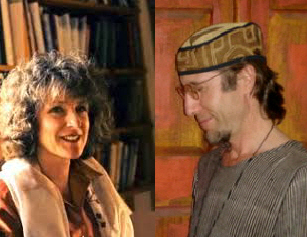
Two of my favorite authors, Patricia Damery and David Abram, will present a dialogue entitled “The Environmental Crisis and the Living Quest of the Embodied Psyche” on Friday, February 10, 2012, 7:00 to 9:30 p.m. at the The David Brower Center, 2150 Allston Way Berkeley, CA 94704. The event is hosted by the C.G. Jung Institute of San Francisco. Click here for tickets to the event.

Event Description from the Institute

Dammery and Abram

David Abram is a cultural ecologist and environmental philosopher whose lyrical evocations in his books, The Spell of the Sensuous and Becoming Animal: An Earthly Cosmology, have captivated a generation of readers. Patricia Damery, an analyst member of the C.G. Jung Institute, first learned to love the land as a child growing up on a farm in the Midwest and now farms a Biodynamic ranch in Napa, California. Patricia’s memoir, Farming Soul: A Tale of Initiation, as well as her novel, Snakes, address the preservation of our connection to the environment and explore the interconnected fabric of consciousness.

She and David Abram will explore the interplay of the embodied psyche and the destruction of whole ecological systems. What is the nature of the challenges with which we are presented? Is there evolutionary potential? This dialogue promises to be generative and exploratory in spirit—a truly unique event.

A Few Personal Thoughts

I cannot help but notice the fact that this event is taking place less than a mile from the house I lived in when I was born. However, my current residence is 2,168 miles away and, travel, food and lodging expenses being rather high, I’ll have to hope the event is recorded and then released as a video or printed transcript. The environment, I think, is our first duty. It is, so to speak, not only our nest but the nest of many thousands of other lives who are depending on a common-sense and loving collaborative effort with humankind to protect the place where we are born and live out our lives.

The  books by David Abram and Patricia Dammery celebrate our community nest. What a wonderful evening their dialogue will be. I am happy to echo the words Patricia wrote in a recent blog post: “Please enter this dialogue with your presence! Never has it been so important to renew our conversations with the not-human and the natural world. David is a lively and thoughtful speaker, and we are very fortunate to have him this evening in the Bay Area.”

Malcolm

“Book Bits” provides daily information for writers and readers

Writers like keeping up with contests, tips and techniques, publishers and magazines where they can submit their stories and articles, and advice on how to market their work once it’s published.

Readers like keeping up with their favorite writers, upcoming books in the genres they read the most, and information about authors’ future book signings and other appearances.

Book Bits brings you the links to this kind of information six days a week.  Quite simply, Book Bits is a blog in which every post is a list of links covering the latest reviews, books and author features, contests,  marketing and social networking advice, “writer’s how to” posts, and essays and features about authors, books and publishing.

Book Bits Titles

Book Bits is numbered from the first issue onward toward infinity. The higher the number, the more recent the post.  The titles are designed to attract attention, so they include the names of authors/events most likely to lure people into the post. For example, the title for this morning’s post looked like this:

Book Bits #117 – Hedy Lamarr, Roberto Bolaño, Elmore Leonard and more writing news

So now you know I’ve made 117 posts. This one included a review of Roberto Bolaño’s latest novel, a biography about Hedy Lamarr, and an article about author Elmore Leonard who, says “why not,” when asked why (at age 86) he’s still writing.

This morning’s Book Bits had 24 links.  In addition to those attention-getting names in the title, the other offerings featured a link to a blog hop where you might win a Kindle, a story about the return of the Lit Fest to Haiti, and the names and novels of the ten finalists in Georgia’s Townsend Prize for Fiction.

Naturally, some posts will bore you. My top picks on those days will be authors you’ve never heard of or genres you never read. I try to include a variety, though, in hopes that every time you stop by, you’ll find at least one link you want to click on.

Some posts will take over you’re entire day because, heck, you’ll want to click on every feature, news story and review. The reviews will tempt you to read books. The contest announcements will tempt you to write books, or maybe short stories or poems.

This morning, you might have followed the link to this review:

  • Review: Grave Mercy by Robin LaFevers – “With characters that will inspire the imagination, a plot that nods to history while defying accuracy, and a love story that promises more in the second book, this is sure to attract feminist readers and romantics alike.” – Booklist

Or the link to this advice:

  • Lists: 10 Ways to Get Paid for Online Writing, with Lior Levin – “Selling words for dollars is easy, if you are aware of two things: -How to put down the words together. -How to sell your piece in the right market.”

I invite you to surf over to Book Bits, read a few posts and see what you think. That’s sort of like kicking the tires on the car you just might want to buy. Unlike the car, Book Bits is free.

Sure, you’ll see some banners at the ends of the post with links to my author’s site and my novels. Maybe those banners will tempt you. If not, have fun. Goodness knows, I have a lot of fun every day finding the news and rev iews for each post. I tell me wife I’m working, but I think she suspects I’m just surfing the net for the heck of it.

Coming in tomorrow’s Book Bits, a link for a wonderful piece of satire that pokes good-natured fun at the Antiques Road Show (imagine people bringing in crime evidence rather than antiques) and some pithy advice for authors planning to self publish their books. Oh, and reviews, too. There are always reviews.

Malcolm

P.S. When the “Book Bits” title is short enough for me to squeeze in an extra word, I add the #bookbits hashtag to help people find the posts on Twitter. Now, here’s an example of a book banner:

contemporary fantasy for your Kindle

Heroine’s Journey Links and Resources

While I was working on my recent contemporary fantasy Sarabande, I found a lot of helpful references about the heroine’s journey. The heroine’s journey has fewer Internet links, so perhaps you’ll find some of mine helpful if you are experiencing, reading about or writing about the journey.

There seem to be two schools of thought about the journey. One is that the heroine’s journey is the same as the hero’s journey, potentially with a few modifications.

While that concept approach works for many people, I don’t agree with it because the hero’s journey is a solar journey and the heroine’s journey is a lunar journey. My novel’s research materials tend to reflect the lunar approach.

Dark Moon

  1. Goddess Meditations by Barbara Ardinger
  2. Dragontime Magic and Mystery of Menstruation by Luisa Francia
  3. Moon Phases Calendar
  4. Planting by the Moon
  5. The Moon Watcher’s Companion by Donna Henes.
  6. Moon Watching by Dana Gerhardt
  7. Moon Tides, Soul Passages by Maria Kay Simms
  8. Moon Mother, Moon Daughter by Janet Lucy

Death and Rebirth

  1. Descent to the Goddess by Sylvia Brinton Perea
  2. The Myth of the Goddess: Evolution of an Image by Anne Baring and Jules Cashford
  3. The Pattern of Initiation in the Evolution of Human Consciousness by Peter Dawkins & Sir George Trevelyan
  4. Inanna, queen of heaven and earth: Her stories and hymns from Sumer by Diane Wolkstein and Samuel Noah Kramer – This book, first published in 1983, presented a long-awaited translation of the original Inanna material from the 2000 BCE cuneiform clay tablets.

Fantasy

  • The Mythopoeic Society – The Mythopoeic Society is a national/international organization promoting the study, discussion, and enjoyment of fantastic and mythopoeic literature through books and periodicals, annual conferences, discussion groups, awards, and more.

Horses

  1. She Flies Without Wings-How Horses Touch a Woman’s Soul by Mary D. Widkiff
  2. Horses and the Mystical Path-The Celtic Way of Expanding the Human Soul by Thomas McCormick
  3. The Tao of Equus by Linda Kohanov
  4. Torden, Hear the Tunder by by C. Kirkham. (This is a well-written young adult novel about a young girl and a Friesian horse.)
  5. Horses, Somatics, and Spirit: An Equine-Guided Program in Conscious Living, a workshop presented by Beverley Kane, MD, Ariana Strozzi, MSC. (This is an example of some of the programs available today.)

Heroine’s Journey

  1. The Heroine’s Journey by Maureen Murdock
  2. From Girl to Goddess: The Heroine’s Journey through Myth and Legend by Valerie Estelle Frankel (See the July 2011 “Mythprint” review of this book here.) Frankel’s website includes a lengthy heroine’s journey reading list.
  3. Sarabande contemporary fantasy by Malcolm R. Campbell released by Vanilla Heart Publishing, August 2011.
  4. “The Way of Woman: Awakening the Perennial Feminine” by Helen M. Luke
  5. Apple Farm Community – The Writings of Helen M. Luke
  6. Real Women, Real Wisdom: A Journey into the Feminine Soul by Maureen Hovenkotter  (See a review here.)
  7. The Heroine’s Coach, the website for Susanna Liller’s journey-oriented coaching services. The site includes an e-mail newsletter for women following their own paths called “Journey News.”
  8. The Heroine’s Journey appears on author Leslie Zehr’s Universal Dancer website and includes a discussion of Sylvia Brinton Perera’s Descent to the Goddess, a book I found essential for my understanding of the journey. Zehr is the author of The Alchemy of Dance: Sacred Dance as a Path to the Universal Dancer.

Light of Nature

  1. Light of Nature Website, exploring the science and the philosophy of the concept.
  2. “The Female Brain” by Louann Brizendine
  3. “The Spell of the Sensuous” by David Abram

Literature

  1. The Heroine’s Bookshelf: Life Lessons, from Jane Austen to Laura Ingalls Wilder by Erin Blakemore
  2. Fearless Girls, Wise Women & Beloved Sisters: Heroines in Folktales from Around the World by Kathleen Ragan
  3. The Heroine in Western Literature: The Archetype and Her Reemergence in Modern Prose by Meredith A. Powers
  4. The Art of Fiction: Illustrated from Classic and Modern Texts by David Lodge

Patriarchy

  1. The Dance of the Dissident Daughter by Sue Monk Kidd
  2. Unplugging the Patriarchy – A Mystical Journey into the Heart of a New Age by Lucia René
  3. Reviving Ophelia by Mary Pipher
  4. Ophelia Speaks: Adolescent Girls Write about Their Search for Self by Sara Shandler
  5. Surviving Ophelia: Mothers Share Their Wisdom in Navigating the Tumultuous Teenage Years by Cheryl Dellasega

Story Within

  1. And Now The Story Lives Inside You, poems by Elizabeth Reninger
  2. The Spell of the Sensuous by David Abram
  3. Alchemical Studies by C. G. Jung
  4. Harry Potter – A New World Mythology? By Lynne Milum
  5. “Dark Wood to White Rose: Journey and Transformation in Dante’s ‘Divine Comedy’” by Helen M. Luke
  6. “The Soul’s Code: In Search of Character and Calling” by James Hillman

War

  1. Achilles in Vietnam and Odysseus in America by Jonathan Shay.
  2. Rape: Weapon of Terror by Sharon Frederick
  3. Against our Will: Men, Women and Rape by Susan Brownmiller

Weaving, Storytelling, Linen

  1. American Textile History Museum
  2. All Fiber Arts (weaving in stories and fairytale)
  3. Women’s Work: The First 20,000 Years by Elizabeth Wayland Barber
  4. Linen from flax seed to woven cloth by Linda Heinrich
  5. The Joy of Handspinning – many details, photographs and demonstration videos
  6. The Weaver’s Book: A practical, authoritative step-by-step guide for beginners by an expert weaver by Harriet Tidball
  7. Grading, Spinning, Dyeing: an introduction to the traditional wool and flax crafts by Elizabeth Hoppe and Ragnar Edberg
  8. Fibers of Being – Judy’s detailed weaving blog
  9. Eva Stossel’s weaving blog – In addition to information about weaving, both Judy and Eva include lengthy blogrolls.
  10. A History of Irish Linen
  11. Flaxland – Growers and Processors in the U. K.

Wolves

  1. Women Who Run with the Wolves by Clarissa Pinkola Estes
  2. The Company of Wolves by Peter Steinhart
  3. The Wolf’s Tooth by Christina Eisenberg

Writer’s Muse

  1. The Sister from Below: When the Muse Gets Her Way by Naomi Ruth Lowinsky
  2. Marry Your Muse: Making a Lasting Commitment to Your Creativity by Jan Phillips
  3. The Voice of the Muse: Answering the Call to Write by Mark David Gerson.
  4. 20 Master Plots: an How to Build Them, by Ronald Tobias
  5. The Hero’s Journey: A Guide to Literature and Life by Reg Harris and Susan Thompson (This is a series of lesson plans for teaching the hero’s journey in a classroom setting.)

Classic TA Resources for the Journey

  1. Born to Win: Transactional Analysis with Gestalt Experiments by Muriel James and Dorothy Jongeward
  2. Your Inner Child of the Past by Hugh Missildine
  3. What Do You Say After You Say Hello: The Psychology of Human Destiny by Eric Berne
  4. I’m Ok, You’re Ok by Thomas Harris

Malcolm

Malcolm R Campbell is the author of the heroine’s journey novel “Sarabande” from Thomas-Jacob Publishing.

Texas Town Opens Tough-Love Writers Bootcamp

You Enter With a Skull Full of Mush; You Exit as a Corpse or a Writer

by Jock Stewart

Radley

Junction City, TX, January 6, 2012 (Star-Gazer News Service)—Rhett Radley fully expects 98.6% of the raw wanabees who enter Wordsmith Perdition University (WPU) to die trying.

“Every Gomer Pyle in the world wants to be a writer,” smirked Radley, who found his favorite expressions while serving as a Marine drill instructor at Parris Island. “They can’t even spell ‘Ooh-rah,’ much less use it in a coherent sentence.”

Radley, who “double-dog dares” students to say “boo” to him, plans to run WPU like a bad neighborhood on a Saturday night when it opens its gates February 29.

According to informed sources who give their names as Tom, Dick and Harry, the 1.4% of the students who survived WPU’s beta test courses held in Florida’s notorious Tate’s Hell Swamp during the snake season, went on to become bestselling authors making “exorbitant amounts of money.”

“When authors leave WPU, they are who we say they are,” Tom said. “For legal reasons, the grammar-loving writers of fortune who walk out our doors will have no memory of ever having been here.”

The Slammer Connection

While many of the university’s Tough-Love Instructors (TLIS) are currently serving time at the nearby State Pen 666, most of them have promised not to commit any really bad crimes while teaching the basic noun, verb and preposition courses.

State Pen warden Rod Curtain admitted during a recent grand jury probe of the prison’s work-release programs that there “are always risks” when experimenting with new rehabilitation methods.

“You’d think most of the cons are going to teach students the True Crime Genre,” said Curtain. “Not so because, you see, most of them are innocent.”

According to WPU’s public information director, Brenda Starr—who still claims that “A comics page without me would be a felony.”—said that the registrar’s office has been swamped with applications “even though the ads in the Star-Gazer and the Chronicle of Higher Education make WPU sound like a scary place.”

“Our core courses have captured the imagination of every Tom, Dick and Harry out there who has realized he’s a failure with nothing left to do with his life but become an author,” Starr said.

Core Courses

  • 101 – Show, Don’t Tell, Big Yard Table #1 – Only a dirty rat tells anybody anything.
  • 102 – Kiss Your Muse Goodbye, Solitary Cell Block – Muses and other nonsense are for the Pepsi Generation while real writers find inspiration in a bottle.
  • 201 – Writing Prompts, Big Yard Table #2 – Recruits quickly learn that “what I did on my summer vacation” isn’t as good a writing prompt as a kick in the ass.
  • 202 – Writing Style, Intensive Management Unit – “Without style, you’re never going to score,” according to lead instructor Charles Jones.
  • 301 – Sleeping With Agents and Publishers, Bone Yard – “If you can’t score, it won’t matter if you have any style,” according to Radley.
  • 401 -Parallel Structure, Big Yard Tables #4 and #5 – Like a Modus operandi, keeping everything lined up helps readers know where your story is.

Chow Time

During the first month of training, recruits are limited to a bread and water diet because Radley thinks low rations help weed out the prima donnas who think all writers live charmed lives “like those celebrity authors on Entertainment Tonight.”

“Every time a recruit writes a proper sentence without requiring a kick in the ass, we throw a piece of raw meat into the classroom,” Starr said.

Writers who survive the heady days of obstacle courses, long hikes and live fire training on starvation rations, move into the tenderfoot class with cafeteria privileges that allow them to take all they want as long as they eat all they take.

Outsourced to the State Pen 666 prison kitchen, the food is guaranteed to include entrées from the most inspiring food groups along with all the pruno (prison wine) a student can drink. Tenderfeet discovering any outlawed materials (files, hacksaws, shivs, or explosives) in cakes, mashed potatoes, and beef hash, are expected to inform the nearest guard and show rather than tell.

Jobs for a Depressed Area

Not counting the cons from State Pen 666, WPU is expected to hire at least 500 “regular people” to help school wannabes about the realities of plots, subplots and maguffins.

“Jobs are more effective than Paxil and Zoloft in curing what ails this little town,” said Mayor Clark Trail.

An unauthorized city hall spokesman told reporters that Trail plans to audit course 301 in hopes of discovering how to fast track his as yet unpublished memoir Looking For Bribery in All the Wrong Places to the powers that be at a Big New York Publisher.

Local authorities expect a decrease in crime throughout the Junction City metro area once WPU is up and running.

“After all,” said Chief Kruller of the JCPD, “idle hands are devil’s tools.”

Starr told local area educators that WPU “paid off somebody” to facilitate accreditation.

“Being on the up and up at a place like this is fiction we can live with and take to the bank,” Starr said.

Jock Stewart is an investigative reporter for the Junction City Star-Gazer and the author of the highly addictive Jock Talks…Outlandish Happenings and Jock Talks…Strange People that are available on Kindle for only 99 cents.

Falling Trees: Part of the ‘joy’ of owning a home

Our house was built in 2001 on a heavily wooded old farm near Jefferson, Georgia some 60 miles north of Atlanta. We liked the fact that the developers had kept the old trees. However, we were also aware that they had graded too close to many of them, ensuring that they would die off in less than ten years. Add to that the drought conditions we’ve experienced during many of the years we’ve lived here, and you’ve got a recipe falling trees.

The day after we got back home from the Thanksgiving holidays, one of the trees in the tree island in the front hard toppled over and damaged the roof over the garage. Fortunately, our insurance covered the repairs and allowed a little something for having the tree removed before the home owners association sent us a note saying, “Do you know you have a fallen tree in your yard?” Since this was the third tree to fall in 2011, we didn’t want another snippy note.

On new year’s day, two more trees fell. Fortunately, these missed the house. Unfortunately, the dead one knocked over a live one on the way down. While the tree people were here cleaning up the mess, they cut down four other trees that seemed to be aimed at the house. We hope we don’t have to call them again any time soon.

When I see advertisements for houses on wooded lots, I often think: “Yeah right, the lot is wooded now, but how long will it stay that way?” Growing up in a subdivision in Florida where care was taken with the grading, I got a bit spoiled. We had 40 trees on the lot when we moved in and none of them fell down in the 33 years the family owned the house. Maybe we were lucky: they were all slash pines and several hurricanes came through town. We always had plenty of pine straw!

As a tree city, our town keeps track of its percentage of tree canopy. Looks like the next survey (using aerial photographs) is going to show a few gaps in our neighborhood.

Malcolm