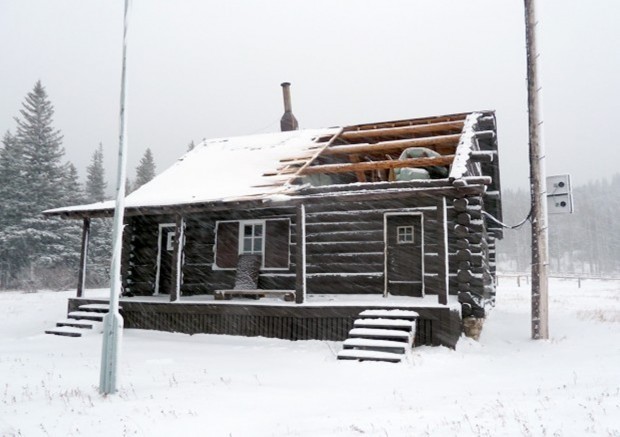
Glacier’s Belly River Ranger Station Receives Temporary Roofing Repair

NPS photo

from NPS Glacier National Park

WEST GLACIER, MONT. -Park employees recently completed a challenging task to make emergency repairs and construct temporary roofing on the historic back-country cabin at the Belly River Ranger Station

The cabin was severely damaged during a winter storm in late December or early January. More than half of the roof shingles and a quarter of the roof were blown off by high winds, leaving the cabin directly exposed to rain and snow. A significant amount of snow accumulated inside the structure resulting in water and ice damage to the flooring, interior finishes, furnishings, and equipment. The storm also damaged a jack-leg fence at the site.

The damage was discovered by a resource management crew conducting work in the area during the second week of January. The crew surveyed the site, removed some of the accumulated snow inside the structure and moved materials and furnishings for better protection from the weather.

In anticipation of additional damage to the historic and culturally significant structure, including loss of the entire roof, and destruction of furnishings and equipment inside the cabin, an emergency response plan was created. A four-person crew and materials were flown to the site via helicopter. The crew removed snow from the building, constructed a temporary roof, heated the cabin with the wood stove to dry out the building and furnishings, and inventoried the site to help prepare for final repairs this summer. After four days of intense work, the crew skied out.

Anyone that may be in the surrounding area of the cabin is encouraged to use caution and be on the lookout for debris materials. Nails, ripped shingle pieces and wood debris are scattered about the area. Some of the debris was picked up, but some of the debris is buried in snow and may be a potential hazard, especially as the snow melts.

The Belly River Ranger Station was built in 1925 and is a significant cultural resource listed in the National Register of Historic Places. The station has been in use since it was built, housing rangers, trail crews and others. It is an integral part of Glacier’s cultural legacy, and contributes to the unique character of the park’s back-country landscape. The Belly River Ranger Station complex retains the classic configuration of structures (combination residence and office, barn, woodshed and fire cache) with few intrusions and excellent physical integrity. The local legendary Joe Cosley, the first Belly River District Ranger, lived at this site in the early years.

Support from the Glacier National Park Fund helped with the emergency response plan. The Fund assists the park with preservation of historic structures within the park, and is an official partner of the park. The Fund’s mission is to support the preservation of the outstanding natural beauty and cultural heritage of Glacier National Park for the use and enjoyment of present and future generations by fostering public awareness and encouraging private philanthropy. For more information about the Glacier National Park Fund visit www.glacierfund.org.

On a personal note, I took refuge in this ranger station on a very rainy night in the summer of 1963 when another hiker and I got caught by a sudden storm on a hike from Many Glacier Hotel to Canada via the Ptarmigan Tunnel and Lake Elizabeth.

Malcolm

Learn more about Joe Cosley in “Glacier’s First Ranger” in my free, PDF e-book Celebrate Glacier National Park that you can download from Payloadz.

“Hikers in the Northern Lewis Range area of Glacier National Park following the trail above Lake Elizabeth northeast along the Belly River are walking in a world once favored by the park’s first ranger Joe Cosley (1870-1944). To the west of Lake Elizabeth is Cosley Ridge (shown as Crossley on some maps), one of several landforms Cosley named after himself.”

Allowing your story to happen

“Leopards break into the temple and drink to the dregs what is in the sacrificial pitchers; this is repeated over and over again; finally it can be calculated in advance, and it becomes a part of the ceremony.” – Franz Kafka, from his Zürau aphorisms

When I first read Kafka’s temple ritual aphorism in high school, I was enchanted with logic. I believed that including the leopards either suggested that the ritual was meaningless and/or that the leaders were simply lazy and expedient. In high school, we were taught to plan, outline and research our fiction and nonfiction in advance to ensure that we said what we meant. Stray leopards in our prose might suggest otherwise.

Over the years, intuition and a love of apparent chaos have replaced logic in my life–and in my writing–as the primary inspiration behind what I’m doing and saying. Now, when I see Kafka’s aphorism, my thought is that the leopards had, in fact, been missing from the ceremony from day one.

Had the temple leaders maintained security and vigilance, the leopards couldn’t have gotten into ritual. The same is true, I think, for writing. Too much logic and too much planning can keep out the very things your story needs. Needless to say, if you allow something to enter and decide it really doesn’t help the story, you can edit it back out.

Author  Diana Gabaldon once mentioned during a research discussion on a writers’ forum that while doing research about ABC she would inadvertently stumble across XYZ. Once she investigated XYZ, it turned out to be vital to the plot and theme of her book even though she had never considered it before. Was her discovery magic, synchronicity, a butterfly-effect phenomenon, or an example of her subconscious mind “knowing” the material was there and leading her to it?

I’m not sure. And really, I’m less likely to stumble over the leopards trying to get into the temple if I don’t worry about how they found the temple or managed to appear at the proper time.  So, I leave my work open to chance. In his book Voice of the Muse: Answering the Call to Write, Mark David Gerson suggests that the stories we tell are already out there (don’t worry about where), just waiting for us to listen. If we don’t listen, we won’t hear them or, perhaps, if we do hear them, we’ll censor out the leopards because they weren’t included in the original plan.

Over the years, I’ve come to think that events and ideas that seemingly come out of nowhere are often the most meaningful. And, they can send our lives and our stories off on the most surprising pathways. In her post How an African Intruder Taught Me a Lesson on Magic and Writing, author Smoky Trudeau Zeidel wrote about a guineafowl that wandered into her neighborhood. She named the bird Gertie. Its appearance there was probably just as unlikely as a leopard in the local temple.

“All sorts of Gerties have popped up in my Work In Progress (WIP), The Storyteller’s Bracelet. Not guineafowl, these Gerties, but surprises that seem to have materialized out of nowhere,” she said. (She and I were content to label the appearance of a Gertie of any kind as magic.) Her view is that “when magic enters your life, be it through an unexpected visitor from another continent or through your words, it is best to go with it.”

I agree. Going with it is part of allowing your story to happen.

Malcolm

Malcolm R. Campbell is the author of magical realism and contemporary fantasy novels, including “Sarabande.”

Review: ’99 Girdles on the Wall,’ by Elena Louise Richmond

For her estate sale, I nailed my mother’s twenty seven girdles to the wall of her bedroom. Girdles, instruments of torture that impede the breath, and imprison joy were emblematic of her repressive influence. Even when she lay dying, she had the energy to tell me to put my knees together.

In Elena Louise Richmond’s candid and well-written memoir, 99 Girdles on the Wall, her mother’s girdles symbolized everything that was constraining in a childhood governed by an alcoholic father, an emotionally disturbed mother, and an infinite number of Christian fundamentalist imperatives. Early in life, Richmond found refuge in her music, but it would take her 35 years to escape from the prison of clinical depression.

Readers who have coped with the slings and arrows of an outrageous childhood will appreciate the dark humor and sharp edge of Richmond’s prose:

My mother’s prayers always ended with “Guide and direct us in all they ways.” She also went in for a lot of sighing. She wanted God to know what a heavy burden she was carrying down here and but for her recalcitrant family, she could do better.

The book is also a positive journey of hope, for Richmond—who was a prime candidate for simply giving up—found ways to hang on to and develop a career in music while learning how to fall in love with her own life.

I loved teaching. I had an intuitive way of working with the children who came for lessons. I had never forgotten what it felt like to be a child: the wonder and curiosity; also the confusion, the fear of adults, and the feelings of powerlessness.

Her journey included a strong reliance on music teachers, therapists, Christian groups and her “pilot light,” as she called her inviolate spirit, until she was strong enough to make her own rules for living outside the confines of a constricting childhood.

Those who do not suffer from clinical depression often equate it with the garden variety depression of having a bad day. Richmond’s memoir is a powerful antidote to that myth, a road map for others wearing their own figurative girdles, and a story of triumph in a world where one feels out of place.

Malcolm

Malcolm R. Campbell is the author of four novels, including the contemporary fantasy “Sarabande.”

Pick up your Valentine’s Day Gift Here

If you’re here looking for chocolate, roses or Champagne, you won’t find them here.

You’ll find something that will last much longer (maybe as long as this antique Valentine’s Day card I saw on Wikipedia): a free, PDF e-book of fiction, nonfiction and poetry celebrating love written by the authors of Vanilla Heart Publishing:

  • S.R.Claridge
  • Janet Lane Walters
  • Anne K. Albert
  • Malcolm R. Campbell
  • Chelle Cordero
  • Marilyn Celeste Morris
  • Collin Kelley
  • Melinda Clayton
  • Charmaine Gordon
  • Smoky Trudeau Zeidel
  • Joice Overton

A Gift for You includes my short story “Those Women.” The book is available as a free download from PayLoadz. Enjoy the stories, novel excerpts, essay and poems. Share them with all your valentines while they enjoy the roses, chocolate and  Champagne you found at your handy neighborhood Kroger, Safeway, Trader Joe’s, Ingles, Food Lion or Albertson’s.

Malcolm

Old Books, Old Stories, Old Memories

“An inviolate circle of light from the lone lamp encompassed mother and child, she in a chair reading aloud from an old tan book of stories, he sleepy-eyed beneath covers hearing about trolls, witches, winds that talked, a castle, and a prince, the stuff that dreams and futures are made of before seasons matter and life hardens the soul. While she liked reading ‘Why the Bear is Stumpy-Tailed’ and his father liked reading ‘Why the Sea is Salt,’ David asked each night for ‘The Lad Who Went to the North Wind’ or his favourite  ‘East o’ the Sun and West o’ the Moon.'” – Malcolm R. Campbell in “Garden of Heaven: an Odyssey”

I grew up in a house filled with books. Many of the older books were owned by my parents all the way back to their college years. When I was little, they read stories to me out of fading editions of Andersen’s Fairy Tales, Grimm’s Fairy Tales, Mother Goose, and others. My favorite folktales were the Norwegian stories collected in a 1912 volume by Gudrun Thorne-Thomsen (1873 – 1956) with illustrations by Frederick Richardson (1862 – 1937) called East o’ the Sun and West o’ the Moon.

While I heard the following stories dozens of times, the excerpt from my novel Garden of Heaven: an Odyssey tells you which ones were my favorites:

  • East o’ the Sun and West o’ the Moon
  • The Three Billy Goats Gruff
  • Taper Tom
  • Why the Bear is Stumpy-Tailed
  • Reynard and the Cock
  • Bruin and Reynard Partners
  • Boots and His Brothers
  • The Lad Who Went to the North Wind
  • The Giant Who Had No Heart in His Body
  • The Sheep and the Pig Who Set Up Housekeeping
  • The Parson and the Clerk
  • Father Bruin
  • The Pancake
  • Why the Sea is Salt
  • The Squire’s Bride
  • Peik
  • The Princess Who Could Not Be Silenced
  • The Twelve Wild Ducks
  • Gudbrand-on-the-Hillside
  • The Princess on the Glass Hill
  • The Husband Who Was to Mind the House
  • Little Freddy with His Fiddle

You can read these stories in multiple collections, including a version on Project Gutenberg and in reprints available on Amazon. Or, you can see the Wikipedia synopsis here. Even though the book is in poor condition, I like the old copy on my shelf the best. I grew up with it. It’s a link to my childhood. According to the inscription “Kathryn Gourley from Aunt Mary and Aunt Margaret,” my mother was given the book long before she was married.

Chicago School Teacher

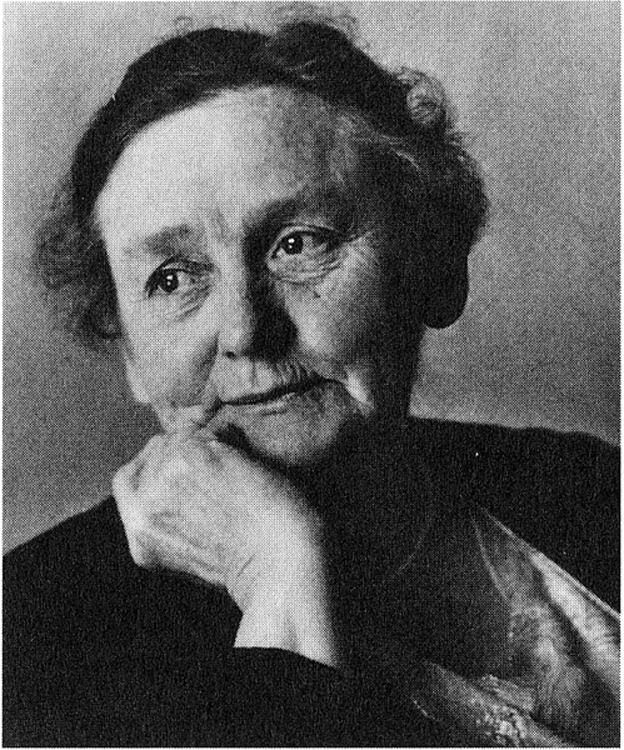
My mother’s side of the family came from Illinois, so I’m guessing my aunts heard about the book because Thorne-Thomsen (shown here) was a librarian and school teacher in Chicago. Or, perhaps they heard about the illustrator first: Richardson was probably best known for his work in L. Frank Baum’s books. I’m fairly certain my parents never read me the book’s foreword when I was little. I came to appreciate the author’s rationale behind the book much later:

In recent years there has been a wholesome revival of the ancient art of story-telling. The most thoughtful, progressive educators have come to recognize the culture value of folk and fairy stories, fables and legends, not only as means of fostering and directing the power of the child’s imagination, but as a basis for literary interpretation and appreciation throughout life.

Storytelling was a powerful influence in my early life because that’s what people did before radio, television and the Internet infected their homes with the latest, greatest and most awesome of what’s happening right now. My two brothers, my parents and I read stories, made up stories, shared stories around the table, and wrote them down on notebook paper and kept them until they were crumpled beyond recognition.

As was the practice in those days, some of the stories in East o’ the Sun and West o’ the Moon were accompanied by illustrations. The first drawing shown here goes with “The Princess on the Glass Hill.” Before I learned how to read, I could spend hours looking at the pictures, remembering the stories.

East o’ the Sun and West o’ the Moon

The title story begins like this: Once on a time there was a poor woodcutter who had so many children that he had not much of either food or clothing to give them. Pretty children they all were, but the prettiest was the youngest daughter, who was so lovely there was no end to her loveliness.

And it ends like this: But the Prince took the lassie by the hand and they flitted away as far as they could from the castle that lay East o’ the Sun and West o’ the Moon.

Obviously, it’s a “happily ever after” story. Or, to be more formal about it, this is a type 425A story (search for the lost husband) in the Aarne-Thompson classification system, that was originally collected by Asbjörnsen and Moë.

As a child, I liked the White Bear in the story. Who wouldn’t want a friend like that? According to Mary Lou Mitchell, “In Norse tradition, the bear is a valiant warrior, representing ‘the lonely champion, fighting in single combat and leading his men.'” (Later on in my own novels, I used a great black horse as a friend of the main characters.) Long before I knew anything about totem animals and their traditional meanings, my appreciation of “animal helpers” began with this story.

I think, perhaps, that my love of stories and storytelling began with old books and old stories and then remained a part of my psyche via the old memories. Now that I’m a grandfather, I begin to wonder if there will be a day in the future when my four-year-old granddaughter Freya with her Norse-inspired name will hearing these Norwegian folktales as much as I did.

Malcolm

Malcolm R. Campbell is the author of Celebrate Glacier National Park, a free e-book released this week by Vanilla Heart Publishing. Available as a PDF download, the 49-page book covers the famous red buses, the land, the personalities and the park’s history.

Campbell, who worked in the park while in college, wrote the articles for this e-book during Glacier’s 2010 centennial.

Review: ‘Identity: Lost’ a legal thriller by Pascal Marco

When I review a book, I check the publisher’s description online and on the back cover to make sure I don’t inadvertently divulge plot twists and other surprises that readers won’t know when they start reading. I was a bit surprised to find a blurb on Pascal Marco’s Identity: Lost from an author claiming that this “electrifying debut puts him firmly in the hunt to succeed John Grisham.”  Really?

By the time I finished reading this intricate and heartbreaking legal thriller, I decided that blurb might be right.

After twelve-year-old James Overstreet witnesses a 1975 murder in a lakefront Chicago park in a dangerous neighborhood, his life changes dramatically because police and prosecutors botch the trial. James identifies the black gang members who killed the 85-year-old white man in Burnham Park. But once the judge says, “I have no choice but to find the defendants not guilty of murder,” James and his family know their lives are at risk if they ever go home again.

Readers know going into this book that thirty years later James Overstreet will no longer be James Overstreet, but a man named Stan Kobe who has gone to law school, learned his craft well, and become a successful prosecutor in Maricopa County,  Arizona. Savvy readers will guess that even though James has been reincarnated as Stan 1,400 miles away from the scene of the crime, one way or another, “Ice Pick” and the Oakwood Rangers will cross his path again.

Crime shows on TV often imply that once a person goes into the Witness Protection Program, life is safe and good. Pascal Marco does a wonderful job of counteracting that myth. When James becomes Stan, nobody can know. All ties to his past, and his parents’ past are cut. Even if Stan is good at pretending he didn’t come from Chicago and knows little or nothing about the town, there are a hundred ways a chance statement or a chance meeting will bring the Oakwood Rangers to his front door. While James/Stan might be a bit more paranoid about such things than most, his fears are not without cause.

Marco’s plot is complex, for any future encounters between the young man who was torn away from his favorite lakefront park and plunked down in the Southwest must be handled carefully. If not, the novel would appear to rest on a string of unlikely coincidences. While the novel slows down a little while James is going to law school and turning into Maricopa County’s “most ruthless prosecutor,” Identity: Lost moves forward at flank speed through a labyrinth of thrills and chills en route to a surprising and satisfying ending.

Electrifying is a reasonable superlative for this novel. Marco, a native Chicagoan and current Arizona resident, uses his streetwise knowledge of both locations to great advantage in bringing this story to life. The characters are richly and realistically created from James/Stan to Chicago detectives “Stick” and “Timbo” to Ice Pick and his Rangers to Manny Fleischman (the victim) who once played for James/Stan’s beloved White Sox. Identity: Lost is a well-told tale with a fine mix of courtroom, Chicagoland and baseball ambiance and many dangerous moments.

–Malcolm

Malcolm R. Campbell is the author of four novels, including the 2011 contemporary fantasy “Sarabande.”

Free e-Book: Celebrate Glacier National Park

During Glacier National Park’s 2010 centennial, I wrote quite a few posts about the history, personalities, facilities and environment of Montana’s shining mountains for this weblog. Now, Vanilla Heart Publishing has compiled a selection of those posts into a free PDF e-book that you can download from PayLoadz.

Highlights of the 49-page e-book

  • Fast Facts and Photographs
  • All Aboard for Glacier National Park
  • Glacier by the Grace of God and the Great Northern
  • Mountains and Rock
  • Remembering James Willard Schultz
  • Glacier’s Long-Ago Mining Town
  • Remembering George Bird Grinnell
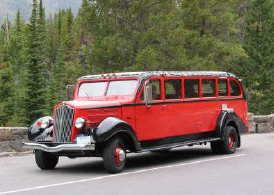
  • Those Historic Red Tour Buses
  • Kinnikinnick
  • Glacier’s First Ranger
  • Heavens Peak Fire Lookout
  • Mary Roberts Rinehart

The Scenery Behind My Stories

While working as a bellman at a Glacier Park hotel, I fell in love with the park. I’ve been back several times, but it’s too far from northeast Georgia for easy commuting. I returned in my imagination, though, while setting three novels in the park: The Sun Singer (contemporary fantasy, 2004), Garden of Heaven: an Odyssey (magical realism, 2010) and Sarabande (contemporary fantasy, 2011). If you’ve visited Many Glacier Hotel on the east side of the park, you’ll recognize many of the settings in all three books from Swiftcurrent Lake to Grinnell Glacier

I hope you will enjoy Celebrate Glacier National Park and the scenery behind my stories with a bit of the history of how Glacier came to be and who took part in developing it as both a park and a playground. Of course, you need to do more than read about “backbone of the world” in northwestern Montana.

How about a trip? You’ll need to stay for a couple of days so you have time to see both sides of the park, experience Going-to-the-Sun Road, hike to Sperry or Grinnell Glacier, take a launch trip on Lake McDonald, Swiftcurrent Lake or Lake Josephine, and ride in one of those ancient red buses with the top down so you can enjoy the mountain air.

–Malcolm

Kindle edition

Summit Sets Course for Protecting America’s National Parks, Connecting to People

from the National Parks and Conservation Association

Historic gathering of leading national park champions shapes outline for supporting National Park Service’s mission for 2016 centennial and the century to follow

Recognizing a growing need to unite the advocates, partners and supporters of national parks in advance of the upcoming 2016 National Park Service (NPS) centennial and beyond, the most diverse group of national park leaders ever convened gathered last week in Washington, D.C. to attend America’s Summit on National Parks. The Summit was a first of its kind event established in coordination with the NPS through a partnership of the National Park Foundation (NPF), the National Parks Conservation Association (NPCA), and the National Park Hospitality Association (NPHA).

The two-day Summit, which took place January 24-26, was inspired by NPS’ recent Call to Action report [PDF download] and was designed to create unifying, clear objectives that will ensure the protection, enhancement, and support America’s iconic landmarks for centuries to come. The Summit inspired thought-provoking dialogue on some of the greatest challenges and opportunities facing national parks currently. The Summit produced a working document outlining the participants’ shared “Statement of Principles” and “Action Items” to ensure that the seeds of progress begun from the passionate and inspired conversations will take root, leading to growth, change, increased accessibility and ultimate strengthening of the national park system and national park programs. The Summit drew prominent members of Congress, Interior Secretary Ken Salazar, major political advisors and top conservation, tourism and communication leaders.

In a joint statement regarding the Summit, Tom Kiernan, president of NPCA; Neil Mulholland, president of NPF; and Derrick Crandall, counselor of NPHA said:

“Our parks need to evolve with us. The passionate leaders and advocates who attended this Summit are committed to a united vision for the national parks to thrive in the next century. We understand that appropriate funding, diverse outreach, natural resource protection and conservation, updated facilities, and adequate staff are necessary to make sure our national parks remain attractive, healthy places for people to visit and enjoy. And, though there are many challenges, we are confident that this newly unified focus, support and dedication by the park community will make these goals obtainable.”

Yosemite - Call to Action Report

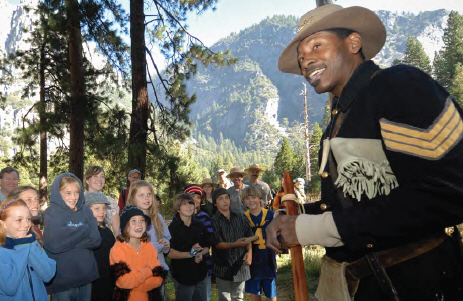
Among the most notable directives coming out of the Summit were to increase outreach to youth and other diverse populations; to make units within the NPS system more representative of the diverse makeup of the nation; to use technology, such as social media, smart phone applications, video games and other electronic technologies to attract visitors and improve park experiences; to highlight healthy food and opportunities for safe, active fun during park visits; to increase public awareness of the 2016 centennial; to create an endowment to provide the NPS with secure funding for the future; to encourage supporters and lovers of national parks to become more engaged with their members of Congress and other decision makers, and to grow the base of support for national parks, particularly among the health, education and tourism communities.

Leading up to the 2016 centennial, the current stewards of our national parks will take up the gauntlet thrown by this Summit. Through their work, these original goals will be enhanced and the shared vision will become action.

For more information about the Call to Action, click here.

Malcolm

Malcolm R. Campbell is the author of three novels set in Glacier National Park, “Sarabande,” “Garden of Heaven: an Odyssey,” and “The Sun Singer.”

Review: ‘The History of My Body’ by Sharon Heath

“The Bible says that in the beginning was the void, and it hasn’t escaped me how fast the Lord moved to take care of His own particular vacuum—dividing day from night, spitting out vast oceans, carving out competing continents that would one day have the power to blow each other up. What an inspired series of creations to keep the devil of boredom at bay. No wonder God kept seeing that it was good.”

So begins the story of Fleur Robins.

Fleur Robins is called creepy child, poor child, little monster, odd duck, space cadet and assorted other synonyms for “weird” by almost everyone who notices her existence and tries to figure out whether she is gifted, autistic, simply hopeless or hopelessly simple. Fleur’s imagination contains many worlds because—as she explains life as the fifteen-year-old narrator of The History of My Body—positioning her body and mind “just this side of the lurking pit of nothingness” requires constant vigilance and ingenuity.

Whenever the void looms too large for her to handle, Fleur flaps her arms, bangs her head, pinches herself, emits strange noises and makes oddly literal pronouncements that simultaneously appear to miss the point and contain cosmic truths. No school will take her. An alcoholic mother loves her, but spends her days drunk or asleep. A mean-spirited father dislikes her, but fills his days with a pro-life crusade while filling an entire nursery wing of the family’s large house with children rescued from the “devil abortionists.” An odd-duck household/nursery staff cares for her, but is too busy to overtly save her from the void.

Fleur is her own teacher. She makes lists, keeps diaries, consults the dictionary frequently, and assembles the often-confusing puzzle pieces of information from others to make sense of the external world. She listens to the voices of her heart and her infinite imagination to define her internal world and to explore far-flung probabilities beyond the ken of “normal people.”

When she’s told that a woman who walks down the street every day in a bathrobe has lost her mind, Fleur falls into a figurative pit considering the ramifications:

“What kind of God would let people lose their minds? And was there some kind of cosmic Lost and Found where He kept them? I tell you, it gave me a serious case of the heebie-jeebs, thinking of God feeling so empty and alone that He needed to steal people’s minds to stuff into His own unfillably huge one.”

In her wise, superbly crafted debut novel, author Sharon Heath connects a series of highly improbable events into a tightly knit story about a self-taught young girl who believes her coming of age is a wonderful example of the butterfly effect: or, as Fleur came to understand nonlinear systems, a personal development with a sensitive dependence on initial conditions. Potential events spin off in all directions when Fleur finds a dying baby bird in the garden; while those that ultimately manifest as her body’s history could never have been predicted, they represent a meaningful synchronicity if not harmony.

Fleur’s phases of growth (incarnations, to her way of thinking) unfold as a metamorphosis out of the chaos of her childhood. Her progress isn’t ugly duckling to swan. It’s more like a butterfly transitioning from egg to larva to pupa to adult, or like the unfolding of the beloved David Austen roses she tended on the grounds of the childhood home of her first incarnation.

In The History of My Body, Sharon Heath masterfully combines darkness and light, tragedy and comedy, and the sublime and the ridiculous into a dazzling and beautifully ironic dance of opposites that create an unusual and endearing protagonist with an unforgettable tale to tell.

Malcolm R. Campbell is the author of four novels, including the recent contemporary fantasy “Sarabande.”

Versatile Blogger Award, OMG, ROFLMAO

Due to a questionable, though potentially humorous ripple in the space-time continuum yesterday, author Smoky Zeidel awarded me the Versatile Blogger Award. According to the usual half-informed sources, this award forces me to divulge seven facts about myself that most of you don’t know without the benefits of a get out of jail free card or an invitation to join the FBI witness protection program.

  1. I danced with a local mobster’s girl friend one night in Denver when he (the mobster) was out of town. The girl friend was also a stripper, though not while we were dancing to the celestial “Double Crossing Time” from the Blues Breakers with Eric Clapton album via the juke box.
  2. I once delivered singing telegrams for Western Union even though I can’t sing. (I delivered regular telegrams, too.) Fortunately, strip telegrams were banned in Florida due to the size of the palmetto bugs.
  3. My first byline came from Quill & Scroll Magazine when I was in high school. This occurred before I been introduced to the exciting world of mobsters’ girl friends and Eric Clapton.
  4. My college roommate and I introduced a Vietnamese exchange student to President Lyndon B. Johnson as he shook hands with the mob (not the Mob) watching his plane come into Denver in 1966, the same year I danced with the stripper. We did not bring the stripper with us, but our friend from Saigon still got a nice smile from the leader of the free world.
  5. After I got out of the Navy, my parents inadvertently asked during a Sunday afternoon dinner (moments after all of us got back from church) if “those stories” about Navy men going to bars in foreign ports frequented by strippers were true. When I said “yes,” they seemed pleasantly scandalized and said “that” was part of the price one paid for serving one’s country. I didn’t mention that I made a downpayment on that price several years earlier in Denver.
  6. I had a school-boy crush on actresses Millie Perkins, Natalie Wood, and Nancy Kwan. I “fell in love” with Wood when I saw her in person on an old Chicago radio program called Don McNeill’s Breakfast Club. She was there promoting a new movie called “The Burning Hills.” She didn’t notice me because she was there with Tab Hunter. Wood wouldn’t sing “Let me do a few tricks, Some old and then some new tricks, I’m very versatile” for a few years yet.
  7. En route to a Dutch shipbuilder where I did volunteer work one summer as part of an international youth group, we all swam in Amsterdam harbor after the captain of the barge we were using for transportation said the water was so dirty, nobody ever dared get in it. No strippers were present.

New Award Winners

According the the rules of the Versatile Blogger Award, I am supposed to pass along this award to 15 bloggers who currently have no idea I’m thinking of doing such a thing. Yet, they are writing blogs I enjoy reading:

  1. Chelle Cordero, “Welcome to Chelle’s World”
  2. Pamela Patchet, “A Novel Woman”
  3. Neil Vogler, “A Writer, He Muttered”
  4. Susanne Iles, “Bone Singer Studio”
  5. Seth Mullins, “Spirituality With an Edge”
  6. Shelly Bryant, “My Blog”
  7. Lee Libro, “Literary Magic”
  8. Floyd M. Orr, “POD Book Reviews & More”
  9. Terry (aka Montucky), “Montana Outdoors”
  10. Matt, “Just Wondering”

Well, I’m not as young as I was when I was dancing with strippers, swimming in Amsterdam harbor, talkin with President Johnson or singing “Happy Birthday” to the shocked residents of Tallahassee, Florida while wearing my Western Union badge. That means I’m out of steam and will stop at ten blogs on my list. Don’t bug me about this: I have Mob connections.

Malcolm

Malcolm R. Campbell is the author of the comedy/satire, “Jock Stewart and the Missing Sea of Fire,” the novel credited with adding a little nooke to the Nook.