Awaiting another voice on the new year

“For last year’s words belong to last year’s language And next year’s words await another voice. And to make an end is to make a beginning.” – T.S. Eliot, “Little Gidding”

Mythologist Joseph Campbell has written that in spite of the seeming chaos of our lives at any given moment, the past when seen in hinsight will appear well-planned. The continuity of our lives was one of my favorite themes in the novel Dune. The image author Frank Herbert used was that of a desert wherein those with second sight who thought they had been wandering could see through meditation the events of their past aligned across the dunes as a perfectly ordered set of footprints leading up to their present location.

We are who we are, I think, and making abrupt changes at the end of a calendar year is unlikely to be effective—and might be dangerous if we knew how to keep those noble resolutions we made during the last days of December.

Author Smoky Zeidel often speaks of the fallow periods in a writer’s life—or, in anyone’s life, for that matter—as periods we should accept and learn from rather than fight. Winter, a time when seeds wait in the darkness of the earth beneath the snow, is symbolic of fallow periods. As in the old story of Taliesin out of pre-Christian Welsh mythology, we germinate in the darkness of the womb and undergo many changes before we emerge into the springtime of our full potential.

Perhaps our hopes and resolutions at the beginning of a new year aren’t really abrupt, desperate or rash changes in personality, lifestyle and direction. They may well be part of our continuing evolution toward our truest dreams, more on course than we realize as the new year approaches.

The Darkness of Winter

The darkness of winter is often said to be synonymous with the underworld, the last place any of us logically want to visit. Yet, the visionaries amongst us say that, like seeds in the soil, all things are born in darkness, arising with a new voice when the time is right.

My 2011 novel Sarabande is, among other things, a story about my protagonist’s descent into the underworld where she will prepare for the next steps in her life. At the moment, I have yet to extricate myself from the underworld I envisioned for my young protagonist because, as Robert Adams discovers in the book, men are not by nature equipped to navigate the dark regions without a guide.

Writing that novel was a learning experience. So, too, is my period of re-acclimation back into the real world. Part of writing is the fallow period that arrives after the writing itself is done. The same process is probably true for most of the major experiences of our lives. Even the best of them might carry us through periods of confusion, depression and even sadness as we gather close around us what we have learned and how we have been changed.

I’ve quoted T. S. Eliot’s “Little Gidding” in other year-end posts because I’d rather spend winter with great expectations for my voice of the new year than thrash about in the darkness making rash promises and finely phrased resolutions. The flow of the seasons is (obviously) a natural river of time in the temporal world and whenever I’m pressed to make a resolution, it is “to keep swimming with the current.”

Malcolm

Books You May Have Missed in 2011

I reviewed over forty books this past year, some from major publishers and some from small presses. Sad to say, many small press books are overlooked by the general public, book reviewers and major media outlets. While writers and small publishers are talking these days about the so-called democratic publishing available through print-on-demand and e-book technology, the public remains oblivious to most titles that don’t come from large presses with major marketing campaigns.

Here are a few books from 2011 that I wish more people were discovering and talking about:

  1. Blood on the Roses by Robert Hays – “Blood on the Roses is a frank and honest story that does justice to its splendid east Tennessee setting, stunning from beginning to end in its juxtaposition of raw ugliness and beauty and its historical veracity that captures both the engaging qualities of the Southern people and the terrible wrongs of discrimination and outrageous acts of pure racism carried out by a few.”  Book Review from Hunting News Net. Personally, I found this book to be a shining example of the fine work being published by small presses. While I avoid reviewing books from my own publisher, I found Hays’ novel to be exceptional.
  2. The Uncertain Places by Lisa Goldstein – “An ages-old family secret breaches the boundaries between reality and magic in this fresh retelling of a classic fairy tale. When Berkeley student Will Taylor is introduced to the mysterious Feierabend sisters, he quickly falls for enigmatic Livvy, a chemistry major and accomplished chef. But Livvy’s family—vivacious actress Maddie, family historian Rose, and their mother, absent-minded Sylvia—are behaving strangely. The Feierabend women seem to believe that luck is their handmaiden, even though happiness does not necessarily follow. It is soon discovered that generations previous, the Feierabends made a contract with a powerful, otherworldly force, and it is up to Will and his best friend to unravel the riddle of this supernatural bargain in order to save Livvy from her predestined fate.” Book review from Malcolm’s Round Table.
  3. Snare by Deborah J. Ledford – “Native American pop singer/songwriter Katina Salvo’s career is about to take off. There’s one problem: someone wants to kill her. Katina and her bodyguard, Deputy Steven Hawk, are attacked during an altercation at her first live concert. Could the assailant be a mysterious, dangerous man from her youth? Or her estranged father recently released from prison for killing her mother? Performed against the backdrop of the picturesque Great Smoky Mountains of North Carolina, and the mysterious Taos Pueblo Indian reservation, Snare is a thriller fans of Tony Hillerman will appreciate.” Book review from Malcolm’s Round Table.
  4. Bog Meadow’s Wish by Terry Kay – “When Cooper Coghlan arrives in Ireland with the cremains of his grandfather, Finn Coghlan, he has one instruction: Let my ashes blow in the wind. You’ll know the place when you come to it. I’ll be there, telling you. He also has tender memories of his grandfather’s exaggerated stories of Irish wonder and magic–stories of leprechauns and legends and the mysterious power of fate. But he does not have the story of why his grandfather left Ireland as a young man.” Book Review from Literary Aficionado.
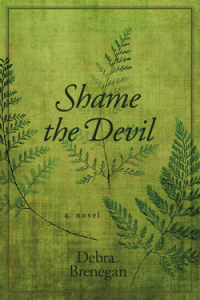
  5. Shame the Devil by Debra Brenegan – “Shame the Devil tells the remarkable and true story of Fanny Fern (the pen name of Sara Payson Willis), one of the most successful, influential, and popular writers of the nineteenth century. A novelist, journalist, and feminist, Fern (1811-1872) outsold Harriet Beecher Stowe, won the respect of Nathaniel Hawthorne, and served as literary mentor to Walt Whitman. Scrabbling in the depths of poverty before her meteoric rise to fame and fortune, she was widowed, escaped an abusive second marriage, penned one of the country’s first prenuptial agreements, married a man eleven years her junior, and served as a nineteenth-century Oprah to her hundreds of thousands of fans.” Book review from Smoky Talks Books.

You may also like: Holiday Guide: Six Fantasy Picks for 2011 on my “Sarabande’s Journey” blog.

Malcolm

a young woman's harrowing journey

Review: ‘The Devil’s Elixir’ by Raymond Khoury

Reading Raymond Khoury’s The Devil’s Elixir can be hazardous to your sleep cycle! You won’t be able to put the book down until you reach the last page.

Once again, Khoury pairs up FBI agent Sean Reilly and archeologist Tess Chaykin whom long-time Khoury fans already know from their tangled and dangerous destinies in The Last Templar and The Templar Salvation. (See also my review of The Templar Salvation.) In this high-energy thriller, Reilly and Chaykin shift their focus from Templar and Vatican mysteries to a potentially more dangerous secret extracted and resynthesized out of the South American rainforest.

Eusebio, the priest who learned about a psychoactive alkaloid from a tribal shaman in 1741, viewed the “sacred brew” as a catalyst that could lead a seeker toward mystical enlightenment. Álvaro, his Jesuit brother at the mission, called the drug the devil’s elixir. In the hands of a present-day drug lord named El Brujo the drug represents not only a belief-changing experience but a chance for unlimited profits with a potion more powerful than meth, cocaine and heroine combined.

Reilly is is drawn away from New York into the high-body-count world of drug cartels and kidnappings when a former girlfriend calls to report her life is in danger. Former DEA agent Michelle Martinez’s story is so compelling that Reilly packs his bags and heads for San Diego immediately. Soon, his life will be at risk as will Chaykin’s. One way or another, sparks fly when Reilly and Chaykin are involved in a case. This time out, there are a couple of additional complications, one being that Reilly never told Chaykin about his earlier relationship with the “seriously hot” Martinez.

Khoury’s story moves briskly with alternating chapters from the perspectives of El Brujo, southwestern FBI operatives, the drug lord’s foot soldiers, Reilly and Chaykin. This approach heightens the intrigue by showing the reader thrills, chills and plot twists that the primary characters have yet to discover. Reilly is a strong-willed, indefatigable FBI agent who gives everything he has to keep his loved ones safe while keeping the devil’s elixir out of the black market supply chain. At the same time, his conscience constantly asks him whether the ends justify his means.

Readers new to Khoury’s fiction may think as they finish each chapter in The Devil’s Elixir, “certainly things can’t get any worse than this.” Those who have  read The Last Templar and The Templar Salvation know things never get better until the story’s over because following a Khoury plot is similar to riding a snowball through hell.

The Devil’s Elixir is a delightfully breath-searing ride.

Book Details

The Devil’s Elixir by Raymond Khoury

Hardcover: 384 pages

Publisher: Dutton Adult (December 22, 2011)

Language: English

ISBN-10: 0525952438

ISBN-13: 978-0525952435

Malcolm R. Campbell is the author of four novels, including the recent contemporary fantasy Sarabande.

Common Forest Trees of Florida – How being a packrat saves time

Looking at the pamphlet shown here, I can say that I have no idea how and when I got it, who scribbled on the cover, or even why the handy little pocket guide published in 1956 didn’t get buried in one of the numerous boxes of packrat stuff in the garage or attic.

Today, of course, a writer can Google just about anything. If he’s persistent, he can sort through all the hobby sites and find information he can count on. While writing my 2010 novel Garden of Heaven: an Odyssey, I needed a handy reference to Florida’s trees. And there it was: right on my shelf less then six feet from my desk.

Published by the Florida Board of Forestry since 1925, I’m guessing I stole or borrowed or received this pocket guide while I was in the Boy Scouts in North Florida. The guide contrains black and white drawings of leaves, acorns and cones along with a descriptive text for each tree. This makes it easy for a hiker or a Boy Scout in Tate’s Hell Forest, the Apalachicola National Forest, or the swamps and estuaries along the Gulf Coast to identify what he’s looking at.

I grew up around Baldcypress, Chinkapin, Tupelo, Sweetbay Magnolia, Sassafras, Cabbage Palmetto, and Swamp Cottonwood trees. So, one would think I’d be a walking encyclopedia about their common attributes, the quick  kinds of details a writer needs when he writes a sentence such as “David stood beneath the ______ leaves of the ____-foot tall Swamp Popular.” But  no, I’ve been away from Florida too long to remember even the simplest details.

If only I had a photographic memory!

I include a lot of detail in my novels about mountains, trees, lakes and wildlife. That helps anchor the magic and fantasy in the story while making the location settings three dimensional. There’s a risk, though. If you make a mistake, somebody’s going to write you a letter or focus his review on the fact that while the hero of the novel was in a gun battle fighting for his life beneath a Chinkapin Oak, you forgot to mention that the three- to seven-inch leaves are toothed or that the trees are between fifty and eighty feet tall. Nice to have a quick reference book!

When it came down to quick reference materials, I found it much faster to grab this old pamphlet off the shelf than to search online. Sorry, Google, but I rather enjoy being a packrat and every once in a while I can actually justify it.

Malcolm

Dreams, Inspirations and Trees

Welcome to the Malcolm’s Round Table edition for the Sleigh Bells and Inkwells Blog Hop

 DREAMS, INSPIRATIONS AND TREES

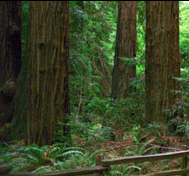
Muir Woods - NPS photo

“When you enter a grove peopled with ancient trees, higher than the ordinary, and shutting out the sky with their thickly inter-twined branches, do not the stately shadows of the wood, the stillness of the place, and the awful gloom of this doomed cavern then strike you with the presence of a deity?” –   Seneca

I love forests, especially coniferous forests.

Two of my earliest memories of forests are polar opposites. I saw the towering redwoods of Muir Woods and rode through an Oregon forest fire before I was in the first grade. Forest imprinting, I think: those early moments when I first experienced the beauty and wisdom of trees as well as the pain of their destruction.

The blue-grey aura of a tree is larger than the tree.

When one walks through a forest, s/he cannot help but touch the overlapping souls of the redwoods, firs or cedars gathered there. When I stop by the woods on a snowy evening or come to myself in a dark wood, I think of John Muir saying that “I only went out for a walk, and finally concluded to stay out till sundown, for going out, I found, was really going in.”

In a forest, I am within the spirits of the trees and within myself. At Yule, the ancient traditions bring the deity into the house with the greenery, creating a sanctuary of scents and spirits around the decorated tree, the boughs lying along the mantel, the wreaths greeting and guarding at doorways and the holly in the center of the table. As a child sneaking through the darkened living room on Christmas Eve, I strongly felt the watchful presence of the blue spruce waiting for the happy morning. I still do.

limber pine

As I wondered what I should write for a Sleigh Bells and Inkwells post, trees came to mind as the perfect subject. I wasn’t surprised. Trees have always found a way to live in my writing.

The cast of characters in my novels isn’t limited to the two-legged creatures—Gem, Robert, David, Siobhan—who walk between the pages. My favorite trees have made sure they also had roles to play. The Sun Singer features spruce, whitebark pine and a grandfather oak. Garden of Heaven: an Odyssey contains multiple worlds of cottonwood, boxelder, lodgepole pine, cypress and rowan. Sarabande includes cottonwood and a limber pine next to the River of Sky. My love of trees fills my stories, even in the action sequences such as this one in “Sarabande:”

Sarabande wedged herself between two branches of a floating cottonwood deadfall as the Mni Sose [the Missouri River] approached a bridge at the western edge of a reservoir. The relative calm she had experienced while passing the high canyons and breaks topped by Ponderosa Pine slipped away as the water eddied into twisted shapes beneath the cloud draped moon. She felt watched. The tree caught briefly on the bridge pier closest to the center of the river. Then she saw the silhouette of Danny Jenks’s truck. The velvet drapery of spider webs between the piers transformed into a trot line. When she screamed, one of the hooks caught inside her mouth and was jerked tight, piercing her cheek. She was pulled away from her river and raised up through a tender breeze that carried in its heart the cries of owls and nighthawks.

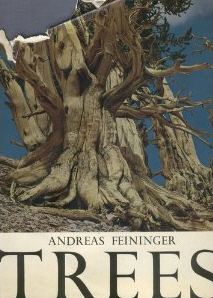
For 43 years, one book has always remained accessible on the bookshelves in all the towns I’ve lived in since it was published: Tallahassee, Syracuse, San Francisco, Waukegan, Zion (IL), Indianapolis, Rome (GA), Smyrna (GA), Marietta (GA), Norcross (GA), Jefferson (GA), and it is simply called Trees. Andreas Feinniger’s cover photograph reminds me that even though the aura of a “dead” tree is mostly gone, the tree remains wise, and bids those who come and go to sit and lean against its old trunk and listen.

When I find myself in the presence of redwoods on a foggy morning, subalpine fir around a lake on a sunny high country afternoon, or a snowy woods that are, as Robert Frost wrote, “lovely, dark and deep,” I am always called to stay even though I, too, still have promises to keep on my writer’s journey.

Thank you for stopping by my figurative forest today. Now, to continue your festive blog hop journey, click here to visit author T. K. Thorne.

Your trip also includes posts by:

Smoky Zeidel

Patricia Damery

Debra Brenegan

Anne K. Albert

Elizabeth Clark-Stern

Collin Kelley

Sharon Heath

Melinda Clayton

Ramey Channell

Leah Shelleda

How to tell the difference between a blog hop and the bunny hop

This post is presented as a public service after a barrage of text messages coming in to the Malcolm’s Round Table International Headquarters indicated that a lot of people were scared. The problem arose over the letters BH. Today, they stand for blog hop.
Years ago, they stood for bunny hop. But now: In a text message, BH 2nite? led many people to believe they were supposed to meet up on the dance floor. After Googling Bunny Hop, people stated (for the record) that they’d rather be caught dead than caught doing the bunny hop.

Quite understandable.

Even during the heyday of the bunny hop in the 1950s, most of the guys leaning up against the walls of the gym where most high school hops (dances) were held screamed “oh no!” whenever the bunny hop got started.

It snaked all around the dance floor picking up wallflowers as it went. At my high school, it was always led, started or planned by the feisty lady who led the pep rallies and the cheerleading squad. I think she was a Navy SEAL with a smile.

Okay, here it is

Bunny: Snakes around a high school dance floor.

Blog: Snakes around the Internet.

Bunny: Imprints the addictive music in your head for weeks and for the rest of your life maybe, returning in your dreams to haunt you.

Blog: Brings you (hopefully) an exciting series of posts as you hop from blog to blog hearing only the music of your choice from your MP3 player.

Blog

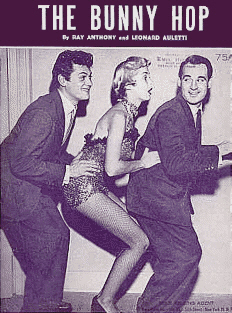
Bunny: Forced you to grab the butt (often appropriately) of the person ahead of you in line (see picture) while tapping the floor with one foot, then the other, then leaping backward, then forward.

Blog: According to the Federal government, blog hops are coverened by a section in the code that proclaims: Mama don’t allow no butt grabbing around here.

Bunny: Sometimes people got hurt.

Blog: Casualty free for years.

For a shining example of a blog hop with more class than this post, stop by on Friday, December 16th for the Sleigh Bells and Inkwells Blog Hop, featuring a baker’s dozen writers who will knock your socks off without forcing you to dance or remember frightening music.

–Malcolm

Book Review: ‘Mister Blue’ by Jacques Poulin

In Jacques Poulin’s Mister Blue, the novel’s protagonist, lives in a ramshackle house on the Île d’Orléans with his cat Mr. Blue. Jim’s world is defined by the bay, the St. Lawrence River, the beach and the novel he’s writing and not writing in the attic room where he works. As a novelist, he refuses to intrude into the lives of his characters; he watches and waits for them to fall in love on their own while he watches and waits for his chance to meet a mysterious young woman who has suddenly taken up residence in a small cave near his house.

Jim and Mr. Blue have seen her anchored sailboat, her footprints in the sand and a few possessions in the cave including a copy The Arabian Nights inscribed with her name, Marika. Yet, he refuses to overtly intrude into her life, certain that he will ultimately meet her by slightly nudged chance. When he cautiously visits the cave, the sees her bookmark’s progress through Scheherazade’s fanciful stories for the Persian king, but Marika is never home. Jim’s life suddenly shifts from that of an aging, divorced man dwelling in solitude with a cat to to an awakening writer in a shifting world of daydreams and obsession that mirror the fits and starts of a manuscript in the attic.

Before his obsession begins, he wonders if he’s picked the wrong subject for his novel. A former Hemingway scholar, Jim sees that he has broken Papa’s first rule: write what you know best.

“I had to acknowledge that I’d broken this rule. I was trying to write a love story without being in love myself. I’d probably chosen this subject because, as I felt myself growing older, I was afraid it was too late to fall in love one last time.”

Poulin’s compassionate story about a man searching for himself flows from beginning to end as smoothly and effortlessly as the river outside Jim’s attic window. The 150-page novel appears deceptively modest because the prose is just as unadorned as the protagonist’s gentle life of promising days and lonely blue days.

On days of hope, Jim’s novel moves forward and he almost finds Marika. Though he is forever just missing her, the marching bookmark in The Arabian Nights, the movements of her sailboat and other hints of her presence nourish him. On blue days, he sees no sign of her and loses himself in memories of the past and mourns the fact that his haunting, off-stage muse eludes him like words in his book.

“Words are independent, like cats, and they don’t do what you want them to do. You can love them, stroke them, say sweet things to them all you want – they still break off and go their own way.”

Poulin’s novel is a powerful masterpiece of understatement. What is real and what is dream? Neither Jim nor the reader can be sure in a story where seemingly disparate elements—an idealized woman, tennis games with a brother, the friendship of young girl who suffered an abusive past, and Mr. Blue—rise and fall like the tides in the bay without the heavy handed intervention of novelists and their characters.

This novel rubs up against a reader’s emotions with a soft, but persistent purr.

Mister Blue (Archipelago Books, January 3, 2012) originally appeared in 1989 as Le Vieux Chagrin (old sorrow) and in a subsequent English edition Mr. Blue, in 1993. Like the 1993 edition, this new edition comes to English readers through the work of the award-winning translator, Sheila Fischman. The novel has won Prix Québec-Paris, Prix Molson of the Académie des lettres du Québec, and the Prix France-Québec.

–Novelist Malcolm R. Campbell is the author of magical realism and contemporary fantasy including “Sarabande” (Vanilla Heart Publishing, August 2011).

contemporary fantasy for your Nook

My Book Reviews of 2011

Like most book reviewers who aren’t paid by a newspaper or a magazine to read 24/7, finding the time to read a book and then say something helpful about it is difficult. I could use an extra hour or two ever day just for reading. I don’t review all of the books I read. I currently have three books in the queue:

  1. Mister Blue by Jacques Poulin – I read and enjoyed this book and will post the review this year.
  2. Cinder by Marissa Meyer – Next on my reading list.
  3. The Devil’s Elixer by Raymond Khoury – Book on the way to my house.

Nonetheless, it was a good year for reviews. Here’s a look back at the books I reviewed or noted in 2011 for those you might have missed:

Next Review

Malcolm’s Round Table

Literary Aficionado

 Malcolm R. Campbell is the author of novels filled with fantasy and magic.

For a glimpse into the flavor of “Sarabande” (Vanilla Heart, August 2011) see his post: an assault where willow creek carries water away from the mountains

My 2011 Favorite: ‘The Night Circus’ edges out ‘The Tiger’s Wife’

In April, I began my book review of The Tiger’s Wife with the following: Gather around, my friends, and I will tell you the story of the man who could never die, who, some say, still walks the streets of our village at night, and then—if most of you are still awake—I’ll tell you the story of the tiger Shere Khan whose eyes burn brightly in the night when he prowls near campfires like this looking for his wife.

As a storyteller, I’m drawn to stories that sparkle with probabilities, magic, a sense of mystery, and a raw potential for being real beneath the guise of the novelist’s art. In April, I didn’t think anyone would do better in 2011 than Téa Obreht. Then I started seeing the hype for Erin Morgenstern’s novel of fantasy and magical realism The Night Circus. Hype bothers me because it smacks of money-fed, well-oiled machines churning out literary propaganda for those favored authors who get the rare treatment of a real, book-selling campaign. As a storyteller and author, I am jealous of those authors and that alone kicks in a nasty attitude of bias against whatever it is they are selling.

Yet, when it came to The Tiger’s Wife and The Night Circus, my intuition told me I was going to like these books in spite of my bias and in spite of the fact that I really wanted my 2011 favorite to come from a small press. Perhaps The Night Circus edged out The Tiger’s Wife because I finished reading it later in the year. Or perhaps it was because the magic of two dueling magicians in the Le Cirque des Rêves in Morgenstern’s novel reminded me of the dueling magicians in Susanna Clarke’s Jonathan Strange & Mr Norrell, my favorite novel in 2004.

Complete Worlds

Both Susanna Clarke and Erin Morgenstern paint rich pictures of complete worlds, worlds where there is room to experience the magic in depth and to believe that it fits there and really did happen or could happen. Booklist saw this complete world in Jonathan Strange & Mr. Norrell in its starred review: The brilliance of the novel lies in how Clarke so completely and believably creates a world within a world: the “outside” world being early-nineteenth-century England, as Napoleon the eagle looms over all of Europe; the “inner” world being the community of English magicians.

Likewise, Library Journal saw an equally complete world in Morgenstern’s novel this year: To enter the black-and-white-striped tents of Le Cirque des Rêves is to enter a world where objects really do turn into birds and people really do disappear…Debut novelist Morgenstern has written a 19th-century flight of fancy that is, nevertheless, completely believable. The smells, textures, sounds, and sights are almost palpable. A literary “Mr. Toad’s Wild Ride,” this read is completely magical.

Mysterious Plot

In The Night Circus, two young illusionists, Celia and Marco, are magically bound by their mentors into an endless competition without rules or time limits that is destined to play itself out in a mysterious circus of dreams that arrives in towns with no advance notice and is only open from sunset to dawn. Celia and Marco use real magic, but because the public doesn’t believe in such things, they pretend to be illusionists.

Neither magician knows when or how his or her illusions will be judged or when or how a winner will be declared, but only that they are not allowed to tell the outside world about the competition. In fact, the competition itself influences how the circus is maintained, what the patrons see or think they see, and creates a rather dream-like realm where it’s difficult for readers and circus visitors to know where the fantasy of it all begins and ends.

While most of the reader reviews for The Night Circus are positive (three to five stars), as of today, the novel’s 64 one-and-two-star reviewers saw no plot in the book at all. Generally, they found the book to be boring and pointless. One way or the other, these reviewers’ expectations were not met. I suspect they were looking for an overt storyline more like Harry Potter’s battles with the evil Voldemort throughout J. K. Rowling’s popular series. Rowling has also created a very complete world, yet what happens in it happens faster and with more splash and consequence and that garners more happy readers.

Storytelling Itself

Near the end of The Night Circus, one of the two devious mentors tells a circus performer about the imporance of stories themselves and how they connect writer and reader in intersting ways and spin out consequences outside the control of either of them:

Someone needs to tell those tales. When the battles are fought and won and lost, when the pirates find their treasures and the dragons eat their foes for breakfast with a nice cup of Lapsang souchong, someone needs to tell their bits of overlapping narrative. There’s magic in that. It’s in the listener, and for each and every ear it will be different, and it will affect them in ways they can never predict. From the mundane to the profound. You may tell a tale that takes up residence in someone’s soul, becomes their blood and self and purpose. That tale will move them and drive them and who knows what they might do because of it, because of your words. That is your role, your gift. Your sister may be able to see the future, but you yourself can shape it, boy. Do not forget that…there are many kinds of magic, after all.

I love blurring reality and fiction together in my writing. My wont to do this, as a trickster and storyteller, led me to enjoy reading both The Tiger’s Wife and The Night Circus. Both Téa Obreht and Erin Morgenstern have created believable worlds with strong characters that can move and drive readers. Even though I have always loved tigers and have always disliked circuses, Le Cirque des Rêves has manged nonetheless to connect with my blood and self and purpose.

Coming Soon: a review of Mister Blue by Jacques Poulin, to be released later this month by archipelago books. Published in 1989 as Le Vieux Chagrin, the novel first appeared in English in 1993.

You May Also Like: Yesterday, I announced an end-of-the-year book give-away challenge for my contemporary fantasy Sarabande. If you enter, you might just win a free copy.

Malcolm

Briefly Noted: ‘My Yehidah: A Journal into the Story of You’

We often hear people say they’re feeling centered or feeling uncentered and take such comments to mean they’re having a good day or a bad day. True enough, but for those who want to know the true unity of the self, there are deeper personal explorations and stories to discover, tell and experience.

As I often suggest in my fiction, discovering the transcendent magic of oneself is often difficult in a science and technology world where we’re directly and indirectly taught as children that “the answers” come from books, experts, and the latest polls.

Years ago, we used to say that everything that influenced a child to seek answers outside himself/herself was akin to programming, and that by the time one reached adulthood those programs were often “running in the background” and very hard to get out of one’s system.

That said, I’m pleased when I see fiction and nonfiction for children that encourages them to think outside the box and discover the power and joy of the imagination. That’s how we get to the unified center of ourselves. The words “My Yehidah,” in Melissa Studdard’s new book My Yehidah: A Journal into the Story of You refer to an individual’s essential essence.

Studdard’s writing prompts, in combination with artist Cheryl Kelley’s illustrations, offer children—in and out of classroom or camp settings—a wonderful and lighthearted way to take exciting trips into the worlds of their imagination. We might call this a personal voyage of discovery.

The book can be used in combination with Studdard’s novel Six Weeks to Yehidah (reviewed here in August), showing young readers how the fairytale protagonist Annalise learned to explore her magical dreamscape; or it can be used as a standalone volume with or without adult mentors (parents, teachers, camp counselors, workshop facilitators).

The workbook was a joy to read and almost made me wish I was a kid again with no pre-programed horizons in front of me, setting off on my journey into my own center with a box of stories, some crayons and colored pencils and a copy of My Yehidah: A Journal into the Story of You as my private drawingboard.

Malcolm