Thoughts on ‘The Invention of Wings’

“Alternating between Sarah’s and Handful’s contrasting perspectives…allows Kidd to generate unstoppable narrative momentum as she explores the troubled terrain that lies between white and black women in a slaveholding society… The novel’s language can be as exhilarating as its powerful story… By humanizing these formidable women, The Invention of Wings furthers our essential understanding of what has happened among us as Americans – and why it still matters.”
—The Washington Post

Sue Monk Kidd’s powerful historical novel The Invention of Wings returns to the public’s consciousness the effective, famous and infamous abolitionist and feminist orators/authors, sisters Sarah Moore Grimké (1792-1873) and Angelina Emily Grimké Weld (1805 – 1879). (See PBS’ People & Ideas: Angelina and Sarah Grimké.)
inventionwingsBorn into a Charleston slaving-holding family that was widely known in the city’s upper levels of society, both girls would–in spite of a stern mother and a resolute father–evolve into outspoken ladies who would ultimately defy their kin, city, and church to speak out against slavery and discrimination against women.

As the PBS article notes, “The sisters’ public speaking and involvement in the political sphere drew condemnation from religious leaders and traditionalists who did not believe that it was a woman’s place to speak in public. The sisters soon found themselves fighting for equality of the sexes and women’s rights, following women like Sojourner Truth in linking the rights of blacks and women.”

The Invention of Wings shows the sisters’ (and Sarah’s Black maid Handful’s) struggles at a close, personal level as the women’s views about themselves and their places in the world evolve during the novel’s 1803 to 1838 time frame. This is the novel’s first great strength.

From Sarah’s perspective: “All things pass in the end, even the worst melancholy. I opened my dresser and pulled out the lava box that held my button. My eyes glazed at the sight of it, and this time I felt my spirit rise up to meet my will. I would not give up. I would err on the side of audacity. That was what I’d always done.”

From Handful’s perspective: “Goods and chattel. The words from the leather book came into my head. We were like the gold leaf mirror and the horse saddle. Not full-fledge people. I didn’t believe this, never had believed it a day of my life, but if you listen to white folks long enough, some sad, beat-down part of you starts to wonder.”

Its second great strength comes through the seamless blend of historical facts and characters and fictional characters and events. You realize how expertly this hand-in-glove fit was accomplished when you read the author’s note at the end of the book. (Kidd also provides a list of references.)

dissidentdaughterI became a fan of Sue Monk Kidd in 1996 when I read her The Dance of the Dissident Daughter: A Woman’s Journey from Christian Tradition to the Sacred Feminine. I thought of that book again as I read The Invention of Wings. I does not surprise me that an author who wrote about her own escape from religious patriarchy would be drawn to two historical sisters who also took strong issue with the organized church, sexism and racism.

The Invention of Wings is a testament to a wonderful writer’s ability to put herself into the shoes of two unfortunately obscure civil rights and feminist leaders and bring them to back life again in a highly readable story.

–Malcolm

KIndle cover 200x300(1)Malcolm R. Campbell is the author of “Conjure Woman’s Cat,” a novel about small-town racism in the Florida Panhandle during the Jim Crow era.


 

Give auntie some sugar

When I was a kid and some long lost relative came to visit, they often said something horrifying like, “Come on, Malcolm, give Auntie some sugar.”

Truth be told, I still get the willies thinking about it.

However, if auntie had been a conjure woman, she could have made me run over and hug her without having to say a word. How?

A Sweetening Spell

brerrabbitThese make people like you, feel better about you, or appreciate you in some way whether it’s a relative, a co-worker or even a judge.

(In general, sweetening may help you attract a lover, but for true industrial-strength romance, check out these love spells.)

You’ll need:

  1. Something Sweet (sugar, honey, Karo Syrup, molasses)
  2. An empty jar (baby food jars work well)
  3. A piece of brown paper (a grocery sack is fine)
  4. Appropriate candles (see below)
If you want hot romance, well that usually requires something stronger.

What to do:

  1. Write the name of your auntie, co-worker, judge of whoever in the middle of the paper three times with a pencil.
  2. Now, turn the paper side ways and write your name across those three names three times. (Some say four times). Be thinking about what you’re wanting.
  3. Fold up the paper and push it down into the jar of sweetener. Say aloud you intention: “I want Bob to like me.”
  4. Close the jar and put it on a shelf, desk, workbench, or nightstand where it won’t be disturbed.
  5. To ramp up the power, burn candles next to the jar twice a week, white for general esteem, brown for court cases, red for passionate love and pink for friendship. (optional)

Now, when you need a friend or a favor or “a little sugar,” you won’t have to ask for it.

There are many variations of this trick, and you can find them on line by using search terms like sweetening spell and conjure honey jar. You’ll find a few sites like this one and this one.

So, here you have a bit of friendly white magic!

Malcolm

MaKIndle cover 200x300(1)lcolm R. Campbell is the author of “Conjure Woman’s Cat,” a Jim-Crow era novella set in the Florida Panhandle. The KKK was very strong in Florida in those years, so Eulalie has her work cut out for her. On sale for 99 cents June 4 and June 5, 2015.


Readers, do disparate books fracture your dreams?

A friend of mine on Facebook whose been watching H. G. Wells movies said that her dreams have turned into H. G. Wells movies.

thecityMy dreams never turn into the exact movies: more like some fractured mess of the movie where everyone’s crazy and all hope is lost.

The same thing happens to me with books. I read books most often before falling asleep. I’ve been cursed with “the ability” to see scenes of my own invention out of the book I’m reading if I ever doze off–or even rest my eyes.

My scenes seem real to me as though I’m propped up in bed still reading the book. Then the cat bothers me or I fluff up the pillow and realize I’ve been making it up “reading” something that’s not in the book, but that could be in the book. This happens every time without fail. When my wife finds me dozing, she thinks I’m asleep rather than writing new scenes for another author’s book.

There doesn’t seem to be a cure for this.

Dreams and reality get fractured when I’m reading more than one book at a time, say, Dean Koontz’ “The City” and Sue Monk Kidd’s “The Invention of Wings.”

So, there I am holding Kidd’s book about life on a plantation and suddenly Sarah and Hetty are walking down Fifth Avenue. That’s rather jarring since the plantation is in Charleston.

wingskiddThe nonsensical scenes that arise out of this jolt me awake faster than cats and twisted pillows.

The plot further thickens (AKA, gets messed up) when I’m working on multiple writing projects, say, one set in a swamp and one set in the mountains. Sometimes I open up the file and find myself planning to write a scene that belongs in the other book.

Fortunately, sentences like “the grizzly bear stood next to the Ponderosa Pine forest” tip me off that I’m not currently in the Florida swamp manuscript. If I see a cottonmouth moccasin, I assume I’m not in the Montana mountains.

I don’t know if readers have this trouble or if it’s just writers. I feel like I’m juggling realities like on of those old-time performers juggle bowling pinson the Johnny Carson show.

There are says when it’s best not to step outside because I don’t know if my front yard will be there or something our of a Stephen King book.

Malcolm

SunSinger4coverMalcolm R. Campbell is the author of contemporary fantasy and magical realism which explains a lot. His fantasy, coming-of-age novel The Sun Singer is currently on sale on Amazon for 99 cents.

Looking for lust in all the wrong places

While doing research for another short story that  includes a few conjuring tricks, I came across a lust potion.

lustclipartTraditionally, a fair number of people stop by their local root doctor’s house for a little help getting lucky in love or gambling (which are pretty much the same thing, at times). While you can pick up powders and oils such as “Follow Me Boy (or Girl)” to persuade others to find you attractive, many practitioners don’t like tampering with a prospective lover’s free will.

It’s one thing to cast a spell to keep your spouse from cheating on you; it’s another thing to compel somebody to fall in love with you–that wouldn’t be true love, right?

This lust potion is powerful stuff. Heck, right after reading it and visualizing how it might work, I chanced to see a picture of the late Grandma Moses and my immediate reaction was, “Whoa, that chick is hot.”

Some writers have been criticized for, say, putting too many details in their work about how to cause death and destruction, that I feel I must say that causing lust in ones readers might be almost as dangerous.

Just as a responsible writer wouldn’t put the directions for making an A-bomb out of the stuff in a medicine cabinet, a merciful storyteller shouldn’t put the directions for causing lust in a story. Heaven help us if somebody rushed into a Walmart and sprinkled this stuff around or threw it out the car window on I-75.

Where would we be today if Jerry Leiber and Mike Stoller had listed the ingredients in their “Love Potion No. 9” classic back in 1963? We know the stuff smells like turpentine, but (fortunately) dowsing oneself in paint thinner doesn’t cause amorous feelings in normal passersby. But thank goodness we don’t know the complete recipe.

So, I’ll mention the potion in the story without the recipe and let all my readers who are looking for lust in all the wrong places create their own opportunities. Oddly enough, the potion includes nutmeg. Using nutmeg by itself won’t cause lust, though it might make a person remember their favorite pumpkin soup.

–Malcolm

KIndle cover 200x300(1)Malcolm R. Campbell is the author of Conjure Woman’s Cat, a 1950s-era novella about a black cat named Lena who helps  her best friend do magic.

Day of memories

“These heroes are dead. They died for liberty – they died for us. They are at rest. They sleep in the land they made free, under the flag they rendered stainless, under the solemn pines, the sad hemlocks, the tearful willows, and the embracing vines. They sleep beneath the shadows of the clouds, careless alike of sunshine or of storm, each in the windowless Place of Rest. Earth may run red with other wars – they are at peace. In the midst of battle, in the roar of conflict, they found the serenity of death. I have one sentiment for soldiers living and dead: cheers for the living; tears for the dead.”

– Robert G. Ingersoll

memorialdaywikiMany online images remind us that this is a day of memories, one that clashes with wishes for a “Happy Memorial Day” and with images of barbecues and shopping.

I served on an aircraft carrier. Please don’t thank me for my service today. Save those kind wishes for Veterans Day. Thank those who didn’t return for giving everything they had.

This is a day of reflection, I think. What do we have? Who helped us establish it and preserve it? Have we honored their sacrifice by doing the best we can to govern fairly within the scope of the Constitution? Were the wars that took their lives just and meaningful and necessary?

Difficult questions, I know, but more important that asking “Where can I get 25% off on my purchase of a new riding mower?”

Barbecue if you must, but don’t forget why you’re able to do it.

–Malcolm

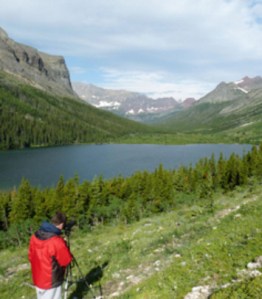
Help Glacier Park track loons, goats and weeds

from NPS Glacier National Park

Crown of the Continent Research Learning Center Opportunities

The Crown of the Continent Research Learning Center at Glacier National Park will continue its Citizen Science Program this summer, offering free research and learning opportunities for the public.

The program trains individuals to identify, observe, and record information on mountain goats, bighorn sheep, pikas, aquatic insects, loons, and invasive plants in Glacier National Park. These species have been targeted because of their sensitivity to changes in habitat, human disturbances and, in the case of invasive plants, their threat to native biodiversity. Participants are asked to attend a one-day training session before collecting data for a project.

Common Loon Citizen Science

Gather information on the distribution and reproduction of common loons to understand more about population trends and nesting success. Glacier National Park is home to about 20% of Montana’s breeding Common Loons. Monitoring takes place May through September.  Training Date: May 22, June 18, June 26, or July 9

High Country Citizen Science

Observe mountain goats, bighorn sheep, pikas, and aquatic insects at selected sites to assist with population and distribution estimates. These species are habitat and temperature sensitive and may be affected by climate change. Monitoring takes place June through October.  Training Dates: June 12, June 19, or July 2

Invasive Plant Citizen Science
Learn to identify five targeted invasive plants and use GPS units to map their locations while hiking along trails in Glacier National Park. Monitoring takes place June through September. Interested invasive plant citizen science participants can be trained in one of two ways:
1. Complete online training session at http://www.crownscience.org/getinvolved/citizen-science/noxious-weeds.
2. Attend annual weed blitz on Tuesday, July 21. Participants will assist Glacier National Park by pulling targeted weeds.

Glacierloonhighweed

Additional training sessions for any of the programs may be scheduled based on interest.

Since 2005, the Glacier National Park Citizen Science Program has utilized trained citizen scientists to collect baseline population data on species of interest within the park. Training is provided to participants to inform them of threats to native plants and wildlife that may result from human disturbance, climate change, and invasive species. Perhaps most importantly, the Citizen Science Program helps create an informed group of visitors involved in active stewardship of Glacier National Park.

Please contact the Crown of the Continent Research Learning Center at 406-888-7986 to register for training or for more information, or visit http://www.crownscience.org/getinvolved/citizen-science.

This is an excellent opportunity to learn more about the park while providing a valued service. Since our parks our underfunded, help is always needed, and this program gives people a chance to get involved, get hands-on  experience and get the summer of a lifetime.

–Malcolm

SunSinger4coverMalcolm R. Campbell is the author of The Sun Singer, a contemporary fantasy adventure novel set in Glacier National Park.

Campbell is a former Many Glacier Hotel bellman.


Letterman just took the last train to the coast

lettermanIn today’s here today, gone tomorrow world, I’m reminded of my age when I remember events, books, and TV programs that the mainstream youth culture has never heard of or considers ancient history.

Today, fewer and fewer people remember Dinah Shore and Steve Allen. Johnny Caron is fading into history. And now David Letterman has pulled the plug. If not the most popular, he was perhaps the most innovative and literate of the late night hosts.

His influence will be felt by people who’ve never heard of him. But that’s okay. After 33 years of sitting behind his desk, he’s bound to have had an impact. One wonders, will he escape the “scene” and fade away quickly like Carson or will we see his name as one of the voices on The Simpsons?

It was difficult to keep up with Letterman after a while because of full-time jobs and the need to get some sleep before sitting in a cubicle all day. Even when I didn’t see the show, I saw clips and felt a sense of things being right with the world knowing he was there with a new top ten list, some low-key satirical jokes, a new band, and some intentionally lame comedy bits.

A lot of notable people came and went on Letterman’s show. Everyone has their favorite interviews. But Dave was more than those interviews: he was middle America trying to make sense of everything outside middle America.

Don’t quote me on this, but Letterman shouldn’t have left even if (ultimately) he had to do the show from a hospital bed hooked up on life support, he should have stayed the course: “Tonight, Ladies and Gentlemen, the top ten reasons I’m still alive.” That would keep our link with the past up and running, making us feel better about ourselves and our world.

This isn’t the say the comedy died. Let’s just say that it’s changed and quite possibly that means the world as we know it is over. Change is a scary thing.

–Malcolm

Malcolm R. Campbell is the author of Conjure Woman’s Cat, a 1950s-era novella about Jim Crow, conjure and the klan in the Florida Panhandle.


The Falling Down Smokehouse Blues

That old smokehouse been fallin’ down,
Yes, that old smokehouse’s fallin’ down,
Seen wind and rain, babies born, babies grown,
Seen cotton, corn, and okra sown,
While roof and siding been fallin’ down.

When my wife and I had a house built on the site of her family’s original homestead, she became the 5th generation to live on property that’s been in the family since the 1880s. We moved here in January and found the site none the worse for wear for all the trucks, people, dumpster and piles of building materials that have been coming and going since last June.

We told the builder not to run over, back into, damage, knock down or even dent the old tractor garage, well house, and smokehouse. Along with the property’s one hundred year old trees, these remaining outbuildings represented the land’s history and the continuity of family over the years.

Several years ago, a tornado tore out one of the more ancient trees and, in the process, damaged the well house roof and the smokehouse. Now they have been repaired. We’re trying to stabilize everything old and restore a sense of “home” to this patch of ground, and that includes the two rose bushes we planted where my wife’s grandmother once had two rose bushes, and keeping watch over day lilies that bloomed this spring after spreading while people came and went.

Here are two BEFORE pictures:

smokehouseblogA

Here are the two AFTER pictures showing the new door, two new corner posts, new siding and a new roof:

smokehouseblogBMoving to this place has been–and continues to be–an adventure. We need more trees and shrubs in the yard, some fencing, a closer look at the well to see if we can get water from it again, and we need to finish unpacking things inside the house.

But today, that old smokehouse no longer has the blues.

–Malcolm

Malcolm R. Campbell is the author of “Conjure Woman’s Cat.”


Review: ‘Lost Lake’ by Sarah Addison Allen

Lost Lake, Sarah Addison Allen (St. Martin’s Press, hardcover, January 21, 2014, paperback January 6, 2015), 304 pp.

lostlakeKate Pheris is waking up after the worst year of her life, the year she lost her husband and almost lost herself while her young daughter Devin waited for life to begin again and her mother-in-law Cricket orchestrated their future like a puppeteer with an agenda stronger than love.

But older ties are stronger even though they might have seemed forever lost.

Kate and Devin serendipitously discover a fifteen-year- old postcard in the attic while getting ready to move to Cricket’s house where neither of them wants to be: Greetings from Lost Lake, Georgia: a Magical Experience. Sent by Kate’s great-great-aunt Eby after Kate’s best summer ever at the ramshackle cabins our of another era in South Georgia, the card stirs up old hopes and memories.

Kate’s never seen the card before. Her mother, who had a falling out with Eby that summer, hid it away along with its message, “You’re welcome to come back anytime you’d like.”

It’s too late, isn’t it? Lost Lake and Eby are probably long gone. Yet, Lost Lake really isn’t that far from Atlanta. What if Kate and Devin drive down there and look?

While Cricket organizes the future she wants with indomitable and merciless force, Lost Lake suggests possibilities with a gentle touch, one that pulls on the heartstrings of those who have come back for one last summer before Eby sells the place she can no longer afford to keep and flies away to see the world.

The book features a cast of memorable characters and–inasmuch as this novel is magical realism–a magical setting. Everyone who arrives to say goodbye to Eby and Lost Lake is looking for something, and they all have their secrets and their losses.

Like an oasis that’s almost visible for one moment and gone the next, the magic and the synchronicity of the setting are deftly handled by Allen (Garden Spells The Sugar Queen, The Girl Who Chased the Moon, The Peach Keeper), adding mystery and, perhaps, a sense of hope that a seemingly lost future is not altogether lost.

One cannot read Lost Lake without noting a certain predictability in the plot and the syrup of sentimentality it the developing themes and coming-out-of-hiding histories of the characters. One can say the same thing about It’s a Wonderful Life.  Nonetheless, movie viewers return to It’s a Wonderful Life every year at Christmas just as the faithful, if not aging, guests return to Lost Lake every summer.

Lost Lake gives those guests what they’re looking for even though most of them are too stubborn to admit it. Readers may know, or think they know, how Kate’s and Devin’s summer at Lost Lake will end. They may be right. Even so, the book casts a spell that’s impossible to resist.

–Malcolm

KIndle cover 200x300(1)Malcolm R. Campbell is the author of the magical realism novella “Conjure Woman’s Cat,” set in the Florida Panhandle where folk magic lives deep in the piney woods.


How to destroy the pacing of your story

thrillerNovelists trick us in multiple ways in order to ramp up the suspense of a story. Important facts are concealed, backstories aren’t revealed, and point of view is shifted from one character to another keeping readers outside the head of the person whose thoughts would reveal important clues.

One trick annoys me, probably annoys others, and disrupts the pacing of the story. Let’s call this “hurry up and wait.” Here’s an example:

The Bomb

Joe opened the suitcase. There is was: enough C4 to level the building and a timer with ten seconds left in the countdown. The timer was old, sounded like a plastic clock.

The tick tock, tick tock reminded him of summer evenings at the lake when Dad not only woke him at the crack of dawn, but kept him awake most of the night with a loudly ticking alarm clock. Every time it woke him, he lay there waiting for it to go off in an explosion of bells and sunshine. Before the left the old cabin, he threw that darned clock in the lake, hoping a gator might eat it. He had to smile in spite of the bomb in the suitcase. If Dad were alive and sitting here next to him, he would love the sound of that timer.

When a story is racing toward a critical moment, stopping the action for an absurd reason cheats the reader, for it builds tension where there should already be enough tension to cover the action.  In this example:

  1. No sane person faced with a bomb with just seconds to defuse is going to walk down memory lane in his thoughts. He will run, throw the bomb out a window, or defuse it.
  2. Some novelists don’t pay attention to the time it takes a reader to read a passage. I always note it. In this case, the bomb will explode before Joe finishes his thoughts about the lake and the clock simply because the thought takes more time than he has.

A similar sin, somewhat less grievous, is the insertion of backstory information into a scene where, in reality, there’s no time for it. Now, if you’re a reader or a writer who isn’t concerned with the amount of time thoughts and memories take to occur, this won’t bother you as much as it bothers me. Consider this:

The Highway

Sue lit another cigarette and blew the smoke out the open window of the car. Goodness knows, she was driving fast enough for the wind to draw everything out the window including her soft voice, her hair and the gnats that took over the car while they were parked at a rest stop.

“What are we going to tell our parents when we get there,” she asked.

“If you’ll slow down,” said Jim, “we’ll have more time to come up with an elaborate lie.”

She laughed, looked at him sideways, and punched his shoulder gently.

“I’m eight months pregnant,” she said. “What kind of elaborate lie do you propose.”

Other than how she happened to get pregnant, Sue was forever practical. He preferred jokes and delays and white lies. If he could think of a real whopper, he would resort to that. This road was a highway of lies because it connected their hometown with the beach cottages. Things happened at those cottages. Always had. The road home, lined with saw palmetto and scrub oak and a few longleaf pines, was a fertile ground for fibs, large and small. They literally fell out of the trees. If they’d been fish, they would have jumped into his boat. Sue felt uncomfortable with lies. That’s why she drove down this road faster than the law allowed.

“You’ve been overeating,” he suggested.

Okay, maybe there’s some relevance in the fact Jim uses the road as a time and place for covering up whatever he did at the beach.

  1. Nonetheless, this diversion destroys what was developing as a back-and-forth dialogue of short sentences. The pace one can create with that kind of dialogue gets derailed with the intrusion of a giant paragraph of information.
  2. Plus, I feel like asking the author exactly what Sue is doing while Jim has this multi-sentence thought. Yes, sooner or later such conversations have to end. But not before they’re naturally over.

Pacing can help a writer’s work or destroy it. Sometimes, it’s a matter of personal taste. If you read your stuff aloud, you’ll hear the pacing as surely as you hear the rhythm of a song on the radio. The pace not only needs to feel right, it needs to make logical sense. I think it’s illogical for a man defusing a bomb to think about something else, and I think most people having a conversation would be saying “Jim, Jim, Earth to Jim” before Jim finished his thoughts about the road and the lies he found on it.

Pitch-perfect pacing keeps the thrills in your thriller.

My two cents for a Monday afternoon.

–Malcolm