How can you not love a great city park?

“One of the most important but least recognized essentials to an attractive and healthy urban environment is a well-designed and well-maintained network of city parks—an essential component of any city’s infrastructure. Parks support public health, the economy, the environment, education, and community cohesion. They are also critical to workforce development, particularly green career tracks. Parks make our cities sustainable, livable and vibrant.” – City Parks Alliance
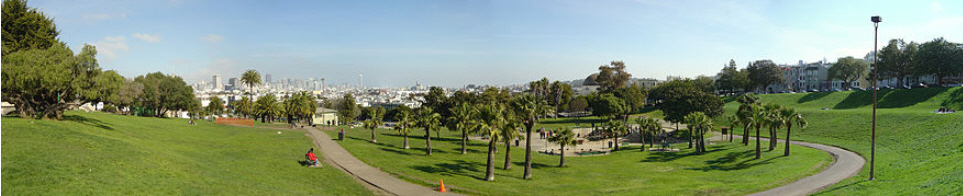
Mission Dolores Park, San Francisco - Wikipedia photo
Mission Dolores Park, San Francisco – Wikipedia photo

Do you have a favorite city park?

I remember the parks of my childhood, Winthrop and Myers in Tallahassee, Florida; Nelson and Fairview in Decatur, Illinois; and Golden Gate in San Francisco.

If you’re a New Yorker, perhaps Central Park or Union Square Park or Bryant Park fits your style. In Boston, perhaps you stroll about the Boston Commons.  In San Francisco, you may like Mission Dolores Park–I do, I once had an apartment next to it. Forest Park in St. Louis has a lot to offer as does Griffith Park in Los Angeles.
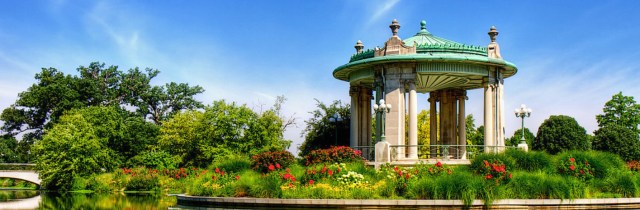
Forest Park, St. Louis - "Help sustain Forest Park as it sustains us all."  - Forest Park Forever
Forest Park, St. Louis – “Help sustain Forest Park as it sustains us all.” – Forest Park Forever

Many of us enjoy little pocked parks whose names aren’t well known outside their neighborhoods. Some of them are great for lunch with business associates; others appeal to dog owners and their pets; and some feature swings and green space for children.

Every time I receive a copy of “land + people,” the publication of the Trust for Public Land, I smile. Why? This magazine is a celebration of parks. New Parks being created. The latest innovations. Spotlights on trends and recent park ideas.

Some people criticize parks because they cost money, attract noise and/or “the wrong kind of people,” or create headaches when those who built them cannot afford to maintain them.

Griffith Park, Los Angeles - Wikipedia photo
Griffith Park, Los Angeles – Wikipedia photo

Aside from quality of life (as in beauty, play and relaxation), parks generally increase nearby property values, reduce hardscape, aid wildlife and increase the city’s tree canopy. Or, as the Trust for Public Land puts it, “We believe that everyone should have the opportunity to connect with nature. And as research clearly shows, access to nature is an essential prescription for the physical, environmental, social, and economic health of a community.”

I recently saw a link on Facebook to doctors who were prescribing time in a park for some of their patients. Many of the comments were along the lines of “about time.” Unlike some of the medications we’re given, park addiction is a habit we can live with. We’re hard pressed to live without it.

The current issue of “land + people” includes a photograph from Knight’s Pond in Cumberland, Maine, of a boy in old clothes walking along the shoreline with a net. The cutline reads, “Dragonflies and salamanders, fish and frogs–who knows what the day’s exploration will turn up. Every kid needs a place to discover the natural word.”

I like that. It reminds me of long childhood days. And it reminds me, too, that discovery of the natural world leads to respect.

–Malcolm

Malcolm R. Campbell is the author of “Conjure Woman’s Cat,” a 1950s-era novella set in the piney woods of the Florida Panhandle he discovered as a child. Thank you all for your support of this book:

CWC05072015

Wondering why people click on what they click on

When I blogged about the USS Ranger, the Glacier National Park Centennial and the White House Boys (at Florida’s Dozier School), I wasn’t surprised to see lots of folks stopping by to read those posts while the stories behind them were in the news.

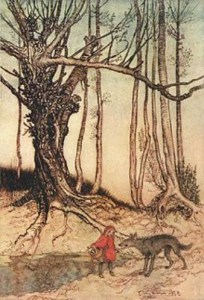
Arthur Rackham's 1909 illustration for "The Fairy Tales of the Brothers Grimm"
Arthur Rackham’s 1909 illustration for “The Fairy Tales of the Brothers Grimm”

Then, when there was suddenly an upsurge of interest in those posts, I often found out I’d missed a news event and people were out looking for information again. So then I updated the posts and even more people read them!

Of course, there are always those posts I write, thinking they’ll be popular and nobody reads them. Shows what I know!

It’s kind of fun trying to figure out why people read what they read. If I knew the answer to that question, I’d probably write more follow-up posts and get some real conversations going in the comments section.

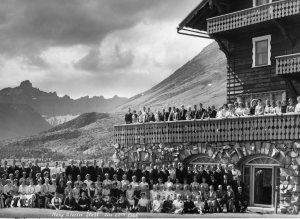
  • This summer marks the 100th anniversary of Many Glacier Hotel in Glacier National Park. Along with various centennial events, there will be an employee reunion which–sorry to say–I’m not able to attend. Perhaps this is why I’m suddenly getting more hits on my 2011 post Many Glacier Hotel 1963, where the fantasy began.
  • I figure there must be some Floridians following this blog, or possibly people planning a trip there, because I randomly get slews of hits on some of my “On Location” posts about locations in the panhandle such as Location Settings: The Other Florida, featuring Panacea and St. Teresa. I’ve written a lot about Florida settings and, since most of them are in the panhandle rather than the primary tourist sections of the state, it’s nice to see people stopping by to read them.
  • Reader interest in old book reviews comes and goes, quite often when the author of a book I reviewed has released something new.
  • Long-ago days
    Long-ago days

    The hits on one post, though, really have me puzzled. The highest readership week after week is going to my June 2013 post The Bare-Bones Structure of a Fairy Tale. In fact, that post has taken over from the White House Boys as the most-read post in the history of this blog. But why? I have no idea. I like fairy tales, myths, and legends: that’s why I wrote the post. I figured nobody would notice it because fairy tales are not exactly breaking news or high on the list of things that are trending on Yahoo, Twitter and Facebook. If you’re one of the people who read that post, what were you looking for?

This really isn’t a niche blog, though it generally has to do with books, writing and the things that catch my fancy. If the NSA is tracking me here, it probably knows more about this blog than I do, what with the various algorithms around for weighing how much space has been devoted to one subject or another.

Whatever prompts you to stop and read, I appreciate it. Hang in there as I bounce all over the spectrum. I’m working on another hoodoo related book, so that means you might be finding out more about folk magic than you want to know. (I spent the morning researching possum bones, but I think I’ll spare you the details of that.)

–Malcolm

Free on Kindle Unlimited

Malcolm R. Campbell is the author of The Land Between the Rivers, the three-story set of folk tales about Panther, Bird and Bear, the first animals (according to the Seminole creation myth) to walk upon the earth. It’s set in Tate’s Hell Swamp in the Florida Panhandle.


Your state’s goldmine of folktales

Folklore is “the boiled-down juice of human living,” Zora Neale Hurston believed. It’s potent stuff and most stories have multiple versions that have been adapted by storytellers to fit the places where they live and the audiences listening to the story.

William Gropper's America, its folklore
William Gropper’s America, its folklore

We often equate the word “myth” with the word “lie” and likewise the word “legend” with the word “superstition” or, perhaps, an ill-informed version of “the real history that actually happened.” I prefer Paula Gunn Allen’s view that myth “is an affirmation of self that transcends the temporal.”

Folklore, whether it’s a creation myth or an often told foundation story brings us, even in a world of science and technology, an alternative, somewhat unconscious and strongly symbolic account of how things came to be the way they are.

When writing about the people who live in a real-life location, I feel ignorant of the place until I read its folklore. These stories tell me a lot about the people and their customs. While many have made careers studying and collecting folklore and comparing that found in one place to that found in another, fiction writers can quickly focus in on some of their states’ basic stories simply through Internet searches like “Montana Ghost Stories,” “New York Legends,” and “Florida Folklore.”

Or, to get a jump start, you can go to American Folklore where you’ll find tall tales grouped by type and by state. You’ll find a diverse array of material by searching for folklore on the Library of Congress’ American Memory website. Similar searches on bookseller sites like Amazon will turn up useful stories as well. If your focus is a specific town, it will usually have a historical society with a local history and/or professional and amateur websites where a mix of history and legend can be found–such as this one for Two Egg, Florida. Many such sites have lists of helpful links.

If you delve into stories about Florida, for example, you’ll discover the skunk ape, a man named Uncle Monday who could turn himself into an alligator and a haunted bridge where a bride in a burnt wedding dress was supposedly seen for years.

The gold in the south isn’t the supposed Confederate Gold, it’s the stories, real, imagined and symbolic. Your town and state also have hidden wealth behind the modern buildings and high-speed Interstates: you can find it at those exits that are badly marked or that are overgrown with weeds due to infrequent use.

I didn’t learn very muck about local folklore in school because when it came up at all, it was always something from the brothers Grimm. Good stuff, that, and universal as well. Yet I cannot help but think that when it comes to legends and tall tales fit to give more to a neew story or novel, that it’s always best to “buy local.”

–Malcolm

Many thanks to all of you who helped make my April 30th “Conjure Woman’s Cat” book sale a success:

number13

Review: ‘Causing Chaos’ by Deborah J. Ledford

Causing Chaos (Inola Walela/Steven Hawk Suspense Series Book 4), by Deborah J. Ledford, IOF Productions Ltd (March 31, 2015), 308 pp.

causingchaosDeborah J. Ledford follows Staccato (2009), Snare (2010) and Crescendo (2014) with another powerful mystery/thriller set in the western North Carolina world of the Smoky Mountains and the Eastern Band Cherokee trust lands of the Qualla Boundary.

The story begins in blood, “Red streaks on the lower cabinets, an overturned chair, the oven door. An arc of crimson, the entire height of one wall.”

While Cherokee artist Paven Nahar works in his studio, his wife Shellie argues with two art dealers in the couple’s house who insist on acquiring the sculpture in progress. When Paven returns to the house later, he finds a bloody kitchen, a shattered pottery urn and no sign of his wife.

Paven, who is soon on the run, quickly becomes the prime suspect in his wife’s disappearance and presumed murder. Inola “Hummingbird” Walela, the only Cherokee in the Bryson City police department is tasked with the capture of the man who was her closest childhood friend.

The story is also defined by blood, blood as represented by the often conflicting love and drama within a family, and blood as a force of heritage and loyalty for members of the Cherokee Nation. Walela’s case is potentially related to an unsolved series “Qualla Ghosts” cases of missing women on tribal lands. This increases the pressure on Walela while ramping up the suspense for readers.

While each novel in this very cohesive series has developed the characters of Walela and her boyfriend Steven Hawk, Causing Chaos belongs to Hummingbird in every possible way. While the novel is aptly categorized as a police procedural and thriller, it is also a deeply personal story for Walela as multiple layers of her past and her family/tribal relationships come to light. Among these is a childhood incident, a source of nightmares and latent fears, that may somehow be related to the fate of Paven and Shellie and to the puzzling Qualla Ghost cases.

Causing Chaos is a cop story with great depth and a heartbreaking psychological undertow.

On a personal note, I have been hiking and vacationing in western North Carolina since childhood and have a deep fondness for the Smoky Mountains, the Blue Ridge Parkway and the sacred waters of the Oconaluftee River. Ledford’s novels not only fit hand-in-glove within this setting, but enhance it for those of us who know it well.

–Malcolm

Malcolm R. Campbell is the author of contemporary fantasy and magical realism fiction, including “Conjure Woman’s Cat.”

Throwback Thursday – a few memorable headlines

My father was a journalist. So was I (briefly). That means I’m conscious of headlines, the good, the absurd and the comical.

Years ago, the New York Times ran a weekly piece for its staff called “Winners and Sinners” in which it commented on the stories and headlines that hit gold and those that hit fool’s gold. It was enjoyable reading for me and a learning experience.

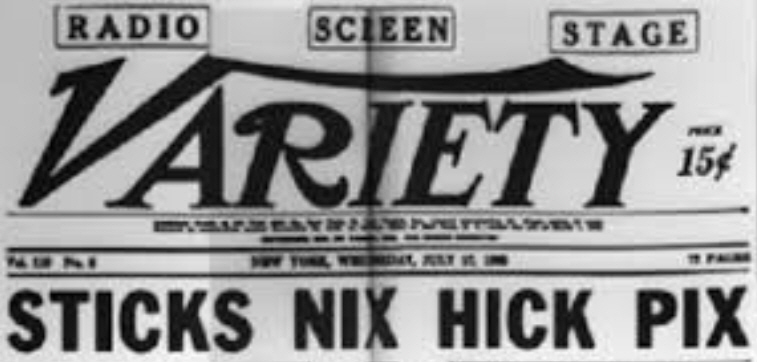
stixnixMy favorite headline of the past comes from Variety. It’s been copied and referred to so many times, that a fair number of places of the web explain what it means. This one appeared in July 1935 over an article claiming rural audiences didn’t care for movies about rural life.

A lot of people think this headline was STIX NIX HIX PIX. That would have been funnier, but in four words, the editors still said it all.

deweyOn November 3, 1948, the one-star edition (which means that it was an early one of many for that day) called the Presidential election a bit early based on its polling. The fact that the paper and the candidate both had low opinions of each other might have played into  the error.

The photograph of Truman holding up the paper has probably become more famous than the headline itself.

titannicsafeIn April of 1912, the New York Times reported that the Titanic sank, much to the dismay of other papers who were relying on wishful thinking and White Star Line assurances. The fact that one paper reported everyone was safe seems to have occurred when Marconigrams were intercepted and mixed up by amateurs.

One of the wires that apparently helped create the confusion was the one that asked ARE TITANIC PASSENGERS SAFE? Somebody read the question as a fact.

This gaffe, however, remained one of the largest until the Dewey Defeats Truman headline.

dianadeadThe stark, sobering headlines about Princess Diana’s death in August 1997 contrasted so greatly with the love many felt for her, they immediately captured the grim event.

The fact that she died in a car crash seemed to so many such a mundane and tragic fluke, leading to conspiracy theories, that her last moments stayed in the news seemingly forever.

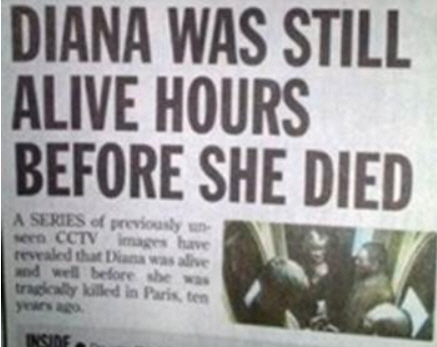
dianaaliveHere’s a headline that definitely would have found its way into the New York Times list of sinners. Headlines are often written quickly, leading to inadvertent meanings the editors don’t intend. Headlines like this frequently made their way into comedy bits on the Letterman and Leno shows.

Today, Facebook, YouTube and other social media are quick to capitalize on similar mistakes for places that didn’t really want to become famous due to a humorous typo.

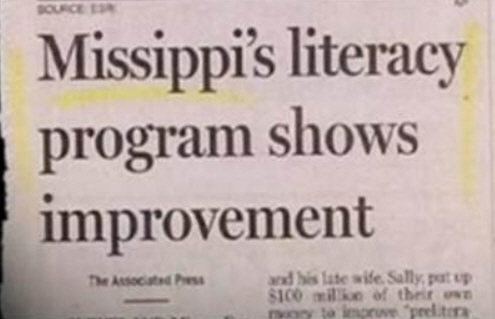
mississippiheadlineIn grade school, various little rhymes helped us remember how to spell the names of the states. Mississippi was a problem state, spelling-wise, though it also was very easy to spell once you learn the little spelling ditty.

Whoever wrote this headline was obviously out sick on the day of that lesson. These days, a quick Google search will turn up hundred of examples of church signs, advertisements, posters in store windows and road signs with hideous examples of misspelled words of words with double meanings.

Yes, unfortunately some of these get into the newspapers.

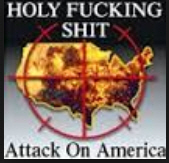
onionholyshitOn the flip side, sometimes a satirical publication specializing in fake news stories helps capture the country’s mood about a major tragedy in a way that mainstream newspapers can’t so for sake of propriety. Here is, perhaps, the best such headline that came after 9/11.

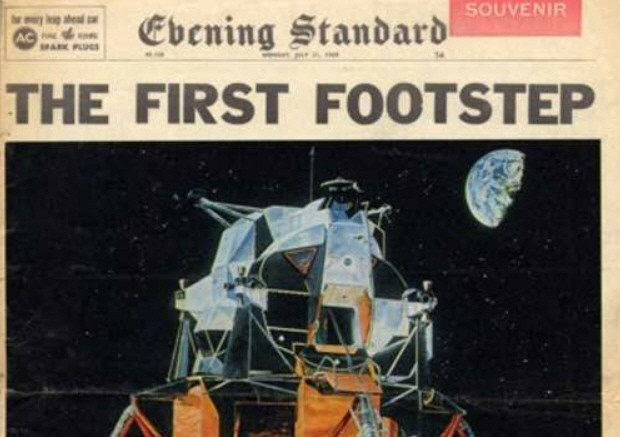
firstfootstepEditors are said to like gaining readers now only with sensational headlines (correctly written or skewed), but with puppies, babies, aw shucks moments and the minimalistic few words that say things just right as this paper did April 5th, 1968.

In the “old days” headlines were more difficult to write because editors weren’t looking at them on the screen like they do today to make the they really fit in the space provided by the layouts. Each typeface had different spacing and checking to see what headline fit and what didn’t involved knowing which letters were thick, thin and normal. If you’ve been around for a long time in the business, then you’ll remember “flitj,” the list of thin letters, and you’ll also remember the “W” was a wide letter and took up more space. Now, the screen tells us what fits and what doesn’t. Yet, the year’s news still provides us with plenty of sinners to go along with the winners.

I see winners and sinners every week. So do a lot of people. For better or worse, some of those seem to last forever, even ending up in memory lane posts like this one.

–Malcolm

Carrying Snakes Into Eden

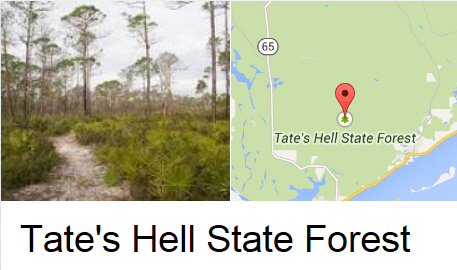
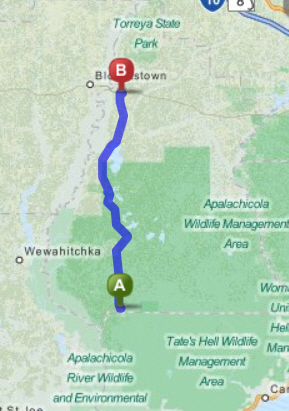
tateshellforestWhen I lived in north Florida, Tate’s Hell–fifty miles west of Tallahassee–was one of my favorite places. Much of it is swamp. Much of it is forest. Other than the logging companies who just about ruined it, few people went there in the 1950s and 1960s. Now, it’s being restored.

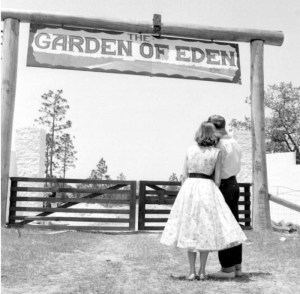
The entrance as it looked in the 11950s - Florida Memory photo
The entrance as it looked in the 1950s – Florida Memory photo

I’ve featured Tate’s Hell in several of my books and stories, including my recently released novella Conjure Woman’s Cat. An easy drive from Tate’s Hell is Florida’s Garden of Eden. That was once a well-promoted tourist attraction. Now, most of the old signs are gone; however you can still enjoy the heavenly habitats on the Garden of Eden Trail in the Apalachicola Bluffs and Ravines Preserve. After just a short hike, you’ll find a wonderful view of the Apalachicola River.

The founders of the Garden of Eden based their attraction on the work of the reverend E. E. Callaway who documented a fair number of features in this area that matched the Biblical story, including the Apalachicola River which split into four rivers. Callaway also thought that Florida’s imperiled Torreya tree was the Biblical Gopherwood from which the ark was built.

In those days, our local paper had an active letters to the editor section that often functioned the way blog comments and Facebook threads do now. Callaway constantly posted short letters talking about the sacredness of the site, hoping, I guess, that more ministers would support his findings. The reverend and I sparred politely on more than one occasion about whether Adam and Eve were native Floridians. I said they weren’t.

sumatraTObristolHowever, I have always been fascinated–possibly in a twisted and cynical fashion–about the proximity on several state and county roads–of Hell and the Garden. My dark “Garden of Heaven” trilogy played out multiple scenes along this theme. Conjure Woman’s Cat is set near Torreya State Forest and has numerous references to Tate’s Hell.

According to local legend (around Sumatra and Carrabelle, Florida), Tate’s Hell is named after Cebe Tate who was bitten by a rattlesnake there while hunting a panther that had been raiding his livestock. Just before he died, he told those who found him, “My name’s Cebe Tate and I just came from Hell.” That happened in 1875 and the name stuck.

Needless to say, I couldn’t help but write a short story about taking snakes from Hell and transporting them to Eden. Yes, I know, I shouldn’t have done that, but for better or worse that’s just the way my mind works.

The result of this madness is my new Kindle short story “Carrying Snakes Into Eden.” It’s set in the 1960s. Had I published it then, I’m sure the reverend Callaway would have complained about it on the letters to the editor page, and I probably would have responded that Cebe Tate might just be related to Adam, if not Lilith.

–Malcolm

snakesamazonMalcolm R. Campbell is the author of Emily’s Stories, Conjure Woman’s Cat and “Carrying Snakes Into Eden.”

I invite you to visit my Conjure Woman’s Cat website.


Briefly Noted: ‘The Storyteller’s Bracelet’ by Smoky Zeidel

Thomas-Jacob Publishing released a new edition of Smoky Zeidel’s The Storyteller’s Bracelet today, bringing the novel back into print after a twenty-two month absence. The book is available in e-book and Kindle editions. You can watch the novel’s trailer here.

From the Publisher

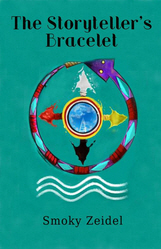
STBcover“It is the late 1800s, and the U.S. Government has mandated native tribes send their youth to Indian schools where they are stripped of their native heritage by the people they think of as The Others. Otter and Sun Song are deeply in love, but when they are sent East to school, Otter, renamed Gideon, tries to adapt, where Sun Song does not, enduring brutal attacks from the school headmaster because of her refusal to so much as speak. Gideon, thinking Sun Song has spurned him, turns for comfort to Wendy Thatcher, the daughter of a wealthy school patron, beginning a forbidden affair of the heart.

“But the Spirits have different plans for Gideon and Sun Song. They speak to Gideon through his magical storyteller’s bracelet, showing him both his past and his future. You are both child and mother of The Original People, Sun Song is told. When it is right, you will be safe once more. Will Gideon become Otter once again and return to Sun Song and his tribal roots, or attempt to remain with Wendy, with whom he can have no future?”

Smoky’s Description of the Cover’s Symbolism

“I’ve gotten a lot of questions about the meaning behind the symbols on the new edition of The Storyteller’s Bracelet. The wavy lines at the bottom represent water, which plays a life-changing role for my male protagonist, Otter/Gideon. The stairway through the clouds represents the gateway to the 5th World in Hopi mythology. The arrows point to the four cardinal directions and their colors represent the direction people of color scattered at creation. (These colors can vary from one tradition to another; these are the colors the Hopi use.) Finally, the rattlesnake is a symbol of new life, of transformation. Rattlesnake sheds her skin and begins life anew.”

You May Also Like

Smoky also released a companion short story on Kindle called Why the Hummingbird is So Small, “the enchanting story of Sun Song, a storyteller for her tribe, as she visits Fuss, her hummingbird friend, on the day before she is to leave for Indian School in the East.” You can visit Smoky’s website here.

–Malcolm


You’ve gotta ask yourself one question: “Do I feel lucky?”

A few days ago, an article zipped through my Facebook timeline in which the author claimed that lucky people tend to have more good luck and unlucky people tend to have more bad luck.

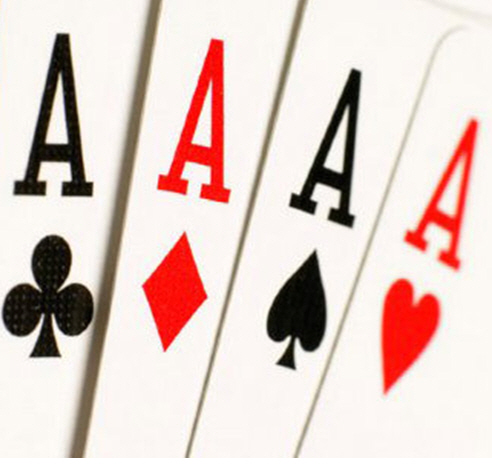
AcesNow that I want to link to it, I can’t find it. So, you’ve gotta trust me on this. Apparently–at cards anyway–people with a lucky night in progress tend to start playing a bit more conservatively. This increases the chances they won’t lose all  their dough.

People with bad luck get desperate and want to turn things around, so they start taking more risks, This increases the chance they will lost all their dough.

I’m not sure what was supposed to happen if the person didn’t think about luck one way or the other and just kept doing what they were doing. But I have this sneaking feeling that if a person has to ask himself “Do I feel lucky?” his luck–such as it may be–will get worse.

I say that because I’m very superstitious. If I were playing for a major league team and had hitting streak going, I’d never change my socks. I’m the kind of guy who thinks a pitcher’s no hitter will go in the toilet if one of the announcers says, “this guy almost has a no hitter.”

A far as I know, the article had no answer for the bad luck that happens if you change your socks or mention a no hitter in progress. It also didn’t say what would happen if a guy asked himself whether or not he felt lucky.

So, I’m wondering how the readers of this blog feel about good mojo vs. bad mojo and whether you’ve ever been rash enough to ask yourself if you feel lucky.


— Malcolm

Malcolm R. Campbell is the author of “Conjure Woman’s Cat,” a novella with a lot of mojo in it. If you’re feeling lucky, you might win a free copy of it in the current GoodReads giveaway.

The Power of Obscure Events in Fiction

“Claude Neal was an African American farmhand living in Jackson County, Florida who was accused of raping and murdering Lola Cannady, a nineteen year old white female, just outside the town of Greenwood on October 18, 1934.” — Wikipedia

Outside of Jackson County in the Florida Panhandle, I doubt many current Florida residents are aware of the lynching of Claude Neal by a mob after he was accused of raping and killing Lola Cannady.

Find a local historian, and you're well on your way to uncovering the good, the bad and the ugly about the location where you're setting your short story or novel.
Find a local historian, and you’re on your way to finding the good, the bad and the ugly of the place where your short story or novel is set.

It was a brutal incident and became a yet another notorious example of why the country needed anti-lynching laws.

I grew up in Florida during a time when local history was taught in the schools, so I’m aware of many of the panhandle’s legends, crimes, folklore, things to do and places to see.

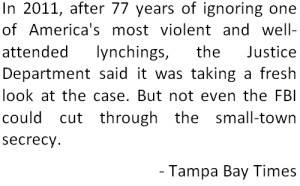
The old story came to light again in 2011 when the FBI said it couldn’t close the case. (There’s a link in the graphic below.) So people knew or  re-remembered the case for a while. But time passes and that knowledge fades quickly.

Needless to say, I hope my recently published novella Conjure Woman’s Cat will have a wider appeal than readers who live between Tallahassee and Pensacola. So why did I mention–just in passing–an obscure event when I could have just as easily made something up?

For better or worse, here’s how a writer’s mind works when it comes to creating a fictional town in the real world:

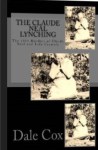
  1. The description of historian Dale Cox’s book notes that this event has been called the “last public spectacle” lynching in U.S. history.  Consequently, the African American characters in my 1950s-era story set in a town a few miles from where the lynching occurred would certainly know about it even though it happened 20 years earlier. To my characters, there’s not only a precedent for such violence but a chance it could happen again since the “climate” and the attitudes haven’t changed much.*
  2. Picture and cutline from Explore Southern History.
    Picture and cutline from Explore Southern History.

    Places are understood by many as not only their geography but as defined in part by what has happened there. It’s hard to mention Gettysburg without thinking about the Civil War battle there. Gettysburg is shaped partly by that battle, the intervening response to that battle, and–if you like magical realism and/or the paranormal–by the psychic strength of that event. Jackson County and nearby Liberty County, Florida were what they were in the Jim Crow 1950s partly because of the violence created an nurtured by a lot of KKK activity.

  3. Sometimes those obscure events come back into our consciousness again.
    Sometimes those obscure events come back into our consciousness again.

    When the characters in my fictional town fear mob violence after the rape of a local black girl by whites, it’s natural for them to think of what’s happened before. I strongly believe that authors who write about places should try to preserve the real stories–myths, legends, real events–of those places in their fiction. Even the casual mention of a real event, as opposed to a fictional event I could have easily made up, not only keeps history alive, but offers stories stronger foundations than one can get out of fabricated folklore and history.

  4. Mention a real event–or an existing myth–and you can enlarge your story’s impact by keying off of things readers believe–as they read your fiction–they might have heard about before; or perhaps they’ll wonder about it and Google it or otherwise read further. If you dumped all this history into your story, your research “would show,” as people say. In my case, I wasn’t writing historical fiction, much less a dramatization of the Claude Neal lynching. But, if I can tempt you to consider the very real environment in which my story was set, then the story potentially has a larger meaning than its fictional plot, theme and characters can convey.

Basically, the power of obscure events in fiction is context. The story doesn’t unfold in a vacuum but in a real place with real rivers (the Apalachicola), real foods (catfish and hush puppies), real forests (longleaf pines), real industries (turpentine) and real history.

All of those things fit hand-in-glove with the stuff the author is making up. As far as I know, the town I created (Torreya) never existed. Neither did a hoodoo woman (Eulalie), her cat (Lena) or her good friend (Willie Tate). But they are who they are in the story because of the kinds of things that happen in the place where they live.

Storytelling advice often focuses on plots and characters, and that’s not a bad part of the craft from which to begin. Writers have learned over time than modern readers won’t tolerate pages and pages of description. But readers find resonance in fully developed context: that is to say, the real in the story makes the fictional in the story seem real.

–Malcolm

* The reality of a lynching in Florida in the early 1950s was punctuated by the fact that when Ruby McCollum was accused of killing a white doctor in Live Oak, Florida in 1952, she was held in a state prison to protect her from a potential lynching had she been confined prior to trial in a local jail.

The “Conjure Woman’s Cat” giveaway continues on GoodReads until April 15th. Enter for a chance to win one of three paperback copies.