Writing magical realism: step-by-step suggestions

When the magic within a story is accepted as usual within an otherwise realistic setting, you’re probably reading or writing magical realism. It requires a light touch: if the magic becomes too overt or too over-the-top in terms of Hollywood special effects, then you’re out of the magical realism genre realm into fantasy, occult or science fiction.

Here’s an example
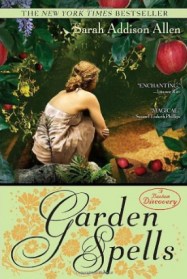
gardenspellsIn her novel Garden Spells, Sarah Addison Allen tells a story about a woman named Claire Waverly living alone in the family’s old house in a small town. Her family has always been viewed by others as odd or unusual in some way. She runs a catering business that’s in high demand because she’s not only a great cook, but uses the products of her own garden to enhance her dishes in ways that seem to help those who need to be helped: their luck or their emotions improve, they feel better, find their lives improving. She doesn’t advertise this: if she did, it would sound like an unbelievable health food scam and would no longer be magical realism. Each member of the Waverly family has a special gift that causes others to see them as slightly odd and/or highly talented.

The novel works on many levels as magical realism because: (1) We’re not seeing Harry Potter magic, (2) The small town setting lends itself to local legends and gossip that create an eerie overlay of maybe and perhaps that’s never quite analyzed in the light of day, (3) The magic is low key, not the kind that in other novels would turn into a thriller, witchcraft hysteria, (4) Her characters do what they do without overtly using “magical techniques” that require practice, meditations, or the stuff of either fantasy or dark arts novels.

If you  want to write magical realism, it helps if you’ve read a lot of it and have a feeling for the genre as well of being comfortable leaving a lot of things unsaid or hinted at rather than approaching the unusual in your story with a full-bore emphasis on “creepy stuff” as  Stephen King might approach similar material. Here are a few suggestions

Tips for Writing Magical Realism

  1. This magical realism book review site is a great place to learn tips about what works and what doesn't.
    This magical realism book review site is a great place to learn tips about what works and what doesn’t.

    Unlike fantasy, magical realism has strong plots and characters that would draw readers through the story if there were no magic at all. It’s hard to imagine the Harry Potter books without wizards and their magic. Garden Spells might work as a story in a small town even if the Waverly family didn’t have unusual talents.

  2. Choose a setting that lends itself to magic, unanswered questions and unusual events without attracting the attention of, say, the news media or the police or others who might shine a strong light on it. Small towns and rural settings both have legends and myths (whether you make them up or do a riff on those of the real place where you set your story).  Since a lot of people in today’s society get spooked by swamps, remote mountains, piney woods in the moonlight–along with the real or imagined creatures that might be there–going off the beaten track for your story gives you a lot of opportunities for implying that, say, the land is conscious or that birds and animals have unusual motives, or that keeping on the “right side” of folk beliefs is the healthy thing to do.
  3. The people who create the magic seldom talk about their magic; if they do, they don’t see what they do as any different from the way anyone else uses the tools of his/her trade to do or to create what most people cannot do or create. If you borrow from a real magical tradition such as Voodoo, witchcraft or hoodoo, research (or your own knowledge) will bring you a lot of ideas about ways of living a magical without turning the practitioner into a caricature.  As the author of a magical realism story, you never ever demean the myths, legends, beliefs, spells and practices of your magical characters or the enchanted landscape in which they live.
  4. If you use a real wilderness or other remote setting, your book will be more believable if you research the flora, fauna, weather and people who live there now–or lived there in the past.  For one thing, you need realism to play off against the magic. For another, it’s hard to show characters moving around in an area if you don’t know what it looks like. And finally, natural magic uses things from the land that witches and conjurers grow, harvest or find. Don’t make this up: it will kill your story. Find out what kind of leaves are used for the spell you want, research what the plants look like and whether they grow in the area where your story is set, and make that a natural part of your narrative.
  5. Refer to an area’s legends and myths. For real settings, you’ll find these from folklore societies, books with titles such as “The Ghosts of Quincy” or “Florida Legends” and “Creation Myths of the Sunshine State.” Your job is usually not to retell any of these stories, rather to refer to them the way people in a city might mention in passing the day the trolley car first came by the house or the fact that some accident happened years ago in a certain place. For example, in my novel in progress, one character tells another not to eat gopher tortoises because they were created by the devil. The legend about that is longer than this post, but in a magical realism book I can simply refer to that as a fact and move on. I always prefer to use nuggets out of the real myths and legends from a place rather than making them up from scratch. For one thing, they fit the place well. For another, they convey a folklore truth that many people living there have heard before and/or a bit of folklore I want to help keep alive.
  6. Certain events/feelings that are told as metaphors in a mainstream realism novel can be told as though they actually happened. Be careful with this, or it won’t seem believable within the story’s context and the character’s beliefs. For example, in realism, a character who needs to apologize to another might say, “I felt as though I was so small, I could hide under the dining room chairs until my parents left for work.” In magical realism, you don’t include the words “as though” or “as if.” You state it like it’s temporarily the case. Interior monologue and/or lyrical propose are two ways you can do this so that a typically unrealistic event suddenly seems plausible within the magic of the moment. For example: “When my conjure woman is angry, she is taller; she doesn’t look smaller when she walks down to the far end of the beach.”

amfolklore

There’s no recipe here. In a sense, you have to feel it and sense it before you can do it. Once you practice the genre a lot, you don’t have to consciously think about the components any more than a person with years of experience thinks about what s/he does to make a bicycle work. It also helps if you have an open mind and a sense of wonderment or even magic about people and the natural world.

At any rate, I toss off these suggestions as ideas that might work. Or might not.
Malcolm

Malcolm R. Campbell is the author of the magical realism novel “Conjure Woman’s Cat.”

Positivity is the world’s saving grace

“I’d like to invite you to join me for two days of pure positivity. Forty-eight little hours of looking for and at only the good stuff. Of ignoring what isn’t beautiful. I’m not asking you to give up misery forever. Forty-eight hours and one minute from now, you are welcome to seek out all the stuff that makes you angry, sad, frustrated, and worried, but for two days, let’s sweep all that under the rug and then dance atop it. What do you say, are you in?” – Beth Grace in Your Voice Within

Focusing on the good stuff ain’t easy.

positivveSeems like the world throws a lot of curve balls at us and our friends–and at other good people as well. Getting depressed or angry is probably a very human response.
Plus, many of us have “hot buttons,” issues that almost automatically bring fire-breathing anger and personal issues that upset us so much we lose our cool and say words we can never call back.

I’ve spent a lifetime working on controlling negative emotions, damping down what I jokingly refer to as my “volatile Scots’ temper.” My temper doesn’t flare up  as often as it used to, nor as forcefully. For one thing, the logical side of myself realized years ago that anger primarily hurts the person who’s angry unless they haul off an hit, shoot or bully somebody with words, things I hope I will never do.

My logical conclusion is: anger is a waste of time. The person or group I’m angry at doesn’t even know it. Yes, if it’s a social matter or a political matter, I can join others in protesting it or expressing my beliefs about the issues involved, but anger won’t help me do that. Meanwhile, the anger is hurting me, causing anything from indigestion to a preoccupation with fuming thoughts that distract me from the things I’d much rather be doing.

The Silva Method

Years ago, I took a two-weekend seminar that was developed out of the research of a man named Jose Silva that focused on positive thinking, mediation, improving memory, and on techniques that helped bring dreams into reality. Few of us could match the adeptness of our instructor in any of these areas. But we all reported a similar benefit: for many months after the course, we all felt like we were walking on air. We were simply completely happy and confident.

Unfortunately, most of us didn’t spend enough time in the years following the course to maintain such a high level of bliss. The world gets to you after a while. It not only throws those curve balls, but it mocks you if you maintain a peaceful and nonviolent approach to the slings and arrows of outrageous fortune.

Like the martial arts, sports, music, learning another language, and almost everything else we may wish to master, mastery of oneself and one’s emotions and negative mental chatter requires constant monitoring and practice. Life gets in the way, doesn’t it? We get up at 6:30 a.m., commute to work, get home early in the evening, have supper, and then fall into an easy chair and watch TV until it’s time to go to bed. It just too darned easy to skip meditation and practice. So, without vigilance, even after one takes a course or listens to an inspiring speech, it’s easy to slip back into the old habits.

Rosicrucian Order

I have been a member of the Rosicrucian Order for almost half a century. I’m embarrassed to admit this because I’ve probably spent a tenth of the amount of time required to fully take in the wisdom of this mystery school and apply it to every day life. I apply it more to my writing than to myself. I’m grateful for the magic and mystery that ancient wisdom brings to my writing. However, I have–it appears–chosen to bring less of it into my day to day living than I should have. Like studying Kabbalah  and other ancient “big picture” approaches to the universe and how it works, the order takes a positive, non-judgemental approach to improving one’s life while making Earth a better place for everyone.

So it is that I am pleased when I read posts like Beth Grace’s “48 Heart-Centered Hours.” Beth, and others, remind me how dangerous to oneself negative thoughts can be, and lead us back into the fold where positive thoughts are more the norm than an anomaly. Sheepishly, I think, “Well, I knew that, so why haven’t I been more dedicated in living a life based on a positive focus?”

Beth’s invitation to two days of heart centered hours came at the same time that I’ve been doing the final revisions on my latest book. What a wonderful experience this has been! The words fell into place because I was staying away from negative thoughts, thoughts that really have no value whatsoever no matter how “right” we think we are about one issue or another. And yes, I have felt more bliss and energy during the last 48 hours than usual!

I have an edge, perhaps. Age has brought me to a point where getting angry is just too much trouble. I tend to look for other ways of addressing issues that need to be fixed. But I need reminders. There are many positive blogs around that help me find my loving center again. Beth’s is relatively new and one that has helped me ind my bliss again.

–Malcolm

Malcolm R. Campbell writes magical realism because he believes in magic.

Seriously, why do I need to know everything right now?

We’re living in a right now world.

Of course, it’s always now.

But the now I care about is the now I can see, hear, taste, touch and smell.

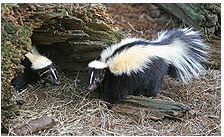
  • skunkIf I’m enjoying smelling the roses in my side yard, I don’t really need an “urgent” text message from a friend saying, OMG I just ran over a skunk on Interstate 75. (Unless the skunk or the smell of the skunk caused a car wreck, this information can wait until later–or possibly never.)
  • When I turn on CNN, I see that the words “BREAKING NEWS” are always on the TV screen even if the news happened a week ago. The primary breaking news on CNN is that a bunch of talking heads are telling me what they thing about the news rather than covering actual news. (I got fooled by this at first and though some hideous events were happening over and over again.)
  • Looking for interesting posts on Facebook, I don’t need to see status updates that look like this: “Good one.” “Oh no, look at that chick’s ugly dress.” “What a bunch of crap.” “Yikes, the killer is getting away.” (I took me a while to figure out that the people posting these updates weren’t necessarily crazy–though that’s possible. They were making comments about some TV show they were watching, you know, like were were all watching it together.
  • When I’m busy defusing a bomb that somebody left under the hood of my car after watching the movie called “Speed,” I don’t really want to get a slough of voice mail messages from you saying stuff like this: “Hi Malcolm, this is Bob, just calling to see if you’re still alive.” “Malcolm, I know you’re not dead, please pick up.” “If you don’t answer your GD phone when I call you, why do you have a GD  phone?” (Bob, the Earth circles around the sun rather than around you.)
  • When I’m watching an exciting episode of NCIS, I don’t really want my local network station to preempt the the show with five minutes of emergency “JUST HAPPENED” commentary about a dead skunk on the Interstate with on-the scene coverage from reporters saying, “This is Bob Smith standing next to a dead skunk a mile south of the Highway 53 exit for Calhoun. It smells really bad. Back to you at the station, Susan.” (Meanwhile, I missed the stunning conclusion of my program and have gotten back to the network feed in time for a Preparation H commercial.)
  • Let’s say I just ran over a skunk on I-75. You send me a text message: “7132 hh lol”  (First, I need to remind you that looking at text messages while I’m driving is illegal in Georgia. Second, I need to remind you that I hate text messages because typing is a lot more trouble than actually talking. Finally, I have no clue what that gibberish means anyway and think maybe you’re a troll or a hooker.)
  • I try to avoid Twitter because most of it’s gibberish from people who think I care about what they’re doing right now as opposed to what I’m doing right now. When you say, “fantastic sex with my hooker BF is happening while I tweet,” I want to respond with “TMI.” (Actually, I don’t want to respond at all and will assume you’re insane, arrogant, or are having lousy sex that leaves you time to be on Twitter.)
  • If you just discovered minutes ago that a Hollywood star most of us thought had been dead for years has just now passed away, it really means you just now heard of it and think that my life will be changed forever if I don’t know about it immediately. (As it usually turns out, the breaking news in this information is the fact you just heard about it even thought it happened last week.)

There are days when I want to throw away my cell phone, swear off Facebook and Twitter, and stop listening to the so-called breaking news that isn’t breaking.

If you just discovered something, please don’t call.*

–Malcolm

*Unless you think I just ran over a skunk and want me to know there’s a bomb in my car that will go off if I don’t keep going at over 55 mph in spite of the smell.


Being preoccupied – one hazard of being a writer

If somebody wrote a blues song about living with a writer, it might start out something like this:

My baby’s lyin’ next to me, but I ain’t here,
I’m just a haint who ain’t dead, cause she’s off yonder inside her head.

My wife told me many years ago that she can always tell when I’m working on a novel or a short story because I’m not in the room even when I’m in the room. She says I’m preoccupied, but we both know it’s more than that. I haven’t gone off into a trance, but I’m getting close.

I can pull myself back from this preoccupation if I have to, if the cops bust into the room or the world ends, but otherwise the story in progress is so addictive that it has more power than “real life.”

dadreamWhen a writer’s in a writing trance, the sights and sounds of his/her story display in the mind’s eyes with greater clarity than memories and dreams. It’s almost like s/he is there with the hero being chased down the street by muggers, the people escaping from a burning building, the troubled woman on a swing, the lovers walking on a beach in the moonlight , or a room full of employees getting chewed out by the boss.


It you’re a writer, you know what I mean. If you live with a writer, you have my sympathies.

Once the story’s complete, the daydream quality of my non-writing hours disappears and I’m back to normal. Thankfully, I don’t work on multiple stories/novels at a time, so when I write the words “the end” on one story, I don’t immediately become preoccupied with the next. I say “thankfully” because being not fully present with others when you’re supposed to be watching a TV movie together, shooting the breeze on a car trip, or sharing a carafe of wine at a fine restaurant always comes off as disinterested uncaring.

One of my pet peeves is people who text or talk on their cell phones when having dinner with my wife and I or who have have come over to play cards or shoot the breeze over drinks. Few things are more rude than that even though most cell phone users think the world will stop if they don’t answer every call. While writers don’t mean to be rude and caught not listening or not responding to others in the room, they can’t always help it. And we come across as worse because we don’t have a cell phone plastered against our ear while everyone else around the dinner table sits in limbo while we yak about something inconsequential. Cell phone interruptions are an accepted kind of rudeness; daydreaming in front of others is not.

Maybe I need a sign around my neck that says: Sorry to be rude, but my short story’s calling I’ve got to take this.

Most people will either think that’s a joke or that the writer is crazy, that is, unless they’ve lived with a writer and his/her trance-like moments and understand what’s going on.

Seriously, it’s not that really want to ignore you. It’s just that I haven’t yet found a twelve-step program to cure my writing addiction.

–Malcolm

Still addicted after all these years, Malcolm R. Campbell is currently preoccupied with the sequel to “Conjure Woman’s Cat.” 


Getting the sequel right

I’m working on a sequel to Conjure Woman’s Cat. It’s been more difficult to write than CWC. Likewise, Sarabande–the sequel to The Sun Singer–was harder to write than TSS. I don’t think my difficulties with sequels are unique to me.

On the other hand, some writers produce multi-book series with the same characters and similar plot lines, so whatever drags me down while working on a sequel must not bother them or they’d go nuts by the time they get to the third or fourth book in a series.

The books grew more complex as the characters aged and advanced through their years at Hogwarts. A large cast of characters with conflicting motivations and loyalties also kept the books fresh.

With a sequel, what can possibly go wrong?

  • When everything is said and done, it might lack the unique freshness the author achieved in the original book.
  • The characters don’t seem to be the same. I’m not talking about character growth, which is good; more like their being apples and oranges different than they were in the first book, ending up as different people.
  • The events, descriptions, voice, and mannerisms had to be consistent within the first book. With the sequel, there’s always a danger that the author will inadvertently change something or contradict something from the original without even noticing it.
  • Some of an author’s favorite phrases and descriptions might get into the second book to such a great extent that readers feel they’re reading the same book twice, or a hastily written sequel in which the author plagiarizes himself.

If you’re a writer, perhaps writing sequels bothers you for other reasons. If you’re a reader, you’ve probably found yourself disappointed with some of the sequels you read because they didn’t live up to the wonders of the original.

Frankly, I don’t have an easy solution for solving my concerns about sequels. But here are a few ideas.

  • The sequel can focus on a different character than the original. On the plus side, if you take a secondary character from the original and make him or her the protagonist in the sequel, you’re dealing with a lot of new ground. You’re adding information, events and experiences that weren’t mentioned or even hinted at in the original. On the minus side, try to imagine the Harry Potter books focusing on a different protagonist with each follow-up book in the series. This can anger fans, even if you’re not a major bestselling author, because they return to your work wanting to hear more about the character they grew to love (or hate) in the first book. I feel that the dangers here might outweigh the advantages  even though I used this approach when I wrote Sarabande.
  • Knowing your characters in the same way you know real people makes them more likely to seem just as believable and consistent in the sequel as they did the first time out. I have always thought there was something false about making a grid for each character in which I listed his or her traits, motivations, personality, brief history, etc. Sure, this will keep you from changing a character’s hair color by accident in the middle of a book, but I see such grids as somewhat artificial. We know and keep track of our real life friends without needing a chart showing everything about them. If you really know your protagonist, and other primary characters, then I think you can take them into new situations without having to fret about what they would do or say. When you have a real-life problem, you know (usually) in advance which of your friends to turn to for a shoulder to cry on or for practical advice. Knowing our characters in this way helps keep them from changing into totally different people in the sequel, much less doing something that’s (so to speak) out of character.
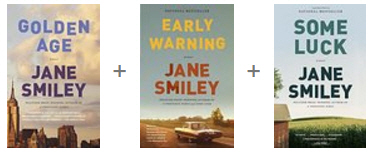
  • Jane Smiley's "Last Hundred Years Trilogy" takes a family through a century of real and fictional events as the characters age, marry, have children and pass away. New real-life events played off against the characters and helped keep the books interesting.
    Jane Smiley’s “Last Hundred Years Trilogy” takes a family through a century of real and fictional events as the characters age, marry, have children and pass away. New real-life events played off against the characters helped keep the books interesting.

    Keep your notes from the first book. I don’t plot or outline any of my books: if you do, don’t throw those away. I do take a lot of notes as I do research. The flora and fauna living around a protagonist’s piney woods cabin probably won’t change from book one to book two. Keeping the notes reminds you what you said so that the sequel is consistent. When I have multiple characters, I sometimes make a timeline that shows when they were born, when they married, when they had children, etc. If you do this, too, then that timeline will serve you well when you write the sequel.

  • While you may have had certain in jokes and events that were mentioned more than once during the course of the original, the sequel will be fresher if you don’t use the same ones over again. Referring to a few of them in the sequel is so similar to people in real life often telling the same stories many times, that it not only makes the characters real, but it also ties the sequel to the original in a positive way. However, the sequel needs to add new in jokes, set pieces and personalities for the characters to talk about rather than rehashing everything from the original. In some ways, oblique references in the sequel to often-mentioned events and attitudes in the original also adds realism because we don’t always tell the same yarns or remember-whens the same way each time we think of them.
  • While keeping the characters consistent from the first book to the second book is important, I believe it’s equally important for the protagonist to have different challenges in the sequel. Sure, some TV series pit the protagonist hero against similar kinds of bad guys in every episode. This works for a while, but then it gets stale. So, if your protagonist in the first book is, say, coping with the aftermath of a natural disaster, the second book probably shouldn’t show them coping with a new natural disaster. As authors, we need to avoid having our books sound like they all have the same plot, such as a hurricane in book one, a flood in book two, and an forest fire in book three. For every series that works that way, I think there are probably ten that fail.
  • Sequels are also helped (though this isn’t mandatory) if they take place with events, hobbies, avocations, locations, and issues the author knows well. In my case, I have focused on times and places where I lived or worked, giving me a feel for the places and what was likely to happen there.

As writers, we play “what if” with characters and situations. The thing that makes this fun for us is that after we play one kind of what if with a character, it’s boring to do that again whether it’s personal relationships, disasters, bad guys, injustice, or vacation hi-jinks. Knowing one’s characters and keeping a few notes helps us write sequels that are both consistent and fresh when compared to the original books.

Malcolm


Webinars and Courses that Rip off Writers

The other day, I saw a promotion for an online course that claimed to be filled with secrets for increasing Kindle sales of your books to high, money-making sales numbers. The plan was advertised as being easy to implement and took so little time to keep going that it would free up a lot of the writer’s time for writing and researching future books.

I have no idea what the plan is because in order to find out, one had to sign up for a course costing almost $200.  Quite possibly, that could be the best $200 I ever spent. But I’m not willing to risk the money without more details about the plan. Apparently the course is a one-time deal before the webinars are released at a cost of $900 or more.

These prices are exorbitant.

money2If somebody has a marketing plan that’s really working for them by bringing in money like they’ve never seen before, why must it be sold sight-unseen to the rest of us rather than offering the details in a magazine article or in an appropriately priced Kindle or paperback book?
While this not be the case with the plan I’m thinking of, many no-fail plans require writers to do what they may not want to do: change genres, write shorter books, write faster, be more commercial, have a monetized website, sign-up for third party services that also cost money, attend conventions and participate in panels and book fairs, or other tasks which may not fit some writers’ lifestyles, abilities, and budgets.

My personal opinion is that a webinar is a horrible way for dispensing detailed information because it’s linear. If the information were in a PDF, a Kindle book, or a paperback, one could see large blocks of information, headings and graphics at a glance rather than waiting for the webinar/podcast to get to them. Adding insult to injury, many of these video presentations include guests and that means time is wasted introducing them and chatting with them and adding happy talk throughout the presentation. Even if you love webinars, if they’re not free, then they are more costly than reading a e-book with the same information in it. You may not agree, and that’s fine. I primarily resent the prices.

I subscribe to “Poets & Writers Magazine” and AWP’s “The Writer’s Chronicle” because I want professional advice and tips. “Writers Market” is another alternative as well as local and state writing organizations. Writers are, as many will tell you, not really competing with each other, so sharing techniques at a reasonable price (book/speech/article) rather than doling them out for a giant profits seems to me too be the professional thing to do.

A lot of promotional experts offer free PDF and Kindle files filled with tips in hopes that after reading those, the writer will subscribe for more expensive services. The tips vary in quality and application. They’re great idea generators even if you can’t use all of them. The more expensive services are described in detail so that the author knows what s/he is getting.

I might have just missed out on a money-making secret by turning down the $200 course. On the other hand, I’ve been around long enough to worry about buying a pig in a poke.

Malcolm


Pardon the language, but are “sh_t” or “go blind” valid alternatives?

Obviously, when somebody says a group of people or farm animals don’t know whether to shit or go blind, we’re supposed to know that the phrase is figurative and means the people or animals are confused.

As a writer, I can’t help but smile at the phrase because it’s tempting to take it literally and wonder if the first person who ever said it was–in fact–so gobsmacked, they didn’t know whether to shit or go blind because these alternatives really don’t belong together,

I mean, who would choose “go blind”?

Maybe there are actually more options but they don’t see them because the last time they were confused, they chose “go blind” instead of heading for the outhouse.

I’ve never seen a national poll on this question, so I don’t know how many people favor one option over the other. Perhaps many of them would write in “none of the above” or add another option called “use my brain.”

As an often-cynical writer, I see the comments on news sites written beneath new stories and think a lot of people aren’t aware that there are additional operations. Somewhere–childhood, perhaps–they were brainwashed into an either/or mentality.

Then there are those who, when hearing the phrase, think, “I’ve already used the bathroom, so I guess that means I have to go blind.” I see a lot of people on Facebook post status updates that indicate this solution happens more often than we think.

In case you’re wondering, I try to use the bathroom on a schedule my doctors approve of even though some of them have said, “hell, you don’t want to go blind, do you?” I can see how some people might think if they forget to go to the bathroom, they might lose their sight and then they wouldn’t be able to find the bathroom, thus ending up picking both options.

How sad is that?

I’ll admit that when it comes to some things, I am (figuratively speaking) blind. By that I mean, I have my hot buttons and biases and hope you understand that when you read things on this blog, they represent my experiences and may not be true for you.

In this case, that could mean that the shit or go blind choice really works for you. In a way, that’s good, because it doesn’t clutter up the mind with the thousand actual options that exist.

The major news media are facilitate this limited view of the world. CNN believes in going blind and FOX believes in shit. Now, if you see that the opposite way, that’s fine because I may be too blind (figuratively speaking) to see that you’re right. I don’t think you are right, but then I haven’t hired any private detectives to hide in the shrubbery at your house to see whether you go to the bathroom regularly and/or walk around with a blindfold, stumble over chairs, and scream, “Oh shit!”

For those I’ve offended, I want to point out that (a) my header says “pardon” the language and (b) I don’t usually use the word “shit” in polite company (whatever that means).

I thought of all this because I see so many people out on the Internet who believe news stories and posts that coincide with what they want to hear and shout “lies” or “bias” when they find news stories they don’t like, seemingly blind to the idea there are multiple points of view. So far, haven’t asked if they stopped having regular bowel movements.

I don’t have any solutions for the shit or go blind brainwashing because many people don’t see how blind they are to the things they don’t want to hear, much less believe. This means they made their choice so many years ago, they don’t remember making it. Can you imagine how scary that is to folks who want to discuss all the options and alternatives to most problems and issues?

“Either/or” is usual a false alternative that we must force ourselves to question even though we’re not yet able to see past the illusion.

–Malcolm

Malcolm R. Campbell is the author of the comedy/satire “Special Investigative Reporter.”

Used eagle eyes available for cataract surgery

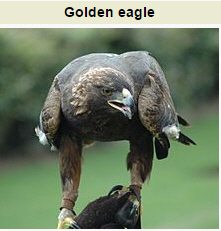
Rome, Ga, August 22, 2016, Star-Gazer News Service–When author Malcolm R. Campbell scheduled cataract surgery this week for his left eye, he learned that he will be the first man in his town to receive a used golden eagle eye instead of an artificial lens (called an intraocular lens, or IOL).

Wikipedia photo
Wikipedia photo

Ophthalmologists report that eagles have five times the number of light receptor cells in their eyes as humans, so it was “just a matter of time” before humans were offered a chance to upgrade.

“So far, the service is only available for those undergoing cataract surgery,” said Waterfall Jones, head of the Eagle Eye Research Center of the Department of the Interior. “In time, all humans will be given the option of receiving eagle eyes at birth if not sooner.”

Campbell, who is a long-time member of such groups as the Sierra Club and the National Wildlife Federation expressed reservations about the used golden eagle eyes due to the fuzzy nature of the “used” concept.

“It’s not like golden eagles upgrade their own eyes and offer their older eyes at a used eye lot for resale,” Campbell said. “However, I learned that the eyes come only from golden eagles with organ donor cards.”

“Eagle whisperers working in the national parks have had a continuous dialogue with the birds for fifty years, finally winning their trust along with signed consent forms for the donation of eyes,” said Jones.

According to spokesmen who have elected to remain anonymous to avoid bad publicity claim that Campbell will not only be able to see a reader turning the pages of a book from a mile away, he will also be able to fine tune his books into best sellers, especially in areas frequented by golden eagles.

“Within a few years, we’ll be able to create golden eagle eyes in the laboratory,” Jones said. “This will create an unlimited supply even though the eyes will be hideously expensive and will not be covered by Medicare or private insurance. People will have to ask themselves just how much it’s worth to be able to say ‘On a clear day I can see forever.'”

“I won’t have the night vision of an owl,” said Campbell, “but then I can buy lamps and flashlights at Home Depot and owls can’t.”

Story by Jock Stewart, Special Investigative Reporter


Public Invited to Celebrate the Centennial Of The National Park Service At Glacier National Park

from NPS Glacier National Park

Park Entrance Fees Waived for August 25 –August 28

Entrance fees to the Park, as well as all other units of the National Park Service, will be waived for four days.

NPScentennialWEST GLACIER, MONT –On August 25th celebrate the centennial of the National Park Service. The celebration is as much a reflection on the importance the national park system has played in our nation’s heritage as it is an opportunity to look forward to the next 100 years. As we take that look,we must do everything we can to foster the next generation in becoming outstanding stewards and advocates for Glacier National Park and prepare them for the future challenges of protecting its natural resources, celebrating its cultural legacy, and providing for outstanding visitor experiences.

At Glacier, we are in the forever business, always taking that long look forward to where we are headed. The next generation will be challenged by managing the parks in the face of climate change. For this park it could mean the loss of its remaining glaciers with significant impacts on the ecosystems and the waterways which originate from here. The next generation will also face an ongoing change in park demographics.This could mean a demand for new recreational experiences, adapting to increases in visitation, and adjusting to rapidly evolving technology.

Our cultural heritage at Glacier National Park goes back far beyond the establishment of the park. It goes to the deep connectivity that the Kootenai, Blackfeet, Salish, and Pend D’Oreille have to this landscape. Thosenative traditions and practices are an important part of the deep rich texture of Glacier National Park. As the park and tribes move forward together in the next 100 years, the next generation has the opportunity to strengthen important programs, such as Native America Speaks, tourism development, and the Iinnii project, and develop new initiatives with our tribal partners.

As we enter our second century, I invite you to celebrate with us the sense of wonder that these historic and wild landscapes have instilled in us all.

The National Park Service Centennial Week Events


  1. Commemorative coings
    Commemorative coins

    National Park Centennial Instameet: Glacier National Park, partnering with the Glacier National Park Conservancy, the Department of the Interior, and Visit Montana as well as special guest photographers are hosting an Instameet on August 25from 6 p.m. to sunset in the Apgar Village Green near the Apgar Village Inn. Visitors are encouraged to come together to connect, explore, and celebrate creativity with a camera, make new friends, exchange ideas, and celebrate the 100thbirthday of the National Park Service (NPS). All ages, levels of experience and types of cameras are welcome. Around 6:15 p.m. the host of the Instameet will say a few words in regards to the National Park Service centennial. The official Glacier National Park Service centennial visitor photograph will be taken around 7:00 p.m. Visitors will have a chance to sign the photo matte and be a part of NPS history. The photograph will be posted on our social media sites, printed and hung in the park, as well as copy presented to the director of the National Park Service. It is anticipated that attendance will be high;visitors are encouraged to park at the Apgar Visitor Center and take the bike path to the event.

  2. NPS Photo
    NPS Photo

    Happy Birthday NPS 100 Ranger Program: Say “Happy Birthday NPS” and join a national park ranger for a special program at the St. Mary Visitor Center Auditorium, Thursday, August 25, 8:00 p.m. Admission is by ticket only, with only 209 tickets available. Attendees can pick up a free ticket at the St. Mary Visitor Center beginning on the morning of August 24.The program will explore the history of the National Park Service, reflect on the last 100 years, and the role Glacier will play as we prepare for the next 100.

  3. Logan Pass Star Party: Explore the dark skies of Glacier National Park and attend the Logan Pass Star Party. Admission is by ticket only. Attendees can pick up their free ticket (one per vehicle) at the Apgar or St. Mary Visitor Centers beginning Thursday August 25. The Logan Pass Star Party will be held at Logan Pass Parking Lot from 9:30 p.m. to midnight on Friday, August 26. Attendees will have opportunities to meet with rangers and members of the Big Sky Astronomy Club while taking in the unusually dark skies. There will also be telescopes available to look into the depths of the universe.
  4. Give Back To Glacier Week: The Glacier National Park Conservancy (GNPC) is hosting a “Give Back To Glacier Week,” from August 19 –28.GNPC volunteers will be at entrance locations throughout the park asking for involvement in the program. The GNPC is the official fundraising partner of Glacier National Park providing funding for vital projects and programs that preserve and protect the park.

Wish I could be there.

–Malcolm

Malcolm R. Campbell’s contemporary fantasy novels “The Sun Singer” and “Sarabande” are set in Glacier National Park. He was a bellman at Many Glacier Hotel while in college.

Jesus, a Sun Deck, a Kimono and Magical Realism

“You can imagine then how distinctly I remember the day Jesus of Nazareth, in person, climbed the hill in our back yard to our house, then up the outside stairs to the sun deck where I was sitting. And how He stayed with me for awhile. You can surely understand how clear those details rest in my memory. ” – Gloria Sawai, “The Day I Sat With Jesus on the Sun Deck and a Wind Came Up and Blew My Kimono Open and He Saw My Breasts” in ‘A Song for Nettie Johnson’ (2002)

It probably won’t surprise you to hear that this short story, first published in 1976 or 1980 (depending on which source you use), has been anthologized and discussed a great deal due to its unusual title.  I find magical realism flowing through the story while others think the author merely came up with a clever title and couldn’t do it justice. (You can read the short story in PDF form here.)

nettiejohnsonI like Morny Joy’s take on the short story in Voices and Echoes: Canadian Women’s Spirituality: “No ecstasies, stigmata, fasts undo death or masochistic indulgences for this visionary. No cloistered convent or perpetual vows of chastity in the name of a temperamental divine lover. No proclamations of salvation or indictments of this perfidious, lascivious world. Instead, a woman has a neighborly chat with Jesus on the deck of a house on the outskirts of Moose Jaw.” (You can read the rest of her commentary here.)

As Joy notes, this story “illustrates the extraordinary in the ordinary,” and that is what we expect when reading magical realism.

Within A Song for Nettie Johnson, the story is unique, for it is the only one where magic is overtly mixed with the days of the characters’ lives. Some reviewers think the story doesn’t fit and should have been left out. I see their point, but I don’t agree. This story presents another viewpoint in a collection that Cocteau Books says “examines the heartbreaking lives of people on the margins.”

Consider the book’s descriptionA group of young school students prepares a memorial for the town’s deceased doctor, at the inadvertent risk of deeply offending his widow. A young girl learns important things about herself – some of them extremely unpleasant – on a storm-ravaged Mother’s Day weekend. A woman on a road trip in search of her erstwhile husband finds instead the one thing she never expected to see again in her lifetime. A woman sitting on the deck outside her Moose Jaw home receives an unusual and unexpected gentleman caller. And, in the title story, an outcast and misunderstood woman and her disgraced lover struggle toward what may be their last chance at redemption.

canadacouncilThe short story collection won the Governor-General’s-Award in 2002. The winner’s news release said, “Gloria Sawai brilliantly creates a world in which love and light redeem human failings. With clarity, deftness and generosity, she celebrates a universe in which even the least of her characters can achieve a vision of the infinite.” The finalist news release said, “A Song for Nettie Johnson is a profoundly light-filled collection of short stories set on the Prairies and peopled with holy sinners, visionaries, children and so-called ordinary folk. The power of grace illuminates her world.”

I read this collection years ago and I think I wrote a post about it–because she is among the writers who have influenced my own writing–but that must have been in another blog because I can’t find it in the archive.  I find myself thinking of her from time to time along with her stories which, as the Canadian Encyclopedia describes them, are “filled with gentle humour. Her stories often focus on characters in pious communities, set amid the majestic extremes of weather and landscape on the prairies. They emphasize the power of grace to bring forth hope, wonder, and goodness out of circumscribed lives and straitened circumstances.” (Sawai, of Edmonton, Alberta, Canada, died in 2011 at 78 years of age.)

Here’s a brief excerpt from the story: “First He was a little bump on the far, far off prairie. Then He was a mole, way beyond the quarry. Then a larger animal, a dog perhaps, moving out there through the grass. Nearing the quarry, He became a person. No doubt about that. A woman perhaps, still in her bathrobe. But edging out from the rocks, through the weeds, toward the hill, He was clear to me. I knew then who He was. I knew it just as I knew the knew the sun was shining…And there He was. Coming. Climbing the hill in our back yard, His body bent against the climb, His robes ruffling in the wind. He was coming. And I was not ready. All those mouldy clothes scattered about the living room. And me in this faded old thing made in Japan, and drinking—in the middle of the morning.”

Perhaps some of you will enjoy this collection, the art and craft of all the selections, and the lighthearted but powerful “The Day I Sat With Jesus on the Sun Deck and a Wind Came Up and Blew My Kimono Open and He Saw My Breasts.”

–Malcolm

Malcolm R. Campbell is the author of the magical realism novella “Conjure Woman’s Cat.”