Hoodoo Nuances: Rising and Falling Clock Hands

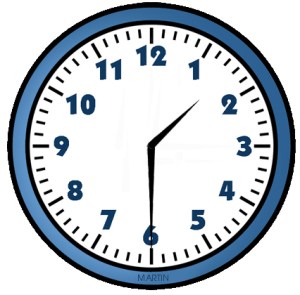
“When both clock hands are rising, cast spells of a positive or uplifting nature; when both clock hands are falling, cast spells that are meant to cast off evil and keep enemies down. But you must not perform magic when one clock hand is rising and another is falling. For Example: if the time is 10:40 the hands are rising, if the time is 2:15 the hands are falling, if it’s 5:45 do not do any magic because the hands are doing both.”

– Moon Phases in Hoodoo Magic from the “Spiritual Illumination” blog.

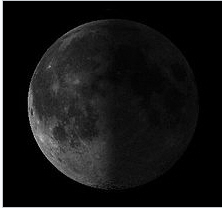
Years ago when more people were conscious of moon phases, rising and falling tides, solstices and equinoxes, and the flow of the seasons, farmers, fishermen and others who depended on nature for their livelihood, referred to their almanacs to that they were planting, harvesting, and fishing by the signs. For example, as the Natural Events Almanac mentions by way of introduction, “Planting by the signs is a fairly straight forward operation. You plant aboveground crops (lettuce, peas, tomatoes, etc.) when the moon is waxing (growing) from New to Full Moon. Underground crops (beets, radishes carrots, potatoes, etc.) are planted when the moon is waning from Full to New Moon. However, true gardening by the signs is a bit more complicated.”
While the I Ching (book of changes) seems fairly remote from hoodoo, it emphasizes aligning ones life and choices with the natural flow of change, the direction the universe is heading at the moment you ask the oracle a question.   The idea here, which is deeply understood by conjurers, works (for spells, gathering/planing herbs, collecting rain water) and by old farmers and fishermen is that success is more likely when you go with the flow rather than against it.

Taking note of the hands of a traditional clock–which I suspect some day soon people will no longer know how to read–fine-tunes one’s work with the flow of time hour by hour. Like planting and fishing, some work is best done under waxing (growing) moments and some is best done under waning moments.

Conjurers base their practices on what works for them. To some extent this is intuitive inasmuch as you can, with practice, feel the moon’s changes without looking out the window, sense high tides and low tides without referring to a tidal clock, and understand the hours without looking at the positions of the sun and moon–or the hands on your clock.

The “old-time” conjurer woman who posts at Spiritual Illumination believes that “the three most important timing considerations in hoodoo are the day of the week, the time of day, and the time of the moon. Of less importance (generally) are the positions of the planets and the day of the year.” This is a personal preference and differs from person to person.

As a writer, I like conjuring nuances because they add depth to my series of folk magic novels. Personal experience has shown me that notions about time, moon and tides are not superstition because–let us say–that if one works with oracles like the I Ching, the Kabbalist’s Tree of Life, Tarot Cards, and meditation, the flow of time and space and energy become very evident when it comes to their impact on what we are doing. So, it’s not surprising that hoodoo practitioners are very conscious of the benefits of going with the flow.

In some ways, our attitudes about life are a form of conjure in that consciously or subconsciously, our minds are creating the future. What works for the hoodoo practitioner works for all of us.

–Malcolm

Malcolm R. Campbell is the author of the hoodoo/crime novels “Conjure Woman’s Cat” and “Eulalie and Washerwoman.”



Preparing to visit the moon’s shadow in the mountains

According to Being in the Shadow, 39% of the people in the United States live within 300 miles of the eclipse. We’re well within that distance of scaring ourselves by the fast-moving moon shadow racing across the sunny (hopefully) sky, so we’re going. Our trip to the North Carolina mountain rental cabin where eight of us will meet is only 188 miles,–according to MapQuest, that’s three and a half hours on the road.

Artist’s conception of an eclipse.

We’re arriving at the cabin several days in advance because if all Americans within 300 miles decide to travel to a great viewing location, that’s 127 million people on the road. So far, we’ve seen estimates for north Georgia of about 60,000 extra cars on the road.

This is the post-eclipse estimate of people streaming back toward Atlanta minutes after the totality period is over. I-85 backs up every Thanksgiving, so–even if we still lived in an Atlanta suburb–we’d travel on a different day. That’s the good thing about being officially retired and working at home: we don’t have to rush back to work.

Initially, my attitude about driving so see the eclipse was kind of “ho hum.” I maintained that I saw eclipse conditions every night after it got dark. Nobody else in the family bought this. We have the shortest drive. Four people are coming from Maryland and two are coming from central Florida. It will be fun getting together in a cabin where we have plenty of room. Of course, as soon as we get there, we’ll check out how much sky is visible from the cabin’s deck.

We’re getting ready to go. We have our approved eclipse glasses (the cops say don’t wear them while driving). The car has new tires and a recent oil change. We have somebody coming by the house here in NW Georgia to check on our cats. We have extra wine.  We have dinner reservations on eclipse day, compliments of my wife’s tireless planning efforts. And we have a nice list of places to go and things to see while the eclipse isn’t happening–depending on traffic. As for pictures, I’ll post some if I can capture anything that looks exciting other than the black rectangle.

What are your plans? If you don’t live along the eclipse track, are you giving there?

Malcolm


Those messy website blues

Like a new car, a new website looks sleek, clean, and is the envy of everyone who sees it. However, like cars that get older and no longer are washed or given scheduled maintenance and oil changes, websites start showing their age as well.

Last night on MasterChef, chef Ramsay told one of the contestants that his dish was confusing because it wasn’t cohesive and was more like a smorgasbord of flavors that didn’t go together. This is another way of saying that–like the old car–a website that’s messy, confusing and probably difficult for new visitors to figure out isn’t helping you.

When I set up my website (Conjure Woman’s Cat), I had great intentions. I was going to keep it squared away (a navy terms that means “shipshape”) rather than than letting it look like our old Buick or the top of the desk in my office.

I chanced upon a writer’s website article that basically said, if you’re website is screwed up, you won’t be kissing your books goodbye because nobody will be buying them. This caught me attention because sales have been lower this year than last year. Partly, that’s Amazon’s fault for establishing a new ranking system that’s biased in favor of bestselling books from mainstream publishers. Even though the rest of us are in the chopped liver category, it was obvious to me that I needed to clean up and streamline the website.

This has taken the better part of two days. It’s by no means perfect. On the other hand, it no longer has a garage sale kind of ambiance surrounding it. One thing I tossed out was a synopsis of each of my older books. This made the site too wordy and added pages. So, I’m featuring my two latest books and putting everything else in a catalogue of covers. Might be a mistake, but the result is certainly a lot easier to figure out.

In the business world some years ago, the word “agile” was often used to refer to companies that could change quickly with the times whether they needed new products or new ways of talking about their current products. I think authors need to be agile in this way in their presentations and promotions. While the books are the same books we published some years ago, we need to find new ways of capturing people’s attention.

So, I cleaned up my website an hour ago. So far, neither Oprah or Warner Brothers has called, but I can always hope.

–Malcolm

Candidate Discriminated Against Due to Silver Spoon in Mouth

Junction City, Texas, August 6, 2017, Star-Gazer News Service–Mayoral candidate George Argentite, 47 Metallica Way, filed suit in federal court under the Americans with Disabilities Act claiming he was being discriminated against because he was born with a silver spoon in his mouth.

“Slanderous statements by incumbent Clark Trail alleging that a man with a silver spoon in his mouth cannot possibly govern fairly or understand the needs of the majority of prospective voters have not only poisoned public opinion against me in the current election campaign, but have cost me my job at P.S. 47, gotten me kicked out of my role as head deacon at the church, and essentially banned me from local restaurants, movie theaters and grocery stores,” Argentite told reporters outside the courthouse this morning.

Political commentator Joe Everyman, who says his family uses stainless steel flatware, believes Agentite’s troubles stem from Trail’s campaign slogan “My opponent thinks he’s a privileged man or possibly a god.”

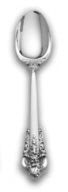
Members of the family have mixed views about the origin of the Wallace Silversmiths Grand Baroque teaspoon that protrudes from the left side of Argentite’s mouth. 50% claim that the spoon was swallowed by George’s mother Anne at a Rotary Club dinner while she was pregnant and 50% say the spoon–which is completely fused into Argentite’s jaw bone–resulted from a gypsy curse.

Hospital records indicate that early attempts at removing the spoon threatened to destroy Argentite’s head, “potentially transforming him into a two faced individual.” The pediatrics department believed he would grow out of it by the time he lost his baby teeth while surgeons discovered that cutting off the spoon at the gum line resulted in the object “regrowing rather like a lizard’s tail.”

“Prior to Trail’s smear campaign, most people didn’t realize I couldn’t get the spoon out of my mouth any more than a real rich person could pretend he wasn’t rich,” said Argentite. “People just thought I sucked on the spoon in the same way other people walk around with cigarettes, toothpicks and bits of straw.”

Trail told reporters that “saying your opponent has a silver spoon in his his mouth is a traditional method of vilifying the rich as a class of people who deserve to be tarnished for reaching the pinnacle of the American dream that the rest of us have yet to attain.”

According to informed sources, Argentite has received lucrative offers from monarchs, mob bosses and dictators to serve as an official taster since silver can detect the presence of arsenic in food.

Agentite’s wife, Flora, said, “We’re too scandalized to kiss in public any more,”

–Story by Jock Steward, Special Investigative Reporter


Florida Wildflowers: Seaoats

“Seaoats are important dune builders and protect beach dunes from erosion. It is unlawful in Florida to destroy or take this grass.” – “Florida Wildflowers: a Comprehensive Guide” by Walter Kingsley Taylor

“It shall be unlawful for any person to cut, collect, break or otherwise destroy sea oat plants, Venus’s-flytrap plants or any part on public property or on private property without the owner’s consent. Any person violating the provisions of this section shall be guilty of a misdemeanor and upon conviction shall be fined not more than two hundred dollars or imprisoned not more than thirty days nor less than five days. Each violation shall constitute a separate offense.” – SC Code § 16-11-590 (2013)

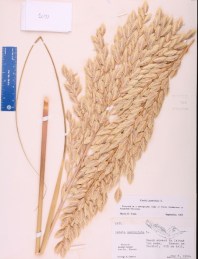
Herbarium Specimen – Atlas of Florida Plants photo.

Seaoats (Unicola paniculata) are perennial grasses, often clumped and with vast root systems, that can grow over six feet tall that are found throughout the state in coastal uplands and beach dunes. The flat, inch-long flowers (spikelets), which are slightly purple or the color of straw, blooms throughout the year.

Seaoats can be found along the coasts and on barrier islands along the eastern seaboard from Virginia to Florida. Seaoats are very tolerant of salt spray. They are also very heat and drought tolerant and green until late in the summer. While the conditions under which they thrive reduce encroachments from other plants, beachfront development is a primary threat. (As you can see in the Florida state park photo below, developers, dune buggy enthusiasts, and others are likely to write the plant off as a weed.)

Some people like using them as accents in flora arrangements or as the focus of dried arrangements–one reason why some areas classify the grass as a threatened or endangered species as well in addition to being vital to soil stability within its habitats. They not only protect dunes year around but are an important factor in protecting coastal areas from the erosion associated with tropical storms. Restoring seaoats often becomes an important part of dune restoration programs.

Seaoats provide food for songbirds, burrowing owls, mice and marsh rabbits. While the grass produces numerous spikelets, these don’t generate a lot of viable seed. Fortunately, the seeds don’t have any important commercial value.

Seaoats on the crest of a dune at the John U. Lloyd Beach State Park, Florida – Wikipedia photo.

“What is so tantalizing about sea oats, making one wish to break the law to have sea oats in their own garden? For starters, they have a striking appearance growing and swaying in the slightest breeze. The decorative plumes (seed heads) are often dried and placed in floral arrangements, or displayed alone as a focal point. Sea oats are quite easy to have without breaking the law, but few people are aware seeds and/or plants may be bought legally from nurserymen licensed by the state of Florida to propagate them. These nurseries supply sea oat plants to local, state and federal government agencies for dune restoration after hurricanes; the nurseries are allowed to sell them to the public as well.” – Darius Van d’Rhys

Seaoats are edible (browned or used as a cereal), but if you want to try them, you have to grow your own. Note that the plant is not the same as Inland Sea Oats (Chasmanthium latifolium) that often grows as a ground cover in open areas and is found in northern states as well as the southeast.

–Malcolm

For a chance to win a free Kindle copy of “Conjure Woman’s Cat,” see the Amazon giveaway which runs through August 8th.


This and that for avid readers

Even though July 30th was yesterday, this selection of posts about magical realism is still available. If you love the genre, you’ll find some fascinating ideas.


New from Thomas-Jacob Publishing, Transformed, a Kindle short story by Smoky Zeidel.  “The way I see it,” said Daniel, “the fence lizard eats the fly, so the fly becomes part of the fence lizard. The fly is the fence lizard. The fence lizard gets eaten by the snake, and thus becomes the snake. What’s to say that snake won’t get snatched up by a Golden Eagle, and thus become the eagle?” Does the same principle apply to humans? Marina is about to find out.

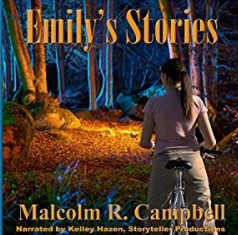
Thank you to all the readers who participated in the recent sweepstakes for Emily’s Stories on Audio Book Reviewer. Kelley Hazen and I are glad you stopped by and signed up. Congratulations to the winners and thanks to those of you who have already posted reviews.

Here’s a copy of my Amazon review for Don Westenhaver’s mystery thriller Missing Star

This post WWI thriller mixes historical and fictional characters in a fast-paced search for a missing actress (Joyce) in the very different Los Angeles of another era. The ambiance and history anchor the story which pits ex-marine aviator (Danny) and against the seedy unknowns of the big city where overlapping police jurisdictions and the corrupt politics of prohibition make it easy for many crimes to fall through the cracks.

Danny is determined to find Joyce in spite of impossible odds, and this makes him a believable and determined main character. Inasmuch as missing persons cases typically includes gaps of time when no new information is found, the story takes a few side trips that, while relevant, slow down the pacing a bit. It also doesn’t seem likely that Danny, as a civilian, would be included in police actions. Otherwise, the story moves well with a high degree of credibility toward a satisfying conclusion. Readers will feel anger over Joyce’s circumstances and respect for Danny’s perseverance, and cannot help but hope that they find each other again and make the bad guys pay for what they’ve done.


Recently released from Thomas-Jacob Publishing, Tizita, a new novel by Sharon Heath: “Physics wunderkind Fleur Robins, just a little odd and more familiar with multiple universes than complicated affairs of the heart, is cast adrift when her project to address the climate crisis is stalled. Worse still, her Ethiopian-born fiancé Assefa takes off right after her 21st birthday party to track down his father, who’s gone missing investigating Ethiopian claims to the Ark of the Covenant. Fleur is left to contend with the puzzle of parallel worlds, an awkward admirer, and her best friend Sammie’s entanglement with an abusive boyfriend. Assefa’s reconnection with a childhood sweetheart leads Fleur to seek consolation at Jane Goodall’s Gombe Stream Chimpanzee Reserve, but it’s through a bumbling encounter with her rival that the many worlds of Fleur’s life begin to come together. In the experience of tizita—the interplay of memory, loss, and longing—Fleur is flung into conflicts between science and religion, race and privilege, climate danger and denial, sex and love. With humor, whimsy, and the clumsiness and grace of innocence, Fleur feels her way through the narrow alleyway between hope and despair to her heart’s sweetest home.”

New, from Theodora Goss, my favorite review book for 2017, The Strange Case of the Alchemist’s Daughter. See my review here. From the publisher: “Based on some of literature’s horror and science fiction classics, this is the story of a remarkable group of women who come together to solve the mystery of a series of gruesome murders and the bigger mystery of their own origins. Mary Jekyll, alone and penniless following her parents’ death, is curious about the secrets of her father’s mysterious past. One clue in particular hints that Edward Hyde, her father’s former friend and a murderer, may be nearby and there is a reward for information leading to his capture…a reward that would solve all of her immediate financial woes. But her hunt leads her to Hyde’s daughter, Diana, a feral child left to be raised by nuns. With the assistance of Sherlock Holmes and Dr. Watson, Mary continues her search for the elusive Hyde and soon befriends more women, all of whom have been created through terrifying experimentation: Beatrice Rappaccini, Catherin Moreau, and Justine Frankenstein. When their investigations lead them to the discovery of a secret society of immoral and power-crazed scientists, the horrors of their past return. Now it is up to the monsters to finally triumph over the monstrous.”

–Malcolm

Malcolm R. Campbell is the author of magical realism books set in Florida.


Looking back at civil rights protests with regrets

In the 1960s, African Americans (organized in large part by CORE) picketed the two major down town Tallahassee, Florida, theaters, the bus station and numerous lunch counters because these facilities were segregated. I was out of town when this protest occurred in May 1963 at the Florida Theater. Most of the time, I was in town but stayed away from the protesters even though I supported their cause. I still regret this.

Why wasn’t I there?

  • Fear of the white hecklers who openly hobnobbed with police.
  • Fear of the KKK.
  • Fear of losing friends and becoming an outcast.
  • Worry that my father would lose his government job.
  • Worry that my mother would lose her church volunteer work positions.

At the time, these concerns were very real. Unfortunately, they are in somewhat different ways, still real today.

The late Patrician Stephens Due, a Tallahassee CORE volunteer and a student at Tallahassee’s Black college (FAMU) was at the center of many of the Tallahassee protests. She would write later in the book she co-authored with her daughter that when it came down to it, a very small minority of African Americans actively took part in sit-ins or picketing. Fewer Whites took part even though many of us always rode in the backs of city buses when there was space. That wasn’t enough.

Looking back, I’m sorry that I didn’t do more.

–Malcolm

Malcolm R. Campbell is the author of two novels about racism in Florida, “Conjure Woman’s Cat” and “Eulalie and Washerwoman.”
Review: ‘The Last Days of Magic’

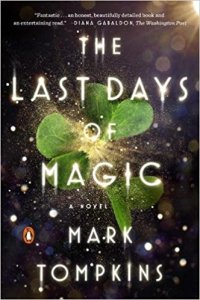
Mark Tompkins’ The Last Days of Magic is a mixture of the historical record of the 1300s and an imagined prospective history based on legends. The history focuses on Richard II’s designs on Ireland and on the Catholic Church’s designs on unifying Christianity by driving out magic, pagans, and others who did not follow the dictates of Rome.

The book contains a wealth of history about the real power players of the era. It also contains a wealth of myth and legends about the opposing magical forces in Ireland. If you’re interested in the history of the times, this is not “alternative history” because–by the end of the novel–what happens is what history gave us. If you’re interested in the wealth of magical beings that opposed the English and the power of the Catholic church, the author has taken great pains to remain true to the stories about the Morrigna, Nephlim, Sidhe, witches and others who were presumed to be active in Ireland at the time.

Here’s the problem: The book is confined by history, so there is little suspense here because we know–or can Google–the historical outcome: Ireland is lost to Richard II. While it’s interesting to imagine what the Morrigna, Sidhe and others were doing to keep Ireland as it was, we know they will fail. This kills the suspense.

The book is not cohesive because there were so many players involved. This adds multiple characters and points of view. As Brown did in The Da Vinci Code, Tompkins has included a modern day prologue/epilogue that suggests that the magical bloodline continues into the modern era. While this is hopeful if you like magic more than the organized church, it lends nothing real to the story line. Interesting, yes, but otherwise it has little active association with the events of the 1300s.

The book is interesting for those of us who believe in magic. Otherwise, it’s standard history with a “what if” approach to what the opposition in Ireland might have been doing when the English and the Vatican invaded.

–Malcolm

Malcolm R. Campbell is he author of novels filled with magic including Sarabande, Conjure Woman’s Cat, and Eulalie and Washerwoman

Going into the dark

“The space Hunt’s fiction inhabits is the dark dark itself, which, she writes, is ‘unknowable, unlit, mysterious, and disappearing.’ ‘You can have one foot in a spot that’s grounded,’ she says, ‘and one foot out there in the dark, the night, the unknown, which is so tempting, and for me is the place where mystery is sighted. I can’t not go into the unknown. Where the scary music is playing and people say, ‘Don’t go in there,’ I’m the person who says, ‘What’s in there?’ I must know.”

Lucas Loredo, interviewing Samatha Hunt (“The Dark Dark”) in Kirkus Reviews

Going into the dark, I think, is the author’s first duty. That’s where our stories come from, from truths that are greater than logical, everyday world truths because they include dreams, imaginations, ponderings, and whatever goes bump in the night.

When Hunt writes in Mr. Splitfoot, “These woods are where silence has come to lick its wounds” she’s not stating anything logic can support. But we know what she means and what she means changes us the minute we consider it and know it. Perhaps, thinking of this quote, we go into the woods, hear silence at work. and understand something knew about our world, or at least, ourselves.

The writer either has to go into the woods first and discover this “truth” or s/he has to imagine going into the woods, almost like a shamanic journey, and discover what silence does. Then s/he places this discovery into a poem, essay, or story. This is not to say that writers must think and write like Samantha Hunt (though it helps); but writers must go into the unknown one way or another. That’s where the new stories are.
Whether you literally or figuratively go into the dark woods to listen to the silence or to the occasional screams and pleas that shatter that silence, you are doing something chaotic, uncontrolled, fearful, and possibly dangerous. The greater the chaos and danger, the more spectacular–and potentially transformative–the story. No pain, no gain, as people say.

The resulting story, as author Jane Yollen says–echoing Emily Dickinson–is truth told on the slant. In other words, “All storytellers are liars. We make up things to get at the truth. The truth of the story and—if we are lucky and have revised well—the truth of the world as well.”

You have probably heard–or discovered in a physics class–that when a tuning fork is struck with a hammer, a nearby tuning fork will vibrate at the same frequency. As I once wrote in a review of a book about the blues, and why that music is so powerful, “In his 1967 inquiry into the nature of man, Man in Search of Himself, physicist Jean E. Charon writes that inasmuch as the material in the unconscious is in archetypal form, works of art communicate it via an innate knowledge shared by artist and viewer in a language which ‘awakes unconscious resonances in each of us.'”

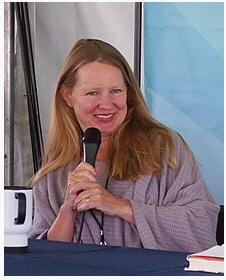
Hunt – Wikipedia photo

When a reader finds silencing licking its wounds in a poem or story and is the kind of reader attuned to such ideas, s/he will see the truth of those words at a slant, so to speak. They will convey a truth, an idea never considered, bring forth a new way of looking at wounds and woods and silence that was–in this reader–waiting to be born. Thinking of Yollen again, this is what she calls “life in truth” rather than “truth actual.” Truth actual is the apparent logical workings of the everyday world, what we expect in credible news reports and expert testimony and scientific studies. Life in truth includes the realities behind the ever-addictive illusion of a logical world.

Darkness, the place where seeds germinate to create the flowers we will one day observe, is the same place where writers’ stories germinate. As Hunt says, writers want to go into the dark to see what’s happening there and then write a story or a poem about it. Or, maybe even a blog post.

Writers seem to learn at an early age that the ability to see in the dark is a prerequisite to telling a good story.

–Malcolm

Malcolm R. Campbell is the author of Conjure Woman’s Cat and Eulalie and Washerwoman, magical novels that are on sale on Kindle on 7/21/17 – 7/23/17.


Review: ‘The Strange Case of the Alchemist’s Daughter

The Strange Case of the Alchemist's DaughterThe Strange Case of the Alchemist’s Daughter by Theodora Goss
My rating: 5 of 5 stars

Imagine “monsters” from science fiction and horror classics written by H. G. Wells, Mary Shelley, Nathaniel Hawthorne, and Robert Lewis Stevenson working together with Sherlock Holmes, Dr. Watson and Inspector Lestrade to track down the killers in a string of gory London murders.

Odds are, the resulting story would be a chaotic, unbelievable mess. Or, if the muses were kind and the odds were defied, the resulting story would be a breathtaking and expertly plotted Victorian-era fantasy in which the plots, characters and themes of fictional legends fit together in a believable, wondrous harmony.

Theodora Goss’ muses were kind.

The protagonists of legend believed they could create evolved humans out of bits and pieces of the dead. They failed. The evil scientists in Goss’ story have similar ideas. “The Strange Case of the Alchemist’s Daughter” has been assembled from the remains of its legendary predecessors, yet unlike the “monsters” of yore, it is strikingly beautiful, functions elegantly with the well-focused skills of its creator, and contains a radiant soul.

Readers familiar with the original stories will enjoy references to even the smallest of details. For everyone else, no footnotes are required because the story stands on its own.

The plot is complicated and compelling and the pace is rapid and perfectly synchronized with a dash of humor. As a writer, I wonder how Goss created a novel that is better than the works from which it takes it themes. I suspect her precision as a poet and short story writer, her love of fairy tales and folklore, and her long-term research into the “monsters” of literature are factors. But those factors are only bits and pieces of the author’s craft, imagination and creative spirit.

Rather than analyse how Goss turned an accident waiting to happen into one of the best novels of the year, I’m willing to write it off and say: “It must be magic.”

View all my reviews

–Malcolm

Malcolm R. Campbell is the author of contemporary fantasy, folklore and magical realism short stories and novels.