Some said we were killing commies for Christ, some said we were killing babies, some said we were killing civilians in a Sherman-takes-war-to-the-people style, some said collateral damage was to be expected, and some said we should be proud of what we were doing while others said we were supporting the wrong side.
Vietnam was the first war brought into our living rooms. Ken Burn’s Vietnam documentary has brought it back though some people say the war never left us even if we were born years after the April 29, 1975 photo was taken of an American helicopter at 22 Gia Long Street in Saigon evacuating civilians as the North Vietnamese advanced on the city. Some say we killed those we left behind.
Pro-Vietnam war and anti-Vietnam war Americans saw in this evacuation photograph a sad and sobering epitaph for the two million civilians, 1.1 million North Vietnamese and Viet Cong soldiers, 250,000 South Vietnamese soldiers, and 58,200 Americans who were killed during the war. The picture smacks of defeat, though the U.S. was not defeated: it left Vietnam based on the 1973 peace settlement. Nonetheless, what happened in Vietnam seemed like defeat because our political and military objectives were not met and, in fact, were impossible to achieve. Much of the anti-war anger comes from the fact that as the United States sent in more and more troops, its leaders knew that losing the war (by whatever definition one chose) was a foregone conclusion.

Those of us who were against the war wondered, with singer Bob Dylan’s “Blowing in the Wind,”. . . “how many deaths will it take till he knows that too many people have died?”
There’s no point in rehashing the arguments here about whether we should have been there or not. I served two years and three months in the navy before leaving as a conscientious objector. The summer before joining the navy under the threat of being drafted into the army, I was in the Netherlands with one foot on the gangplank of a ferry that would take me to the safe haven of Sweden when I changed my mind and came back to the U.S. I regretted that for a long time. Burns’ documentary, which seems balanced to me, has brought back all the images and doubts and regrets and angers of those days of war and protest.
I’ve never felt comfortable saying I am a veteran, much less taking advantage of any prospective veterans’ benefits, because, while a pacifist, I still experience survivor’s by suggesting that I “fought” in the Vietnam War. I was on a aircraft carrier one hundred miles off the coast, a far cry from the terror and danger of those who served in-country. I was in Da Nang for only 24 hours as I flew back to the states for a change of duty assignment. I feel this guilt all over again as I watch Burns’ series.
Burns takes us back many years prior to the United States’ involvement, background which I think is necessary. He tells us that the U. S. initially supported Ho Chi Minh via covert ops in his fight against the French. I don’t think we knew that during the 1960s. He shows us images we want to forget. He makes us (well, some of us, I guess) wonder just what the hell we were thinking or if going there was really the right thing to do. Either way, we paid for it with a lot of blood.
Personally, I don’t think we’re past Vietnam as a country because we’re doing the same things again in Iraq, Afghanistan and elsewhere. I know I might be wrong about all this, but I don’t see the point of it. Ken Burns’ series has added a lot to the discussion about military intervention and national policy even though I could have done without the memories becoming energized again.
–Malcolm
Malcolm R. Campbell is the author of “At Sea” based on his experiences aboard the aircraft carrier USS Ranger during the Vietnam War. His novel “Eulalie and Washerwoman” was nominated for a Readers Choice Award in the fantasy category. Click here to vote.
 Readers don’t like good even though many of them claim them have to have read “the good book” and that they adore every novel that features people who helps the homeless or who starve their families while donating time and money to the Salvation Army.
 Writers with platforms sell books. If you threw your mama from a train, you have a much better chance of writing salable books than a hapless MFA-graduate whose “platform” is (a) writing good, (b) An MFA, and (c) A resume filled with angst-ridden poems and short stories set in an unbelievable universe where angst-ridden stuff actually gets onto bestseller lists.
 If you’re a movie star or a famous Hollywood personality who looks like a slut or a stud on the red carpet, you can become a bestselling author even if you’re illiterate. How? Ghostwriters, darling. A sure way to get a publisher’s attention is by “writing” a memoir or novel based on a true story that dishes out plenty of scandal about your co-stars, lovers, and agents. The public adores stories that tell them their favorite stars aren’t really as pure as the driven snow. A bonus for movie stars is writing a book about an issue even if an expert writes it for you. Do this, and you’ll soon be testifying at Congressional hearings even though you probably know less about the issue than the average man or woman on the street.
 Create a novel with a compelling plot, multidimensional characters, and a jaw-dropping title that, under normal conditions, will probably sell only one hundred copies. Not to worry. This novel will have a secret weapon, and the big payoff comes when the secret is discovered: you’ve stolen thousands of its words from famous novels. When people find out, you’ll deny it, of course. Your readers will hate you. As your crime becomes harder to deny, you’ll claim “fair use.” That won’t work, but it may keep the wolves from your door for a while.




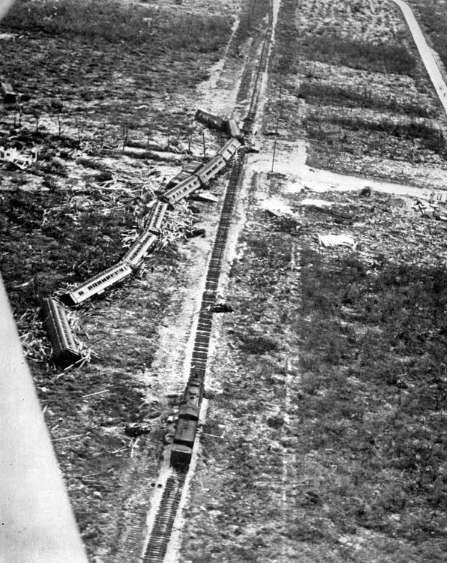
 If the story was written soon after the wreck, the how isn’t known? Since those involved were city council members, there may be a follow-up story explaining how it happened even before a police investigation is completed. In terms of the 5Ws, there aren’t many variations of automobile crashes at intersections.
 According to the Incident Information System, “