Bees vs Wasps, Soccer, Tennis, and More Hardcover Releases from Thomas-Jacob

  • When I got stung by 8 wasps several weeks ago, I didn’t expect my wife to try to top my experience. Okay, now she’s in first place with 23 aggressive bumblebee stings. She was mowing high grass and brush and hit a hidden nest. I took her to the ER where the folks at Rome, Georgia’s Redmond Hospital couldn’t have been nicer or more responsive. We were there about an hour while they put her on an IV of Epinephrine, Benadryl, saline, and a steroid of some kind. She has lots of swollen places and the expected amount of itching.
  • Great news about the U.S. Women’s Soccer Team beating the Netherlands. I wish them luck in their lawsuit that seeks to equalize prizes and pay between their teams and the men’s teams. There’s no excuse for paying the women a pittance.
  • Today is grocery store day for me, so I was happy that Serena William’s Wimbledon match was set for 8 a.m. She won. That started my day off on a positive note.
  • Among the most recent hardback releases from Thomas-Jacob are the new editions of Melinda Clayton’s four-book Cedar Hollow Series that begins with Appalachian Justice.  This is a highly popular series.


  • Being cheap, I waited until The President is Missing by James Patterson and Bill Clinton came out in trade paperback to buy a copy. I’ve enjoyed the book primarily because it focuses on the problem of cyber-warfare as a real issue that could totally disable the government, military, and commerce of a nation. A very readable book.
  • My upcoming Special Investigative Reporter, a satirical novel about (guess what) an investigative reporter, is working its way through editing, formatting, cover design, and a book trailer. More about that later. Here’s a snippet:

The meatloaf was surprisingly lousy. It was the kind of meatloaf Aunt Edna fixed Jock when he was an innocent kid on or about the time when she was losing track of things such as who he actually was and what ingredients belonged in the food.

  • Thanks to all of you who have been posting reviews on Audible for the audio editions of Conjure Woman’s Cat, Eulalie and Washerwoman, and Lena.
  • Gosh, you’d think a name-brand dryer would last more than 18 months. Ours stopped working last night. We can air dry (ha ha) stuff, but there’s no heat. If it were older, we’d simply replace it, but we’re not like those people who buy new cars whenever the ashtrays get full. First, the bee attack and the ER, and now the dryer quits. Typical trickster crap from the universe.

Malcolm

Where are y’all coming from?

When I look at my Word Press dashboard, I often see that old posts are suddenly getting a lot of visitors. Today it was Review: ‘Plain Truth’ by Jodi Picoult from last September. I have no complaints about this. I simply wonder how and why a bunch of y’all find a post six months after it was written. I don’t think the post saw that many visitors last fall.

So, do Word Press readers get together in “secret” Facebook groups and say, “Hey, let’s all read Malcolm’s old review this week. That’ll freak him out.” Or, is there a mother ship in high earth orbit that beams down subliminal messages about the blogs everyone’s supposed to visit?

Posts I’ve forgotten about suddenly appear in my blog’s stats with dozens of visits, and that sends me out to them to see what I might have said. You know, did I insult a celebrity, inadvertently announce a cure for ten horrid diseases, or post nude pictures I didn’t know were available? Of course, I keep waiting for the post that goes viral, the one that attracts the attention of major movie studios who get into a bidding war for my books. So far, that hasn’t happened.

When people find old posts, I sometimes search Google to see if anything earthshaking has happened that relates to their subject matter.  Usually not. And then, further adding to the mystery is the fact that a lot of those readers come from the far-flung corners (figuratively speaking) of the world. How do you find me? And why that particular post?

I’m not particularly astute when it comes to the issues of the day or the philosophical questions of our era. CNN doesn’t call me for quotes and the New York Times doesn’t review my books. Humbly, I must say that in both cases, it’s their loss. Of course, if I were invited anywhere special other than the nearest Cracker Barrell, I would decline the invitation because I have nothing to wear. I wear jeans an tee shirts; haven’t put on a suit and tie for years, and those I used to wear no longer fit.

Seriously, I grew up in a swamp–or near a swamp–and today’s social media (including Word Press and Facebook) are beyond me. As for Twitter, my blogs post there, but I seldom go there because I can’t figure out what’s happening. So, I wonder, how do y’all track down these old posts?

I’m usually too buried in writing and weekly chores to notice the stuff that many sites refer to as “trending.” So, if I’m ever trending, it’s news to me. Actually, I don’t want to be trending. That means the phone would ring and people would ask stuff like “Which of the Democrat’s 2020 candidates do you support?” and “Do you buy good wine or swill?” Frankly, I don’t need the hassle.

On the other hand, I appreciate everyone who stops by my blog. As we said in the old days, “What a hoot.”

Malcolm

My new novel, “Special Invesigative Reporter,” will be released soon. Meanwhile, enjoy “Widely Scattered Ghosts.”


I drive grocers nuts

Since I’ve been around for a while and got dragged along on shopping expeditions when I was a kid, I’m constantly frustrated about the fact the stuff we could buy 50 years ago isn’t on the shelves today.

Most of today’s apples were apparently created in a lab, but nobody carries Winesaps any more. I ask about them, and the produce people haven’t heard of them.

Kumquats – Wikipedia photo

Here in Georgia, we’re next to the country’s number one citrus state (sorry, California, your production is a pittance compared to Florida), but for some reason, we can’t get kumquats. We’re just a few miles up the road, yet our produce departments don’t even know what kumquats are. That’s just bad.

It’s really hard to find endive and watercress these days.

I asked the meat department at Publix this morning for salmon steaks. They don’t have them because nobody buys them. Every one wants filets. I sure as hell don’t.

At least Publix sells radicchio.  Humorously, many of those running the checkout cash registers think I’m buying red cabbage. They usually ask me how to spell radicchio. They’re costing the store a bundle when they charge me for red cabbage.

One day when I was in a bad mood and couldn’t find any real feta cheese, I went to the Publix website and asked why they were labelling cheese as “feta” when it was made with cow’s milk rather than sheep’s milk. They just said that’s the way things are done in the U. S. I said that’s like making a cherry pie with blueberries but selling it as a cherry pie. I think they should call their fake feta cheese “feta-style” cheese, but since I’m not Bobby Flay or Gordon Ramsay, they don’t care what I think.

Frankly, I think grocery stores have dummed down their products, reduced their inventory, and are denying us many of the items that used to be available in every IGA and A&P in the country.

I’ll confess that–in addition to remembering products that used to be common on grocery store shelves–I do watch shows like “Chopped” and “Master Chef” where I see a lot of products my grocery stores have apparently never heard of. Some of those products are disgusting and I really don’t want to see them on the shelves. Some are things we used to see every time we went shopping, yet if you ask for them these days, store managers look at you like you’re crazy.

I may be crazy, but I still like kumquats.

Malcolm 


About ready to re-release an out-of-print book

When I left my previous publisher to become part of Thomas-Jacob Publishing (T-J) in Florida, many of my titles went out of print. I have self-published some of them because I didn’t want to dump a box of titles on T-J. Some of those I have self-published have come out under new names. Some, like The Sun Singer (self-published) and Sarabande (T-J) kept their original titles.

Over the past several weeks, I’ve been converting a PDF copy of Jock Stewart and the Missing Sea of Fire into a DOCX copy of the newly titled Special Investigative Reporter.  The formatting has been tedious since the conversion, using Acrobat, produced a Word file with weird spaces and strange formatting in it.

I think the 2009 novel is still valid inasmuch as it hits on the growing tendency for news sites to mix opinion with facts or, in some cases, to present opinion instead of facts. So, I hope the novel will still be considered relevant by today’s readers.

As a journalism school graduate and former college journalism instructor, I become somewhat irate when an interviewer asks a guest a question and then proceeds to interrupt him/her by doing most of the talking. I can cite examples, but it’s probably safer not to do that. I don’t see that as journalism or even fairly presented opinion.

I grew up in a journalism environment. My father was a journalism textbook author, the dean of a college school of journalism, and active in a variety of press institutes. What I liked best in those days was hearing the stories of veteran journalists either at our house or the journalism school. They captured my imagination. So, I went to journalism school at the University of Colorado and Syracuse University as well as a summer journalism institute at Indiana University.

That means, there’s a lot of info available for a satirical newspaper reporter novel. I’m not sure my late father would approve because Special Investigative Reporter is a bit risque and presumes that many old-style reporters rank too much. My uncle, who was a reporter, might have liked booze a little too much–to my father’s chagrin. So do I, actually.

So, in spite of the tedious process of fixing the PDF-to-DOCX conversion of the novel’s file, I’ve had fun re-visiting a book that originally came out in 2009. I’ll let you know when the new edition come out. I hope you like it.

Malcolm


I spend more time tinkering with stuff than writing stuff

Some time ago, I read a post in the late Pat Conroy’s blog in which he thanked his publicity team from his publisher. No wonder he sells so many copies. His team was bigger than my neighborhood.

Most of us don’t have a publicity team, so we try to do it ourselves. Frankly, we like to think that our strong points as authors are the books we produce. Our weak points are creating ads, blog posts, and scintillating website copy. But we try.

I just finished reading an author’s book that came out several years ago from a sizeable publisher. When I checked her website, I was surprised to see that it had been more or less dormant for three years. Maybe she can afford to let it go until her next book comes out. But most of us can’t. So, if we have blogs, we try to post often. If we have websites, we keep tinkering with them in hopes that visitors will be lured back with fresh stuff to read.

Sometimes we have real news. I recently announced the new hardcover editions of Conjure Woman’s Cat, Eulalie and Washerwoman, Lena, and a collection of short stories called Widely Scattered Ghosts.

A few days ago, AudioFile Magazine posted a favorable review of the Audiobook edition of Lena.  Sometimes we have to rely on back-up materials, in my case, I often post pictures of the Florida Panhandle where my books are set and recently posted an opinion about the bankruptcy of white supremacy. Frankly, once we were out of the Jim Crow era, I didn’t expect to see it again.

Lately, tinkering hasn’t been enough. Book sales have been down for a while for many self-published and small-press authors. I’m glad it’s not just me, but knowing that doesn’t tell me what to do to fix it.  Some changes have hurt us. One is the fact that Amazon has changed its giveaways so that they work less well for small-press and self-published authors. GoodReads giveaways used to be free; now they cost over $100. Sure, both sites need to make money for what they offer, but they are doing so at small-press authors’ expense. That means, I can no longer afford to run giveaways on either site, and that’s a great loss of exposure.

Fewer people seem to be posting reviews of small-press authors’ books these days. Needless to say, this looks bad when prospective readers come to a book’s listing page on Amazon and see almost no reader comments. On the plus side, people are leaving more reviews on Audible than before, and that helps generate interest in our audiobook editions.

Some authors ask for reviews on their blogs, websites, Facebook, and Twitter. I don’t like doing that. For one thing, it seems amateurish. Well-known authors certainly don’t try to shame readers into posting reviews on GoodReads, Amazon, and Barnes & Noble. Frankly, I don’t think readers should feel an obligation to post a reader review. While I wish they would, I don’t fault them for not doing it.

In the last year or so, many book newsletters that promote books on sale have been charging more, expecting a larger number of Amazon reviews, and–in spite of that–have brought lower sales. I won’t say this sales method has dried up, but it seems that way. Yet, telling readers I can’t get into newsletters because they aren’t reviewing my books seems wrong.

I do fault many media sites who talk about the best books of the year, post lists of upcoming books to consider, and in late summer start creating their top books of the year lists. Most, if not all of them, ignore small-press books. So what you have is the best books from publishers like HarperCollins, Penguin, and Hachette. Most publishers and their books are off the radar. These lists offer a lot of exposure throughout the year, though I have to say, they are promoting books that don’t need any help. Those books that could benefit the most from, say, a list of the best beach reads or best books of the year (so far), aren’t even considered.

To some extent, I think many small-press and self-published authors are in a hurry: the books are printed as soon as they’re finished and edited. Instead, they should have advance copies ready for review sites that expect to see prospective books four months prior to publication. Mainstream sites require this. Then, the hardbacks need to be issued first–which is standard–followed by Kindle editions and then many months later by paperbacks. Why? Because this is the way big publishers work and when we don’t do things this way, we lose exposure and look like also-rans.

What this all means for small-press and self-published writers is finding ways to cut back. Cutting back, of course, reduces their books’ exposure. One of the first things to go will probably be the website. If it costs more than an author makes from royalties in a year, it’s not pulling its weight. And of course, none of us wants to run in the red. In other cases, small publishers may close their doors because the time and expense of reading, editing, formatting, and publishing new titles are no longer viable. I think this is a sad thing for many reasons, among them, being allowing the conglomerates to publish/control the books we read rather than having a strong grassroots competition from indies of all kinds.

I read a larger number of books every year, most from BIG PUBLISHERS. Why? Those are the books I hear about and those are the books with a lot of Amazon and GoodReads reviews. Perhaps most of you find your books the same way. What I hope, though, is that when readers find a small-press or self-published book they like, they will tell their friends about it, mention on Facebook that they enjoyed it, say something in their blogs about it, and consider posting a review on Amazon, GoodReads, and Barnes & Noble. This support helps authors stay in business and write more books that will also catch your attention. And, it keeps the conglomerate publishers from controlling everything we read!

As those old two guys on the old Bartles & Jaymes TV wine cooler commercials used to say, “thank you for your support.”

Malcolm


Learning from agents (yes, agents still exist)

If you want to learn about the business of books, it helps to be hungry. Not only hungry to learn, as the expression goes, but also just plain hungry, literally—it helps to have an appetite. Or an expense account. Ideally both. Because no matter how much the world of publishing has changed over the past hundred years—and, boy, has it changed since the days of Blanche Knopf, Horace Liveright, and Bennett Cerf—some things remain the same. It is still a business of relationships; it still relies on the professional connections among authors and agents and editors and the mighty web of alliances that help bring a work of literature out of the mind of the writer and onto readers’ screens and shelves. And those relationships are often sparked, deepened, and sustained during that still-sacred rite: the publishing lunch.

Four Lunches and a Breakfast: What I Learned About the Book Business While Breaking Bread With Five Hungry Agents

This is an interesting article by Kevin Larimer on the Poets & Writers website. It’s worth reading, I think, in spite of its length because many aspiring writers who want their books considered by mainstream publishers and reviewers forget that agents still exist. They are your route to big publishing. Yes, I know, in an era of Kindle Direct Publishing and CreateSpace, nobody thinks about agents or the standard methods for approaching major publishers.

Yes, publishing is changing, but one thing that hasn’t changed is that if a writer publishes his/her book, s/he will never find it on the New York Times bestseller list or reviewed by Kirkus or in the local Barnes & Noble store. Take that to the bank. So, from time to time, a reality check can be a good thing just to see how you would approach publishing if you seriously wanted a six-figure book deal and more movie options than you could shake a stick at.

Malcolm

What can 10,000 wasps do?

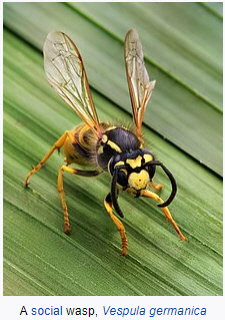
Nope, I’m not talking about White Anglo Saxon Protestants, but the so-called Social Wasps that build paper nests on your front porch and then sting the hell out of you when you come home from a long day at the office and want to kick back with a TV dinner and watch “Jeopardy.”

Wikipedia photo

In my case, I was opening the storm door to the older house on the property when these buggers took offense and stung the hell out of my left arm making it swell up to twice its normal size while itching like the three-day measles. My first line of defense was a string of profanity, followed up by a couple of megatons of HOT SHOT on their hidden nest.

Their nest is now history.

That approach didn’t help my arm. When I mentioned this on Facebook, some people said, “Gosh, Malcolm, if that had happened to me, I’d be dead by now.” What happened to just saying “there there” rather than trying to comfort me with a Nurse Ratched pronouncement?

Okay, as far as I know, I’m not dead. My arm still itches today, but after Caladryl, a baking soda poultice, ice, and a few glasses of wine, my warm is returning to its normal size and color. I still can’t put my wedding ring back on my swollen left hand, but soon, hopefully.

The best piece of news, while I was fuming about the wasp incident, was that AudioFile Magazine had posted a nice review of Holly Palance’s narration of the audio edition of Lena. (Yes, she’s Jack Palance’s daughter.) I’ve been lucky in that the magazine has liked all three audiobooks in the Florida Folk Magic Series. You can see the review here.

Meanwhile, I’m getting an out-of-print book ready for publication with a brand new title and a brand new cover. I think I’ll dedicate it to “the wasps on the front porch.”

Malcolm


Words in good order are a treasure

As I re-read Amanda Coplin’s The Orcharist (2012), I’m reminded–as I always am when I read a great book a second or third time–of the treasures the author’s words present that might be overlooked the first time through by reader’s focus on the plot.

David Abram (The Spell of the Sensuous) speaks of the languages of the forest that most of us miss because we either don’t understand them or aren’t paying attention. In addition to animal tracks and calls, there are things that move (leaves blown across the sand, for example) that are another language we could learn if we wanted to understand the planet.

When I took a typesetting course in college as part of my journalism degree, the professor said that the best way to learn about a new typeface was to take a printed copy of it and trace every letter on an overlaid sheet of tissue paper. To know type, you need to see all of the thick and thin places, the ascenders and descenders, the legibility of the face on the page, and whether or not the type works best for headlines or text.

When we pay attention to a novel on a second or third reading, rather like noticing the language of a forest or the personality of a typeface, we see more than we saw the first time we read it. I’ve read The Prince of Tides and A Scot’s Quair at least five times, and each time I find a new nugget of gold or a hidden diamond. I usually let a fair amount of time go by before I’ll read a book again. That tends to make it seem newer when I pick it up for another reading.

I see on the Internet that some people track the number of books and their titles each year. I’m not sure why. I guess that’s okay, though it might emphasize quantity over quality, including making it harder to insert time in the schedule for re-reading one’s favorites.

Reading a book once seems to me to be similar to buying anything else and using it only once. Okay, maybe it’s not similar at all. But once the book is there on the shelf or on the display in one’s Kindle library, it still has things to say to us.

–Malcolm

Malcolm R. Campbell is the author of Conjure Woman’s Cat.


Book Bits: Catherine Chung, Sharon Heath, ‘Cygnet,’ Amazon, Linda Holmes, Mueller report

At my age, a vigorous, bone-crushing, muscle twisting workout comes from spending several hours on the riding mower. While recuperating, I found a few links you might enjoy. Or you might not. Long-time readers of this blog know that ever since high school, I’ve been fascinated by writings about Carl Jung, alchemy, and quantum mechanics (the many worlds interpretation), so I’m happy to see a review of a very readable book that has uncovered multiple levels and/or universes of meaning (Item 2) since we’re all entangled one way or another.

Have fun exploring the books and authors links this week.

  1. Essay: On Being a Woman Who Loves Math, by Catherine Chung – “All my life I’ve been aware of the disheartening fact that as a society, we generally find intellect off-putting in women, and do our best to squash it.” (Lit Hub)
  2. Review: Tizita (2017) By Sharon Heath, Deltona, FL: Thomas-Jacob Publishing, by Frances Hatfield
    “Tizita, like the first novel before it in The Fleur Trilogy, The History of My Body, is as utterly original as its chief protagonist, and in some of the same, brilliant, moving, and laugh-out-loud hilarious ways.” (Psychological Perspectives)
  3. Excerpt: ‘Cygnet’: Featured Fiction from Season Butler – “Publishers Weekly called the book poignant, adding that ‘Butler has created an appealingly rich world with quirky, flawed characters and a dramatic landscape determined by the constant action of wind and water. Butler delivers a potent and finely calibrated novel.’” (The Millions)
  4. Opinion: Amazon Says It is Not a ‘Lawless’ Retail Platform As Charged by ‘NYT’ – “The New York Times’ recent feature on Amazon, which focuses on how much control the tech giant exerts over the book business and how detrimental that control might be for the sector’s health, has provoked a response from the company. Specifically, Amazon responded to claims in the article that it takes a lax approach to policing the sale of counterfeit books on its website, saying, in a blog post, that it ‘strictly prohibits the sale of counterfeit products’ and ‘takes proactive steps to drive counterfeits in our stores to zero.” (Publishers Weekly)
  5. Interview: Linda Holmes with Stephenie Harrison – “I have wanted to write a novel . . . always. I can’t remember when I didn’t think that would be the absolute greatest thing I could do. But I would start things, write a few pages and just get intimidated that I couldn’t keep going. I played around with writing fiction for many years and got a little more serious in 2012 when I decided to devote some time to this story. But again, I worked on it for a while, then left it alone. I didn’t pick it up again until sometime in the fall of 2016.” (Book Page)
  6. Quotation: “I spent half my money on gambling, alcohol and wild women. The other half I wasted.” ― WC Fields
  7. Wikipedia photo

    Feature: How Jenna Bush Hager became the new book club queen, by David Canfield – “Around 10 minutes into my interview with Jenna Bush Hager, I make a careless mistake: I assume her new Today show book club isn’t merely a one-woman band. ‘You say ‘You guys,’ but you really are just talking about one person — me!’ she responds, laughing. ‘Reese Witherspoon was on the show the other day, and we were talking about it. She’s like, ‘I have a whole team, Jenna!’ The problem is, I definitely need to read the whole book before I recommend it — and I’m a pretty picky reader.’ (Entertainment)

  8. Wikipedia Graphic

    New Title: A Mueller Report graphic novel will be released by San Diego publisher, by Michael Schaub – “Special Counsel Robert S. Mueller III’s report on Russian interference in the 2016 U.S. presidential election has become something of a publishing phenomenon, with several book versions of the report flying off bookstore shelves. Now a San Diego publisher is planning to release a version of the report for those who might find the original a little too dry. IDW will publish a graphic-novel adaptation of the report next year, the press said in a news release.” (Los Angeles Times)

Book Bits is compiled randomly by malcolm R. Campbell, author of the “Florida Folk Magic Stories.”


People often ask if authors compete with each other

Sort of, kind of, maybe, if we’re up for the same award, but usually not.

In fact, if Amazon (or some unbiased guru) tells me that if I like book ABC, I will probably like book XYZ, I’ll probably take a look. Sure, I know Amazon wants me to buy more than I can afford to buy. But, if another author is writing books that Amazon thinks are competing with mine, I will probably want to read them. Why? I write the kinds of books I like to read, so if anyone else is doing it, I want to find their books.

Sometimes I’m surprised. I was looking for magical realism books this morning and found one on Amazon that came from an author I’d never heard of from a publisher I’d never heard of that had almost 4,000 customer reviews. After getting rid of a few initial feelings of jealousy, I wanted to find out how they did this. Usually, 4,000 customer reviews is something you expect for titles by famous writers. So how does somebody “come out of nowhere” and get that kind of response?

Unless one is a very avid magical realism reader and buys every new release, I doubt that my books are competing with this book. I have a feeling that I’m going to read this book. But first, I want to know how 4,000 people found out about it and took the time to post a review. Most people don’t review the books they read, so if 4,000 is a fraction of the book’s total number of readers, wow!

As writers, our first duty is telling stories. After that, the whole business falls into the black hole of marketing and promotion. So, when we see somebody who is successful, we want to know how they did it. We learn from each other, sometimes at conferences and panels and workshops, and sometimes through information on authors’ websites and interviews. Chances are, we will never be able to duplicate another author’s road to success exactly–or even inexactly. What s/he did, is probably so closely linked to who they are, where they are, the hundreds of choices of a lifetime they have made, that there is no way to “become them” and “do what they did.”

Perhaps we’ll learn one tip or a hundred tips. If so, we’re a little better off than we were before!

Malcolm