Do most writers want to be Rowling, Grisham, Roberts, and Patterson?

No.

It’s fair to say that most writers want to sell more copies of their books than they do, that they wish small press books were noticed by the media and by those handing out awards, and that they had the resources to do on-location research anywhere in the world.

However, I doubt that most of us want to be in the public eye 24/7. Writers don’t attract paparazzi like movie stars do, but those who are famous can’t really hide. Frankly, who wants a tour bus pulling up in their driveway with people wanting to see their houses, their cats, their writing desks, and even their sock drawers? I don’t.

In the FAQ of a blog written by a lady who adopted a coyote, one question is: “When can we see Charlie?” The answer is: “Charlie doesn’t want to see you.” I feel like Charlie. I don’t want people showing up and taking selfies of themselves (with me in them) to post on their Facebook pages.

Suffice it to say, there are consequences to being famous that many of us don’t want to cope with. Perhaps many of us want to be successful and anonymous. A lot of writers are successful without attracting the attention of Rowling, Grisham, Roberts, and Patterson. That sounds good because we’re sort of under the RADAR.

Plus, if you’re a really famous writer, you’re “forced” to blurb people’s books, serve on panels discussing the use of adverbs, appearing at conventions, and doing readings in places you’ve never heard of. Not my thing. When I read the newsletters of so-called mid-list authors, I see that they’re juggling time between writing, personal time, and events. I don’t like events. I don’t want to be there, much less to give a speech. That’s not me. I have a feeling it’s not a lot of people.

Past a point, fame and success both have their prices. I’m not willing to pay them. I would love being the successful enigmatic writer who sells 100000000000 books a year that nobody can find due to an unlisted telephone number and an unpublished address. I’d post a fake picture on my Facebook page and website that looks like one of those criminals that used to be displayed on the most-wanted lists in post offices.

People would say, “Hell, he looks like he’s guilty of something. Let’s not go looking for him.” Good. I can live with that persona.

Malcolm


My new home away from home

Okay, I didn’t pick this place out on the House Hunters TV show, so you won’t see me in an upcoming episode looking at ensuite bathrooms, kitchen appliances, or backyard pools. Actually, this is Rome, Georgia’s radiation oncology center:

Since I’ll be going there daily for radiation treatments starting August 15th, I feel like it would be easier if I had a penthouse apartment upstairs. Two days of CT scans have been completed, so now they (the doctors) have a template for where they’re going to beam the radiation for 40 business days. I suggested that walking into a nuclear power plant would be faster, but apparently, that has unpleasant side effects.

The waiting room has large black & white photographs of people who went there and were cured. Each has a positive blurb next to it. There’s also a bell you can ring on the day you’re cancer-free. Since the prognosis is good so, I might right that bell, even though nobody’s promising to but a poster-sized photo of me in the waiting room with links to where people can buy my books.

The whole thing is expensive, but Medicare pays most of it. I’m not especially stressed out about this, just kind of ticked off that I’ll be driving over there every day (except weekends). On Facebook, a lot of people who’ve gone through this before, have spoken of their experiences and the fact that they’re doing fine now. That’s nice to hear!

In other news, we haven’t released Special Investigative Reporter yet because we’re waiting for a proof copy of the hardcover edition. I’m still working on another Florida novel but set it aside temporarily because this prostate cancer stuff was making it difficult to return to the world of Eulalie and Lena.

Have a great weekend, everyone.

Malcolm


Masterful Wordsmithing with Metaphor and Imagery 

Metaphors, similes, and creative imagery can be useful, creative tools for relaying emotion. In case you don’t remember, a metaphor, according to Reedsy, is “a literary device that imaginatively draws a comparison between two, unlike things. It does this by stating that Thing A is Thing B.” A simile compares things, usually with as or like.

Filmmakers carefully construct image systems similar to how writers use motifs in fiction: with color, placement, sound, or emblematic imagery. They are used to subtly manipulate the emotional state of the viewer.

This is clip art and not a photo of Jane, Lakin, or me.

Take the time to add these skills to your writer’s toolbox because they will help you become an emotional master.

Source: Masterful Wordsmithing with Metaphor and Imagery | Jane Friedman

I have a strong bias against the term “wordsmithing” because it’s often used to imply that a writer is like a mechanic who simply tunes up a story or an article that needs help–like there’s no art in the process. Nonetheless, this post from Jane Friedman’s site has some good ideas for those of us who are constantly trying to improve our stories, essays, and articles.

This post includes a fair number of examples that show just how “creative imagery” is used. C. S. Lakin does a good job with this post, one that veterans and emerging writers alike can read for fresh inspiration.

I find that these how-to posts remind me of techniques I learned a long time ago but haven’t actively thought about for years. They’re kind of a jump start.

Malcolm


We’re saying goodbye to the natural world

I think many poets, myself included, are struggling with how to keep writing in the face of the environmental degradation that is looming over us and our children, the beauties and seasons that will be lost, the diversity of flowers and trees and butterflies and fish. These are in danger of vanishing before the words for them do. Poetry is extremely hardy—it was around before the alphabet and will outlast many kinds of human technology. I am robustly optimistic about poetry, but that is maybe the only thing I am optimistic about.

I think a lot about Richard Wilbur’s “Advice to a Prophet”: “Whether there shall be lofty or long-standing / When the bronze annals of the oak-tree close.” So much of our language is rooted in the old seasons, and in a miraculous natural world. It is terrifying to think that the language will outlast some of these. On the other hand, I suppose there will be new metaphors, and the poets of the future will find a way forward. – A. E. Stallings

Should writers be political? I think the answer is “yes,” though in many countries being political results in a death sentence or life imprisonment. Each of us does this in our own way. We don’t write in a vacuum. It’s hard to ignore the slings and arrows of fads, bad government, and horrible business decisions. However, many of our potential readers say they’re tired of logging on to Facebook and other services, much less the news sites, and seeing a continuous flow of bad news.

I’ve been an environmentalist for a long time, so Stalling’s words resonate with me. My response in my fiction has usually been to celebrate the natural world. Perhaps this is not enough. It appears that more people want to celebrate suburbia than the world as it was created. So, how do writers approach that point of view?
Many writers have focused on climate change. Yet readers seem to think such works are “over the top” and that climate change either isn’t happening, isn’t caused by humankind, or that the worst scenarios won’t play out for hundreds of years. I’m not a scientist, so I can’t say how soon the Earth’s environment will collapse. But we’ve been warned, I think. The least writers can do is celebrate the environment and have their fictional characters worry about global chaos.

The best we can do, perhaps, is allowing our characters the opportunity of expressing the kinds of fears we have. This way, we’re not beating our readers over the head with politics and activism. We’re telling stories in which folks have the same worries many of us have. I doubt that most people read stories that sound like a list of the political arguments of the day.  So, unless we have a seriously hardy theme, we need to be careful about how political we are.

Our readers want stories, not political tracts. Yet, we can inject our opinions if we are careful about how we do it.

Malcolm

Still an Addict After All These Years

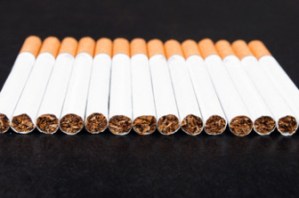
I’m still addicted to cigarettes even though I haven’t smoked one in over twenty years. Maybe longer. I know the addiction is still there because I often want one.

Years ago, there was a joke in which a guy asked a woman if she smoked after sex. Her answer was, “I never looked.”

The trouble with addictions is this: they get linked to all kinds of things. A lot of people lit a cigarette after sex, when they picked up the telephone, when they sat down to write, when they went out onto the church steps after a funeral, went in a bar, when they got in the car, so all those things (and more) became associated with smoking. And, like post-hypnotic suggestions, all those cues are just as strong now as they were when I quit (finally).

I started smoking in graduate school and started smoking more when I was in the Navy where cigarettes we cheap after the ship got outside U.S. waters (no taxes). We were told, years ago, that quitting smoking was harder than getting off hard drugs. That seemed like BS at the time, so I didn’t believe them. The thing was if we ever ran out of cigarettes, the angst was just as strong as a person on hard drugs who was looking for a fix. That should have told us something.

Having cigarettes on hand at all times was more important than anything else. When I lived in northern Illinois and couldn’t get my car out of the snowy driveway, I walked five blocks for a pack of cigarettes. That should have told me something.

I smoked when I had pneumonia and when I had horrible colds. That should have been a learning experience as well.

Quitting took a long time. Most attempts failed. What worked was smoking lighter-weight cigarettes over a period of time until I was buying brands that were pretty much like inhaling air. Then I got a bad cold, and when the cold went away, I was done with smoking. Basically, I wish smoking wasn’t a bad thing and that second-hand smoke didn’t annoy everyone else or get in my clothes and my hair so that I smell like a campfire. See, smoking is a constant temptation.

Nowadays, relatively few characters in movies and TV shows smoke. So, I find it almost shocking to watch an old movie in which everyone smokes. Those were the days when the guy put two cigarettes in his mouth, lit both of them, and handed one to his best girl. Hell, I remember doing that. I wish I didn’t.

Willie, a character in my Florida Folk Magic Series smokes Kools.  I never liked those–or any other menthol cigarette–but I still feel like lighting up a Marlboro when I write those scenes. My wife, however, is highly allergic to cigarette smoke. That’s all the reason NOT to buy a pack of cigarettes and light one “on special occasions.” I still want to, and that bothers me.

When we were young and thought we would live forever, too much booze and too many cigarettes were an extravagance we thought we could indulge in for a few years and then go back to a “normal life.” We were wrong.

There are still some places where employees go outside the front doors of their offices for smoke breaks. That means customers must walk through a cloud of smoke to go inside. I think smokers should have to stand farther away from the front door. Nonetheless, I still want to ask if I can bum a smoke.

What would I do if I could go back and “do it all over again”? The same thing, I think. Some of us just seem to have addictive personalities. Raleigh brand cigarettes used to have a coupon program, causing many of us to say we were saving up our coupons for an iron lung. Yes, we called cigarettes “cancer sticks.” We knew we were potentially doomed and we didn’t care. Is that crazy, or what?

Malcolm


Creating ARC Copies: A How-To

Once upon a time, Publisher’s Weekly asked for a review copy of a children’s book our small press had in the works. We were new to the business then and had no clue how to accommodate them, so we lost the opportunity for a high-profile review. Ouch! Now that I know better, I won’t make the same mistake again. Better still, I’ll share what I’ve learned so you won’t, either.

Source: Creating ARC Copies: A How-To | Celebrating Independent Authors

I saw a post by author Hope Clark in which she said that she buys copies of her books and sends them out to her favorite readers prior to publication so that then her books go live, there’s a batch of reviews ready to go. (She’s at a mid-seized publisher and buys the books at cost because many publishers don’t send out review copies any more.)

For the same reason, think about creating advance reader copies (ARCs) of your books so that you can send them to review sites before your books are published. In fact, major review sites won’t look at a book after its publication date; many of them expect a copy four months in advance.

You may not get in Kirkus or Book List, but it’s worth the time an effort, I think, to try. This post at Indies Unlimited takes you through the basics. Reviews early on in a book’s life not only draw more readers but improve how your book is displayed on sites like Amazon or in book newsletters.

Malcolm


Review: ‘Lie to Me’ by J. T. Ellison

Lie to MeLie to Me by J.T. Ellison
My rating: 5 of 5 stars

Suffice it to say, Sutton and Ethan aren’t enjoying a marriage made in Heaven. We learn as we read that they were not 100% truthful with each other wherever they said their vows and that, as time went by, the truth of the matter (any matter) became more blurred and got no better when Sutton disappeared and people started wondering if Ethan killed her. Or worse.

Some authors build tension by using an unreliable narrator. So, we can stipulate that both Ethan and Sutton are unreliable in multiple ways and that Sutton’s friends can, quite possibly, be trusted as far as one can throw them. Ethan learns this in spades: rather than receiving the support he presumes is due a husband whose wife has disappeared, he faces hostility.

In “Lie to Me,” J. T. Ellison has–to use an old fashioned phrase–created a dandy thriller that keeps readers chasing leads along with the police. Since the first part of the novel is told from Ethan’s point of view, we know he didn’t kill her. At least, we think we know that. Everyone is a suspect, it seems, and that’s what makes this–as lame as it is to say it–a page-turner.

The gossip about what might have happened to poor Sutton gets thick and vicious, and quite probably some of those gossiping have an agenda or an axe to grind. The reader doesn’t quite know. The beauty of Ellison’s plot–and our building knowledge about Sutton and Ethan–is that everything is in limbo and, perhaps, always has been.

Then, of course, we have to consider their dead child. Sutton never really wanted a child. So, did it really die of SIDS or was it something else? Both husband and wife are grieving the child’s death, so one must consider that they simply needed time away from each other. Whatever happened, Ethan is the one in the hot seat and Ellison’s great success over time has brought her all the tools she needs to keep her readers guessing and her characters squirming.

This is a very satisfying mystery from a master of the genre.

Malcolm

View all my reviews

Will write for food

“If you have any young friends who aspire to become writers, the second greatest favor you can do them is to present them with copies of The Elements of Style. The first greatest, of course, is to shoot them now, while they’re happy.” – Dorothy Parker

  • I tried writing for money and it didn’t work out.”
  • My parents’ greatest sorrow–other than the fact I wasn’t born with a silver spoon in my mouth–was that my grades in English classes were always lower than my grades in my other classes. They knew I was running from destiny before I did.
  • On my first visit to the radiation department to talk about upcoming cancer treatments, the doctor asked what I did for a living. When I told him I was an author, he asked how many of my books had been published. When I said, “All of them,” he said, “Oh, I’m so sorry, but we do have a financial assistance program for the indigent.”
  • I once set up a card table downtown with a poster that said, “Will write for food.” A cop brought me a tomato and mayo sandwich and said, “Okay, ace, write something.” I took out a scrap of paper and wrote, “Mama don’t allow no tomato sandwiches ’round here.” “Buddy,” he said, “you’re no James Patterson.” “Story of my life,” I said.
  • When people look at me funny during a conversation, my wife explains that I’m a writer. That usually shuts them up.
  • On the plus side, when people know I’m a writer of fiction, they think I’m just making stuff up whenever I insult them with one wisecrack or another. This has given me a lot of latitude for saying just about anything to anyone.
  • Most English teachers can sense fear; mine always sensed flippancy. They discovered sooner or later that I thought high school and college English departments were doing their best to train people to hate reading and writing.
  • I was once thrown out of a college English class for challenging the professor’s negative views about journalism. He said journalism was hack writing. I said many of the world’s greatest authors began as journalists. He stipulated that but said they were in the minority, and that most journalists couldn’t write their way out of a paper bag. When I said, “you probably can’t either,” he told me to get out. My father, who was dean of that university’s school of journalism, went over and had a talk with him, ensuring that I was back in the class the next day. Afterwards, I kept out of trouble (mostly) and ended up getting a B in the course.
  • Writing is like drugs. I’ve spent large amounts of time looking for a 12-step program to help me quit. So far, no luck on that.
  • People keep saying that the pen is mightier than the sword. I usually ask if anyone is still using swords these days. When they look at me funny, my wife says, “he’s a writer.”
  • If you decide to write for food, pick something you like. There’s no point in working all day for a tomato sandwich. much less humous. Go for a steak or a plate of oysters or wine that costs $500 per bottle. Otherwise, you’re not only selling yourself short, but you’re eating stuff that doesn’t taste good.

Malcolm

EPA to Implement Cistern Plan to Solve Rising Seas Problems

Washington, D.C., July 25, 2019, Star-Gazer News Service–The Environmental Protection Agency (EPA) will soon begin placing rows of used crude oil storage tanks, each capable of holding 16 million gallons of liquid, in the open spaces at solar farms, wind farms, abandoned military bases, and Alien holding cells at Area 51. These tanks will be linked to a vast pumping station and pipeline network that will extract seawater from the oceans to counteract rising sea levels.

At this morning’s press conference, EPA Deputy Manager of Oceans, Leilani Moana reported that while the agency has not reversed its position about the unreality of climate change and related rising sea levels, it recognizes that small, short term climate anomalies are causing a public panic about the future of states like Hawai’i and Florida.

“Since the EPA feels your pain,” Moana said, “our top scientists and engineers  have devised a system of pumping stations, pipelines, and aqueducts to remove water from coastal areas and store it inland until it can be safely released.”

Some of the pumping stations would be tied into desalinization plants that would reduce the pressure on river systems for potable freshwater during times of drought.

According to a NASA white paper, launching water into the sun on Saturn V rockets would be cost-prohibitive even though some experts said such a program would cool the sun slightly, allowing Arctic glaciers to reform to help stabilize sea levels.

“The world’s excess heat is primarily caused by heated arguments about climate change that are turning the entire issue into a self-fulfilling prophecy,” Moana said. She added that groups claiming that the weight of the water in the cisterns would push the U.S. deeper into the ocean are unfounded.

Scientists told reporters this morning that the water held in the cisterns would always remain available to be pumped back into the oceans should weather anomalies ever decrease sea levels to the point where cruise ships were scraping bottom trying to get in and out of popular tourist destination ports.

“The Earth’s water supply is a closed system,” said EPA Chief Oceanographer Porter “Po” Seidon. “The water we have is all the water we have. All we’re doing is improving upon the Creator’s design to better manage that water in times of weird high temperatures or weird low temperatures.”

“We think we’ll have the system up and running before we lose southern Florida,” Moana said.

Story filed by Jock Stewart, Special Investigative Reporter


Do you care if your favorite author writes at noon or midnight?

A writers’ magazine, that shall remain nameless here, asks authors of new titles ten questions. Clearly, the intent of these articles is to promote the book because I can’t imagine that readers care how and when authors write.

Okay, maybe I’m biased against these kinds of articles because “they” haven’t called me and asked whether I write best in fire or rain, use a pencil or a pen, or sit in Waffle Houses or woods as I craft each new book.

I’ll stipulate that there may be circumstances where a writer’s methods and techniques might be interesting:

  • Wrote the book in jail.
  • Wrote the book while clinically dead on the operating table.
  • Wrote the book while surrounded by rabid kangaroos in Australia.

Otherwise, I’m not sure readers care whether an author writes in the bedroom or the back porch or the south forty. I know I don’t care. And if “they” called me and asked for an interview in which “they” proposed a series in inane questions, I’d probably agree to it and make stuff up. People who ask inane questions deserve to be lied to.

Perhaps I would say, I always write at High Noon because “High Noon” is one of my favorite movies. Or, perhaps I would say, I always write on Hallowe’en because I channel haints and the veil between worlds at that time of the year. Personally, I think that thin veil between worlds stuff is a lot of nonsense, but people seem to believe it. That means readers would probably believe haints help me write my books.

I just got done reading one of these “ten questions for Joe Smith” kind of articles and the whole shebang was so boring, I immediately opened a bottle of Shiraz and tried to forget.

These articles all seem to be written by lazy writers who ask the same stock questions to every writer they interview, so it’s no wonder they (the authors and/or the articles) all sound like they come off an assembly line.  When a real journalist is assigned to write a feature article about an emerging author (or anyone else), the first thing they need to do is learn everything they can before the interview begins. That makes each article unique, makes the subject a real person rather than just another widget, makes the source more important than the interviewer’s stock questions.

Some blogs actually have a list of stock questions for writers to answer. Purportedly, the result is supposed to sound like an interview. It doesn’t. The result is usually boring and probably costs the emerging author a lot of book sales.

Question: What were you doing when you first thought about writing this book?
Answer: I was eating a pizza.

Wow, that information’s really going to resonate with prospective readers! As an author, I’d feel so discounted if I were asked such a question, I’d probably say, “I was watching alligators have sex.”

When I read an interview with an author, I want to see questions and answers that matter.

Malcolm