Developing a Writing Practice

The world is full of people who “want to write a book someday,” but few are those who manage to find the time to do so amid the myriad other commitments in their lives.

A lot of the people who genuinely want to write a book never do so, because they never find a reason to prioritize their writing practice. That was the case with one of my book-coaching clients—until one of his sons died from cancer.

Source: Developing a Writing Practice, Part 3: Important | Jane Friedman

Without a strong passion and/or a pragmatic approach to giving your writing the time it needs, those dreams of poems, novels, and plays will probably never come true. Passion might arise out of a tragedy in your life that subsequently sends you to the keyboard day after day until you’ve said what you want to say about it.

Yet, as the author says, “There’s no need to wait until life reminds you of your mortality. You can make writing a priority right now.” The suggestions in this article just might help you, I think because they don’t smack of discipline, like being forced to do fifty pushups a day or run ten miles, approaches that might create good soldiers by don’t allow much for a fresh breath of creativity as part of your prioritizing time and effort.

Worth a look–and even more, worth a try.

–Malcolm

A thousand characters: give me a break

I’m reading a novel–that shall remain unnamed for now–that has a lot of chapters, each with multiple subchapters, and all with thousands of characters with multiple names and aliases and Internet handles.

I have a vague idea most of the time about what’s happening–cyber warfare–and a feeling that there are multiple good guys in multiple alphabet soup federal agencies as well as multiple bad guys in a slough of nasty groups all of who are either trying to steal secrets and/or plant bombs OR who are trying to keep people from stealing secrets and/or plant bombs.

What I seldom know is which character is doing what. Sometimes characters are referred to by the first name, last name only, or code name.  Often, all in the same paragraph, as in “Johnson stopped his car in a no-parking zone and hung his FBI creds around his neck. As Bob edged closer to the barricades he noted a police helo hovering overhead, then, and incoming call, ‘Cyber 1,’ he answered.”

Ack. Are Bob and Johnson the same person? Yes, but it’s often hard to tell.

I looked up the reviews for this book on Amazon and the most common complaint was too many characters and the fact that new characters kept being introduced throughout the book.

No offense to the names in other countries, but a large number of foreign names, (first/last/pet/title only) doesn’t help the reader keep track of everyone, especially when some of these people are bad guys and are using phoney names.

I’m losing my patience with this and am surprised by the reader reviews on Amazon where people said, “Best book since sliced bread” and “Well written with a lot of character depth.”

Some people read the book while drunk or stoned and that probably accounted for the glowing, five-star reviews. Other people read the book because it was the only new book in the house (my situation) and just decided at some point it didn’t matter who was going what as long as what they were doing was really cool.

If you wrote this book, shame on you for an anal amount of complexity.

–Malcolm

Would you live your life over again if you could?

When people ask this question, they usually want to know if you’d make the same career choices, marry the person you married, go to the same colleges, live in the same places, and become involved with the same hobbies and avocations. Of course, the only way you could live your life over and make changes would be having knowledge of what happened the first time through and then not doing any of the things that turned out badly.

I regret many of the decisions I’ve made, but when it comes to those that turned out badly, I know that even though the decision hurt me and/or others at the time, if I had done something differently, many of the good things in my life since then would disappear.

So many things over the course of one’s life often happen due to small and seemingly innocuous decisions. A man drives home from work a different way and gets t-boned in an intersection and ends up in the hospital. How do you predict that? Maybe he marries his nurse and lives happily ever after. Okay, the car wreck was bad but the marriage was good. What if he’d driven home the normal way without a car wreck. Would fate/luck/God made sure he met that nurse some other way?

When asked about living one’s life over in a different way, it’s easy to say “I wouldn’t have driven to work drunk and run over all those people” or “I would have told my friends I wouldn’t help them rob the bank which ended up with me in jail for twenty years.” Those things seem so obvious, it’s easy to see why somebody would leap at the chance to do things differently.

But how would you know which tiny choices would end up having wonderful or horrible consequences? That is, when a person goes out to eat at Restaurant A rather than Restaurant B, s/he doesn’t really see that choice as a defining moment. usually, it isn’t. But it could be.

When it comes down to it, I always say I’d live my life the same way that I have because it’s the devil I know. It might not have been all Champagne and roses and millions of dollars in the bank, but those things don’t guarantee happiness or that some cruel catcher in the rye might jump out of the shadows if I were to change the smallest thing.

The question of would you or wouldn’t you becomes more tangled than quantum theory with so many variables and connections, I don’t think our brains could handle living our lives over to make them come out better.

The big, bad decisions are easy to focus on and think about changing. But I believe our character and our chosen destiny for this life come out thousands of “smaller” decisions that don’t seem world-changing when we make them.

–Malcolm

Malcolm R. Campbell is the author of “Conjure Woman’s Cat”


For those who get too close

Nightbeat Column, by Jock Stewart, Star-Gazer News Service

In addition to a robber’s red bandana face mask, my grocery store costume includes a carpenter’s utility belt with a sign in 18-point Bodoni Bold type that says For Those Who Get Too Close.

COVID-19 oriented, my utilities do not include a hammer, screwdriver, vise grips, pliers, tape measure or T-square because handy as those tools are, they don’t scare huggers, hand shakers, coughers, and sneezers away.

Instead, I have these very practical items:

  • Wikipedia Photo

    TASER: For lone family members at the far end of the aisle who start running toward me sh0uting, “Jock, give me some sugar,” in the belief that being close at home (in some cases) means being close in the store is okay.

  • WASP Spray: Since this comes in long-range spray cans, it keeps White Anglo-Saxon Protestants on their side of the store without having to accept any tracts or lists of Bible verses.
  • Pepper Spray: Keeps hookers from coming up and whispering, “Jock, baby, I need $100 for a roll of toilet paper.”
  • Bowling Ball: If a bevvy of grannies from the neighborhood runs toward me for help carrying their Polident, Fig Newtons, and snuff back home, this can be rolled down the aisle for an easy strike. (I have two balls in case I come up with a dreaded 7-10 split on the first roll.)
  • Smith & Wesson 642 .38 Special Revolver: Keeps the cashiers on their side of the new sneeze screens.
  • Emergency Poster: Printed in 72-Point Bodoni Bold type, this sign says: I ALREADY GOT IT: HOW ABOUT YOU.

Shop only for essentials, be safe, and mainstain social distancing (or else).

“Nightbeat” appears on the Junction City Star-Gazer editorial page as needed

John Hart delays release of new novel ‘The Unwilling’

John Hart announced on Facebook yesterday that The Unwilling, originally scheduled for release in this June, will be delayed until February of next year. Many fans, including me, are disappointed by this news since we had been looking forward to some wonderful summer reading material.

Unlike many of us who promote our books primarily online with an occasional bricks-and-mortar reading and signing, Hart schedules a book tour for each of his books. The pandemic makes tours impossible now.

Calling the planned book tour for The Unwilling collateral damage to coronavirus, he said, “This was not an easy decision for any of us, but book tour is a huge part of my life – that includes meeting fans and booksellers, raising funds for important charities and doing what I can to support all of the stores that writers and readers value so highly (talk about an essential business!). It is also a necessary part of my life. Writing novels is such a lonesome, isolating affair that I have long considered tour as a needed reinsertion into the human race, a once-in-a-while reminder that life exists beyond the farm and keyboard, the family and close friends.”

His novels are so intense, I can understand his need to get out into the real world every time one is finished and ready for release. We’ll be waiting, Mr. Hart.

Malcolm


What’s the street value of a roll of toilet paper?

Once when I was picking up a prescription at my pharmacy, I said I was ready to make a profit by selling the pills on the street at a dollar each.

The pharmacist said that I’d be losing a lot of money pricing them that cheap. Shows what I know about the DIY drug biz.

This morning, I found a couple of store brand packages of toilet paper at the Food Lion. First time I’ve seen any there in almost a month. They also had paper towels and Kleenex. My lucky day.
People in the parking lot saw the toilet paper and looked envious. Since I hadn’t bought any fresh ammo, I hoped they weren’t armed. I knew one thing they didn’t know. There wasn’t enough toilet paper left inside the store for all of them.

Hmm, how much would they be willing to pay for one roll? $10, perhaps? That seemed fair since I have expenses, insurance, transportation costs, etc. But no one came over to threaten me or propose a deal. So now we’re stocked up to a little while.

Whew.

That’s a relief. Like everyone else, we were running low on a product that several months ago we took for granted.

In the 1970s, I never expected (and didn’t like) the gasoline shortages. As I drove around looking for a service station that had something to sell, I never thought the next shortage would be toilet paper.

Maybe we should all use the grocery store restrooms every time we go shopping. Naah, with a virus around, I don’t think so.

If you want a roll, send me $10 plus shipping and maybe I’ll ship one back to your house and you’ll feel inspired or relieved.

–Malcolm

Are you going to read pandemic novels when all this is over

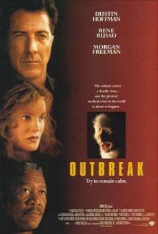
Looking for something to do this afternoon, my wife and I watched an old virus-out-of-control movie on Netflix this afternoon called “Outbreak.” While I suppose a movie about a pandemic in the making was apt for the interesting times we find ourselves in, we picked it because it was better than the other selections.

I read an article this morning about probable post-pandemic novels. One point of view was that we’re all sick of this and don’t want to relive it on the screen or in print after it’s over.

Another point of view was that a lot of people have a lot of free time right now and the daily news is certainly supplying a surge of writing prompts, so, yes, we’ll probably have a lot of fiction, real-life-stories, and political analyses to suffer through.

I think it’s going to be difficult for a fiction writer to put the pandemic in perspective if s/he writes about it “too soon,” unless (of course) the output is a political red state or blue state look at what people did wrong, could have done, etc.

Rushing into print might not be the best choice

–Malcolm

“Lena” is free on Smashwords through April 20.

A mix of stuff, i.e. a potpourri (without herbs)

  • My latest post “How are You Feeling?” was written in hopes followers of this blog would respond with their own comments and stories about coping with the pandemic. I was disappointed in the lack of response.
  • I’m coping by working on my next novel. It seems to be about halfway done, though I’m usually the last to know. It continues where my Florida Folk Magic Trilogy ends, though it’s by no means a sequel (unless my publisher tells me it’s a sequel).
  • I’m also coping by re-reading old books, currently James Patterson’s Instinct about a serial killer who leaves cryptic clues to his next victim by placing a playing card next to each person he murders. The novel came out in 2017 and was co-written by Howard Roughan. It demonstrates the problem with the police using the services of an expert. If the murders keep going on and on an on, the expert really isn’t solving anything. If the murders stop right after the expert solves the whole case on page 20, you don’t have much of a novel.
  • My wife and I see to be trading the low-grade flu back and forth. Not sure how to fix that except for both of us to take it easy and get extra sleep.
  • I listened to Queen Elizabeth II’s brief pandemic speech on TV last night and though it was a reasonable appeal for working together to solve this crisis as Brits have done before. She’s old enough to remember the Blitz, the country’s attempts to find safe places for the children, and the resolve with which everyone mobilized for efforts in battlezones and on the homefront.
  • Comfort food is a high priority with us right now. I just took a squash casserole out of the oven to be warmed up for several meals. My wife’s been making pies and rice casseroles. We usually pair these with whatever we can find on TV, including “How to Get Away With Murder.” Our joke with that series is that (like “Lost”) we seem to know less and less about what’s going on after watching each episode.
  • Stay well.

Malcolm

How are you feeling?


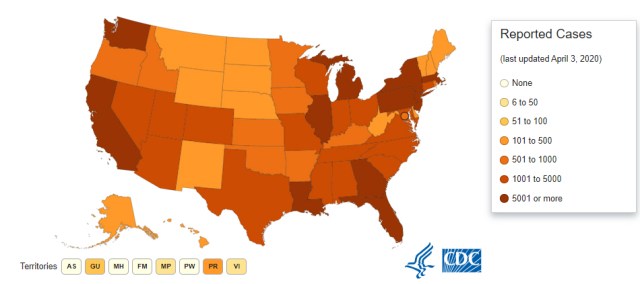
Those of us who aren’t old enough to remember the fear and uncertainty, the rationing, and all the shortages and economic changes during World War II, will probably see the COVID-19 pandemic as the nation’s greatest crisis. The last U. S. figures I saw showed 277,205 cases and 6,593 deaths. We are told that these numbers don’t include cases and deaths we don’t know about and that they’ll go higher. We’re also told that a vaccine is probably at least a year away.

Historians are comparing this pandemic with the 1918 influenza pandemic that impacted 500 million people throughout the world, 50 million deaths worldwide, including 675,000 deaths in the U.S. That’s not reassuring even though it sounds long ago and far away with no one alive with personal memories of it.

I’m reminded of the polio scare in the 1950s, with 57,628 cases in 1952. The Salk and Sabin vaccines generally put an end to the outbreaks, but prior to that, there was a fair amount of fear and unease about the safety of one’s children. (My younger brother had a mild case.)

Whether they’re joking about it or trying to deny the real danger to themselves, my sense from news reports and social media is we’re seeing off-the-scale unease, uncertainly, and frustration that exceeds the 1950s polio scare, one that has captured the country’s consciousness like the national efforts to mobilize on the homefront for World War.

Cases and deaths are spreading across the country for a disease with no cure but to try to simply lessen one’s chances of getting it and to endure it if one does get it. The economy is, of course, a resulting tragedy as stores and other venues close, travel is restricted, and employees are furloughed, and businesses facing bankruptcy. The pandemic seems like a sword with multiple sharp edges.

The Internet is filled with ideas for things to do while quarantined. These ideas probably help, but I doubt they’re a real substitute for unemployment, disruptions in products and services, and concerns about any flu-like symptoms one has had. It’s nice to see news stories about people pulling together: they offset some of the stories about the political squabbling as well as the crazy people who ignore guidelines and/or purposefully try to infect others.

My younger brother and his wife were planning a European trip. My wife and I were planning a trip to Maryland to see my daughter, her husband, and my two granddaughters. These trips have been cancelled. Thousands of people are probably having similar experiences.

Day to day, I’m impacted by news stories and the latest lockdown style regulations and lack of many grocery items in the stores. I try, though, to focus more on the book I’m writing, the TV shows we watch, our two cats, and life around the house rather than becoming obsessed with the pandemic.

How about you? How are you feeling and how are you coping?

Malcolm


How You Can Help During the Coronavirus Pandemic 

As the days march on and the only thing that feels certain is devastating uncertainty, my colleagues and I consider it both our mission and privilege to help keep readers’ spirits up and do whatever we can to see them through to the other side of this. There always seems to be pressure on us to make something of “free time” and the paradox of our current moment is that we have a lot of it and can’t really do anything with it but wait.

Source: How You Can Help During the Coronavirus Pandemic | Literary Hub

An important source for writers, publishers, and readers, Literary Hub has increased its output of essays, poetry, historical precedents, philosophy, and lists of books we might read while staying at home. Many of these offerings are grouped together under “These Times” in Lit Hub’s daily newsletter of literary links.

Now they’ve taken a new step by creating a list of practical suggestions for helping out during the pandemic. These include donating blood, assistance to the elderly and other homebound individuals, making/distributing healthcare supplies, and helping sterilize shared spaces. They include places where one can donate money and promise to update their list of suggestions as new ideas arise.

For those people who want to do more than wait and hope for the best, this list is a great addition to the local and regional lists you may be seeing in the newspapers, TV news, and social media.

–Malcolm