Book Bits is my new blog of writers’ links. Here you’ll find information about reviews, new titles, author interviews quotations, and book news. I invite you to stop by, skim through the offerings and click on a few links such as:
News:Harlan Ellison Would Kill Timberlake Film – “Harlan Ellison, filed a copyright suit last week that alleges that a new film borrows heavily from his 1965 short story” See the book’s listing on Amazon here.
Quote: “Always read stuff that will make you look good if you die in the middle of it.” — P. J. O’Rourke
I see these kinds of links every day and thought it would be fun to start sharing them.
–
Coming Attractions: Author Beth Sorenson (Divorcing a Dead Man) will contribute a guest post here on September 28 and L. E. Harvey (Impeccable) will be here on her birthday September 30.
Today’s guest post by author Smoky Trudeau Zeidel (On the Choptank Shores – A Love Story) offers tough-love advice for aspiring writers who have become frustrated with the road to publication. Zeidel is the author of two novels, two non-fiction writing books, and a book of prose, poetry and photographs about the natural world (Observations of an Earth Mage). A book reviewer and a former writing instructor, Zeidel is also a professional editor.
KNOCK IT OFF: How to Be Treated Like the Writing Professional You Aspire to Be
by
Smoky Trudeau Zeidel
Recently, I’ve done a little bit of Web surfing, checking out places writers and aspiring writers hang out. You know the places: water coolers at Websites, Facebook pages, Yahoo groups. As I surfed, I found a disturbing trend.
There is a lot of whining going on among unpublished writers about the fact they are unpublished. Some of that whining is aimed at those of us who are published. Not only whining, but some very unpleasant name-calling.
I have a bit of advice for any of you who may be in that category of frustrated, unpublished writer, that advice being: KNOCK IT OFF!
You heard me right. But before you brand me a heartless meanie with no compassion for the little guy, let me assure you that isn’t the case. I taught fiction writing for many, many years. I’ve taught and coached literally thousands of unpublished authors, helping them learn their craft, polish their manuscripts, giving them guidance. Heartless meanie is not the right modifier here.
Let’s look at a handful of problems I’ve seen this past week:
Writers who want others to do their legwork for them. I’ve seen at least ten writers post comments to the effect that they’ve written a book, but don’t know what to do next. They beg “someone who’s been there” to tell them what to do next.
Writers who have an over-inflated opinion of themselves and their writing. I’ve seen people swear their book is as good as The Lord of the Rings trilogy, or that it is a guaranteed best seller. I’ve heard them say they write like Stephen King or J.K. Rowling.
Writers who cannot spell, yet complain they cannot get a publisher or agent to look at their book. The word “your” is spelled Y-O-U-R, not Y-E-R. It’s “for sure,” not “fer sher.”
Writers who complain that those of us who are published have written books that aren’t as good as theirs, or, worse still, they bash another writer’s blog, or Goodreads book reviews, or other online writing—or bash the author personally. This, perhaps, is the most dangerous thing of all I see on the Internet—writers complaining about—and sometimes downright bashing—other, currently more successful, writers. Bad karma, bad karma! If I see those posts where you trash talk someone else, publishers can see them, too. Don’t think for a minute they won’t find out you said unkind things. All they have to do is plug your name into a Google search and they can come up with who said what and where, and yes, they do Google writers. There is no anonymity on the Internet. If you can’t say something kind, it is best not to say anything at all.
If you are guilty of even one of these transgressions, you need to shape up! Here’s where that bit about me not being a heartless meanie comes into play: I’m going to give you some suggestions for doing exactly that.
Do your research
Do a Google search with the words “How to Get Published” in the search box. When I did that, I came up with 165 million results! If you can’t figure out what you need to do with that wealth of information at your fingertips, you perhaps need to find a different avocation.
I’m not suggesting you can’t ask for tips on your Facebook pages. Asking politely for tips is completely acceptable. But complaining that published writers won’t tell you what to do next is whining. No one likes a whiner.
Along the same lines, if you do happen to find an author who is receptive to giving your some hints, don’t abuse their good graces. It is fine to ask if they have any tips for you. It is not fine to ask them to critique for free your book, or to introduce them to your publisher. It is not fine to email or message them ten times a day.
Control your ego
Of course you think your novel is wonderful, and you should! Writing a novel is hard work; just completing the task is worthy of a congratulations. But don’t brag about how great it is. It’s up to readers and reviewers, not you, the writer, to say if your book is as good as some other book, or if your writing style is like a famous author’s.
Learn to spell, and learn proper punctuation, grammar, and syntax rules
I can’t emphasize this enough. If spelling is not your strong suit, look up words you are unsure of, and have someone who can spell well proofread your manuscript. Buy a Chicago Manual of Style, the industry-wide standard for all things word related, and study the chapters on punctuation. Learn how to use a comma. Never, ever have I seen so many books where the writer didn’t have a clue how to use a comma than I have in the past few months. It’s enough to make this editor pull her hair out. And watch your syntax. “This morning I saw a deer driving Rachel to work” is bad syntax—unless you have very talented deer in your neighborhood.
Be polite – Everywhere
That means on Facebook, in chat rooms, on Yahoo Groups, and when you comment on blogs. If you cannot be polite, do not say anything. I know my publisher lurks on Facebook, and I know of at least two other publishers who do the same. If I see your post, they will, too. One snarky comment could cost you dearly. You don’t hurt the author or publisher you are snarking about, because serious authors (and publishers) don’t take these snarks seriously—except when it comes to judging the person who is being snarky.
Bottom line is, if you want to be treated like an author, and not just a wannabe writer, you need to act the consummate professional. It’s no different from being a doctor, lawyer, or barista at Starbucks. Do your job well and be kind, and you will be treated accordingly. Whine and whimper about how unfair the world of publishing is, and expect to live with the consequences.
–
Smoky’s writing combo book containing both her books, Front-Word, Back-Word, Insight Out and Left Brained, Write Brained: 366 Writing Prompts and Exercises is available at both Amazon and Smashwords.
“A Pearl Harbor attack intensified hostility towards Japanese Americans. As wartime hysteria mounted, President Roosevelt signed Executive Order 9066 making over 120,000 West Coast persons of Japanese ancestry (Nikkei) leave their homes, jobs, and lives behind and move to one of ten Relocation Centers. This single largest forced relocation in U.S. history is Minidoka’s story.” — National Park Service, Minidoka National Historic Site
“Now, therefore, by virtue of the authority vested in me as President of the United States, and Commander in Chief of the Army and Navy, I hereby authorize and direct the Secretary of War, and the Military Commanders whom he may from time to time designate, whenever he or any designated Commander deems such action necessary or desirable, to prescribe military areas in such places and of such extent as he or the appropriate Military Commander may determine, from which any or all persons may be excluded, and with respect to which, the right of any person to enter, remain in, or leave shall be subject to whatever restrictions the Secretary of War or appropriate Military Commander may impose in his discretion. ” — Franklin D. Roosevelt, in Excutive Order 9066, February 19, 1942, resulting in the relocation into camps of 122,ooo Japanese, many of whom were born in the U.S. and were American citizens.
“The internment of individuals of Japanese ancestry was carried out without any documented acts of espionage or sabotage, or other acts of disloyalty by any citizens or permanent resident aliens of Japanese ancestry on the west coast; there was no military or security reason for the internment; the internment of the individuals of Japanese ancestry was caused by racial prejudice, war hysteria, and a failure of political leadership.” — Commission on Wartime Relocation and Internment of Civilians, April 15, 1988.
–
Hotel on the Corner of Bitter and Sweet by Jamie Ford
Had I written this powerful novel, my black sense of humor would have tempted me to weaken the story of Chinese American Henry Lee and Japanese American Keiko Okabe by including Franklin D. Roosevelt’s name in the book’s acknowledgements. Without his failure of leadership, there would be no bittersweet story to tell.
Ford knew better than that. Lee and Okabe are fictional characters living out their story between 1942 and 1986 against a backdrop of historical fact. Seattle existed in 1942 with Japanese and Chinese enclaves. Many of the residents in both sections of town were property owners, merchants, wives, school children and American Citizens. The Japanese residents of Seattle were removed and taken to Idaho where they were placed within the Minidoka Relocation Center until the end of World War II. Ford lets these facts speak for themselves.
In the author’s note he writes, “My intent was not to create a morality play, with my voice being the loudest on the stage, but rather to defer to the reader’s sense of justice, of right and wrong, and let the facts speak plainly.”
Hotel on the Corner of Bitter and Sweet is a universal love story. School children from diverse backgrounds meet and become friends. Their friendship isn’t supported by the prevailing social customs, the political realities of the day, or their families. In 1942, Henry Lee was sent to a white school in Seattle because his father thought it was in his son’s best interests. Born in China, Lee’s father dispises the Japanese because they have invaded his homeland. China is an ally of the United States. Since he doesn’t want young Henry to be mistaken for the enemy, he makes him wear a button that proclaims “I am Chinese.”
The other students at the white school see “Chinks” and “Japs” as subhuman and other and too alien to tolerate or befriend. While Henry grew up speaking Cantonese, his father has forbidden him from using it. Becoming a full American means speaking Enlish. When Henry meets Keiko at the school, he is surprised to discover that she’s never spoken any language other than English. Born in the U. S., she’s a full-fledged American even though the students who taunt Henry see her only as his “Jap girlfriend.”
We know before the novel begins that Keiko will be taken away. What we don’t know—actually, what we can’t know unless we have experienced it—is how Henry and Keiko will cope with the daily threats from whites, the ever-present fear of soldiers and FBI agents, the forced removal of people from the “Japantown” enclave in Seattle, or the forced separation that looms large and infinite in a person’s life. In part, the power of this story comes not only from the fact Ford lets the historical facts speak for themselves, but the thoughts and actions of his fictional characters as well. His understatement is finely tuned and carries the story well across its alternating time periods.
In 1942, Henry lives through the days of fear and friendships lost. In 1986, when the old Panama Hotel—a real Seattle Landmark—makes the news because its basement holds the stored-away belongings of many of the “evacuated Japense families,” Henry relives the old days, and wonders if he can come to terms with them and all that he lost and how he lost it. Even “now,” in the 1986 “present day” of the story, he is still wondering and still searching—for exactly what, he’s not sure—but he will know it when he finds it.
Ford has written a terrifying and poignant love story that’s as haunting as the ever-present jazz music Henry and Keiko love and as filled with hope as two young people in any time period of culture or circumstance who promise they will wait for each other forever.
In Garden of Heaven: an Odyssey, my protagonist David Ward is convinced that some of the people we meet on rainy city sidewalks and between the dry-as-dust shelves in ancient libraries began their lives as fictional characters. Whether they first strayed through a writer’s thoughts as a random notion, stalked him along the boundaries of his waking world in twilight dreams, or arrived at the very moment the pen first kissed the paper with their name, such individuals are called into life because an empty space must be filled.
David claims he wrote a novel about a woman who meets his protagonist at an old transfer house where the city’s streetcar lines come together, allowing people to transfer from one city car to another or from a south side local to a north side interurban. It’s impossible to know whether Ward dreamt up a character whose depth and outlook were the very same as the depth and outlook of the soul mate he was seeking or whether his muse was moonlighting as a matchmaker.
At a time when David was lost, the fictional character appeared in his life as a living, breathing woman, and while she was in the process of saving his life, he asked how she happened to meet him by happenstance on a warm, Indian summer afternoon. She said he called her when he wrote what he wrote about the transfer house. Clearly, he needed her too much for her to live out her existence on a printed page. She is, in David’s mind, a very real woman who is filling a very real empty space.
He’s fair certain the gods tampered with the workings of the temporal world on the day when she had her first independent thought. He’s convinced of her reality, and I believe him.
As an author of fantasy novels, I can’t claim what my characters claim. I will not try to convince you that David Ward stepped out of Garden of Heaven: an Odyssey, and became real, much less that a character in one of my character’s stories became real. Speculation along such lines leads to lunacy or into the “many worlds interpretation” of quantum mechanics that suggests that things that can happen, do happen.
Sarabande has entered dark territory
My protagonist in Sarabande was, for the many months I was actively at work on the novel, a very strong presence in my thoughts. She had a story to tell. Like a living and breathing person, it took her awhile to trust me enough to share the most personal events and feelings that had, for so many years, lurked powerfully in her thoughts. Figuratively speaking, I followed her on her journey from Montana to Illinois and back as a silent scribe. I could not intervene because my powers as an author do not allow me to tamper with the workings of my stories.
Now, the novel has been written and published and I feel rather lost because, fictional though she is, Sarabande’s voice—as interpreted by my muse—has been a voice constantly speaking. She needed me to hear her and disseminate her story to those who love fantasy worlds that hover close enough to our world that they rattle the windows as well as our thoughts while we’re reading a story.
When Sarabande was published, Sarabande stopped talking. There was nothing else for her to say. My muse became quiet as well. At the end of the novel, Sarabande understood many things. I understood them, too. Then she stepped into a well-lighted mountain cabin with two friends and closed the door. They have much to discuss, but I am no longer hearing Sarabande’s voice. I have no idea what is being said and done on the other side of that door. In the railroad business, “dark territory” refers to sections of the line where there’s no communication between a train and the outside world. That’s an apt description for Sarabande’s current whereabouts.
Many authors feel a bit lost when the finish writing a short story or a novel. The intense focus on the story for many months or many years is rather hard to replace with the chores of a normal day. The missing story-in-progress leaves an empty space. I can understand why a reader or a writer might speculate about his characters finding the wherewithal to transition from the world of fantasy into the world of reality as we currently understand it.
What’s Next?
Yet, Sarabande ended at a natural place. Tempting as it may be to write past that ending, I think my words would not ring true.
A friend of mine asked, “What next?” I really don’t know. Perhaps I’ll write about stone masons in 16th century France or mountain climbers on the summit of Mt. Everest. Perhaps Sarabande will ask my muse to ask me to write another story about her life in the universe next door. She’s independent of me now and, in that regard, just as real in my memory as the people I’ve met on rainy city sidewalks and between the dry-as-dust shelves in ancient libraries. I can no longer tell you what she’s thinking.
I don’t know what’s next. No doubt, there are a lot of probable fictional characters out there with stories to tell. Hopefully, there are dreamers amongst them who need a scribe who loves mixing fantasy and reality in the same glass. When one of them is ready to talk, my muse knows my phone number and we can talk about what’s supposed to follow the words “once upon a time.”
–
Coming September 6
Author Smoky Trudeau Zeidel (On the Choptank Shores – A Love Story) will be here with a guest post offering a bit of advice for unpublished authors called “Knock it Off.”
For one thing, people don’t like authors whose last names are impossible to spell correctly: is it Wolf, Woolf, Woolfe, or Wooolf?
Plus, there seems to be that lingering question about whether Virginia Woolf is or is not on the endangered species list and whether or not she can be shot on sight in certain western states.
No self-respecting rancher reads such books as Mrs Dalloway,To the Lighthouse and Orlando because “the author of those books is eating out cattle.” Others say Virginia Woolf is, obviously, an eastern predator and/or that no westerner would want to read an entire novel about a central-Florida city.
People of my generation, and that includes ranchers who are almost too old to ride a horse, fondly remember Virginia Woolf’s excellent job of acting in the bio-epic Who’s Afraid of Virginia Woolf. “She might have been a Liz Taylor clone, but she knew how to act.” Either Taylor or Woolf was married to Richard Burton on more than one occasion. It was hard to keep track in thos pre-Internet days.
True crime writer Megan Abbott (The End of Everything), in a recent interview on The Rap Sheet explained her shift from reading classics to more ramped-up novels with the quip: “How many times can you talk about Virginia Woolf before you want to kill yourself?”
Virginia Woolf
I really can’t answer that. For one thing, due to the mix-ups about her name and predator status, Woolf really doesn’t come up in conversations very often. In fact, I can go for months without hearing anything about Virginia Woolf. The last time I mentioned Woolf in a bar, a guy drunk on shooters said, “she took a bite out of my nephew’s puppy up in Richmond.” I said I was sorry to hear that.
These days, the vicissitudes of reading tastes have led people to read more about werewolfs than Virgina Woolfs (or should that be wolves?) Misinformation being the currency of the Internet, it probably wouldn’t be too difficult to get a viral campaign started that alledges Virginia Woolf did not kill herself in 1941. Weather historians have determined that there was a full moon on the night she drowned and, chances are, she became a shapeshifter and that we all have a very good reason to be afraid of Virginia Woolf.
This is pure speculation on my part. Wolves are generally feared for scatterbrained reasons, and Virginia is no exception. As kids, none of whom have heard of Virginia Woolf are fond of keying into their text messages when they make an important point: Just saying. . .
In addition to his contemporary fantasy adventure novels Sarabande and The Sun Singer, Malcolm R. Campbell is also the author of the comedy/satire JockStewart and the Missing Sea of Fire. Campbell maintains that there is no reason to be afraid of any of his books except, perhaps, Garden of Heaven: an Odyssey which has a lot to say about wolves and wolfers.
Welcome to the world of fantasy. My name is Malcolm, and I’ll be your server this evening.
Today’s special is Sarabande, a bone-chilling new adventure about a young woman named Sarabande who risks a dangerous journey into her own past. With the help of the Sun Singer, she plans to raise Dryad from the dead so that her cruel sister’s ghost can no longer cause pain and suffering throughout a peaceful mountain valley.
Fantasy is a Dangerous Place
You’ll be reasonably safe in the world of fantasy while I am here to guide you. Otherwise, may I suggest that you read Sarabande during the daylight hours in the company of others. Do not read the novel at night unless the doors are locked.
Like abandoned mines, fantasy leads deep into the heart of strange landscapes, forbidden worlds and dreams, places where everyday reality fears to tread. Be careful and do not wander off alone, for the mysterious world of fantasy can be dangerous. That’s why I’m posting a warning sign here just like the one I saw recently in Virginia City, Nevada where gold and silver were once extracted from the earth.
Mining Fantasy Novels for Gold and Silver
While growing in a house full of books, I discovered high-quality ore in such fantasies as The Once and Future King and Lord of the Rings. Recently, others have discovered gold and silver in the Harry Potter books. The gold of dreams and the silver of mystery are not only exciting—they jump start the imagination.
I hope you’ll enjoy Sarabande. It’s available today in multiple e-book formats at Smashwords. Other editions will follow soon, including paperback. Dig deep, enjoy the ride, but please, read safely in well-lighted places.
“When you seek it, you cannot find it.” — Zen Proverb
When editing and revising a novel in progress, I try not to seek anything. While I sometimes jot down things to consider, I don’t make lists of characters, events, dialogue snippets or internal monologues as I ponder the latest draft of my manuscript. If I do, I suddenly can’t see the forest for the trees.
Like a hiker on an unknown trail, I try to get a sense of the place–in this case, that place is the world created by the novel. Casually, I wonder: What is going on here? Who are these people? What do they want?
If I were to look too hard for specifics, it would blind me to what is missing, what could have been said, what might have been done. In many ways, I’m reading my manuscript the way I would read another author’s novel for the first time—with as few expectations as possible.
In my Sarabande’s Journey blog, I have been writing about some of the issues, symbols, motifs, and themes that are often found in a heroine’s journey story. While my novel in progress, Sarabande, is a heroine’s journey, I do not read my manuscript looking for those issues, symbols, motifs and themes.
First, I need to internalize all of that before I begin writing; otherwise, the novel sounds like I’m simply pasting ideas into a story say, the way somebody might randomly use words in a language they don’t know in a conversation with a native speaker. Second, I don’t intend for my fiction to be a demonstration of the heroine’s journey theme or to explore everything that has been written, say, about women in a man’s world. The novel is a story before it’s anything else.
I know before I begin writing where my character is going and why. I know how the novel will end. I try to keep everything in between loose and flexible until I begin to write. Then, I go where the story carries me. When I edit and revise a manuscript, I try not to have a destination. I want to see where I am being carried by the currents and tides of the work. Editing this way is relaxing if you don’t fret about it.
Worrying about whether one ought to be doing one thing or another thing with the story doesn’t help the work. Actually, nothing helps the work more than staying out of the way of the story as much as possible. When I put on my editing hat, I’ll “fix” a lot of things and re-do a lot of things without being heavy handed.
Does this sound chaotic? Not at all. When you’re not actively looking for a result, the novel begins to edit itself.
Malcolm R. Campbell is the author of the recently released Bears; Where they Fought: Life in Glacier Park’s Swiftcurrent Valley, a glimpse at the dramatic history of the most beautiful place on Earth. A Natural Wonderland… Amazing Animals… Early Pioneers…Native Peoples… A Great Flood… Kinnickinnick… Adventures… The Great Northern Railway.
“Give a month at least to this precious reserve. The time will not be taken from the sum of your life. Instead of shortening, it will indefinitely lengthen it and will make you truly immortal. — John Muir, “Our National Parks,” 1901
“Beware thoughts that come in the night. They aren’t turned properly; they come in askew, free of sense and restriction, deriving from the most remote of sources.” — William Least Heat-Moon in “Blue Highways: a Journey into America.”
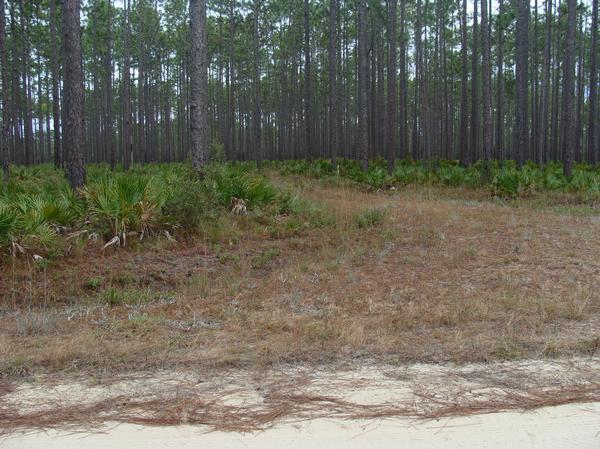
Forest Service Road - Wikipedia Photo
In the early 1960s when gasoline was 31 cents a gallon, my decrepit 1954 Chevrolet knew every unpaved national forest road in Florida between Tallahassee, St. Marks, Woodville, Sopchoppy, Carrabelle, Sumatra and Chattahoochee. Almost nightly, I drove late into the night and all the graveyard shift fry cooks and waitresses knew my name.
The car at night was a sanctuary and such guidance as I received from the universe was both welcome and askew.
In the early 1970s when gasoline as 35 cents a gallon, my 1970 Kaiser Jeep knew the secondary roads across northern Illinois and southern Wisconsin from Waukegan to Fox Lake to Lake Geneva to Kenosha. I’d take the doors off and make the Jeep’s noisy, nighttime world into a place of meditation where the best of wisdom was free of sense and restriction.
Sweet Highway
Montana Plains - Wikipedia Photo
In time, the Jeep also learned the beauty of the empty daylight highways that led through Minnesota and North Dakota to the Rocky Mountains following the route of the old Great Northern Railway. The “sweet highway,” as author Linda Niemann once called it, was the best route to the most remote sources my mind sought out in those days.
I have always understood why some people like repetitive factory jobs, sitting in the right-hand seat of a freight locomotive, or sailing for days with no sight of land. The widgets passing by on the line, the sound of steel wheels on steel rails, and the rhythmic movement of a boat in mid-ocean are the perfect mantras for unlimited thought.
For a young writer trying either to hide from the world or to find his place in it, unlimted thought behind the wheel of a Bellaire or a CJ5 was perfect escape and therapy. Quite literally, driving saved my life and most of my sanity while giving me a first look at the plots and themes of the novels I would one day write.
The Jeep and I in 1975
Driving blue highways at night isn’t for everyone, and thank goodness, because it was the roads would be too crowded to be of any value. The real world expects those who enter the workplace to have the validation that comes from a high school diploma and a college degree. There’s value in a formal education.
The Cost of a Good Education
Yet, I learned more about myself and about writing on Forest Road 13 in Florida and Heart Butte Road in Montana than I did in high school or college. Today, when I compare the tuition costs with the gasoline prices nearing $4 per gallon, I can’t help but wonder if Blue Highways at Night are still a better value.
Today’s guest post is by Chelle Cordero, author of the recently released novel Hyphema (Kindle Edition, Vanilla Heart Publishing, April 15). She is the author of eight novels, including “Bartlett’s Rule,” “Hostage Heart,” and “Final Sin.”
You can see the “Hyphema” book trailer here , Chelle’s web site here and Chelle’s blog here.
Is there a Red Herring in the room?
The heroine of my latest novel, Hyphema, is a recent immigrant from Pakistan. Sudah has a reasonable command of the English language, but American idioms sometimes confuse her. I wonder what she would think of the expression “Red Herring”?
According to Wikipedia, the idiom “Red Herring” in a mystery story refers to something thrown in to distract the reader, perhaps to make the “whodunit” a bit harder to figure out.
I used Sudah’s ethnic background, and her Muslim religion, as an excuse in my story ~ an excuse for the local police and her husband’s coworkers to assume the strange happenings threatening Sudah’s family were just the locals letting their feelings be known. In today’s contemporary society, isn’t that what often happens? Even though Muslims have been in this country for years, since September 2001 there has been a heightened suspicion of this group of people. Add to that Sudah’s brown skin and the hajib (scarf) she wears in public, and a lot of people look at her with resentment and mistrust in their eyes.
Sudah is married to Matt Garratti, an “All American male” (at least a few generations), a flight medic, a Christian, and a New York transplant. They share a son. Sudah was just a child in Pakistan the day extremists hijacked four airplanes to use as weapons. She remembers her mother consoling a friend whose husband had come to America and hoped to become a citizen and bring his family along only to die along with three thousand innocent souls simply because he ran to the towers to try to help.
It’s a sad commentary when we accept intolerance and it’s sad when we direct our hyper-vigilance towards an entire ethnic group. And just perhaps, the police in this story are a little too quick to assume that someone is out to get them because of Sudah’s ethnic background.
Excerpt from Hyphema
Click cover for sample
“I don’t have to calm the hell down!” Matt’s voice rose. “We could have died a couple a weeks ago because somebody messed with the stove pipe and my CO detector. And you didn’t do anything then. And now someone tried to kidnap my son. They probably would’ve gotten away with it if I hadn’t pulled down the road when I did.”…
“Sit down and be quiet.” Matt blustered and finally sat. He was furious. “You’ve been making a lot of noise that the police down here aren’t doing their jobs. Now I know you’ve had a few incidents of vandalism…”
“It’s been more than a few incidents of vandalism.”
“Shut your mouth. I am still talking.” The detective stood over Matt and waited. “Now I admit you probably got a few folks around here upset thinking they might have a terrorist living here.” He tilted his head towards Sudah. “And they really should be more open minded, so you have a reason to be upset.”
Today’s guest post is by Pat Bertram, author of the recently released novel Light Bringer (Second Wind Publishing, March 27). She is also the author of “More Deaths Than One,” “A Spark of Heavenly Fire,” and “Daughter Am I.”
The Sumerians believed there were twelve celestial bodies in our solar system: the sun, the moon, the planets we know — including poor demoted Pluto — and one other. This twelfth planet goes by many names. Astronomers today call it planet X. Sumerians called it Nibiru, Babylonians Marduk, Greeks Nemesis, Hebrews the Winged Globe. Prophets called it the Fiery Messenger and the Comet of Doom. They also called it Lucifer, which means light bringer, because it brought its own light rather than reflecting the light of the sun like the moon does.
Light Bringer
Hence, the title of my latest book: Light Bringer. Though it doesn’t make an appearance, this Planet X, this bringer of light and destruction, is the reason for the happenings of the story.
Light Bringer is not only the title; it is also a statement of the theme, or at least one of them. All of my novels explore the same themes, such as love in its various guises and a search for identity, but Light Bringer has one theme uniquely it’s own: bringing light. This light is both figurative and metaphorical. During the course of the story, light is brought to hidden places, both in the world and in my characters’ hearts. Light is brought to truth, or at least the possibility of truth. Light, as love, is brought into the lives of my characters.
Harmonics of Light and Sound
This theme of bringing light also refers to different aspects of light itself, including the harmonics of light and sound (where sound becomes light and light becomes sound) and color (different wave lengths of reflected light).
Light Bringer took years of research, of enlightenment. The plot demanded extensive information about mythology, conspiracies, UFOs, history, cosmologies, forgotten technologies, ancient monuments, and color. Especially color. Color is the thread connecting all the story elements, and all the colors have a special meaning. (You can find a brief listing of color meanings here: The Meaning of Color.)
Auras
Rena’s dark eyes brighten to amber when she is delighted, (yellow denotes joy and intelligence). The auras that envelop her and Philip show their moods: a magenta cloud of distrust, a mauve of confusion, a pale pink of love and devotion. And the world itself reflects their growing love: After the sun set, they headed home in a rich, warm alpenglow that turned the world to gold. (Gold counteracts feelings of loss, enhances feelings of security.)
Because of this theme of light, it is fitting, then, that Light Bringer begins with a bright light in the sky and ends with a new clarity of light in my little town. Perhaps the novel will even bring a bit of light into your life.
–
You May Also Like
Sandra Shwayder Sanchez’s review of Light Bringer on Bookpleasures.
A free preview of the first chapter of Light Bringer is available here.
 Book Bits is my new blog of writers’ links. Here you’ll find information about reviews, new titles, author interviews quotations, and book news. I invite you to stop by, skim through the offerings and click on a few links such as:




 In Garden of Heaven: an Odyssey, my protagonist David Ward is convinced that some of the people we meet on rainy city sidewalks and between the dry-as-dust shelves in ancient libraries began their lives as fictional characters. Whether they first strayed through a writer’s thoughts as a random notion, stalked him along the boundaries of his waking world in twilight dreams, or arrived at the very moment the pen first kissed the paper with their name, such individuals are called into life because an empty space must be filled.




 “When you seek it, you cannot find it.” — Zen Proverb