On Writing as Entertainment

Today’s guest post is by L. E. Harvey, author of “Loving Her,” “Unbreakable Hostage” and “Imperfect.” Lauren posts articles about writing and related joys on her blog “The writings & ramblings of a Philadelphian.”

On Writing as Entertainment

I recently caught a co-worker reading a well-known author’s book. Like any good writer, I asked her if she was an avid reader. She told me she was. My excitement level sky-rocketed. It was when I asked her what her favorite genre was, though, that I was surprised by her answer: smutty romances. The smuttier the better, in fact.

Now, she did have a point in the fact that we work at an intense, high-paced practice and that as medical professionals we deal with death, heart-break and the like. She wants to escape from reality and not think. She wants entertainment.

That caused me to think. As a writer, I’ll admit that I have never considered my books as entertainment. There was always a social or political purpose to them. No escapism here. So now, who is better: the famous author whose work is strictly mind-less entertainment or me, the no-name who writes with the purpose of making people think?

Can you really compare apples to oranges?

Not in my world.

Every writer, ever genre has its place. There is nothing wrong with any genre, nor is one genre better than another. Though not comparable, they are all equal.

I will admit that my bubble had been burst when my co-worker informed me of her lust for entertainment. This person in particular is someone who I would love to have read Imperfect. She still might. I am an optimist, after all.

So what does this mean to me? Do I abandon my genre and personal writing style to simply entertain?

No.

Do I write books and stories that are simply cerebral?

No.

Balancing Purpose and Entertainment

A good writer finds a balance between purpose and entertainment. I may not be there, but it is a good goal; something for which I will continue to strive.

At the same time, I cannot and will not dismiss my works thus far.
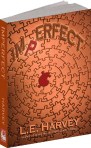
Imperfect is very emotional and thought-provoking. It is entertaining too. You can’t tell me that driving a muscle car on a perfect summer day, cranking out the classic rock music isn’t entertaining.

By all accounts, I’m a realist: my writing background is in historical and scientific non-fiction (not to mention the fact that I work in a scientific/medical field). Boring, I know. Black and white. Factual. Not entertaining. I am, however, coming around. Imperfect is my first full-length novel I ever attempted to write. The facts and reality may be in there, but there are definitely elements of entertainment as well.

My bottom line: the truth is, ALL stories are entertaining. My book is just as much a form of entertainment as that famous author’s book. It may not be smut, but it is definitely a story you can get swept into.

Celebrating Earth Day 2011

Lauren’s “A Summer of Butterflies” appears in Celebrating Earth Day 2011 from Vanilla Heart Publishing. Click on the book cover to download a PDF copy of this FREE GIFT from the Giveaway Anthology page at PayLoadz.

The book includes the work of Anne K. Albert, Charmaine Gordon, Chelle Cordero, L.E. Harvey, Malcolm R. Campbell, Marilyn Celeste Morris, Melinda Clayton, Robert Hays, S.R. Claridge, Smoky Trudeau Zeidel, Victoria Howard and Vila SpiderHawk.
The Shadow Knows – Books for the Journey

‘Who knows what evil lurks in the hearts of men? The Shadow knows!’ — “The Shadow,” 1930s CBS Radio Detective Serial
‘Sad that I love the darkness so much and I’ve never knew it.’ — Maggie Evans in “Dark Shadows” (1966).

Whether it’s an old radio drama about a crime fighter or a Gothic soap opera, writers like what they can do with shadows and the purported evil they conceal. In Jungian psychotherapy—and, consequently—in the hero’s journey, the shadow is a major concern.

As Daryl Sharp writes in Digesting Jung: Food for the Journey, “everything about ourselves that we are not conscious of is the shadow.”

The shadow is said to contain a muddle of resentments, inferior notions, infantile fantasies, aggressive feelings, and other things about ourselves we’re not willing to openly admit to. On the other hand, as Robert Bly suggests, the shadow also contains everything about ourselves that society (parents, teachers, etc.) brainwashed us to get rid of because “it wasn’t proper” or “wasn’t fitting.”

The Hero’s Journey

The hero’s journey is impossible to understand, much less use as a structure in writing fiction, without confronting the shadow, first as a concept, and then within ourselves. The writer knows himself by making that which is not conscious, conscious, and then he brings his revelations into the lives of his fictional characters.

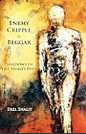
In Enemy, Cripple & Beggar: Shadows in the Hero’s Path, Erel Shalit, calls the shadow a crucial image in the hero cycle, the blood of the hero’s soul:

Without a shadow, there are no dangers to overcome, no struggles to endure, no weaknesses to suffer that make us human, no rewards of consciousness to be gained, and no depth of soul to be treasured.

Three Helpful Books

In addition to such standard hero’s journey references as Joseph Campbell’s The Hero With a Thousand Faces, Christopher Vogler’s The Writers Journey: Mythic Structure for Writers, Stephen Larsen’s The Mythic Imagination, and Jean Houston’s The Hero and the Goddess: The Odyssey as Mystery and Initiation, these three books will help you explore the shadow:

Enemy, Cripple & Beggar: Shadows in the Hero’s Path, by Erel Shait, Fisher King Press, 2008.

FROM THE PUBLISHER: The Hero is that aspect of our psyche, or in society, who dares to venture into the unknown, into the shadow of the unconscious, bringing us in touch with the darker aspects in our soul and in the world. In fact, it is the hero whom we send each night into the land of dreams to bring home the treasures of the unconscious. He, or no less she, will have to struggle with the Enemy that so often is mis-projected onto the detested Other, learn to care and attend to the Cripple who carries our crippling complexes and weaknesses, and develop respect for the shabby Beggar to whom we so often turn our backs – for it is the ‘beggar in need’ who holds the key to our inner Self.
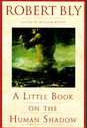
A Little Book on the Human Shadow, by Robert Bly, edited by William Booth, Harper and Row, 1988.

FROM THE PUBLISHER: Robert Bly, renowned poet and author of the ground-breaking bestseller Iron John, mingles essay and verse to explore the Shadow — the dark side of the human personality — and the importance of confronting it.
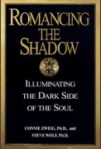
Romancing the Shadow: Illuminating the Dark Side of the Soul, by Connie Zweig and Steve Wolf, Ballantine Books, 1997.

FROM THE PUBLISHER: According to authors Connie Zweig and Steve Wolf, each of us has shadows that hold forbidden feelings such as shame, jealousy, greed, lust, and rage. Left to their own devices these shadows will become destructive saboteurs–causing us to betray our loved ones as well as ourselves. It is not within our power to choose whether or not to have these shadows; however, Zweig and Wolf believe that it is within our power to take responsibility for our shadows and put them to productive use. Chapter by chapter Zweig and Wolf reveal the shadow side of love, parenthood, siblings, friendships, midlife, and work. Rather than deny or destroy these shadows, the authors show readers how to confront and “romance” them in order to access the energy, vitality, and creativity that usually lie dormant within our dark sides.
Everyone carries a shadow, and the less it is embodied in the individual’s conscious life, the blacker and denser it is. – Carl Jung

Malcolm R. Campbell is the author of two hero’s journey novels, The Sun Singer and Garden of Heaven: an Odyssey.

Review: ‘The Girl Who Played with Fire’

The late Stieg Larsson (1954 – 2004) left a legacy that includes the Millennium Trilogy of novels, a dispute between his life partner of 30 years and his family over the estate, and an unfinished forth book that would continue the story he began in The Girl with the Dragon Tattoo and ended with The Girl Who Kicked the Hornet’s Nest.

As the second book in the trilogy, The Girl Who Played with Fire, is as absorbing as The Girl with the Dragon Tattoo. Once again, the primary characters are the crusading magazine journalist Mikael Blomkvist and the illusive goth super computer hacker Lisbeth Salander. Blomkvist and Salander are both complex, three-dimensional characters, the former, no doubt, inspired by Larsson’s career focus as a journalist. Salander is less goth than she was in “tattoo” and her background and motivations are more fleshed out.

Cast of Characters and Plot

Readers will know from the back cover blurb that Millennium Magazine’s investigative journalism in this book focuses on sex trafficking, that two people are killed before the material is published and that Salander is a suspect.

Once matters played out in The Girl with the Dragon Tattoo, Salander went on vacation. Unfortunately, this initial section of the book appears to have little to do with the plot. Salander’s development as a person gains strength during this vacation section. She does get involved in a harrowing experience. Yet, these events do not come into play later in the novel.

Except for other supporting characters whom readers met in “Tattoo,” most of the characters have few shades of grey. To some extent, they are stereotypes of the roles they play: liberal and conflicted journalists, sadistic had guys with a brutal and horrific way to life, and police with a dutiful approach but very little imagination.

Writing Style and Approach

Larsson tells his story from the viewpoint of multiple characters. This works more often than not in “Fire” because the reader sees what everyone is doing and what conflicts between them are upcoming. The approach works less well in cases where the point of view shifts to a character who, in real life, would think certain things, yet Larsson conveniently focuses their attention on something else.

One question on the reader’s mind, for example, is likely to be: “Are the police right about Salander and the murders?” Larsson goes into a “listmania” amount of detail about almost every part of the magazine work and police work, including the characters’ thoughts. Yet after the murders occur, he does not allow Salander to think either “I hope they don’t find out I did it” or “why the hell do they think I did it?” Such thoughts would go through most people’s minds. The tension is ramped up through the fact Salander does not ponder this, but it is an artificial device.

The surprising thing about the Millennium Trilogy phenomenon is that the books are popular (35 million copies sold as of last summer) in spite of their length. While some readers complain that they “just couldn’t get into “Tattoo,” the books sell well and generate a large number of reader reviews on Amazon and commentary on blogs and news stories.

The exceptional level of detail contributes to the length (“Fire” in paperback has 724 pages) and—at its best—immerses the reader into the the worlds of both the predators and prey in the book. The reader is brought “close in” to the action. At its worst, the detail wastes time, especially when it focuses on things (such as Salander spending a day shopping for furniture for her apartment) that do not advance the plot.

On Balance

On balance, the book succeeds. Its high points are the author’s development of Lisbeth Salander, the intricacies of its plot, and the author’s use of mini-cliffhanger plot points when he shifts the story’s view point from one character to another. The Guardian’s comment that Salander is a Laura Croft for grown-ups is certainly apt.

The ending of the book is satisfactory in terms of emotional justice for characters and readers. However—like other scenes in the book—it relies a bit too much on contrived coincidences. Nothing is totally resolved, though we can forgive the author that because at this point, since there’s still another book to come.

The Controversy Surrounding the Estate

Larsson died without a will. According to Swedish law, his life partner of 30 years does not have the rights of a spouse. Consequently, Larsson’s assets, including control of the books, passes to his brother and father rather than to Eva Gabrielsson.

Gabrielsson contends that the brother and father were virtually estranged from Larsson and herself and that she helped plan the Millennium series from the beginning. On the Support Eva web site, she also claims that “she was there when he received death threats from ultra-nationalist groups” and was an integral part of everything that the rest of the family had nothing to do with. Larsson’s own experience clearly was a major factor in the creation of the Blomkvist character and the other investigative journalists and she says she was part of it.

The brother contends in press releases, some of which you can find on the Stieg Larsson web site, that the family has been more than fair, that it has returned to Gabrielsson many assets she held in common with Larsson, and that they are willing to work with her in creating additional books. They contend that had Larsson wanted her to have total control of the estate, he would have married her and/or created a will.

Fuel will be added to this fire when Gabrielsson’s new book Stieg & Moi becomes available in Europe next week. Meanwhile, Gabrielsson will work on another Millennium Book. See “Stieg Larsson’s partner plans to complete final Millennium novel.” See also “Stieg Larsson feud hots up with partner’s memoir.”

Some commentators have said that the controversy surrounding the estate has the same flavor of the novels itself: that is, it’s about men who hate women. While that characterization’s accuracy depends on the “side” one takes in the dispute, it adds another level of detail and drama to an appealing series of books.

–Malcolm R. Campbell

Malcolm R. Campbell is the author of three novels, including the 2010 “Garden of Heaven: an Odyssey” about a man suspended between heaven and hell in a world where one place is often mistaken for the other.

Songs and Whispers of the Living Earth

“On a quiet day, however, those walking alongside the relatively recent Lake Sherburne reservoir may hear the voice of grandfather rock whispering a secret: within the scope of geologic time, all rivers are new, and the men and women who follow them are as ephemeral as monarch butterflies on a summer afternoon.” — Malcolm R. Campbell in “Bears, Where They Fought,” Nature’s Gifts Anthology

Perhaps you’ve heard the Earth’s Goddess call your name. If not, wade in the rolling surf along the edge of the sea or hike through the heart of a desert or wait quietly at the summit of a mountain where old stone touches the sky. Some hear the Goddess voice more clearly at night beneath a full moon.

If your own heart holds a strong passion for a place, then that is where you will best hear Earth whispering her secrets. Calm your breath and your mind’s ever-chattering thoughts. Then, take off your shoes and gloves and touch that which is ancient with the young soles of your feet and your neophyte fingertips.

Listen.

The songs and whispers of the living earth may come to you as a breath of wind, the roar of surf or a mountain stream, the faint rasp of sage brush against cooling sand, the hollow echoes of rain, or the sharp clatter of stone falling on stone. You may find a message within seemingly mundane signs.

Yet, what you hear, you may not hear with your ears. The Earth may speak to you with a voice inside your heart, clear and distinct from your own thoughts. When the Goddess speaks, you may hear her voice as you would recall a memory or the almost audible music within seemingly inert water, sand or stone beneath the watchful eye of the moon.

Your right-now sense of Earth’s message may be strong in the moment of contact or it may catch your attention later in dreams and daydreams. One way or another, you will know when the Goddess has called your name, for her song brings with it a great comfort whether she imparts a secret or asks of you a favor.

Like fluttering butterflies, we are momentary visitors upon the surface of a world that is incomprehensibly ancient, yet when we hear Earth’s voice, we know to a certainty that we are not separate from sand and water and stone.

Malcolm

“Thank you for stopping by my Blog! Please explore all this Blog has to offer, then jog on over to “Mysteries and My Musings.” If you would like to visit a different Blog in the jog, go to Blog Jog Day.

Preparing for National Novel Writing Month

If you’re bold and/or crazy enough to sign up for National Novel Writing Month (NaNoWriMo), then you know it begins November 1. On that day, thousands of people will write the words “Once upon a time” and then work feverishly to complete another 49,996 words by November 30.

For those of us who may falter, a panel of inspiring people has been assembled to provide pep talks during the month. They will, I believe, remind us that we have it in us, that we have what it takes, that we can go the distance, that we can just do it.

The NaNoWriMo folks remind us going in just why we’re doing this: The reasons are endless! To actively participate in one of our era’s most enchanting art forms! To write without having to obsess over quality. To be able to make obscure references to passages from our novels at parties. To be able to mock real novelists who dawdle on and on, taking far longer than 30 days to produce their work.

My primary reason for writing 50,000 words in one month is avoiding Georgia’s leaf raking season. As of November 1, it is considered excessive gauche to continue “taking care of” the leaves in one’s yard by mowing them into nowhere. If you have a leaf vac, you’re in business. If you don’t, it’s rake city. I, on the other hand, will be churning out words.

We’ve been warned not to fudge on this. It is also considered gauche to begin writing a 300,000-word novel in January or even 20 years ago, and then dump it into the NaNoWriMo system while screaming, “hey suckers, look at me.”

Having taken the pledge to go the distance and just do it, I am contemplating several novels that have been waiting on the drawing board. Among them are:

One Flew Over the Vulture’s Nest: a cautionary tale about the lives and loves of a roadkill cleanup crew.

The Girl Who Kicked The Outhouse Door: A girl “who just can’t wait” kicks open the door to a campground privy and discovers all that glitters is not gold.

Chipmunk Steals Squirrel’s Nuts: A chipmunk born with crooked stripes sneaks into squirrel’s house one dark and stormy night and grabs all the nuts, leading to a caper that eventually turns everyone in the 100-acre wood against each other.

I know I have it in me even though I’m not sure yet what “it” is or how “it” will end. But the point is, it doesn’t matter because on the morning after eating two or three sacks of Halloween candy, we’re supposed to work off those calories by writing faster than a bat can fly out of hell.

At the end of the month, we’ll all swap war stories, tell lies about how we did whatever we did, and then take a nap.

Coming Friday, October 22: An interview with author L. E. Harvey

You May Also Like: End of Earth Rescheduled (from Jock Stewart and the “Morning Satirical News”)

–Malcolm R. Campbell is the author of Jock Stewart and the Missing Sea of Fire, a bold and crazy novel about a reporter who thinks writing 50,000 words in a month is child’s play, especially if he has plenty of Scotch.

Can’t get enough Cracker Jack

Take me out to the ball game,
Take me out with the crowd;
Buy me some peanuts and Cracker Jack,
I don’t care if I never get back.
Let me root, root, root for the home team,
If they don’t win, it’s a shame.
For it’s one, two, three strikes, you’re out,
At the old ball game.

–Take Me Out to The Ball Game

“Take Me Out to the Ball Game” was written in 1908 by a Vaudeville star who had never seen a baseball game. Jack Northworth, who wrote some 2,500 songs (including “Shine on Harvest Moon”) didn’t see his first ball game for another 32 years. Albert von Tizer–who wrote the music–didn’t see his first baseball game for another 20 years. Today, baseball fans know the song well.

I wonder if either Nortworth or von Tizer had ever eaten Cracker Jack, the caramel coated mix of peanuts and popcorn introduced by F. W. and Louis Rueckheim at the World Columbian Exposition in Chicago in 1893. The secret to Cracker Jack–which is still a secret today–is what keeps the peanuts and popcorn in a box or sack of Cracker Jack from all sticking together.

Cracker Jack was a success, but the song made it famous. While the song was first sung at a baseball game in 1934, Harry Caray made it a solid tradition when he started singing it in 1971 from his Chicago White Sox broadcast booth. Across the country, fans sing “Buy me some peanuts and Cracker Jack” during the seventh inning stretch at the ballpark no matter who is winning or losing.

Legend has it that a salesman for F. W. and Louis Rueckheim tasted a batch of the caramel coated popcorn and peanuts and exclaimed, “That’s Cracker Jack.” Suddenly a product name and a now-famous trademark were born, one that–under Borden and then Frito-Lay is lasting far longer that the term “cracker jack” is lasting in general English usage. In the late 1800s, the term was popular slang for what, today, we would call awesome!

“Cracker jack” meant high quality whether it referred to a person and event or a product. We still use the word “crack” in that way today, as in “she’s a crack shot” or “my crack staff will finish the project before lunch.” “Jack” was slang for a boy or man or a manual laborer, as in lumberjack or steeplejack, and often referred to a sailor. (The Sailor Jack and his dog Bingo trademark image still adorns Cracker Jack packages today.)

I like Cracker Jack, and the chance purchase of a couple of sacks at the grocery store this morning when I was purportedly there to purchase fresh produce, got me to thinking about the ever-changing use of slang. I haven’t heard a phrase like “He is one cracker jack salesman” for a long time. In context, I suppose most people would figure out what it meant. I know what it means, but I never use the term–except when buying a sack of Cracker Jack, because it’s not in fashion any more.

As a writer, I like tracking down how word usage has changed as well as the original meanings of slang expressions that continue to be used long after their literal meanings are forgotten. Some day–and perhaps that day is already here–most people will think the word “Cracker Jack” has always applied to the candied popcorn and nuts, and nothing else.

But for the moment, we know better, don’t we?

Siobhan – a ‘Garden of Heaven’ excerpt

E-Book only $5.99
“Garden of Heaven: an Odyssey” is the story of a man’s spiritual journey through the mountains of Pakistan, the swamps of North Florida, the beaches of Hawaii, the waters of the South China Sea and the ivy-covered halls of an Illinois college as he attempts to sort out the shattered puzzle of his life.

In this excerpt, David Ward’s significant other, a woman well-practiced in the old Huna magic of Hawai’i, is ready to discuss the clues, if any, she found in his journals about who has been trying to kill him.

David sits on a fence post, a comfortable, familiar spot, and looks across the creek to the house. The creek is the same; the house has shrunk with time. Too perfectly symmetrical when it was new, the structure’s roofline, doors and walls have aged randomly and grown more natural into the place.

Complacent while Siobhan keeps the Komondor puppy inside, the remaining Dominique chickens peck at the hard path between the kitchen door and the clothes line. The path turns west into a gravel road that leads to an old house lying down in weeds and ruin where his grandparents lived until one became too frail and the other became too psychotic to be left alone, where they said that his mother was born on a cold January night in 1914, where lies and truths were sown and bore hybrid fruit.

Along the road between the houses, grey sheds linked by fences lean into the earth. Dry and empty, like old nooks and crannies and secret places, they were always the first full focus of spring–humid and rich as sea fog, dripping with the juices of birth and new life. Jayee’s timing was as precise as nature allowed. Today he would be moving the last of the lambs from the jugs to the bunch pen if he was on schedule, or the first of them if nature wasn’t.

From this vantage point, David sees the pros and cons of dreams; he views his visions from the other side, and—remembering everything that has happened between then and now and then and now and then and now—must decide how much of history is too broke to fix. Siobhan refuses to tell him who tried to kill him and why because he’s not ready to hear it, much less re-live it; Sikimí will take them back to the scene of the crime soon enough.

She steps out the back door carrying old notebooks, an envelope labeled remnants, and grandmother’s blue-on-white eight-pointed star quilt. The door slams, stirring memories. She smiles and her pony tail dances when she nods at the circle of box elders where she heads at a brisk walk.

In her khaki cargo shorts and light blue sleeveless crew shirt, she radiates a well-toned athletic health that sings of perfectly managed energy conceived in Aries fire and transformed into infinite zest down through her well-developed shoulders and sun-browned legs. Siobhan is Wind’s daughter. Grandmother would love her for that alone. It’s a matter of breath control, he thinks. When Siobhan is open to the world, she inhales those she meets into her presence, pulling them in with her smoky eyes and the fluid caresses of her hands. At such times, she drags out the first syllable of her name in a shhhhhhhhhh of light breezes. David heard that endearing shhhhhhhhhh when she ran into him like a pro-football lineman on the day they met. When Siobhan is closed to the world, she exhales those she meets outward beyond the reach of her hands. At such times, when there is no still escape from her eyes, she clips off the first syllable of her name into a harsh shh that shushes even the most determined people into quiet.

She flips the quilt out into an even rectangle and sits in the centre of it surrounded by Blue Horses and Silver Bears, knowing Katoya stood on that very spot in the tall bluebunch wheatgrass 33 years ago and told him the secret of the universe before they watched the stars rise into the sky. When he stops at the northern boundary of the eight-pointed starry night lying across the grass, Siobhan looks up from an open composition book as though she’s surprised, but pleased, to see him there.

–I’ve finished reading almost all your journals.

As he takes off his boots, he’s enveloped by the scent of her lavender bath soap. He shrugs. What is there to say? He feels naked in spite of her smile which is so unwaveringly natural it seems to be borne up out of the grass.

–You know almost everything, then, and you’re free to run for the hills, he says.

Siobhan frowns and looks at him with her eyebrows raised about as high as she can get them. She waves an older Blue Horse in his face.

–Talk like that chased Anne Hill away, didn’t it?

–It seemed a logical thing to say at the time.

–How logical does it seem now? she asks.

He sits next to her and studies her face while she watches the noisy water of the creek bunching up at the base of the limestone bedrock.

–Hell, I was looking for reassurance.

She turned toward him now and her breath was warm and sweet on his face.

–No need and you know it, she says and kisses him. When he starts to speak, to say some inane self-deprecating thing, she kisses him again. Shhhhhhhhhh, she whispers, Anne is Anne, Siobhan is Siobhan, and you and I are the yin and the yang fitting precisely together.

She hugs him, wrapping him snugly in lavender.

–I see what you mean, he tells her. This hug could easily lead to more, much more, but I think you have things to say.

–I do.

My publisher, Vanilla Heart Publishing, interviewed me and posted the result in AUTHOR SPOTLIGHT – Malcolm R. Campbell.

Review: ‘Alchemy: An Introduction to the Symbolism and the Psychology’

Alchemy : An Introduction to the Symbolism and the Psychology (Studies in Jungian Psychology)Alchemy : An Introduction to the Symbolism and the Psychology by Marie-Louise von Franz
My rating: 4 of 5 stars

The late Marie-Louise von Franz (1915 -1998) was a Jungian analyst and colleague/student of Carl Jung. She is widely known for her penetrating treatises about seeker’s journey motifs, alchemical texts and fairy tales as well as an accessible biography of Jung.

Here again, her insights are profound and broad in scope. The book, published in 1980, is composed of lectures she presented in Zurich in 1959. The lectures contain excerpts from European, Arabic and Greek alchemical texts along with her explanation of the symbolism they contain. Her focus here is the relationship between alchemical process and Jungian analysis as discovered through an examination of the chosen texts.

The difficulty in the book comes not so much from the fact that the lecturers were intended for serious students of Jungian psychology rather than those outside the field, but from the format itself. First, it scatters terms and symbols throughout the book depending on where they appeared in one of the excerpted fragments. This is counter-intuitive to readers expecting an organized, one-to-one comparison of alchemical steps with the individuation process in or out of a therapy setting. This would make the book a true introduction as its subtitle implies.

Second, in as much as the lectures focus on what was to be found in the texts rather than on an orderly presentation of alchemy and individuation, the book suffers by dedicating more space to the excerpts than an introduction requires. That is, the text fragments are less interesting, informative and succinctly on point than von Franz’s material. One wishes for more of von Franz and less of the ancients here.

That said, readers who are familiar with Jungian psychology, inner alchemy and related philosophies will experience many “Eureka Moments” as the meaning behind long-puzzling symbols, archetypes, drawings, and processes suddenly clicks into place. Outside of the decision to use a series of already-completed lectures rather writing an introductory work from scratch, the information and insight found here are exceptional.

View all my reviews

A seeker's journey story.

What does a novelist actually do?

Like magicians, novelists are never supposed to reveal their true secrets. Instead, they dispense lame generalities like “show, don’t tell” and “don’t write in passive voice.” The good stuff is better than that!

Today’s Example

Did you read this news story?

MARSEILLE, France (Reuters) – European group Eurocopter showed off a revolutionary winged helicopter on Monday, in a bid to counter U.S. rival Sikorsky’s efforts to break the speed barrier by rewriting rotorcraft design rules.

A journalist wrote this lead paragraph, possibly after looking at a Eurocopter press release, talking to company spokespersons, calling rival manufacturers and expert sources for other opinions, and then distilling all that information through the reporter’s WHO WHAT WHEN WHY WHERE lens.

A novelist asks WHAT IF?

What if the design for X3 hybrid helicraft came from the devil. Hmm, let’s go with that. Why? Maybe he wants to fly people to hell faster than ever before. Maybe he wants to fly good people to bad places where they will do bad things and end up going to hell. Maybe he’s trying to straighten up and fly right.

OR

What if Sikorsky formed a secret subsidiary called Eurocopter and “accidentally” leaked some pictures and information about the X3? Okay, where might that lead? As the manufacturers of mass market name-brand products learned long ago, you can make more money by competing with yourself through the launching of additional products. Maybe the design for the X3 was transmitted telepathically to Eurocopter designers from an advanced civilization in a galaxy far far away because, frankly, after they infiltrated Sikorsky years ago, they were getting bored again.

OR

What if the whole thing is an illusion? Let’s say a bunch of guys started slamming down shooters one night and then simultaneously dreamt about the craziest looking helicopter the world has ever seen. When they woke up, they had hangovers, of course. Meanwhile, a trickster god convinced them they never had any shooters, never got drunk and invented the X3. Once the press got a hold of the story, the thing was out of control.

That is what a novelist actually does. S/he brainstorms the improbable and/or the unlikely and then convinces readers it happened or might have happened or could happen.

You might also like: “Lust in All the Best Places” by Jock Stewart from the Morning Satirical News.

One of the perks of being a writer

Most of us enjoy the world of our imagination even though many of our fantasies will forever be stamped CLASSIFIED.

As a writer, though, my job is spending large amounts of time with my imagination without having to admit to garden-variety daydreaming.

For example, I gave David Ward, my protagonist in Garden of Heaven some of my best and worst qualities. While people who really know me may debate which are which, those qualities include dreams I never fulfilled.

When I was younger, I wanted to work for the railroad, specifically the Great Northern, now a part of the Burlington Northern Sante Fe. The railroad was never hiring when I was looking. David Ward also wanted to work for the Great Northern. While it was not to be, he did get a chance to run a passenger locomotive for a few miles on the high line tracks east of Glacier National Park.

(Oddly enough, my wife and I were volunteers at a railway museum in the 1990s, and she turned out to be much better at running locomotives than I was, from a 44-ton yard goat to a mainline freight engine. Sigh.)

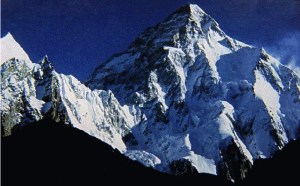
People who see my bad knees and ankles now can’t imagine that I used to climb mountains in Colorado and Montana, and (worse yet) that I actively wanted to climb Everest or K2. Unfortunately, such things were outside my budget.

But David Ward wasn’t cramped by his budget. So, I sent him off to climb K2, and (worse yet) to summit via the dangerous “magic line” route before it was called the “magic line.”

Pretending to run a diesel locomotive on the head end of a passenger train and to climb the most difficult mountain of the world are parts of my fantasy world. One of the perks of being a writer is using one’s active imagination and following through with such dreams in, perhaps, another reality or universe.