Old Books, Old Stories, Old Memories

“An inviolate circle of light from the lone lamp encompassed mother and child, she in a chair reading aloud from an old tan book of stories, he sleepy-eyed beneath covers hearing about trolls, witches, winds that talked, a castle, and a prince, the stuff that dreams and futures are made of before seasons matter and life hardens the soul. While she liked reading ‘Why the Bear is Stumpy-Tailed’ and his father liked reading ‘Why the Sea is Salt,’ David asked each night for ‘The Lad Who Went to the North Wind’ or his favourite  ‘East o’ the Sun and West o’ the Moon.'” – Malcolm R. Campbell in “Garden of Heaven: an Odyssey”

I grew up in a house filled with books. Many of the older books were owned by my parents all the way back to their college years. When I was little, they read stories to me out of fading editions of Andersen’s Fairy Tales, Grimm’s Fairy Tales, Mother Goose, and others. My favorite folktales were the Norwegian stories collected in a 1912 volume by Gudrun Thorne-Thomsen (1873 – 1956) with illustrations by Frederick Richardson (1862 – 1937) called East o’ the Sun and West o’ the Moon.

While I heard the following stories dozens of times, the excerpt from my novel Garden of Heaven: an Odyssey tells you which ones were my favorites:

  • East o’ the Sun and West o’ the Moon
  • The Three Billy Goats Gruff
  • Taper Tom
  • Why the Bear is Stumpy-Tailed
  • Reynard and the Cock
  • Bruin and Reynard Partners
  • Boots and His Brothers
  • The Lad Who Went to the North Wind
  • The Giant Who Had No Heart in His Body
  • The Sheep and the Pig Who Set Up Housekeeping
  • The Parson and the Clerk
  • Father Bruin
  • The Pancake
  • Why the Sea is Salt
  • The Squire’s Bride
  • Peik
  • The Princess Who Could Not Be Silenced
  • The Twelve Wild Ducks
  • Gudbrand-on-the-Hillside
  • The Princess on the Glass Hill
  • The Husband Who Was to Mind the House
  • Little Freddy with His Fiddle

You can read these stories in multiple collections, including a version on Project Gutenberg and in reprints available on Amazon. Or, you can see the Wikipedia synopsis here. Even though the book is in poor condition, I like the old copy on my shelf the best. I grew up with it. It’s a link to my childhood. According to the inscription “Kathryn Gourley from Aunt Mary and Aunt Margaret,” my mother was given the book long before she was married.

Chicago School Teacher
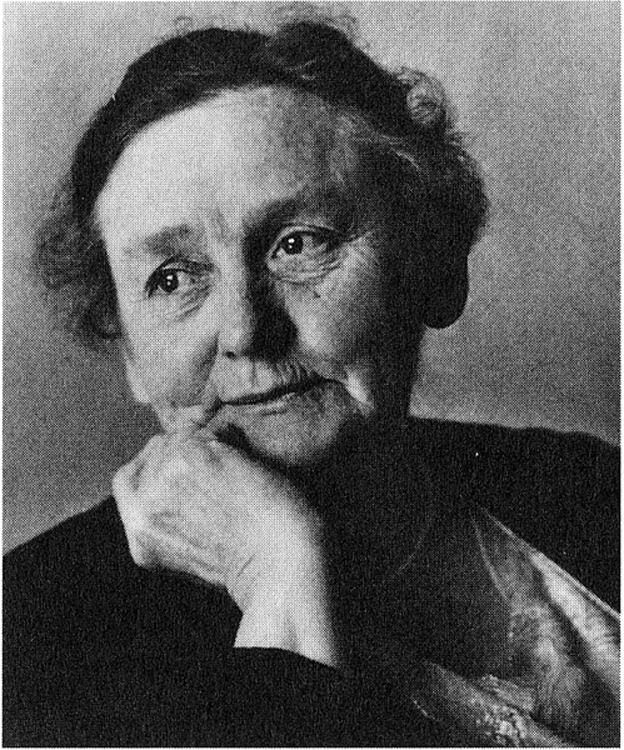
My mother’s side of the family came from Illinois, so I’m guessing my aunts heard about the book because Thorne-Thomsen (shown here) was a librarian and school teacher in Chicago. Or, perhaps they heard about the illustrator first: Richardson was probably best known for his work in L. Frank Baum’s books. I’m fairly certain my parents never read me the book’s foreword when I was little. I came to appreciate the author’s rationale behind the book much later:

In recent years there has been a wholesome revival of the ancient art of story-telling. The most thoughtful, progressive educators have come to recognize the culture value of folk and fairy stories, fables and legends, not only as means of fostering and directing the power of the child’s imagination, but as a basis for literary interpretation and appreciation throughout life.

Storytelling was a powerful influence in my early life because that’s what people did before radio, television and the Internet infected their homes with the latest, greatest and most awesome of what’s happening right now. My two brothers, my parents and I read stories, made up stories, shared stories around the table, and wrote them down on notebook paper and kept them until they were crumpled beyond recognition.

As was the practice in those days, some of the stories in East o’ the Sun and West o’ the Moon were accompanied by illustrations. The first drawing shown here goes with “The Princess on the Glass Hill.” Before I learned how to read, I could spend hours looking at the pictures, remembering the stories.

East o’ the Sun and West o’ the Moon

The title story begins like this: Once on a time there was a poor woodcutter who had so many children that he had not much of either food or clothing to give them. Pretty children they all were, but the prettiest was the youngest daughter, who was so lovely there was no end to her loveliness.

And it ends like this: But the Prince took the lassie by the hand and they flitted away as far as they could from the castle that lay East o’ the Sun and West o’ the Moon.

Obviously, it’s a “happily ever after” story. Or, to be more formal about it, this is a type 425A story (search for the lost husband) in the Aarne-Thompson classification system, that was originally collected by Asbjörnsen and Moë.

As a child, I liked the White Bear in the story. Who wouldn’t want a friend like that? According to Mary Lou Mitchell, “In Norse tradition, the bear is a valiant warrior, representing ‘the lonely champion, fighting in single combat and leading his men.'” (Later on in my own novels, I used a great black horse as a friend of the main characters.) Long before I knew anything about totem animals and their traditional meanings, my appreciation of “animal helpers” began with this story.

I think, perhaps, that my love of stories and storytelling began with old books and old stories and then remained a part of my psyche via the old memories. Now that I’m a grandfather, I begin to wonder if there will be a day in the future when my four-year-old granddaughter Freya with her Norse-inspired name will hearing these Norwegian folktales as much as I did.

Malcolm

Malcolm R. Campbell is the author of Celebrate Glacier National Park, a free e-book released this week by Vanilla Heart Publishing. Available as a PDF download, the 49-page book covers the famous red buses, the land, the personalities and the park’s history.

Campbell, who worked in the park while in college, wrote the articles for this e-book during Glacier’s 2010 centennial.

Top Ten Things a Writer Should Never Do

Elmore Leonard’s “10 Rules for Good Writing” include Never use the words “suddenly” or “all hell broke loose” and Try to leave out the part that readers tend to skip.

Savvy advice from an old pro. But suddenly, it occurs to me that there’s more to it than that.  After all, nobody wants to wistfully look back on a writing-career-that-could-have-been and be forced to admit that all hell broke loose when s/he violated one of Malcolm’s Top Ten Things a Writer Should Never Do.

  1. Never use words like “wistfully” and “forced to admit.”
  2. Do not drink cheap wine while describing successful people because, when all is said and done, your prose will end up smelling of sour grapes.
  3. Do not try to screw over the bastards who tried to screw over your writing career unless you’re pretty sure you won’t get caught because if you do get caught, you will personally be all said and done before having a chance to write your swan song.
  4. Never grab pithy quotes off the Internet from people you’ve never heard of because you might end up looking bad without knowing why all hell broke loose.
  5. Use of the passive voice is to be avoided.
  6. If you’re walking around quoting W. Somerset Maugham’s statement that “There are three rules for writing the novel. Unfortunately, no one knows what they are,” stop doing it immediately. We’re all sick of hearing it and it won’t make you look smart.
  7. Don’t believe experts who say that to produce good writing “You simply sit down at the typewriter, open your veins, and bleed.” Nobody uses typewriters these days and you’ll just end up with blood on your hands when the cops bust in and accuse you of causing all hell to break loose.
  8. Never say things like “I’d sell my granny’s fanny to get a good agent” because even if you don’t, people will think you did.
  9. Never kill a book reviewer without first writing yourself an airtight alibi.
  10. Never plagiarize material from writers who have already admitted that they stole most of their stuff from somebody else.

Malcolm

Malcolm R. Campbell is the author of the comedy/satire “Jock Stewart and the Missing Sea of Fire” and the “Jock Talks” series of scandalously inappropriate e-books.

He is forced to admit that while writing satire, you can do all the things you should never do and get away with it.

Writing Tip: Use Humor as Part of Your Character Development

We remember some friends because they tell lame jokes and other friends because they’re guilty of non-stop puns. Perhaps these traits have little or nothing to do with these folks’ jobs, causes, abilities as parents, or the heroic deeds they may perform. Yet, they are one of the ways we know them.

A sense of humor, or the inadvertent habit of doing funny or odd things, can also help readers get to know your characters in a novel or short story.

For example, in my contemporary fantasy novel The Sun Singer, my fiery red-headed character Cinnabar’s favorite phrase is “Holy Bear Puke” and the blustery blacksmith in charge of weapons constantly misuses everyday words. Such traits become “signature traits,” rather like the theme songs that accompany characters in movies. They not only make the characters three-dimensional, but are like comfort food to readers whenever the humor repeats itself randomly through a story.

I thought of the beauty of humor—as a character trait and as a way of suddenly lightening up the tone of a fast-paced or frightening story—when I found veteran author Lisa Goldstein using it in her fantasy The Uncertain Places to show us “something extra” about protagonist Will Taylor and his long-time friend Ben Avery.

As with many people who’ve known each other since childhood, they’ve developed  their own brand of wild-and-crazy repartee. The humor is part of who they are, and Goldstein uses it to good advantage in developing these characters.

For example, Goldstein drops this old Will-and-Ben riff into a dinner-table conversation:

“Will and I are thinking about writing a movie,”  Ben said. “It’s called ‘Theater Closed for Repairs.'”

We’d told this joke before, of course. It was one of the routines we did, our two-man band. People either got it or told us we were idiots. This time Livvy and Maddie laughed, though Mrs. Feierabend looked a little confused.

I like this because it defines everyone at the table. It’s not only typical Will and Ben, but includes the kinds of reactions the reader is coming to expect from Livvy, Maddie, and their mother. Also, Goldstein doesn’t belabor the joke. Some readers won’t get it. Some will smile and move on. Others (like me) will stop and ponder the beauty of the words THEATER CLOSED FOR REPAIRS on a marquee while wondering about the reactions of passersby.

Set in 1971, The Uncertain Places makes frequent counter-culture references. Maddie, for example mentions marching in a protest parade with a group called the Young Socialist Alliance, leading to this exchange with Will:

“Wait a minute,” I said.”You’re a Trotskyite!”

“Trotskyist,” Maddie said. “Yeah, what about it?”

I knew she had radical politics, but I’d had no idea. To me, Trotskyists were like Cubs fans—their team was never going to win, but you had to admiore their loyalty.

Since my mother was a Cubs fan, I have to smile at this, not to mention knowing full well what her (and any other Cubs fan’s) reaction to such a comment would be. Will and Maddie’s conversation occurs on page 34 of the book, but even this early in the story, everything about it is so typical of both Will and Maddie, that I nod as I read it, and think, “Yes, that’s the kind of thing Maddie would say and the kind of thing Will would think—but leave unsaid.”

I’m getting to know and care about the characters of the book, partly because the there are a lot of strange things going on in the Feierabend household and Will, with some help from Ben, is trying to figure out the mystery. The humor doesn’t move the plot forward, but it is a wonderful part of the author’s character development.

A Word of  Caution

As you consider using a bit of humor to develop the characters in your stories, a word of caution. The humor needs to fit the character. It needs to be just what the reader would expect from him or her. Mrs. Feierabend never would come up with the THEATER CLOSED FOR REPAIRS gag any more than she would burst forth with a string old genie jokes or flirty stories filled with sexual innendos. She’s not that kind of person.

My thought is: make the humor fit and don’t run it into the ground turning it into the kind of flaw in the story reviewers like to point out. A quick laugh, and then get on with the plot.

Malcolm

Malcolm R. Campbell is the author of four novels from Vanilla Heart Publishing, including the recently release contemporary fantasy “Sarabande.”

Contest: Holding Each Elephant’s Tail: Voices from the Iraq and Afghanistan Wars

from Missouri Warrior Writers Project:

Holding Each Elephant’s Tail:  Voices from the Iraq and Afghanistan Wars

The Missouri Warrior Writers Project, in partnership with the Missouri Humanities Council, is pleased to announce a contest and call for submissions for its national anthology of writing by veterans and active military service personnel of Afghanistan and Iraq about their wartime experience.  This experience includes deployments and those who have never been deployed.  Transition back into civilian life is also a topic of interest for this anthology. The contest will award 250.00 each to the top entries in poetry, fiction, and creative nonfiction.  All entries will be considered for publication in the anthology.  There is no entry fee.  Guidelines are listed below:

-Prose limited to 5000 words. Up to 3 poems (max 5 pages). Submissions that exceed these limits will be disqualified.

– Deadline December 30, 2011. Winners will be announced by April 1, 2012.

– There is no entry fee for submission, but submissions must be limited to one per person per genera

– Manuscripts must be submitted electronically as a Microsoft Word document. (Save with a *.doc extension). Please combine all poems into one document and use first poem as title.   Send to:  submissions@mowarriorwriters.com

-Put your name and contact information on the first page of your submission document and nowhere else within the manuscript.

-Please include a brief (75 words or less) bio with your submission.

-Work previously published will be considered, but new work is preferred.

-Simultaneous submissions are permitted, but we ask that you notify us immediately if your work is accepted elsewhere. (This will avoid potentially awkward situations.)

-Southeast Missouri State University Press acquires first-time North American rights for previously unpublished work. After publication, all rights revert to the author and the work may be reprinted as long as appropriate acknowledgement to the anthology is made. All entries will be considered for publication.

JUDGES:  Brian Turner, poetry.  Mark Bowden, nonfiction.  William Pancoast, fiction.

The anthology will be released  on Armed Forces Day, 2012.

Contact submissions@mowarriorwriters.com for additional information

What a great project and a wonderful idea for an anthology.

Malcolm

NaNoWriMo – Try writing with a ‘theme song’

Did you sign up for National Novel Writing Month (NaNoWriMo)?

Good for you.

If you participated last year, as I did, then you’ve probably gotten a few e-mails from program director Lindsey Grant with links and advice. Here’s a crucial reminder from a recent note: Warn your friends, family, neighbors, and pets about the upcoming challenge. The more people who  know what you’re working on, the more accountable you’ll feel and the likelier you are to hit the 50,000-word goal.

Now is the time to write at flank speed. If you weren’t in the Navy, flank speed means “fast.” Others will remind you to either shoot your inner editor or lock him or her in a closet this month. You can’t write at flank speed if you’re cutting, pasting, backspacing, using the thesaurus, or playing Angry Birds while you try to think of the perfect word.

All good.

While writing my recently released contemporary fantasy novel Sarabande during last year’s NaNo, I also used a theme song. Actually, it was a theme album.

Some people go to sleep every night listening to a DVD with a selection of restful music, an appropriate radio station, or a white noise machine. The music, or the surf or waterfall on the white noise machine, quickly become associated with sleep. The sound works somewhat hypnotically…sleep…sleep.

I picked a CD with Native American flute music by Mary Youngblood. I knew it would work because I’d used it before. I also knew it wouldn’t make me sleepy. Whenever I sat down for my NaNo writing, I put on my headphones and started the music. It was a jumpstart, and it automatically got me thinking of my characters and plot.

For best results, try not to listen to your writing music when you’re not writing. That might dilute its impact during NaNo when you need at least 1,667 words a day to reach that 50,000-word goal.

I’ve written three novels using theme song music. Sarabande was the second time out for Mary Youngblood’s Beneath the Raven Moon. While writing The Sun Singer, I used a new-age instrumental album called Nivana Road by Deuter. In my case, the music had a double connection. First, it became hypnotic and associated with writing. Second, Sarabande has Native American themes and The Sun Singer has new age themes.

You may not find music that mirrors what you’re writing about. If you do, it’s a bonus. If you don’t, I’m guessing that after listening for a couple of flank-speed, NaNo sessions, you’ll soon find those word counts a bit easier to reach because you will be in the zone with your work—thanks to the theme song.

Malcolm

Lions, Tigers and NaNoWriMo, Oh My

“Warn your friends, family, neighbors, and pets about the upcoming challenge. The more people who know what you’re working on, the more accountable you’ll feel and the likelier you are to hit the 50,000-word goal. (And the family hamster will be a lot more understanding when you don’t refresh his chlorophyll chips as regularly.)” — Lindsey Grant, NaNoWriMo Program Director

NaNoWriMo is one of two things: (1) a popular writing program that arrives every November that encourages aspiring writers to write a 50,000-word novel in a month while posting their daily word counts on the organization’s web site, or (2) a sign that the end of the world is near.

Since it’s always 5 o’clock somewhere, my alterego Jock Stewart dropped by this afternoon with a bottle of expensive Scotch and a tale of woe. He knew the that the Scotch would get my attention if the woe didn’t.

We settled down in a couple of lawn chairs to watch the traffic and the dark clouds of a real or imagined storm coming into town from Rome, Calhoun, Dalton and other points west.

“Campbell,” he said, “Lucinda signed me up to write a NaNoWriMo novel this year.”

I sipped my Talisker pensively because there are very few of us in town who drink our Scotch neat, much less a brand that makes this claim: “Deep and stormy like the ocean crashing over the rocky shores of its island distillery, Talisker is the only Single Malt Scotch Whisky rugged enough to call the Isle of Skye its home.”

The Scotch reminded me of Fiona, prompting me to say (with complete disregard for the potential impact of my words), “I once dated a lass from the Isle of Skye.”

“What?”

“I once dated a lass from the Isle of Skye.”

“That’s what I thought you said.” Stewart shook his head back and forth in the way people do when they feel like it may not be screwed on straight. “Why’d you say it?”

“If Fiona and I were still dating, I’d be in sitting in a lawn chair in the front yard of Dunvegan Castle listening to the sweet lass singing Mo rùn geal dìleas rather than listening to you singing the blues about a mere 50,000 words of fiction.”

“I bet James Joyce never wrote a novel in a month,” said Jock, opting to drink from the bottle rather than his now-soggy Dixie cup.

“Of course not,” I said.

“So, how can a lesser man do what the master could not?” asked Jock, continuing to drink from the bottle while shoving gthe Dixie cup into the snake-infested broom sage that took over my yard a year ago when the lawn mower ran out of gas.

“You write ten times that much for the Star-Gazer every month,” I said, grabbing the bottle for a couple of swallows.

“Oh hell,” he said, “that’s writing the facts, telling people about all the horror that went on in the world while they were at work, or having a nooner with the secretary or shooting 8-ball down at the watering hole.”

“Make it a horror novel.”

“Does NaNoWriMo allow novels filled with true facts?”

“Sure,” I said, “the truer the facts, the more like fantasy and/or drunkeness the whole thing will be.”

“I could copy and paste my stories into a DOC file, do a little editing, and bingo, my daily word quota of 1,667  words would be done. Could I do that?”

“Sure, but don’t go blabbing about it on Facebook or twitter or some clown will yell ‘foul’ or, worse yet, other people will start doing Heaven only knows what?”

“Turning their diaries into novels,” he said.

“Turning their spam e-mail into novels,” I said.

“Turning their tweets into novels,” he said.

“When will it ever end?” I asked.

“It won’t end,” he stated, becoming a bit formal as he tried to obscure the fact that there he was, a middle-aged man slouched in a lawn chair next to a stand of rat-infested broom sage staring at the curse of NaNoWriMo. “It’s too late for it to end.”

“I know, Jock, but you can do it.”

He flipped open his laptop and skimmed through the news stories he’d written since the dawn’s early light.  “Okay, I got it,” he said. “Listen to this headline: GIRLS GIVEN EQUAL RIGHTS TO BRITISH THRONE.”

“How the hell can you possibly turn that into a novel?” I asked.

“It’s going to be a cautionary tale about the sad fact that up until a few minutes ago, women were not permitted to use the country’s restroom facilities. My heroine, the fetching Lucinda, will be accosted by lions, tigers and whatever other beasts are running abroad in England while she is doing her business.”

“Is she in the circus business?”

“Hells bells, man, she’s going to the bathroom without the bathroom. She’s out on the moor where the hounds of the Baskervilles are still running loose. She’s scared and embarrassed. I mean, who wouldn’t be, out there in your altogether when frightening creatures show up.”

“Then what happens?”

“I can’t tell you. Suffice it to say, the book will be a reality inspired bodice ripper.”

“Ah, a romance.”

“Not really. Lucinda isn’t the kind of girl who sings old-time stuff like Mo rùn geal dìleas. She’s a latrine-hating, outhouse-kicking woman who believes she can sit on the throne just as well as any man.”

“Kirkus Reviews will love it,” I said, finishing the last of the Scotch while Jock was hastily Googling a few sites for background information about latrines and outhouses.

“Who cares about Kirkus? I just want Lucinda to love it.”

“If so,” I said, carefully, “you better not use her name in the story.”

“You’ve got a point there,” he said. “This NaNoWriMo stuff is going to be a walk in the park. Just promise me to blurb the book with some family sounding schmalz so the title doesn’t come up during next year’s Banned Books Week.”

“All sweet Meghan wanted in life was a room of her own,” I said. “How about that?”

“Needs work,” he said.

–Malcolm, who wrote the first half of his contemporary fantasy Sarabande during NaNoWriMo and recalls using words stronger than “oh my” when he was fighting with his daily 1,667 word counts.

The allure of doorways

“Edward Hopper found stillness in motion and geometry in light. His simultaneously strong and subtle images of houses, streets and intimate rooms invite us to quiet our minds and open our eyes to the beauty of the commonplace as revealed by shadow, sun and the warmth or artificial lights.” — Charley Parker

Walk through an exhibit of Edward Hopper paintings and you’ll immediately see he was drawn to windows from both sides and in every  magnitude of light. He is best known for his painting of a brighly lit diner as viewed from the dark street outside called “Nighthawks.” Painted in 1942, the original can be found at the Art Institute of Chicago. If I were an art collector, most of the rooms in my house would be filled with the work of Jamie Wyeth and Andrew Wyeth, but hidden away in my den in the company of paintings of mountains and mountain trails would be Nighthawks.

Nighthawks by Edward Hopper

I am a nighthawk. I like lonely diners where nighthawks can stop for coffee or a piece of pie. I wrote somewhere that in the days before gasoline was expensive, my best ideas came from driving at night, and there was a time when I knew every waitress and fry cook in a one hundred mile radius around Tallahassee, Florida, where I grew up.

Doorways and Supersitions

While windows draw me to look in or out, figuratively or literally, I cannot resist the allure of doorways. Of the many sounds our four cats hear throughout the week, the doorbell causes the greatest disruption. Their response is a mixture of excitement and foreboding until they see who is there and what they want. There are so many doorway-related symbols and superstitions, I won’t even begin to list examples, but most of them come down to the fact that a threshold is a portal between worlds or areas of activity.

The front door to my house separates, in terms of custom and use, inside from outside. Doors separate rooms from each other and often define the activities on one side or the other. The doorway itself is where the danger lies because, as anthropologist Victor Turner observed, the space within the entryway is “betwixt and between.” It reflects both inside and out, but is—in fact—neither.

Doorway superstitions revolve around the spirits and tricksters that are said to lurk, live and cause mischief or bad luck at the undertain spaces between rooms, zones, worlds, and realms. Doorways themselves can make us feel welcome or unwelcome, hopeful, fearful or inspired. They can symbolize the steps in a project, rites of passage, personal development and transcendent expirences.

Shamanistic journeying often begins with a portal, door, or cave entrance. The children in The Chronicles of Narnia fantasy novels by C. S. Lewis enter another world through a doorway in an old wardrobe. Alice’s Adventures in Wonderland by Lewis Carroll uses a rabbit hole to link our world with a world of magic. In my contemporary fantasies The Sun Singer and Sarabande, I use arches, a waterfall cave and a special door in a cabin to connect the world of Glacier National Park with a look-alike universe.

Liminal Space

In myth and psychology, thresholds such as those between worlds and those encountered during rites of passage ceremonies and meditation, are referred to as liminal space. The term comes from “limin,” Latin for threshold. It’s considered an intermediate state, rather like the twilight zone, dusk and dawn, a sleeper’s focus as they begin to awake, and transitional in nature.

Personally, I am drawn to doorways because my point of view about the world is very much shaped by what happens or what can happen in liminal space. As an author, I find that doorways and the boundaries between worlds, either hinted at or utilized, literal or figurative, with or without a guardian entitity or ritual of passage, are among the important tools of the art and craft of fantasy.

Doorways not only open up worlds for my protagonists Robert Adams (The Sun Singer) and Sarabande (Sarabande) to find and step into, but a vast amount of symbolism relating to stages of life or development. In Sarabande, for example, a plunge into a cold mountain lake can be seen as just what it is (a wet and cold experience) as well as a figurative dive into the unconscious and/or a realm of dream and magic:

Her laugh had the rare quality of a wolf’s howl. She flung the dryas flower at Sarabande, then swam or somehow moved closer and playfully pushed her sister’s head under water like she did when they were children playing in Turquoise Lake. Then the light or the clouds changed and Dryad vanished.

Sarabande rubbed the water out of her eyes. The mare’s tail clouds were gone along with the sun and—from growing shadows within the spruce and fir forest in lower valleys—most of the day. She waded ashore, cold. There was no time to change.   She ran down the valley’s long steps, wishing she could fly. Gem—what must she think?

The surface of the lake is the perfect place for fantasy authors and other tricksters to move a character in and our of dream or magic. The liminal space where rooms meet, where night and day come together at the blue hour, and where sleep and dream snuggle up next to each other is the place where things happen. Sometimes those things are obvious and filled with wonderment or terror and sometimes they are more intuited than visual.

Give a fantasy author a doorway (or even an everyday window) and he or she will build you a world, a place where the imagination is unfettered and where change itself is the order of the day.

Malcolm

Changing Writing Hats When the Need Arises

Today’s guest post is contributed by author Phyllis Zimbler Miller

I met Mitch Miller in January of 1967 when I a freshman and he a junior were both writing for the editorial staff of MSU’s college newspaper, the State News.

During Mitch’s time at MSU he wrote, among other things, articles about the Vietnam War, especially as he was a member of R.O.T.C.  I wrote feature articles, such as on the controversy of a college health clinic giving out birth control pills.

Fast forward ahead:  We married in September 1969, and in May 1970 Mitch went on active duty at Ft. Knox, Kentucky,  for Armor Officers Basic.  I went with him although the Army had not officially invited me.  (For a fictionalized account of my experiences, see my novel Mrs. Lieutenant, which was a 2008 Amazon Breakthrough Novel Award semifinalist.)

When we returned to the States in May of 1972, I eventually became a reporter and editor for Philadelphia’s weekly Jewish newspaper, the Exponent.  Mitch went to law school on the GI Bill and then I went to Wharton to get an M.B.A.

In the summer of 1980 we moved to Los Angeles, where we got “bitten” by an interest in writing for the entertainment industry.  We both took several screenwriting courses at UCLA Extension.  And we began writing and  rewriting and writing and rewriting screenplays that did not sell.

Both of us had to learn to go from a newspaper reporting style to a screenplay format where characters’ inner thoughts could not be portrayed.  The only way a screenplay character could convey his/her thoughts was by telling it to someone, talking to himself/herself, or by certain representative body actions.  (Remember when a movie actor would light a cigarette to show nervousness?)

Then I got interested in writing mystery novels – and I again had to learn a new writing style.  I had to write POV (point of view) characters whose thoughts I could convey while being careful not to switch to a different POV in any one section of a novel.

It took me 20 years of writing and rewriting the novel Mrs. Lieutenant, plus hiring an expert to figure out the one thing missing from the story, before I knew the book was ready to go.  And, of course, the book was then rejected by agents and publishers.

I decided to self-publish at the same time I submitted the manuscript to the Amazon Breakthrough Novel Award competition. Being named a semifinalist helped convince me that there was a market for this type of book.

And as ebooks exploded from a slow start by Kindle in late 2007, I got an idea.  Why not take Mitch’s and my screenplay “Lt. Commander Mollie Sanders,” which had been a 2005 Nicholls Fellowship quarterfinalist, and combine the script with a prequel script we had written titled “A Needle in a Haystack” in order to create an ebook?

Now I had to change writing styles again, and some people feel there is not enough character development in the book Lt. Commander Mollie Sanders.  (This is why we call the story a technothriller rather than a novel.) This ebook is meant to be an action/adventure story with a female
protagonist rather than the usual male protagonist.

On the other hand, some of the criticism of the character Mollie Sanders has been revealing of other people’s own issues. In fact, it has been so revealing that I felt compelled to write the post “A Fictional Character Is Fiction.”

In the end, though, I am grateful for having the opportunities to learn different writing styles and to then have the option to determine which ones work best  for me and for the stories I’m telling.

And,  oh, yes, who would have thought my journalism undergraduate degree would be so helpful now in writing short blog posts?

Phyllis Zimbler Miller (@ZimblerMiller on Twitter) is the co-founder of the marketing consulting company Miller Mosaic, LLC.
You can learn about her fiction and nonfiction books at http://budurl.com/PZMbooks

Walking My Future Novel’s Setting

While I was working as a seasonal, college-student employee at Glacier National Park, my father said, “One day you’ll write a book about this.” As I walked the mile between the hotel and the camp store for Cokes, candy bars and other “health foods,” I visualized long nature articles about the park for National Geographic Magazine that would combine with proposed climbs of K2 and Mt. Everest and canoe rides down the Amazon into a hiker’s guide to exotic trails.

Little did I know I would one day set three novels in the park.

Like most college students, I was used to walking—and sometimes running—across a campus to get from one class to another. While working at the park, I not only walked around every lake near the hotel, but hiked to every waterfall, tunnel, mountain pass, and alpine meadow. Why? For a lot of reasons. For a Florida boy, the mountains were an exciting new environment. Plus, in those days, seasonal employees weren’t allowed to bring cars into the park. So, we talked. Going to the camp store was child’s play. By the end of the summer, a 25 mile hike as an easy stroll.

A Sack of Guidebooks

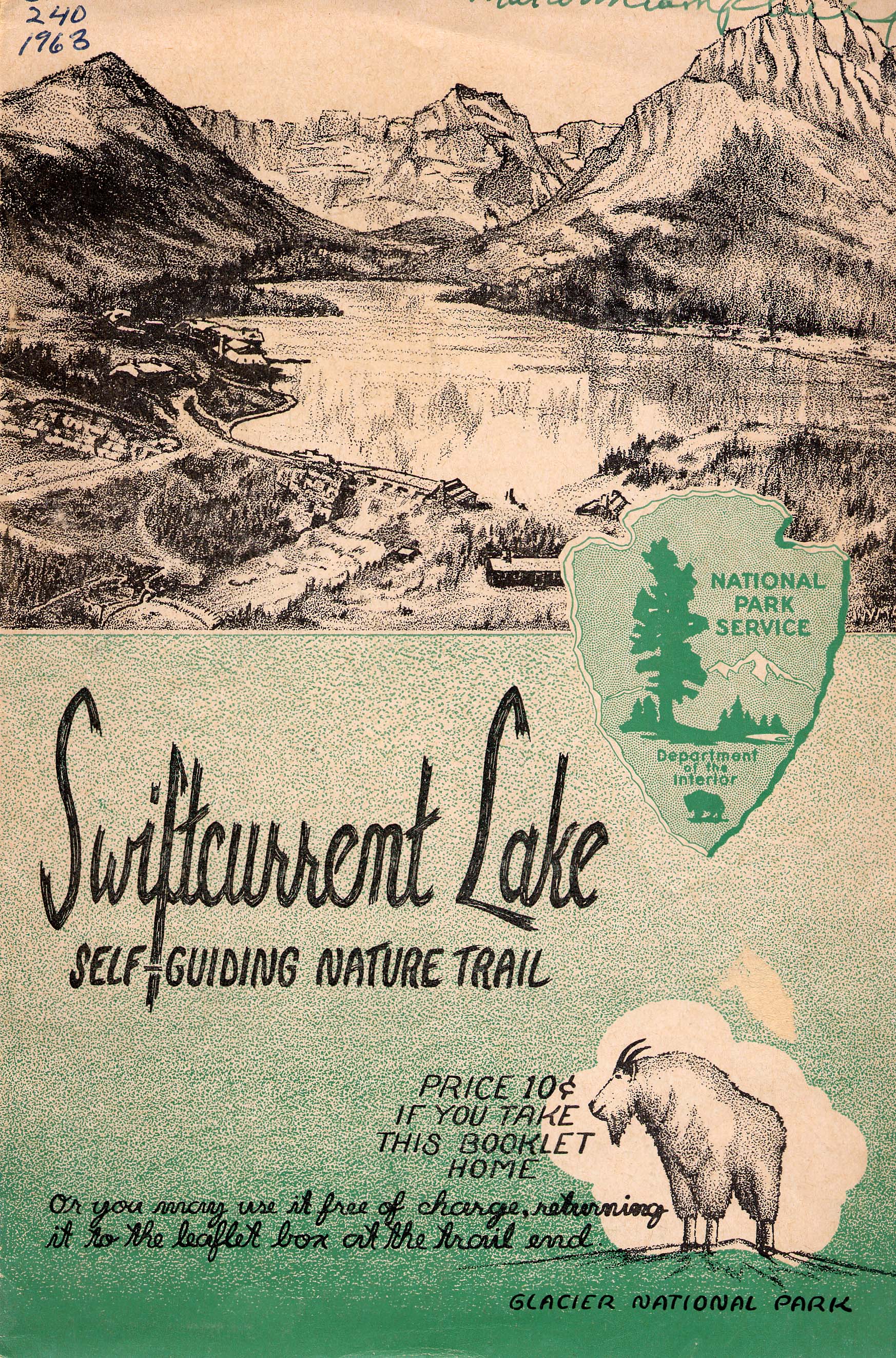
There used to be a wood box on a post near Many Glacier Hotel with a handfull of walking guides for tourists taking their first hike around Swiftcurrent Lake. If you wanted to keep the guide, you put a dime in a slot. If not, you put the guide into a similar box where the trail neared the camp store. I kept mine and along with it, brought home a sack full of guidebooks.

These materials are a writer’s dream. They allow me to merge my imagination and memories of the trails and mountains with specific factual information about the trees (subalpine fir, willow), wildflowers (fireweed, beargrass), and mountains (Grinnel, Allen). Even though I write contemporary fantasy, I want the setting to be as realistic as possible, and while I didn’t know it when I was a hotel bellman, all thosde after-work hikes were taking place in a world that would one say be part of The Sun Singer, Garden of Heaven: an Odyssey, and my new novel Sarabande.

I never wrote those National Geographic Magazine articles, much less climbed K2 or Everest, but I did write a few articles and essays about the Swiftcurrent Valley in Glacier National Park. Looking at the valley from a journalist’s or feature writer’s perspective helped me collect my thoughts for the fiction I would set there later.  Unfortunately, I haven’t been back to the park for many years, but all that time walking around in the setting of my future novels rather engraved the sights and sounds in my memory.

Sarabande Excerpt – from a Fictional Cabin at the Park’s Lake Josephine

Lake Josephine and Mt. Gould - twbuckner photo

The bright yellow of a late morning sun filled the bedroom when Sarabande awoke. She felt the light move before she opened her eyes and pulled the tangled folds of the quilt away from her face. A summer breeze followed the light, fluttering the blue curtains with a breath that smelled of fir trees, larkspurs, gentians, and stones from snow-melt streams. Pine siskins chirped to each other amongst the ferns and mosses, olive-sided flycatchers pipped from tree-top perches, and children laughed. The laughter came and went with the coming and going of a rumbling, technology-sounding hum. Sensing no threat in the sound, she projected outside and found that a boat traveling up and down the lake with visitors was powered by whatever made the pervasive hum. The visitors got off the boat, looked around, laughed, and then got back on the boat and went away.  They surrounded the cabin with their smells of strange soaps and fabrics, completely unaware of the magic in their midst. Whether it was the good night’s sleep or the rhythms of the water in the box of warm rain, her normally sharp senses intensified while she slept. Within the quilt of interlocking rings, she acquired—or was acquiring—Bear’s sense of smell, Eagle’s sight, and the quivering alertness of chipmunks and butterflies.

–Malcolm

an exciting adventure for only $4.99 on Kindle

Finding Thomas Hall – Author Beth Sorensen Discovers Her Passion in a College Course

Sorensen

Today’s guest post has been contributed by Beth Sorensen, author of “Crush at Thomas Hall” (Chalet, August 2010) and “Divorcing a Dead Man” (Chalet, August 2011). My review of her romantic mystery, “Crush at Thomas Hall” appeared here on Malcolm’s Round Table in September 2010. Sorensen lives in Delaware with her husband and three children.

Finding Thomas Hall

When I sat down to write Crush at Thomas Hall, I already knew I wanted my story to take place in Virginia. I was born and raised there and the eastern coast of the commonwealth as only a native would. Most people, however, would not necessarily associate wineries with this part of the United States. And until I was in my mid-twenties, neither did I. Until I returned to Old Dominion University in the mid-nineties, to finish a degree I had started six years earlier. My interests had changed and so did my major. I enrolled in the geography program and set myself on a track that included taking classes year-round.

As a single mom, I often took a night classes. I was fortunate to have the help of family with my son and I could knock out a three credit class while only being away from home one night a week. In the summer of 1996 I enrolled in the geography of wine. Sounds like an easy class, right? Wrong! It turned out to be two nights a week of six weeks. One night lecture, the other lab. Okay, so the lab was fun, but lecture was no joke. The history of wine, wine in early America, how and what type of grapes are grown, how wine is made, stored, and sold were all topics on the syllabus.

I fell in love with every part of the class and when I went out on our field assignment, this was a 400 level class; I fell in love with wineries as a location. I had the great pleasure of spending several hours at Ingleside Winery with their then wimemaster Tom Payette. The day left me with a true sense of what vineyard and winery life was like. I visited others that summer and discovered that they were all beautiful and romantic with a touch of mystery. And for our final, we had to design our own winery and defend its practicality.

So when it came time to choose which winery to use as a setting for my romantic mystery series I knew exactly where it would take place. A winery of my own design, named after my great-grandmother’s maiden name, Thomas Hall.

Protagonist Cassandra Martin from “Crush at Thomas Hall” returns in “Divorcing at Dead Man,” available in Kindle and trade paperback editions.

Cassandra Martin’s life is bordering on perfection. She has settled down in the Northern Neck of Virginia and has an amazing job running a winery. In addition, she plans to marry the man of her dreams, sexy billionaire Edward Baker.

However, in Cassandra’s world, perfection usually means the earth is about to drop out from under her and this time is no exception. What starts as a series of prank calls, soon reveals her abusive, late husband, Tony Martin, is very much alive and looking for her, three weeks before she plans to remarry. Now she must do the unthinkable as a devout Catholic, divorce Tony. When secrets  alienate her from her fiancé, Cassandra begins to question the advances of a man that wants more than her friendship. And when she wakes up after having been  drugged and kidnapped, Cassandra begins to wonder if she’ll live long enough to decide whether or not she wants to walk down the aisle.