This and That, Mostly About Books

While Georgia’s heat wave continues, I’m doing just fine when I’m inside working on short stories. The A/C can hardly keep up with temps over 90, much less over 100. As long as I’m working on my story about a Florida river, I can imagine floating in its cool waters even though “in real life,” the river is a mess due to the recent flooding from Debby.

Lately, I’ve been wondering what’s going on in the world that’s causing so many people to search on the phrase “light conquers all.”  A year-old post here on Malcolm’s Round Table about author Pat Bertram’s novel Light Bringer has been getting dozens of hits per day for about two weeks now. If you’re one of the people searching for that phrase, leave a comment and tell me what’s happening.

After reading author and artist Terri Windling’s recent post about artistic inspiration, I felt inspired to use her words as a springboard and post a few words about where authors get their ideas on my Magic Moments blog. Stop by and tell me what inspires you to write, draw, compose music or make a quilt or create a new sculpture.

Long before I was born, my father’s family lived in Fort Collins, Colorado before moving to the California coast. Because my father loved the Colorado high country, I followed in his footsteps and climbed mountains there one summer before finishing school and being summoned by “my friends” at my local draft board to join the Navy. So it is, that I watch the news about the Colorado fires, the people who have been driven out of their homes and the heroic efforts of the fire fighters with horror and awe mixed together with memories of better times. The news from the fire lines seems better at the moment.
On July 9th, author Melinda Clayton will stop by for a chat about her third novel Entangled Thorns, including why a Florida author is lured to Appalachia again and again for her stories. I enjoyed the interview!

Publisher’s Description

Beth Sloan has spent the majority of her life trying to escape the memories of a difficult childhood. Born into the infamous Pritchett family of Cedar Hollow, West Virginia, she grew up hard, surrounded not only by homemade stills and corn liquor, but by an impoverished family that more often than not preferred life on the wrong side of the law.

After the mysterious death of her brother Luke at the age of thirteen, seventeen year old Beth and her younger sister Naomi ran away from home, never to return. As the years passed, Beth suppressed the painful memories and managed to create a comfortable, if troubled, life with her husband Mark and their two children in an upscale suburb outside of Memphis, Tennessee.

But the arrival of an unwelcome letter threatens to change all that.

Against her better judgment, and at the urging of her sister Naomi, Beth agrees to return to Cedar Hollow, to the memories she’s worked so hard to forget. When old resentments and family secrets are awakened, Beth must risk everything to face the truth about what really happened to Luke that long ago summer night.

With three out of four of my novels partly set in Glacier National Park, Montana, I’m usually distressed when I read about the continued absence of funding, especially for such mundane sounding line items as infrastructure and maintenance. The good news this summer is the Glacier National Park Fund’s plan to begin an adopt-a-trail program to help pay for the upkeep on the remaining 750 miles of trails (down 250 miles since I was first there). As a member of the Fund, I heard about the plan via a letter and a brochure. The details are not yet on the Fund’s web site, but I think they will be soon.

When I write my next Montana novel, I really don’t want to hear that more trails have been abandoned due to Congress’ continued lack of support. Maybe all of us can help pick up the slack.

Otherwise, I know newspapers, websites and magazines often feature the summer’s hot reads every year about this time. What with the heat wave, I’m ready for books about snow and ice.

Malcolm

Only $4.99 on Kindle

and now a word from our fantasy sponsor

My book reviews, interviews and posts on Malcolm’s Round Table, Magic Moments and Literary Aficionado are brought to you by, er, me.

Speaking of myself now in the third person, Malcolm R. Campbell is the author of magical realism, contemporary fantasy and satire published by Vanilla Heart Publishing of Washington State. While my noir satire, Jock Stewart and the Missing Sea of Fire, is set in a fictional Texas town with a really screwed up fictional newspaper, my three other novels are set in Glacier National Park, Montana and other places where I have lived or visited.

Last summer brought the release of Sarabande, a harrowing heroine’s journey and contemporary fantasy about a young woman who is haunted by the ghost of her sister. Sarabande seeks the help of a young man who has, on one previous occasion, bent time to “raise the dead.” The solution to the problem is not without its nasty down side.

Satire for your Nook

In 2004, I came out with the first edition of my novel The Sun Singer, the story of a young man whose psychic dreams ultimately lead him into a dangerous mountain world where it will take all of his skills to survive. First things first: he had to figure out who the good guys are and who the bad guys are and, as it turns out, who exactly he is. The second edition of The Sun Singer was released in 2010. College students at Lone Star College, Texas, read and discussed the novel this past Spring as part of a Wayfaring Heroes course.

Garden of Heaven: an Odyssey (also released in 2010) is magical realism about a man who grows up on a Montana ranch who loses his way when a failed love affair sends him down dangerous roads along which is is betrayed multiple times by those he cares about the most. The book is also available as an $4.99 e-book from OmniLit.

Where To Find Malcolm R. Campbell on the Internet

Excerpt from Sarabande

Only $4.99 on Kindle

Gem pulled her hands away and stood up so quickly she knocked over her spinning wheel. She didn’t appear to notice. She walked to the window and leaned out as though making sure no one else would hear her words.

“I was shamed by the king.” Gem pulled up her left sleeve to reveal the letters SJ in a bold pink scar that contrasted with her walnut-colored skin.

“Your strike brand!”

“I bore Justine’s mark as well as his child. Both were conceived in pain in a dark cell covered with urine and rat droppings.” Sarabande went to her, but Gem rolled down the sleeve, covering the ugly mark that signified Sovereign Justine. “No, my friend, I cannot abide your seeing it close at hand. My daughter, though, this doting mother will speak of her at great length if allowed to do so.”

“Cinnabar has shown me her brand,” said Sarabande.

“Discretion is a lesson I was never able to teach her. But listen: on your journey to Osprey’s house, you won’t walk through the domains of kings.”

Sarabande gasped and sat down, suddenly lightheaded when she understood why Gem showed her the scar.

“If there are no kings, what dangers have you seen?”

Gem put her hands on Sarabande’s shoulders and kneaded out the growing knots. Her touch always felt like a touch of power, and she wondered if she shared Osprey’s way with healing magic.

“I have seen a dark creek beneath a bridge on a foggy night. I have heard screams and howls outside my comprehension. I don’t understand it,” said Gem, holding their eye contact as though she understood more than she would say. “Sarabande, you know without my lecturing at great length about the ways of the world. A a woman on a lonely road can be a target. Travel with a sharp knife.”

The impromptu massage felt good. The unclear warning did not. Vague predictions were worse than silence. They stirred up what did not need to be stirred up.

“Yes, I know that, Gem. I will carry a knife and take care to have it handy.”

“With due care, you can avoid your fate, but destiny is the way you’ve already written your life’s story.”

“I wanted to walk the sixteen hundred and fifty miles to Osprey’s house long before it occurred to me I would ever do so. If there is to be shame in it, then I will live or die with whatever I find on that lonely road.”

Thank you for stopping my Malcolm’s Round Table today!

–Malcolm

Take a look at locations you know for your best stories

The possibilities for swamp stories are infinite

Like most starving authors, I can—on a bad day—be jealous of authors who have the money for multiple research trips to Scotland, Paris or Japan. On the other hand, I’m not writing global thrillers or looking to my highland ancestors for what if romances about Mary Queen of Scots. So, I return again and again to the places I’ve lived and worked for my fictional settings.

Writers often debate whether the old admonition “write what you know” makes sense or is foolish. Obviously, writers do a lot of research to fill in the gaps. Nonetheless, I think it’s much easier to write about a place where you’ve been or an occupation you’ve had or have been exposed to than to have to make everything up from scratch.

If you lived in a town for years, you know the streets, the ambiance, the trees and flowers to be found there, and perhaps some of the history. If you vacation at the same beach, resort or National Park every year or so, these are also prime examples of “what you know.”

In my contemporary fantasies “The Sun Singer” and “Sarabande,” I used Glacier National Park as a setting for the adventures because I worked there and later went back as a tourist. I placed some of the scenes in my magical realism novel “Garden of Heaven: an Odyssey” in Glacier, but also used the Philippines which I saw while in the Navy and the Florida Panhandle where I grew up. And this year, I’ve been writing short stories which have been set in Glacier, a north Florida swamp, and central Illinois where one side of my family came from.

My fiction always has a strong sense of place

To some extent, each of these stories could have unfolded in a dozen other places, but since I always have a strong “sense of location” in my fiction, it was easier to plunk down my characters in places I know well rather having to start from scratch. I know, for example, that you’re going to find chinkapin trees, titi thickets and scrub oak in the Florida Panhandle, and that there are several varieties of Indian Paintbrush flowers in the Montana mountains.

What I know about each location isn’t earth shaking, like state secrets, smuggling rings, or hair-raising stories from years gone by. But what I know does give me a jump start. I may well use Google to fill in a few facts, but knowing a location helps you know what to look for when you do your next Internet search. Yes, I still have dreams about going to the highlands of Scotland, but until then, I can be happy with East Glacier, Montana and Tate’s Hell Swamp on the Florida Coast.

Perhaps you can, too.

One of my favorite Glacier flowers gave me a new story idea – NPS Photo

I just saw a screen saver filled with Indian Paintbrush: ah, that leads me to another Montana short story. A week ago, I started thinking of the chuck-will’s-widow that sang all night in the woods behind the Florida house where I grew up. Oh, good, another story idea about those woods and my old neighborhood.

In many ways, I am probably always on the lookout for stories I can tell in my favorite settings because, well, I know the territory and the kinds of things that happen (or might happen) there. If the location settings in your fiction play a role, then where you’ve been is a lot easier to bring to life in words than a place you’ve always wanted to see.

Malcolm

You may also like: World of Wonder about nature as my primary inspiration as a writer. The post appears as part of an inspiration series running on author Smoky Zeidel’s weblog through June 27.

Historic Newspapers on line help researchers and hobbyists

Nothing is more frustrating to an author, researcher or individual with a passion for a place or a historical period than to discover that the records they want to see are stored in a university or historical society library where they are classified in terms of linear feet. Internet searches that yield such hits are a real barrier to learning more, finding family histories, or finishing a book.

Fortunately, more and more organizations and units of government are funding the creation of searchable databases of digitized records. If you know anyone searching for their great great grandparents on Ancestry.com, then you’ve probably heard that new material is becoming available daily.

Now, Chronicling America is bringing old newspapers into the modern world by scanning them into a publicly accessible database with full-text search capabilities via names, topics, places and keywords. Called the National Digital Newspaper Program, the project represents a joint effort of the National Endowment for the Humanities (NEH) and the Library of Congress (LC).

The Montana Historical Society noted in the current edition of “Montana, the Magazine of Western History,” that issues of the Anaconda Standard, Butte New Age, The Colored Citizen, Daily Yellowstone Journal, Fergus County Argus, Helena Independent, Mineral Argus, Montana News and Montana Post in the late 1800s are now available. Many more papers and issues will come online between now and 2013.

As a fan of Glacier National Park, I found an immediate number of hits for materials I’d never had access to before unless I was willing to pay a researcher or staff member at a library several dollars per page to Xerox and snail mail me materials out of a collection—and then hope I guessed right about the dates and page numbers.

Your special places may be covered by newspapers that are already available. The searches are easy and free. Of, if you’re just browsing, the site’s homepage displays old newspapers from the current date.

–Malcolm

Writing Prompts for the Bold, Insane and Desperate

“The Muse is an ornery creature and rarely comes when called. She wears feathers in her hair and birkenstocks on her feet and is often out in the woods when you are home at your keyboard.” – Jane Yolen

On the day Isaac Asimov died, the muses of the world formed a union because they no longer wanted to be at the beck and call of prolific writers who expected free ideas 24/7. Some authors were exempt, including Nora Roberts who–according to informed sources–has a stable full of muses that supply “enough ideas for ten normal writers” just to keep those bestsellers flowing.

In school, writers are encouraged to become bold, insane or desperate as a means of churning out poems, plays and promises to publishers. Usually, this procedure fails. Why? Nobody knows what to say any more. Enter, the writing prompt. This is a sentence, paragraph or shot of Scotch that starts a writer writing. If your muse is on vacation, here are some a few prompts to get you started:

  1. Hire a mob hit man to shoot you in the knee every day you write less than 5,000 words. (Alternately, you can write about a writer who does this, especially after both of your knees are in casts.)
  2. Write a modestly erotic novel with the title “Josie has a screw loose.” (Try to avoid bad puns or the kinds of unsavory words your mamma taught you to avoid using unless you were being threatened by a hit man.)
  3. Visualize the end of human life as we know it. How would the smarter insects react to that? (This is likely to be a cautionary tale.)
  4. For a somewhat speculative story, visualize what might happen to literature as we know it if William Shakespeare returned to the world of the living and started writing chick lit. (Potentially, this could be a bittersweet comedy that catches the conscience of  the reader.)
  5. After having an affair with an older woman, a graduate goes into the plastics business.
  6. Write a letter to Nora Roberts in which you explain patiently that since she has more ideas than she can shake a stick at, you’ll be willing to take thirty or forty of them off her hands assuming she doesn’t get any lawyers involved. (If you’re not bold enough to do this, write about a bold protagonist who writes the famous author with unintended and calamitous results.)
  7. Consider writing an essay about the origin of the birkenstock, citing informed sources about what might induce a person wear such a thing in this day and age.
  8. A writer—possibly you—becomes trapped in the Twilight Zone and realizes that when s/he calls 911, s/he can only speak in limericks.
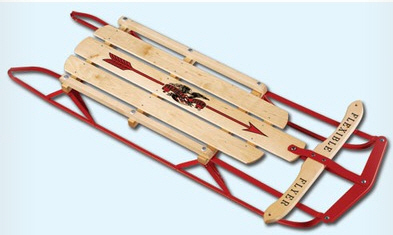
  9. After hearing that the Eskimos have over 300 words for “snow,” you bet the guys down at the factory that you can put all of them (the words for snow, not the guys) into an epic poem of great beauty about an old newspaper publisher whose favorite possession is a sled named “Rosebud.”
  10. Fearing that he has immeasurably harmed the environment by making the plastic bags used by stores, an old man shuts down his factory and goes into the strip mining business “to even things out.”
  11. While sending an e-mail, a disoriented preacher realizes that the entire online world is nothing but but an illusion or, possibly, a Fellini movie or Dali painting, and does on a quest to return the world to real reality. (Speculative fiction.)
  12. Write a black comedy about a cult that resolves to get all the sleds off the streets, hills, vales, or wherever they may be, entitled “Gather Ye Rosebuds While Ye May.”
  13. A man spends a lifetime climbing Mt. Everest only to find a wise man at the top who says “coming up here was damn stupid.” What happens after that?
  14. You (or a fictional character sort of like you) discover that “your” muse is cheating by “keeping company” with the plumber at the local recycling plant and resolve “to set things right” (without resorting to foul language) by drinking a potion that turns you into a powerful wizard who teaches the plumbers of the world a powerful, but amusing, lesson.
  15. What would happen if somebody, possibly you, brought Isaac Asimov back from the dead?

By the way, ideas like these don’t grow on trees. So, if none of them work for you, and you can’t get Isaac Asimov or Nora Roberts to help, you might want to think about sucking up to your muse with candy, praise, Scotch, and a new pair of birkenstocks (whatever the hell they are).

Malcolm

Malcolm R. Campbell is the author of the comedy/satire Jock Stewart and the Missing Sea of Fire, available on Kindle and as a trade paperback.

Upcoming book reviews

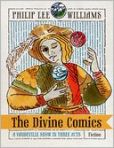
I’ve got my work cut out for me with Philip Lee Williams’ huge new novel The Divine Comics: A Vaudeville Show in Three Acts. It’s a 1,000+ page, two-inch thick novel from an award-winning Georgia author. However, I’m really looking forward to this one. I’ve previously enjoyed his poetry in Elegies for the Water, his natural history about the ridge he calls home in In the Morning, and his civil war novel  A Distant Flame. Williams, who is also a composer of classical music, recently retired from the  University of Georgia.

I’ve had the pleasure of meeting Williams several times at our local library when he was on tour.

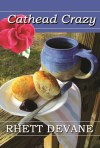
I’m also looking forward to Rhett DeVane’s new novel Cathead Crazy. She wrote a guest post about the novel’s background here on March 12. I’ve started reading the book—it’s great. I’m not surprised. I liked Rhett’s Evenings on Dark Island, co-written with Larry Rock. What a great vampire spoof that was. While Rhett lives in Tallahassee, Florida, the town where I grew up, I’ve never met her. She needs to do a book tour into the Northeast Georgia region where we also happen to like large biscuits.

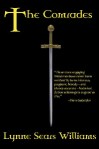
Meanwhile, I’ve been reading and enjoying Lynne Sears Williams wonderful novel about the long-ago days in the country now known as Wales. I’ll be talking more about The Comrades on this blog very soon.

Meanwhile, I’m busy keeping up with my Book Bits blog (writer’s links) while working on short stories. (I’m not yet ready to tackle another book-length story.) And then, too, the website has undergone a major overhaul lately. That can happen when you switch the domain from one ISP to another.

The weather’s heating up in northeast Georgia, the grass is growing faster than I like, pollen is covering the cars, the cats are constantly miaowing about something, and I’m starting to think I’m ready for a vacation.

Malcolm

A writer’s influences

Yesterday afternoon, I enjoyed a wonderful conversation about writing, fiction and the hero’s journey via a speaker phone with professor Melissa Studdard and her English 2341 students in “A Study of the Journey in World Literature” at Lone Star College in Texas. Readings for the course included my 2010 contemporary fantasy The Sun Singer.

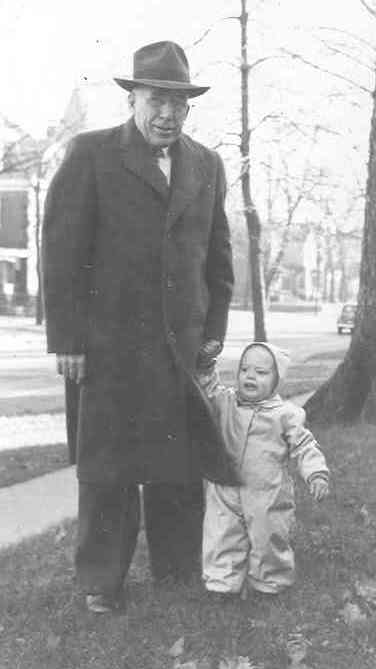
When one student asked whether the novel’s supporting character Grandfather Elliott was based on a real person, I had a ready answer. No, but I was strongly influenced by my Grandfather Joe Gourley who lived in Decatur, Illinois where the initial parts of the novel are set.

My grandfather and me

Imagination With  Dash of Reality

After the Q&A session was over, I started thinking about what I would say about characters’ role models in fiction if I were teaching a creative writing course. First, I would clear away the misconception some readers have that novelists can’t possibly dream up characters from scratch, that characters must be based on real people.

That commonly held belief is a long way from the truth. Characters are created out of authors’ imaginations with a dash of reality. In the case of Grandfather Elliott in The Sun Singer, my fictional character is not my grandfather with a pseudonym. If my grandfather had been alive when the novel was published, he wouldn’t recognize himself in the character.

What he would see is a character who, as he did, took his grandson on a day trip to the nearby Allerton Park where they saw wooded trails, formal gardens, and sculpture including the famous bronze Sun Singer statue. Joe Gourley would also see that my novel was set in the house he owned when I was a child and that the characters visited the parks where I once played.

Everyone is fair game

Joe Gourley in Decatur in the 1940s

I think there’s even a tee shirt out there that says something like “if you aren’t nice, I’ll put you in my next novel.” When novels focus on real towns, the author’s neighbors try to find themselves in the book. They did it with Peyton Place and when The Help was released, they were still doing it. Since I tend to “meet” my characters as I write in much the same way all of us see people in our dreams that we didn’t know before, I seldom think of real people as role models. My grandfather Gourley played a role because, like my character, he visited the Sun Singer, lived in a neighborhood that made a strong impression on me from the time I was born through junior high school, and loved practical jokes.

When I’m writing about a character with certain traits, I often think of people I know who have those traits. The title character in Sarabande is a good-natured individual who expects the best from other people and loves learning new things and traveling to new places. She shares these qualities with a co-worker I knew forty years ago. If my former co-worker read the book, she might like seeing those qualities in Sarabande, but she wouldn’t for a moment think I was writing about her.

Those old familiar places

Buses and street cars came and went from this transfer house in Decatur's Lincoln Square when I was a child.

Decatur, Illinois made an impression on me because our family was there so often during my formative years. The Florida Panhandle made an impression on me because I lived there from the first grade through college. Glacier National Park made an impression on me because I worked there while I was in college. So, I know these places. They influence me whether I consciously think of them or not. The same is true of family and friends. Since I like blurring the line between fiction and “real life,” I take the influence of places one step further and put real places in my books.

The Sun Singer is set in Decatur and Montana. So is Sarabande. My magical realism novel Garden of Heaven: an Odyssey is also set in those locations as well as north Florida and the places I saw when I was in the Navy. The three short stories I’ve written so far this year are also set in those places, perhaps because Decatur, North Florida, and Glacier National Park fit me like old shoes.

My memories influence what I do, just as they influence everyone else. When I write, most of those memories are part a figurative vat of stew. As I dream up characters, they often remind me of people I knew—or know now. Bob Hope’s signature song was Thanks for the Memories. If I wore tee shirts with slogans on them, they might say “Thanks for the Influences.”

Malcolm

If you’re not a reader, for Pete’s sake, stop trying to be a writer

When I taught college-level journalism, I was convinced that some of my reporting and feature writing students never read newspapers.

Other than wondering what the hell they were doing in my classroom, it was clear to me that those who didn’t read the news would probably never learn how to write it. News and feature stories have a noticeable organization and style.

Long-time journalists can hear the cadence of a “properly written” news story inside their heads. Stands to reason, then, that reading—in this case, the news—will help you learn the fundamentals of reporting much faster in a classroom and on the job than being clueless about it.

Aspiring poets and novelists who don’t read poems and novels

Author and editor C. Hope Clark (“Lowcountry Bribe”) wrote in a February 28th post at read.learn.write that in her consulting and speaking work, she finds a lot of aspiring writers who seldom read:

The world abounds with writers. Everyone wants his name, photo and title on a bookstore shelf, as a minimum on Amazon. But amazingly enough, most of them are not voracious readers. They are spitting out words, but taking few in. It’s like using a shotgun instead of a high-powered rifle. The result isn’t very refined, the results less satisfactory.

Some years ago, when desktop publishing programs made it easier to create newsletters, brochures, and posters on a PC screen, a lot of big corporations cut the writers from their staffs because—the bean counters seasoned—anyone could use the software and create something that looked like a newsletter, brochure or poster. Who needed actual writers? The results were a mess, and since the bean counters never read anything anyway, they didn’t know the results were a mess.

The Internet is (perhaps) today’s desktop publishing

The Internet has not only reduced our attention spans, it’s given all of us the power to create materials that look like e-zines, blogs, books, magazine articles and poems. No experience necessary. Simply log on and create.  Clark says that “The slogan ‘reading is fundamental’ is remarkably accurate. Somewhere along the line, however, between elementary school and college, reading falls by the wayside. Teaching to tests, however, and not enticing children to fall in love with words, has stolen their ability to perform later in life.”

As a writer, I’m biased: I think all of us need to learn how to read and then not let the skill get away from us. And, we’re talking novels, essays, commentaries, features and criticism here, not just the back of the cereal box or the “Trending Now” links on the Yahoo screen. Having worked in corporate America, I can testify to the fact that a lot of stuff got screwed up because the people reading the reports and white papers and trade magazine article weren’t really getting it. They skimmed and/or couldn’t follow a logical argument in print.

What do I have to do to become a writer?

The Internet, and that includes a few well-known print-on-demand book publishers, gives the impression the answer is nothing. Just put one word after another until you reach the required word count for a short story or a book, format it, and you’re done. And when nobody reads it, the first thing you’ll hear from “the writer” is the accusation that there’s a conspiracy out there. Amazon, BIG PUBLISHING, the government, the search engines, the service providers and the reviewers had nothing better to do that get together in a bar and decide to stomp down some a book that otherwise would have won the Booker, Nobel, and Pulitzer prizes.

The speculation about “What the hell happened to my book?” seldom includes any need to learn the art and craft of writing first. And this goes back to something very fundamental: Reading. That’s where becoming a writer starts, and it never stops.

Malcolm

A combination of incongruous things

“pot·pour·ri n. pl. pot·pour·ris – 1. A combination of incongruous things: “In the minds of many, the real and imagined causes for Russia’s defeats quickly mingled into a potpourri of terrible fears” (W. Bruce Lincoln). 2. A miscellaneous anthology or collection: a potpourri of short stories and humorous verse. 3. A mixture of dried flower petals and spices used to scent the air.” – The Free Dictionary

  1. I’ve about finished reading An Uncertain Age by Ulrica Hume. That means you’ll be seeing a review of the novel here soon. According to the publisher (Blue Circle Press), Justine’s life is uncertain when she meets Miles Peabody on the Eurostar. She has lost her job, her fiance, everything except her dream of becoming an artist. Miles Peabody, a retired librarian and beekeeper, has always led a cautious, philosophical life. Now, faced with his mortality, he needs a miracle. Drawn inexplicably to each other, their relationship is tested when Miles invites Justine to join him on a Santiago de Compostela pilgrimage. But before she can answer, Miles goes missing. Desperate to find him, and nudged by the French police, Justine slips into a dark night of the soul. A fascinating theme!
  2. I you keep up with publishing news, you know that the Independent Publishers Group and Amazon could not agree on Amazon’s slice of the pie. Consequently, Amazon turned off the buy buttons for the 4,000 e-books from the author’s IPG represents. In a post called “What Should an E-book Cost?,” IPG compares print and e-book pricing. Not being one to keep quiet about such issues, I posted “The low prices of e-books are bad for writers” on my Sun Singer’s Travels blog.
  3. While I’m happy that The Artist, Meryl Streep and Christopher Plummer won Oscars last night, I’m also happy that I only watched the last 15-20 minutes of the event on TV. It was long, ending a little after 11:30 p.m. (Eastern), but not as long as it has been before.  Had I watched all of it, I think I would have agreed with Andrew O’Hehir’s assessment in a piece he wrote for Salon: “From Billy Crystal’s cringe-worthy act to the obvious winners, the Academy Awards felt old, tired and out-of-touch.”
  4. My brother Douglas has entered the world of fiction writing with a fantasy/allegory called Parktails. The novel tells the story of a massive forest fire in a national park from the animals’ point of view. In many ways, Parktails is a quest story; the animals are seeking answers and inspiration and must travel many miles to learn how to keep their community together. Doug teaches art at George Fox University in Oregon. He is also the author of Seeing: When Art and Faith Intersect,  published in 2002.
  5. I have been updating my website to better display my books. Among other things, I needed to add my recently-released free e-book Celebrate Glacier National Park. The 48-page PDF about Glacier’s history, personalities, facilities, plants and animals can be downloaded from the Vanilla Heart Publishing page at Payloadz. In addition to the website, you can learn more about my 2011 contemporary fantasy novel Sarabande on my Sarabande’s Journey weblog where my most recent post was “Check your imagination at the door.” If your book group or class is planning to read and discuss the novel, you”ll find a list of sample discussion questions here.
  6. If you’re an author and/or an avid reader, I invite you to stop by my daily list of links for book reviews, book news, contests and writing tips called Book Bits. It’s usually posted in time for your lunch-time web surfing. Tomorrow’s edition will include a feature for writers called “Know Your Competition” and a review of Kate Alcott’s The Dressmaker.
  7. You can still download Vanilla Heart Publishing’s free, Valentine’s Day e-book called A Gift for You. The book, which features fiction, nonfiction and poetry focused on love, includes my short story “Those Women” as well as work from authors S.R.Claridge, Janet Lane Walters, Anne K. Albert, Chelle Cordero, Marilyn Celeste Morris, Collin Kelley, Melinda Clayton, Charmaine Gordon, Smoky Trudeau Zeidel and Joice Overton.
  8. Even though it’s not yet spring, I’ve already had the lawn mower out once to trim the front yard. I’m always somewhat surprised when it starts right up without a lot of tinkering, oil changes, or a trip over to the auto parts store for a new spark plug. The yard looks better now and even somewhat green due to our recent thunderstorms. We’ll have to decide soon whether to clean out the garden in the back yard and then fight with the deer all spring and summer over our vegetables. Oddly enough, they seem to be drawn to the hot peppers–I thought they would leave those alone.

Wherever you live, I hope you’re seeing signs of spring.

Malcolm

contemporary fantasy for your Kindle

Allowing your story to happen

“Leopards break into the temple and drink to the dregs what is in the sacrificial pitchers; this is repeated over and over again; finally it can be calculated in advance, and it becomes a part of the ceremony.” – Franz Kafka, from his Zürau aphorisms

When I first read Kafka’s temple ritual aphorism in high school, I was enchanted with logic. I believed that including the leopards either suggested that the ritual was meaningless and/or that the leaders were simply lazy and expedient. In high school, we were taught to plan, outline and research our fiction and nonfiction in advance to ensure that we said what we meant. Stray leopards in our prose might suggest otherwise.

Over the years, intuition and a love of apparent chaos have replaced logic in my life–and in my writing–as the primary inspiration behind what I’m doing and saying. Now, when I see Kafka’s aphorism, my thought is that the leopards had, in fact, been missing from the ceremony from day one.

Had the temple leaders maintained security and vigilance, the leopards couldn’t have gotten into ritual. The same is true, I think, for writing. Too much logic and too much planning can keep out the very things your story needs. Needless to say, if you allow something to enter and decide it really doesn’t help the story, you can edit it back out.

Author  Diana Gabaldon once mentioned during a research discussion on a writers’ forum that while doing research about ABC she would inadvertently stumble across XYZ. Once she investigated XYZ, it turned out to be vital to the plot and theme of her book even though she had never considered it before. Was her discovery magic, synchronicity, a butterfly-effect phenomenon, or an example of her subconscious mind “knowing” the material was there and leading her to it?

I’m not sure. And really, I’m less likely to stumble over the leopards trying to get into the temple if I don’t worry about how they found the temple or managed to appear at the proper time.  So, I leave my work open to chance. In his book Voice of the Muse: Answering the Call to Write, Mark David Gerson suggests that the stories we tell are already out there (don’t worry about where), just waiting for us to listen. If we don’t listen, we won’t hear them or, perhaps, if we do hear them, we’ll censor out the leopards because they weren’t included in the original plan.

Over the years, I’ve come to think that events and ideas that seemingly come out of nowhere are often the most meaningful. And, they can send our lives and our stories off on the most surprising pathways. In her post How an African Intruder Taught Me a Lesson on Magic and Writing, author Smoky Trudeau Zeidel wrote about a guineafowl that wandered into her neighborhood. She named the bird Gertie. Its appearance there was probably just as unlikely as a leopard in the local temple.

“All sorts of Gerties have popped up in my Work In Progress (WIP), The Storyteller’s Bracelet. Not guineafowl, these Gerties, but surprises that seem to have materialized out of nowhere,” she said. (She and I were content to label the appearance of a Gertie of any kind as magic.) Her view is that “when magic enters your life, be it through an unexpected visitor from another continent or through your words, it is best to go with it.”

I agree. Going with it is part of allowing your story to happen.

Malcolm

Malcolm R. Campbell is the author of magical realism and contemporary fantasy novels, including “Sarabande.”