How to destroy the pacing of your story

thrillerNovelists trick us in multiple ways in order to ramp up the suspense of a story. Important facts are concealed, backstories aren’t revealed, and point of view is shifted from one character to another keeping readers outside the head of the person whose thoughts would reveal important clues.

One trick annoys me, probably annoys others, and disrupts the pacing of the story. Let’s call this “hurry up and wait.” Here’s an example:

The Bomb

Joe opened the suitcase. There is was: enough C4 to level the building and a timer with ten seconds left in the countdown. The timer was old, sounded like a plastic clock.

The tick tock, tick tock reminded him of summer evenings at the lake when Dad not only woke him at the crack of dawn, but kept him awake most of the night with a loudly ticking alarm clock. Every time it woke him, he lay there waiting for it to go off in an explosion of bells and sunshine. Before the left the old cabin, he threw that darned clock in the lake, hoping a gator might eat it. He had to smile in spite of the bomb in the suitcase. If Dad were alive and sitting here next to him, he would love the sound of that timer.

When a story is racing toward a critical moment, stopping the action for an absurd reason cheats the reader, for it builds tension where there should already be enough tension to cover the action.  In this example:

  1. No sane person faced with a bomb with just seconds to defuse is going to walk down memory lane in his thoughts. He will run, throw the bomb out a window, or defuse it.
  2. Some novelists don’t pay attention to the time it takes a reader to read a passage. I always note it. In this case, the bomb will explode before Joe finishes his thoughts about the lake and the clock simply because the thought takes more time than he has.

A similar sin, somewhat less grievous, is the insertion of backstory information into a scene where, in reality, there’s no time for it. Now, if you’re a reader or a writer who isn’t concerned with the amount of time thoughts and memories take to occur, this won’t bother you as much as it bothers me. Consider this:

The Highway

Sue lit another cigarette and blew the smoke out the open window of the car. Goodness knows, she was driving fast enough for the wind to draw everything out the window including her soft voice, her hair and the gnats that took over the car while they were parked at a rest stop.

“What are we going to tell our parents when we get there,” she asked.

“If you’ll slow down,” said Jim, “we’ll have more time to come up with an elaborate lie.”

She laughed, looked at him sideways, and punched his shoulder gently.

“I’m eight months pregnant,” she said. “What kind of elaborate lie do you propose.”

Other than how she happened to get pregnant, Sue was forever practical. He preferred jokes and delays and white lies. If he could think of a real whopper, he would resort to that. This road was a highway of lies because it connected their hometown with the beach cottages. Things happened at those cottages. Always had. The road home, lined with saw palmetto and scrub oak and a few longleaf pines, was a fertile ground for fibs, large and small. They literally fell out of the trees. If they’d been fish, they would have jumped into his boat. Sue felt uncomfortable with lies. That’s why she drove down this road faster than the law allowed.

“You’ve been overeating,” he suggested.

Okay, maybe there’s some relevance in the fact Jim uses the road as a time and place for covering up whatever he did at the beach.

  1. Nonetheless, this diversion destroys what was developing as a back-and-forth dialogue of short sentences. The pace one can create with that kind of dialogue gets derailed with the intrusion of a giant paragraph of information.
  2. Plus, I feel like asking the author exactly what Sue is doing while Jim has this multi-sentence thought. Yes, sooner or later such conversations have to end. But not before they’re naturally over.

Pacing can help a writer’s work or destroy it. Sometimes, it’s a matter of personal taste. If you read your stuff aloud, you’ll hear the pacing as surely as you hear the rhythm of a song on the radio. The pace not only needs to feel right, it needs to make logical sense. I think it’s illogical for a man defusing a bomb to think about something else, and I think most people having a conversation would be saying “Jim, Jim, Earth to Jim” before Jim finished his thoughts about the road and the lies he found on it.

Pitch-perfect pacing keeps the thrills in your thriller.

My two cents for a Monday afternoon.

–Malcolm
 

Wondering why people click on what they click on

When I blogged about the USS Ranger, the Glacier National Park Centennial and the White House Boys (at Florida’s Dozier School), I wasn’t surprised to see lots of folks stopping by to read those posts while the stories behind them were in the news.

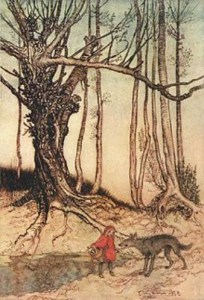
Arthur Rackham's 1909 illustration for "The Fairy Tales of the Brothers Grimm"
Arthur Rackham’s 1909 illustration for “The Fairy Tales of the Brothers Grimm”

Then, when there was suddenly an upsurge of interest in those posts, I often found out I’d missed a news event and people were out looking for information again. So then I updated the posts and even more people read them!

Of course, there are always those posts I write, thinking they’ll be popular and nobody reads them. Shows what I know!

It’s kind of fun trying to figure out why people read what they read. If I knew the answer to that question, I’d probably write more follow-up posts and get some real conversations going in the comments section.

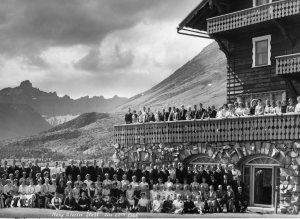
  • This summer marks the 100th anniversary of Many Glacier Hotel in Glacier National Park. Along with various centennial events, there will be an employee reunion which–sorry to say–I’m not able to attend. Perhaps this is why I’m suddenly getting more hits on my 2011 post Many Glacier Hotel 1963, where the fantasy began.
  • I figure there must be some Floridians following this blog, or possibly people planning a trip there, because I randomly get slews of hits on some of my “On Location” posts about locations in the panhandle such as Location Settings: The Other Florida, featuring Panacea and St. Teresa. I’ve written a lot about Florida settings and, since most of them are in the panhandle rather than the primary tourist sections of the state, it’s nice to see people stopping by to read them.
  • Reader interest in old book reviews comes and goes, quite often when the author of a book I reviewed has released something new.
  • Long-ago days
    Long-ago days

    The hits on one post, though, really have me puzzled. The highest readership week after week is going to my June 2013 post The Bare-Bones Structure of a Fairy Tale. In fact, that post has taken over from the White House Boys as the most-read post in the history of this blog. But why? I have no idea. I like fairy tales, myths, and legends: that’s why I wrote the post. I figured nobody would notice it because fairy tales are not exactly breaking news or high on the list of things that are trending on Yahoo, Twitter and Facebook. If you’re one of the people who read that post, what were you looking for?

This really isn’t a niche blog, though it generally has to do with books, writing and the things that catch my fancy. If the NSA is tracking me here, it probably knows more about this blog than I do, what with the various algorithms around for weighing how much space has been devoted to one subject or another.

Whatever prompts you to stop and read, I appreciate it. Hang in there as I bounce all over the spectrum. I’m working on another hoodoo related book, so that means you might be finding out more about folk magic than you want to know. (I spent the morning researching possum bones, but I think I’ll spare you the details of that.)

–Malcolm

Free on Kindle Unlimited

Malcolm R. Campbell is the author of The Land Between the Rivers, the three-story set of folk tales about Panther, Bird and Bear, the first animals (according to the Seminole creation myth) to walk upon the earth. It’s set in Tate’s Hell Swamp in the Florida Panhandle.


Your state’s goldmine of folktales

Folklore is “the boiled-down juice of human living,” Zora Neale Hurston believed. It’s potent stuff and most stories have multiple versions that have been adapted by storytellers to fit the places where they live and the audiences listening to the story.

William Gropper's America, its folklore
William Gropper’s America, its folklore

We often equate the word “myth” with the word “lie” and likewise the word “legend” with the word “superstition” or, perhaps, an ill-informed version of “the real history that actually happened.” I prefer Paula Gunn Allen’s view that myth “is an affirmation of self that transcends the temporal.”

Folklore, whether it’s a creation myth or an often told foundation story brings us, even in a world of science and technology, an alternative, somewhat unconscious and strongly symbolic account of how things came to be the way they are.

When writing about the people who live in a real-life location, I feel ignorant of the place until I read its folklore. These stories tell me a lot about the people and their customs. While many have made careers studying and collecting folklore and comparing that found in one place to that found in another, fiction writers can quickly focus in on some of their states’ basic stories simply through Internet searches like “Montana Ghost Stories,” “New York Legends,” and “Florida Folklore.”

Or, to get a jump start, you can go to American Folklore where you’ll find tall tales grouped by type and by state. You’ll find a diverse array of material by searching for folklore on the Library of Congress’ American Memory website. Similar searches on bookseller sites like Amazon will turn up useful stories as well. If your focus is a specific town, it will usually have a historical society with a local history and/or professional and amateur websites where a mix of history and legend can be found–such as this one for Two Egg, Florida. Many such sites have lists of helpful links.

If you delve into stories about Florida, for example, you’ll discover the skunk ape, a man named Uncle Monday who could turn himself into an alligator and a haunted bridge where a bride in a burnt wedding dress was supposedly seen for years.

The gold in the south isn’t the supposed Confederate Gold, it’s the stories, real, imagined and symbolic. Your town and state also have hidden wealth behind the modern buildings and high-speed Interstates: you can find it at those exits that are badly marked or that are overgrown with weeds due to infrequent use.

I didn’t learn very muck about local folklore in school because when it came up at all, it was always something from the brothers Grimm. Good stuff, that, and universal as well. Yet I cannot help but think that when it comes to legends and tall tales fit to give more to a neew story or novel, that it’s always best to “buy local.”

–Malcolm

Many thanks to all of you who helped make my April 30th “Conjure Woman’s Cat” book sale a success:

number13

Carrying Snakes Into Eden

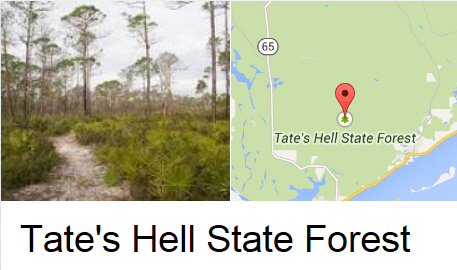
tateshellforestWhen I lived in north Florida, Tate’s Hell–fifty miles west of Tallahassee–was one of my favorite places. Much of it is swamp. Much of it is forest. Other than the logging companies who just about ruined it, few people went there in the 1950s and 1960s. Now, it’s being restored.

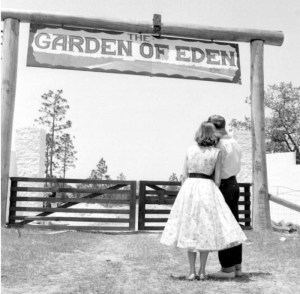
The entrance as it looked in the 11950s - Florida Memory photo
The entrance as it looked in the 1950s – Florida Memory photo

I’ve featured Tate’s Hell in several of my books and stories, including my recently released novella Conjure Woman’s Cat. An easy drive from Tate’s Hell is Florida’s Garden of Eden. That was once a well-promoted tourist attraction. Now, most of the old signs are gone; however you can still enjoy the heavenly habitats on the Garden of Eden Trail in the Apalachicola Bluffs and Ravines Preserve. After just a short hike, you’ll find a wonderful view of the Apalachicola River.

The founders of the Garden of Eden based their attraction on the work of the reverend E. E. Callaway who documented a fair number of features in this area that matched the Biblical story, including the Apalachicola River which split into four rivers. Callaway also thought that Florida’s imperiled Torreya tree was the Biblical Gopherwood from which the ark was built.

In those days, our local paper had an active letters to the editor section that often functioned the way blog comments and Facebook threads do now. Callaway constantly posted short letters talking about the sacredness of the site, hoping, I guess, that more ministers would support his findings. The reverend and I sparred politely on more than one occasion about whether Adam and Eve were native Floridians. I said they weren’t.

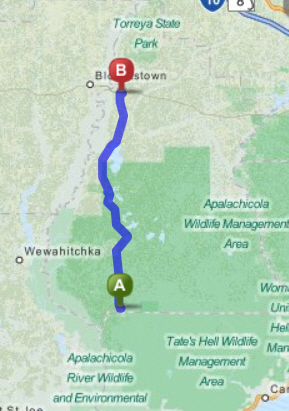
sumatraTObristolHowever, I have always been fascinated–possibly in a twisted and cynical fashion–about the proximity on several state and county roads–of Hell and the Garden. My dark “Garden of Heaven” trilogy played out multiple scenes along this theme. Conjure Woman’s Cat is set near Torreya State Forest and has numerous references to Tate’s Hell.

According to local legend (around Sumatra and Carrabelle, Florida), Tate’s Hell is named after Cebe Tate who was bitten by a rattlesnake there while hunting a panther that had been raiding his livestock. Just before he died, he told those who found him, “My name’s Cebe Tate and I just came from Hell.” That happened in 1875 and the name stuck.

Needless to say, I couldn’t help but write a short story about taking snakes from Hell and transporting them to Eden. Yes, I know, I shouldn’t have done that, but for better or worse that’s just the way my mind works.

The result of this madness is my new Kindle short story “Carrying Snakes Into Eden.” It’s set in the 1960s. Had I published it then, I’m sure the reverend Callaway would have complained about it on the letters to the editor page, and I probably would have responded that Cebe Tate might just be related to Adam, if not Lilith.

–Malcolm

snakesamazonMalcolm R. Campbell is the author of Emily’s Stories, Conjure Woman’s Cat and “Carrying Snakes Into Eden.”

I invite you to visit my Conjure Woman’s Cat website.


The Power of Obscure Events in Fiction

“Claude Neal was an African American farmhand living in Jackson County, Florida who was accused of raping and murdering Lola Cannady, a nineteen year old white female, just outside the town of Greenwood on October 18, 1934.” — Wikipedia

Outside of Jackson County in the Florida Panhandle, I doubt many current Florida residents are aware of the lynching of Claude Neal by a mob after he was accused of raping and killing Lola Cannady.

Find a local historian, and you're well on your way to uncovering the good, the bad and the ugly about the location where you're setting your short story or novel.
Find a local historian, and you’re on your way to finding the good, the bad and the ugly of the place where your short story or novel is set.

It was a brutal incident and became a yet another notorious example of why the country needed anti-lynching laws.

I grew up in Florida during a time when local history was taught in the schools, so I’m aware of many of the panhandle’s legends, crimes, folklore, things to do and places to see.

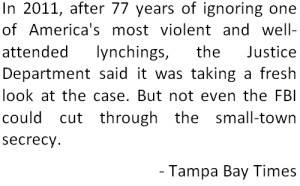
The old story came to light again in 2011 when the FBI said it couldn’t close the case. (There’s a link in the graphic below.) So people knew or  re-remembered the case for a while. But time passes and that knowledge fades quickly.

Needless to say, I hope my recently published novella Conjure Woman’s Cat will have a wider appeal than readers who live between Tallahassee and Pensacola. So why did I mention–just in passing–an obscure event when I could have just as easily made something up?

For better or worse, here’s how a writer’s mind works when it comes to creating a fictional town in the real world:

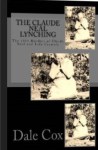
  1. The description of historian Dale Cox’s book notes that this event has been called the “last public spectacle” lynching in U.S. history.  Consequently, the African American characters in my 1950s-era story set in a town a few miles from where the lynching occurred would certainly know about it even though it happened 20 years earlier. To my characters, there’s not only a precedent for such violence but a chance it could happen again since the “climate” and the attitudes haven’t changed much.*
  2. Picture and cutline from Explore Southern History.
    Picture and cutline from Explore Southern History.

    Places are understood by many as not only their geography but as defined in part by what has happened there. It’s hard to mention Gettysburg without thinking about the Civil War battle there. Gettysburg is shaped partly by that battle, the intervening response to that battle, and–if you like magical realism and/or the paranormal–by the psychic strength of that event. Jackson County and nearby Liberty County, Florida were what they were in the Jim Crow 1950s partly because of the violence created an nurtured by a lot of KKK activity.

  3. Sometimes those obscure events come back into our consciousness again.
    Sometimes those obscure events come back into our consciousness again.

    When the characters in my fictional town fear mob violence after the rape of a local black girl by whites, it’s natural for them to think of what’s happened before. I strongly believe that authors who write about places should try to preserve the real stories–myths, legends, real events–of those places in their fiction. Even the casual mention of a real event, as opposed to a fictional event I could have easily made up, not only keeps history alive, but offers stories stronger foundations than one can get out of fabricated folklore and history.

  4. Mention a real event–or an existing myth–and you can enlarge your story’s impact by keying off of things readers believe–as they read your fiction–they might have heard about before; or perhaps they’ll wonder about it and Google it or otherwise read further. If you dumped all this history into your story, your research “would show,” as people say. In my case, I wasn’t writing historical fiction, much less a dramatization of the Claude Neal lynching. But, if I can tempt you to consider the very real environment in which my story was set, then the story potentially has a larger meaning than its fictional plot, theme and characters can convey.

Basically, the power of obscure events in fiction is context. The story doesn’t unfold in a vacuum but in a real place with real rivers (the Apalachicola), real foods (catfish and hush puppies), real forests (longleaf pines), real industries (turpentine) and real history.

All of those things fit hand-in-glove with the stuff the author is making up. As far as I know, the town I created (Torreya) never existed. Neither did a hoodoo woman (Eulalie), her cat (Lena) or her good friend (Willie Tate). But they are who they are in the story because of the kinds of things that happen in the place where they live.

Storytelling advice often focuses on plots and characters, and that’s not a bad part of the craft from which to begin. Writers have learned over time than modern readers won’t tolerate pages and pages of description. But readers find resonance in fully developed context: that is to say, the real in the story makes the fictional in the story seem real.

–Malcolm

* The reality of a lynching in Florida in the early 1950s was punctuated by the fact that when Ruby McCollum was accused of killing a white doctor in Live Oak, Florida in 1952, she was held in a state prison to protect her from a potential lynching had she been confined prior to trial in a local jail.

The “Conjure Woman’s Cat” giveaway continues on GoodReads until April 15th. Enter for a chance to win one of three paperback copies.

A few potentially humorous quotes about writing

When a blogger is too tired to write something original, s/he compiles a list of something or other. Today’s list is composed of funny quotes about writing.

  • writing“If you have any young friends who aspire to become writers, the second greatest favor you can do them is to present them with copies of The Elements of Style. The first greatest, of course, is to shoot them now, while they’re happy.” ― Dorothy Parker
  • “I wrote a few children’s books. Not on purpose.” – Steven Wright
  • “Frankly, my dear, I should bury your script in a drawer and put a lily on top.”  – Noël Coward
  • “If I had not existed, someone else would have written me, Hemingway, Dostoyevsky, all of us.” — William Faulkner
  • “If you can’t annoy somebody, there’s little point in writing.” – Kingsley Amis
  • “One trouble with developing speed-reading skills is that by the time you realize a book is boring, you’ve already finished it.” –   Franklin P Jones
  • “Unless a reviewer has the courage to give you unqualified praise, I say ignore the bastard.” – John Steinbeck
  • “Writing is not necessarily something to be ashamed of, but do it in private and wash your hands afterwards.” — Robert A. Heinlein
  • Historian: an unsuccessful novelist.” – H. L. Mencken
  • “Panicky despair is an underrated element of writing.” ― Dave Barry
  • “I leave out the parts that people skip.” – Elmore Leonard
  • “Outside of a dog, a book is a man’s best friend. Inside of a dog it’s too dark to read.” – Groucho Marx
  • “It took me fifteen years to discover I had no talent for writing, but I couldn’t give it up because by that time I was too famous.” – Robert Benchley
  • “It usually takes me more than three weeks to prepare a good impromptu speech.” – Mark Twain
  • “When male authors write love stories, the heroine tends to end up dead.” ― Susan Elizabeth Phillips
    “In Hollywood the woods are full of people that learned to write but evidently can’t read. If they could read their stuff, they’d stop writing.” – Will Rogers
  • “I always start writing with a clean piece of paper and a dirty mind.” – Patrick Dennis
  • “This is the sixth book I’ve written, which isn’t bad for a guy who’s only read two.” – George Burns

Don’t let a bad publisher derail your writing dream

The trouble with dreams is that the defy logic. Last night, I dreamt I was at a Shriners convention. When I woke up, I knew it wasn’t true.

When a fast-talking, dirt bag of a publisher says they’ll give you the moon, the sun and the stars, waking up often takes longer.  Sure, there can be misunderstandings about contract standards and terms as well as what a new author can reasonably expect. But fraud and almost-fraud are something else.

writerbewareIf you have a book and think it’s ready to publish, do some Google searches (if you think you’ve found a publisher) and see if anything negative turns up. In fact, do a search on “publishing scams” as well. I did a search on that phrase and got 850,000 hits. That alone suggests there’s enough badness out there to curl your hair even if you don’t want it curled.

If you’re unsure about publishing practices and terminology, check Writers Write. They’re a good resource.

If you think you’ve found a publisher, check Writer Beware. In addition to positive resources, the site features a solid list of publishers and indiesproblems. Or, as they put it: Writer Beware’s mission is to track, expose, and raise awareness of the prevalence of fraud and other questionable activities in and around the publishing industry. They do a good job keeping their data updated. Looking here might save you a lot of time, money and heartache, while keeping your dream of track.

Another site with good writing resources is Indies Unlimited. They have a staff of seasoned experts who have been there, done that, and survived to tell the tale–and offer some advice as a bonus.

Click on the graphic for the March 25 post about an author's experience with an editing company.
Click on the graphic for the March 25 post about an author’s experience with an editing company.

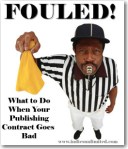
But there’s more. IU is currently running a series of blog posts called FOULED! written by people have been scammed. Dream-wise, these are sob stories. In many cases, fraud was involved. Unfortunately, fraud is hard to prove and most beginning writers don’t have the money to hire a lawyer, much less travel to the state where the publisher is headquartered and initiate a court action.

Nightmare on Editing Street

Today’s post by Brenda Perlin tells a nightmare story about the author’s experience with an online editing company. The company promised a beautiful manuscript and delivered, well, pond scum (my term for it).

Such companies can take advantage of a problem most writers face: if the publisher doesn’t hire in-house editors to clean up a manuscript, then the writer has to do it. Unfortunately, the cost for editing, say, a 70,000-word book might well be more than most of us can afford; and, statistically, it also may be more than most debut, small-press or self-published novels are likely to earn. This is a sensitive area for writers because they get dinged by reviewers for typos.

Most of us are the last people to copy edit or proofread out own work.

Previously, on Fouled

If you want to read these in the order that they appeared, start at the bottom of the list and work up.

This is how dreams are

Writing is hard work. Finding the right publisher and then promoting the book is almost harder work.  In Blue Highways, one of my favorite books, the author William Least Heat-Moon talks to many people along the road, asking one of them: “Dreams take up a lot of space?”

“All you can give them,” was the reply.

This is how dreams are. How dreams are makes them dangerous because logic and good intentions don’t always mesh well with our journey to make dreams come true. So, as the site says, Writer Beware.

Otherwise, how dreams are is also their magic and wonderment.

–Malcolm

Malcolm R. Campbell is the author of Conjure Woman’s Cat.


Author looks at Congress and a slaughterhouse through satirical lens

Marietta Rodgers
Marietta Rodgers

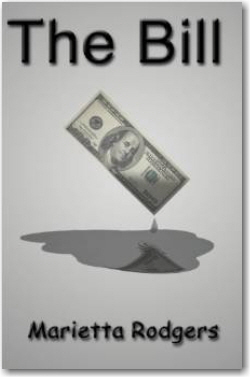
Today’s guest is Marietta Rodgers, author of The Bill (Second Wind Publishing, January 6, 2015). In the novel, Representative Joe Herkieze is trying to get his Hunger Relief Act passed and teenager Hope Price has taken a summer job in a slaughterhouse looking for enlightenment. This juxtaposition screams dark humor and satire.

Malcolm: Your novel The Bill is a political satire. Did you select this genre because you tend to view the world through a satirical lens or because satire seemed like a fitting approach to a story about a Congressman?

Marietta:  I do view things through a satirical lens sometimes, but the lens are more like reading glasses, where I wear them as needed as opposed to all the time. Satire is a good tool for highlighting flaws or short-comings, but it is also a way to goad individuals, groups and governments into improvement, by juxtaposing reality with absurdity and not having a giant chasm in between. The misnomer is that satirists are pessimists, or even misanthropes, but usually it is just a way to unlock human potential.

Malcolm: Did you have to do a considerable amount of research to write about the process a Representative follows to write, promote and get a bill passed?

thebillMarietta: I did research the process of a bill from the time of its inception to its fruition, because it isn’t as straightforward as people might think. These bills can get watered down or so bogged down in a committee, that they never see the light of day.  It’s good that we have checks and balances, but unfortunately what we have currently, is nothing more than obstructionism, that has little or nothing to do with the bill themselves, but more to do with party lines.

Malcolm: Obstructionism is bad for the country but good for satirists. Your book also features a slaughterhouse whose foreman is aptly named Piggy. I must confess, I haven’t read anything about a slaughterhouse since I read Upton Sinclair’s muckraking book The Jungle in school. How did you happen to select this industry for your novel, and how did you learn enough about a slaughterhouse to write about it?

Marietta: I did have to do research on slaughterhouse practices, because I too read The Jungle and thought I would be working away from that, but people would be surprised to note that some of the horrifying practices that took place then still occur. John Lennon famously said, “If a slaughterhouse had glass walls, we’d all be vegetarians.” I think that is definitely true.

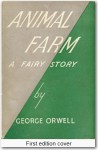
Malcolm: I understand George Orwell’s “Animal Farm” is among the books that have influenced you. Is it partly responsible for your choosing satire as a genre and possibly for naming a slaughterhouse foreman “Piggy”?

animalfarmMarietta:  I wrote, The Bill as a satire, because it just felt natural. George Orwell could have written, Animal Farm (I’m sure he would have titled it something else) as a straight forward tale, without the use of satire, or the metaphorical use of animals to convey his dismay over Stalinism, but it would have been a halfhearted jab, as opposed to the knock out punch it delivered instead. It would have definitely lost a lot of bite in the telling. The slaughterhouse foreman’s nickname is Piggy, which was given to him by the other workers. I chose that name for him, because he is the head of an entire slaughterhouse machine, which slaughters not only pigs, but really human dignity as well.

Malcolm: Do you have a new satirical novel in the works or have you shifted your focus for your next book?

Marietta: I wrote a novel called, Loony Bin Incorporated, which is a satire of big business. It is tentatively scheduled to be available for sale, June 1, 2015. This was another novel, that I felt was better told as a satire. It employs a lot more lighthearted humor than, The Bill though. Currently, I have shifted my focus to writing short stories, that each revolve around the lives of tenants in a particular building in New York City.

Malcolm: What did I forget to ask you?

Marietta: “Vanity Fair” does the Proust Questionnaire, based on the famous questionnaire of the French writer, Marcel Proust. One of the questions they ask authors that I like is, what is your current state of mind? The answer: always a chaotic preoccupation of ideas.

Malcolm: I’ve found that chaos is often a writer’s best friend. Thanks for dropping by the Round Table today to talk about The Bill and the ways and means of satire.

thebillYou can read more about Marietta Rodgers at “Pat Bertram Introduces” and her Second Wind Publishing author’s page. The Bill is available in paperback and e-book.

Briefly Noted: ‘Sunrise from the Summit’

When I spent a summer at the University of Colorado, I signed up with the mountain recreation department and climbed mountains every week. I always planned to go back and see how many of the state’s 54 14,000-foot peaks I could climb. Never did. Wish I had.

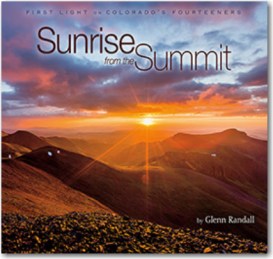
sunridesummitGlenn Randall climbed all of them. Better yet, he took pictures and put them together into a beautiful book. The book groups the photographs by the Front, Sangre de Cristo, Mosquito, Tenmile, Sawatch, Elk and San Juan ranges.

From the Publisher

“Award-winning photographer Glenn Randall dedicated seven years to climbing each of Colorado’s 54 peaks over 14,000 feet with one goal in mind: to capture the glory of sunrise from each summit. His quest required hundreds of hours of planning and preparation, then scaling the peaks in the dark while carrying a pack loaded with camera gear. Randall’s reward and yours is this beautiful collection of unique and dramatic images that will put you on the summit just as the sun gilds the far horizon.”

In his the introduction, Randall writes, “Summits are magical places. Reaching the summit of a high peak gives me the exhilarating, humbling and awe-inspiring experience of being a tiny speck on top of the world. To me, mountaineering is a metaphor for the human condition. It embodies in concrete form the way we reach for the sky, yet can only climb so high.”

I agree. The pictures in this book are beautiful and give a small hint about what it’s like to be standing in the high country experiencing the view.

–Malcolm

Malcolm R. Campbell is the author of “Conjure Woman’s Cat,” a novella about a granny and her cat vs. the KKK in the Florida Panhandle of the 1950s. 99 cents on Sunday, March 8.


Hope – the candle within otherwise dark tales

“At the heart’s core of fantasy literature lies the infinite possibility of dreams. Whether it presents alternate worlds in outer or inner space, alternate forms of life beyond humanity, alternate realities beyond our own, this genre speaks not to the limited self but to the limitless spirit. The well from which it draws its inspiration – be it established myth or the capacity for myth-making – is that which Joseph Campbell calls ‘the lost forgotten living waters of the inexhaustible source.’”
O. R. Melling

Bad things happen to good people every day. We cannot deny this. Good things happen, too, but when they happen too often in fiction, the author is likely to be criticized for his or her story’s Hollywood ending.

One of the reasons I read and write fantasy literature is, as Melling says, the hint that no matter how dark the tale, dreams contain infinite possibilities.

I don’t think this means fantasy is escapist fiction or that it helps people deny reality. I’d rather say that it helps readers nurture the innate glimmer of hope that burns (or, perhaps, hides) within every human heart.

When we read about real-life heroes in the news, their heroism not only says something about their values but about the fact that they defied an apparently hopeless reality and changed it. News stories about animals being saved from icy ponds and raging rivers, about platoons that make it back to headquarters from a hellish battle, and first responders who rescue people from burning buildings tend to catch our attention and turn into the things we share with friends on Facebook or around the dinner table.

Life is, I think, fueled by hope, and so it is that stories in the newspaper and the TV evening news about hope fulfilled resonate with us. This is the key to fantasy literature that people read and re-read and talk about.

Perhaps we think, “If the real person in the news item or the protagonist in the story can conquer an obstacle, so can I.”

As authors, our primary role is telling a good story, not making people feel good about themselves and their future. But for those of us who agree with Melling that “as long as the spirit is intact, nothing is broken irreparably,” writing fantasy is a natural outgrowth of the way we see the world.

When he “get the story right,” our readers feel that way, too, by the time they get to the end of the book.

Malcolm