Why do writers write what they write?

We’re told to write what we know. That doesn’t stop us from doing research and ending up knowing more. Perhaps what we know and what we want to learn about play into the list of things we care about.

I’m not talking about caring about mom and apple pie or caring about getting rid of war, poverty and prejudice, though those things are good to care about. What writers care about is often a mix of locations, themes, character types, story types and the related issues that attract their attention.

My earliest passions–other than having a slice of apple pie with a healthy slab of sharp cheddar cheese–were nature and psychic phenomena. Family vacations and Boy Scout camping trips introduced me to a lot of wild places and what it took to live in the woods. Books introduced me to intuition, transcendent experiences, improving one’s natural hunches and the kinds of things that might go bump in the night.

Perhaps this is why I write fantasy and magical realism with a strong sense of the natural world that surrounds my stories and characters.

A belief in unseen worlds and inner transformation turned me into the kind of person who detests conformity, authoritarian and/or patriarchal control of individuals, and brute-force lawless action whether it manifests in the KKK and Jim Crow, the Armenian genocide, Hitler or ISIS.

I grew up in Florida, a state that made its living and fame off of orange groves and tourist attractions. At the same time, the state was in the “top five” when it came to lynchings, Klan activity and corrupted government officials. Florida, to my mind, equals nature that has been compromised by development and a very ugly past that nobody likes to talk about.

I have a fondness for longleaf pines, blackwater rivers, Gulf Coast estuaries and beaches. I have an inherent dislike of the Klan because they were the devil I knew and feared as a child even though I am white.

All of these things led me to write my upcoming novella Conjure Woman’s Cat, a book about the natural world, folk magic, 1950s-era discrimination and the Klan.

The ever-popular question where do you get your ideas is one I detest because most people who ask it are doing so in an interview, or perhaps in an elevator, and expect a short answer such as “in the newspaper” or “from people watching” or “from my grandfather’s stories.”

The real answer is so much more complex that I don’t know how to put it into a 25-word answer that satisfies anybody. Ideas come from years of feeling strongly about one thing and another until somehow a story idea springs out of “nowhere” and I start writing.

This doesn’t add up to any recipe advice for people who want to write. Recipe advice tends to do more harm than good anyway. The real advice is to nurture oneself, follow one’s intuition and harvest all of that into a mix that accentuates one’s favorite (good or bad) areas of interest. And then, no matter what you believe, try not to preach, allowing the story to speak for itself.

–Malcolm

Malcolm R. Campbell is the author of the fantasy novels “The Seeker,” “The Sailor,” and “The Betrayed” and the paranormal short stories “Moonlight and Ghosts,” “Cora’s Crossing,” and “Emily’s Stories.”

What a surprise: a well-written instruction manual

When I wrote computer documentation for many years, it was a point of honor–or perhaps the desire to keep my job–to write easy-to-follow documentation about complex subjects. I wished the technical writers at other companies took the same approach.

Lately, a lot of instructions are being supplied in foreign languages either without a translation or with the kind of translation one ends up with when using a free on-line translation application, as in:

  1. Please to understand, unit is not to plug up nose or dangerous badness will happen.
  2. Standard wall outlet is where you’re to be plugging in everything that you plug in unless your house does not provide power from generating plant. (Nose not included.)
This drawing actually includes explanatory text for each step.

That said, it’s a pleasure to take a new digital camera out of the box and, after noting all the dials, controls, gauges and other items that look like they’re Star Trek ready, it’s a relief to see that the instructions are: (a) easy to follow, (b) written in English, (c) include illustrations that actually match the gizmos on the camera.

So far, I’ve learned what most of them do even though I don’t yet know why I might want to do some of those things. The battery has been charged by plugging the charger into a standard all outlet that is getting standard power from North Georgia EMC rather than anyone’s nose.

It’s almost time to insert the battery and memory card into the camera and switch on the power switch. No pictures yet, but for a guy who grew up with Honeywell FILM cameras, digital cameras are about as natural a way for me to take pictures as nuclear physics. I need all the instructions I can get.

No pix yet, but soon.

–Malcolm

Malcolm R. Campbell, who no longer writes computer documentation, is now writing fiction. (Yes, I know, some operating manuals are fiction, possibly fantasy produced by sadists.)

The grand myth of John the Conqueror

Like King Arthur of England, he has served his people. And, like King Arthur, he is not dead. He waits to return when his people shall call him again … High John de Conquer went back to Africa, but he left his power here, and placed his American dwelling in the root of a certain plant. Only possess that root, and he can be summoned at any time. Zora Neale Hurston in “High John De Conquer”

When an author plunges into background information and themes for his stories, as I did while writing my upcoming novella Conjure Woman’s Cat, it doesn’t take long to discover mythic characters. John the Conqueror is perhaps the king of conjure, looming larger than life through blues songs, stories, root doctor herbal books, and an oral tradition dating back prior to the Civil War.

The roots of Ipomoea jalapa, when dried, are carried as the John the Conquer root amulet. - Wikipedia Photo
The roots of Ipomoea jalapa, when dried, are carried as the John the Conquer root amulet. – Wikipedia Photo

Today, conjure women–and those requesting their services–know a lot about the “three Johns,” the herbs named after the mythic hero:

  • The much sought after High John root, Ipomoea jalapa, is thought to create sexual power.
  • Southern John, from the Wake Robin, Trillium grandiflorum, used in medicine under the name Birth Root to facilitate childbirth and reduce menstrual cramps, is used in folk magic to solve family problems and love issues.
  • Chewing John (AKA Court Case Root) is Galangal, Alpinia galangal, used in medicine to reduce stomach ache and in folk magic to help a client prevail in court.

For information about spells, check here on the Lucky Mojo site.

The Myth

Charles W. Chesnutt’s 1899 book The Conjure Woman taught mainstream audiences about conjure in a fashion similar to the way Alan Lomax’s books taught them about true country music. Chesnutt collected stories. Lomax collected folk songs.

HyattWhether they trusted them or feared them, African Americans’ awareness of conjure women pre-dates slavery in America. Most White people knew little about the myths and practices of conjure before Chesnutt–and later, Harry Middleton Hyatt and Zora Neale Hurston–collected stories and put them into print.

Oral stories about John the Conqueror fed on themselves and on the hope such tales brought to slaves.

  • He was an African Prince
  • He was a slave
  • He played tricks on his masters and got away with it
  • Stories may have started with a real person
  • He was seen as a trickster like Coyote and Bre’r Rabbitt
  • Strange doings of unknown origin were attributed to him

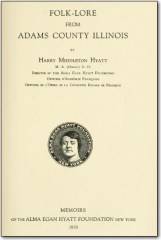
The mythic prince/slave was seen as so powerful that, as Hyatt wrote in Folk-Lore from Adams County Illinois in 1835,  “If you think that someone is trying to hoodoo you or do you some harm, and you meet them, walk backward six steps, spitting right and left, and saying, ‘John over John’–and, ‘John the conqueror’–and they can’t hurt you.” (The book is available in PDF.)

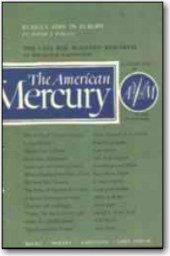
AmericanMercuryHurston brought the myth into the modern day when she wrote, in a 1943 “American Mercury” article, “So the brother in black offers to these United States the source of courage that endures, and laughter. High John de Conquer. If the news from overseas reads bad, if the nation inside seems like it is stuck in the Tar Baby, listen hard, and you will hear High John de Conquer treading on his singing-drum. You will know then, that no matter how bad things look now, it will be worse for those who seek to oppress us…. White America, take a laugh from out of our black mouths, and win! We give you High John de Conquer.” The article is available in PDF.

Conjure subjects fed into blues music and blues music supported conjure. White Americans learned about conjure through songs sung by such well-known artists as Willie Dixon, Muddy Waters and others. It should come as no surprise, then, that Dixon wrote a song called “My John the Conqueror Root.”

My pistol may snap, my mojo is frail
But i rub my root, my luck will never fail
When i rub my root, my John the Conquer root
Aww, you know there ain’t nothin’ she can do, Lord,
I rub my John the Conquer root

(Listen to Muddy Waters sing it here.)

As an author, I think it’s important to keep the old stories alive, whether they’re about King Arthur, John the Conqueror or Joel Chandler Harris’s Uncle Remus stories. They’re part of our culture and our history. Today, I suppose, most of the John the Conqueror focus is on the three roots and the qualities they have in the lore of folk magic.

I’m a novelist and don’t purport to be an anthropologist, much less a collector of myths and folktales. When we write ethically, the research we discover while planning a story isn’t pasted into the work like background music in an elevator. It helps shape the story and make it real. I’ll leave the theories to others and focus on storytelling with as much tradition as I can discover–and that includes John the Conqueror.

Malcolm

Malcolm R. Campbell’s novel “Conjure Woman’s Cat” was released in March 2015 by Thomas-Jacob Publishing. 

Unfolding a novel out of cluttered thoughts

Let’s say you have an idea for a story in which a 21st century man walks across Florida in search of the fountain of youth.

If you’re an organized person, you might rush to your computer, open a DOCX file and start creating an outline. If you’re a disorganized person, you might wander the blue highways of Florida for a few years and see what kinds of ideas come to mind. Maybe you’ll even find the fountain of youth.

We'd all be better writers if high school English teachers taught us the value of hunches.
We’d all be better writers if high school English teachers taught us the value of hunches.

I don’t advocate either approach. Outlines tend to restrict the story before it has time to take shape–that is, everything you don’t put in the outline tends not to be considered. Wandering tends to be addictive and pretty soon the story gets put off for a year or two and then a year of two more.

You’ve heard people say: “I was just thinking about Uncle Nat when he called up” and “My wife and I were wondering why we don’t see any red barns and then suddenly we begin seeing them everywhere.”

Whether you want to call it creating your own reality, fate, destiny or the focus of your awareness, thinking or researching one thing tends to draw similar things to mind. If you’re allowing your story to unfold, these similar things can add a lot to the plot, theme, characters and settings.

For example, while working on my upcoming novella about a conjure woman, I began finding multiple references linking conjure and the blues. I like the blues and so I looked further (trying not to wander and become distracted with my research) and found that many blues songs refer to conjure women or being “tricked” (hexed) or needing some good gambling MOJO.

These ideas enhanced the plot of my novella because blues songs and a juke joint became part of the story. Had I outlined the story in advance, covering the major ideas I had for it, I might not have found how well the blues fit what I needed to do.

Many writers I know tell me that when they research a subject–and don’t get in a hurry about it–the research leads them from one thing to another thing and suddenly (as though it’s destiny) they find something very crucial to their story. How? I don’t know. But the “how” doesn’t matter. The results are what matter.

If you’re writing a novel about a modern day Ponce de León, reading about the historic person who purportedly sought the fountain of youth might generate ideas. Where in Florida did he go? Look at those places and keep your mind open for landforms, local legends, and perhaps a little history about the kinds of people who have lived there.

This might look like a waste of time because, after all, most of us were told in our high school English classes to start themes, book reports, term papers, etc. with many hours of work on an outline. Sooner or later, you might want to do this. When it comes to fiction, later (and possibly never) are better than sooner.

Let’s say the story you want to write has been nagging you to write it. Part of “writing it” is finding it. When it unfolds naturally, then you’ll probably end up writing the story you really wanted to write even though you didn’t know you wanted to write it the way it turned out when the idea first came to mind.

Writing that outline first has about as much chance of resulting in a good story as a marriage has of working out when you marry somebody during the first date before you know who they are.

Malcolm

EScover2014Malcolm R. Campbell is the author of “Emily’s Stories,” a three-story set about a young girl who allows her intuition to guide her so that she can solve problems her practical-minded parents can’t solve.

Writing wasting away in Limboville

I’ve been asked what happened to my contemporary fantasy novels The Sun Singer and Sarabande.

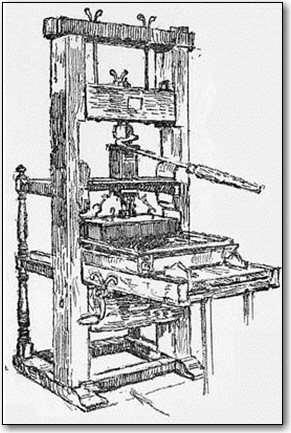
printingpressSince both have been well received, I found a new publishing home (Publisher B) after pulling them away from Publisher A due to a disagreement about the contract.

Publisher B had previously come out with many novels I enjoyed, some of which I had reviewed, so I thought I had found the perfect home for my work.

So what happened?

My guess is that staff turnover at Publisher B created a deluge of work that the remaining staff couldn’t keep up with. Nonetheless, when I sent the manuscripts to the publisher in the fall of 2013, I felt the publisher could meet his proposed release dates of January 2014 for The Sun Singer and May 2014 for Sarabande.

These dates were missed with no explanation and I was given a new set of release dates that were also missed with no explanation. Perhaps my request for a cover befitting a fantasy novel was the problem. I said that the covers supplied by Publisher A, while striking, weren’t typical fantasy covers; among other things, they gave readers no clue about the focus of the novels.

Publisher B agreed as did several of the artists he contacted who looked at the covers I’d had before. Yet somehow, no viable artist could be found until late in the summer of 2014. Finally, The Sun Singer was released last August with a nice cover and a great printing job.

E-book Problems

Unfortunately, the formatting of the e-books as a mess. The publisher blamed me for supplying documents that had formatting errors. He was right about that, though I consider the delivery of a manuscript to be the author’s responsibility and the formatting for print, Kindle, PDF and other e-books to be the publisher’s responsibility. I also expect the publisher to make sure the formatting is correct before the books go live on a seller’s site.

It took me several weeks to get Publisher B to remove the e-books from Amazon and Smashwords. I would have preferred the files be fixed and re-uploaded, but this didn’t seem to be happening. Then, Publisher B removed the print version from Amazon and elsewhere even though there was nothing wrong with it.

We had a variety of discussions about how the e-book formatting should be done, my preference being for something that mirrored the formatting of the print version. Whether I was asking for something impossible to deliver, I don’t know.

Finally, several weeks ago, Publisher B sent me an e-mail saying they were ready to release The Sun Singer in e-book (with a simplified formatting) and print.

Publisher B doesn’t seem to understand that the author needs to know the release date so s/he can do advanced publicity, set up give-aways on GoodReads, and talk about the book on Facebook and Twitter.

I asked for the release date and got no response. Publisher B asked me about Sarabande, I answered, and got no response. I asked about being added to the publisher’s blog so I could help promote the books and got no response.

Finally, I used my old e-mail address to ask the publisher if messages from my new e-mail address were ending up in the SPAM folder because we were (I thought) in the middle of a dialogue about moving forward and all I was hearing from Publisher B was the sound of silence. My question about the SPAM queue got no response.

So there it is. Both novels have been in limbo for over a year. Since Publisher B has authors and novels on their list that I like, I would prefer they release The Sun Singer and Sarabande. Whether they will or they won’t is a question stuck in the black hole of zero communication.

What Happens Now?

Now, if you are Publisher B and happen to be reading this, and have been sick, immersed in a family tragedy or a business reversal, then I would be sorry to hear that because I know what that’s like. I wish you had told me and propose that when you can’t keep up with e-mail, then a staff assistant needs to step up to the plate and keep things running smoothly.

If you’re not Publisher B and wish to have your work published, I’ll say that long delays of a year or so are not uncommon with major publishers, though you do need to have an agreed-upon time table for all the steps in the process. One of the benefits of working with a smaller publisher is the hands-on more personal approach as well as a shorter manuscript-to-print time frame.

My mistake here was not nailing down the release dates, with reasonable flexibility, in advance. Also, if small-publisher tradition and/or contract language specifies that the author is responsible for most of the marketing effort, the publisher needs to at least keep the author informed of release dates (and then stick to them) as well as having a blog or a system of news releases that announce the new books. This needs to be in the contract, too. I didn’t get that nailed down either because my back-and-forth e-mails with Publisher B gave me the impression my expectations about such things would be met without being backed up by clauses in the contract.

I’ve been in this business long enough to know better and ended up with my books in Limboville. There are many sites that show standard book contracts. While reading them doesn’t guarantee you’ll get a prospective new publisher to add any verbiage you find missing in his standard contract, you can always try.

I let my emotions get in the way: I was so upset with Publisher A about the contract dispute that everything Publisher B seemed to be offering looked like a breath of fresh air. It’s better to step away from those kinds of negative feelings and hopes and make sure you have a meeting of the minds with a prospective publisher before you sign the contract.

This is your cautionary tale.

Malcolm

Malcolm R. Campbell is the author of The Lady of the Blue Hour and The Land Between the Rivers. His short stories appear in The Lascaux Prize 2014 (2014) and Spirits of St. Louis: Missouri Ghost Stories (2013).


What might have been; what might still be

“Everyone who gives up a serious childhood dream — of becoming an artist, a doctor, an engineer, an athlete — lives the rest of their life with a sense of loss, with nagging what ifs.”

– Glenn Kurtz in “Practicing: A Musician’s Return to Music,” quoted in “The Pleasure of Practicing: A Musician’s Assuring Account of Creative Homecoming and Overcoming Impostor Syndrome” by Maria Popova

writergraphicIf I were to give up writing, I would, to borrow an idea from Kurtz, feel the loss more strongly than the greatest lovers I have lost.

Childhood dreams of becoming something–a poet, a novelist, a playwright–often nurtured by well-meaning parents who tell their sons and daughters they have what it takes to be great, often fade as interlocking realities about earning a living with creative writing as part of the equation.

Even before Amazon and e-books and free books and cheap books turned publishing upside down, few writers stepped out of college with a manuscript in their briefcases that was ready to become a critical and/or a commercial success on Broadway, in Hollywood or in a major publisher’s newly released book list.

Life as they say, got in the way. And it still does.

It’s easy to find oneself suddenly middle aged with a drawer filled with rejection slips for manuscripts actually submitted and another drawer filled with manuscripts that stalled somewhere between once upon a time and happily ever after.

How easy it is to stop trying, perhaps to ponder on dark and stormy nights what might have been if one hadn’t gotten married too soon, if the baby hadn’t forced one to take a second job, if aged parents hadn’t needed time-consuming care, if somebody somewhere had provided an ounce more of encouragement and support and/or a way for the amateur to get his or her foot inside the golden door to professional status.

It’s also easy to wonder what kind of youthful vanity or arrogance led one to believe s/he would be one of the appallingly small percentage of writers who earns all or a substantial percentage of his/her yearly income as a poet, novelist or playwright/screenwriter.

The dream seemed so right, how could it be wrong?

Quitting the dream makes sense because, with the list of failures in mind between then and now, it has injured a lot of people: spouses and lovers led from hope to hope and from pillar to post while the writer promised year after year that “this” was “the” book, while schedules and expenses and work spaces were arranged to accommodate the writer’s holy mission, while books and manuscripts turned the house into a warehouse of faded paper and faded hopes.

It’s hard to quit and easy to quit. It’s hard because, like the lottery player who thinks this week’s number will win the jackpot, the writer thinks “this time my work in progress will find an agent and then a publisher who believes in it.”

It’s easy to quit because writing, after a long while, becomes not only an expensive and time-consuming hobby, but a rather sad thing like the habits of inventors who think they’re on the verge of creating  something the world needs or aging models who think “I still have it” or various other delusions that verge (at best) on hobbies and avocations when the stars and planets align.

When you quit, you stop growing and you feel the way you felt when the person you wanted to marry somehow slipped away. When you quit, you stop growing because you’re not practicing the craft your childhood or young adult self said it loved, said was a mission, said was like breathing, said was more important than sex, said was a life’s purpose, said was destiny.

If you’re lucky, so you don’t quit because practicing your craft is who you are and you realize when you’re not writing, you’re somebody you don’t recognize in the mirror.

Maybe Hollywood and Random House will never call, though you still dream that they might, and you understand that as some people like creating lists of all the birds they’ve spotted or the places they’ve been or the languages they’ve learnt, that you’re writing because it’s you and you love it and you cannot abide the death of part of yourself if you didn’t keep typing one word after another.

Loving it is where we need to be for those of us who aren’t Hillary Mantel and Stephen King or Nora Roberts, and so we keep writing for what might still be, the satisfaction of reading what we’ve written whether anyone else reads what we’ve written and finds any satisfaction from it, much less pays for the opportunity.

Perhaps we will one day be discovered. Meanwhile, we’re continually discovering ourselves through the words we put on the page.

–Malcolm

thesailorcoverMalcolm R. Campbell is the author of “Emily’s Stories” and “The Sailor.”

Authors, Would You Like to be Interviewed?

A great opportunity for indie authors.

Pat Bertram's avatarBertram's Blog

If you are an author, I am inviting you to let me promote your latest book.

I do author interviews and character interviews, and post excerpts on my blogs, and I don’t charge a penny! Of course, since you get what you pay for, I can’t guarantee you will sell books because of your efforts and mine, but they will be promoted via Facebook and Twitter. If I haven’t scared you off, click here to find the directions for my Author Questionnaire. Click here to find the directions for my Character Questionnaire. And click here to Let me post your excerpt!

computerHere are some tips for doing the most compelling interviews:

For my Author Questionnaire, I begin with the question, “What is your book about?” It’s the hook, the reason why we are all at the blog — to know about your book. So, please, don’t start your…

View original post 463 more words

Free listing for your book at Indies Unlimited

There are a lot of sites “out there” that are worth a look if you’re a writer needing advice or looking for a free listing for your book. My indiesfriend good friend, author and publisher Melinda Clayton, writes articles for Indies Unlimited, so I’ve been tuning in on that site a lot lately.

There’s good stuff there such as Melinda’s overview of AuthorsDen. Among other things, check out the blog and knowledgeBase. You can also list your books on the site on Thrifty Thursday and Print Book Paradise. These listings work well when you want to publicize reduced prices.

Here’s there’s blurb about the service

On every Thursday at 5 a.m. Pacific time, Indies Unlimited presents a feature called “Thrifty Thursday.” It’s simple: authors can list their free or 99¢ e-books and readers can find a large selection of free and cheap reads in one convenient place. For those of you looking for Freebie Friday, it has now been incorporated into Thrifty Thursday. Click here for the most recent Thrifty Thursday. If you have a print book priced under $15, you can participate in Print Book Paradise (also known as Mr. Pish’s Print Book Party) each Sunday at 9 a.m. Pacific time.

To learn more, click here.

I’ve used the Indies Unlimited listings several times and have been pleased with the results.

Malcolm

JockWho Malcolm R. Campbell is the author of contemporary fantasy novels, paranormal short stories and satire. “Jock Who” is free if you have Kindle Unlimited. That’s how I would read it!


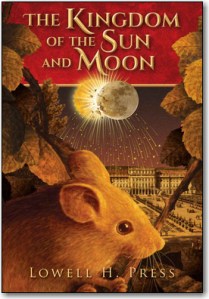
Review: ‘The Kingdom of the Sun and Moon’

The Kingdom of the Sun and Moon, by Lowell H. Press, Parkers Mill Publishing (September 10, 2014), Ages 10 and up, 316 pages.

Starting with the cover, this is a beautifully crafted book.

Lowell H. Press has written an inventive novel about a hierarchy of mice living in the gardens and secret interior spaces of a castle inspired by the Schönbrunn Palace in Vienna, Austria.

The colony’s king cares little for his subjects and is mostly interested in taking the food they save throughout the year for his own use during the winter months.Two brothers, Sommer and Nesbit, discover that all is not what it seems, including the king’s purported fear of a pending invasion of the colony by a massive army of woodland mice.

Sommer, who is drafted by the king’s minions for a suicide mission on the colony’s behalf and Nesbit, who insults the king and flees into the dangerous forest, take different approaches to survival and justice. Sommer becomes a cadet commander, while Nesbit becomes known as either a worker of magic of an exceptionally lucky mouse.

Set in a 1700s world, The Kingdom of the Sun and Moon is a delightful story with well-drawn characters and an underlying culture and myth that will charm young readers while keeping their parents engaged whenever this derring-do yarn is shared around the dinner table or at at bedtime.

Press used his visit to the Schönbrunn Palace to great advantage in developing a setting for his story that is well suited to the mice colony’s culture and history as well as to the people and cats who appear throughout the tale for better or worse.

Sommer and Nesbit of the Long Meadow Colony are tiny, as mice go, but they make up for it in bravery and guile.

–Malcolm

Fiction writing: is it about the money?

Yes and no.

moneyYes, because unless you’re writing stories for your children, for your own amusement, or for small, non-paying newsletters and magazines, full-time fiction writers consider their career a business even if they are partially supporting themselves as teachers, researchers and other jobs.

No, because focusing on money–for most writers–gets in the way of developing and telling a story. This is not to say that we’re unaware of the realities regarding salable novels and short stories by writers at one stage of their career or another. One reality is that, without a strong platform or a lot of friends in the business, most unknown writers will not be able to sell novels as long as those written by Diana Gabaldon, Eleanor Catton and Donna Tartt. Another reality is that, if we’re writing in a genre, we know what’s more or less acceptable within that genre and what isn’t.

So, while we can choose to stray outside the “rules” of genres, especially as defined by the mainstream of out intended readers and we can choose to write 500,000-word first novels, most choices about characters, plots, settings, dialogue and themes are (or should be) divorced from the question: will this make me more money or less money?

I dislike the trite phrase that “writers must wear multiple hats.” But it’s short, sweet and true. At some point–and perhaps this usually comes from experience–we learn how to compartmentalize our writing business. While those compartments–marketing, sales, research, writing, editing–obviously interact with each other, having such divisions in our work allows us to concentrate on one or the other without being distracted by concerns that don’t relate to the task of the moment.

Worrying About Work That’s Already Completed

New writers worry a lot about rejection slips and why it’s taking publishers or agents so long to respond to manuscripts and queries. Quite often, they’re spending so much time checking the mail and e-mail for a yes/no response about the last story they sent out, they find themselves unwilling or unable to work on the next story. Then, if the response they’ve been waiting for finally comes in as a NO, they’re in the worst possible place to be thinking up something new when, if they had something new already in progress, they could go back to it.

Writers also learn–and maybe this is another experience thing–to separate the kinds of writing they do. Those of us who have partially supported ourselves by writing feature articles, grant requests, news releases, computer help files, and training materials can step from one to the other without having to re-learn approaches and styles. The same is true when fiction’s involved. We can transition from writing news releases during the day to writing a Gothic novel at night without getting mixed up about what we’re writing any more than a tennis player worries about using different techniques and equipment when s/he plays a round of golf.

Compartmentalizing our work not only helps us organize the work week rather than trying to run a business by randomly jumping from one task to another, it helps us tell stories without thinking about money. If we write commercial fiction as well as literary fiction, we learn to step into the needs of the story and genre we’re dealing with. We know before we start what the rules are and we know that the commercial fiction is probably more salable, but then we put that knowledge aside and tell the story.

If money’s a concern while we’re writing the story, the story will probably suffer for it.

–Malcolm

thesailorcoverMalcolm R. Campbell is the author of contemporary fantasy, satire and paranormal stories and novels, including “The Sailor.” The novel tells the story of a pacifist who ends up serving aboard and aircraft carrier during the Vietnam War. Truth be told, friends and family cause more trials and tribulations than most of the demands of shipboard life.